UBE Carrascal 2015

Sorry for the radio silence everybody: have been running around a lot lately and haven’t found time to get the posts out. Rest assured, however, that I have maintained my blood alcohol level and that the silence does not indicate abstinence. Rather, I have accumulated a big stack of draft posts.

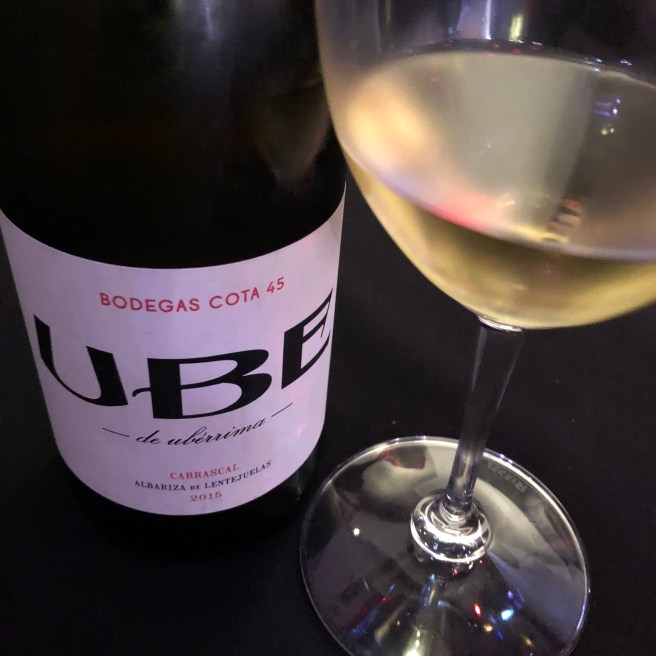
Of which this is one: an encounter with the 2015 UBE Carrascal, by Cota 45. The original UBE and for me still my favourite: a wine that starts fresh, sharp and mineral and just grows in breadth and stewy, beefy flavour as it opens in the glass. A really expressive wine – this one started a little chilly but soon warmed up – and one that shows that you don’t have to compromise between freshness and flavour.

Fresh, expressive and flavourful. Top drawer.

The Williams 2009s in El Escaparate de Vallehermoso

It’s nice to discover new places and it’s nice to run into old friends, so you can’t argue with running into old friends in new places. These two wines – which I was able to enjoy yesterday at El Escaparate – are definitely old friends.

I first came across the 2016 sacas of these released as part of the Colección Añadas – in fact they were among the first añada (vintage specific) wines that I had tried.

The two have a lot in common: from the same palomino in the same vineyards in Añina and Carrascal (Jerez), aged for the same eight years in botas of american oak of 500 and 600L before the saca in April this year. The difference is that the fino was fortified to 15º after fermentation, allowing it to develop flor, whereas the oloroso was fortified to 18º and allowed to age “traditionally”. It makes for a great opportunity to compare and contrast the effects of the biological and oxidative ageing.

It is also really interesting to contrast the various sacas. The first saca was in february 2016 and there have been two or three before this one in April 2017, and it has been interesting to see how the fino, in particular, has changed over time.

It was always a rich, juicy fino with a touch of oxidation, but this one for me has gone over the top from fino to amontillado, with slightly less sharpness and caramel complementing the hazelnuts that, foe me, characterized this vintage. Just look at the colour of it for a start: it is barely distinguishable from the oloroso.

The oloroso too has changed: it always had a spirity, volatile heavy hazelnut nose but this one seems a little quieter by comparison – but maybe the bottle had been open a while, or maybe it was just the change in the fino that made them closer in character.

Two lovely wines, and absolutely perfect with the various delicious meats on offer at El Escaparate (they certainly did the job with Higinio’s finest breasts of Barbary duck and wood pigeon).

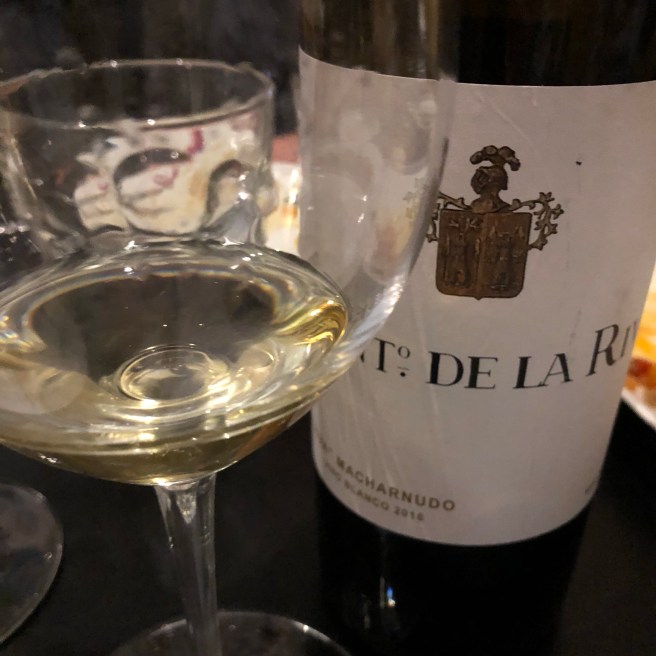
De la Riva Blanco de Macharnudo 2016

One of the most hotly anticipated white wines in ages, this is a white wine from palomino fino grown in Macharnudo and sold under the reborn label of Antonio de la Riva, acquired by Domecq back in the 1970s but now in the hands of none other than Ramiro Ibañez and Willy Perez. I took it to a really fun blind tasting a couple of weeks ago.

At first it came across as a delicate flower. A really inviting sweet, apple blossom nose and a nice mouthful of fresh white fruit on the palate, with some salinity at the end. Fresh and vital but elegant and refined rather than big and bold. Lovely stuff, no doubt about it, but as I happened to remark at the time, it surprised me at how delicate and floral it was, missing the intensity and concentration that the Barajuela wines have us accustomed to.

And that just shows why you shouldn’t take top class palomino white wines to a blind tasting, and why indeed you should keep your lip buttoned if you do. Because like all these palomino white wines even after just a little while open this seemed to grow in intensity and presence, and suddenly I was regretting my decision to share my bottle with seven other winelovers, however likeable.

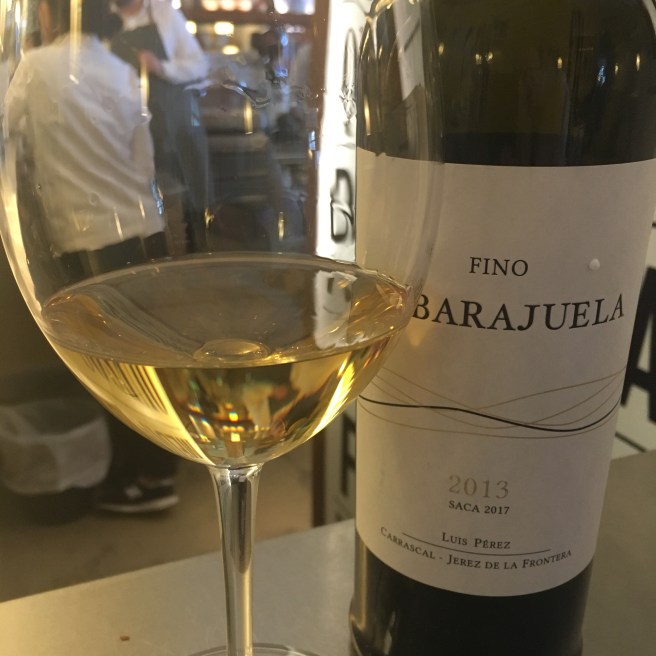
And in fact I managed to nurse a glass long enough for the gods of blind tasting to punish me for my second error. Hearing my earlier comments, the aforementioned deities chose to serve me a wine I know pretty well – the Barajuela Fino 2013 (Saca de 2017) – two wines later such that I had both in the glass at the same time. And that intensity and presence? By now the De la Riva was singing at the top of its lungs whereas the Barajuela was fresh open, and maybe if not twins as such, the resemblance was uncanny.

I have heard this called the best of the blancos de albariza and I would not dispute that at all, it is a really top class white wine. I just wish I had kept the bottle to myself.


Amontillado el Fossi in Fismuler

I said I would be back and when it comes to having an enjoyable lunch with nice wine I can generally be relied on. Cracking little list here at Fismuler and the food is cracking too.

There has been a lot of chat this week about sherries with a sense of place and El Fossi is exactly that. A uniquely fine, punchy amontillado that is absolutely a product of its unique habitat a patch of albariza to the South of Jerez, a mere 7km from the sea but 100m above the aforementioned briney called Finca Matalian.

I have written about this little beauty quite a bit and you can see the posts here. Suffice it to say that it is killing it with this clam and artichoke rice right here.

Terroirpower right enough.

Fino la Barajuela 2013 (Saca de 2017) in Media Ración

It must seem as if I am obsessed with these wines – it has got to the point where my blogging colleagues gently pull my leg about it on social media. Of course there is an element of truth in that, but in my defense I am also in a virtuous loop in which the places I go to tend to stock them, the sommeliers I know are aware of my interest and it is so hard to say no when they are offered.

In fact at one point I did start saying no, on the basis that if I drank all the wine on offer it would defeat the object of writing about them (one establishment told me they had been sent two bottles of one vintage, of which I had accounted for 75%) since noone else would be able to drink them anyway.

And to be honest I am a little mystified as to why more people have not done so. As I have mentioned before on here I find these wines fantastic: top notes, bottom notes, body, concentration, shape, salinity, the full package. Neither do I believe I am alone in this: every time I have shared a bottle with friends from outside my bubble they have loved it (even Mrs Undertheflor enjoys a glass or two) and better judges than I seem to share my enthusiasm.

Anyway, I reckon I have allowed you all a fair crack so be warned: my admirable self restraint, and with it your chance to enjoy these wines, is coming to an end.


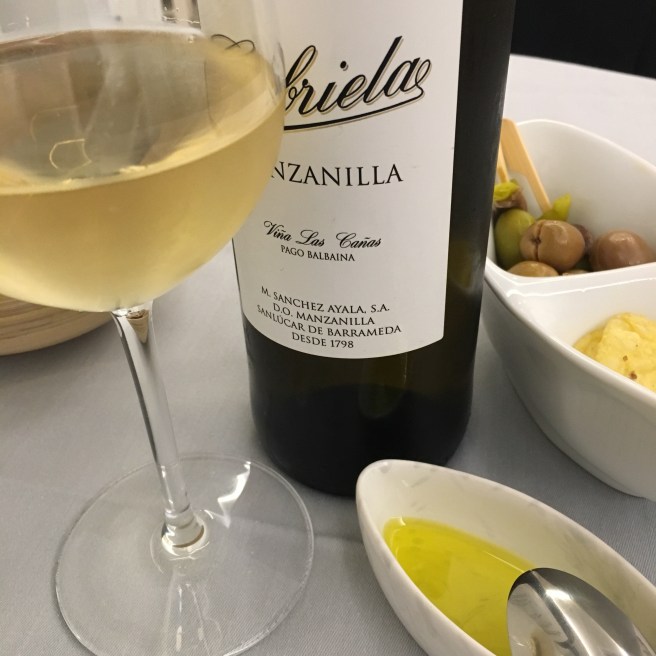
Manzanilla Gabriela in Zalamero Taberna

A beautiful sight, and I am not just referring to the skillful composition and masterful control of light and perspective in the photo. The beauty is in the centre of shot: the words “Viña Las Cañas, Pago Balbaina”. This sort of thing makes the old heart hum along with the band: I strongly believe that those that can put the vineyard’s name on the label should do so. (In fact without wanting to take too much credit I did in fact mention that it might be worth putting these details on the label when I met up with Sanchez Ayala back in September.)

More importantly, this is a classic manzanilla, pure, clean, fresh and crisp. About the most refreshing thing you could drink and still no push over. And a bargain, when you consider that you can buy the same wine at considerably higher prices under other labels.


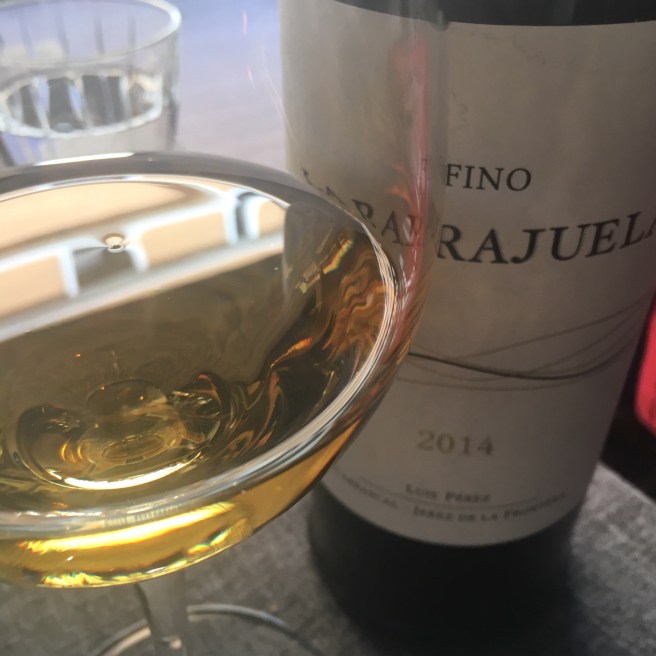
Fino la Barajuela 2014 in Lakasa

Barajuela alert and this is just such an awesome wine. White fruit at the top salt at the bottom and really astonishingly muscular at the waterline. The perfect white wine for the lunch table – and when the table is Lakasa you need something of this quality. An absolutely outstanding lunch once again.

Manzanilla Arboledilla Levante y Poniente

In my opinion Barbadillo don’t get the credit they deserve and I am not sure why. They produce quality wines across the range, the Solear en rama series is a masterpiece, Pastora is a gem and lately they have been producing some really interesting stuff: the Beta bubbly and Nude tintilla to start with but even more so their spikey, spicey white wine Mirabras and the cracking Zerej boxed sets.

And now these Arboledilla wines – which have been around for a while but which I only came across in Reserva y Cata recently. It is yet another fascinating project and an attempt to demonstrate the power of the “other terroir” – the bodega. Specifically, these are two manzanillas of the same age and from the same solera (the Solear en rama if I am not mistaken) which is housed in a famous old bodega called Arboledilla. What is fascinating about them is that one of the bottles – “Levante” (sunrise) – is taken from a butt at the Eastern extreme of the bodega, while the other – “Poniente” (sunset) – is taken from the Western end. The idea is to demonstrate the effects of small climactic differences within the bodega itself.

They are both zingy, high intensity manzanillas and the differences are pretty subtle. Having said that, you can definitely detect a sharper, finer and more vertical style in the Poniente (which I am guessing is the cooler end of the bodega), and a slightly richer, wilder style in the Levante, which certainly has a hint more sweetness on the nose.

Really interesting stuff and definitely worth trying (if you think about it the worst that can happen is that you end up with two bottles of a classic manzanilla).

#4GWFEST2018 – Part 4 – the Callejuela single vineyard manzanillas

There is just so much to like about Bodegas la Callejuela. It is hard to think of a more likeable couple of blokes than these big, friendly guys, and although at first glance they don’t look like the kind of hipsters you would imagine revolutionizing the scene in Jerez I can tell you noone is doing more than they are.

To start with they have a quality bodega with a really solid range of wines, from the unfortified blanco de hornillos via the manzanilla fina, manzanilla madura, manzanilla en rama, amontillado, and oloroso all the way up to the outstanding older wines, Blanquito, La Casilla and the unbelievable El Cerro (and the PX). But they are a lot more than a bodega with a good range. They are the source of the wine which, with the help of a touch of Ramiro Ibañez magic, has become one of the truly iconic projects of the new Jerez – the Manzanilla de Añada 2012 -, they were involved in the Manifesto 119 and have since launched a range of unfortified vineyard specific white wines that for me are really pitch perfect. These guys really get it.

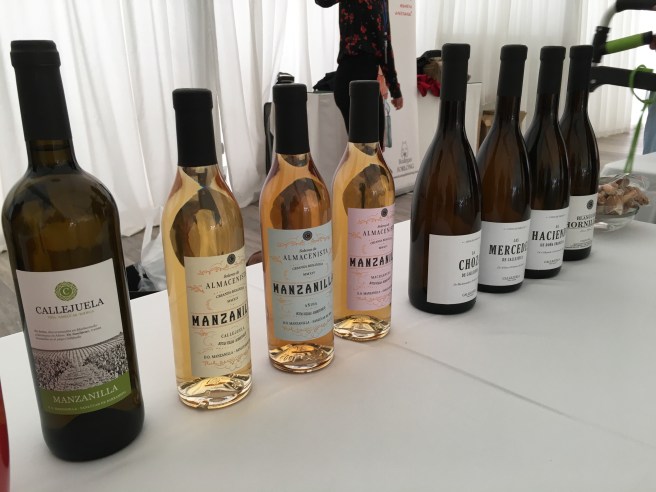
I have already had the chance to write about their latest releases – first at the bar of the late, beloved Territorio Era, and later at an excellent event organized by Montenegro vinos. They are single vineyard manzanillas, and in fact they are also single vintage wines – from 2014-, although they are not able to market them as such since not all “i”s were dotted and “t”s crossed, so at the time I first wrote about them I called them something different. Anyway here they are, resplendent at the Cuatrogatos Wine Fest with their clear bottles (which I personally think is a quality touch), classy new labels and their official title of “manzanilla” (a reminder once again that although two of the three are from Jerez vineyards, what counts is where they are made into wine for these purposes).

And three quality wines too. The Callejuela (vineyard) is the most biological of the three with haybales on the nose, a touch more zing and a sharper profile. The Macharnudo is absolute class, with that aromatic and metallic mineral quality and an elegant, compact shape, while the Añina is even visibly more evolved, slightly oxidated, smooth but nevertheless fresh.

I find it very hard to choose between the three of them, I must admit. Perhaps I need to try them again!


#4GWFEST2018 – Part 3 – Corta y Raspa Vol II: the Mayeteria Sanluqueña strike again

It was at the Cuatrogatos Wine Fest last year that I first met the Mayetería Sanluqueña and it was great to see the three lads again and try the new vintages.

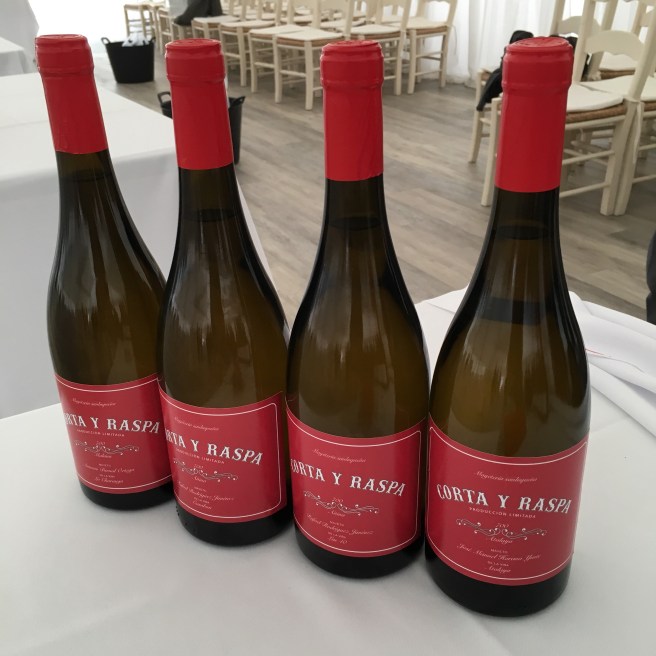
The mayetería are mayetos (the small scale owner/growers who traditionally supply fruit to the cooperatives and other producers) that instead of selling all their production are making and selling their own wines under the brand “Corta y Raspa” (“Cut and Scrape” – there is more explanation in last year’s post).

It was great stuff last year and this year’s vintages, bedecked in red, confirm the potential. There are four wines, one from Atalaya (a vineyard and pago with coastal influence near Sanlúcar) by Jose Manuel “Manu” Harana Yuste, that is all freshness and minerals, Casabon (Pago Añina) by Rafael Rodriguez Jimenez – which had a much more appley nose and a similar freshness, Los 40 (Pago Añina), also by Rafael Rodriguez Jimenez, again with apples on the nose and a touch more structure and bitterness on the palate, and last but by no means least La Charanga (Pago de Maína) by Antonio Bernal Ortega, which if not the best was certainly the most expressive, with a sea-air and apple bakewell on the nose, a touch more zip to start with and peppery spiced almond in between.

Four little gems that are once again well worth hunting out.