CGWF17: Part 3 – Cakes and cream in the afternoon 

The second cata at the Cuatrogatos Wine Fest, lead by the man himself, Federico Ferrer, was short and sweet. At least it was for me: short because I overdid the siesta and rocked up an hour late, and sweet because, well, the wines were sweet, as were the little crumbly pastries we swigged them down with.

The sweet stuff isn’t really my bag but these were not your bog standard sweet sherries by any measure.

  • Moscatel Oro “Los Cuartillos” (Primitivo Collantes) was a really cracking start – citrus rich and lush but with nice acidity and a bit of mineral bite, muscle. Nice bit of freshness to it too.
  • Pandorga 2014 (Cota 45) is another favourite – a 100% pedro ximenez that is not as other PXs: sweet, tasty with apricot richness but with nice acidity, like a late harvest riesling.  Top class.
  • Golpe Maestro (Federico Ferrer) – the only wine of the lineup I hadn’t tried and a fascinating beast. A late harvest, sun dried palomino that has been two years in half full barrels. Unlike anything I have tried before – has a curious, herbal sweetness and a funky green bitterness (like bitter salad) to it. Really reminds me of the spicey peppery edge to some manzanillas, but more concentrated and with residual sugar. Need more time alone with this if I can get a bottle.
  • Piñero Cream (Juan Piñero) is a 20 year old 75% oloroso, 25% old pedro ximenez blend, with a nutty, woody, slightly bitter, acidic oloroso to balance the raisins of the PX. A tough ask in this company: next to the younger varietals it comes across as slightly less fruitful, elegant and natural
  • Pandorga 2015 (Cota 45) is something else altogether. Ramiro Ibañez at Cota 45 believes in expressing the vintage so in a hot year he harvested even later and left the grapes longer in the sun. Added to the fermentation at high ambient temperatures what you get is a nectar with a staggering amount of sugar and only five degrees of alcohol (so low he can’t call it “wine”). All that sugar is balanced with a lovely acidity and intense apricot flavour and the stuff is far, far too easy to drink. No spitting this  one!

(This is where I think I am obliged to make some kind of witty remark about the kind of sherry your grandma drinks or something but I can’t be bothered.)

Encrucijado 2014 

Here it is, the second edition of the most unique wine being made in el marco.

It is by Ramiro Ibañez‘s Cota 45 label and is an evolution of the Encrucijado 2012: whereas that was 50% palomino and had six varietals in total (10% each of Beba, Cañocazo, Mantuo Pilas (aka “Uva Rey”), Mantuo Castellana and Perruno) this is 40% “Uva Rey”, 40% Perruno and only 20% Palomino. The fruit was dried in the sun for two days to bring up concentration, fermented in bota, given a couple of months on the lees and then two more years in bota – including four months or so under flor. I am not sure of the historic back story but the back label has a reference to the old classifications of rayas, palmas and cortados, of which this would presumably be a cortado.

Dark gold in colour and has a spirity, honeysuckle, overripe melon nose. It is fat in texture for a two year old wine and on the palate it has an initial dash of that overripe melon but quickly turns to a grapefruity citrus. It seems more potent than my memory of its predecessor with less butterscotch, more grapefruit bitterness, and more obvious alcohol. However it is sharper in its features and has a more defined, elegant structure to it: there is just a little bit of acidity (some esparto grass from the empty glass at the end?) and a nicely integrated salinity  leaving a mouth watering, fresh finish.

Overall this is different, even exciting, enjoyable and feels like it might get better with time. Only just 1,000 bottles made though so get it if you can. (I am having a glass at the bar of Territorio Era, since you ask.)

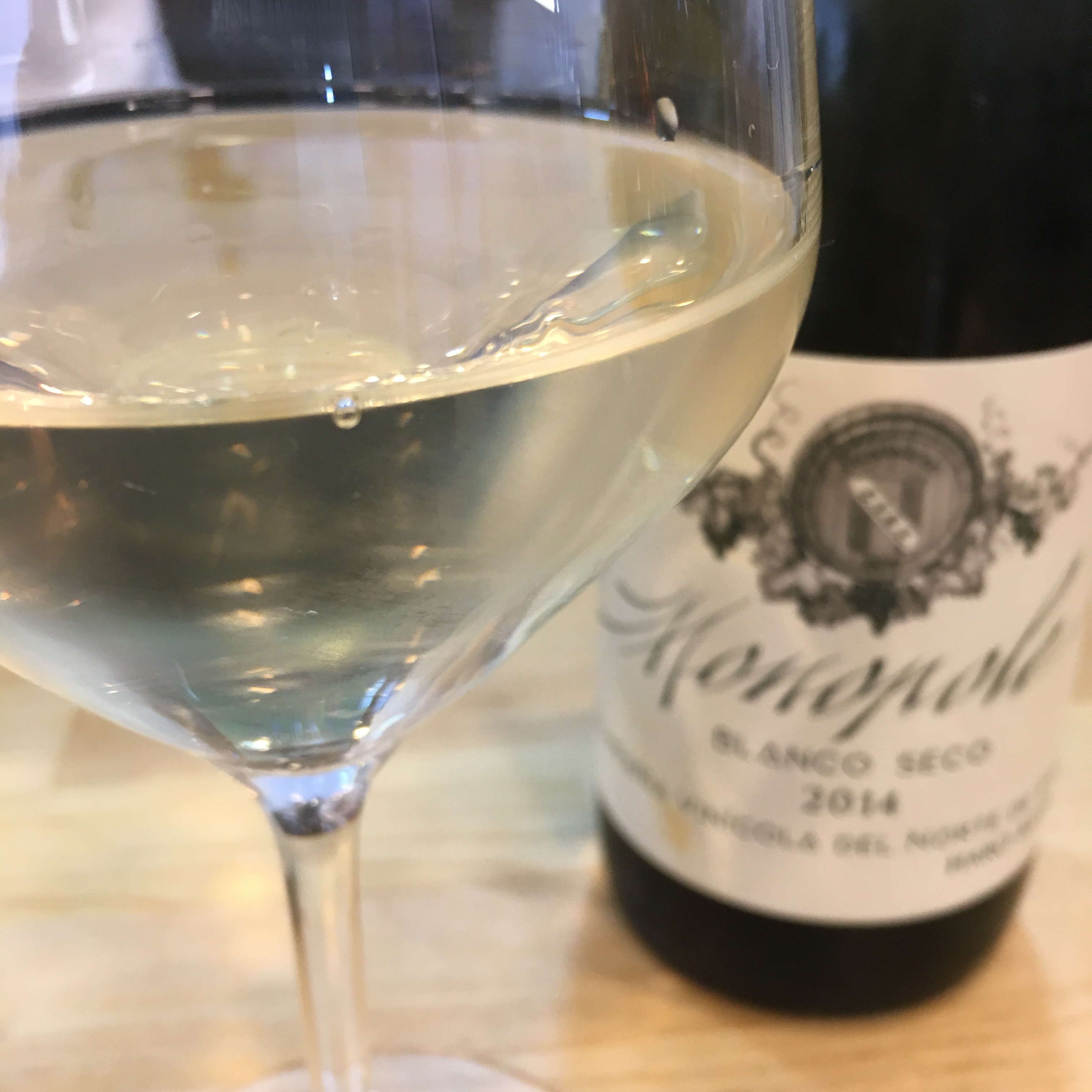
Monopole Blanco Seco 2014 

A much talked about new/old release from Rioja giant CVNE, this is a classic that was discontinued for a good while before being brought back in 2014 to celebrate the centenary of the brand. It gets reported on here because although it is nearly all viura from la Rioja, it has been topped up (somewhere between 15 and 20%) with manzanilla de Sanlucar (and from no less a bodega than Hidalgo-la Gitana). (And because they have it in Territorio Era.)

As you can see it is very very pale in colour. It is possible there is some sea breeze on the nose alongside the peachy, floral viura but I may be imagining it. On the palate again you have a nice combination of white fruit acidity and that touch of salinity – bitey at the front and mouthwatering at the end. The manzanilla definitely adds to the flavour profile too – gives it a bit of savoury depth. 

A fresh, tasty and enjoyable wine and a very happy return. 

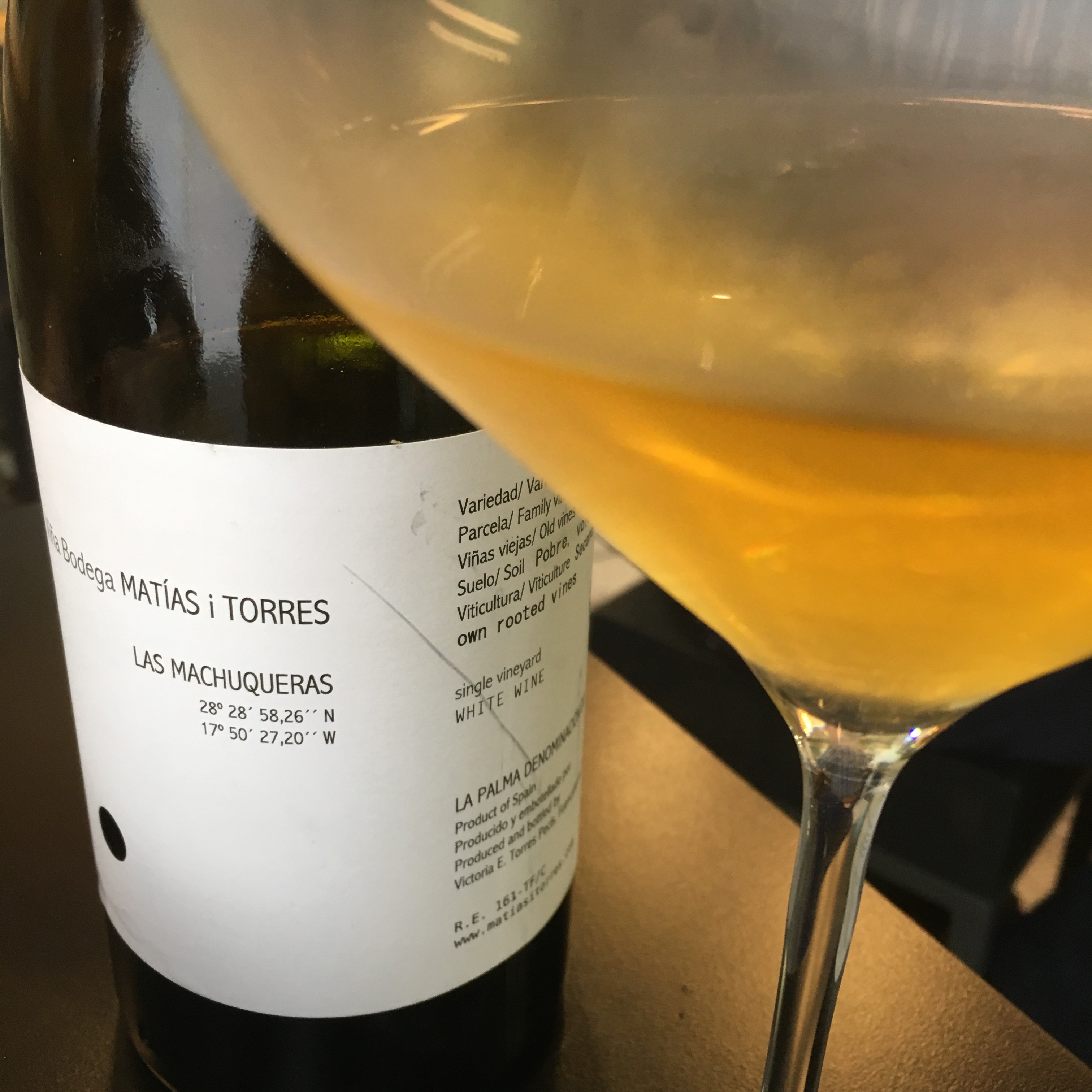
Las Machuqueras, Matias i Torres 

A sought after wine ever since the boys at Can Roca apparently cornered the market in recent years, I have been able to try this – and the Albillo Criollo and the Diego – thanks to David at Territorio Era. Listan blanco (aka our friend the palomino) from old vines about 250-450m above sea level on the island of La Palma in the Canary Islands: one of the vineyards with the picturesque little walls to protect the vines from the wind.

So a lot of expectation and it was a very interesting wine alright. Not high acidity but just enough, and nice concentration of over-ripe apple and chemistry-set minerals. Minerals in colours – more dimensions than your standard salinity and steel. Nicely integrated too. 

A flavourful and complex wine. 

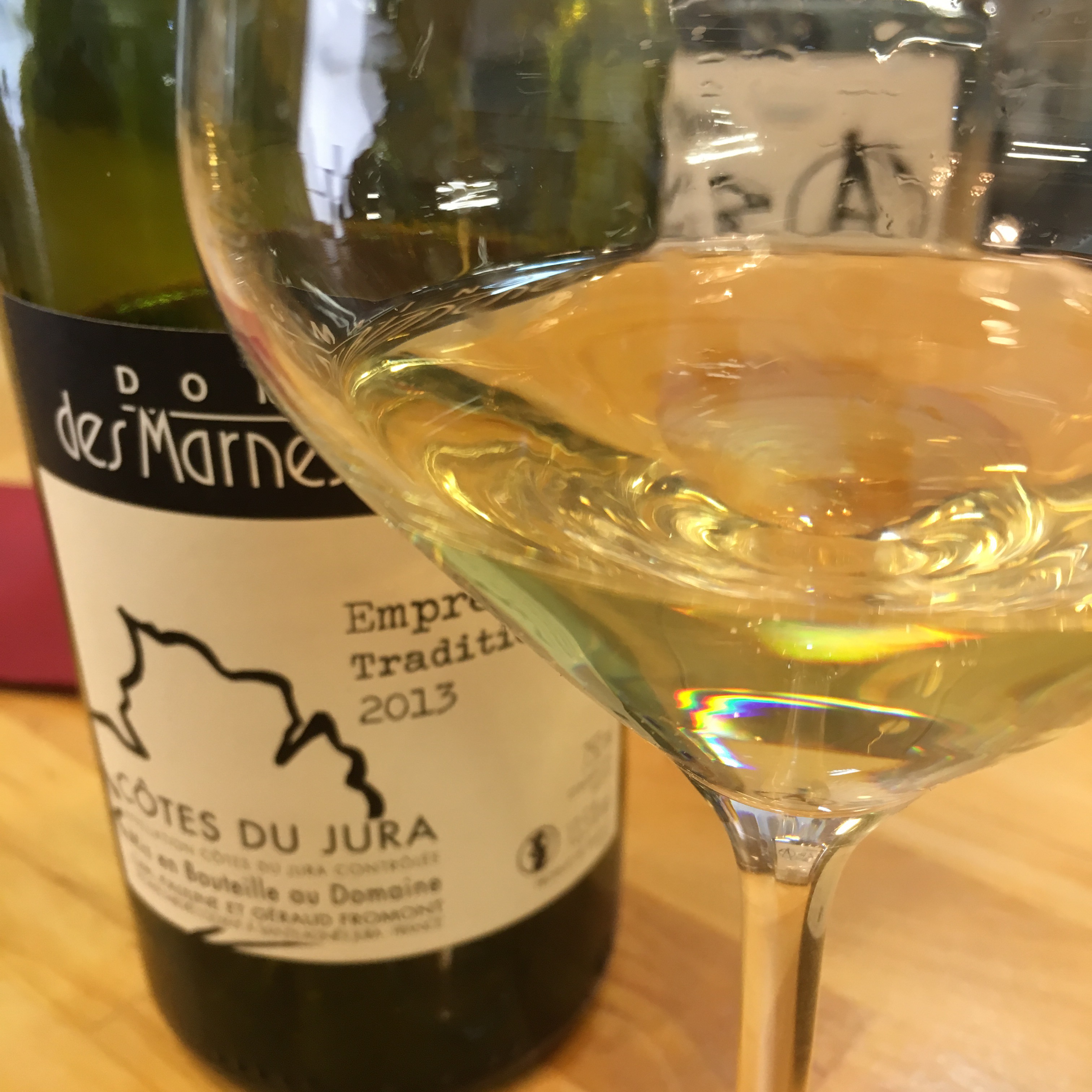
Empreinte Tradition 2013

One of the interesting wines on offer at Territorio Era and one I have been back to a couple of times, this is a 2013 “Tradition” Cotes du Jura – 60% savagnin (minerals and acidity) and 40% chardonnay (body) with three years under flor.

It has a nice freshness to it – the fresh yeastiness of raw almonds, green apples and unbaked bread, a slightly mineral palate and finish. Doesn’t have the mineral power of its palomino cousins from Sanlucar and Jerez but I like the freshness and the fruit. Very drinkable indeed.

Cotes du Jura Domaine Labette, Cuvee du Hasard

I took a picture of this an age ago in Territorio ERA and made a few half hearted notes before getting distracted by a lot of other even more impressive wines that came along, as they are wont to do, and utterly forgetting to write them up.

On the basis that late really is better than never and according to the afore-mentioned, half forgotten notes, I loved the undergrowth nose, buttery texture, the citrus juice and above all the salinity of this little wine. As the label indicates it has been under the flor but I am not sure for how long, and although it had a high register compared to the wines of el marco that salinity caught my attention – not big and heavy like an iceberg but deep and grooved. I have a note saying “soil?” which tells its own story.

Chardonnay you say? Sign me up.


Riodiel Condado Viejo

The second wine from this bodega in el Condado de Huelva that I have tried. Whereas the Espinapura could almost fool you into thinking it was a fino, however, this traditionally aged wine was quite a different beast. 

It is a 100% palomino aged for over 20 years which is fully dry but seems rich on the nose and the palate. There is quite a lot of Christmas cake aroma and flavour – tending towards burnt Christmas cake – but there doesn’t seem to be much noticeable salinity. Maybe as a result it comes across as a bit heavy and its 18% alcohol seems very noticeable.

Bags of flavour but maybe missing the elegance of its cousins further South. 

Flor the sake of it

The veil of flor has a bit of mystique to it nowadays and as a result you find wines popping up all over that claim an acquaintance. Here we have Aires de Vendimia, by Jose Antonio Garcia, a 100% old vine godello from Bierzo that is labelled “oxidative ageing” but, we were told, had had occasional spells under flor, which I tried this week at the IV Salon de Vinos de Terruño. (In recent times I have also tried similar wines from la Rioja, Gredos, and even further afield.)

This is perfectly nice stuff, no doubt, and probably a welcome variation for those accustomed to a straight up godello, but as always I miss the mineral power that the flor in Jerez and Sanlucar reveals in its palomino hosts and, as a result, the oxidative touches in the wine seem to make it a little bit top heavy compared to a very young palomino oloroso.

I guess the veil of flor involved is a different strain of saccharomyces and the conditions are certainly different – Bierzo is a long way from Jerez. In fact a better comparison would probably be with Jura or Arbois rather than Jerez and Sanlucar. As a result, the flor on these more northern wines never seems to have got to work like the flor of Jerez and Sanlucar.

More importantly, the wine involved just doesn’t seem to have the same mineral depth. Palomino is often written off as a “neutral vessel” but the really good palomino wines are capable of really powerful flavour and sapidity – just try an UBE and tell me it is “neutral”. When you don’t have that underlying power and sapidity, the overall effect of flor and wine is less substantial: I often think of the wines of Jura and Arbois as like ocean going yachts, with a cloud of sail above the surface and a sleek profile below, while the wines of Jerez and Sanlucar are like big salty icebergs, with a craggy profile above water and a massive presence beneath (and you know who would win a head to head there).

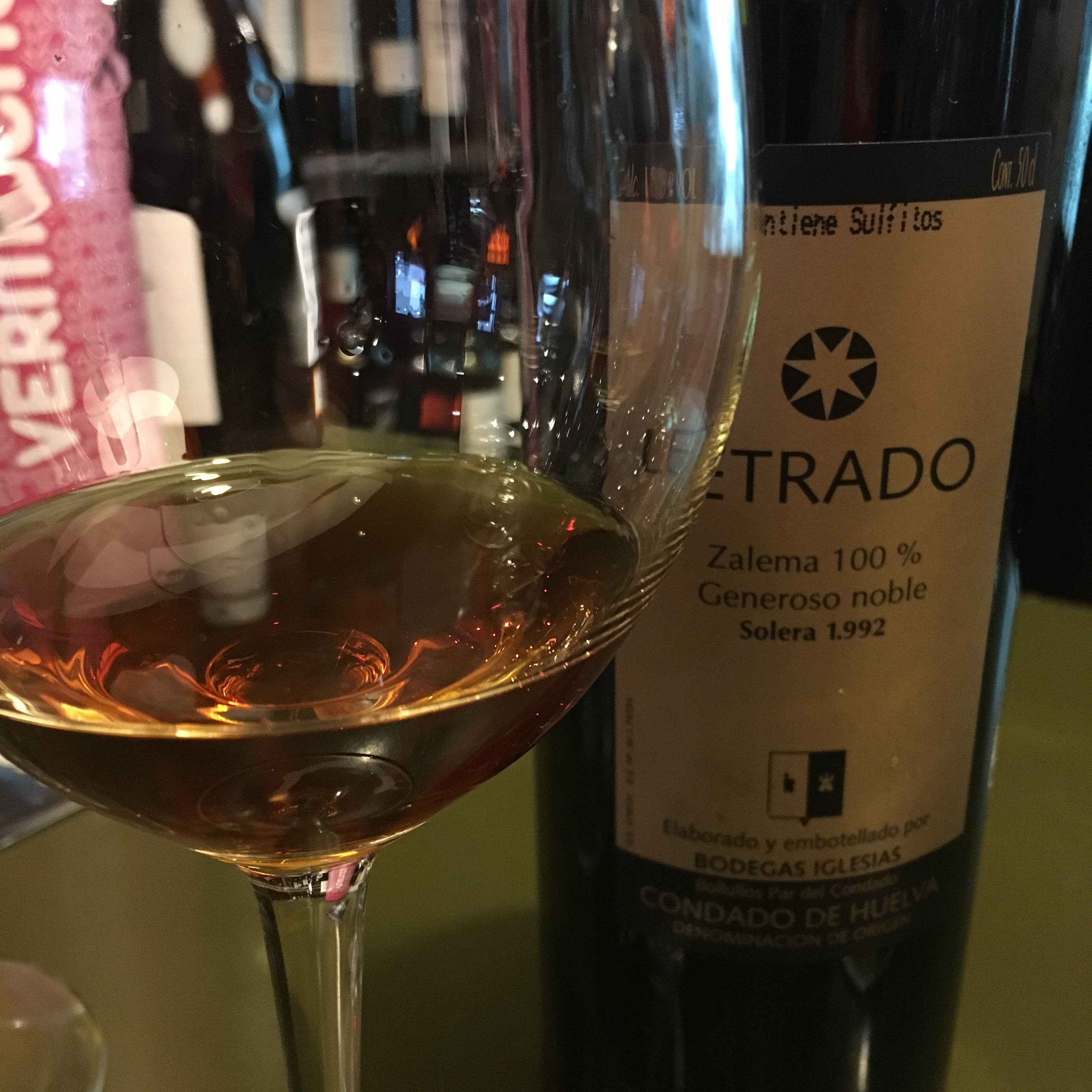
Letrado Generoso Noble 

Another one of the oddities I was able to try at Reserva y Cata the other week, this is something along the lines of an oloroso from Bodegas Iglesias in Condado de Huelva. It is 100% Zalema, the white wine grape of choice in Huelva, and according to this ficha had 8 years in a solera system of 650 litre bocoys. I am guessing from the label that the solera was founded in 1992. Has a spirity nose similar to a medium sherry – maybe just a touch more fruit and sweet hazelnuts rather than almonds. Then on the palate it is similarly flighty – juicy and enjoyable but not a lot of mineral here so it comes across as a bit insubstantial. 

Pleasant, uncomplicated stuff.


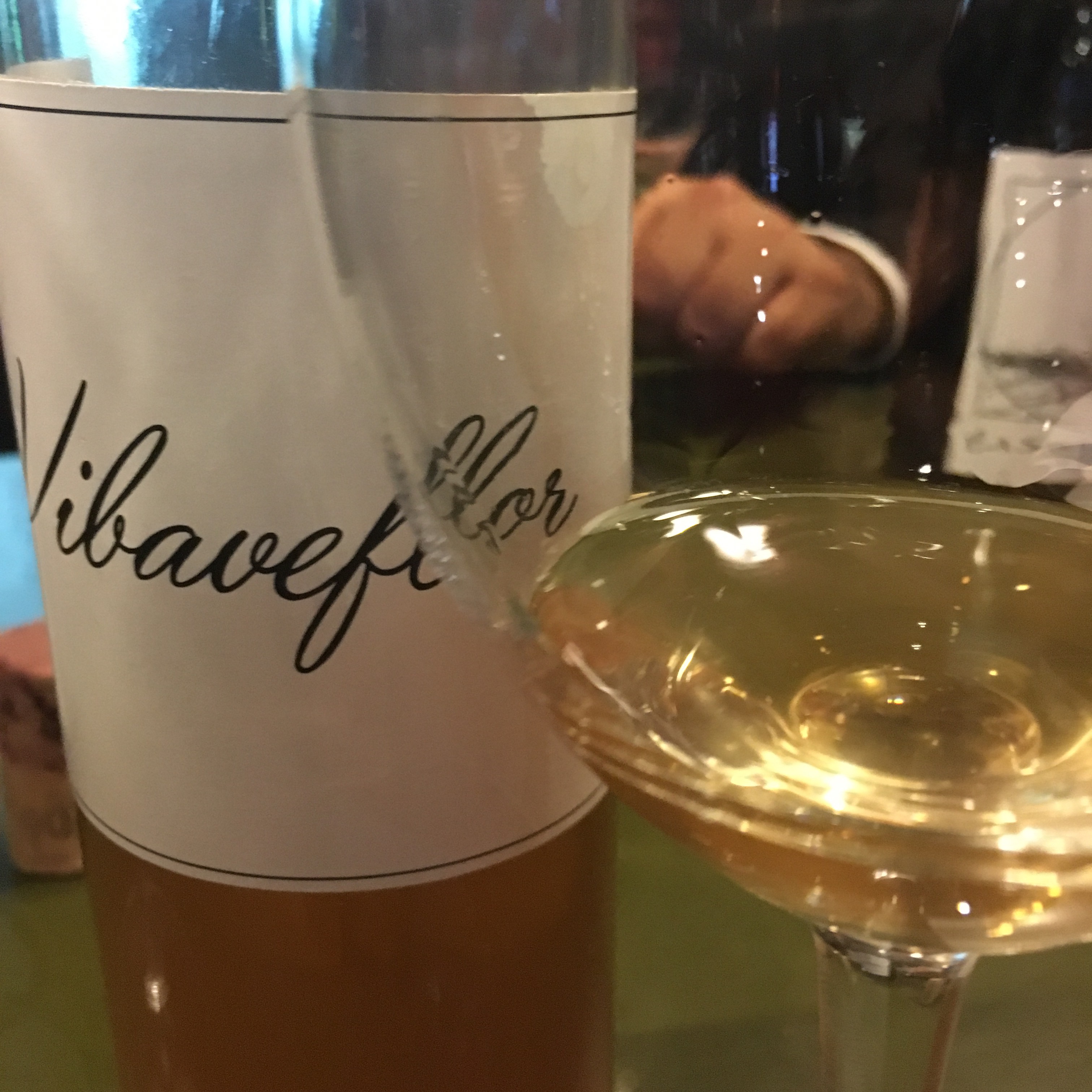
Vibaveflor

Had a chance to try something a bit different last week in Reserva y Cata  – a viura from Rioja that had had some time under “flor” (not clear whether we are talking about the genuine saccharomyces though – when I first tasted it I thought it was closer to a rancio).

Really interesting – in particular tasting it next to a viura with no biological ageing from the same producer. There was a clear difference in profile and volume. (The caramel and vanilla of the straight viura came across as candy floss or a spongecake in the Vibaveflor.) There was also a big difference in appearance – while the straight viura was clean and golden this was slightly cloudy like a cider and had a touch of orange. 

In sherry terms it lacked muscle and minerals, but very nice nonetheless. In general it is curious the way that biologically aged wines appear to be popping up around Spain – none that I have tried have seemed a serious threat to the boys down in Jerez and Sanlucar but it is great to be able to observe the effect of biological ageing on different kinds of wines. 

As you can see, this is very much an experimental wine and I do not think it is commercially available. I didn’t even make a note of the maker’s name – let’s hope I get another chance some day. 

Post script – More recently I had a 2011 Montbourgeau that seemed a better, and fairer, comparison – would be good to try the Vibaveflor side by side with one (if I ever see it again).