CGWF17: Part 2 – Zerej Volume II 

There is a lot to like about Armando Guerra’s Zerej releases, of which this is the second.

The first volume would be a few years ago now and was something of a pioneer: a boxed set of four magnums of wines for with different amounts of biological ageing, accompanied by an explanatory booklet. The idea is for a group of friends to hammer their way through the four magnums and the booklet and by so doing learn about the miracle of the flor. I never tried it but would have loved it – and the format (in particular the magnums) is dead right.

The second volume is the oxidative ageing version and now Armando Guerra has the full might of Barbadillo behind him, so your box includes magnums of a white wine (in the style of Mirabras), an amontillado (think Principe de Barbadillo), an oloroso (the classic Cuco) and a stately old palo cortado (Obispo Gascon). This time around I did get the chance to try them, although not without some difficulty: on the day the man was absolutely mobbed as the locals piled in.

They are classic wines, full of the spikey character I associate with Barbadillo. Really interesting too to be able to taste the spicey, vegetable white wine and see the evolution in that character. They also undoubtedly serve their educational purpose – particularly if you had the discipline to wade through the accompanying literature – although for my money more an illustration of classic styles than the effects purely of oxidative ageing (I wouldn’t mind seeing the same wine with six, twelve and eighteen years of oxidation, say).

Not sure how many of these sets there are, but given Barbadillo’s distribution muscle there must be a chance of this being available internationally. I certainly hope so – there are too few opportunities to sit down with four magnums of sherry and a few mates!
CGWF17: Part 1 – Mayeteria Sanluqueña

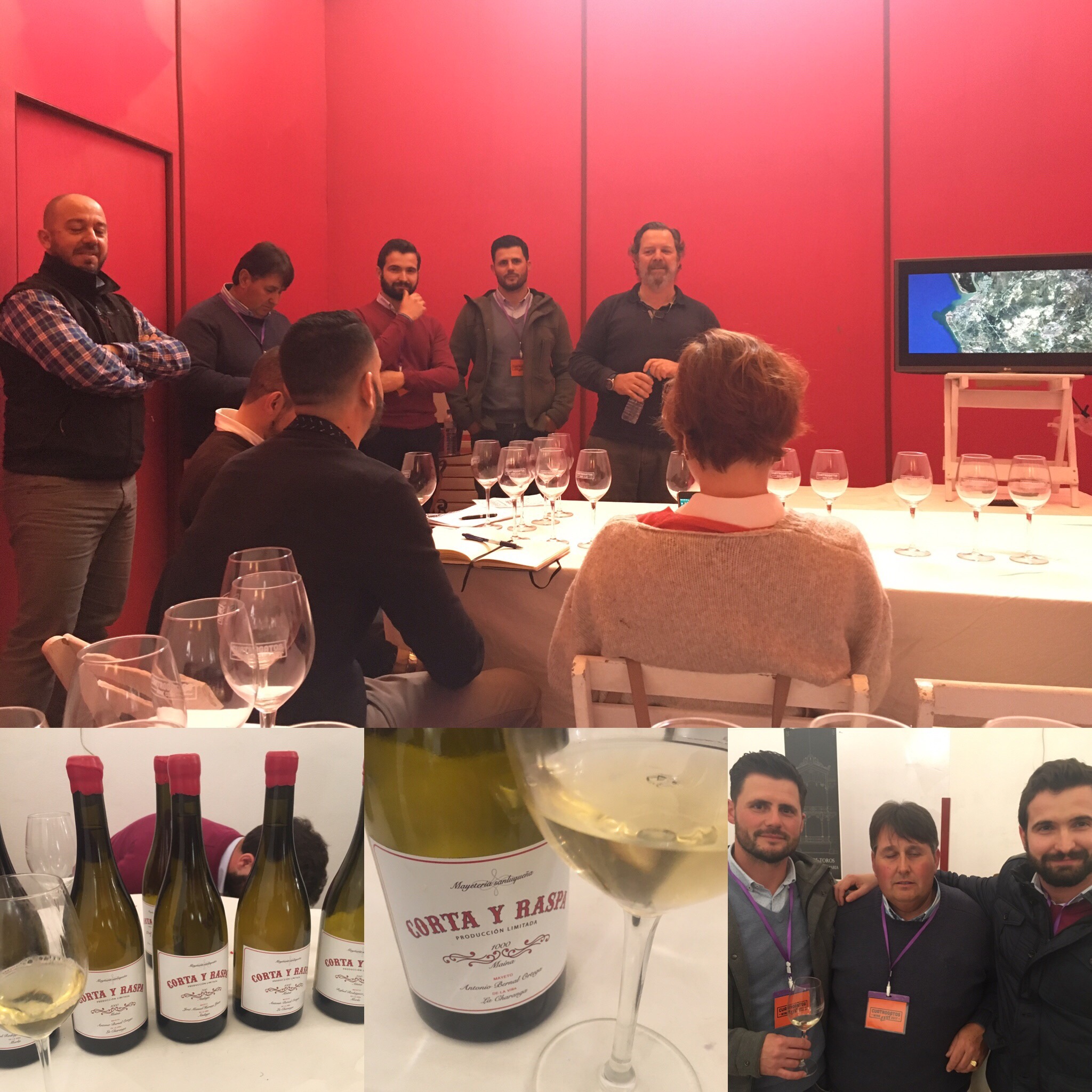
The Cuatrogatos Wine Fest was an absolute blast and there were fantastic wines everywhere you looked, but for me the highlight of the day was the unveiling of the “Mayeteria Sanluqueña”.

The project, the brainchild of Ramiro Ibañez, is aimed at encouraging and helping mayetos, or the small scale owner/growers who traditionally supply fruit to the cooperatives and other producers, to instead make and sell their own quality wines. The wines are vineyard specific from low yield (<7,000kg/ha), hand-harvested fruit and are fermented in bota, but otherwise the mayetos have a free hand to experiment and try and coax the best they can out of their vines, some of which have been in the family for generations.  Today we met the first wave – three guys who brought along four wines – but they are just the start, with other mayetos experimenting and working on their own wines up and down el marco.

As my half-dozen regular readers will know, I believe that this is exactly what el marco needs to do. There was a pretty vehement debate on Saturday afternoon amongst some big names on the role the vineyard and the vine should play in the future of Jerez but for me there is no doubt: the vines and vineyards of el Marco are capable of producing white wines of a quality and expression comparable to any great region worldwide, and seeking out and making those wines – and charting out the vineyards that make them – is surely the best way for el marco to get back to the top table.

And these wines were a further confirmation of the potential of the region:

  • Atalaya – by Jose Manuel “Manu” Harana Yuste – had a punchy nose of iodine and salty sea air (and a touch of reduction to start, although it improved a lot after 30 minutes or so) and a similarly direct and mineral profile on the palate, with a touch of steel, slightly stewy bitter almond flavours and a seashell finish
  • La Morla (Pago de Añina) – by Rafael Rodriguez Jiménez – was a totally different proposition. While the Atalaya was all coastal minerals the Añina was a delight on the nose, like a Cotes du Jura with ripe apple and pastry, and a nice concentration first up on the palate
  • La Charanga (Pago de Maina) – by Antonio Bernal Ortega – was probably the best of the lot, with a sea-air, almond and apple pie nose and a fantastic shape to it, with mineral zing to the start, a long finish and a big flavour profile in between – slightly more concentrated fruit and a hint of vegetable and peppery spice.

We were also given a sneak preview of two other wines – from Miraflores and Macharnudo – and later in the day I also had a chance to try another Añina wine by Rafael Rodriguez Jimenez. In fact it was one of those dream days when I was also able to have a dip into UBE 2014, a diatomic bomb “UBE Maína 2016” and another look at the three vineyard specific wines by Callejuela. Nearly a dozen palomino wines that were anything but the neutral, dowdy solera fodder that we have been brought up to expect: these were fantastic, quality and unique wines, and although it has been pointed out to me that I usually use “interesting” to describe wines I don’t like that much, these were interesting in a very good way.

I appreciate that the opportunity I had yesterday was special, but if you get the chance to try even some of these wines then you should grab it with both hands.


Los Pagos de Callejuela Vinos

A real treat today courtesy of the guys at Montenegro at whose brilliant event I met, at long last, the Blanco brothers from Callejuela Vinos and was given a sneak peek at their latest project – three pago specific young palomino wines.  

The wines are from Callejuela (Sanlucar, by the Guadalquivir), Añina and Macharnudo and really expressed those origins, with a clear step in structure and body from wine to wine. With only six months in bota they were fresh and aromatic and frankly very promising indeed. 

Three wines to look out for – there was talk of them being released in May. 

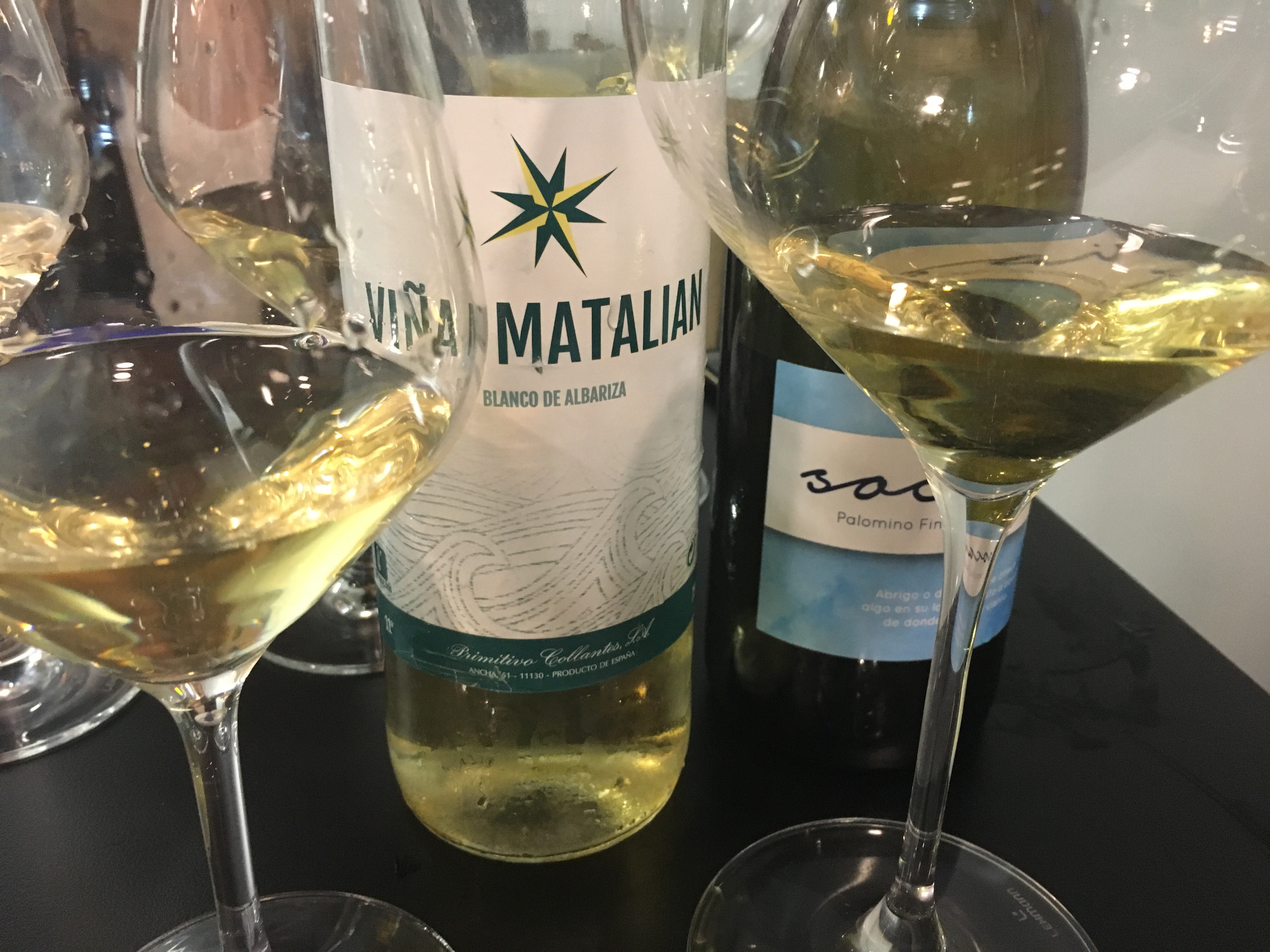
Viña Matalian vs Socaire, 2014 

A nice little demonstration of what wine making choices are all about. The same fruit (palomino fino), parcel of land (Finca Matalian, near Chiclana), vintage (2014) and producer (Primitivo Collantes) but two utterly distinct wines.

The Viña Matalian was fermented in temperature controlled inox and as far as I know hasn’t had any barrel and what you get is a very quiet, refined and refreshing little wine. Very pale in colour it has a sweet almond and herb (rosemary) nose, and then a dryer, more mineral almond palate with just a hint of chalky texture. What really stood out about it for me (although to be honest I went looking for it) is how soft and smooth it was – no edges at all. Nothing spectacular but a very pleasant tipple.

By comparison the Socaire comes across as a bit of a beast. Unlike the Viña Matalian it has been barrel fermented without any temperature control, and has then spent two years in a bota – and not just any bota, but a bota that had previously held fino. The result has a more pronounced gold colour and a pungent nose that is lush by comparison, with over-ripe fruit on top of the almonds and herbs. It also has a chalky touch but there is a more pronounced bite to the minerals, and in comparison to its more refined twin it has a big personality on the palate too – far tastier for that time in the barrel.

Fascinating stuff – and brilliant with the superb tomato salad at Territorio ERA.


The Night of the Pitijopos – Volume II

It has taken a little while to organize but, at long last, here it is, a chance to open the second Volume of the Pitijopos. Whereas Volume I covered the entire Jerez region, from Trebujena in the North to Chiclana in the South (via Sanlucar, Rota, and Añina and Macharnudo), Volume II is all about Sanlucar and sets up a contrast between the vineyards near the Atlantic and those inland, influenced by the Guadalquivir river.

Yet again, it is a quite fantastic piece of work: a case of six “mostos” from 100% palomino grown in six specific sites in Sanlucar, fermented without temperature controls in bota at Cota 45, and released as a boxed set together with the above fact sheet. (Just behold that magnificent diagram indicating the relative distances from the sea and altitudes of the different sites.)

  1. El Carrascal (“the austerity of the Atlantic extreme”) – not to be confused with Carrascal de Jerez, this is the closest pago to the atlantic (7,4 km) billed as having the “purest and most homogeneous” area of “antehojuela” albariza, said to produce the freshest, most vertical wines. And it certainly was fresh – had a metallic, mineral and almost smokey and lemon juice nose, and a really sharp, fine profile, with metallic flavours and what seemed like a fair whack of volatile acid upfront (lacquer) and behind (esparto grass).
  2. Miraflores Alta (“balance and precision”), further inland (7,9 km) where the antehojuelas give way to the tosca cerrada, making for wines with more structure but maintaining some of that Atlantic freshness – considered amongst the finest pagos and associated with some historic names. This was frankly superb, with a lovely elegant profile, juicy, jammy citrus flavours and saline zing. Powerful but silky/slippy. Again the volatile was evident but much better integrated.
  3. Cuadradillos/Charruado (“structured but fluid”), the furthest of the three from the Atlantic (9,45 km) characterized by tosca cerrada in the higher areas and albariza of lesser purity lower down. That distance from the sea, its orientation and the types of soils are said to make for wines of greater weight and fruit. Again, it certainly lived up to its billing. Had the most extraordinary fruity, doughy nose- for all the world like a chardonnay that had been under the veil – and a big fat fruitiness to it first up, but then it disappeared a little on the palate and didn’t hold together with the same finesse as the Miraflores Alta.
  4. La Atalaya (“diagnosos bipolar”), said to be a fascinating “hybrid” pago halfway between the river and atlantic pagos, 10,75km from the sea and characterized by albariza antehojuela which makes for direct, fresh wines, albeit tempered by the inland location and climate. Again top class, with a very aromatic nose of lemon and seaside air, a fresh start, nice juicy volume and a long, mouthwatering saline, seafood shell finish. A little bit more potent than 2 and elegant but maybe not quite as silky.
  5. Maína (“the sapid empire”), or “Mahína” is found on the flood plains of the Guadalquivir, 12,75km from the sea and in an area said to be characterized by albariza de barajuela and the largest quantity of silicate fossils anywhere in the Jerez region, the famous “diatoms” said in turn to produce wines of incredible sapidity (the “diatom bombs”). It did indeed have a big stewy, rockpool nose and lots of concentrated, slightly more vegetable and peppery flavour, with a metallic, almost rusty finish. The tastiest of the six but maybe not as balanced as two and four.
  6. Cabeza Gordo (the gates of hell),  the Sanlucar pago that is furthest from the sea (14,25 km) and closest to the Guadalquivir. It is characterized by tosca cerrada with lower levels of diatoms that offers wines that are structured but more “docile” and “unctious”. Another big bodied wine, with a nose of ripe apples, almost pineapples, but only just a hint of shape – and like three a little diffuse at the back end (where the volatile is noticeable again).

Overall the wines were cracking good – in particular Miraflores Alta and the Atalaya – and the general level was excellent. More importantly, yet again a fantastic demonstration of the kind of expression of terroir that is possible in these wines. Bravo!

And really a brilliant night, thanks in no small part to our hosts for the evening, David and Diego at Territorio Era, which quite apart from the absolutely top class cuisine on offer, has in a short time come to be almost a second home to this blogger and a sort of day care centre for those passionate about the wines of the Jerez region. 102 wines by the glass of which 72 are fortified wines, including some of the most sought after wines you will ever read about. If you haven’t been yet, you really ought to.


Precede Miraflores 2013 

This is a collaboration between Cota 45 and Taberna Der Guerrita. For a few years now Cota 45 has supplied unfortified mosto from pago Miraflores to Der Guerrita but for this wine these guys have taken one of the butts and stored it away “tocadedos” style with no flor for three years before its release. It is the kind of wine that would have been common in Sanlucar going back a couple of centuries before the process of biological ageing and the solera system were widespread. As the label shows, it was harvested in 2013 and a total of 700 bottles were produced when it was bottled in October 2016. I tried it first in Territorio Era, but picked up this bottle for further study in Reserva y Cata.

You would guess it was a pretty old bota because despite those three years you wouldn’t say there was a lot of “wood effect”. On the other hand, you would also guess that it wasn’t a bota that had been used for fino or oloroso because neither is there “bota effect” (you don’t get the same character you might find in Socaire, for example).

Rather, what you get is a dark gold wine with a citrus and slightly ripe pineapple nose, not much acidity but a nice freshness and pineapple on the front of the tongue and then a lasting aftertaste of nicely concentrated, almost jammy citrus fruit – strong and sticky but at the end but not bitter either. There is no noticeable sharpness or zing but the mouth waters as the minerals freshen the wine up around the edges, letting that jammy aftertaste linger a good while.

This is a proper wine, and very enjoyable too. More please!

Alba Brut Nature Rosado 2014

I have written before about these fascinating (and really rather good) sparkling palomino wines from Alba Viticultores and so, taking advantage of the more permissive domestic stance on the consumption of bubbles during the Christmas period I picked this up (and the information below) from Coalla Gourmet.

It is a sparkling rosé. The base wine (about 93% of the volume) is palomino fino from albariza vineyards in Sanlúcar (unusually for these guys they don’t specify the pago – they have vines both inland and in Miraflores so would be interesting to know). It was fermented and spent a few months in inox, then five months or so in demijons under flor before bottling for the second fermentation in August 2015 and disgorging in October 2016 with no filtering, clarifying  or addition of sulphur. The rosé is achieved by adding tintilla de rota – which makes up 7% of the volume -and although the wine is labelled “brut nature” I wonder if it might not be one of the sweeter versions.

The packaging is edgy – the crown cap as if it was yet to be disgorged – but this time the bottle is frosted rather than dark or clear (although to be fair I guess it is to show off the rosé). Not the most bubbly bubbles, but a nice fizz and a deep almost reddish pink colour. Natural wine nose of countryside, undergrowth and fruit, and even chocolatey aromas. On the palate again a nice fizz and effervescence and a rustic feel to it – lots of carbonic and those fruity undergrowth flavours. Serious aftertaste with a touch of diesel and, dare I say, palulu.

Not really my cup of tea to be quite honest: a bit too natural and rustic and lacking that liftoff and elegance of the pure palomino Brut Natures. Having said that, the group I opened it with liked it and it disappeared pretty quickly!

Alba Sobre Tabla 2014

When looking around for a bottle to open tonight I read this fantastic interview (in Spanish) by the always excellent Spanish Wine Lover of Fernando Angulo, the guy behind Alba Viticultores.

I couldn’t agree more with the article – which talks about how not enough recognition is given to the growers in the region – except in one respect: it is unrealistic to expect the growers to get their just desserts until the winemakers, guys like Fernando who let the terroir express itself, get their recognition. So anyway I opened the only remaining bottle of his wine that I had and I am very glad I did.

These Sobre Tablas are fermented in stainless steel, then aged for 14 months in a 500 litre butt that had held manzanilla for over 50 years (they generally make two butts, bottled separately). They haven’t been under flor, although space is left for a little oxidation and concentration.

I love the salinity of it and the flavours on top, a little acidity and ripe apples –  a really nice acidic cider – with a tingling, saline and mineral finish. The last time I had it it was my wine of a big day and I am enjoying it once again. I can understand the comparisons with top white burgundies – that oxidation and salinity. Maybe the fruit isn’t quite as expressive in between but it does a herbal character, leafy character that its cousins to the North lack. Their loss!

So all power to Fernando and other winemakers like him!


Socaire 2014

You guessed it, I forgot to take a picture of this one while still live so have had to edit the skyline shot (not for the first time). Anyway, it is another wine I have tried before – the Socaire 2014 – a 100% palomino fino from my favourite corner of Chiclana that has spent a full 24 months in an old bota that had been used for the Fino Arroyuelo. Apparently the name Socaire means a shelter from the wind, and refers to the breezy conditions up on Finca Matalian, which is near to the sea but a good 100 metres above sea level.

This one was brought to dinner at Territorio ERA by the maker himself and it was a rare chance to try it alongside a couple of other palominos (including its sibling, the Viña Matalian), as well as some wines from Jura, Arbois and the like.

And it must be said it stood up pretty well against all comers on the night, with loads of fino like character on the nose, the fruit/herb of the palomino added to a bit of almond and a more pronounced minerality on the palate and a nice fresh finish.

A really nice wine by any standards.


UBE 2014

The epitome of a Sanlucar palomino. I have written all about this wine (and its 2013 predecessor) on numerous occasions – for background look here and also here on the 2013 and here and here for the 2014. Nevertheless, I had another chance to drink it this weekend at a dinner in Territorio Era (formerly known as Era Espacio Gastronomico) and couldn’t resist sharing my thoughts.

Compared to other unfortified palominos this has a different profile and it seems like a couple of additional dimensions. First, it has a rich gold colour – on other occasions I remember more of a green tinge but here not. Then it has a tremendous nose of herbs tending to stewed herbs as it opens – like a stockpot bubbling away in the corner of the kitchen. Finally, on the palate it is tightly flavoured, vertical and direct (or, to use the maker’s own word, “fluid”), with salinity and acidity in line giving it a clean, fine feel, and an effervescent, fresh finish.

It is a fascinating wine (and I mean that in a good way).