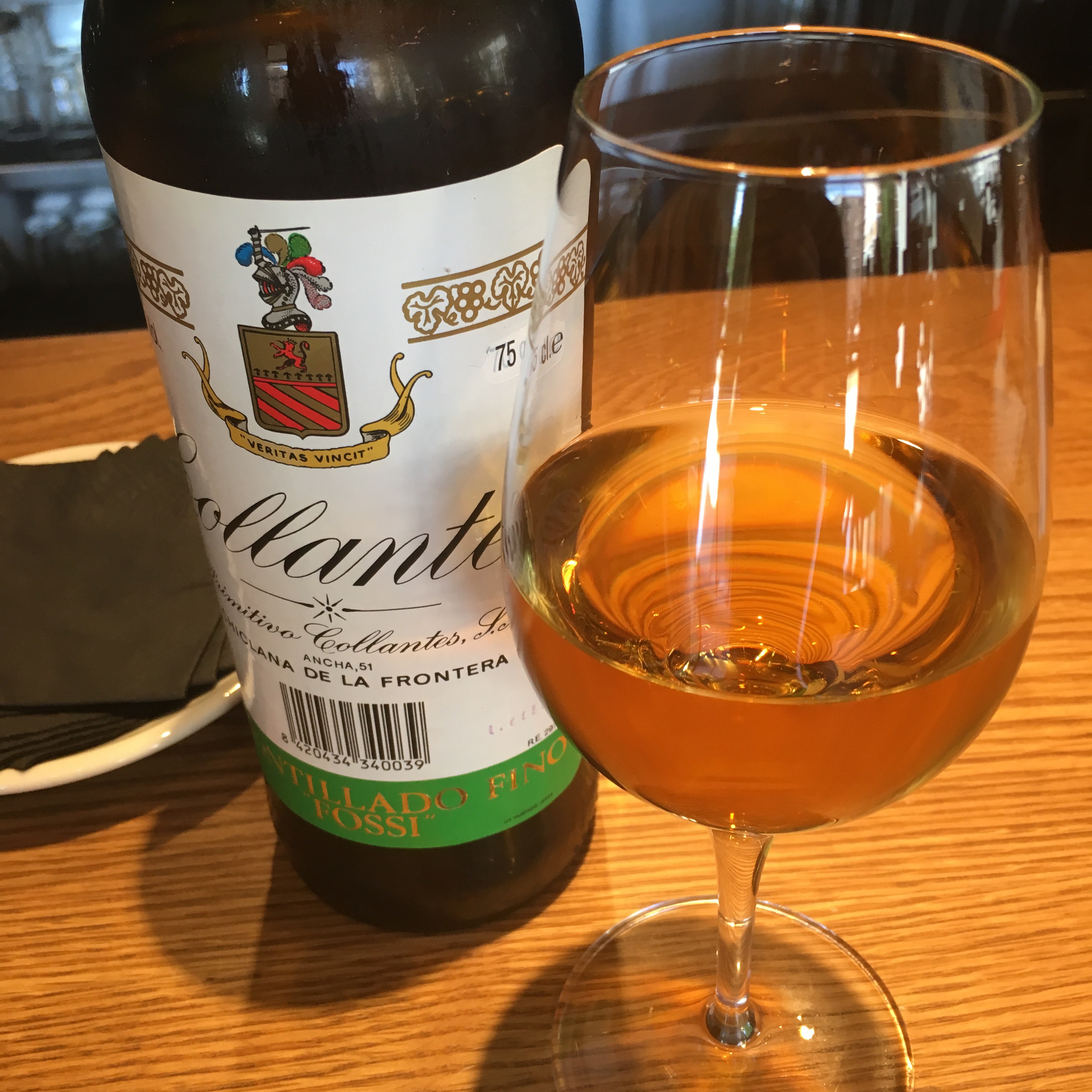
 Lovely. Have just finished lunch around the corner but thought I would call into Lakasa and this little beauty, by Primitivo Collantes and the famous Finca Matalian, is pure pleasure. If there is a more drinkable, enjoyable sherry I know not what it is. Brilliant lush toffee and spikey minerals in balance. Lovely.
Amontillado
Quo Vadis, NPU and the traditionally aged wines of Sanlucar and Jerez
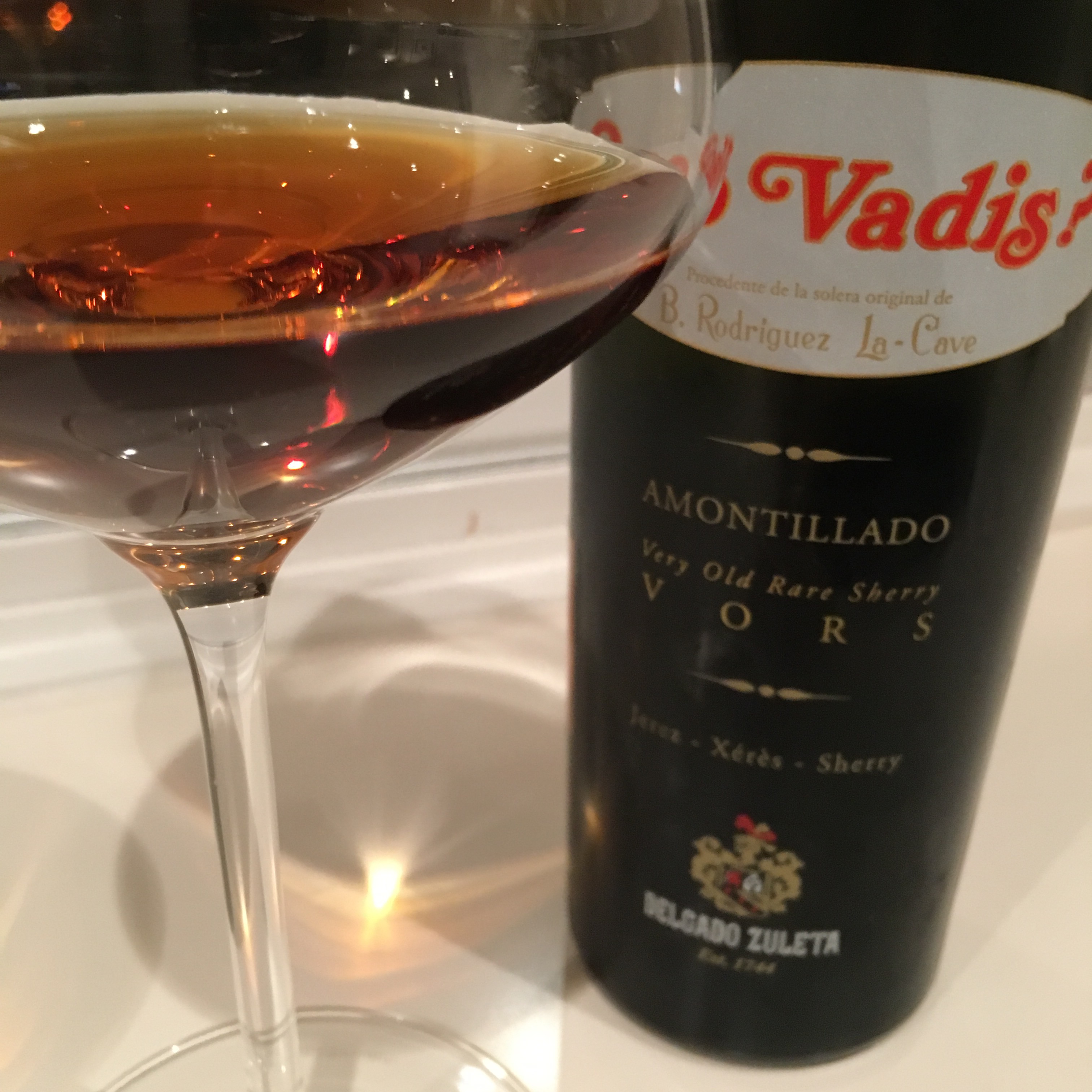
I have had this bottle open at home since before the summer and it has really grown and grown on me since I opened it about six weeks ago. It is a very fine old wine – more than 40 years old – and almost the epitome of what a Sanlucar amontillado is all about. It has a very dry, very stark profile, with only the bare minimum of nuts and caramel, a very saline, savoury flavour and really sharp zinginess.
It is also an interesting contrast to the NPU amontillado from Jerez that I tried this week. That seemed to me to be typical of a Jerez amontillado and was very rich by comparison – really pronounced hazelnut on the nose and a sensation of sweet juiciness to it.
The differences are revealing and to a certain extent mysterious: while it is easy to see why a veil of flor would develop differently in one or the other location, it is less obvious to me why the oxidatively aged wines are so different. The fruit used in each case may even be the same (there is no obligation to use mosto from Sanlucar in Sanlucar or mosto from Jerez in Jerez) and although the amontillados may of course differ due to the biological ageing in practice these days many finos have characteristics that are very similar to manzanillas. Evidently there is a slight difference in terms of climate and it may well be that there are big differences in the techniques used in the cellar – it is something I would like to learn more about.
For the time being, all I can say is that they are different and recommend anyone seeking to learn about these wines to compare and contrast. In fact I would go further: all preferences aside to really understand the wines of the region I think you need to have a handle on both styles.
Amontillado NPU

Another lovely glass of wine from my lunch at Verdejo Taberna yesterday and one of the house favourites (they actually have a little bota on the bar but consumption outstrips supply). It is a Jerez Amontillado by Sanchez Romate – 100% palomino fino and an average age of around 15 years (note that the reference to over 30 years on the web is an error – many thanks to Ruben at Sherrynotes for pointing that out. The NPU presumably refers to “Non Plus Ultra” – latin for none better, and should not be confused with a legendary and mysterious old Sanlucar amontillado allegedly labelled NPI (broadly, “not a bloody clue”).
I actually tasted it once before last year and although I wouldn’t change that original note I am a little surprised by the outcome. I definitely underrated it a little last year, although that could be due to the bottle I had – which had suffered a little leakage. Also, I am interested to see how the other wines I have tried in the meantime have changed my perception.
Anyway, as you can see it is a beautiful lively, deep amber colour and both on the nose and the palate one of the things that catches the attention is the youthfulness of the wine – it is really fresh and full of caramel and fruit flavour, with a lot of hazelnut on the nose. On the other hand, that youthful caramel and juice is beautifully balanced on the palate, which is dry with nice acidity and saline sharpness. A lovely elegant finish in particular.
A beautiful wine.
Amontillado Quo Vadis
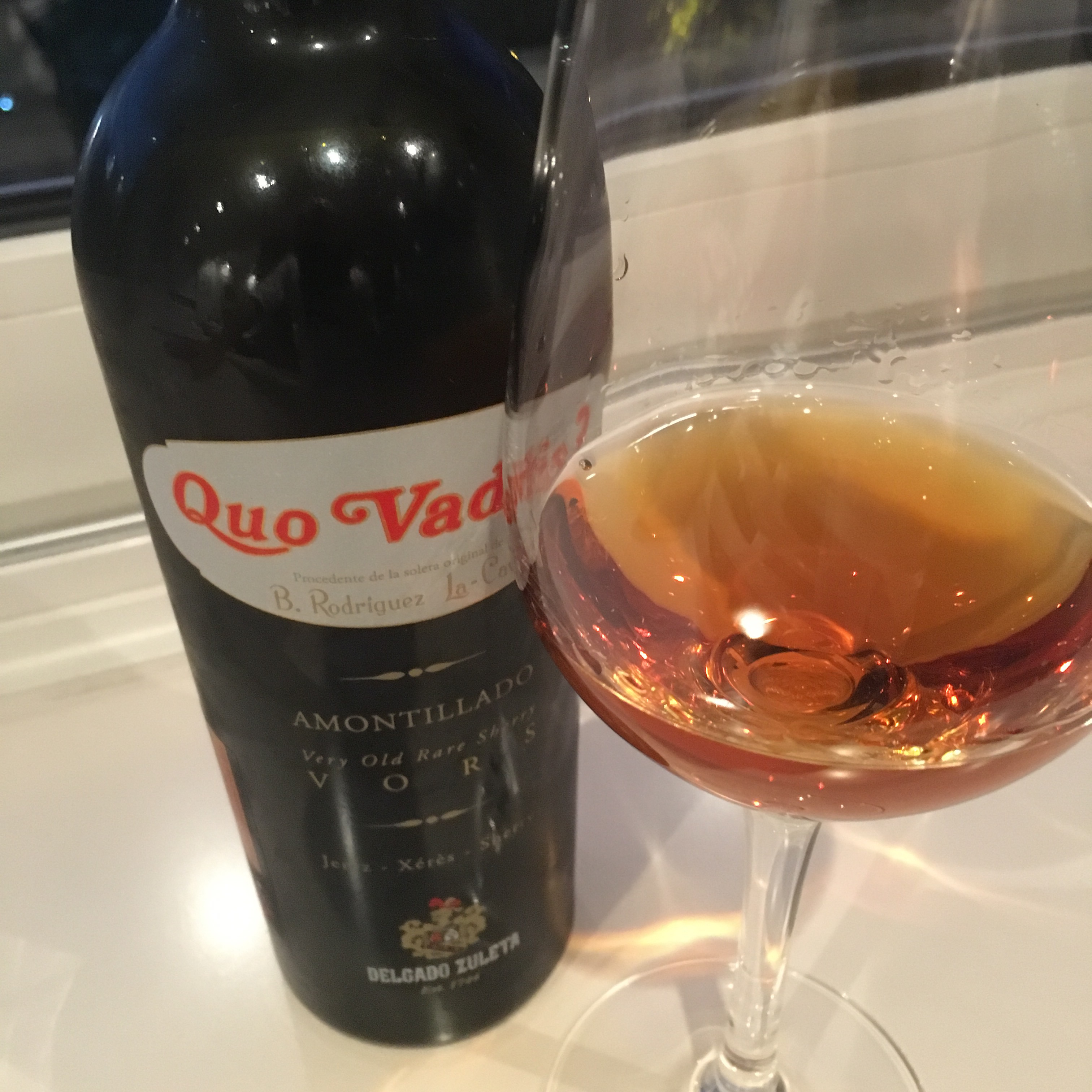
Very old, very famous Sanlucar amontillado with an average age of over 40 years from the bodega Rodriguez la Cave, a once Hispano Frances bodega now part of Delgado Zuleta, who claim to be the oldest in the business. I was surprised that I hadn’t written about this on the blog already, but on a recount the nights where this wine have been involved have not been conducive to note taking. Anyway, better late than never.
As you can see it is a beautiful, lively amber colour with a hint of yellow orange. On first opening it was a little closed up and unforthcoming, but after a week or so open (with the cork in) it seems a different proposition (it is also true that I may be in a better mood/frame of mind, who knows). Now on the nose it has some spirity fumes – closer to petrol than to brandy – then walnut skin, furniture polish, and cigar box wood.
On the palate it is very dry and very salty, sharp but full and refined. Zingy and acidic feel on the tongue and massive in salty seawater volume, and leaves a buzz rather than a sting. Flavours are woody, leathery, and tobacco, before a long long salty and savoury/bitter finish with the tongue still buzzing.
It is easy to see why this is for many the top of the pops in terms of Sanlucar amontillados – a salty beast.
Fino y amontillado de la familia

At first I was alarmed that my team in the office had discovered my blog (will have to be careful about posting at lunchtime) but I was very touched when one of my colleagues brought me these from the family vault in Aguilar de la Frontera.
The “fino” is apparently a bota they have had for 30 years that gets refreshed with mosto year after year. It doesn’t seem to have developed flor but there is just a bit of oxidation and the result is a potent little wine – big farmyard and baked apple nose on it, no real acidity but big in profile on the palate, again with baked apples, and pretty long. Very tasty.
The amontillado – said to be from great grandad’s day – is even better. Very nice caramel and nuts on the nose and palate, again potent and dry but not too salty or astringent. A bit of alcoholic heat but the sort of wine you could drink a lot of.
Two cracking wines and a great way to start the weekend. Many thanks!
Mons Urium in Taberna Palo Cortado
Another great night yesterday in Taberna Palo Cortado, this time to taste the wines of Bodegas Urium, a small, family run bodega that is one of the newest faces in Jerez but to judge from last night one of the most passionate.
The bodega has been around for “centuries”, formerly, as an almacenista (one of the “faceless” winemakers of Jerez, as one of the guys put it last night) and is located on Calle Muro, aka “Wall Street”. The bodega is run by Alonso and Rocio Ruiz, a father and daughter team from a family from the town of Moguer, in Huelva (known to the Romans as “Mons Urium”, from whence the name). Alonso fulfilled a lifelong dream – learnt in turn from his own father – when they acquired the bodega in 2009, acquiring not only a historic bodega but, more importantly, its contents. In total around 500 botas of wines, many of them very old and, to judge by last night, very fine.
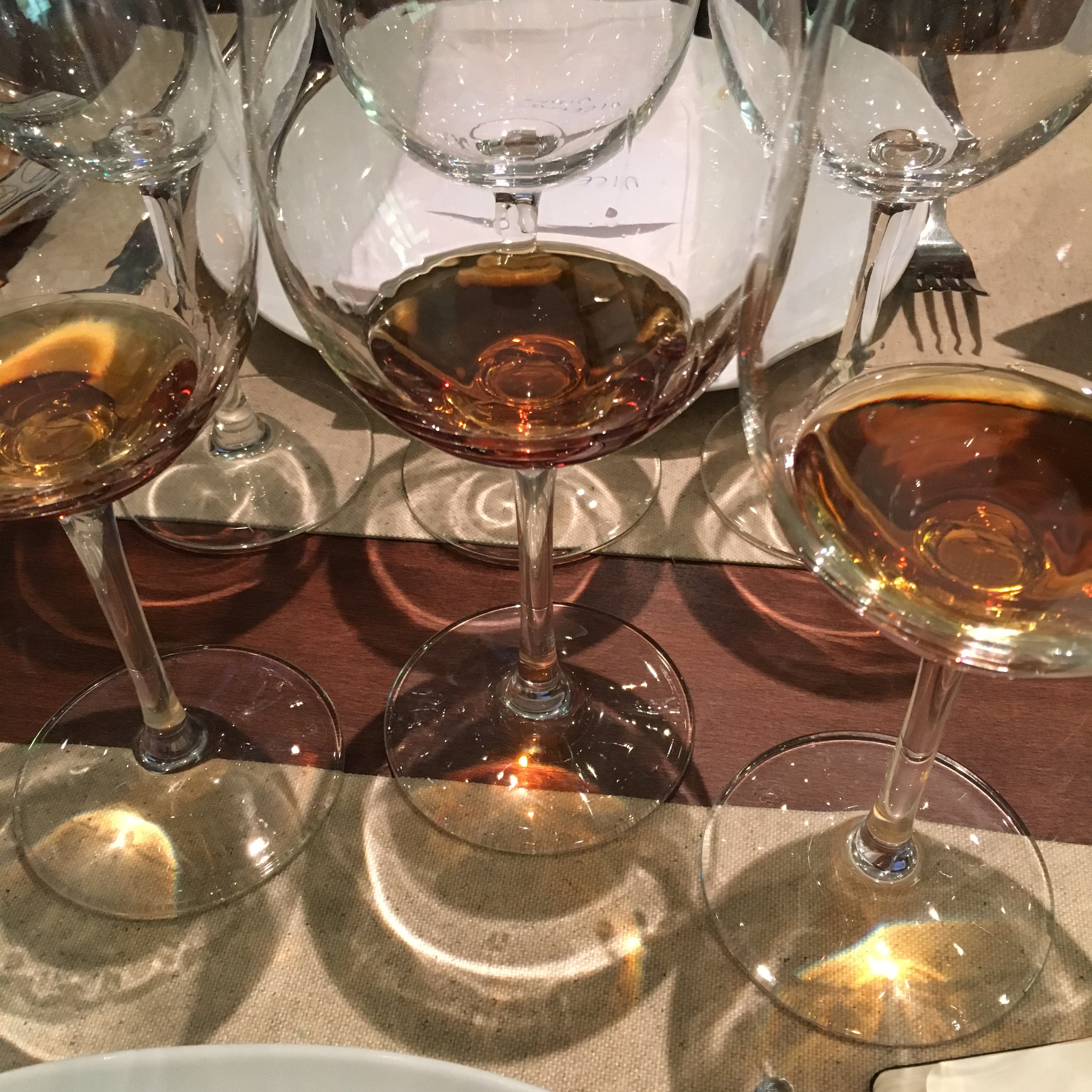
Last night we had five wines: a very nice fino en rama – fruitful, yeasty and juicy – with around eight years under flor, and four VORS wines with an average age of 45 years – the amontillado, oloroso and palo cortado, pictured above, and a very youthful tasting 45 year old Pedro Ximenez. Five excellent wines – I particularly liked the fino and the punchy, saline oloroso, but the amontillado was elegant and smokey and the palo cortado had a bit of spirit to it.
More importantly, we also had the chance to meet Rocio and one got a clear impression of a project that was moving in the right direction. Having trained with none other than Luis Perez she has a very uncluttered, balanced approach to winemaking that was as free from blarney as it was from unnecessary formalism: wine making with wine at its center, with the goal of making wine that people can drink. It was fascinating to hear her talk about the gradual progress in tasting, assessing and classifying mostos and wines, and the efforts to imprint their own style on the old “jewels” they had inherited. It all sounded like hard work, but despite that there was a lot of laughter and enthusiasm that was captivating.
All in all, another terrific evening in Taberna Palo Cortado and a real pleasure to meet one of the young winemakers pushing the region forward.
Amontillado Fino Fossi
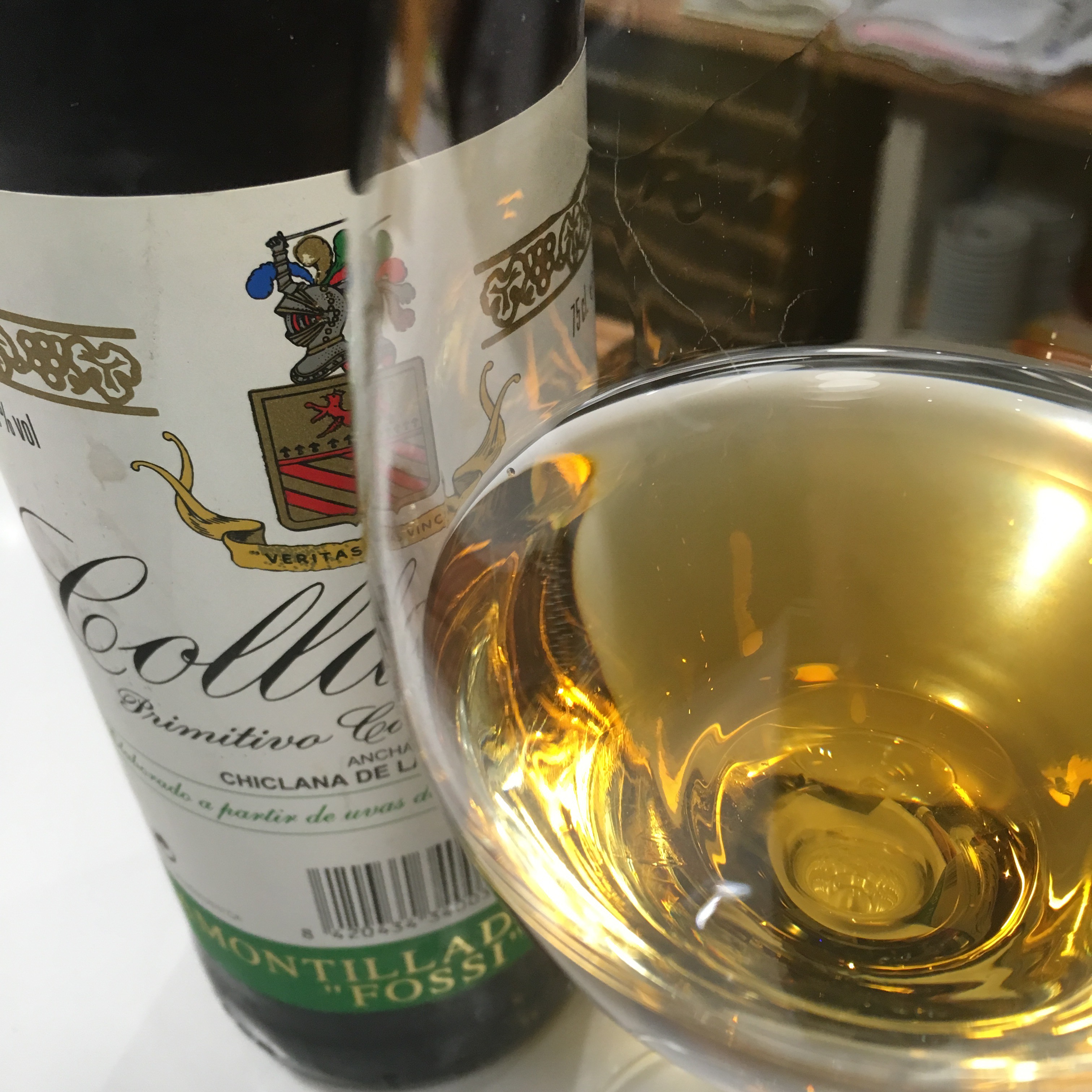
Been too long since I had this – a little gem of an amontillado from the famous Finca Matalian. Buttery toffee on the nose, dry with an illusion of fruit on the palate, and really nicely integrated minerals that keep it fresh and balanced.
All too easy to drink: goes down easier than a Spanish footballer.
Amontillado Coliseo

This Amontillado Coliseo, by Valdespino, was the big beast (in a little bottle) at the end of a memorable dinner at Sacha and one that served as an intense, tasty contrast to the arguable star of the night, the Palo Cortado Reliquia. Like that other wine, this is one of the dinosaurs of the cellar, with an average age of 80 or 90 years, but while the Barbadillo seemed even a little over refined, this was a little brute, full of concentrated flavour.
Dark, mahogany furniture in colour and a punchy, but smooth polish nose. On the palate it was incredibly saline and dense with woody flavours of black treacle, burnt cake and pipe tobacco. Compared to the Reliquia it may have been a little astringent but that salinity and concentration gave it the longest of finishes and I really liked it (I took it after all).
Very very good – may have to taste it again sober!
Amontillado Gutierrez Colosia Solera Familiar

Gutierrez Colosia is a former almacenista and now producer from el Puerto de Santa Maria that has released some really nice wines – the fino en rama really stands out (one of the first really good Puerto finos that I had) but down there in March their standard amontillado was the best of a strong field at dinner one night (seeing off Equipo Navazos and Emilio Hidalgo amongst others). So good, in fact, that one of the friends I was at dinner with that night hunted this down and got me a bottle.
This is the kind of wine you treat with respect so I have endeavoured to do a bit of research and, although this wine does not appear on the website, the bodega have been very quick to answer emails and generous with details. The Gutiérrez Colosía family describe themselves as heirs to the long tradition of “criadores de vinos”. In the past all the production was destined for the big houses with exporting operations. This particular amontillado comes from the soleras that over 50 years ago used to supply Williams and Humbert but when Williams changed hands the wine stopped being sold because at that time nobody else was willing to pay what it was worth (with the exception of a small amount that was bottled for the “almacenistas” collection of Lustau under the name Mª Loreto Colosía. The botas of this wine are located in a corner of the bodega blessed with “special” climatic conditions and only small quantities are bottled each year. In total it is estimated to have an average age of above 60 years.
The wine itself is not quite crystal clear – even a little turbid – but is a lovely deep chestnut colour. The nose has that solvent like, ethereal volatile start, but is full of hazelnuts, toasted almond and burnt butter. On the palate it has a nice bite of alcohol and zingy acidity, and is refined, drying and fresh but tasty and salty. Not as intense as I expected given its age but very pleasant wood, nut and even tobacco flavours and a long, dry finish that is not astringent.
A rare old wine with the woody character to prove it.
Amontillado 2003, Williams Coleccion Añadas

I still haven’t managed to find a moment to open the whole box together but continue to pick off lone bottles of these añadas one by one: so far I have tried the 2009s and now this one (if we are not counting the 2006). Of course they are all similar wines – from the same pagos, made by the same maker in the same bodega – but it is still really remarkable how clear their shared signature is – and indeed I recently had a chance to try the “historic vintage” oloroso and that too was clearly a slightly older brother to these.
And, like those other wines, this is an absolute belter. A beautiful old gold colour (just look at that camerawork), it has a lovely refined nose with hazelnuts baked in granary bread and just a bit of that sweetness in the background. Then on the palate it is wonderfully smooth and elegant, with very refined flavours – nuts, yeast, and minerals. Not all that concentrated but full and seamless – like an opera singer with no vibrato. On the ficha that Williams & Humbert were kind enough to send me they say “rounded” and it certainly has no hard edges.
That tasting note is in fact rather confusing – I had assumed that this was an amontillado on the basis that the flor had given up the ghost in the cask, but according to the ficha it was at some point fortified to 18º (and presumably some time ago, because it finishes up at a hefty 20.5º – which by the way you would never guess in a million years), before being classified as an amontillado in 2016.
However it was made, it is brilliant, and it is absolutely shocking how little of this is available. I am not going to say where I got it just in case I can still get some more.
 undertheflor.com