Amontillado “Fossi”


Another repeat customer and another from the Finca Matalian of Primitivo Collantes– like a Victorian era explorer I an following the stream up/down as far  as I can. (Unlike the aforesaid, from the comfort of a stool at the bar of Taberna Verdejo.)

In colour it is an appetising dark gold – yellow brown rather than the orange or red notes of an older amontillado. After the fino and the en rama it is no surprise to find minerals, ozone, sea air in the nose, but the sweet caramel fruit aromas envelope and balance them in this and make it a less aggressive nose overall.

In the mouth there is that same zing, those salty minerals, although for me the texture is slightly finer (maybe it is more in keeping with this fuller flavoured wine), and there are sweet caramel, fruit flavours that again balance the saltiness, fill the palate and, it may be my imagination but seem to me to get back to the fruitiness of the mosto.

A really enjoyable wine with a nice edge of mineral complexity.

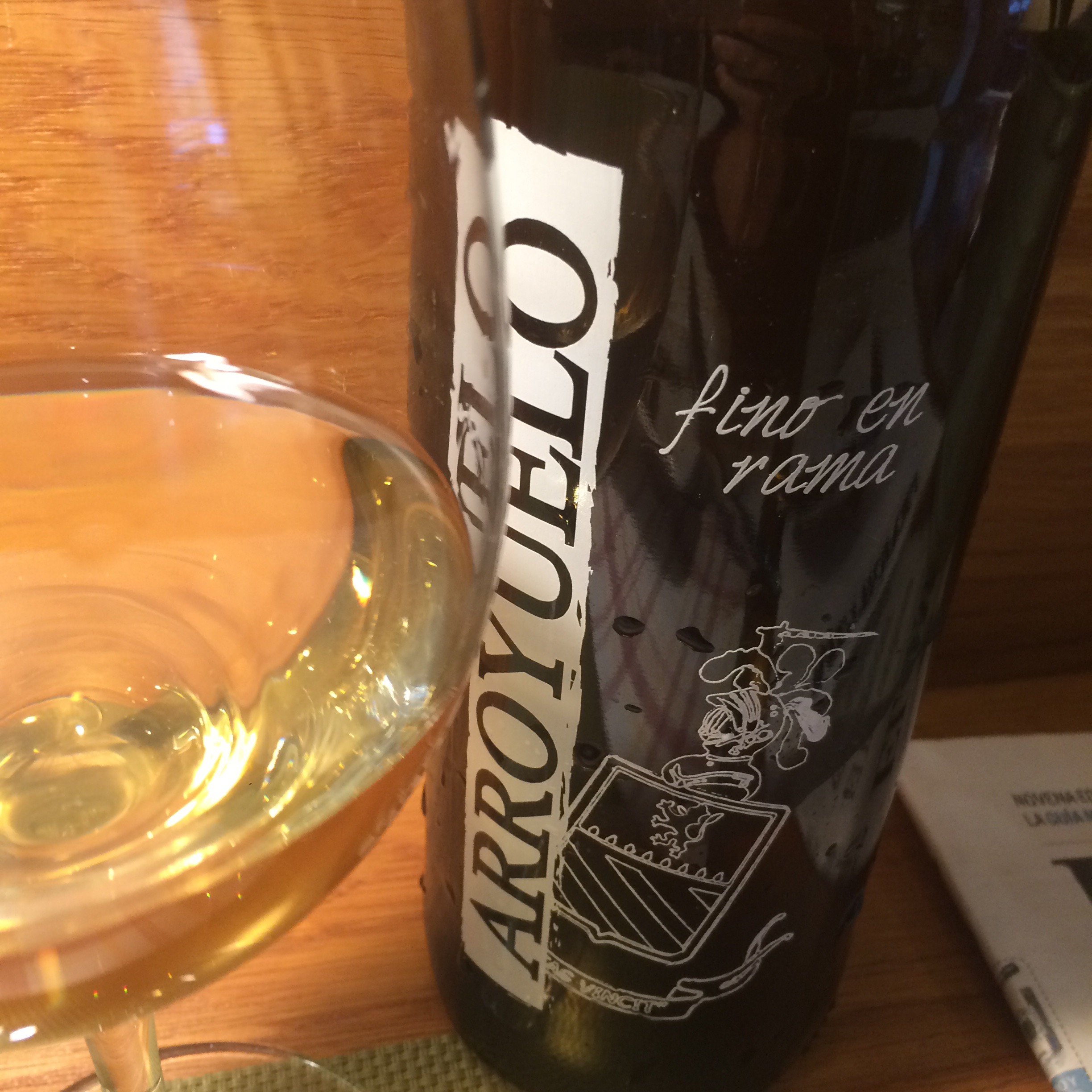
Fino arroyuelo en rama – strikes back


Here we go again with more of the descendants of the magnificent mosto from Primitivo Collantes’ Finca Matalian – raising the stakes on last night’s Fino with the Fino en Rama. First time I had this I found it too vigorous – and then was stupified when I saw it described in one professional tasting as “flat”. Really wanted to try again so have come for a sneaky Friday cata/lunch at Taberna Verdejo, one of the best places for sherry (and, sweetbreads, and indeed eating) in Madrid.

Second time around is interesting. Frankly I am better prepared mentally – this is an intense, mineral fino, and the first time it took me by surprise. After the learnings of recent days the elephant of surprise has vanished.

So, the colour is indeed darker than the fino, has greenish brown notes. The nose is also still massively mineral with ozone/sea air, but again there are some green herbs in the background.

In the mouth too there are similarities: more minerals, zing on the tongue and a salty water texture. However those herbs crop up again – dry herbs like thyme or rosemary, slightly bitter in the finish. Still no sign of that big fruit but a slightly fuller flavoured wine.

I like it more than the first time – maybe I am better placed to appreciate it – but is still vigourous and maybe a bit front-heavy. (Flat though? Really?)

Fino Arroyuelo

After all these mostos and manzanillas I really felt like a fino tonight and I had a particular reason to choose this one by Primitivo Collantes.

The reason? Well, when I tried the  Fino en rama I found it if anything too lively, bulky and vigorous. However, the mosto from this same vineyard was for me (and many others) the standout wine of the Pitijopos, big and juicy but compact and elegant fruitful mouthfull with real personality.

This is a fino from fruit grown on that same Finca Matalian vineyard. The vines are only 8km from the sea and the harvest in this area is the latest of anywhere in the sherry triangle, starting in around the first week of september. These grapes have been manually harvested and separated, and while the pitijopo was fermented in wood this was fermented in inox then raised under the flor in criaderas/soleras for 5 years.

It is a lovely light, clear gold colour – less of a yellow green than the en rama, certainly – and the nose is immense. It has real sea air/ozone saltiness, yeast and nuttiness behind, and although you wouldn’t compare it to the mosto in terms of fruit there may be just a trace of apricot jam at the back.

It is big in the mouth too, but while the mosto was syrupy this has massive salinity and minerals. The salinity gives it both intensity and zing on the tongue and the bulky volume of seawater. Maybe if anything it is a little too intense and overwhelming – a little too much minerality and volume and not enough fruit.

Overall, it would be really difficult to join the dots between this fino and the mosto blind. Although they are both big on the palate and there is clearly salinity under all that fruit of the mosto, the massive minerals and intensity of the fino transform it into something else entirely. In fact it really makes me wonder what this wine would be like with a shorter period under flor – say 18 months or two years. Would be fascinated to find out …

(In other news. fans of Pitijopo 6 will be pleased to hear that these guys are brewing something up. It would be wise to follow Primitivo Collantes’ releases closely in coming months.)

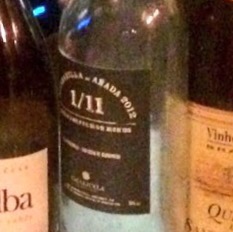
Manzanilla de añada Callejuela 2012 – 1/11


More from the Night of the Pitijopos – and a new blogging low: failure to take any pictures of the wines. Luckily someone sent me a picture so I could cut this one.

This is excellent – really fresh, youthful and fruitful but elegant, polished and compact at the same time. I feel that it is maybe still a little meek although this could be down to its youth: the next couple of editions may well gain intensity and steel. In any event this is a lovely, light, enjoyable wine by any standards.

The group absolutely loved it, and I sensed some of the same enthusiasm I felt the first time I heard about this. It bears repeating: this is yet another fantastic, fascinating idea, and one that will excite any wine lover that hears of it.

La Gitana en rama 

  
An en rama with no indication of the date of the saca (should have brought my bar code reader).

Deep dark colour on this one and a piercing salty mineral, old apple nose. Has a smooth entry but a very intense back end, again lots of minerals, lemony citrus, and a long lingering dry finish. The intense flavour reminds me more of the manzanilla pasada than the straight up manzanilla, but it is a bit more rough around the edges. 

Not quite as juicy/fruity as some but it is a mouthful alright.

Night of the Pitijopos – Part I

Big night last night with lots of sherry to report on, but first the main event: the “Pitijopos, Volume I: from North to South” by Cota 45.

It really is a fascinating project – six “mostos” – the base palomino wines used as the key material in sherry and manzanilla (and, increasingly, a lot of other stuff) from six different pagos on four different types of albariza soil. All from the sherry area (the “marco” in the lingo) in a band 50km North to South and 25 km West to East. It gives us a great opportunity to explore two really interesting questions: how these different soils and areas translate into wines; and, almost as important, the potential of these mostos to become the top table wines that the boys down in Cadiz seem to think.

We were guests at one of Madrid’s shrines to good wine and good living – the Chula de Chamberi – who looked after us fantastically, and we did it properly, tasting our Pitijopos at about 10-12 degrees with empty stomachs (before dining with a cracking lineup of other wines, about which more later).

Frankly my notes are not everything they could be and my recollection is blurred due to a possibly over enthusiastic consumption but, for what they are worth, here are my thoughts on the wines themselves.

  • #1 – Trebujena – northwest face of the pago del Duque on Tosca Cerrada – piercing citric, mineral nose which quitened down, slightly bitter citrus and mineral flavours on the palate, hints of reduction;
  • #2 – Sanlúcar – north face of the pago de la Callejuela (pago de rio) again on Tosca Cerrada – big farmyard, ferrous metal nose that mellowed to undergrowth and nuts, solid and serious on the palate holding its shape better;
  • #3 – Rota – south face of the pago Barragan on Albariza Parda – incredibly floral, fruity and sweet nose and fresh, floral taste first up, but less intense and seemed to die away rather than opening up;
  • #4 – Jerez 1 – northeast face of the pago de Añina on Barajuela – earthy, metallic nose maybe even damp undergrowth, more elegant on the palate with a nice citrus fresh finish
  • #5 – Jerez 2 – north face of the pago de Macharnudo again on Barajuela – even more serious wine, earthy, citrus and mineral nose and seems more intense, saline on the palate
  • #6 – Chiclana – west face of the pago de Matalian on Albariza Tajon – really lively, fruity nose, with lychee, mandarin and minerals, and elegant on the palate with more minerals and honey notes

Overall, I reckon my favourites were 6, 2, and 5 in that order, but not with much conviction: 3 started beautifully but faded away, 4 was probably the most elegant of them all and 1 had some really interesting, more complex flavours and aromas.

More generally, and most importantly, the differences between these wines – even between wines from the same neighbourhoods/soil types – were notable and very interesting: some were floral, fruity and aromatic, some were serious and metallic, some piercing.  If the object of the exercise was to demonstrate the potential of terroir then noone last night was left in any doubt.

Also, while clearly not the finished article, the potential of the wines was equally clear. There was a really nice freshness and life to them and some really attractive noses, flavours and features. It is easy to see why their makers are excited about them.

And the final verdict?  Absolutely fantastic. A great idea well executed and an argument conclusively won in the most elegant way possible. Long life to Cota 45 and  can’t wait for Volume II.


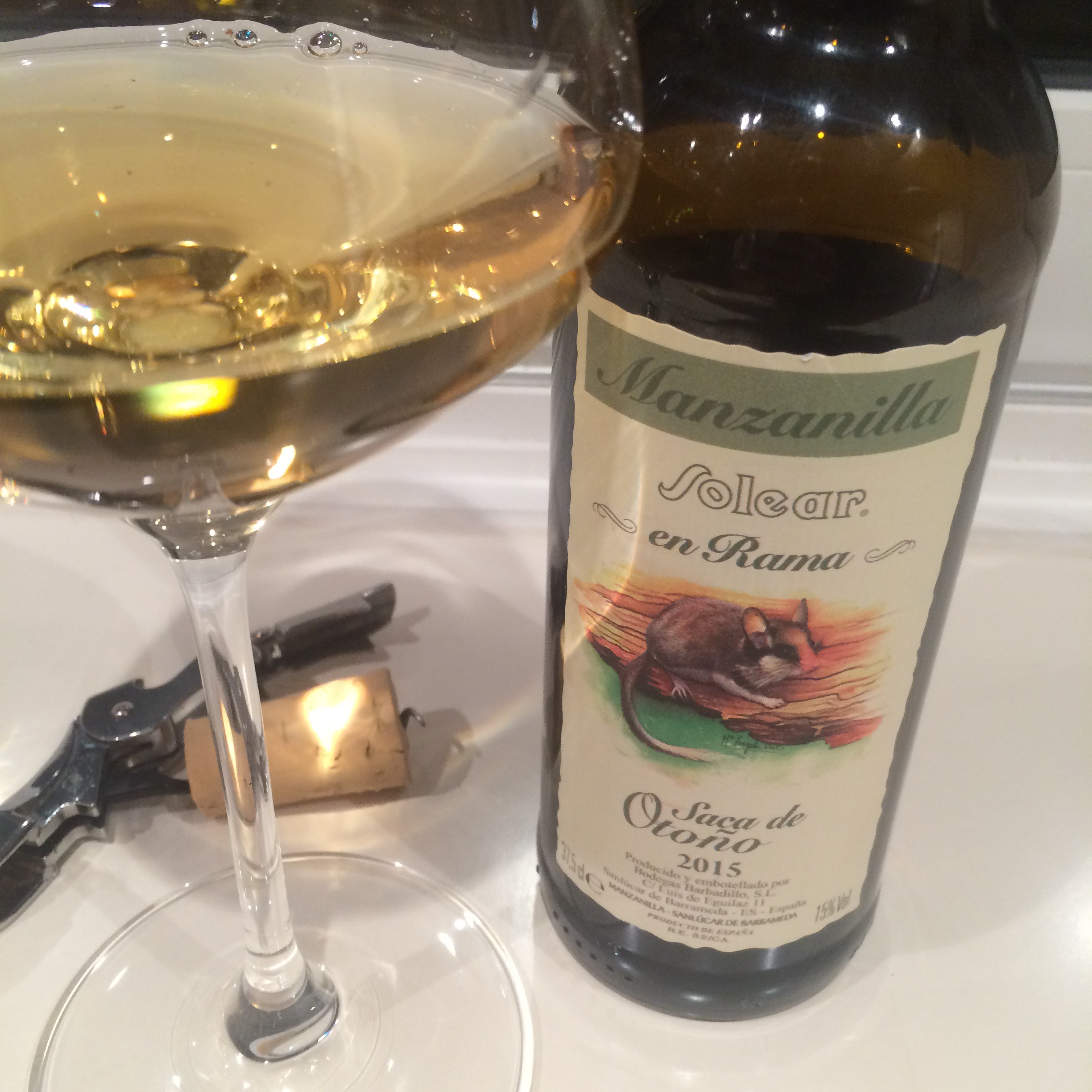
Solear en rama – Saca de Otoño 2015

  
Manzanilla monday and the rat’s days are numbered. This looks, smells and feels richer and more potent than other sacas I have tasted recently. 

The colour is slightly dark old gold – certainly half a shade darker than I remember. On the nose there is a lot of yeast – big salty hay bales – very aromatic, with a suggestion of sweeter herbs. 

The mouthfeel is fatty and lush as always, and on the palate it is just as rich as it looks and smells – massive herbal, vegetable flavours and salinity and maybe just a little bit bitter as it fades away. Really juicy rather than zingy but a powerful mouthfull either way. 

Fantastic, the week is now under weigh and I need to get some more of these little rodents. 

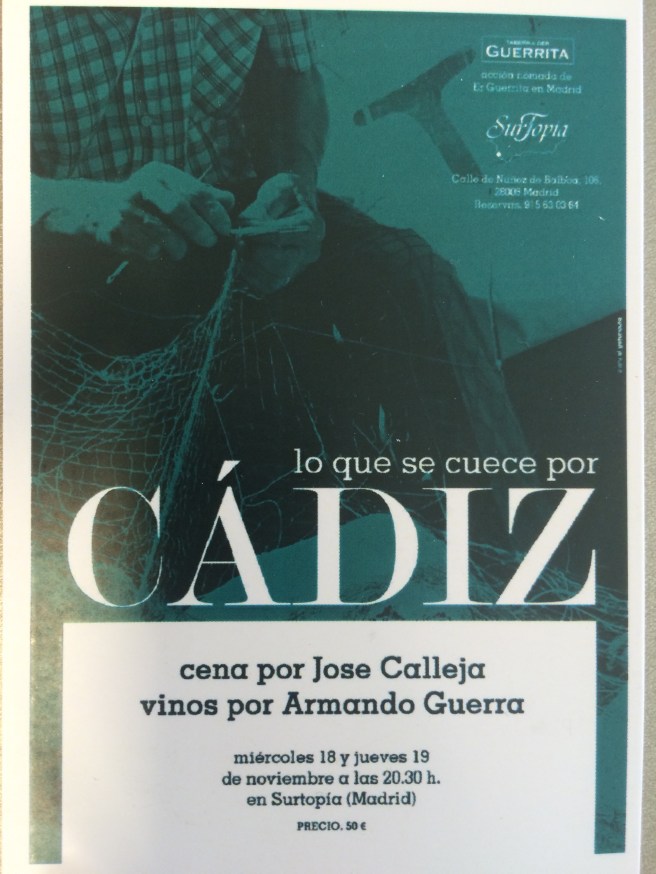
Guerra in Surtopia

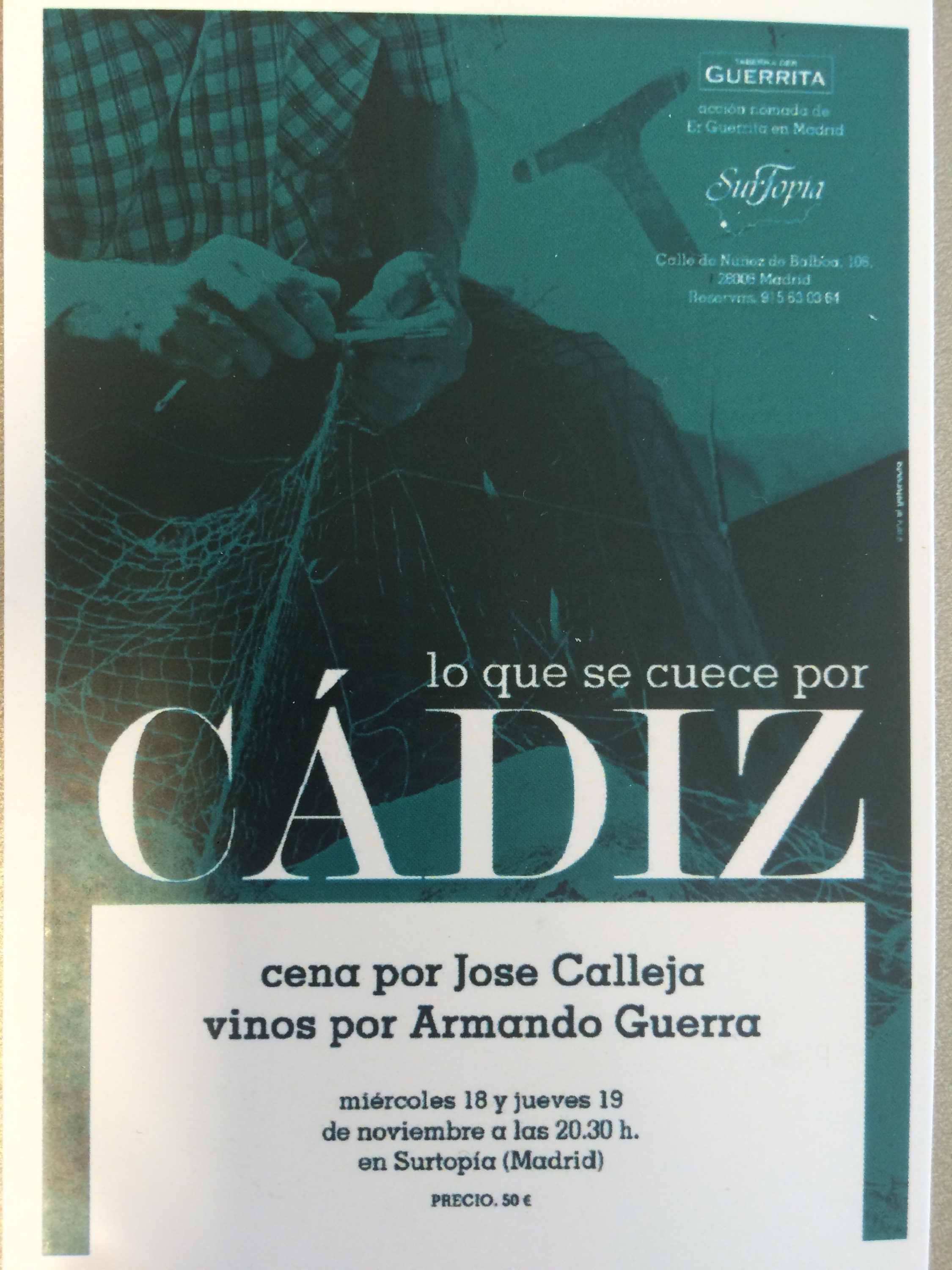
Brilliant night last night at one of my favourite places in Madrid – Surtopia. As I trailed a little while ago, it was the food of Jose Calleja and the wines of Armando Guerra (of Taberna der Guerrita fame). Two great lads from Cadiz it always promised to be a fun event, and filled a room with sherry fans of every colour and stripe (from sherry women to Parker’s man in Madrid).

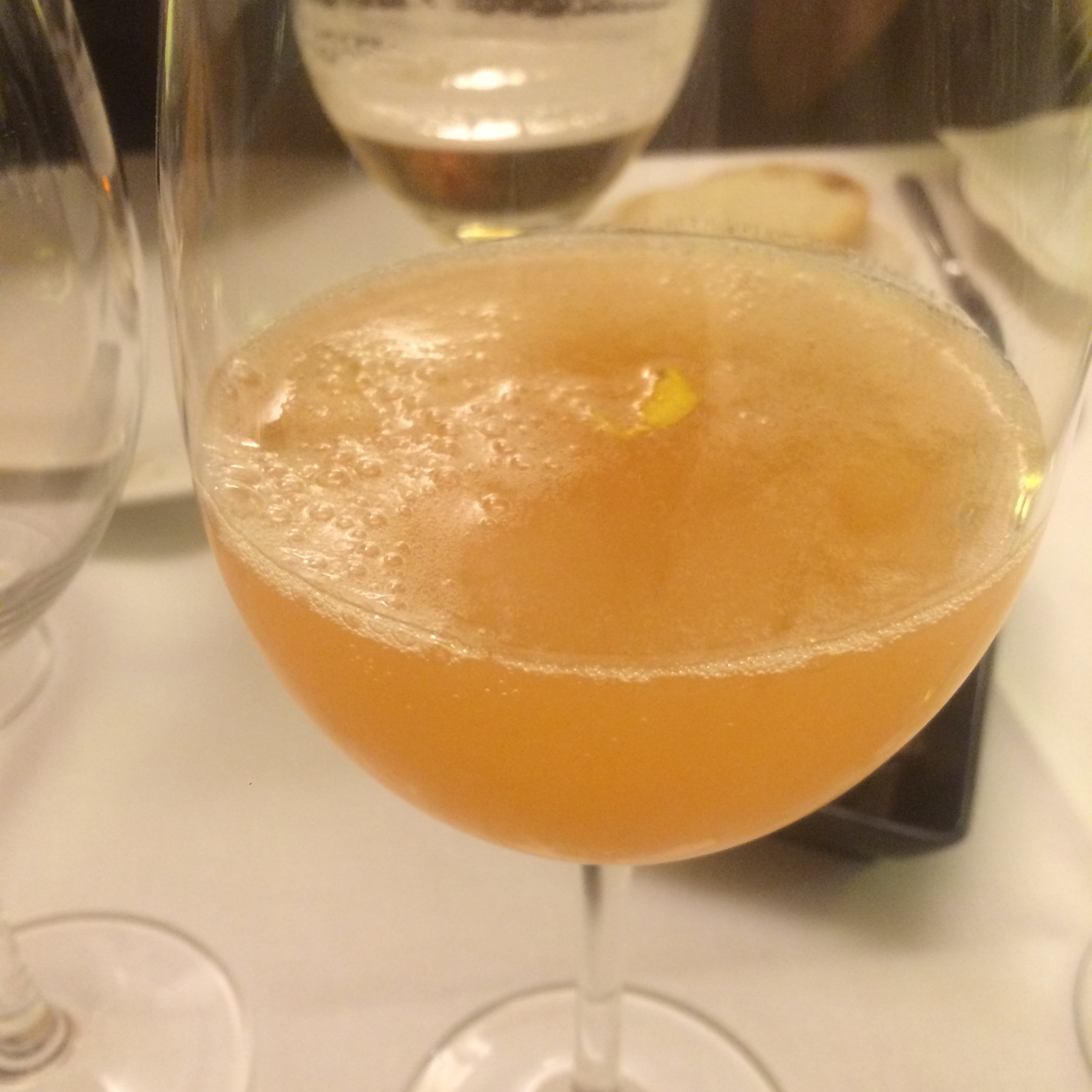
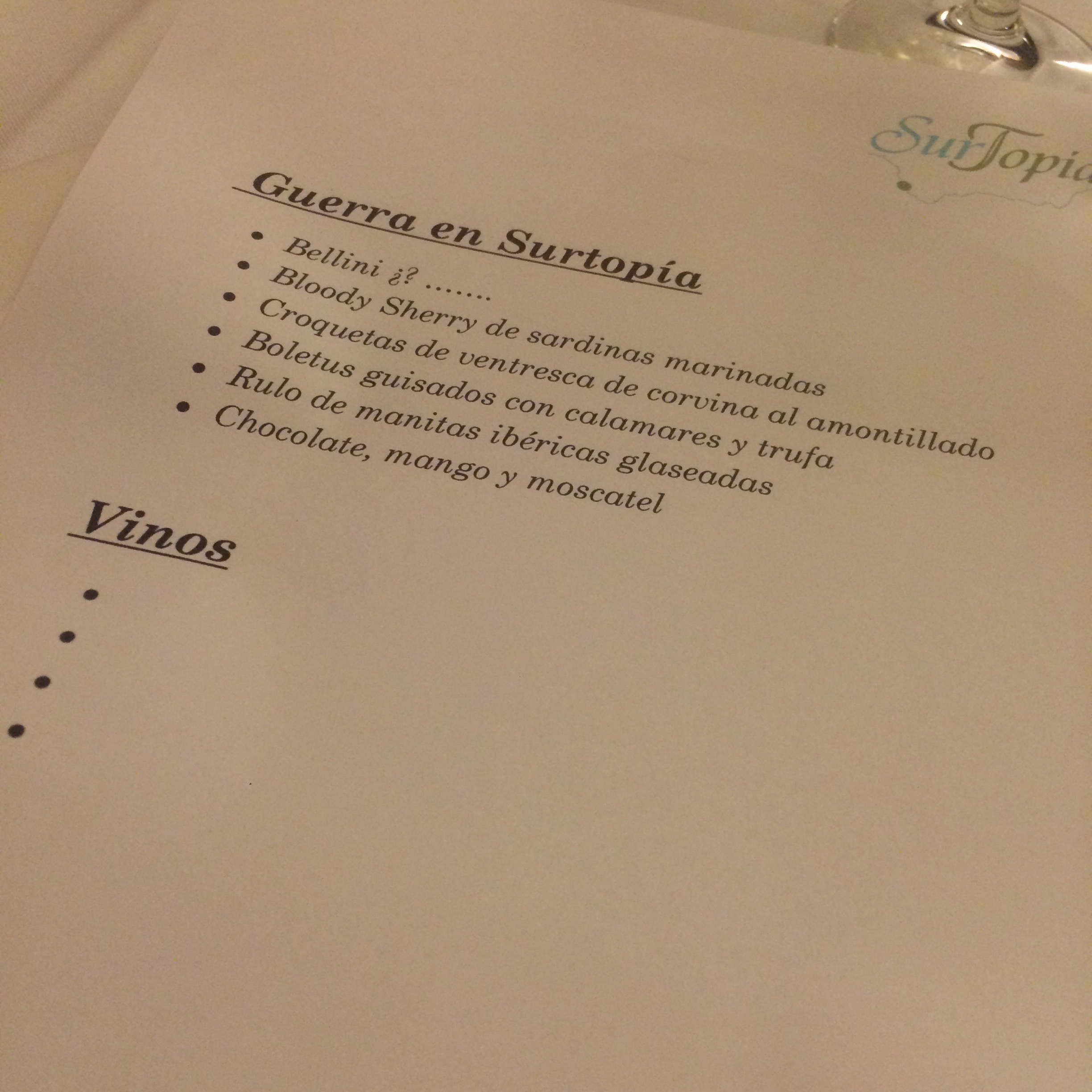
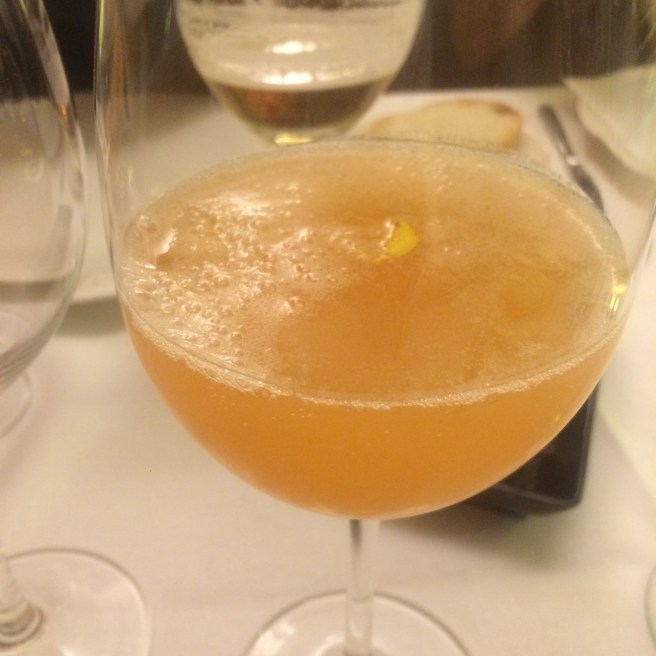
It kicked off with this “bellini” of cantaloupe melon and “Beta”- a sparkling palomino and (10%) chardonnay by Barbadillo. Not a lot you can say about a wine when it is mixed with cantaloupe but it did the job. (To be honest, though, the end result was not that different from an ancestral method mosto that I opened a while ago.)  An interesting start alright.
As you can see below, the dance card did not list the wines – we tasted them blind instead.
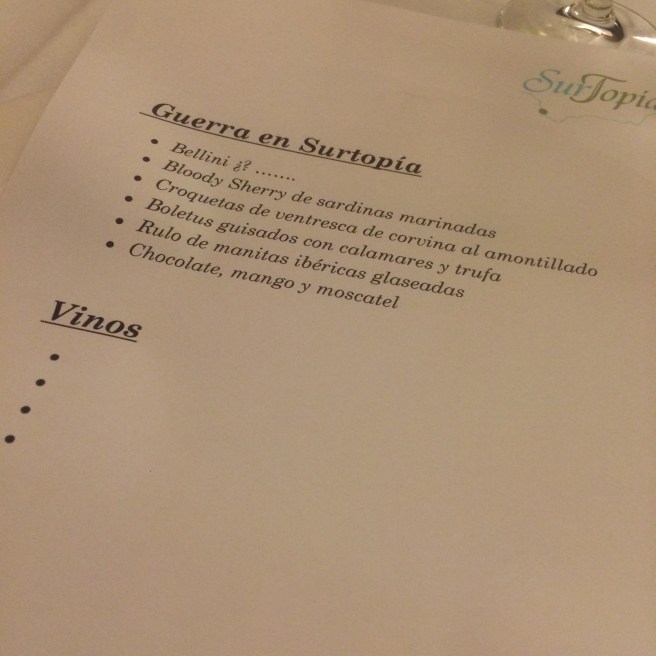
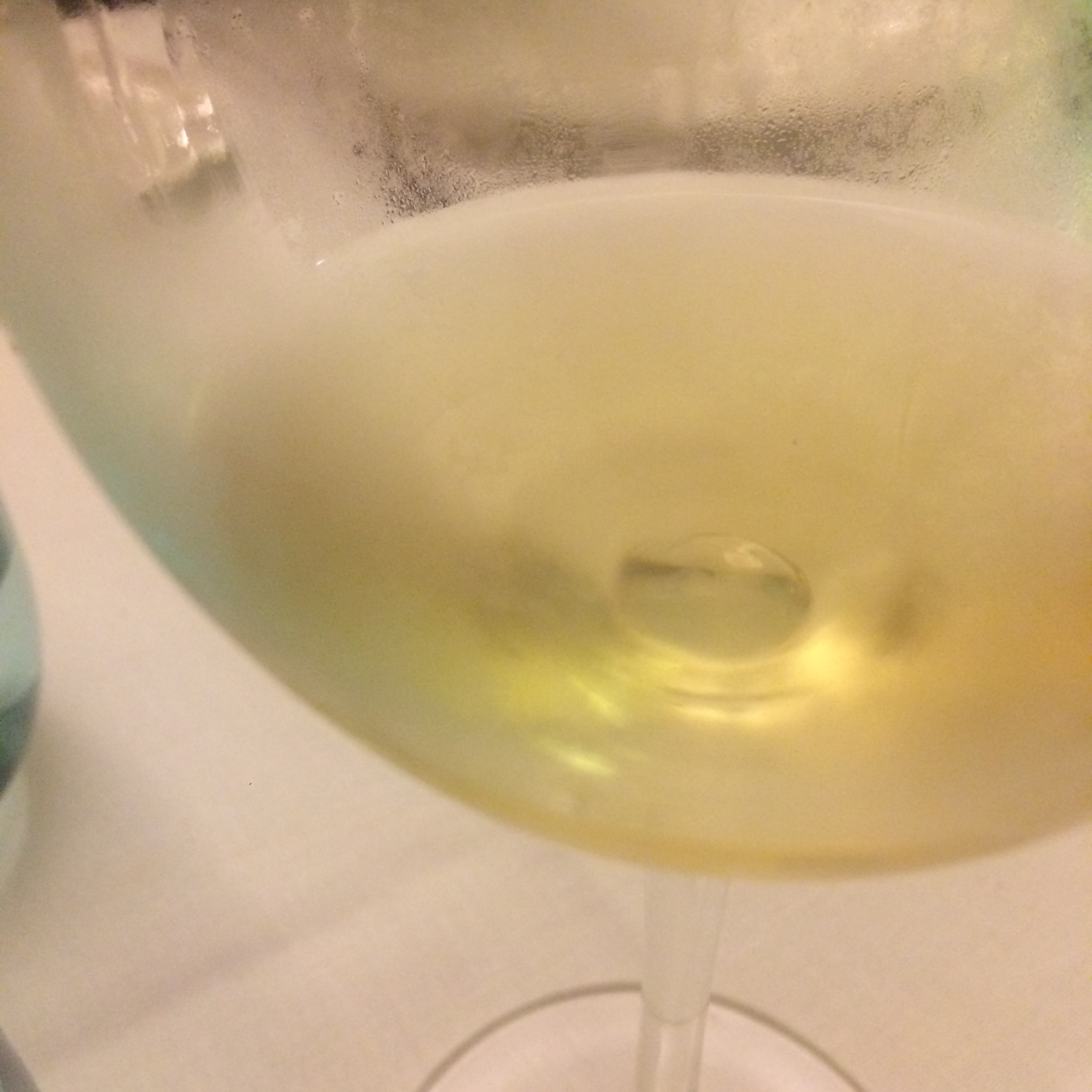
First up was a tasty “bloody sherry” (fino, not vodka) with a brochette of marinated sardines with this, mystery wine # 1.

At the time (and here my tweetstream is my witness) I had as “no acid, sapid, long and clingy, fruity lees” and in my scribbled notes I had also written “pineapple, herbs, palomino?”
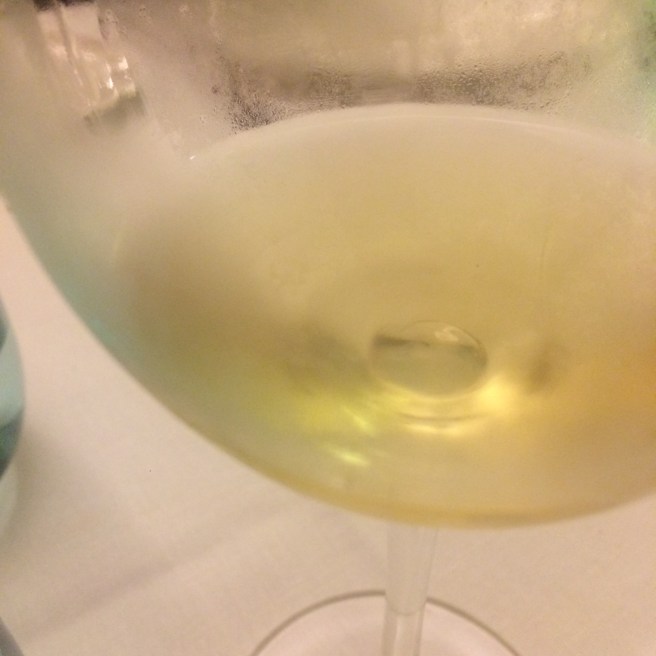
Well, my guess was an unfortified palomino and I was on the money – it was Tosca Cerrada, by Mario Rovira. Had spent 12 months in an old sherry barrel (and is named after the specific type of albariza soil of the vineyard).

Next, and although this is not a food blog, these croquetas -corvina in amontillado- were awesome, and deserve some serious attention.
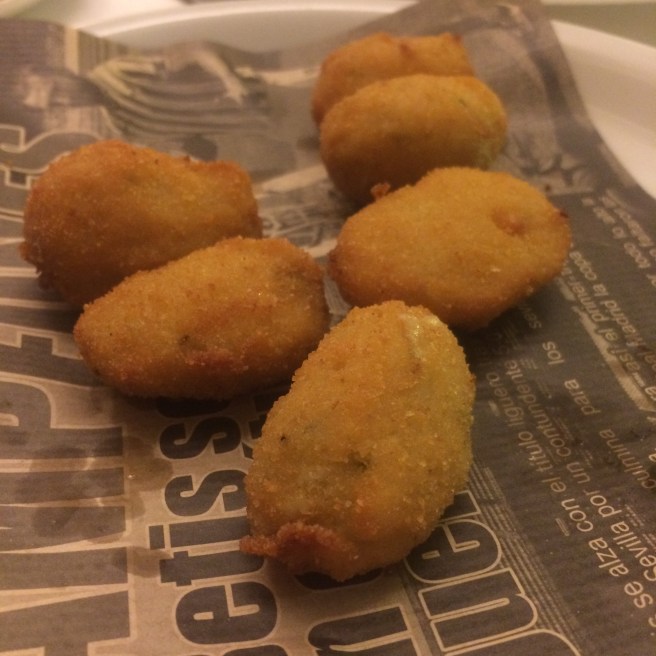
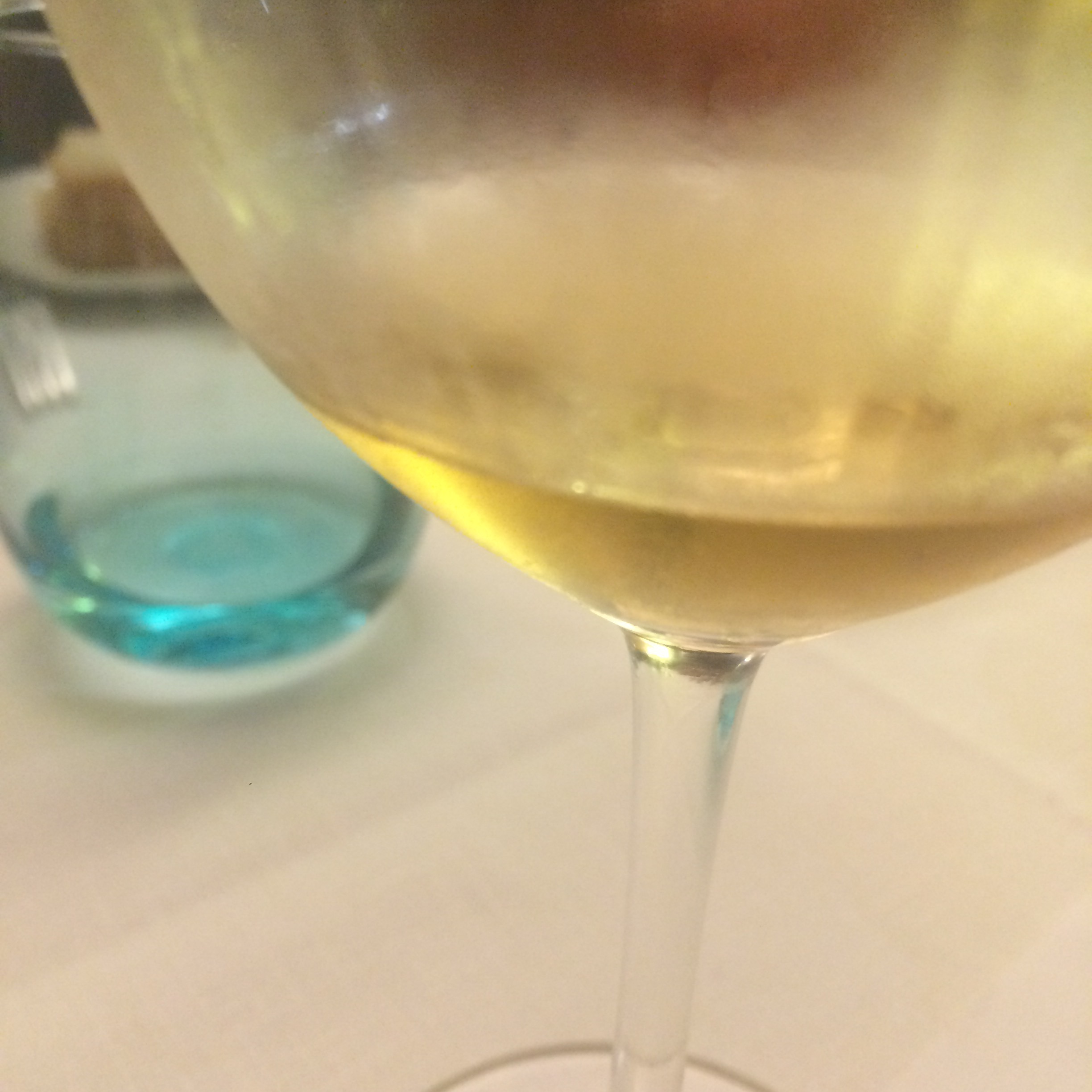
They came with this, Mystery wine #2, which I tweeted as “butter, cheese rinds, sherrified but not sherry, grapefruity”.
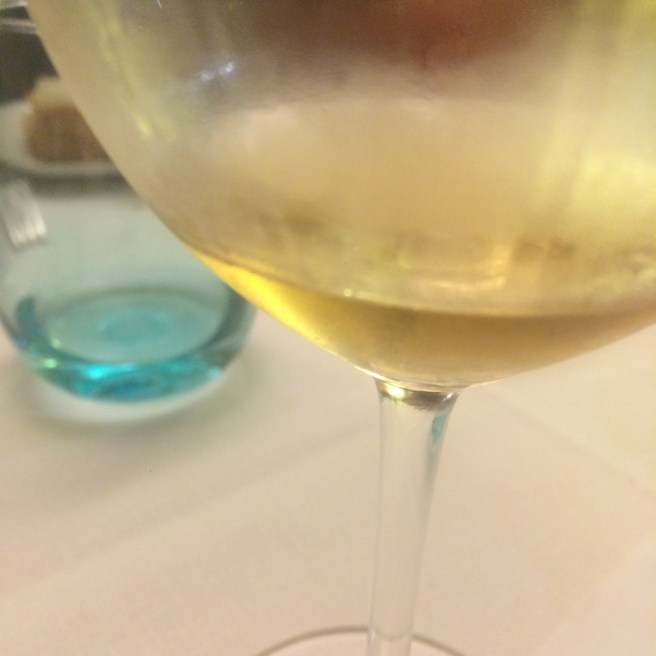

Now when I read that back I would say immediately Jura (I even tasted Comte cheese and had the note “jura?” scribbler in my notes) but at the time I was so convinced it would be from around Cadiz I would have been prepared to swear it was  Encrucijado. Not so my colleague and table mate David, he nailed it: Macle 2009.  Lesson here: taste the wine, not the hype or expectation.
We finished off the Jura with an intense boletus, calamar and truffle stew. Another brilliant dish and an excellent match.
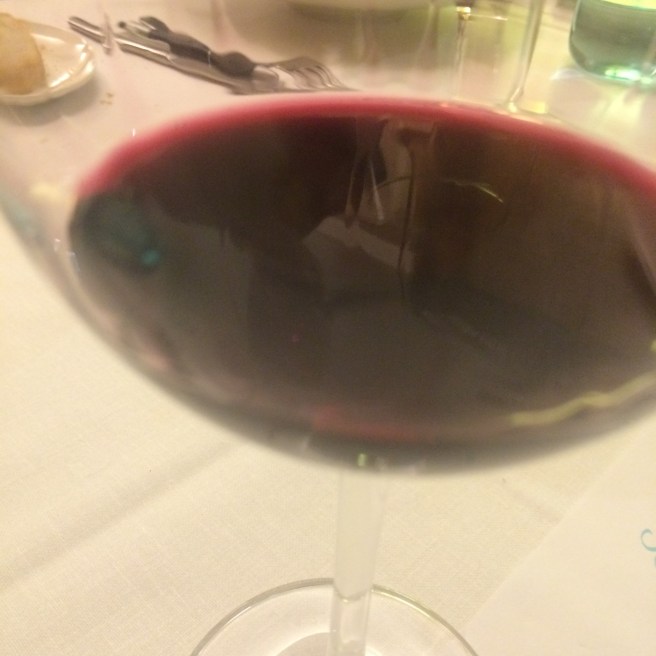
Then, with a meaty, rich pig trotter roll we had mystery wine #3 – which I tweeted as being “young, unshaven, oakshy, shiraz, fruit, maceration”.

My guess was a superyoung, unoaked shiraz, but here I made the  opposite mistake: I was right that it had never touched a barrel but this one was Cadiz through and through. It was a tintilla de rota, a classic red varietal that is making a comeback.

Again, should have listened to my table mates – Guille the boffin picked it perfectly. To be fair, it was nothing like the tintillas I have had before: normally a big meaty tablewine or even a sweet dessert effort.

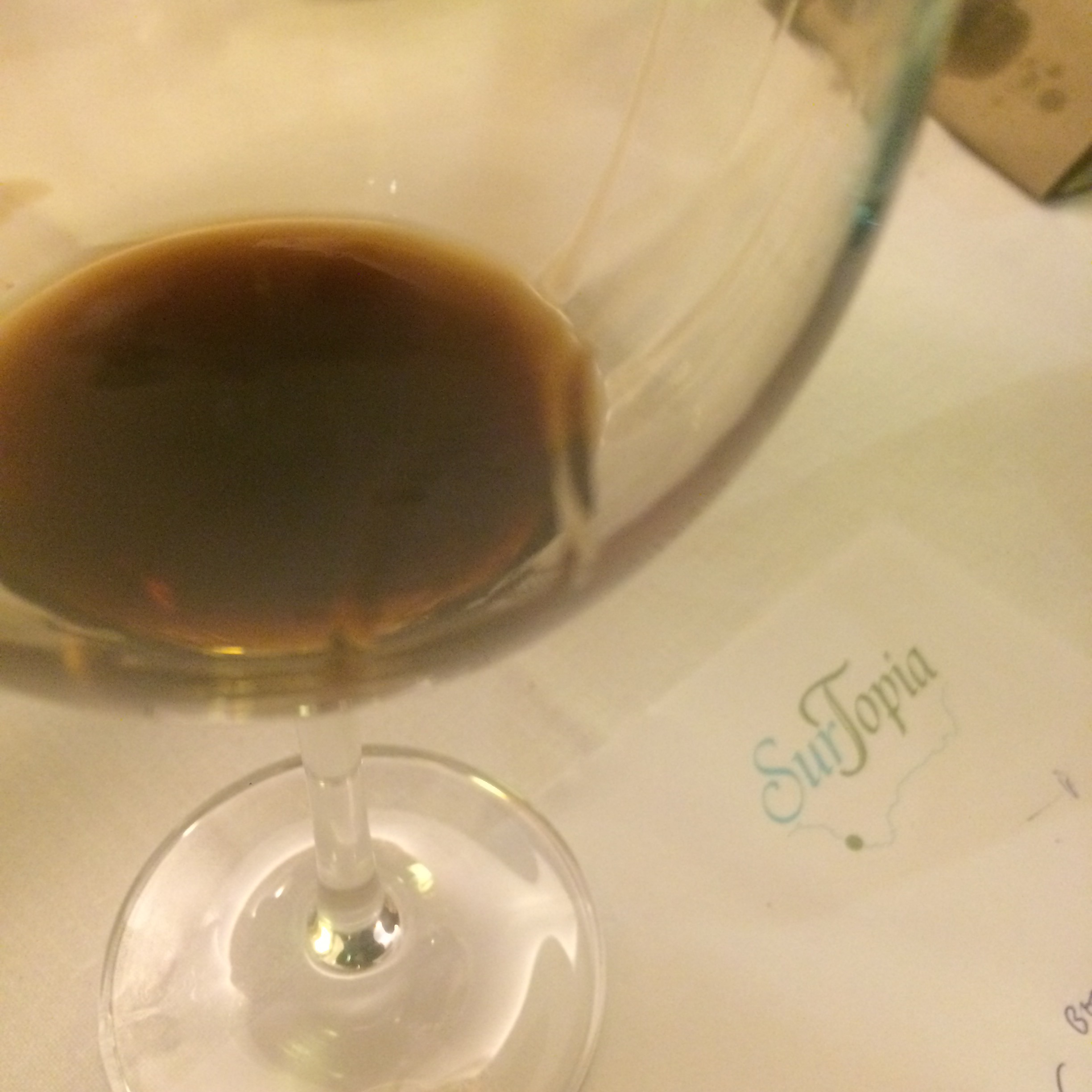
That just left mystery wine #4 which was, in few characters “barrel juice – coffee, cedar, acid, bitterness”.
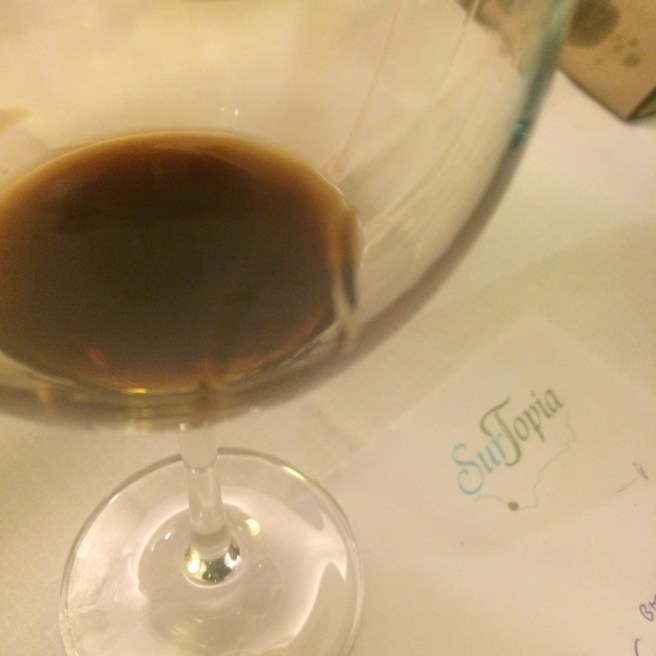
The concentration was way over the top – it reminded me of the bottom of the barrel Garnacha I had a while ago. I had it down as something super old – I reckoned an ancient moscatel in fact. In the event I only got it halfway right – it was a Quina, released by Barbadillo from barrels “found” in the bodega that had not been refreshed in over 30 years. To be fair, I have never knowingly had Quina before (or heard of this).

All in all, another brilliant meal in Surtopia, an eye opening experience wine wise and another lesson in blind tasting. If a fella had a complaint at all it would be: wot no sherry? (Fortunately I have a couple of bottles chez moi.)

La Panesa with … chocolate 


This was an interesting experience – half way through my glass of La Panesa an unexpected pairing was thrust under my nose by the remarkable Ana Losada at the Chula de Chamberi.

Probably the last pairing I would have thought of – seems to break all the rules – and one I am not sure about. The chocolate really accentuates the bitterness, saltiness, and alcohol of the fino – but seems to suppress the umami and the old fruit. It is really interesting, no doubt, and gives you a look at the wine from a different angle. It also has that salty chocolate vibe. Having said that, not sure if it passes my pairing test: do I like the fino better with the chocolate, and vice versa?

Maybe with any other wine – when it comes to something as beautifully balanced as La Panesa I am less prone to adventure.

Blanquito manzanilla pasada  


Another day another lovely bottle of sherry from Callejuela – this time a manzanilla pasada. 

Serious looking dark straw colour but a lively green apple nose like a much younger wine. 

On the palate it has that oily feel and salty intensity – the salty sting on the surface of your mouth followed by apple and yeast flavours. 

Very nice and very drinkable indeed.