Paola Medina in the new Taberna Palo Cortado

2e0480b4-b3f2-4c47-a068-148530f16cec

Paola Medina of Williams & Humbert is one of the most important wine makers in el Marco de Jerez and was the star of yet another absolutely outstanding tasting at Taberna Palo Cortado – this time in their new premises at Espronceda 18.

Williams & Humbert are well known for their collection of vintage wines – they are said to have a cask set aside from every harvest since time began (or at least since the bodega began). Until relatively recently – in fact until the Medina family took over the reins in the early noughties, the wines that were released were of the old oloroso variety, but for the last fifteen years they have also been setting aside 10-20 casks of wine a year for biological ageing and the results – most vividly experienced via the Colección Añadas of a year or so ago – have been ground-breaking. Just as Ramiro Ibañez’s Pitijopos collections have laid to rest any doubt about the relevance of terroir for the wines of the region, Williams Colección Añadas are about the best evidence for the relevance of vintages.

And the tasting provided more of said evidence and also some good news, in the shape of new wines. Taking the good news first, Paola told us that they were in fact making even more distinct wines than before. Since 2015 they have been making an ecological fino de añada, and in addition to the finos and olorosos de añada that we already know and which come from wines from vineyards in Añina and Carrascal (de Jerez), the bodega is now also making separate wines – in fino and oloroso – with fruit from those two pagos/viñas, making a total of seven specific wines for each vintage.

And indeed the first wine we tried on the night was the first of the new kids on the block, the Fino Ecológico de Añada 2015, made with palomino from a vineyard near Trebujena and in process and a lagar (on the road from Jerez to Rota) that are fully separate from those of the other wines. (Apparently, in order to get the certification of ecological you need the ecological alcohol from the Rioja and you have to keep everything separate, which requires some pretty extreme measures – early harvests and fermentation in a different town, for example.)

Whatever the difficulty level it was a cracking little wine – had a nice subtle chestnut aroma on the nose, was full in body again with a suggestion of chestnut and had tremendous sapidity and zing for a wine that had only had a bare two years under flor. Paola attributed the sapidity to conditions in the lagar, where a lovely, healthy, thick white veil of flor formed, but this will be an interesting wine to follow.

Next up was Fino Don Zoilo, a classic fino with a good nine years under flor. A classic that we don’t see often in these parts since the majority is apparently exported to Japan, where in addition the public prefer filtered, clarified wines. Couldn’t have been more distinct to the wine that preceded it: even aside from the biological angle and the Jerez/Trebujena sourcing it was solera rather than vintage, nine years under flor rather than two, and filtered. Those differences showed: although the 2015 had sapidity this had sharper saline intensity, was finer in body and greasier too. To me it had a chamomile tea-like nose, a much dryer palate with less chestnut and more raw almond and mor pronounced citrus notes, with a classic fresh finish. Top stuff.

Then came the wine that I was looking forward to – a look at the Fino de Añada 2010. I was a big fan of the Fino de Añada 2012 and probably even more so of the Fino de Añada 2009 and was looking forward to more of the same but this is a fish of a different kidney altogether. Whereas the Fino de 2009 was so chestnutty, generous in body and full of manzanilla-pasada like fruit, this one is incredibly dry, fine, and sapid, a much more austere wine altogether. Surprising contrast and a demonstration of the variations possible in static ageing: whether as a result of the rainy growing season in 2010, or the climatic conditions in the years that the wine spent under flor, two wines from the same pagos in consecutive years are totally different.

The surprising 2010 was followed with Amontillado Don Zoilo, an amontillado with an average age of around 12 years, of which nine under flor. Specifically, we are looking at the continuation of the Fino Don Zoilo: wine from the last criadera of Don Zoilo is used to refresh a small solera of one criadera and the solera itself of this amontillado. The resulting wine, it must be said, is fantastic. Has a lovely hint of honey on the nose and honeyed chestnut on the palate and the oxidation and concentration (this was 19%) really seemed to complete what had been quite an austere fino, while keeping its lovely sharp profile and fine body. Really buzzy, enjoyable wine that would be superb on the dinner table with almost anything savoury.

After the amontillado it was time for an oloroso but not just any oloroso: our old friend the Oloroso de Añada 2009. Really enjoyable as always, and maybe it was the time of year but it just reminded me so much of Christmas pudding on the nose, with brandy, burnt Christmas cake, nuts and figgy fruit. (There was another top shout from one of my colleagues (or somebody anyway): baked banana.) Then after all that enticing richness there are saline flavours and a little bit of burnt caramel bitterness in there. Really such an enjoyable, juicy wine.

The last wine up was the Canasta 20 años, the VOS version of the original Canasta (which has around six years of ageing). It is a cream of oloroso and pedro ximenez. Unlike some creams the Canasta wines are blended at the outset rather than prior to bottling as a means of enhancing integration and you have to say this resulting wine is extremely elegant. Nice acidity and freshness to it despite what must be a fair dollop of sugar per litre, and very nice array of flavours from figgy to cedar and even tobacco. Really enjoyable stuff, although these sweeter wines really refuse to grow on me. I sometimes wonder if I do them justice when they are tagged on to tastings of dry wines like this one:  maybe one of these days I should try to get a few of these VOS and VORS creams together and try them out side by side and in the right mindset.

And then the Taberna Palo Cortado tapas party began, with lashings of Williams & Humbert wines and an awful lot of laughter. Another absolutely top night: perhaps the best news of all is that normal service is well and truly resumed.
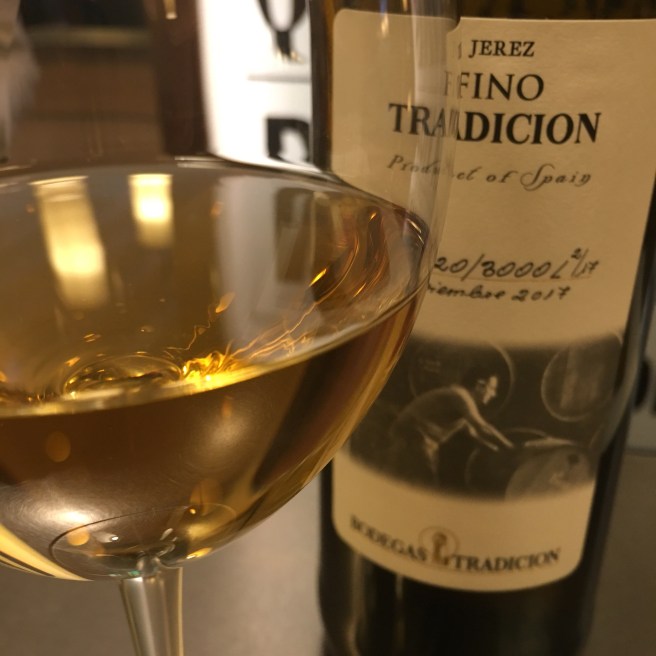
Fino Tradicion Noviembre 2017

If a few of the autumn sacas I have tried are a guide it has been a hard summer for the flor down in el Marco.

This autumn saca of the great Tradicion fino seems to me from memory to be towards the oxidated, roasted, end of the register. Not necessarily a bad thing: gives it plenty of body with a ripe, rich feel to the flavours and the zing of salinity gives it a nice spicey finish and balance.

A serious but very drinkable fino from the top drawer.

Manzanilla pasada La Guita (1970s)

This was a second very special wine brought to lunch by Juancho Asenjo – the man is a legend – in Territorio Era recently.

It had some tough competition on the day – a quite outstanding 20 year old Fino Carta Blanca – and has a tough act to follow in the form of its own descendants. You see it is a manzanilla pasada La Guita from (I think – memory is a bit hazy for some reason) the 1970s and would be a lineal ancestor of the outstanding “noughty”‘manzanilla pasadas released in more recent times by Equipo Navazo, which are among the very finest wines I have tried from the region.

And this was a fascinating wine. Was a rich old amber in colour and was pretty clear, maybe just a hint of cloudiness. On the nose it was still there – a bit of old apple and straw – although not as punchy as it might once have been, and on the palate it was extraordinary. Not so much the flavours, which were still there and were enjoyable if a little muted, but a quite amazing chalky, almost chalk dust texture.

The most mineral wine I have ever tasted without question – extraordinary stuff.

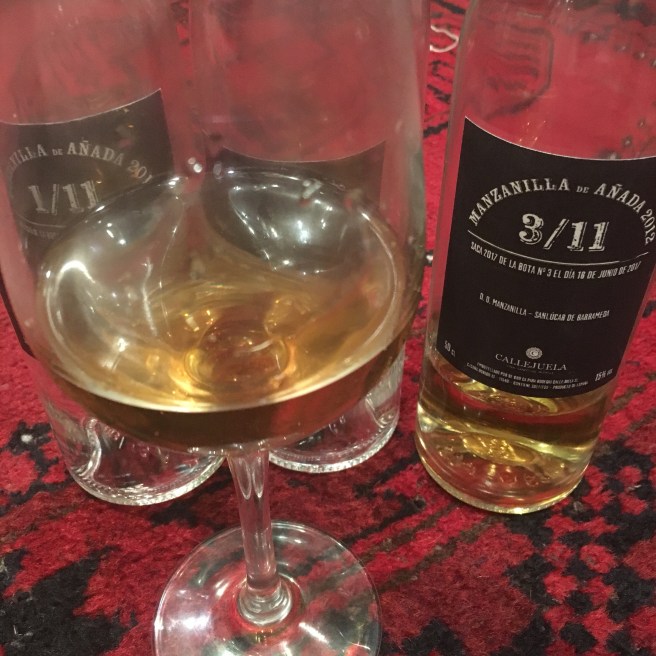
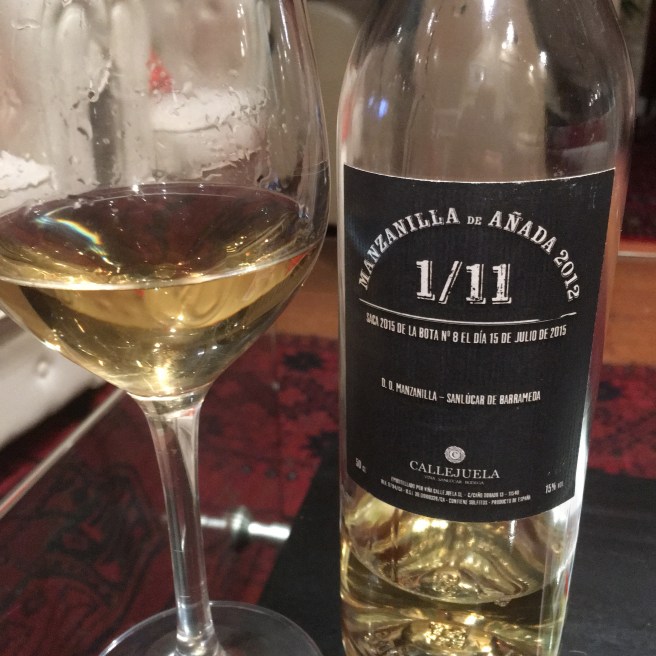
Manzanilla de Añada 2012 – 1/11

Been musing about authenticity this week and you can’t get more authentic than this – single vintage, single vineyard, old school.

But in other respects it was and is a mould breaker, and more importantly it is enjoyable stuff – tonight I am noticing a leafy nose then raw, unbaked bread on the palate, full in body, then salty, slightly bitter herbs and a hot finish.

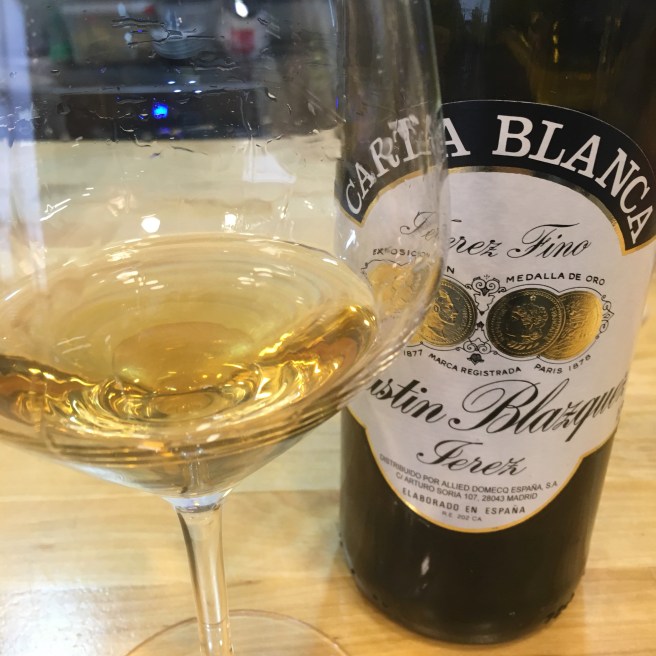
Fino Carta Blanca (de los 90)

Now this is one of those old sherries that have acquired a kind of legendary status (the Spanish prefer the term “mythical” but I can assure you it is real). Agustin Blázquez was one of the many bodegas acquired in the second half of the 20th Century by Domecq and I believe the brand disappeared in the 1990s (when the winemaker in charge was Jose Maria Quiros, now of Tradición). This bottle is from that late era so is around 20ish years old or maybe a bit more, and it was very generously brought along to lunch at Territorio Era by Juancho Asenjo.

And the wine deserves to be legendary: it was absolutely fantastic. Beautifully clear and only a half shade darker than your standard fino, it had maintained its clarity in aromatics and flavours too. Unlike a lot of examples of bottle aged sherries I have come across this seemed to have maintained its shape and balance: compact and with solidity of flavour, and still with a full range from white fruit on the nose and at the start of the palate through those burnt almonds down to salty zing. It may have had more zip and power when it was younger – we all did – but there was certainly plenty left, and I didn’t notice any of the turn to bitterness that I sometimes associate with the older biological wines.

Absolutely top class. Nothing wrong with these golden oldies if you get the right ones!


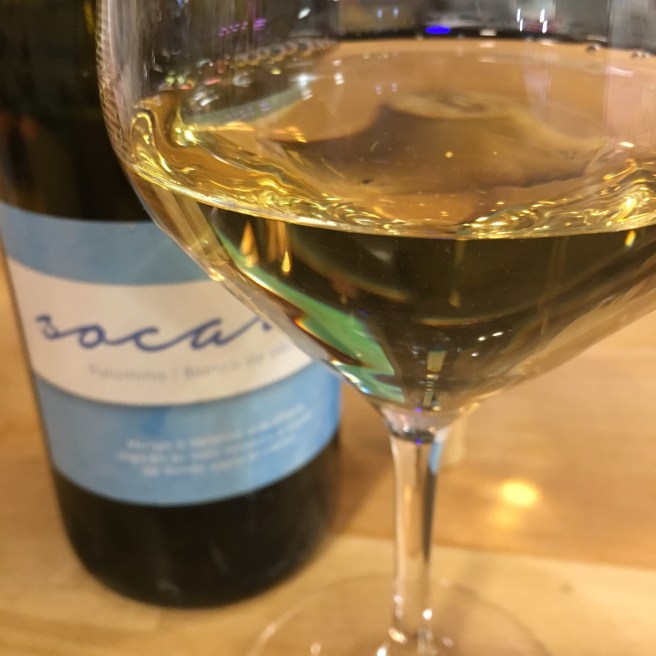
Socaire 2015 revisited

Good to come back to this and more grist to the mill of my palomino theories.

This is the Socaire, a wine named for the hiding spots from the wind that sweeps over the primest of albariza real estate in Chiclana, Finca Matalian. The Finca has a very high chalk content, is 100m up and right by the sea in the Southernmost limit of the “marco de Jerez”, making it a unique bit of terroir. And sure enough it is the source of a really fantastic line up of wines, of which this is one. In fact it wouldn’t be an exaggeration to say that this wine is a bit of a phenomenon: there are people out there who even define the movement towards making new wines in the region as “Socairismo”.

From memory (if you want precision you are reading the wrong blog) this wine was fermented and aged in butts that had previously been used to make the marvellous Arroyuelo fino, then given 20 months or so in the butt, without flor (at least the butt was full) before being released around Easter this year.

I first tried this back in September and I found it a little quiet compared to the first vintage, from 2014, although given my experience with other palomino white wines at the time I wondered if it would find its feet with some more time in the bottle and so it seems to have proved. Maybe it is just the memory of the 2014 wearing off but this certainly isn’t timid at all. Lovely big aromas of over-ripe plums and aromatic herbs and a packet of flavour on the palate. A really tasty and enjoyable wine with just enough of a fresh finish to wash it down.

Fantastic stuff and I am beginning to convince myself of this need to keep these in the bottle. It is not an easy thing to do though.

Authenticity and the wines of the Sherry region

I get asked quite often what my favourite sherries are and find it very hard to narrow it down to less than twenty or so. But in a few words, the wines that interest me most are the wines that are authentic both in the sense of expressing their time, their place, or their upbringing, and, most importantly, in the sense of being what they say they are.

Because, unfortunately, the more you learn about the wines of el marco the harder it can be to keep believing everything you are told.

First, and whether it is biological or oxidative ageing, there is a tendency to exaggerate the amount of the ageing. The Consejo Regulador do a great job with the VOS and VORS classification, but 30 years now seems to have become the minimum age for an old sherry. In fact if your wine isn’t 50 years old (not certified by anyone) you aren’t anyone, and it seems like every year the wines get older. I was told recently that a wine was an average age of 83 years (which seemed suspiciously specific) and there is more than one wine out there the given age of which is a straight-up fairy tale.

A lot of this ties in with the blarney and the poetry that abounds in the region (it can often seem people are more interested in drinking “history” than drinking wine) but it is a bit unedifying when you keep getting told ever higher ages for the same wines. And neither is it a problem that is unique to the old olorosos and amontillados (let’s not get into the “mystery” of the palo cortados). The number of amazingly youthful-tasting 10+ year old finos and manzanilla pasadas is remarkable, and some of them are getting older as we speak. In one particularly egregious example I was given a new bottling taken from a classic solera I know well, and even asked for a glass of the original alongside to appreciate if there were any differences (not that I could tell). Up to there I was quite happy, but then I was told that the first criadera had four more years under flor than the original wine from the solera, which made my head hurt a little bit.

On the other hand, and more recently, as interest in pagos and vineyards begins to take hold there is more and more talk of long-established wines being from X pago or Y pago, in prime terroir and harvested by hand, when only a couple of years ago the same bodegas had told me that the wine had come from a variety of sources or even the cooperative (a cooperative, moreover, that does not source its wine from the afore-mentioned prime terroir). Now in fairness I have also learned that there are bodegas out there – more than you would think – that do source from a single vineyard and have every right to put the name of the pago on the label. I certainly wouldn’t discourage them from doing so or suggest that all new labellings of this kind are misleading, but I worry sometimes that we may end up with more asparagus than Tudela.

And these are only two of the more harmless worries. Under the foggy miasma of blarney and poetry there are whispers of darker deeds: wines being secretly touched up with something sweet to make them a little more amenable on the palate (pedro ximenez or moscatel if you are lucky), or having something very old/concentrated added to make them seem older, or something very dark to make them look as if they have been longer in the barrel. You even hear of wines from bodegas in less fashionable areas of el marco being sold as remnants of cellars with much swankier addresses. The worst of it is that you hear the whispers so often: one very respected maker told me that he believed his to be the only bodega in the region that did not spice up the wines (I don’t believe him, but he seemed to believe it).

And when you think about the recent history of the region it is really not surprising. The fortification, the solera, selection, roceo and cabeceo, all seem designed to correct nature’s variations, while all too scant attention has been paid to the raw materials. It is a philosophy geared more towards manufacturing wines than growing them. One of the more telling comments I have heard recently was the reaction of a very high profile wine maker to the suggestion that single vintage, single vineyard wines were the way forward: “the problem is that you have to be careful right from the being to the end”. The implication, of course, is that you don’t with the solera wines because the solera is much more forgiving (and of course it is).

This isn’t to say that the cellar produced wines cannot be great. Some of my very favourite producers do not own vineyards, buying wine in and doing absolute wonders in the cellar. Neither do I believe for a moment that all these wines are adulterated. But even if they aren’t juiced up, the cellar produced wines can almost be programmed to have certain characteristics: acetaldehide in the biological wines, volatile and other acidity in the oxidated wines, old barrel effects across the board. As one brilliant maker puts it, flor is the oak of the sherry region, and when overdone it becomes the oak chips.

Biological and oxidative ageing can produce wines of stunning beauty and complexity but with the great power that these processes give the winemakers comes great responsibility. And while every wine making region in the world has its issues, and the sherry region is probably no worse than anywhere else, in a region where wines are continually being mixed and processed, it is crucial to be disciplined and transparent in those mixes and processes.

So these days I am less interested in the hay bales or the zing “effects” that once moved me, and although it is great to see new faces, I am increasingly suspicious of the new kid on the block labels with implausibly perfect back stories. (I would really rather that the barrel selectors and new labels, in particular, were up-front about where they sourced their wines from.) I am also put off by the long lost botas of eye wateringly strong liquids that are frequently found and marketed. They can be remarkable wines, but at the moment the marketing seems more imaginative than transparent.

Rather, I am increasingly drawn to wines that express their time and place, whether that be vintage and terroir specific, or the really classic soleras, and rather than effects what I am looking for is the balance and the profile of the wines – more than anything the mark of a quality wine maker. At the very least I like to know what I am drinking and where it came from. And then I really do enjoy drinking it.