Pedro Ximenez Toro Albala 1986 

  
By Toro Albala, the top men when it comes to PX, and a vintage too. Has a cracking Ficha

Anyway, this is late night material. Dark black brown, gloopy, nose of black raisins and spices. 

On the palate it is sweet and concentrated, grapey raisins. Concentrated raisin – lightly spicey, sugary. It is a full flavour alright. Still juicy raisins though, california raisins from a little red box.

Luxurious and not OTT – really good. 

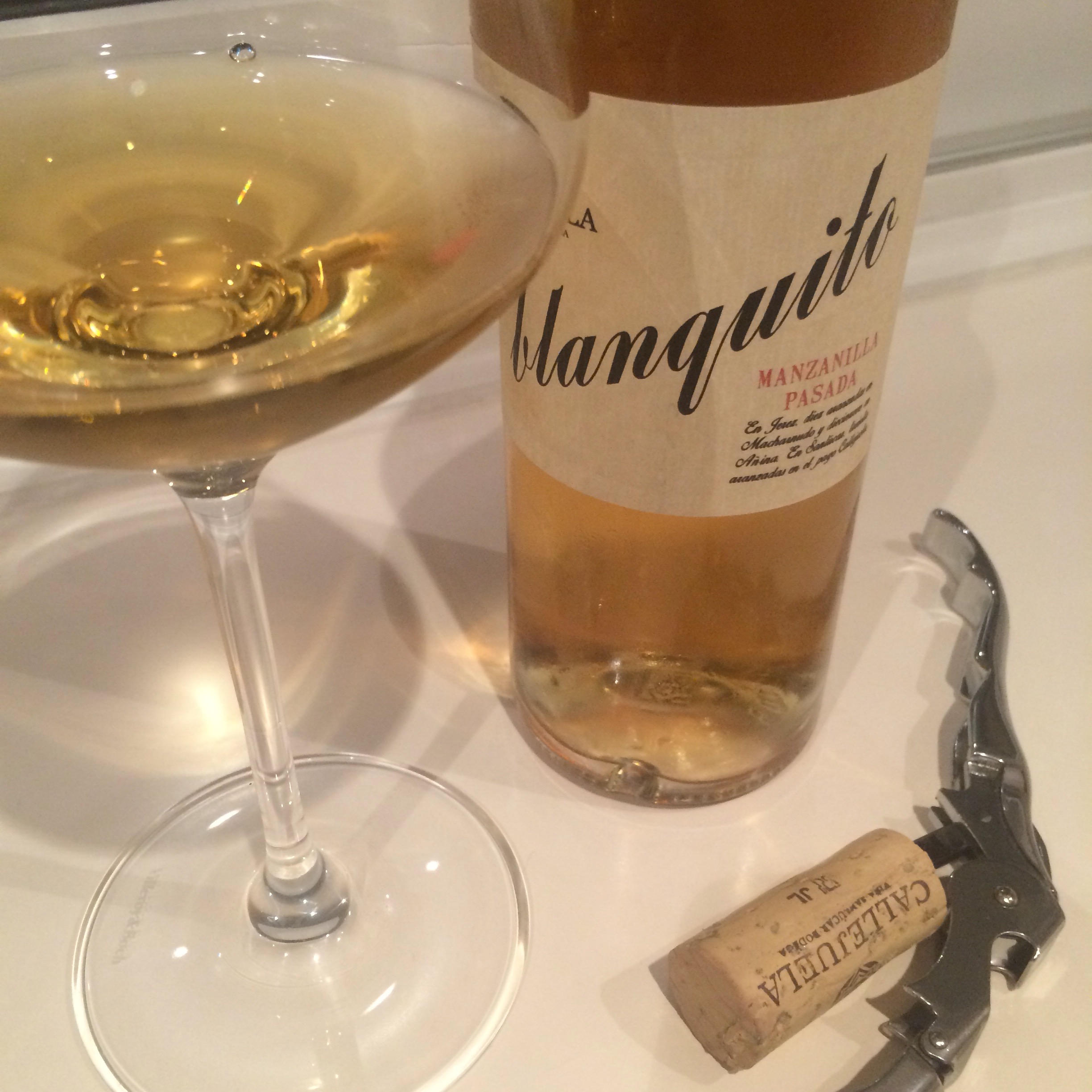
Manzanilla pasada Blanquito 


This was a gift a friend kindly brought back from a trip to Der Guerrita in Sanlucar and a very welcome one too. By Callejuela, one of my favourite bodegas, and by the hand of Ramiro Ibañez (in fact I have had it before).

Love the fleeting aroma of apples from this first up – apples that ripe, juicy, maybe even starting to rot in the bowl. Then the minerals seem to take over – that sea air/ozone. I don’t find the apples again after a while but I get blossoms and flowers in amongst the seaside fumes.

On the palate it is full bodied, saline, sapid and dry but with suggestions of those apples again – very nicely integrated – just turns bitter on the quite long, clingy finish. Mineral with a hint of fruit rather than the reverse.

Enjoying this with Camaron de la Isla – a moment of superb tranquility.

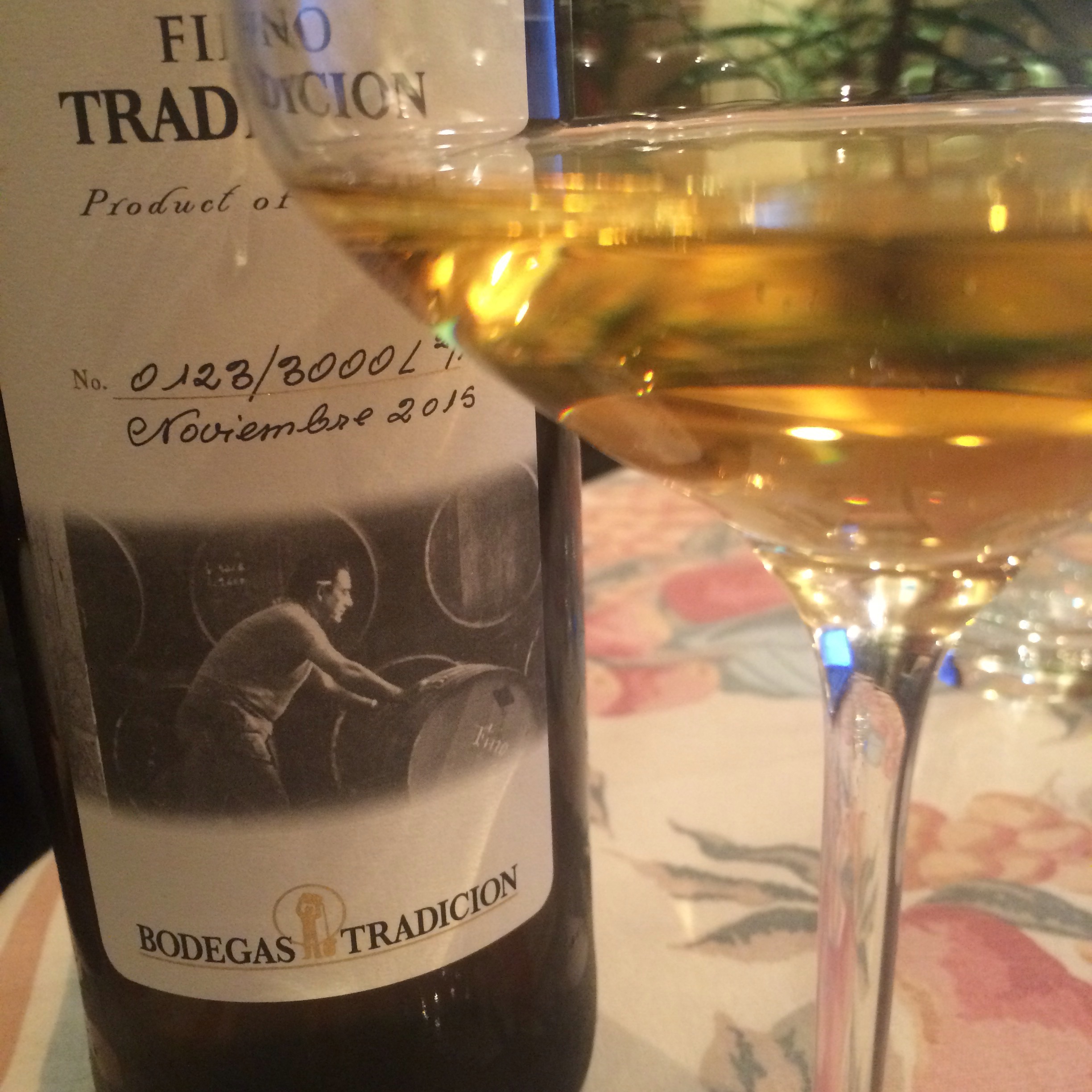
Fino Tradicion november 2015 


Bodegas Tradicion really are a quality outfit. As I have said before, they have done as much as anyone to open up the market for quality sherries, and this is a quality wine. The ficha is not as detailed as it could be but the wine itself is top class.

This bottle is half full (sorry, I mean empty, as in half finished) in a flash – a really elegant, nutty, yeasty fino. Has less citrus than the May 2015 and much more my bag. Tasty stuff. It is literally disappearing by the minute.


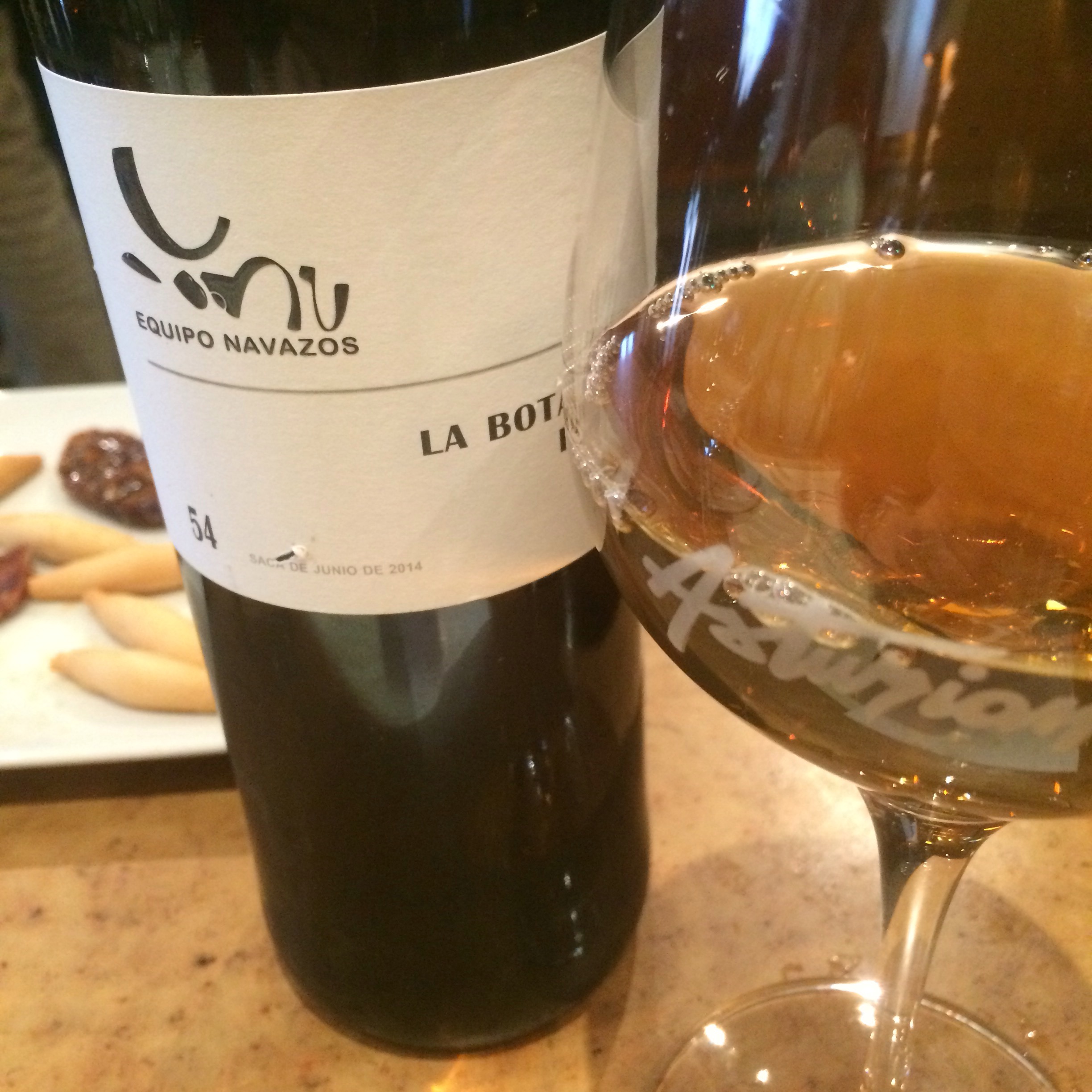
La Bota de Fino 54, “Macharnudo Alto”

Getting around to writing up the second great wine from my trip to Asturianos on Friday and it is another excellent wine by Equipo Navazos.

Fans of terroir in Jerez will note that the name refers to one of the great pagos of Jerez (there are four major pagos, Balbaina, Macharnudo, of which this would the “Alto” part, Añina and Carrascal) – you can see the pagos of Jerez marked on this cracking map that a friend emailed me last week (doesn’t reach into Sanlucar unfortunately).  Historically Macharnudo Alto has always been very highly considered – maybe the most famous single vineyard fino, Inocente, is from up there – I even recall someone (maybe Luis G?) referring to it once as the “DRC” of Jerez (which seems a bit of a stretch, but I think I see where he is going).

Since the ficha is again only available in Spanish a little background. This is a new saca (in June 2014) from the solera from which “La Bota” Numbers 2, 7, 15, 18, 27 and 35 came, and was solected from both the solera and the (somewhat younger wine in the) second criadera with an average underflor of about 10 years.

And it is a joy of a wine. I had it with a “revuelto de gambas, algas, y erizos” (scrambled eggs with prawns, seaweed and sea urchin) but it is so meaty it overpowered the eggs and might have been better with something meatier.

Has a very evolved, dark colour, and on the nost there is dark, . earthy straw or undergrowth with maybe just a hint of something sweet. Big and creamy in texture, nice integrated salinity giving a buzz on the tongue and more yeasty, vegetable flavours on the palate. Again slight hints of sweetness or fruit and a juicy, yeasty, fine finish.

Excellent stuff yet again.

Amontillado 1730

This is a VORS (30 year old) amontillado by bodegas Alvaro Domecq (not the lost, lamented giant, but a scion of the family that bought the business of Pilar Aranda, a historic almacenista). I got this one so cheap I was intrigued but it turned out to be a really tasty little bottle of amontillado.

Beautiful red colour – maybe not quite as crystal clear as some. On the nose it is like barrel aged toffee – little bit of that gasoline buzz in the background. Then on the palate it isn’t all that full but there is acidity, toffee and burnt flavours.

Very pleasant drop all told.

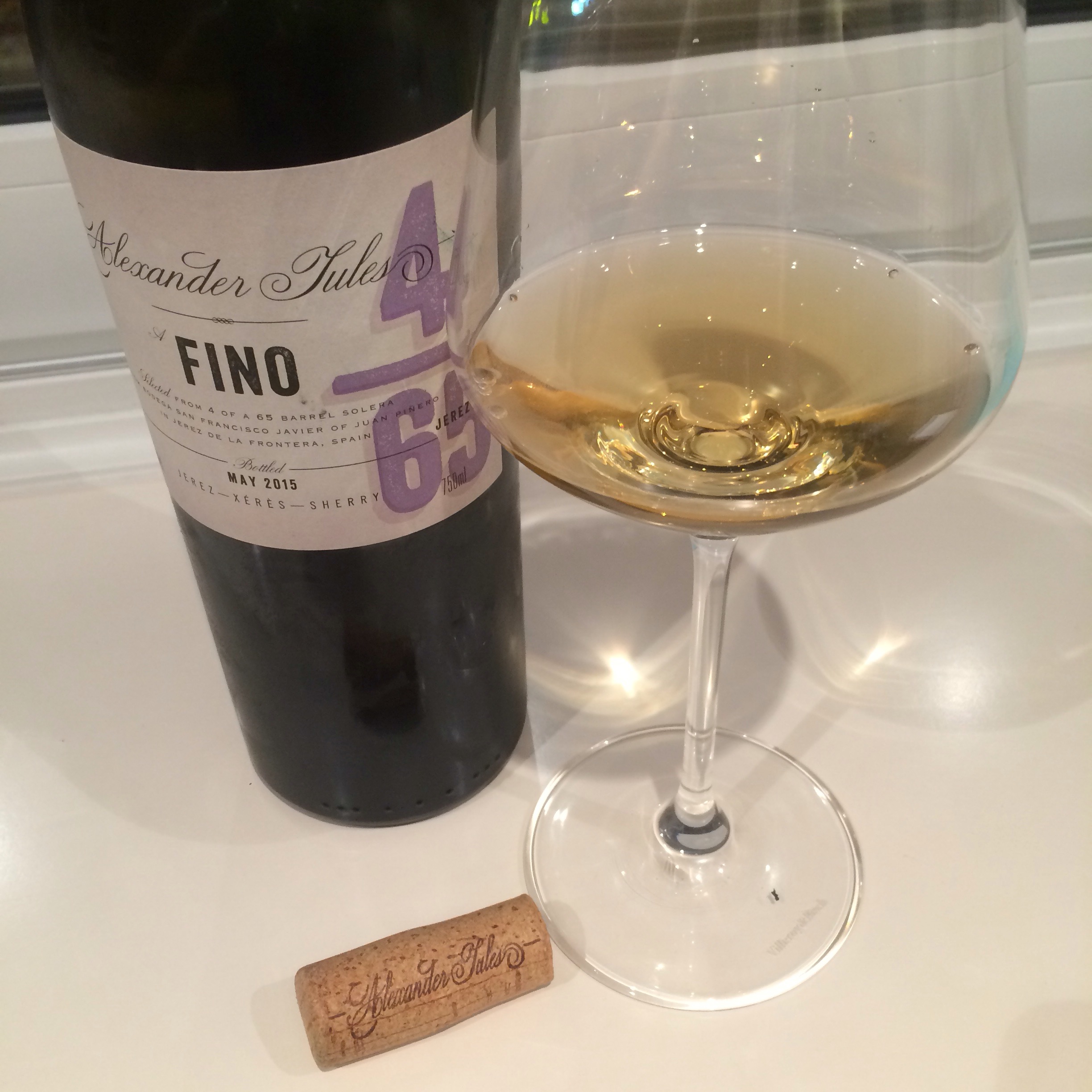
Fino Alexander Jules may 2015 

I must say I feel more than a little envious, and in awe, of this guy. Listen to this:

Alexander Jules is my label of barrel selected sherries. I search the Sherry Triangle for soleras I love in unique and great bodegas, tasting each barrel in the solera, marking with chalk those I feel to be the most complex and elegant, or those that reflect the profile I would like to bring out from within the solera. All bottlings are en rama, being only gently filtered or entirely unfiltered and, starting in 2014, no sulfites are added.

The label reference indicates that this wine has been taken from 4 botas selected from 65 in a solera of Juan Piñero (hence the 4/65). The reference to Juan Piñero makes me wonder: are we talking about Fino Camborio? If so the result is surprisingly different. But it is indeed and the reason is explained perfectly in this superb note on the website.

And the wine is as good as you might expect. If you like big yeasty finos you will love this. Old gold colour, big hay bales, nuts and minerals on the nose. In the mouth it is silky, sapid and tasty – easy, cool entry, real salty zing on the tongue and the sides of the mouth and then big yeasty flavours. Seems to last for ages – and keeps on making the mouth water too.

Only a 1000 of them bottled so get hold if you can.

UBE 2013 – Take 2 

Like a bus in the rain, you wait ages for your first bottle of UBE and then three come along at once. Having had my first bottle on Friday here we are, not a week later, on bottle number 2, this time in the marvellous  Taberna Verdejo.

Not a lot to report against last week’s tasting, this came out with a little bit of an aroma/first impression of oxidation but it improved a lot after the first glass or so. Still those same sweet herbal (ie herbs that suggest sweetness) flavours. My lunch companion made an excellent point about the acidity – or maybe intensity – of the wine giving it a nice balance. I certainly noticed the fruit more this time.

Actually speaking about that intensity a couple of funny things happened pairing wise. We had an excellent lunch, with a couple of navajas each, half a menestra, half a callos, a wild boar escabeche and a pato azulon: so good indeed that I completely forgot about the oloroso desert I wanted to try. Anyway, we started with a manzanilla pasada, then opened the UBE, planning to move onto an amontillado, but before we knew it we had eaten the callos (which are meaty, smokey and very tasty here) with the UBE  and, you know, it wasn’t at all bad as a pairing. Evidently we are talking contrasts but the freshness of the wine cut through the rich flavours and it stood its own ground in flavour terms quite comfortably.

No doubt about it, this is serious wine (and it was a serious lunch).

UBE 2013

There are many reasons to come to Surtopia (as discussed ad nauseam here, here and here) and not the least of them is the chance to drink singular wines like this one.

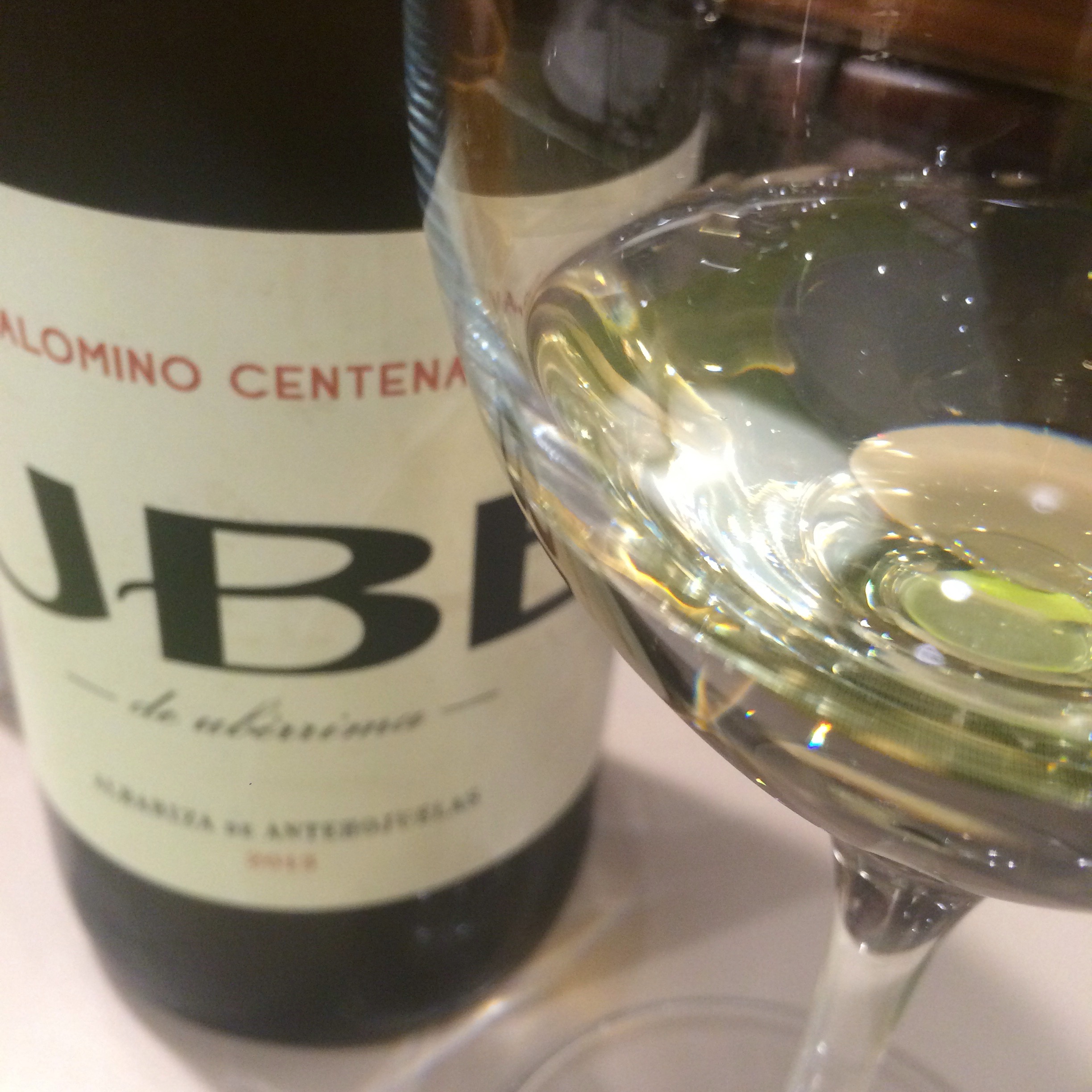
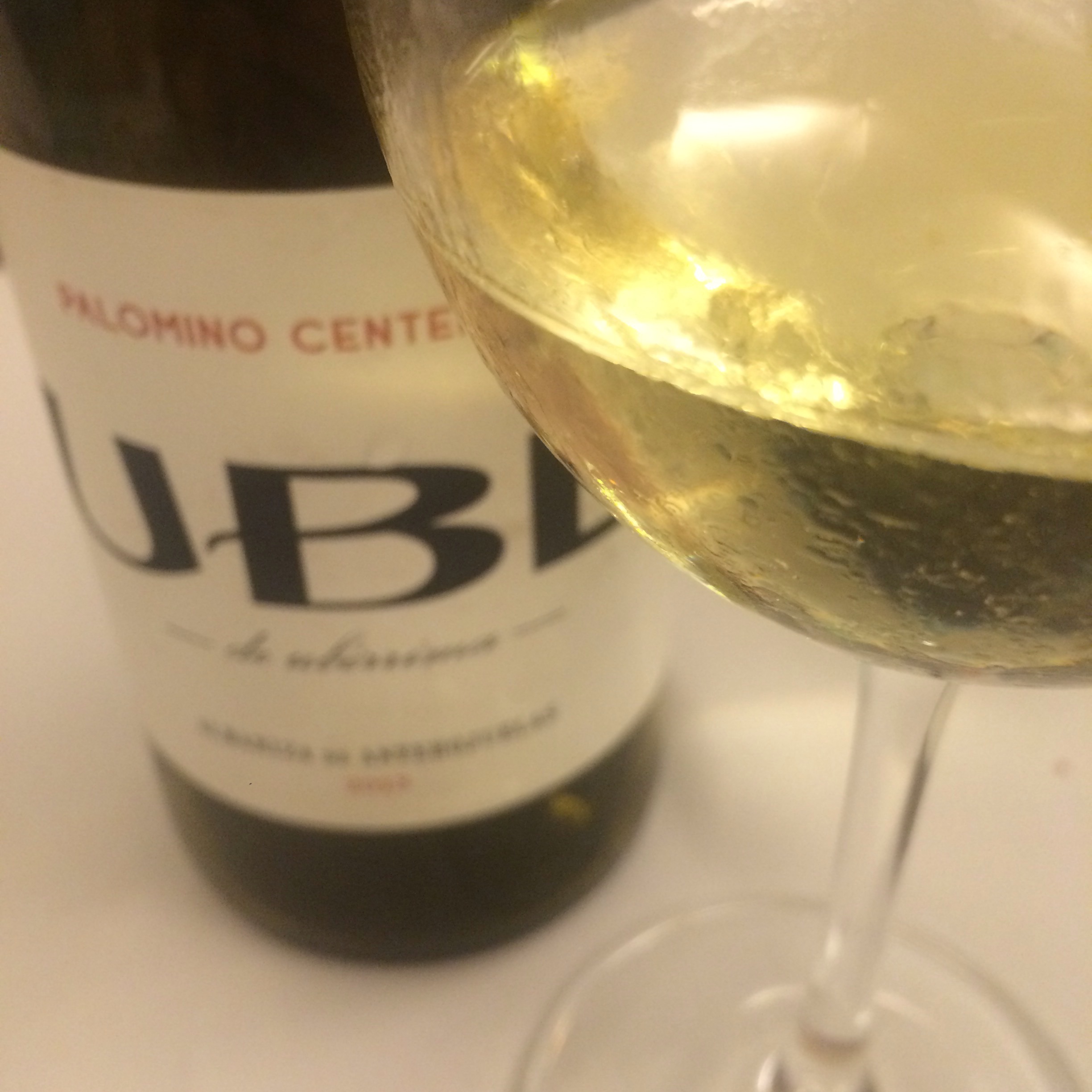
This is yet another of the fascinating projects of Ramiro Ibañez and, since the artistic photo is a bit blurry I need to fill in some blanks. This is the 2013, the full name is “Ube de uberrina” (uberrina meaning “utmost”) it is labelled “Palomino Centenario” (100 year old palomino) and it also references the kind of albariza soil involved – albariza de antehojuelas (new to me – will see what I can find out). The back label has yet more intriguing information, showing that the fruit is from a small finca called Las Vegas and the cepage is 73% palomino fino (the now dominant strain of palomino, originally from Sanlucar), 16% palomino jerezano (which I believe is aka palomino de jerez or palomino basto – originally the dominant grape but now much less common) and 11% palomino peluson (new to me). It says on the label that these are the original “roots” (by which I assume we are talking pre-phylloxera).

So a fascinating CV, no doubt about it, and the resulting wine is very fine stuff indeed. As you can see it is a pale but solid gold colour with green notes – crystal clear and appetising. It has an elegant nose with very subtle notes that are floral/herbal (honeysuckle and rosemary) and mineral (limestone rather than seasalt).

On the palate it is dry but has flavours that suggest sweetness – sweet herbs and almonds – and just enough mineral bite. Brilliant balance to it too: it is really fresh, clean and elegant. Brilliant stuff – maybe not the huge flavour profile of some white wines but classy and utterly enjoyable.

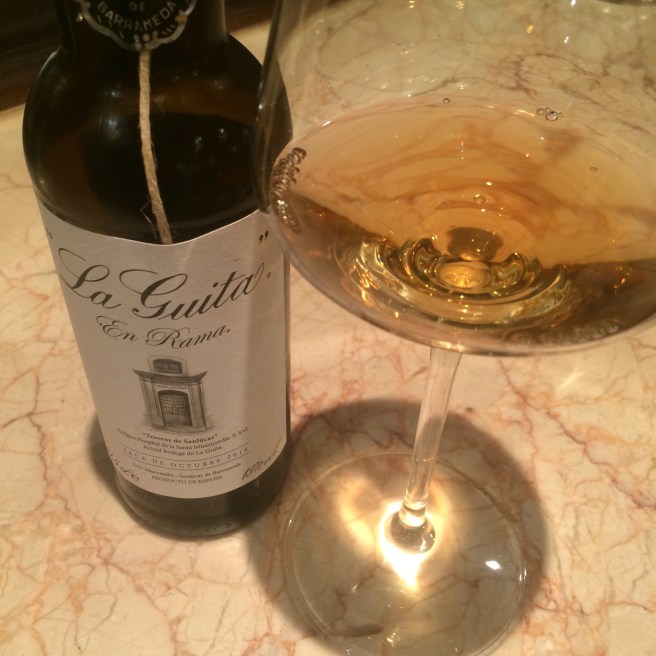
Manzanilla en rama La Guita octubre 2015 


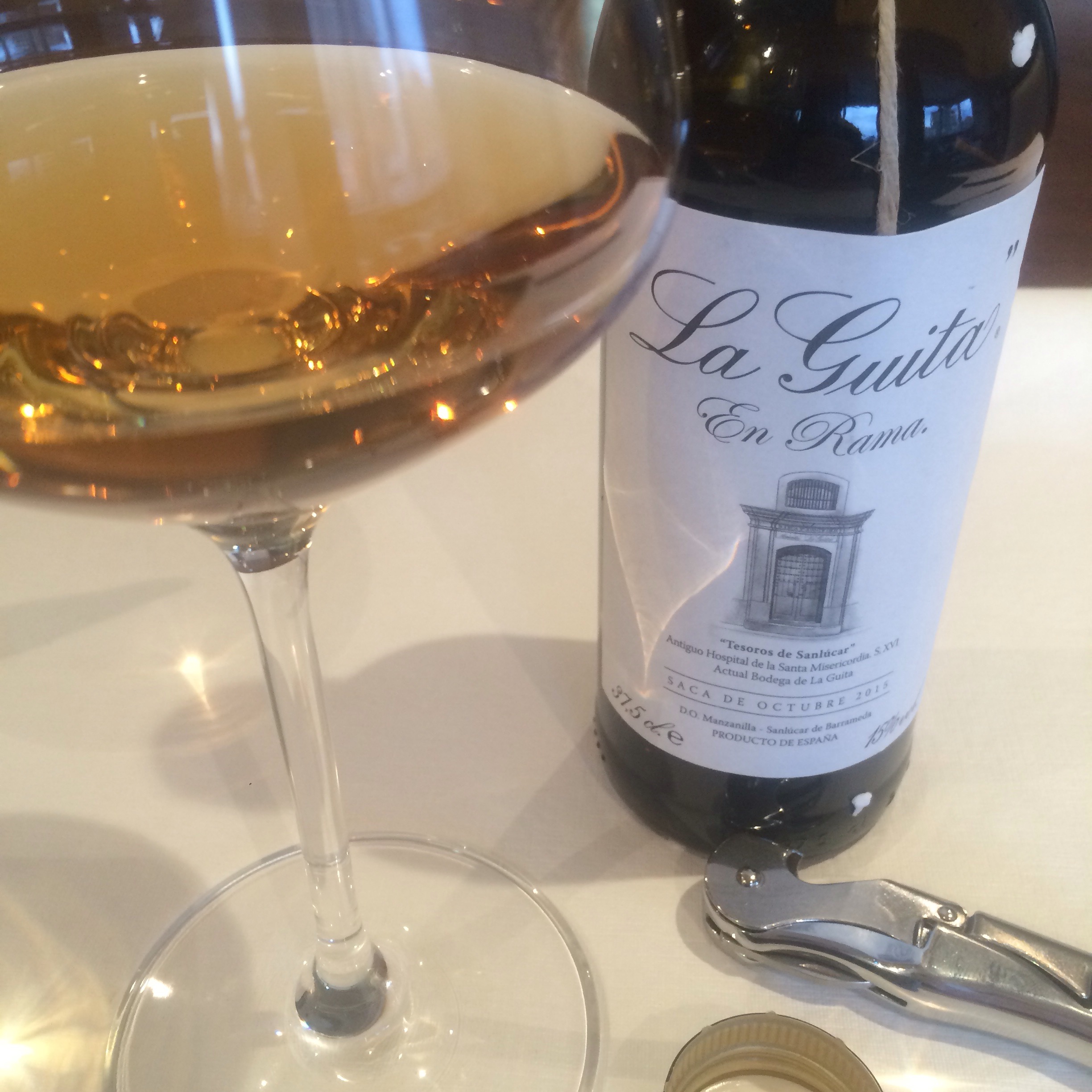
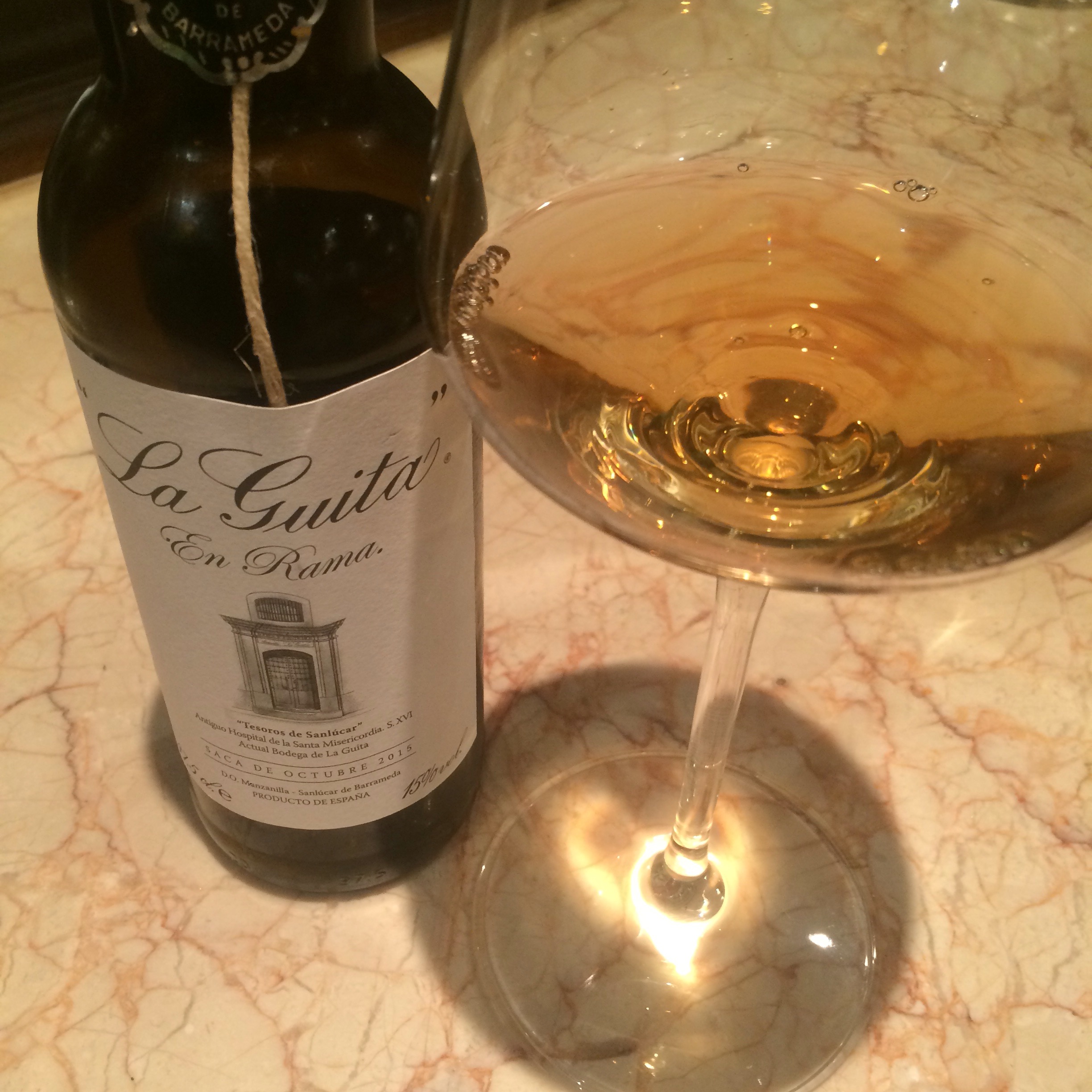
Just look at the colour of this. Pretty amazing colour for a four and a half year old manzanilla bottled a mere three months ago. Bears no resemblance to the classic La Guita manzanilla I have had litres and litres of in the sunshine over the years and in fact really reminds me of one I had last year that had been in the bottle five years.

La Guita (an old Andalucian slang term for “cash”) is one of the classic manzanillas and the bodega from which it comes – Domingo Perez Marin – is owned by  Grupo Estevez.  This wine has been selected from one hundred year old soleras located in two different bodegas, the Misericordia (originally a 16th Century hospital and featured on the label) and Pago Sanlúcar Viejo. It is the first saca en rama from La Guita and as you can imagine there has been a lot of expectation.

It is beautifully presented and the official “La Guita” web has an excellent ficha with details of the vines (all Sanlucar, mainly Pago de Miraflores), the soil type (chalky/limestone rich clay), acidity and sugar content etc. A couple of datapoints that are missing are the number of criaderas, sacas etc but the ficha is well above average as it is (and much better than it was last year, from memory, so well done).

So anyway, getting back to the wine itself, the colour is tremendous – a real old gold, like old brass cuff links and collar studs. On the nose too it is mineral – tin, with sea air rather than salt and orangey citrus – reminded me almost of a Loire white in some ways.

On the palate I get those same characteristics, nice minerals – not aggressive salinity by any means, very smooth and integrated but enough bite to be interesting. Has a lovely suggestion of sweetness and citrus notes – again orange peel. Not the biggest volume (compared to the Solears it lacks juice) but nice flavours nevertheless. Also a really nice length and the citrus notes persist making it a very pleasant finish.

This is extremely drinkable, by which I mean I need a bigger bottle (or several). 

(And three days later the last glass is still intact: the colour, nose and flavours seem very similar. Still that tinny nose and flavour of citrussy yeast. Very good but I don’t see myself taking two attempts to drink future bottles.)
  

Manzanilla en rama Solear – saca de invierno 2015 

  
The razorbill has landed and this is another lovely manzanilla.

It is a lovely gold colour, aromatic on the nose and is wonderfully expressive on the palate – vegetable, herbal and nutty. These spend 7 years or so under flor (in fact I read somewhere that these are technically manzanilla pasadas) but the yeast is still there in force and they seem to pack more herbs and less minerals than many older Sanlucar wines. 

Looking at the note on the back label they also emphasize the flavours but whereas they talk about an “explosion of light and flavour” I find it a bit more solid and meaty, particular by comparison to the autumn edition. 

No doubt about it though: another juicy, flavourful little bottle.