Big weekend in Madrid 


Big couple of days coming up here in the capital. Tomorrow not one but two top class events: Primitivo Collantes in Taberna Palo Cortado and Eduardo Ojeda of Equipo Navazos and the Estevez Group in Lavinia. Then, on Friday night a festival of Jerez, also at Lavinia.

Hard decisions have to be made and I will only be able to attend one of the three: Eduardo Ojeda in Lavinia. It is a shame because Primitivo Collantes gave anabsolute masterclass in Enoteca Barolo recently and last year’s feria at Lavinia was cracking fun. (There was a similar clash a little while ago – Ramiro Ibañez at Taberna Palo Cortado at the same time as Antonio Barbadillo at Lakasa.)

Anyway, my loss but I hope the rest of you have more luck!

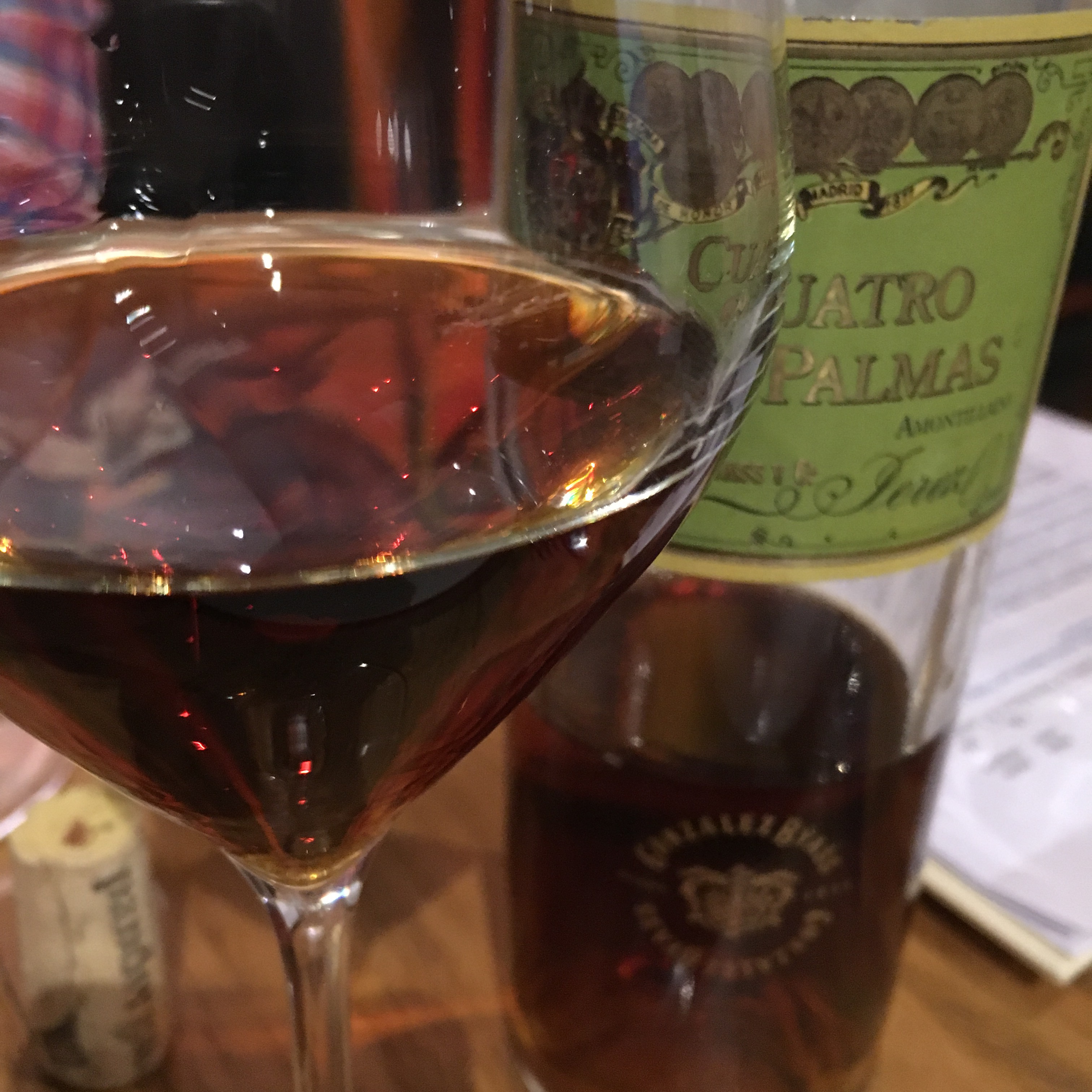
Amontillado Cuatro Palmas 2016

The end of a superb dinner at Angelita and an appropriately superb finish. 

One of the most elegant of the old amontillados available, this 2016 saca is right in my wheelhouse. Whereas I remember more orange in a previous saca this is a deeper chestnut in colour and has a more nutty profile, dryer and finer in profile even. It strikes me that the elegance I associate with it may come from the finely integrated salinity – zingily present but not excessive and not separate from the rest of the wine. Also the concentration of the wine is not overdone – has a better balance of flavour and acidity/alcohol than some bigger beasts. 

A really fine old wine out of the very top drawer. 

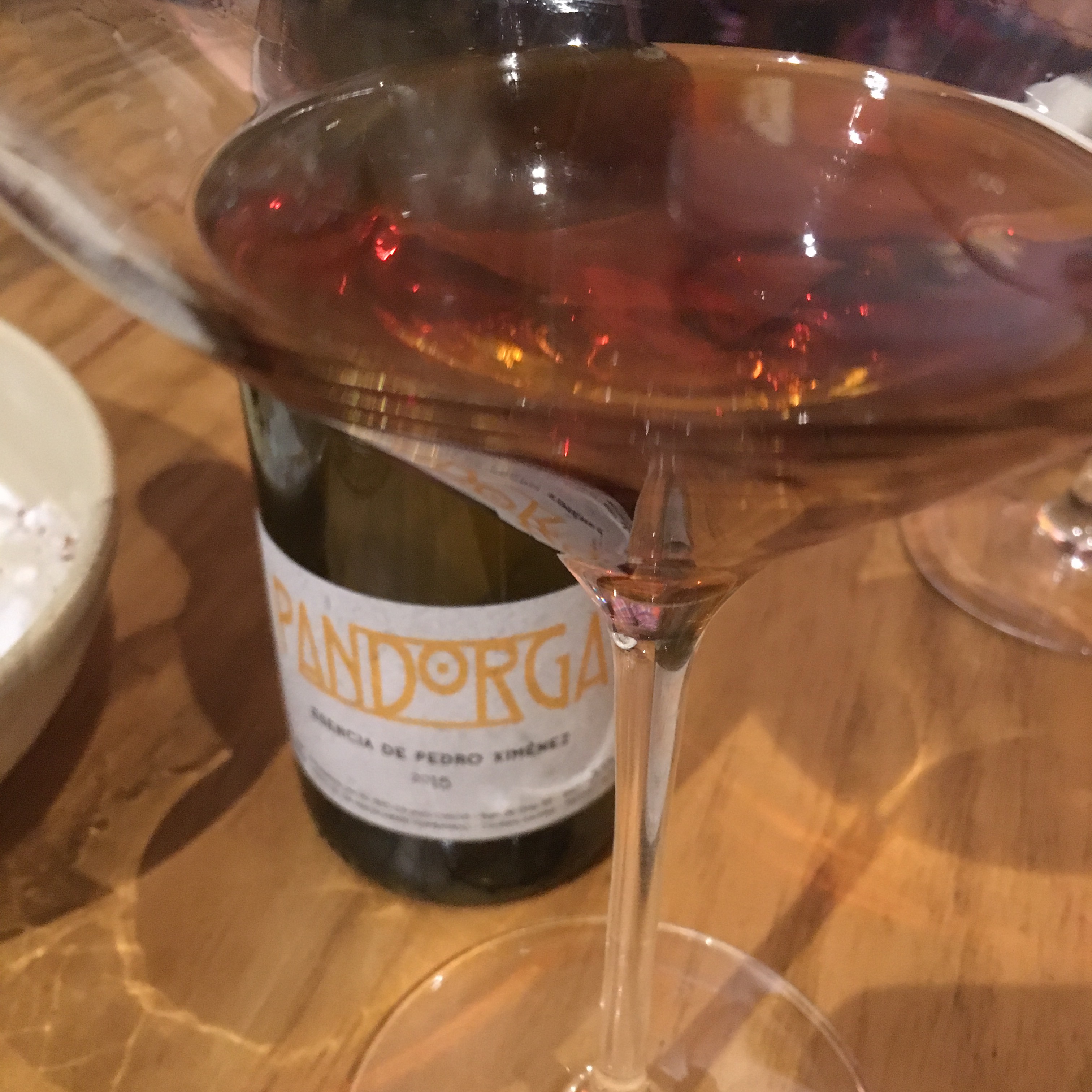
Pandorga 2015 – Essencia de Pedro Ximenez

Here is a wine you won’t see much of, if indeed it is a wine. 

It is the second edition of Ramiro Ibañez’s Pandorga pedro ximenez and, like the first, seeks to express the characteristics of the fruit and the añada – a young wine fermented in bota and no attempt to “correct” the effects of the growing season on the fruit. In most cases of industrial production a cool drying season might be corrected by more days of asoleo and fermentation at higher temperature, and a hot season with fewer days and more controlled temperatures. Ramiro’s approach is pro-cyclical: the effects of the cooler 2014 season given very little asoleo and accentuated by the naturally lower temperatures of fermentation. By comparison the hotter 2015 growing season meant more asoleo and a warmer fermentation. The result is an extraordinary, a tiny amount (and thus sold in tiny bottles) of nectar with 520g/l of sugar and only 5% alcohol – too little to allow it to be labelled wine. 

And if the 2014 was apricot jam this is fresh, ripe apricot juice. Just a touch of acidity to keep it honest, but the words that spring to mind are along the lines of ambrosia, nectar, sherbet and similar. 

Really an exceptional thing. I have my own tiny bottle at home, but we enjoyed this at the end of a sensational dinner at Angelita. (And what other restaurant can offer you wines as rare and unique as this?) 

Manzanilla de añada 2012 – 2/11 – May 2016

The visit of some good friends gave me an excuse to open this special manzanilla and see how it was getting on in the bottle after nearly a year. It is a vintage or “de añada” manzanilla from palomino fino harvested in 2012, fermented and fortified to around 15% and set aside for “static ageing” in individual botas instead of in a solera. There were 11 botas in total and this is the second bota to be bottled (hence the 2/11), on this occasion with around three and a half years under flor.

It is a lovely crystal clear gold colour with just a hint of green to it – exuding fresh green apple, and it did indeed have a sweetness to the nose and at the beginning of the palate, but more like the slight sweetness of fresh almonds, but then some spicey and bitter grapefruit notes that I associate with the time in the bottle (at least I don’t remember it quite as bitter). An exuberantly zingy mouthful and also quite full bodied, maybe even a touch heavy at the back end.

My feeling, looking back at my notes from July, October and November last year is that I enjoyed it a little more back then, particularly in November, and that this may be a touch quieter even only four months later. Unfortunately only two bottles left and one is being saved for the great vertical of 2026, but if I happen upon a stash in the next few months I may need to have another dip.


Unveiling the mystery: Gonzalez Byass and its Palo Cortados 

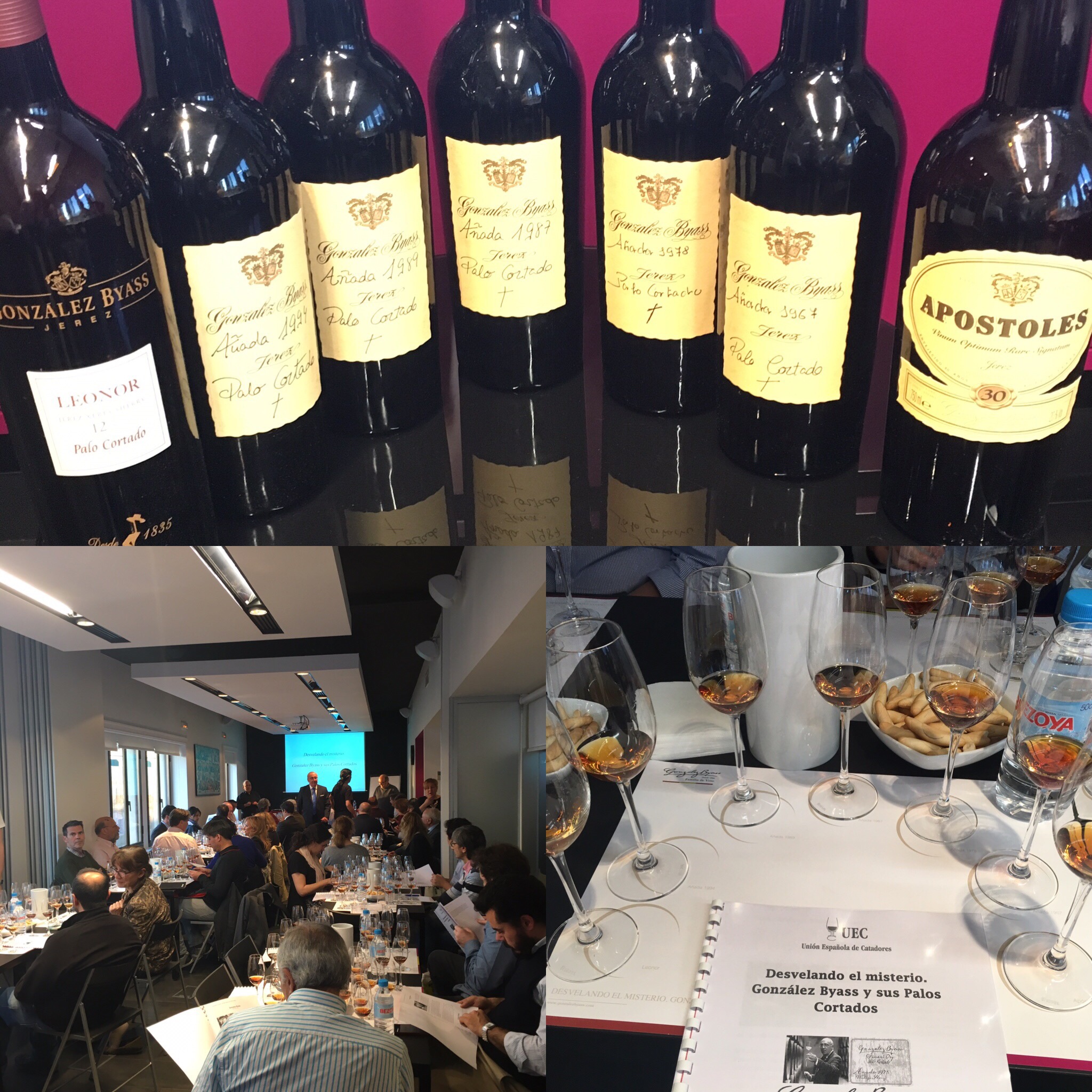
A really impressive tasting this one: the chance to taste Gonzalez Byass’ vintage palo cortados, including not just the current release but past and future releases too, and with Antonio Flores himself on hand to lead the tasting. The event was organized by the Unión Española de Catadores and due to the large number of attendees hosted by Gonzalez Byass themselves in their (pretty flash) Madrid headquarters.

Given the quality of the wines and the surroundings though I was surprised by a couple of aspects of the organization. First, the wines were served in very nice Riedel glasses but, as you can see above, glasses with not much more diameter than a traditional catavinos, whereas for wines of this age, concentration and complexity I would have killed for a bigger glass. Second, the wines had all been served before we arrived – hard to say how long before but it seemed a goodish while – and as a result the wines were at a warmish room temperature when they would probably have shown better a few degrees cooler.

Anyway, we soon got underway and you have to say Antonio Flores is a showman. He had us all imagining we were transported to Jerez for the evening (not hard to do given the sunshine outside and the aromas filling the room) before launching into an account of the history and origins of palo cortados, with equal measures of charisma, shtick, photographic and documentary evidence, graphs representing chemical changes in the wine over time and anecdotes that you would call both historic and historical. For me it was particularly interesting to hear Antonio reference with approval the views of the Sobrinos de Haurie, and in particular Ramiro Ibañez, acknowledging the relevance of the original añada wines, the importance of terroir and the quality of the mosto and even the role and importance of Sanlucar in the development of the solera process. However, Antonio is clearly a believer in the “mystery” that the title of the tasting referred to and kept returning to the mysterious, accidental or incidental origins, in particular involving cunning old capataces, and concluding that palo cortado was wine with not only a soul but actual fairies in it. (Fair enough: the man is described as the “Poet of Jerez” after all.)

While all this was still being explained I got stuck into the wines and a fascinating flight it was too. Gonzalez Byass reserve 200 botas each year (out of 26,000 produced) of first press wines using a specific kind of press whose name now escapes me. The botas are american oak and have 100l of air to allow the wines to develop, and when ready/in the best years, they release 987 bottles. Once those 987 bottles are consumed they move on to the next vintage. (And this really did strike me as a mystery, since 200 botas can produce quite a bit more than 987 bottles – either I am getting something wrong here or a lot of wine is being kept for some ulterior purpose.)

The first wine up was Leonor, not a vintage wine but Gonzalez Byass’ 12 year old palo cortado. A first press, fermented in stainless steel, fortified and aged in a solera. The resulting wine is 20% proof has 6g/l of residual sugar and a nice 4.2g/l of acidity. The sugar is there in the honey and nut aromas and although the sugar isn’t as evident on the palate it is a juicy caramel with a bit of spice and bite. Very decent indeed.

The first of the vintage wines was the Añada 1994, which the excellent ficha told us came from an extremely dry year with only 35 days of rain (347mm) and an average temperature of 19.7C. It was a punchy 21.5% proof, had 5.2g/l of residual sugar, 7.1g/l tartaric acid and 1g/l acetic acid and was absolutely top drawer. It had a fine, brandy-like nose of roasted nuts and spices, and a searing palate which after a first, acidic attack delivered a big, long mouthful of nuts and spices, even dried fruits like figs. I was surprised to hear Antonio say that he thought the wine lacked something on the palate – I found it had plenty of character.

Next up was Añada 1989 – wet year, with 76 days of rain (694 mm), warm with an average temperature of 20.1C. 21% vol, 7.0g/l tartaric acid, 0.82g/l acetic acid, 5g/l sugar. Really distinct to the first wine – on the nose a lot more haybale and even sawdust, then on the palate rather than nuts and spices I got burnt caramel and woody flavours. A fine, dry wine with a lot of concentration but, for my money, slightly less juice that the 1994. I was intrigued by the comparison and the information on the growing season – would the wet year have meant less concentrated fruit, or would the higher temperature compensate for that? Does all this concentration concentrate the nuances of the original wines? My impression, for what it is worth, was that in this wine the barrel maybe had taken over from the original wine – would have been interesting to try it five years ago.

Next was the current release, the Añada 1987 – 21.9%, 8.04g/l tartaric acid, 0.97g/l acetic acid, and 11g/l glycerin (only mentioned in this ficha). It was clear why the glycerin was pointed out – it was really evident in a wine that despite being older and even more acidic seemed fuller and with a sensation of sweetness. Had a really powerful, eye watering acidic attack up front and a full palate of very roasted nuts and spices like a blackened Christmas cake or the baked crust of something. Again lasted a long, long time and held its profile while it lasted – I begun to see what Antonio meant about the palate of the 1994 not being as substantial, although I am not sure all wines need to be this immense. (Unfortunately no information on the growing season for this wine.)

Next was the Añada 1978 – nearly forty years in the making (although now I think of it I am not sure when these wines were bottled) and 21.2%, 7.5g/l tartaric acid, 1.5g/l acetic acid and fully 8.3g/l sugar. On the nose it was that bit richer and heavier, reminiscent of church furniture polish, and on the palate too it was astringent and sharp, with black treacle sweet to bitterness and a bitter to bitter finish with notes of coffee and tobacco coming through. Impressive stuff and one to savour for a long time, but compared to the previous wines it struck me that it had gone a bit over the top in terms of drinkability.

The final vintage wine was the Añada 1967 – a dry year with only 475mm precipitation and a wine with 22% abv, 8.7g/l tartaric acid, 2g/l acetic acid, and 9g/l sugar (interesting that the sugar levels were so much higher in those older wines). Again the nose seemed foreboding, with woody, polish and bitter treacle aromas to the fore, and on the palate it was all concentration, bitter and astringent like burnt caramel and old furniture, with aniseed, coffee and tobacco flavours coming through on the finish. Not a wine to be approached lightly though.

And we finished up with a glass of Apóstoles (87% palomino and 13% pedro ximenez, 20%, 6.2g/l tartaric acid, 0.8g/l acetic acid, 50g/l sugar). Here we have palomino fortified to 18% and the pedro ximenez to 15.5% and placed in separate soleras for 12 years, before being blended and aged together in a single solera for a further 18 years. No longer labelled a palo cortado it is nevertheless a classic and was interesting to try after the añada wines. The sweetness balances it up – sweet tomato aromas on the nose and figs or dates on the palate – and it is certainly more accessible than the older vintage wines, but as often happens it feels a little more bolted together than the monovarietals.

Unfortunately I had to hurry off and was unable to ask any of the questions that were piling up in my tiny mind. What are they doing with all these reserved botas? Why don’t they release a few more añadas? Is all the concentration really necessary? Wouldn’t it be better to bottle and release the same wines at different stages so the variation in vintage might be more apparent? Interesting as the wines had been, all that power and concentration made them hard to really enjoy for me, and it all struck me as a shame that this huge reserve of high quality single vintage wines was only producing very small quantities of extreme wines that are so very difficult to obtain.

Antonio signed off by encouraging us to take our favourite wine and dip our handkerchief in it so that we could enjoy the aromas in the days ahead. I didn’t take him up on it (Mrs Undertheflor has strong enough views on the subject of wine tastings without me coming home whiffing of bodega), but even without the aural cue I came away with memories of some exceptional and very interesting wines.

As for the mystery, I didn’t notice the presence of the soul or fairies in the wines, and unless I missed something I understood they were first press oxidated wines – palo cortados that might once have been called olorosos – rather than the product of any cellaring error or intervention divine or otherwise. The only mystery, if you ask me, is why they are so old, so few, and so hard to get.
Ancestral Las Alegrias del Carrascal 2015  

Was on a mission for fish and chips at La Berenjena de Chamberi (thanks to Victor de la Serna, my personal fish and chip consultant) and observed that they had a few nice wines on the winelist – Fino Arroyuelo, el Fossi and a couple of other goodies, and most eye-catchingly this. On another day I would have put to the test my theory about manzanilla and fish and chips but couldn’t resist some Sanlúcar bubbles.

By Alba Viticultores, it is a 100% palomino fino from a vineyard by the name of Las Alegrias on the Pago Carrascal in Sanlucar. Harvested and fermented in 2015 and this one was disgorged in October 2016.

I was having too much fun to take notes but from memory it had a little bit of reduction first up but then a very pleasant nose of herbal apple sweetness and fresh grass. On the palate it was dry, with muted appley fruit, salinity, maybe a suggestion of creaminess and a slightly bitter, carbonic finish.

Very pleasant all around – will have to come back to try the manzanilla and chips another day.

La Bota de Vino Blanco 57 – Florpower MMXII 

Out for a walk on a beautiful sunny afternoon I stuck my head into Taberna Averias and happened upon this remarkable white wine by Equipo Navazos. I must have last had it about a year ago down in Puerto de Santa Maria – on an occasion that was memorable in a number of ways – and have a bottle stowed away so was interested to see how it was faring.

As I failed to explain the first time I posted about this wine it is an interesting beast: palomino from Pago Miraflores fermented in inox, then eight months under flor in botas, then into more inox for another 18 months or so with some flor (full ficha here).

The resulting wine has a bit of everything. a nice rich colour, it still has a healthy amount of appley fruit to it on the nose and the palate but none of the pungent edge of a mosto. On the other hand there is just enough chalky tingle and mineral outline to give it crispness and a nice herbal or yeasty bitterness too.

Very good stuff – a glass is never the same as a full bottle but I reckon I am going to keep the one I have under wraps for a while yet.


Media Ración by Cuenllas

Media Ración

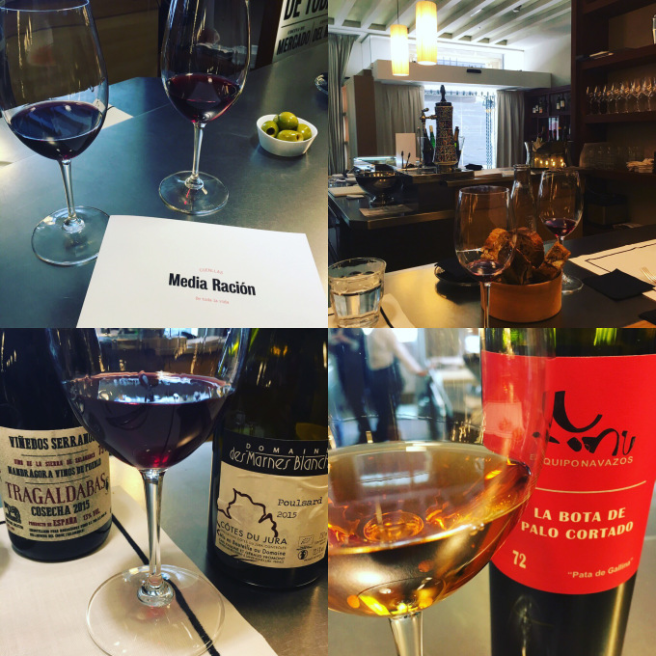
Have been meaning to post for a little while now about one of my new favourite places in Madrid – Media Ración (by Cuenllas). To be found in the Hotel Urso, a stone’s throw from both my actual office and my “other” office (Territorio Era) it is an elegantly appointed, airy space with a fantastic range of wines by the glass and, as the name suggests (half portion for the non Spanish), lots of dinky little dishes to snack on while you imbibe.

It is an outpost (and, for me, a highly accessible outpost) of one of Madrid’s true wine “temples”, Cuenllas, which frankly deserves its own post and will get one when I have the time. For now suffice it to say that Cuenllas is a guarantee of both quality and variety. They have really top drawer wines and victuals of every kind, and occasionally some unique ones, and little brother here isn’t too bad either.

In sherry terms the list was originally small but potent – Amontillado and Oloroso from Bodegas Tradición, Fino and Pedro Ximenez by Maestro Sierra, Manzanilla la Maruja by Piñero, and a quite staggering palo cortado by Equipo Navazos (see above). However, a couple of weeks later the sherrylist is longer and packed with quality: Inocente, La Promesa; Toro Albala 1986; a really good range. Moreover, the sherries form part of an excellent, well chosen wine list covering every style and continent, and with a nice rotation of a dozen or so wines by the glass. 

The emphasis is on quality but the variety is fun: yesterday we had a Ridge Zinfandel that was as delicious as it was surprising – aromatic, harmonious and balanced. And even better, there is expert help on hand in the form of the sommelier Amanda, who consistently puts me to the test in the blind tasting stakes (and defeats me let’s be honest) and, if you are lucky, Fernando Cuenllas himself.

Throw in the excellent grub, the chance to try lots of delicious wines and dishes, and friendly, efficient staff and you have the makings of an excellent addition to the Madrid restaurant and wine scene (and if we can convince them to add a few more sherries maybe even the sherry scene too).

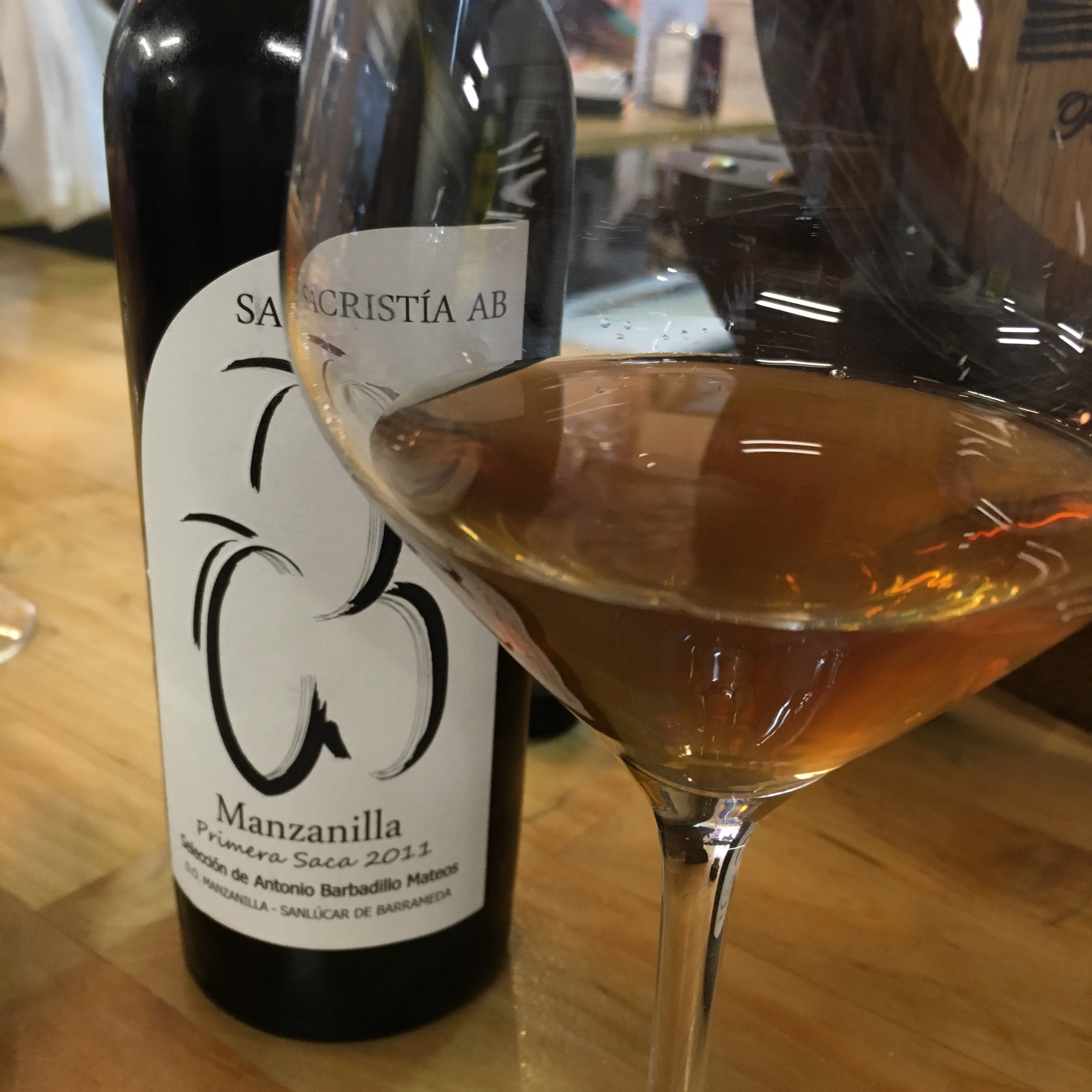
Manzanilla Sacristia AB – 1a saca de 2011 

Once again, just look at the colour of that. I write often about what a special place Territorio Era is and this sort of thing is one of the (many) reasons: the chance to try a special six year old manzanilla like this one.

Antonio Barbadillo started selecting and bottling limited releases of manzanillas in 2010 and so this is one of the very first, selected from Bodegas Sanchez Ayala of Gabriela, Gabriela Oro and Galeon fame. It is a bodega that has also been a happy hunting ground for the guys at Equipo Navazos and in general has a bit of a cult following (at least on this blog). The wines tend to be very incisive, but with a relatively pronounced and quite distinctive esparto grass character – like a stilleto in a velvet glove (note: not sure about this simile will try and think of something better). I still remember Antonio’s selection from the end of 2012 – my favourite of the series so far – so was really keen to try this.

As you can see, the colour is extraordinary. These wines tend to evolve relatively quickly – they are absolutely unfiltered and untreated – and after only six years this is a rich brown colour. (I say “only” six years – I have had en rama finos that were ten years old and had not got half as far as this.) The nose is also evolved, a lovely sweetness to it, esparto grass aroma but sweetened as if it had been wet and was just starting to rot.

On the palate it is smooth and full in flavour, baked apple and nuts and mellow salinity – waters the mouth and lasts and lasts. Unlike some wines with time in the bottle I didn’t notice added bitterness.  I must admit, though, that I was left hankering for a bit more vertical punch and incision (so much so that I had glass of the 2016 to compare) and ultimately felt that it had maybe gone a little past its absolute peak (which I reckon is around three to four years, if you can wait that long).

A lovely old wine though, and the mellowing of the years has only made it more drinkable.