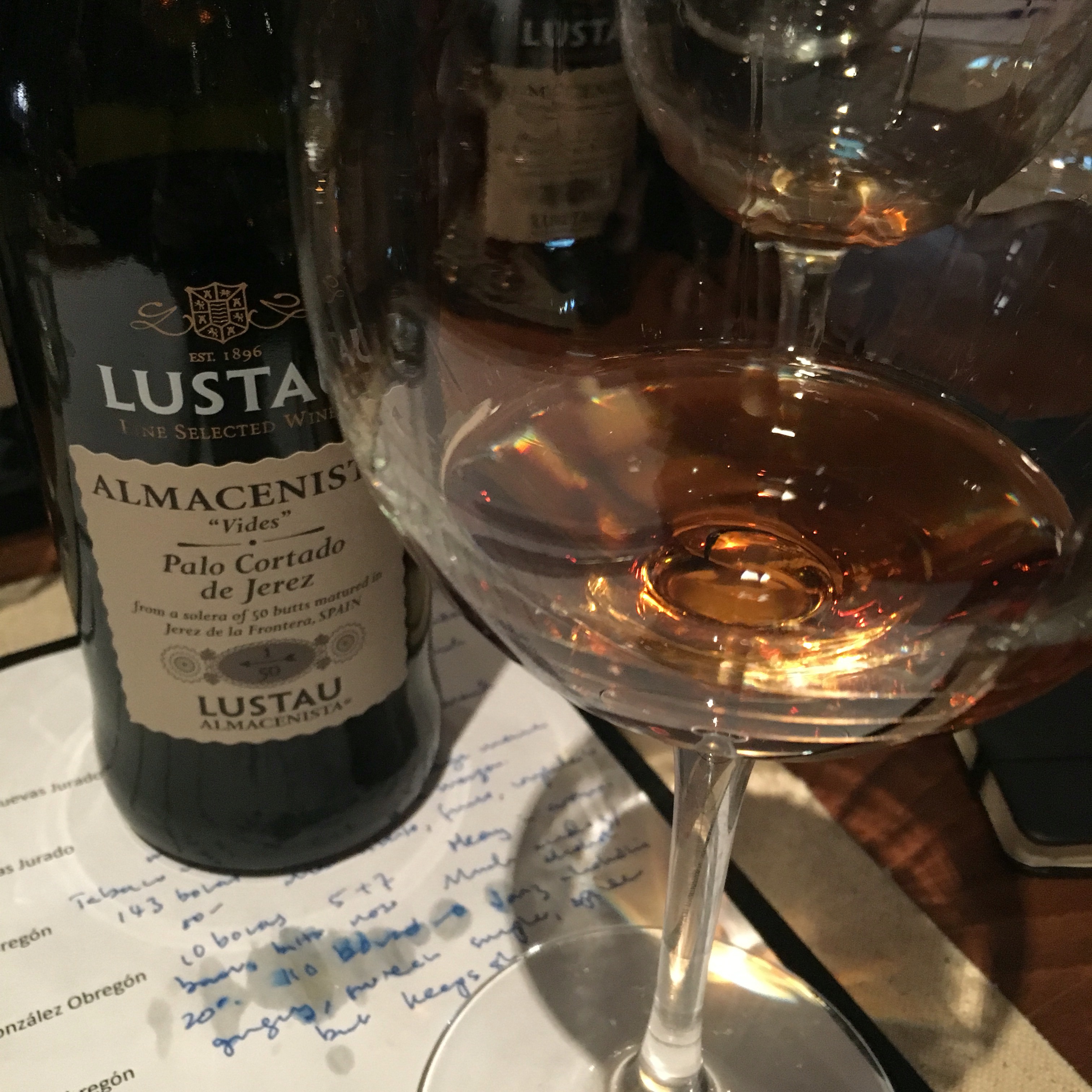
Palo Cortado Cayetano del Pino y Cia, Lustau Almacenistas 


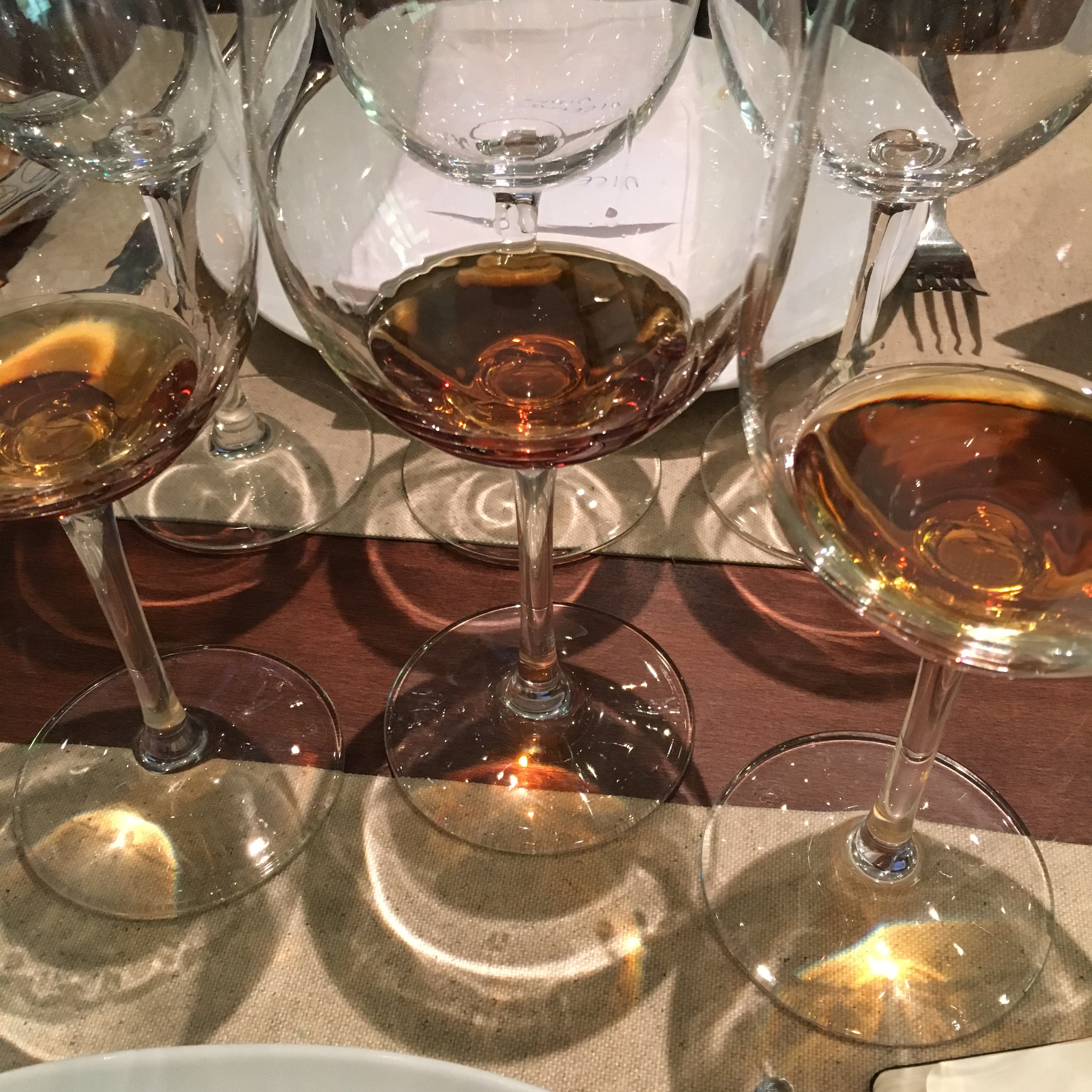
The Almacenistas collection is excellent.  The concept is absolutely right. It pays homage to the traditions of the region while recognizing the variation and uniqueness that is possible. More importantly the wines are top drawer – some of them are amongst my very favourite sherries – and they were the stars of one of the most enjoyable tastings I can remember.

So when the guys at Vila Viniteca tipped me off to this new addition to the range I couldn’t wait to have a go at it. (In fact, I believe I may have tried this wine in different packaging for the UK market but I am not 100% sure – it was at the end of a long day and looked very different, and although it seems very familiar I have no photo or notes ).

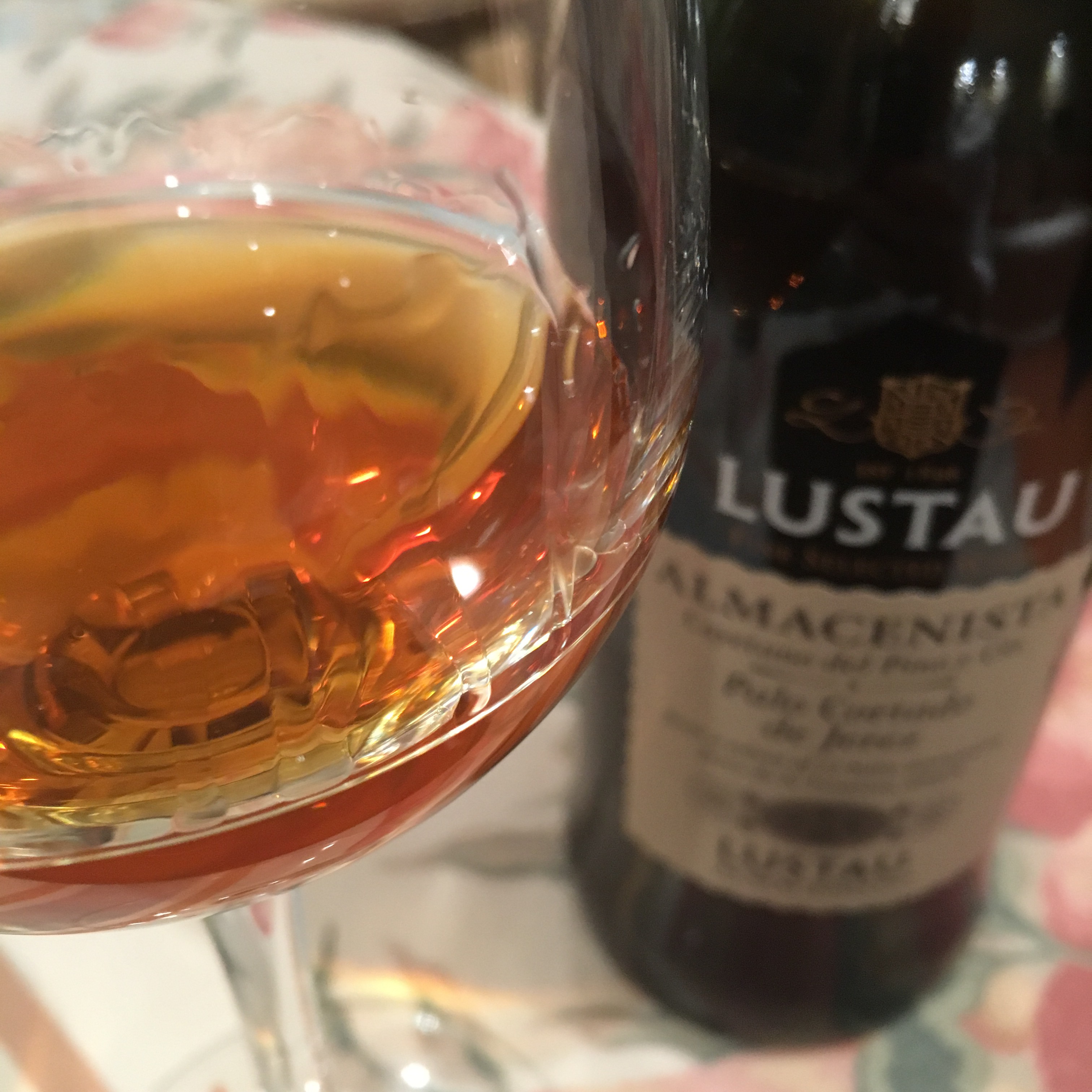
I definitely have tried it now, anyway, and it is another cracking wine. Lovely, vivacious colour and clarity to it (photo deliberately blurs the bottle because I wanted you to see the liquid). The nose has a little bit of brandy-light volatile to it with a citric/gingery sweetness – reminiscent of a liqueur from one of these mountaintop monasteries. Maybe a bit more volatile than I thought, with varnish like aromas as it opens out. Then on the palate it is dry, zingy, a sweet to bitter sensation of nuts and then an ashy, mineral finish. Very long at the end – bitter citrus flavours and salty chimney ashes hanging around for a long time.

Another racey, enjoyable wine from this brilliant series.
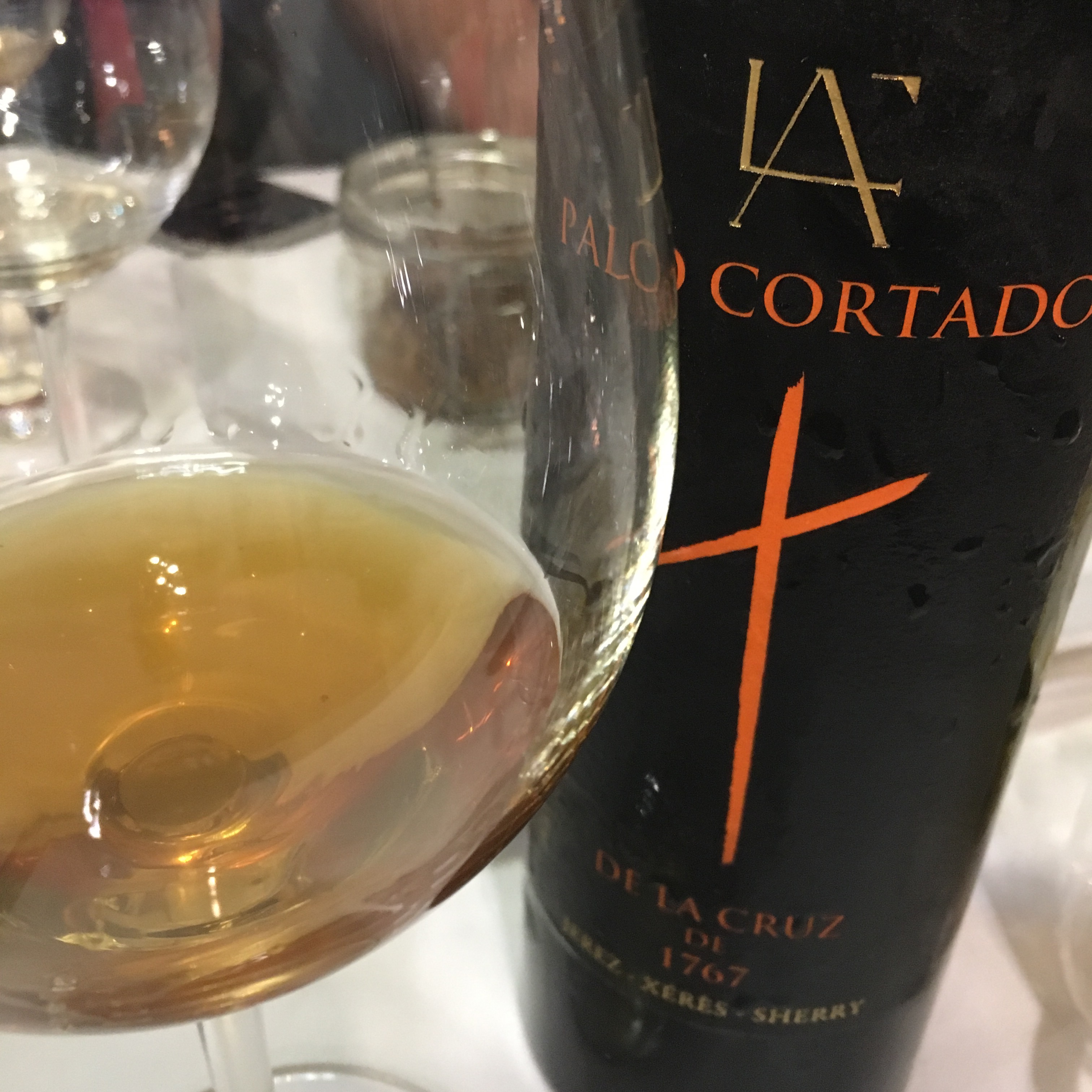
Palo Cortado De la Cruz de 1767

I have never had a bottle of this to myself or really had time to study it but having encountered it twice before (at the Feria de vinos and the Salon de los Vinos Generosos) last night it was brought to a cracking dinner in La Piperna. Third time lucky I thought and I even took a couple of notes. It is a relatively new release and the only wine, as far as I know, from Bodegas Arfe, an old old building (the 1767) but under the brand new management of the former enologo of Garveys, Luis Arroyo. I think they literally released their first wines this year.

As you can see it is a brown-yellow amber colour and at least this bottle last night wasn’t entirely crystalline – just slightly cloudy. On the nose it has nuts and sawdust, and the spicey, gingery and tobacco aromas I associate with old barrels. More a bundle of aromas than a strong, punchy nose.

A very similar story on the palate. It is not over concentrated or astringent and by no means overpowering – almost light, and maybe a bit lacking in body. Has a nice caramel and nuts at the beginning, buzzy salinity and acidity and spicey, gingery flavours, with sawdust and tobacco flavours on the finish but overall gives the impression of a new wine in an old barrel.

A nice, distinctive wine but lacking in power and uniformity.

La Bota de Palo Cortado 62 “Diez años despues”

This is the wine chosen by the guys at Equipo Navazos to celebrate their 10th year and true to their recent releases it is a bit different. The previous anniversary release was a very limited edition and subsequently became very very valuable, so this was one I didn’t want to miss (and thanks to the guys at Coalla Gourmet here we are).

It is a palo cortado from the “Sanatorio” – the bodega of Manuel Aragon in Chiclana, at the far South of el Marco (and beloved of this blog for a number of reasons). Like a classic Equipo Navazos release we are told it is from a single cask that has not been touched for years and that the wine is an average of around 50-60 years old. 

It is a deep brown colour – crystalline but a tone that is a little dull. On the palate it is pleasantly gentle and fresh – in fact not as powerful or saline as I expected for a wine of its age. It is full of salty, nutty, tobacco and barrel flavours, maybe even a bit of orange peel hands – it is nicely integrated and has a very long, fresh but slightly bitter finish. It just lacks that power – while I generally pine for exactly this kind of elegance and flavour, here I am missing a bit of grunt. 

No doubt about it, another fascinating release. 

Mons Urium in Taberna Palo Cortado

Another great night yesterday in Taberna Palo Cortado, this time to taste the wines of Bodegas Urium, a small, family run bodega that is one of the newest faces in Jerez but to judge from last night one of the most passionate.

The bodega has been around for “centuries”, formerly, as an almacenista (one of the “faceless”  winemakers of Jerez, as one of the guys put it last night) and is located on Calle Muro, aka “Wall Street”. The bodega is run by Alonso and Rocio Ruiz, a father and daughter team from a family from the town of Moguer, in Huelva (known to the Romans as “Mons Urium”, from whence the name). Alonso fulfilled a lifelong dream – learnt in turn from his own father – when they acquired the bodega in 2009, acquiring not only a historic bodega but, more importantly, its contents. In total around 500 botas of wines, many of them very old and, to judge by last night, very fine.

Last night we had five wines: a very nice fino en rama – fruitful, yeasty and juicy – with around eight years under flor, and four VORS wines with an average age of 45 years – the amontillado, oloroso and palo cortado, pictured above, and a very youthful tasting 45 year old Pedro Ximenez.  Five excellent wines – I particularly liked the fino and the punchy, saline oloroso, but the amontillado was elegant and smokey and the palo cortado had a bit of spirit to it.

More importantly, we also had the chance to meet Rocio and one got a clear impression of a project that was moving in the right direction. Having trained with none other than Luis Perez she has a very uncluttered, balanced approach to winemaking that was as free from blarney as it was from unnecessary formalism: wine making with wine at its center, with the goal of making wine that people can drink. It was fascinating to hear her talk about the gradual progress in tasting, assessing and classifying mostos and wines, and the efforts to imprint their own style on the old “jewels” they had inherited. It all sounded like hard work, but despite that there was a lot of laughter and enthusiasm that was captivating.

All in all, another terrific evening in Taberna Palo Cortado and a real pleasure to meet one of the young winemakers pushing the region forward.


Palo Cortado Reliquia 

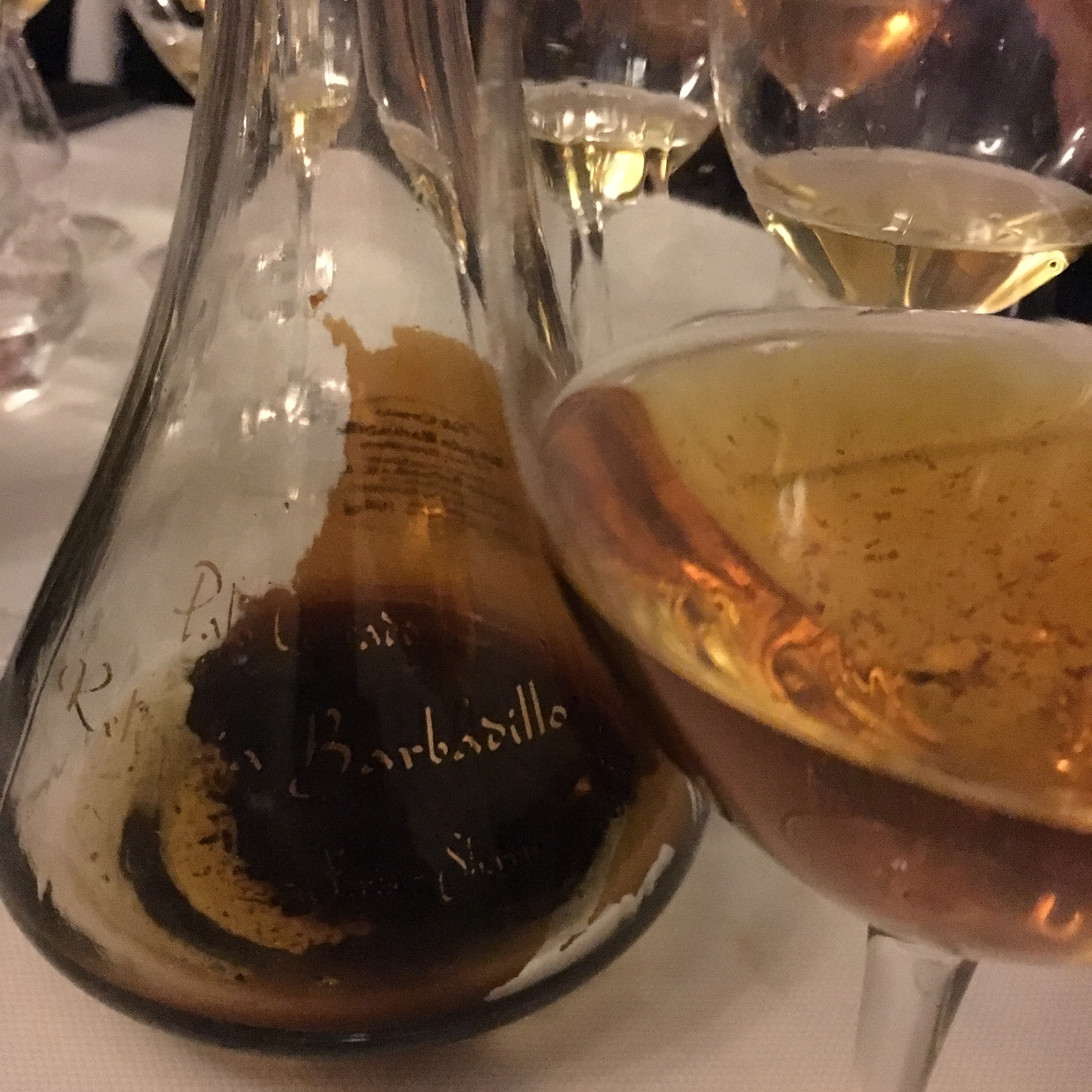
How does one write a tasting note about a wine like this? It is a massively old Palo Cortado by Barbadillo that after a 100 years or so of quiet excellence (the ficha has a nice potted history) was launched to superstardom (and correspondingly astronomic prices) by being awarded 100 points by the Wine Advocate. This one was purchased as a team effort and consumed during a cracking dinner last night.

The colour is paler than I expected – a honey gold as you can see – and it had a lot of sediment. The nose was terrific – a little bit of furniture polish then citric sweetness, toasted nuts, fresh sawdust and chamomile, some salty sea air.

Most importantly, for such an old, concentrated wine it was beautifully elegant and integrated and as a result highly drinkable. Very dry but not at all astringent, with salinity and acidity that warm the tongue without being harsh, and big umami flavours of nuts, toasted nuts and a trace of orange zest bitterness. No edges to it, very silky on the palate and an immensely long, mouth watering finish. 

A beautiful highly drinkable old wine.

Palo Cortado Añada 1975, Bodegas Tradicion 

Another vintage specific wine, again during a terrific lunch at Restaurante Vinoteca Garcia de la Navarra (you can just see the great Luis in the background there), but this time a 41 year old Palo Cortado (although only 39 years oxidative ageing, from a saca in 2014) – number 39 of the 50 magnums produced. Intriguingly it says Bota Nº1 – wonder how many more of these they have waiting for release?

Again the photo strikes me as deceptive (I didn’t notice dim lighting at the time but it may be the light behind). Nevertheless, it was a deep reddish brown – maybe a touch darker than usual – then on the nose the overwhelming memory is of elegance, a nice salty caramel, fresh citrus, and maybe just a hint of polish.

The palate is even more refined and elegant – a really clean, fresh and delicately structured mouthful. Nice caramel flavours with a delicate citrus flavour, then a pleasingly integrated salinity and acidity, then a slightly more burnt caramel and bitter citrus aftertaste – and a pleasant finish that fades out. What is most notable is that cleanliness and definition. It doesn’t have any of the astringency or old barrel flavours I associate with a 40 year old palo cortado (not having been in a solera it doesn’t have that famous teaspoon of “infinitely old” wine), although perhaps if you were being very critical (and maybe for the same reason) neither does it perhaps reach the very heights of intensity either.

I am often bemused when people call the real brutally intense dinosaurs of the cellar “delights”, but for this extremely youthful forty one year old, that description is absolutely spot on – a delightfully elegant wine.


Palo cortado Marques de Rodil 

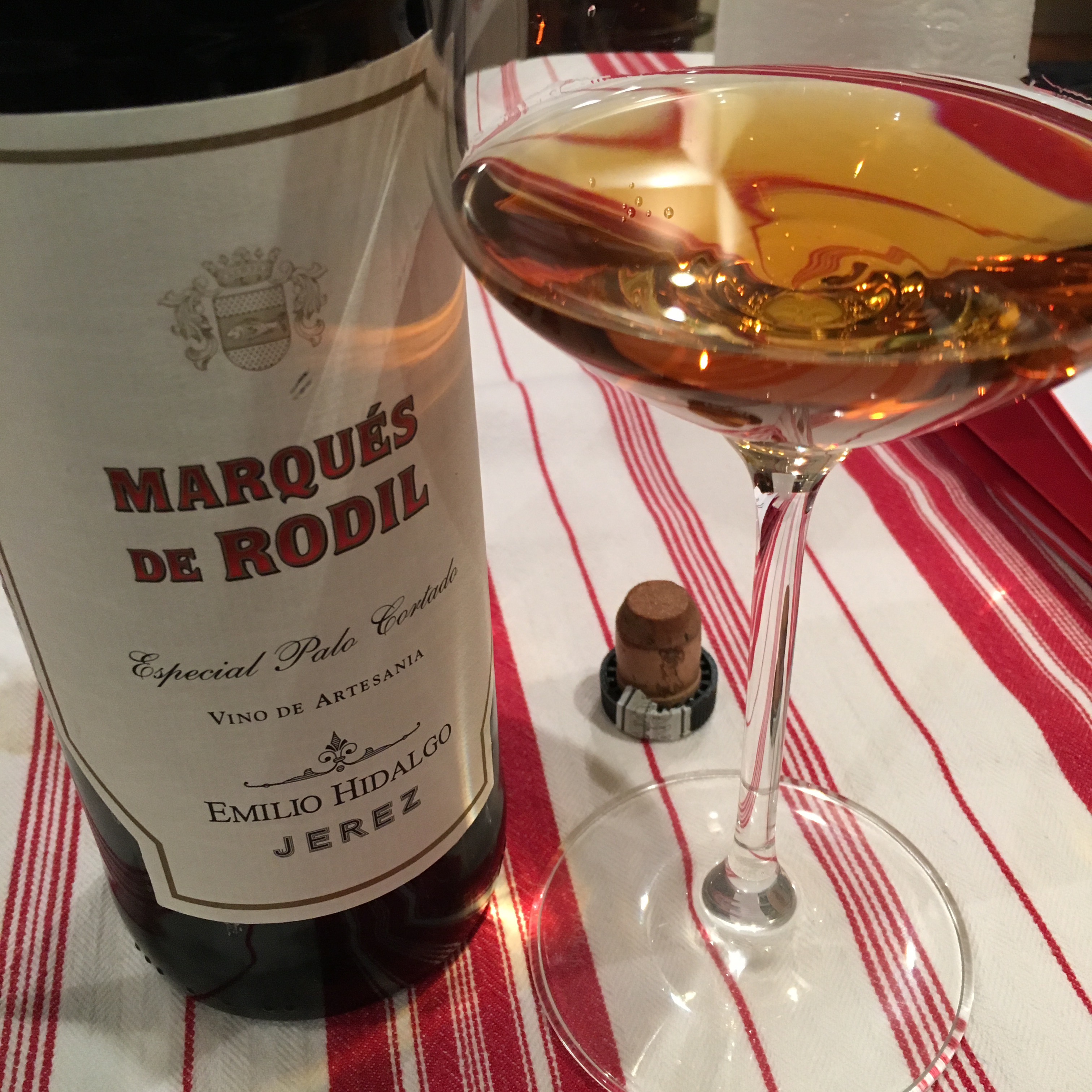
So here is a wine you don’t see around a lot. Emilio Hidalgo is probably my favourite single label – as if La Panesa were not enough on its own they also make El Tresillo and El Tresillo 1874, not to mention El Privilegio 1860 and the ethereal Santa Ana PX. In fact the only wine I hadn’t tried before from this bodega is this Marques de Rodil “especial” palo cortado, which had an average age of anywhere between 15-20 years when it was bottled in 2013.

As you can see, it is beautifully clear. (I like to take pictures against this table cloth – the straight lines help give an impression of turbidity – as you can see above this wine is as clear as a bell. It is also a relatively pale amber colour – at least a shade lighter than you might expect from a palo cortado. The nose is also different – there is a kind of semi-volatile aroma there, not as sharp as in the amontillados, with saltiness and caramel in the background and to be honest the lack of definition is off putting: it smells reductive for all the world, as if it were a red wine with poorly integrated sulphur. (Maybe it is just my bottle – I am going to double check.)

On the palate it doesn’t suffer as badly and has a lovely combination of caramel, bite and salinity, with a long finish that seems to suggest fruit. The zingy salinity, in particular, is very noticeable for a palo cortado, but if anything it seems elegant and maybe lacking the structure of the racier palo cortados.

A typically elegant wine this one but I must admit I find the nose difficult.


Palo Cortado Antique 

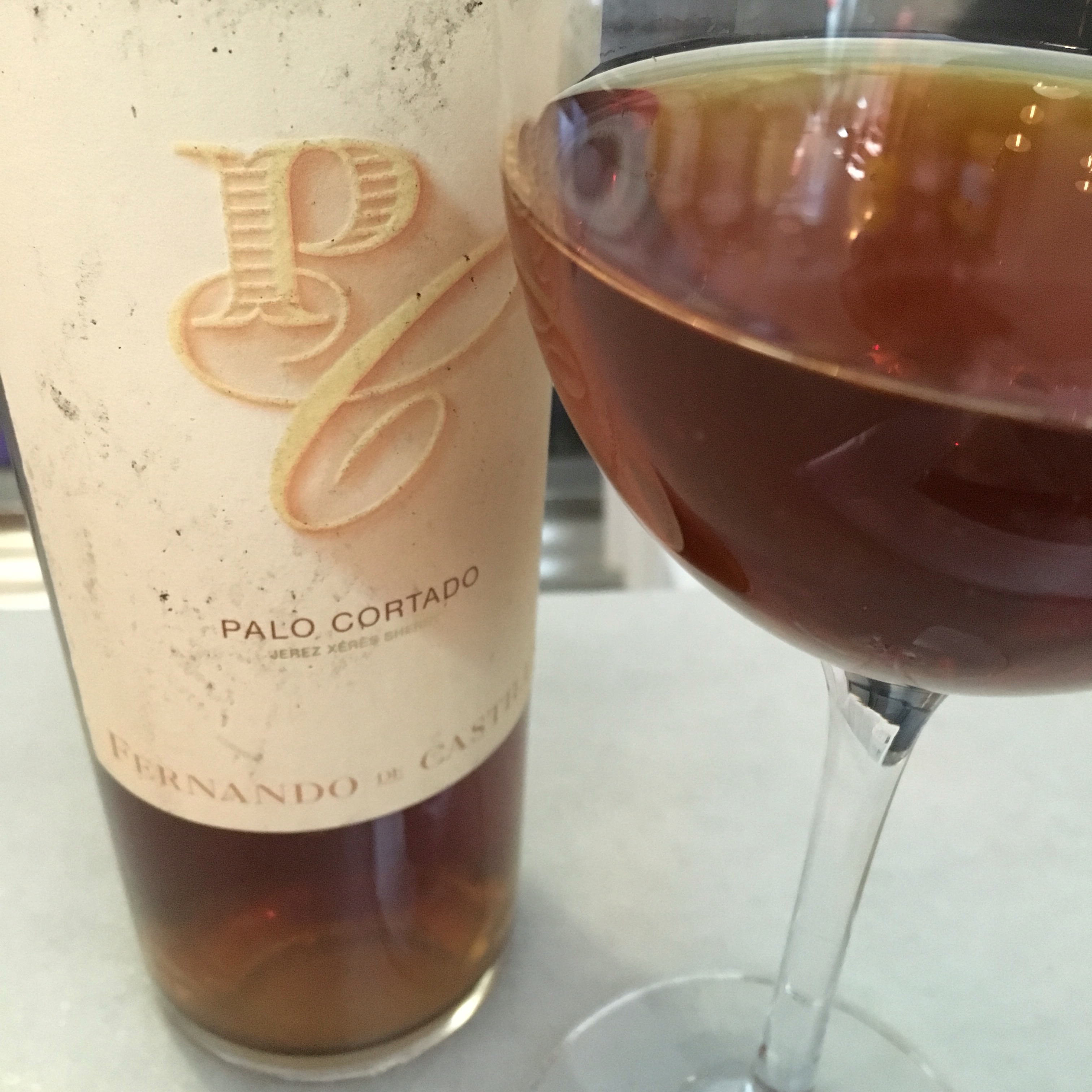
I really admire Bodegas Rey Fernando de Castilla and I enjoy the wines – I once had an opportunity to taste them all together and couldn’t help noticing the mosto in the background, the way the mosto shone differently through the different wines like light through lenses. They have two ranges – the classic and the antique – and I bet you can guess the difference between the two. Anyway, this is the palo cortado Antique, which I once mistook for an amontillado, and tasting it again I can understand why.

It is slightly cloudy in appearance – but a lovely reddish auburn colour. On the nose it is sweet, honeyed, sweetly spiced, nutty nose. Same first up on the palate – really nice sweet entry – then that spicyness and the woody flavours, then spice again. Not as heavy hitting as some but no astringency to it – I really like how light and elegant it is.

Palo cortado Vides


The penultimate wine of our Almacenistas tasting was this Palo Cortado from Jerez de la Frontera, a 15 year old (of which one under flor), 19º palo cortado from a solera of 50 botas.

I clearly remember the spiciness of this one. Looks and smells really enticing: a dark, reddish horsechestnut colour and a nutty, slightly fruity nose. Then on the palate it is a racy style of wine, acid attack, a wider range of flavours, minerals and alcoholic heat and a nice crisp finish.

Not over long or full bodied but a really good example of what palo cortados are all about.

La Bota de Palo Cortado 34 – Pata de Gallina 

This was the wine that gave rise to my current obsession with the wines of Jerez and Sanlucar and it is still one of my favourites – I have a dwindling stash put away but am treating myself after a tough weekend of slings and arrows of every variety (my last bottles were in May and August).

I am satisfied that the value is not just sentimental – it is attractive looking (no filters above – just look at that honey coloured nectar), enticing on the nose (nutty, sweetness and hay bales), delicious, complex, balanced and elegant.

Really an exceptional wine.