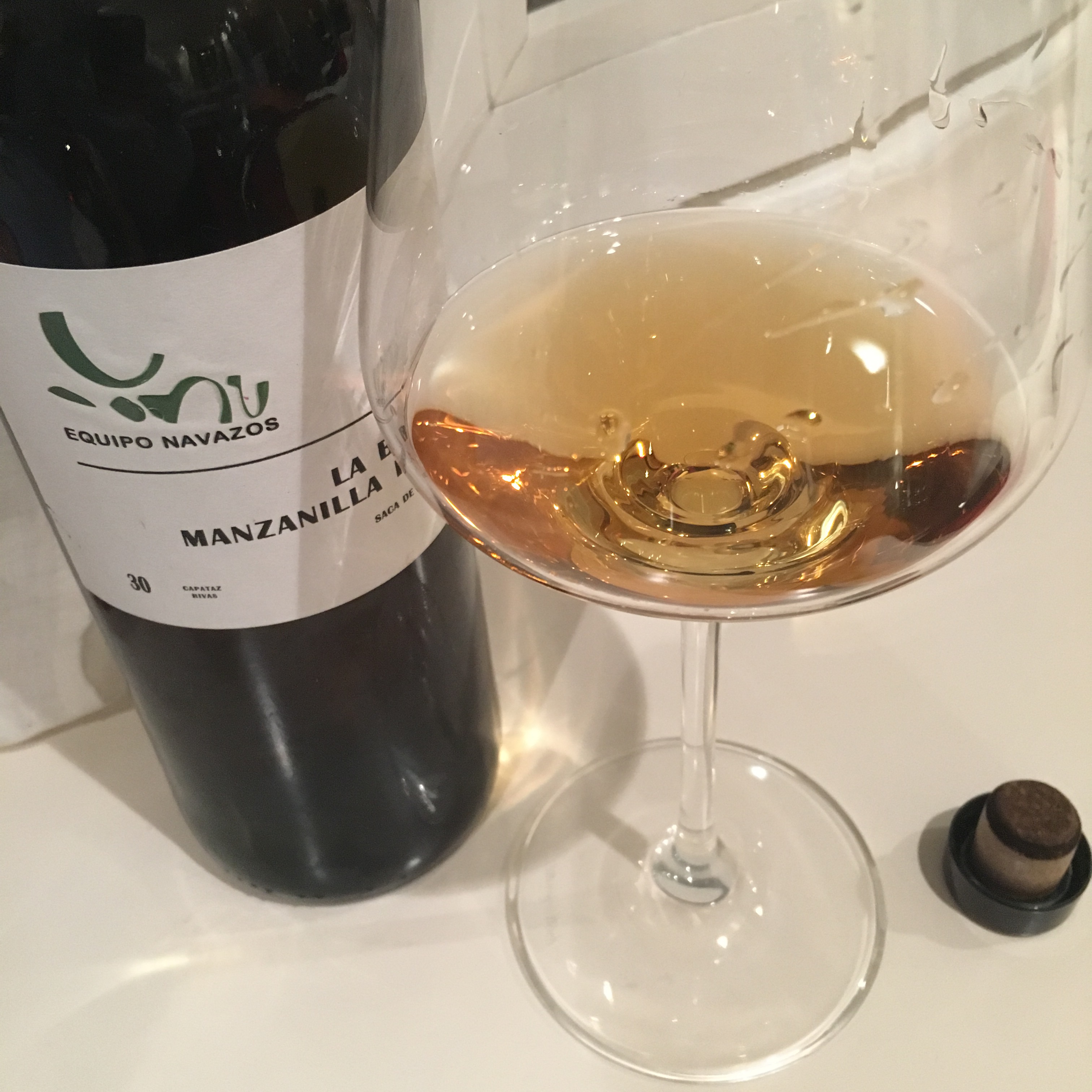
La Bota de Manzanilla Pasada 30 – Capataz Rivas 

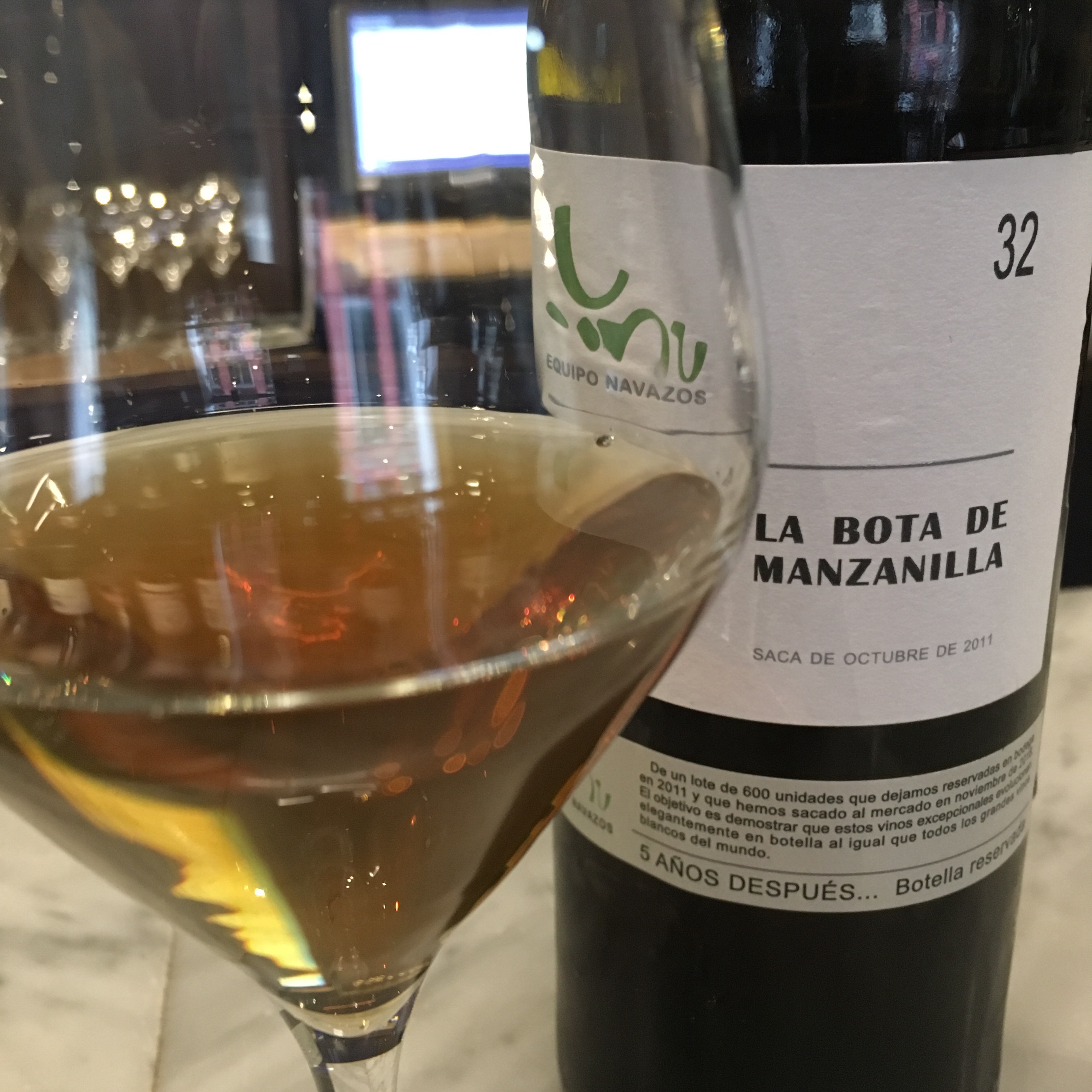
I first came across Equipo Navazos back in 2012 when they were in their early 30s. The first wine I tried was the terrific La Bota de Palo Cortado 34 and I immediately bought up everything I could find from them and have been attempting – with limited success – to keep them for posteriy. However after trying “La Bota de Manzanilla 32 – 5 Years Later” the other day my curiosity was piqued to try this manzanilla pasada bottled in June 2011.

It is the “Capataz Rivas” (like La Bota de Manzanilla Pasada 59) and is a direct relation of la Guita as the excellent ficha points out and there is a clear family resemblance in every respect. Like the Guita en Rama it has an evolved, dark copper colour and a salty sweet nose. Then on the palate it has the smooth silky, slightly fatty texture of an old wine, and a really elegant shape with salty zing, rich, sweet, slightly metallic apricot and orange fruit and a bittersweet finish.

And the effects of those five years of bottle ageing? I must admit I am not finding as big an effect as there was in the manzanilla the other day – which is logical since this would never have been as “fresh” as the manzanilla was on release. Rather, it would have had a little bit of oxidation before bottling and as such you would expect it to be a little more stable in profile. Maybe there is a hint more marmalade bitterness to the fruit and the finish than there was when I tried it the first time – or when I tried the 59 – and maybe the metallic notes stand out a little more. Nevertheless, this is very very drinkable.

An elegant, fruitful and characterful wine: lovely stuff.


La Bota de Manzanilla 32 – 5 years later 

Here is another interesting release by Equipo Navazos and one that is bang on trend.

Behold a bottle of excellent manzanilla – one of the top wines from Sanchez Ayala bottled by Equipo Navazos and one of the first of theirs that I tried. As the second band label makes clear, this bottle is one of six hundred that Equipo Navazos reserved at bottling in October 2011 and have only released again now in November 2011. These bottle aged wines are currently all the go (you may have noticed my own musings and even the new category on the blog), and indeed the stated reason for holding these wines back (five years ago) is to show that they are capable of ageing like any great white wine. The experiment deserves nothing but praise – these guys really have done as much as anyone to generate interest and debate about these wines, and this is another superb release on that score. (My appreciation also to Angelita Madrid – what a luxury it is to be able to have a wine like this by the glass.)

This wine is great. It was always a rich colour but now has an old straw complexion and a lovely yeasty, chamomile and acetaldehide nose, nutty, citrus flavours and zingy salinity. It has retained its biological character and is really top class.

But is it better than it was five years ago? Compared against my (admittedly fading) memory of the wine I first tasted it seems finer and has a bit more smokey flavour, an additional burnt edge and an even more elegant profile. But in my minds eye it seems a touch duller and blunter than it once was, and the additional edge of flavour makes it – to my imagining – slightly more bitter.

I fear I may be projecting my views about bottle ageing these wines. Do I remember this wine as zesty and fresh, or am I imagining that to confirm my theory? I will never know – I have a bottle in the fridge but evidently it is also five years in the bottle. And in the end, what does it matter? I am sure many others will enjoy this wine, which is excellent, and there is no doubt that that shade less punchiness brings it down nearer to the more accessible range of mortal wines.

But ultimately I am put in mind of that old sheep of the Lake District, Wordsworth, and his famous definition of poetry being “emotion recollected in tranquility”. Although I enjoy the poetry of these old wines, I generally prefer the emotion of the new ones.

Manzanilla head to head 

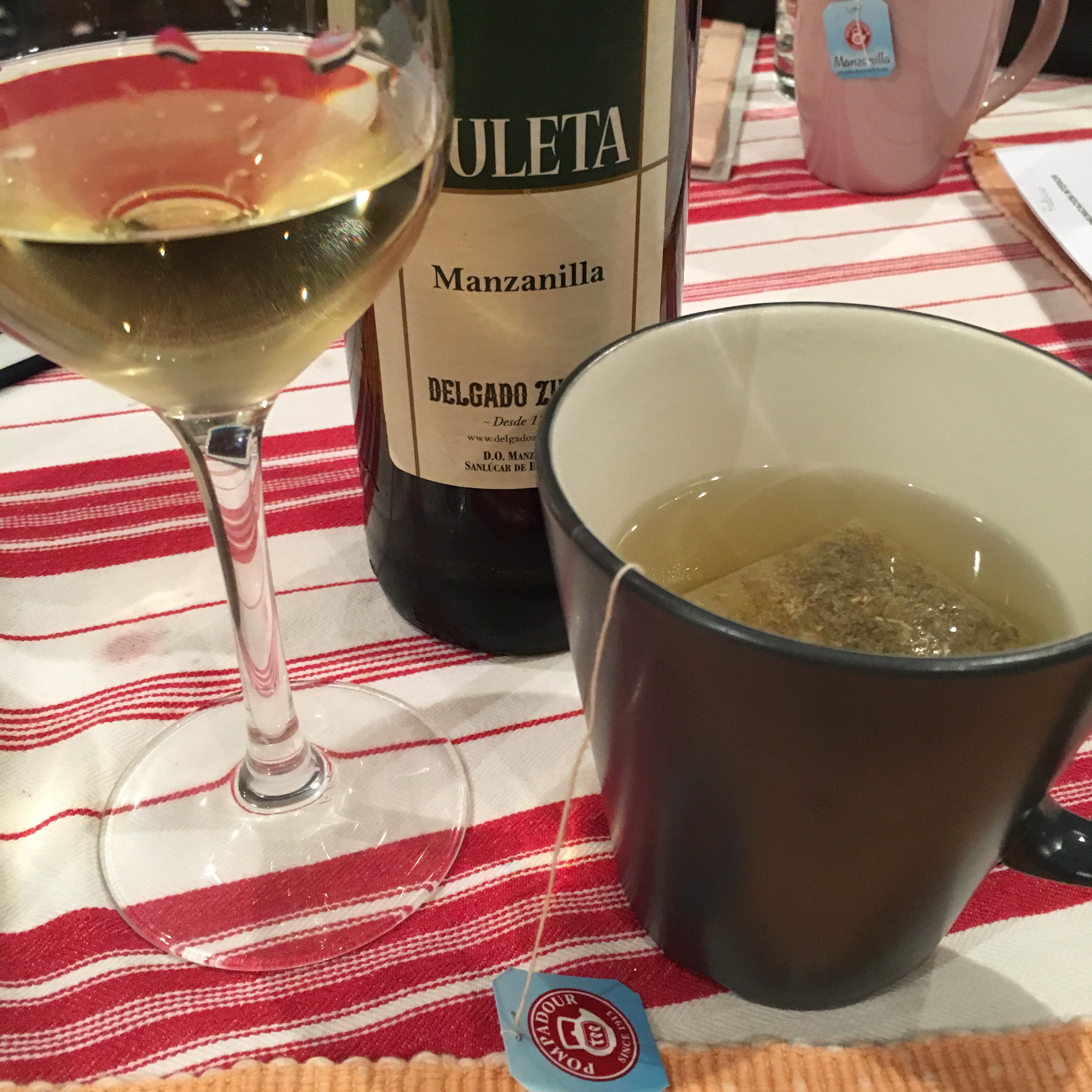
Told my better half I fancied a manzanilla and went to get myself one – by the time I got back I already had one. I wonder if you can guess which one I brought to the party …. 

This Zuleta manzanilla is cracking after a couple of weeks open. Has that same metallic/chalky aroma on the nose, heavy salty texture, herbal citrus flavour, zingy salinity and a long, slightly bitter citrus finish. 

Way, way better than the other manzanilla. 

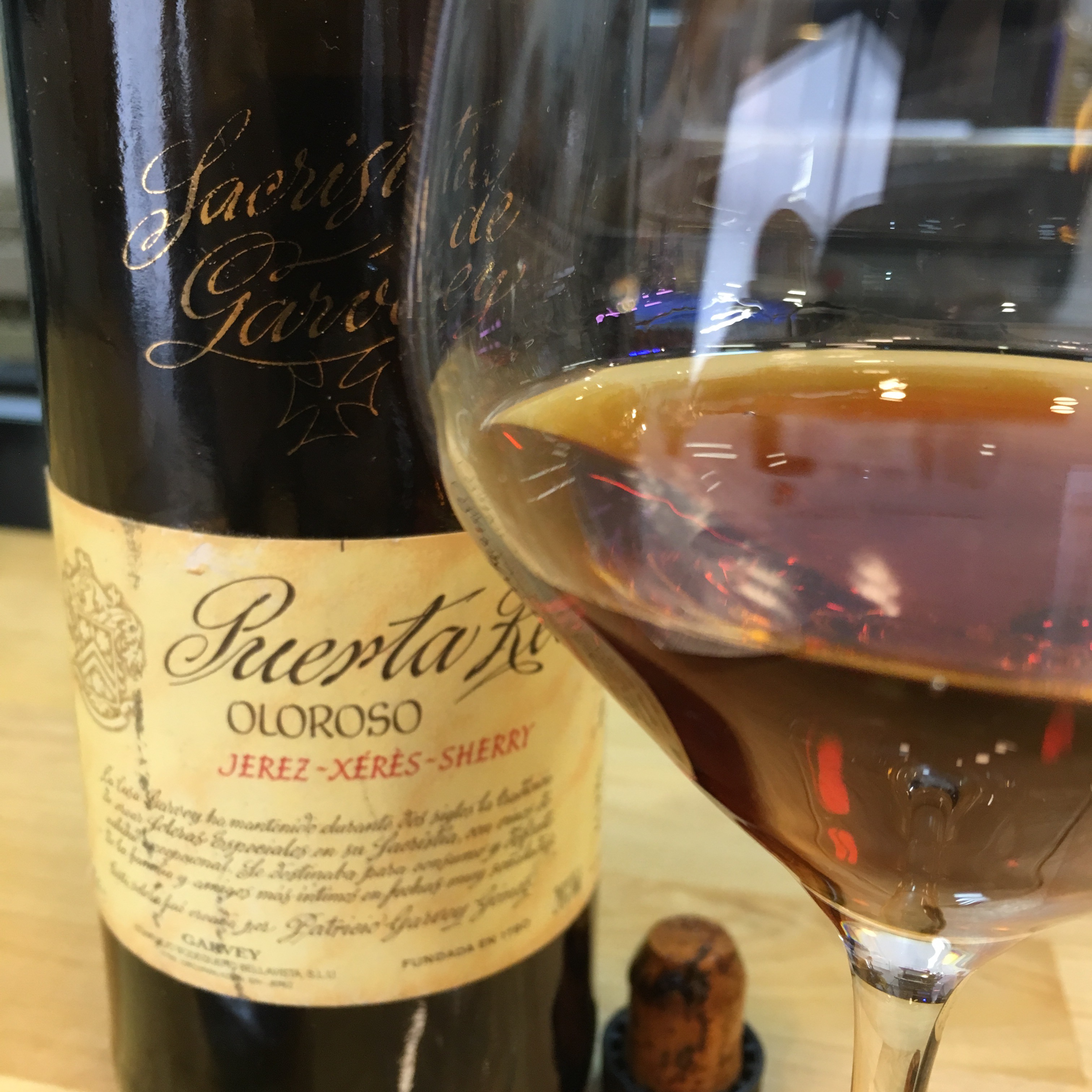
Oloroso Puerta Real 

All macharnudo and pretty old – no VORS or a VOS on the label but a reference to “many years”.  Fans of bottle ageing will note that this one had a few years in the bottle – a 2012 bottling.

As you can almost see it is a reddish, mahogany brown colour. Has a nice rich walnuty nose to, with a hint of sweet spice maybe, and then on the palate it is a big horizontal mouthfull – full flavoured but not sharp in attack or finish. In fact on the whole it comes across as so smooth as to be almost mellow.

Tasty and elegant.

Manzanilla Zuleta, Spring 2010

A gift from my good friend Guille – one of the most generous guys around, whether with his wine or his time – this is a bit of a treat during a week of hard labour. And it is a lovely sup too – has that chalky/metallic, citrussy flavour that seems to be accentuated and broadened out by a slight oxidation.

Of course I now realize I should have lined up a new bottle of the same so I could tell the differences – must see if I can rectify that in the next couple of days. For the time being there is certainly nothing wrong with this – very nice indeed.

Don Zoilo Very Old Dry Sherry 

This wine, bottled in 1977 and brought put tonight by Juancho Asenjo, was in absolutely spectacular condition for all its years in the bottle. 

Just look at that colour – beautiful gold and, while not crystalline, you would never say this first glass was a 40 year old. First up it has a little bit of salty seaweedy reduction on the nose, but on the palate it is is brilliant. It has a soft, buttery texture and is full of flavour. Whereas a 40 year old table wine can whither away, this is still all there: a zingy start, then nice intense almonds and and a smooth, rich and saline finish. 

An oldie but a very goodie. Thanks again Juanjo!

Manzanilla de Añada 2012 Callejuela 2/11

I have been mulling in my head a post on the effects of bottle ageing for a while now and have even sneakily created a related category, but I am still not really sure what to talk about. And maybe because those thoughts were already in the old noggin over the last couple of days I have been struck by how different two wines have seemed thanks to, or at least so I imagine, the time they have had in the bottle.

The first was a little bottle of Pastora that I opened on Friday – a little gem that seemed to have gone from green apple to golden apple and to have gained as a result (and indeed was gone in 60 seconds).

The second was this little bottle above – an absolute star of a wine that I thought was good before – as recently as a month ago – but seems way better now. More potent on the nose and palate, sharper, a little bit spicier.  I am looking back at my notes of other tastings (here and here) and I am convinced it has really come of age only now – just more of that awesome sapidity.


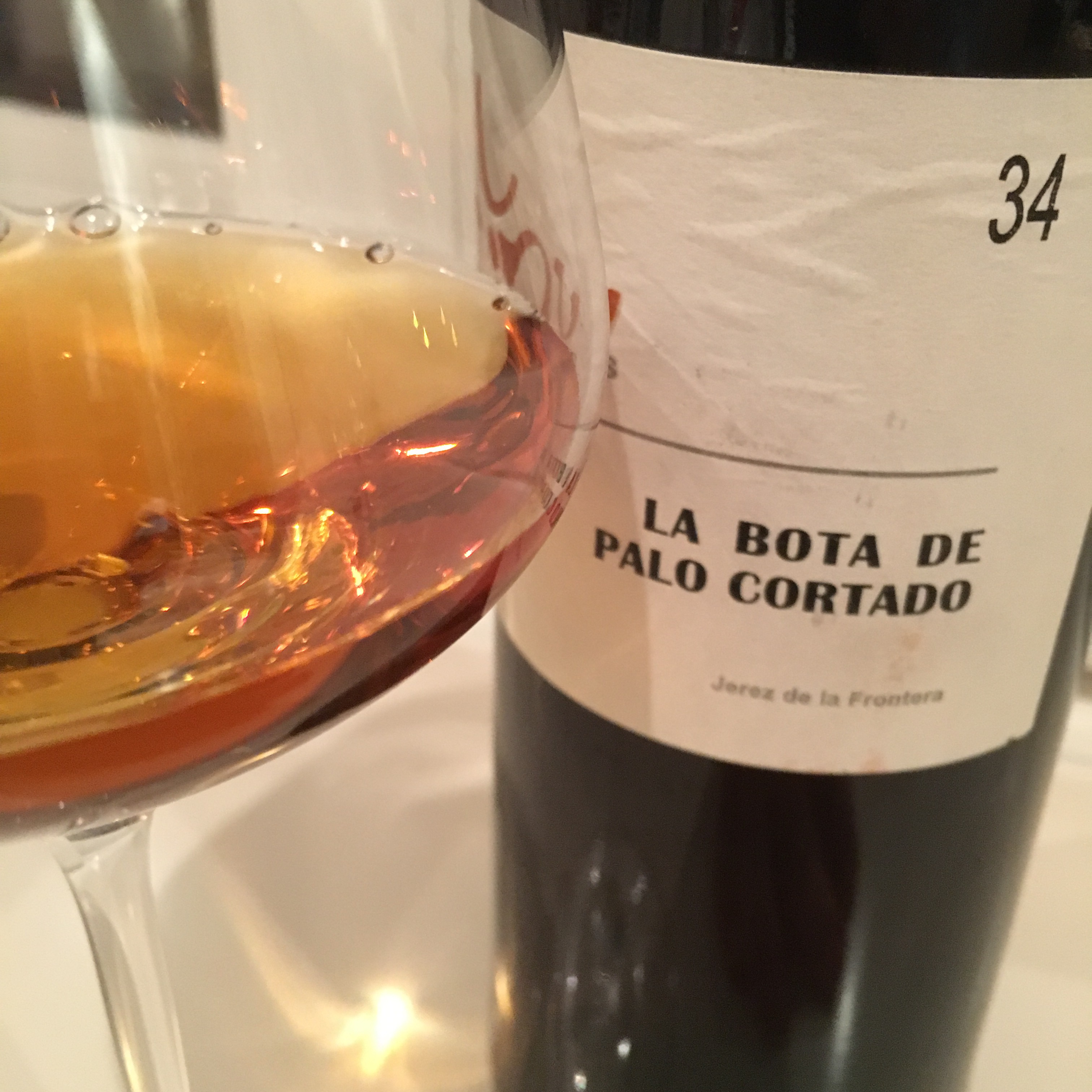
La Bota de Palo Cortado 34  

This was not the first sherry I ever had but it was the first to make me sit up and really take notice. I am spoiling myself after a few days of rustic holiday with the family, during which sherry was notable by its absence. Besides, I see from the blog that I last opened a bottle way back in February!

This wonderful palo cortado was released back in February 2012 and you will struggle to find any nowadays (I reimported a half case from the UK last year) although you can find wines from the same solera if you know where to look (there are clues on this blog).  It was sourced by Equipo Navazos from selected botas in a solera held by the almacenista Garcia Jarana and then finished in their instalation in Bodegas Fernando de Castilla before bottling. Since then it has had four and a half years in the bottle and half my excuse for opening it was to see what difference that time might have made. 

The colour is as lovely as I remember, and it has a fantastic nose of sweet brandy and nuts – maybe not quite as explosive a nose as I remember. Then a nice cool entry, zing and burn of salinity with nutty toffee and then some slightly more bitter,  tobacco and woody notes and that long, mouth watering finish. 

Maybe, maybe a touch less explosiveness and sweetness, a touch more tobacco, but a lovely wine in the prime of its life – terrific.

Tasting the Great Gran Barqueros 

As trailed in my last post, last night I was lucky enough to attend a tasting of Gran Barquero wines given by José Ruz of Perez Barquero at Reserva y Cata, with the added bonus of the presence of Paco del Castillo.

There were four wines, all from the Gran Barquero range: the Fino en rama (a saca from October 20, 2016); a wine taken from the second criadera of the Amontillado Gran Barquero; a 2016 saca of Amontillado Gran Barquero and a 1996 bottling of the same wine. It made for a really instructive tasting which demonstrated the effects of oxidative ageing over time and, interestingly, of bottle ageing.

We started, of course, with the Fino en rama, which is from unfortified, 100% pedro ximenez and has spent 8-10 years under flor in a solera with three criaderas. It is an excellent fino en rama – intensely yeasty, flavourful (slightly bitter almonds) and mineral, and one of the things that always strike me about these Gran Barquero wines is how very fine they are in texture – the sense of how the glycerine and body you might expect from the pedro ximenez has been reduced by the flor over those years. (Interestingly, I was able to sneak a glug of a second bottle of the same wine and it had a quite different green apple and popcorn nose.) It was bottled only 8 days earlier but seemed to have  stood up to the bottling – will have to try and get some to see how it tastes in a few weeks.

We then moved on to the wine taken from the second criadera of the amontillado solera, which is refreshed from the solera of the fino en rama and also has three criaderas. Again there has been no fortification (we were told they hadn’t fortified for ten years or more) and the finished wine bottled as Amontillado Gran Barquero will have had an average of 15-20 years oxidative ageing on top of the 8-10 of biological ageing of the fino. It wasn’t fully clear to me what the average age of this wine from the second criadera was but I guess we are talking 8-10 plus 8-10 or similar. I found it a very enjoyable amontillado indeed – lovely straw and hazelnut nose, and even a little bit of raw yeast and juicy hazelnuts on the palate. Not powerfully acidic but a nice bite to it and good, mouthwatering salinity. Elegant and compact but full of fun.

Next came the finished Gran Barquero amontillado (from a bottling in September 2016) and to me it was a little step up in class and refinement. On the nose the sweet touches of the second criadera had gone but there was a richer yeastiness to it. On that little bit of extra acidity and salinity give it an even sharper entry and finish and the hazelnut flavours of the second criadera have intensified into roasted – borderline burnt – nuts and lead to a long, umami rich finish. It it a classic wine.

Finally, we were able to try a Gran Barquero amontillado bottled in 1996, giving us the chance to appreciate the effects of those 20 years of bottle ageing. As a caveat, it would not have been quite the same wine in 1996 – with a total age of closer to 15-20 years than 25-30. Moreover, I gather that these specific bottles have not exactly had a restful 20 years either: they had been shipped to and from the Canary Islands, no less, and with no guarantees as to the storage conditions.

Nevertheless, these bottle aged wines are all the go now so I was intrigued to see the differences – and surprised by the differences that were there, to be honest. First, and maybe least surprisingly, it looked its age: much darker in colour, not quite crystalline and with crumbs of sediment (see above). The most striking difference was on the nose – whereas the previous wine was all yeast, straw and herbs, this had an aroma of dusty old leather bound books – but also on the palate for me it had lost a little bit of the spring in its step, getting a touch dryer and with more bitterness, and even in terms of definition, again with a slightly dusty sensation to it. Really interesting to have tasted because the differences I noticed were things that in other wines in the past I had attributed to the length of the time in the barrel, but not quite my cup of tea as you can probably guess.

Overall though four top quality wines and an excellent structure to the tasting. When you throw in the knowledgeable commentary and explanations of José and Paco before during and afterwards it was an excellent night all round during which I learned a great deal. My sincere thanks to Ezequiel at Reserva y Cata, José and his colleagues at Perez Barquero and Paco de Castillo – brilliant stuff.


Feria de vinos: Jerez del Siglo XXI


Had a pretty enjoyable afternoon yesterday in Lavinia tasting some nice wines from the likes of Emilio Hidalgo, Tradicion, Fernando de Castilla, Valdespino, Barbadillo, Gonzalez Byass, La Sacristia AB, Diez Merito, Yuste, Maestro Sierra and Baron. There may have been more but memories and notes are somewhat blurred (there was definitely a new bodega with only a palo cortado but the name has gone) – and not for the first time.

Despite the title reference to the 21st century the emphasis was old school/old favourites (notwithstanding some happy discoveries like the manzanilla La Kika). It was pretty rammed by the end but early doors I was able to try the Guita en rama (October 2015), Solear en rama (Winter 2015), Sacristia AB manzanilla en rama (Second saca of 2015), and Fernando de Castilla en rama (December 2015) in quick succession and with the Pastora manzanilla pasada en rama (2015, and which had much less of the apple profile this time, which I was told could have to do with the time in bottle). Very interesting comparison across those wines: a lot of the characteristics that I had remembered were there. I was also able to compare the Sacristia AB manzanilla (from Yuste) against la Kika (also Yuste) then the Tradicion Fino (November 2015) and Panesa, before moving up the gears with marvels like the Tresillo, the Fino Imperial, the Antique oloroso from Fernando de Castilla and the 2014 amontillado and 2015 oloroso by Sacristia AB.

Probably the highlight was trying three Panesa’s bottled in different years – a 2015, 2014 and 2013 (not labelled as such but – the differences were subtle but interesting. Of course it is  debatable whether the differences are due to the wine coming out different in the sacas or the time in the bottle – most likely a bit of both – but at least yesterday the 2013 seemed to have a bit more expression to it.

Unfortunately my methodical approach meant I missed out on some beauties as the horde of patrons consumed all the older and sweeter wines – will have to come back for the Tradicion PX and cream – but by the end I was a few over the eight and over an hour late home so maybe it is just as well.

Overall a cracking event and kudos to Lavinia for organizing. Was also a good opportunity to see some old friends – was great to see Cesar Martin from Lakasa – and meet some top characters from the world of wine and blogosphere. Look forward to the next one!