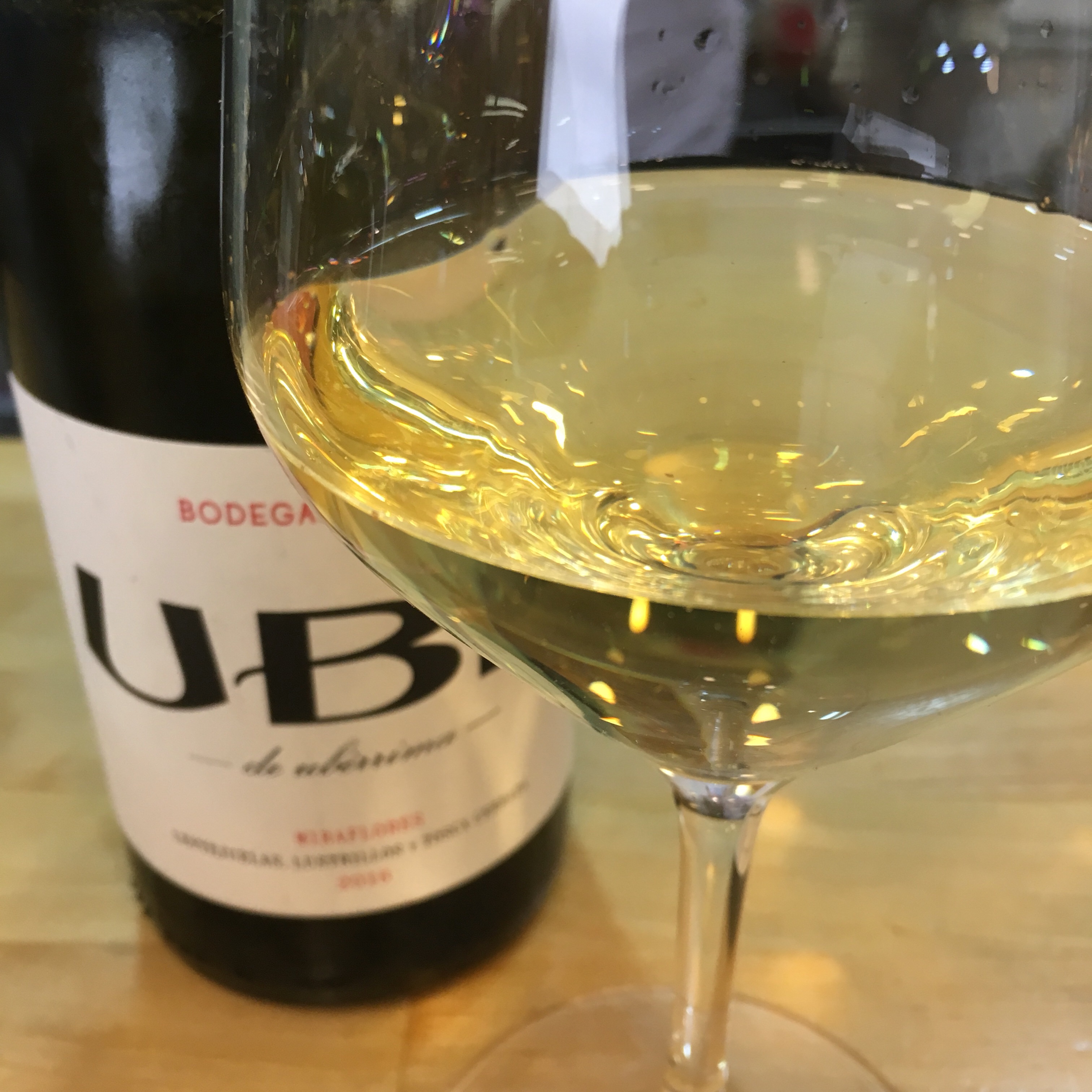
UBE Miraflores 2016

You want character from a white wine? You want attitude? Get yourself some of this little cracker.

The middle child of the three UBEs – not as sharp as the Carrascal or as wide as the Maina – but maybe the most polished overall. It is sharp as a tack and fresh, but savoury, funkier than you expect from a white wine, let alone the much maligned palomino. But above all it has a compact shape and the kind of profile I really like.

These wines tend to improve in the bottle but I had a glass of this at the bar of Territorio Era this week and found it to be absolutely singing, so if you come across it don’t be afraid to give it a go.

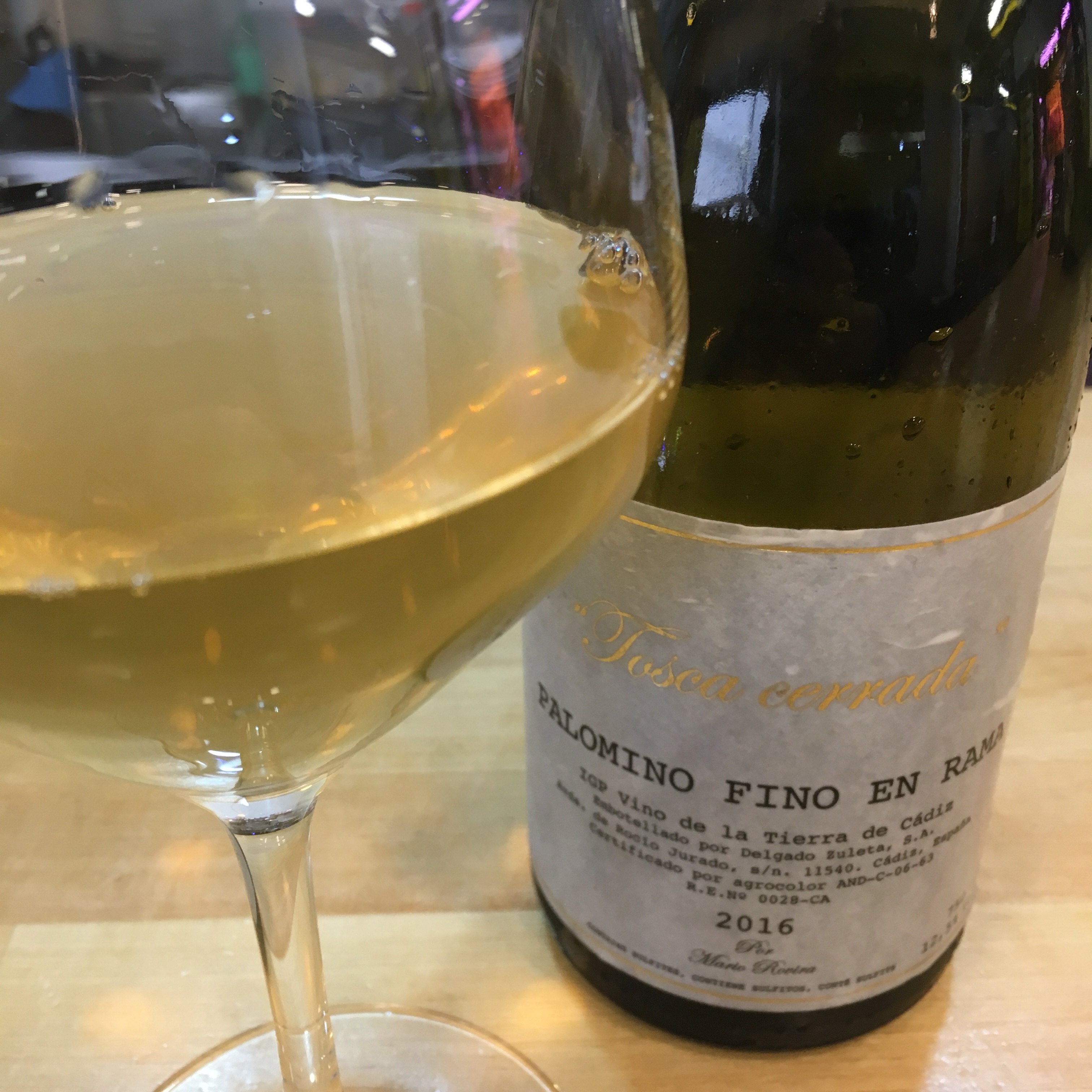
Tosca Cerrada 2016

If you want to enjoy palomino white wines I have two top tips: first give them time in the bottle and then give the bottle time once open. In particular I have found that these wines by Mario Rovira have improved in the bottle – those lucky enough to still have the 2014s really sing their praises.

This one, the 2016, is probably a little unready: aromatic with an apple and sweet herb nose but slightly murky in appearance and just the slightest touch heavy on the palate. Fresh start then that apple and a touch of bitterness, then a touch of fennel leaf or anis coming out in a persistent finish.

Very enjoyable but I reckon you might want to keep this a year or so.

Encrucijado 2015

Encrucijado is one of the projects of Ramiro Ibañez’s Cota 45 and touches on many of the threads of the history the guy is trying to recreate. A multivarietal, vintage specific wine that corresponds to what was once called palo cortado (before that term became synonymous with the more marketable olorosos).

This is the third vintage and the third variation: the first was the 2012, and was from six varieties (50% Palomino Fino and 10% each of Beba, Mantúo Pilas (aka “Uva Rey”), Perruno, Cañocazo and Mantúo Castellano); the second, the 2014, was 40% “Uva Rey”, 40% Perruno and only 20% Palomino. This third addition is 50% Perruno, 30% Uva Rey and 20% Palomino.

My first impression of the wine is that it is a chip off those previous blocks. Has that butterscotch aroma and flavour, maybe slightly sharper and with a bit more volume and heft this time, but still with a buttery saline finish. Very approachable and very fine, elegant wine (although I know for a fact that the author believes it will improve further with time in the bottle).

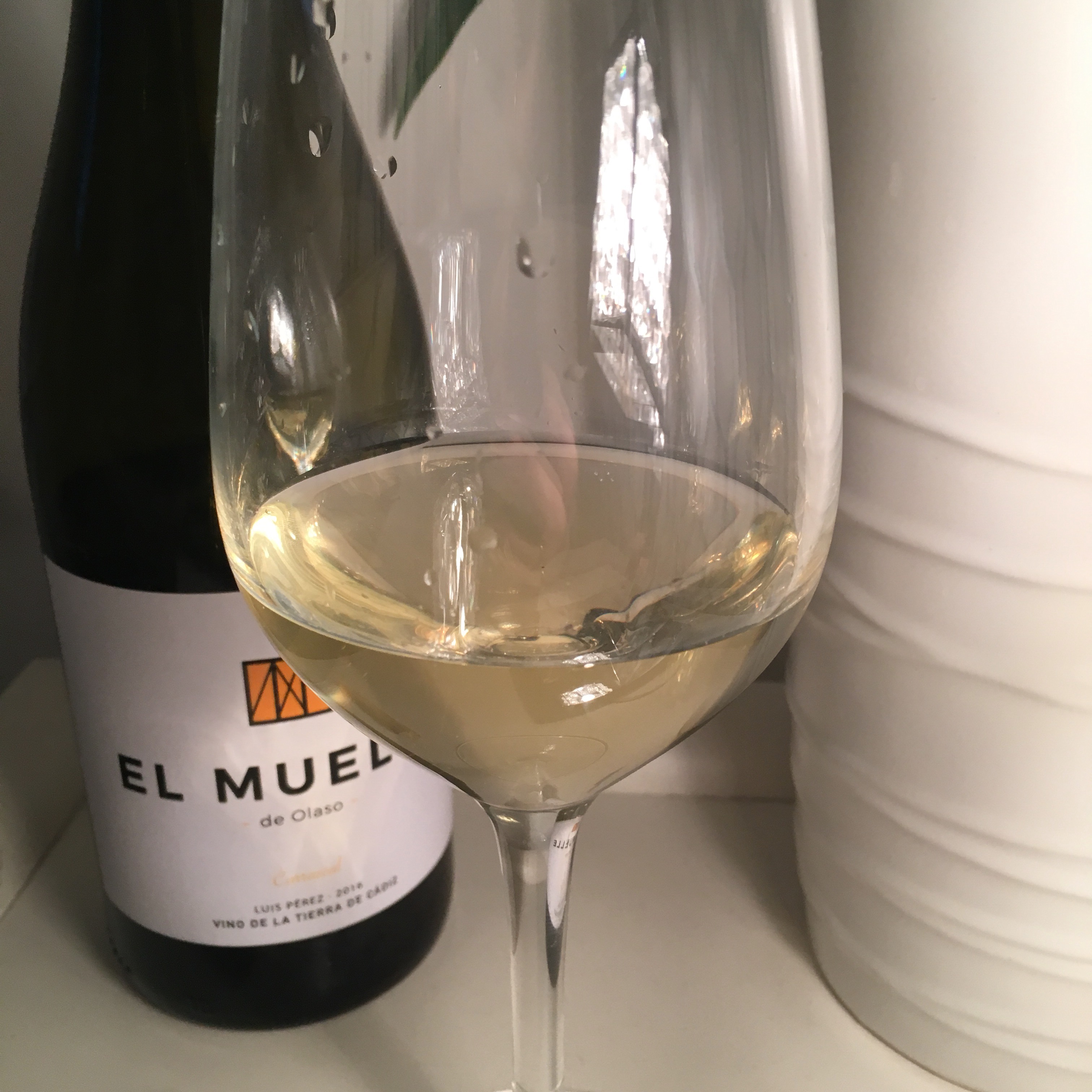
El Muelle de Olaso 2016

My last bottle of this, maybe the beefiest of the unfortified palomino white wines coming from the region at the moment.

The wine is by Willy Perez and the fruit is from the El Corregidor vineyard on Pago Carrascal that is the source of his fantastic Barajuela project. They harvest the grapes in several passes: (simplifying things) first for brandy, then for this, then for the fino and finally for the oloroso. In total 80% of the fruit comes from that early pass and 20% from a later pass that would otherwise go into the fino. The 80% then gets fermented in temperature controlled inox while the 20% gets some asoleo before fermentation in bota.

The resulting wine is a beefy 14.5% alcohol and is beefy in other respects too. It has a lot of concentrated fruit that gives it a floral, honeysuckle, pear and citrus nose, but give it time and you get a lot more herbal undergrowth. Then on the palate there is that fruitful, muscular body, a very broad profile that kinds of unfolds in the throat, backed up by savoury, stewy flavours and a fresh saline finish.

Seriously fruity and fresh.

Florpower Friday

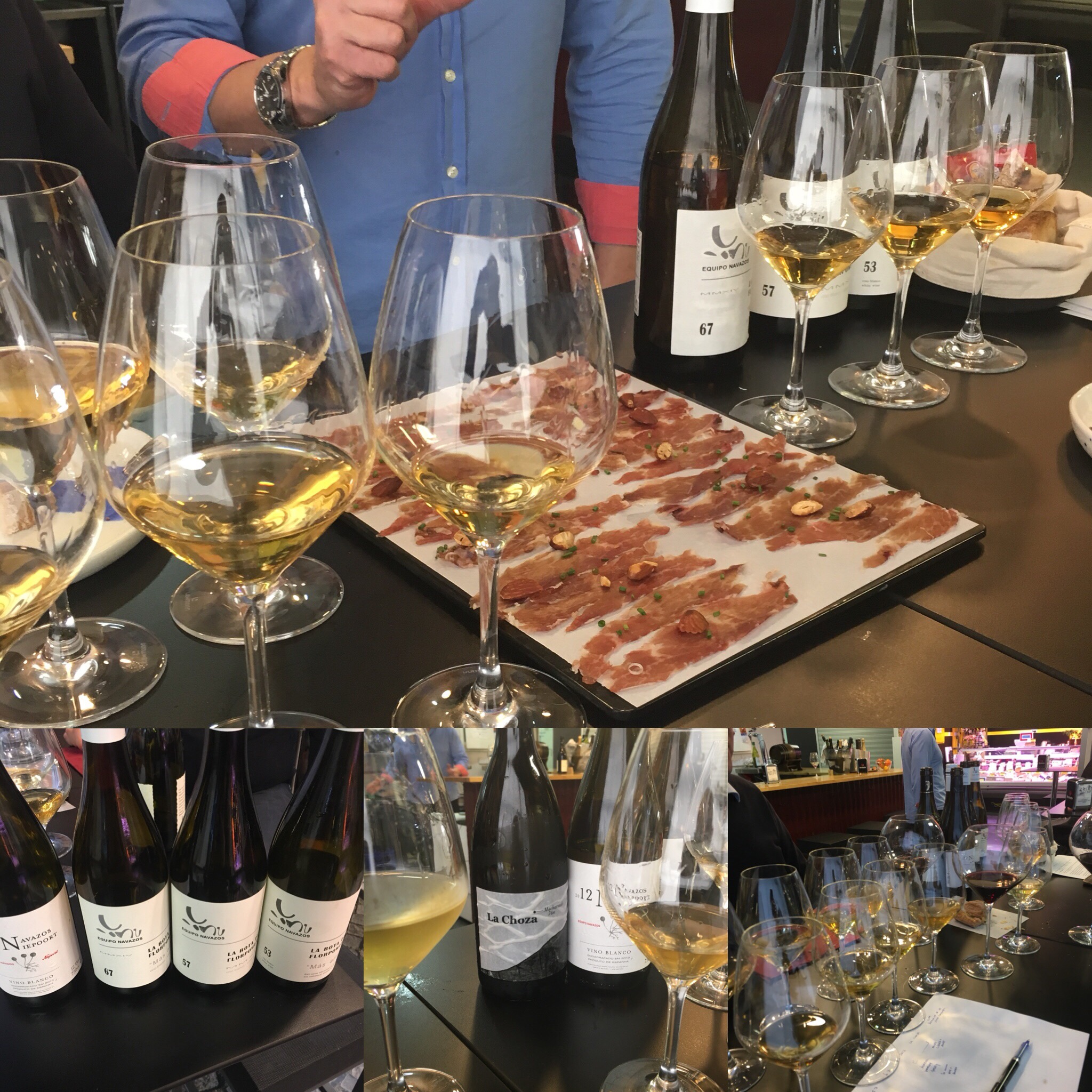
The blog is fun but there is no doubt it is hard work, involving lunches and dinners that sometimes last several hours and multiple bottles of wine. Yesterday was a prime example, as the author and two esteemed colleagues – Jens Riis of elmundovino and Richard van Oorschot, maverick maker of “Pilgrim” – put in a pretty solid shift at Territorio Era.

The wines under scrutiny on this occasion were the Florpower releases by Equipo Navazos: unfortified palominos from Pago Miraflores, and specifically, Number 53 “Más allá” (the MMX), Number 57 “Florpower” (MMXII), and Number 67 “Más acá” (MMXIV). For the sake of contrast we also opened a bottle of the 2012 Navazos Niepoort, an unfortified palomino from further inland (I would swear it was macharnudo), and for comparison’s sake we also compared that with Callejuela’s La Choza. (We also warmed up with a really interesting South African white wine and finished off with a Lirac from the South Rhone, but who is counting?) And the sacrifice was not in vain: we had a cracking time and it was pretty instructive too.

The number one conclusion that we drew was that it really helps to give these wines time. In fact it is something I have been observing for a long time: unfortified palomino wines can be slow to get going after opening and really grow in aromatics after a little while. Of the three Florpower wines the biggest beneficiary was Number 53, the 2010, which started like super-bitter grapefruit but took on haybale aromas and became softer and sweeter like a young amontillado as time went on, but all three improved over time. (Of course this could also have to do with the excellent cooking that was arriving and disappearing with impressive speed.)

The second observable fact was that these florpower wines are a work in progress and you can see the guys at Equipo Navazos are not afraid to try a few different things. Whereas the Number 53 (and presumably the original, Number 44 which we didn’t have a chance to try (because we didn’t have any)) was only 12% and a little underpowered the Numbers 57 and 67 both had that little bit more oomph at 12.5% and all the better for it. You would guess it was a matter of selection of more mature fruit – 12.5% is a pretty good number for Miraflores you would say.

Third, although it was really interesting to see the references to months “under flor” in the description of how these are made, with the exception of the 53 (which really opened up like a milder amontillado as the lunch went on) the influence of that flor was limited. There was still plenty of fruit and body in there and curiously the 53, which ended up smelling and tasting more biological than the others, started off with the stickiest, least saline finish.

Fourth, and maybe I should have started with this, the class wine of the three was the Number 57, or MMXII. By pure chance it is the only one of the three wines that I had had before (not once but twice) and I am glad to say it was just as good as I remembered. If I had to compare it to anything I would say it was like a muscular burgundy: nice gentle acidity to start and then a compact profile with full flavours of a bundle of fruit (sweet and sour citrus and white fruit), a spine of minerals and a nice tail of a fresh saline finish. I guess a fair bit of the credit for that mouthful of flavours would go to the harvest – 2012 is spoken of as a great growing season down there and this certainly is consistent with that – but it was also noticeable how much fruit there was in a wine harvested a good few years ago. Terrific stuff and full of what my colleague Jens Riis described as “disfrutability” (TM or whatever).

Comparisons are odious as they say, and the other two certainly weren’t helped by having to compete with the middle child of the bunch. The Number 67 had a lot in common with the 57 but by comparison seemed a little cruder, a little more brash and not as polished. The 53 on the other hand was a fish of a much different kidney: first up the balance of flavours was much more grapfruit than anything sweet or soft, then it went through a phase where it seemed a bit underpowered, and then it opened out aromatically in a really interesting way. Jens reckoned it had a lot more “Sherryicity” (but I reckon he was pushing it with the catchphrases).

And that brought us to the two other palominos. The Navazos Niepoort 2012 was really interesting aromatically and you would swear it was a macharnudo wine but while it had this great aroma and was tasty first up it maybe just lacked a bit of depth and oomph. Just didn’t seem to have that compact shape and length of the Number 57. And that we compared to la Choza – a 2015 (?) macharnudo unfortified palomino that had a lot more brute strength than the Navazos Niepoort: 13.5% compared to 12.5% to begin with, and yet again you would say well spent. Not the same floral, herbal nose – this one had more than a bit of raw meat and punchier herbs to it – but a big savoury mouthful and an interesting comparison.

And as quickly as it began, after no more than two or three hours (and a couple of other bottles of wine that fall outside my jurisdiction), it was over. Some really interesting wines, one of them high class, and a highly disfrutable lunch by any standards.


UBE Maína 2016

One of the star wines of a great week last week, the long awaited UBE Maína 2016. First spotted at the Cuatrogatos Wine Fest in February this is the third of the wines under Ramiro Ibañez’s UBE label. 

Whereas the first two wines are from Carrascal and Miraflores – two of the most atlantic pagos in Sanlucar – this is from Mahina, the river influence pago famously rich in diatomeas.

And the wine doesn’t disappoint: it is a little tank, a lot of the aromatic hallmarks of the other wines but broader than it is tall and full of punch. Sapidity that hammers at the sides of the throat on the way in but is still fresh on the way out.  

Top stuff, and out soon. 

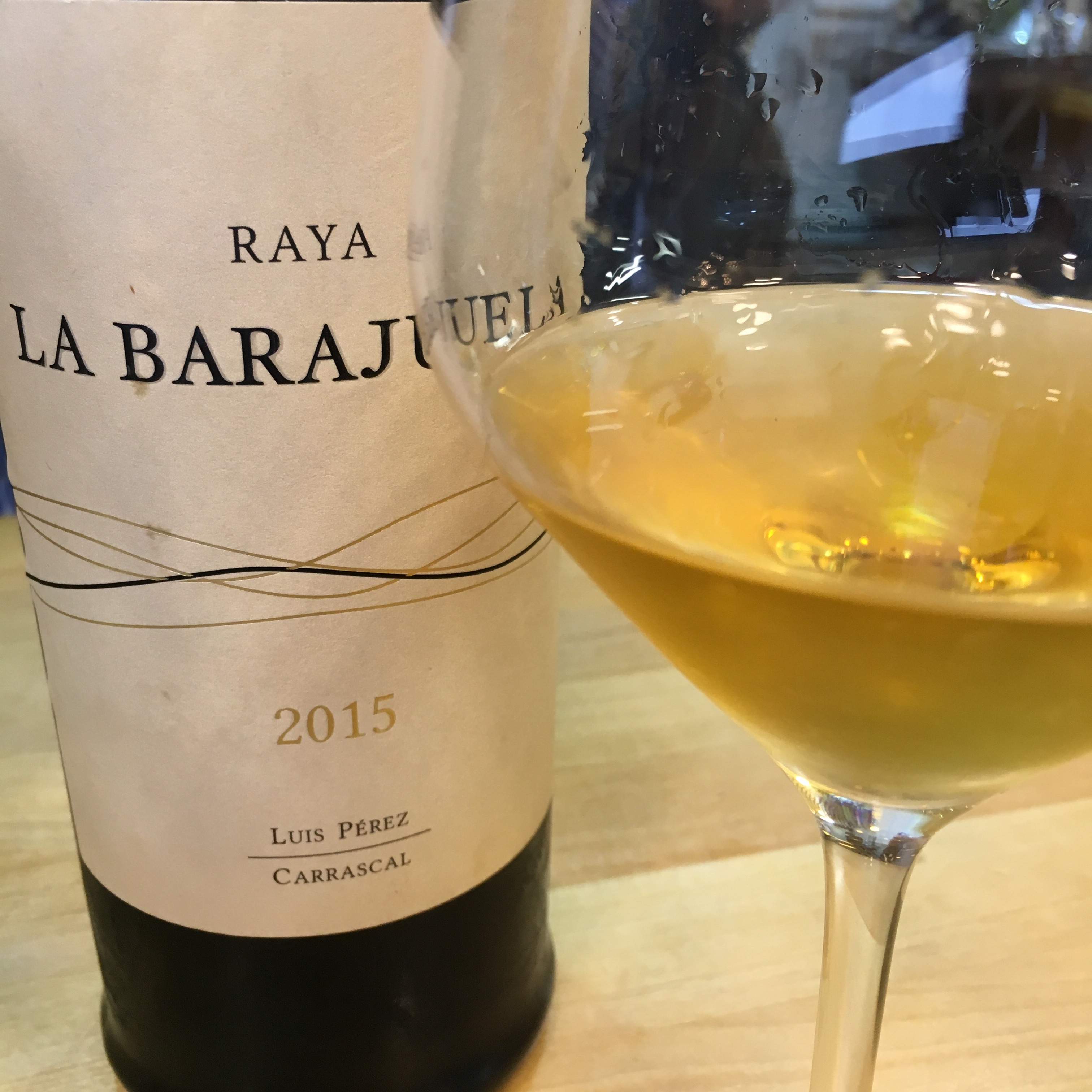
Raya la Barajuela 2015

An unexpected bonus wine from the Barajuela project and another historically and educationally important wine. 

The name refers to the old classification of wines when they came in from the vineyard – palmas and rayas. Broadly speaking whereas the palmas were fine and could hope to become finos and amontillados, the rayas were heavy and were destined for oxidation. Back in the day the differences in the wine resulted from the mix of varieties in the vineyards, but in the monovarietal present this has been selected from the latest and longest ripening fruit from the multiple passes of the harvest.

The result is a wine where on the nose it smells like there is some residual sugar and first up you get that false sweetness of a late harvest riesling, but without the same level of acidity and a much finer body. (I must admit, I have heard these wines described as “heavy” and “fat” so many times I half expected something syrupy.) it has a nice backbone of salinity but then you get a turn to grapefruit bitterness which I must admit I find a bit disconcerting. Overall it is easy to see why the palmas were so sought after. (On the other hand, it is fascinating to speculate about how a wine like this is transformed by oxidation.)

Very interesting indeed.  

Socaire 2015


This year’s release of the premier white wine of the Cote de Chiclana emerged in the spring but has somehow evaded the blog up til now. 100% palomino from Finca Matalian, famed for its high altitude, high calcium and high winds so near to the sea at the Southernmost limit of the Marco del Jerez. 

It is made by Primitivo Collantes, probably the most unsung and under-rated of the guys making wines down there (although he has a growing following in Madrid after some cracking tastings) and is the second vintage of a wine that was a sensation when it came out. 

By comparison to last year’s harvest this one seems (from memory) a quieter soul. It is a lovely watered down gold in colour and has a very fresh nose but instead of the overripe fruit I remember it is more herbal, green leaves over almonds. More concentrated fruit and herb on the palate and still has a nice bite of minerals, but a quieter, less punchy wine than last years. I guess this has been made in the same way so the variation must be down to the conditions in growing season down there. Yet again, a demonstration of the power of vintages. 

In any event it is absolutely killing it with this tomato salad. 

The Wines of Alba Viticultores in Wine Attack Madrid

img_7267

I finally finish writing up my notes of a really fun tasting at the end of June. It was a really good laugh for a number of reasons, but at least in part because these wines seem to have fun embedded in their DNA. Seven bottles in total, four bubbles (two ancestral and two brut, of which one was rosé) and three dry white wines.

First up was the Ancestral Alegrías del Carrascal 2015 – 11,5%, 100% from 50 year old palomino fino vines from the Alegrías vineyard on pago Carrascal (de Sanlúcar).  2015 was a very hot year and the wine was fermented in 1000l stainless steel tanks for 14 days before being bottled at the end of September. No added ingredients here and while we had tasted one with 7 months on the rack last year this one had a further 12 months before disgorging. A curious combination of the most vertical and atlantic of the Sanlúcar pagos in one of the warmest recent years, it was fresh and very amenable, the slight residual sugar making it very appetising, with nice tight bubbles, appley sweetness and fresh grass, a touch of salinity and a slightly bitter finish.

Second came the Ancestral Confitero 2015 – 11,9% vol – from 35 year old vines on the El Confitero vineyard on pago Miraflores (just inland of Carrascal), very near to the legendary “Armijo” of Gaspar Florido. Again ancestral method with only 3 gr/Hl of so2 before pressing and no additives. This one was fermented in plastic containers for 12 days before bottling then spent 17 months on the rack was disgorged by hand and refilled with the same wine. Pretty decent bubbles these – a bit broader in the shoulders flavourwise but didn’t hold together quite as well. A bit more serious, more wine/vine/root-like, not quite as much residual sugar and less of a defined shape.

After the ancestral wines we turned to the methode champenoise wines, starting with the Brut Nature 2014. This comes from palomino fino from different Sanlúcar pagos, is fermented in stainless steel at controlled temperatures, then aged in deposit, initially with a little flor for around 5 months. Then it is put in 16 litre demijons for six months where flor again develops. Then it is bottled and has spent 25 months on the rack. Once again, only 4gr/Hl of so2 before pressing.  The result is a quality bottle of bubbles – tighter, sharper bubbles – with a bit more bite and crispness. Has those same apple and herb aromas and flavours and a compact, elegant profile. Really top class and probably my favourite wine on the day.

That was followed by the Brut Nature Rosado 2014, pink bubbles made from 93% palomino fino and 7% tintilla de rota, all grown on vineyards in Sanlúcar. Fermented in stainless steel and bottled in June 2015, with 25 months on the rack. 3 gr/Hl of so2 added before pressing and then no other additives, disgorged by hand and refilled with the same wine. Again a quality bottle of sparkling wine and full flavoured, with quite brash red fruit flavours and a bit of the heavy metal effect you get from cavas with a lot longer on the rack. Again bags of potential here.

The first of the still wines was the Alba sobre tabla 2014 (Bota 2). 100% palomino fino from different vineyards in Sanlúcar, a white wine fermented in stainless steel and aged there until January 2015, when it was put in a manzanilla butt. For the 2014 vintage there were three butts of Sobre Tabla: Butt III was bottled in August 2015, Butt I was bottled in March 2016 (and was part of last year’s tasting) and Butt II was bottled earlier in 2017. None of the three butts developed flor except this Butt II which saw some develop in the last few months. The wine was excellent and there was general agreement that of the wines tasted it was the wine with most fruit and, at the same time, oxidated “sherry” character. Has a nice tingle of salinity/acidity and ripe apples on the nose and palate and a slightly tingling, mineral finish.

That was followed by Alba Flor 2014, essentially the same wine but whereas the Sobre Tabla was in a butt that was filled to the top this one was placed into a three quarter full butt for four months under flor.  I must admit I found it hard to spot the difference between this and the previous wine. Slightly finer maybe? By a hair’s breadth if anything. Then again it was my sixth wine of a very enjoyable lunch. Still a very fragrant, tasty white wine by any measure.

The final wine was La Charanga 2014, from the eponymous vineyard in pago Mahina. This wine is from the oldest and best palomino fino vines tended by legendary mayeto “el Bolli”, on a vineyard that faces West to the breezes from Doñana. The wine was fermented in an oloroso butt and was aged for a year in a manzanilla butt. I had placed this wine last in the order on the basis of it’s being from the beefiest of the Sanlúcar pagos and a memory of it having a fair structure to it but on the day it came across as lighter and more floral than I expected. Nice slightly sweet floral/herb flavours and a long elegant finish.

Seven quality, imaginative and well made wines, a lot of fun and yet again a demonstration of the value of what can be achieved by working the vintage and the vineyard.


El Muelle de Olaso 2016

A dry white palomino wine from the Corregidor vineyard on Pago Carrascal.

Corregidor is the source of the two most exciting wines from Jerez at the moment – the Barajuela Fino and Oloroso – and this wine is the little brother of those two giants. It is made 80% from grapes collected/discarded while “clearing” the vines in the months prior to harvest and 20% from the mosto used for the Barajuela itself. And even better, there is a lot more of it: whereas the Fino and Oloroso are about as common as singing unicorns there are no fewer than 10,000 bottles of this. It is fermented in Bota de Jerez and then spends six months in stainless steel.

Curiously, despite coming from prime Jerez real estate the name of the wine is a reference to a landmark not of Jerez but of Sanlucar: el Muelle de Olaso, or Olaso dock. A pier built from concrete between 1911-22 on Bajo de Guia and used for many years by the shipping lines before being demolished in 2005. A symbol of Sanlucar’s past importance in exports for the region.

I have only had this in convivial occasions and it contributed significantly to each – a really fun wine. What strikes me is the relatively sparky acidity and the richness of the fruit on the palate. It is quite a lively lemon yellow color and has a really nice nose with almost tropical fruit like pineapple, then it is a big juicy mouthful but still fresh thanks to that sparkiness up front and a faintly mineral finish.

Very drinkable indeed – in fact maybe even better than that because this is a serious wine, and while I don’t often talk about prices on this blog this is cheap as chips – less than a tenner. No excuse for not getting stuck into this this summer people.