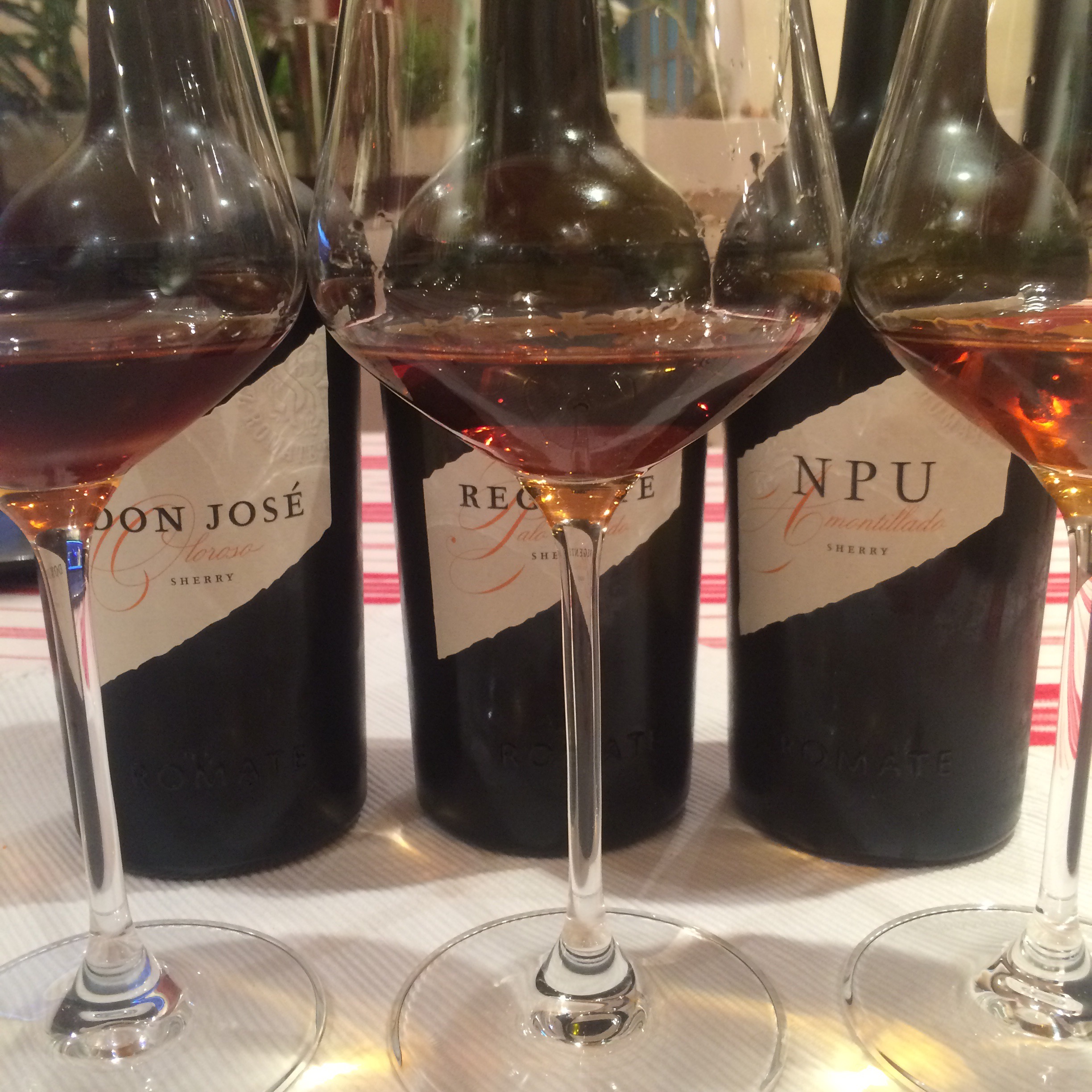
Romate NPU, Regente and Don Jose

   
Good chance to taste an amontillado (NPU, far right), palo cortado (Regente, middle) and oloroso (Don Jose, left). 

The visual impression is as you would expect – progressively deeper  and richer in colour from amontillado to oloroso. 
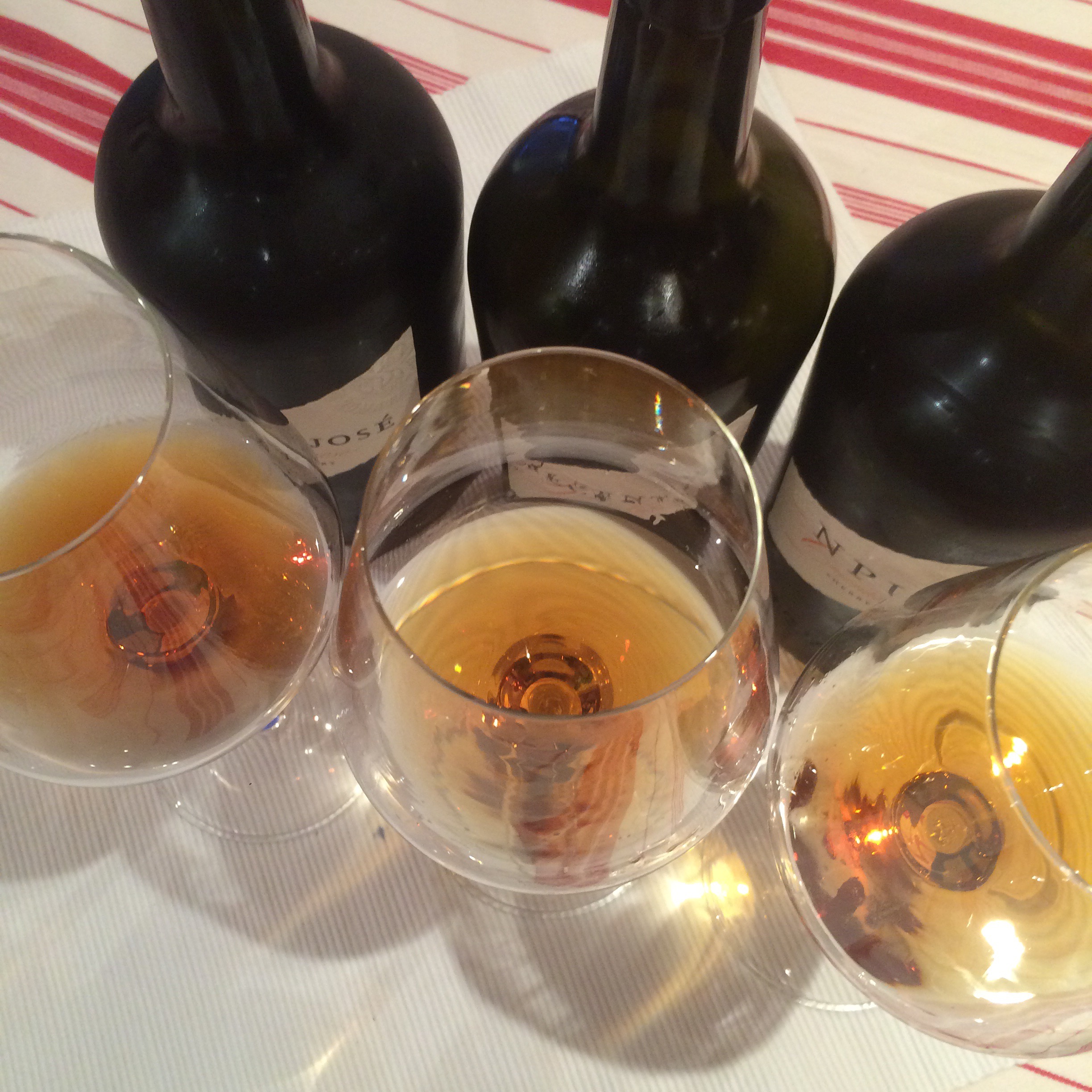
The noses are text book – the amontillado has more bready nuttiness, the palo cortado a touch of spicey ginger, and the oloroso by comparison has an even richer, old red wine and barrel aroma (to be honest a bit unbalanced and ott). Of the three the most elegant and appetising for me is the amontillado – the palo may be more interesting but I like the balance and umami of the amontillado. 
On the palate there are clear steps up in zing, acidity, and structure. Here the little bit of spice in the palo cortado gives it a nice added dimension, whereas the oloroso for me seems more intense but less defined – maybe that same bit of imbalance flavourwise.

Three nice bottles that seem great examples of their styles. All really drinkable too.
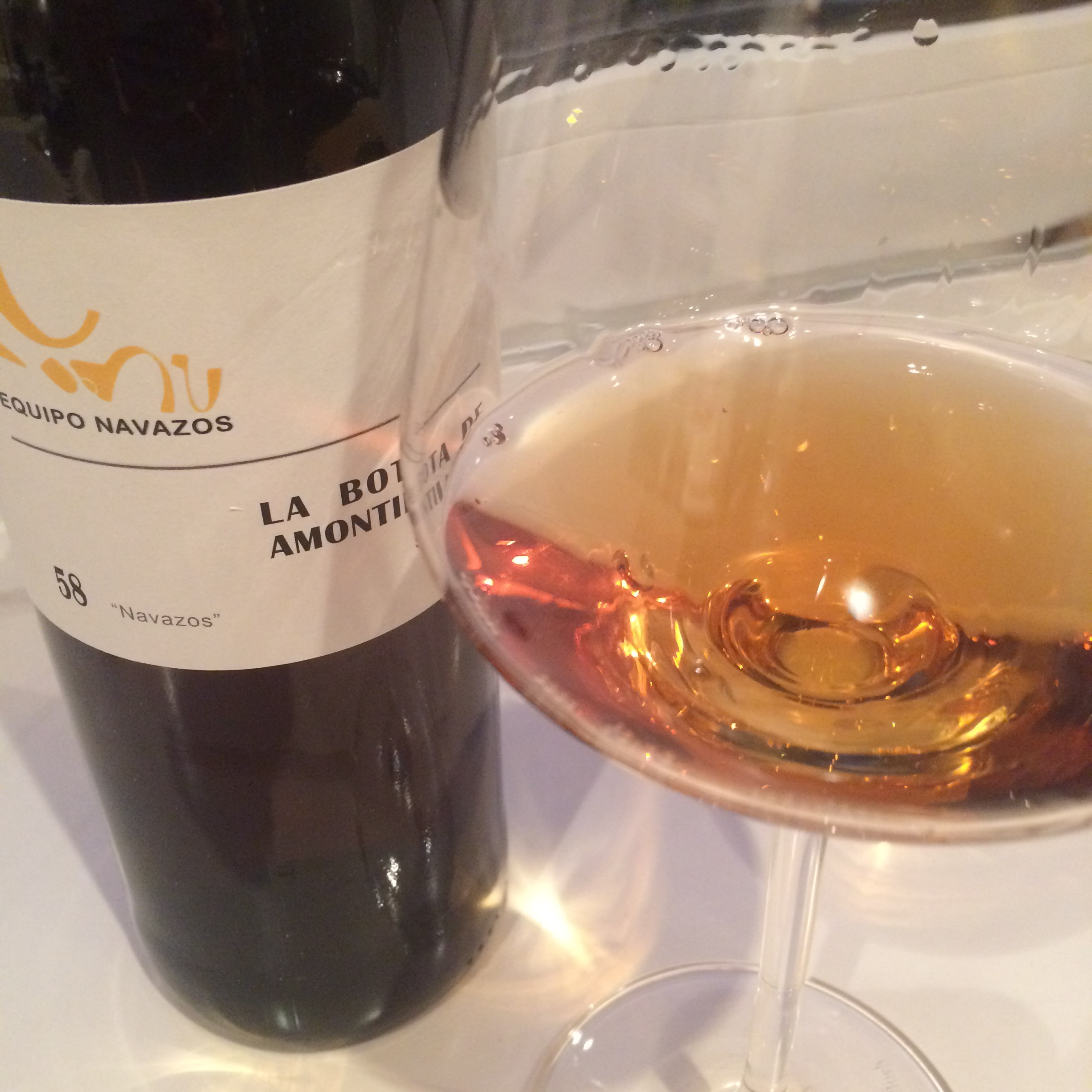
La Bota de Amontillado 58 – “Navazos”

Equipo Navazos release some exciting, top class wines, and when, as this week, the new releases are on offer from Coalla Gourmet then it is just too good an opportunity to pass up.

This wine is also right up my street. It is a new saca from the bota that gave us the luscious Bota 37 and it is tremendous. These Equipo Navazos wines often have fascinating back stories and this one is no different. The original botas were bought by Valdespino from Hijos de Raniera P. Marín (most famous for La Guita) and then topped up with unfortified manzanilla pasada – making it a “natural amontillado” with an average age of around 22 years.

The resulting wine is a gorgeous rich, dark amber colour – looks for all the world like the golden syrup I use to sweeten my porridge of a morning – and also has a slightly sweet nose of honey and caramel on top of hay bales (which takeover as the wine opens out) and spicey herbs. A really cracking nose for a 20 year old amontillado.

On the palate it goes the journey as they say – after the honey sweet nose at first it is dry, acidic/zingy and has an intensity and noticeably salinity, then it opens out into a  big structure of caramel and herbs and fades to a noticeably smokey, burnt sugar finish. It is long and delicious and slightly sticky.

Really excellent – the 37 was a lovely wine and the three years in those botas have only made it more interesting.

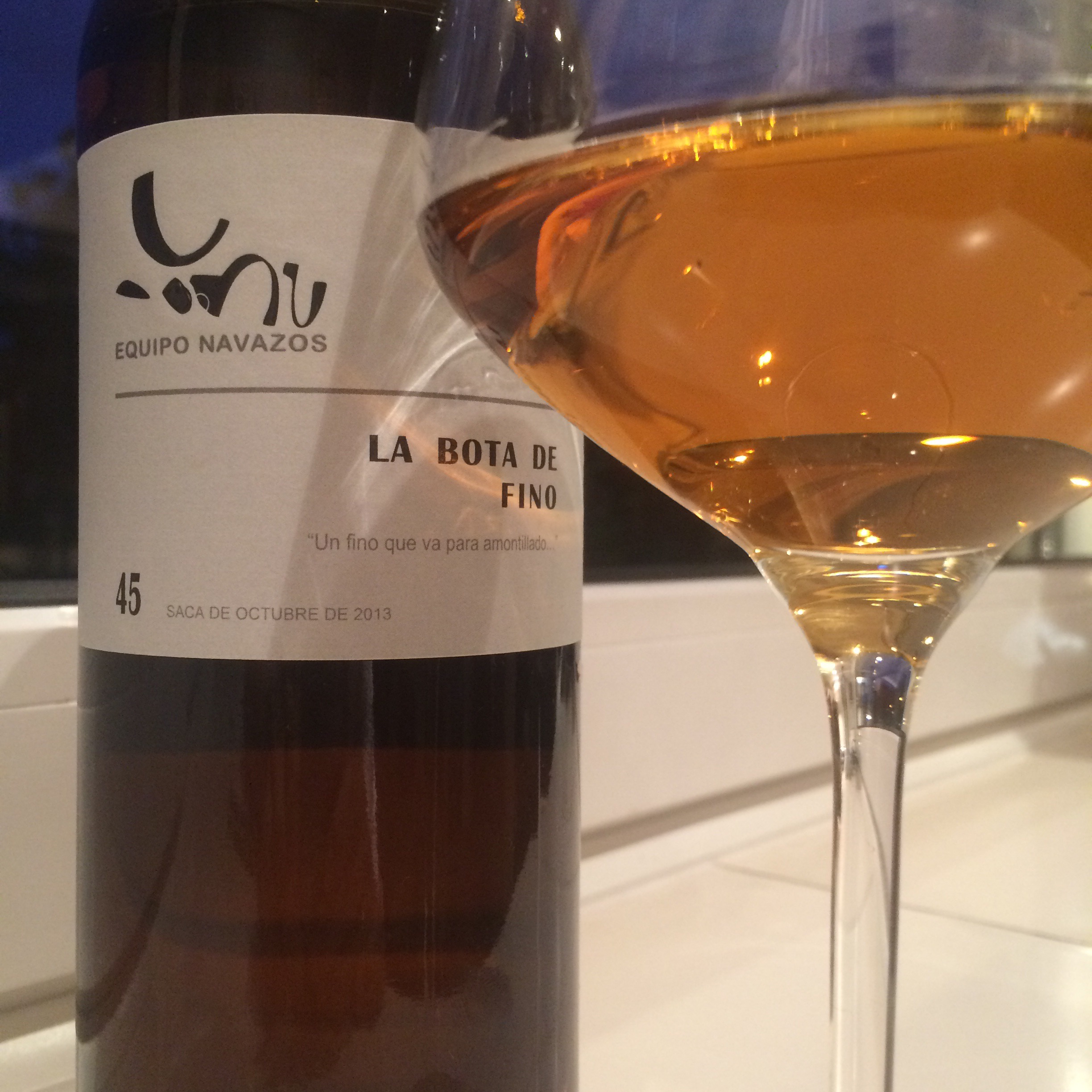
La Bota de fino que va para amontillado 45 – Montilla 

Another week, another magic numberThis one, the number 45, is a “fino on the way to amontillado” selected from Perez Barquero‘s Bodega Los Amigos in montilla. It is said to have an age of 20 years or so.

For an unfined, lightly filtered wine it is amazingly clear and a beautiful dark amber/caramel in colour. On the nose it is right in the sweet spot – as the team say, it is recognizably a fino with hay bales a plenty, but instead of fruit underneath there is nutty toffee and fresh pine needles.

On the palate it shows the full bodied fattiness of a pedro ximenez fino with a really slippy, rich texture. It is also rich in flavour – has a nice zingy start then a surprisingly intense, burnt, salty caramel which fades away to a sort of bitter nuttiness. Very tasty indeed.

Being very picky, it doesn’t seem to have the range and breadth of flavours of the absolute top wines but overall a beautiful looking, wonderfully aromatic and rewarding wine.

Homecoming Part III

  
This time, to my second home and feeding station of choice: La Chula de Chamberi. And what better way to start a new academic year than with veal sweetbread and El Tresillo Amontillado Fino (a lightly chilled, freshly opened bottle no less).

It is a great combination – the sweetbread is intensely salty, savoury and buttery and the Tresillo is all of that and another notch above with spicey, smokey zing and mellow burnt fruit.

It really is good – if I didn’t have so much work this glass could easily turn into a bottle (and bring me the rest of the cow while we are at it).

El Tresillo Amontillado Fino

A friend just sent me this writeup by Julia Harding MW on the Jancis Robinson site. I think it is a fantastic piece which I recommend reading in its entirety.

Here are two snippets:

“But then I tasted it again, with more time and in solitude, from a lightly chilled and freshly opened bottle, and it wasn’t good, it was staggeringly good, so complex and distinctive that I found it hard to describe. …

This is without doubt one of the most stunningly complex and beautiful sherries I have ever smelt or tasted, and it is worth every penny, especially when you consider the time it has taken for nature to make it.” 

My thoughts exactly.

Two amontillados

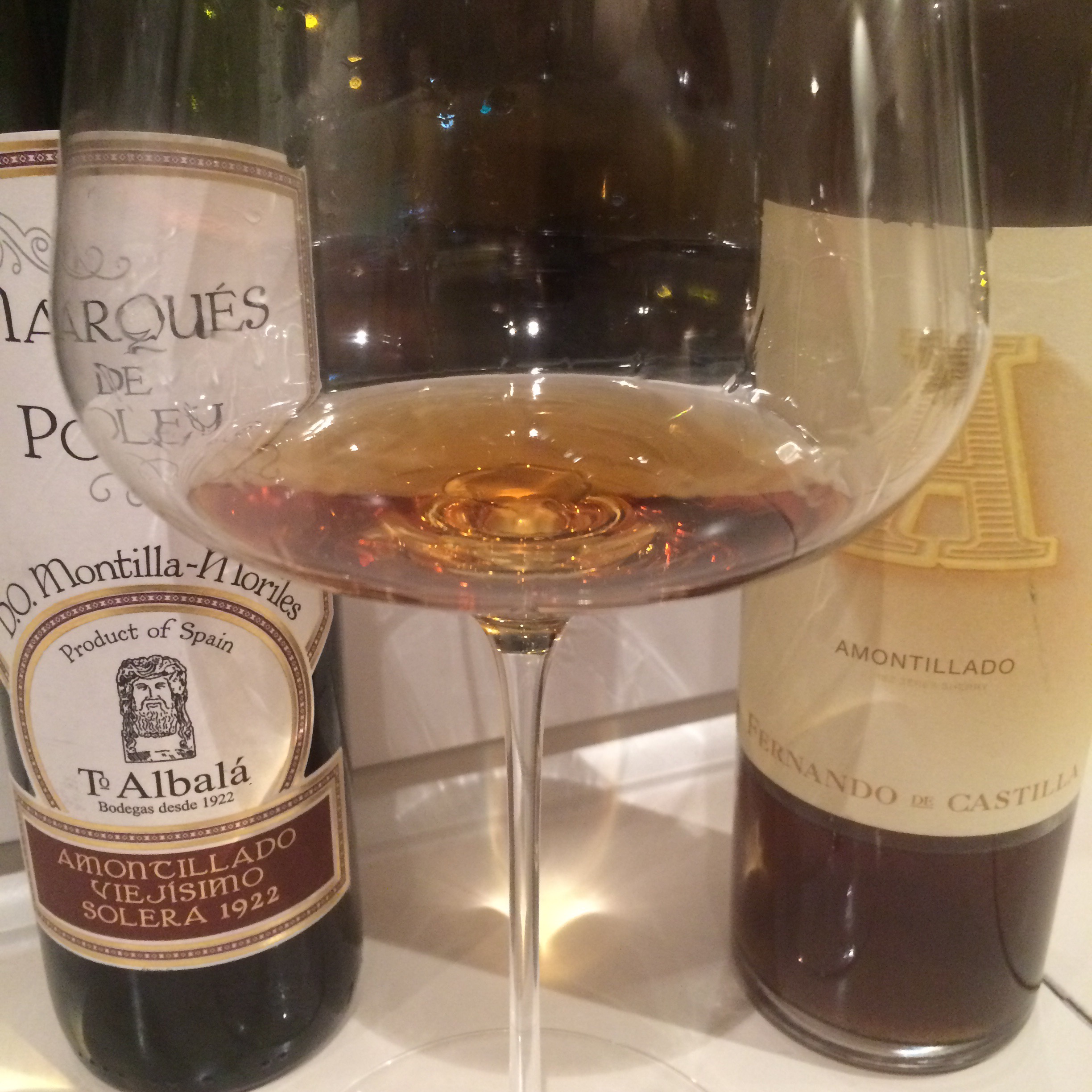
On the right, Fernando de Castilla Antique Amontillado: palomino fino, unfiltered, dusty dry and old in name, spirit and feel. On the left, the Marques de Poley amontillado viejisimo: pedro ximenez, nearly sweet, rich and juicy. Two totally distinct examples of what an amontillado can be.

Tasted separately I really appreciated the breadth of flavours and aromas in the Antique Amontillado and missed it in the viejisimo, but tasting them together one notices how much more compact the Poley is, and how drinkable as a result. It is as if the palomino allows the aromas and flavours to drift apart like a frayed rug while the px keeps them tight.

It seems to me to be a good example of the two contrasting challenges in the creation of a really great sherry – how to achieve that diversity of aromas but hold them together in an elegant structure. (And at a given level of aroma and body the elegance, for me, is most important – it is not for nothing that the very name of fino means “fine”.)

Fernando de Castilla Antique Amontillado


Recovered from my cold and stoked by recent feasting on grilled sardines I feel in the mood for a bit of this amontillado by Bodegas Rey Fernando de Castilla, one of my favourite makers.

On the eye it is just slightly dull brown – definitely more of a yellow brown than the rich red or orange brown of some older amontillados and not quite as crystalline either.

It has a rich nose alright – little bit of the Christmas orange (the one with all the cloves stuck in it), some Christmas tree/pine needles too, even some tobacco and old books. Maybe a little lacking in caramel – in the background at best – and for me it isn’t quite harmonious, but it is certainly an interesting nose.

On the palate it is watery in texture and for me doesn’t quite live up to the nose. It has a nice zingy start, a spicey breadth and a pleasant finish – just maybe lacks an ounce of volume/yeasty umami.

A really spicey smelling glass and an enjoyable tipple – a really good amontillado all around.

And you certainly get the truth and the whole of the truth – just look at these particles: no wonder it tastes dusty!

Marques de Poley Amontillado Viejisimo Solera 1922


This is called “very old amontillado solera 1922” from which I deduce it is a very old amontillado – probably from a solera founded in 1922. It is by Toro Albala, one of the big houses in Montilla Moriles and is 100% pedro ximenez. 

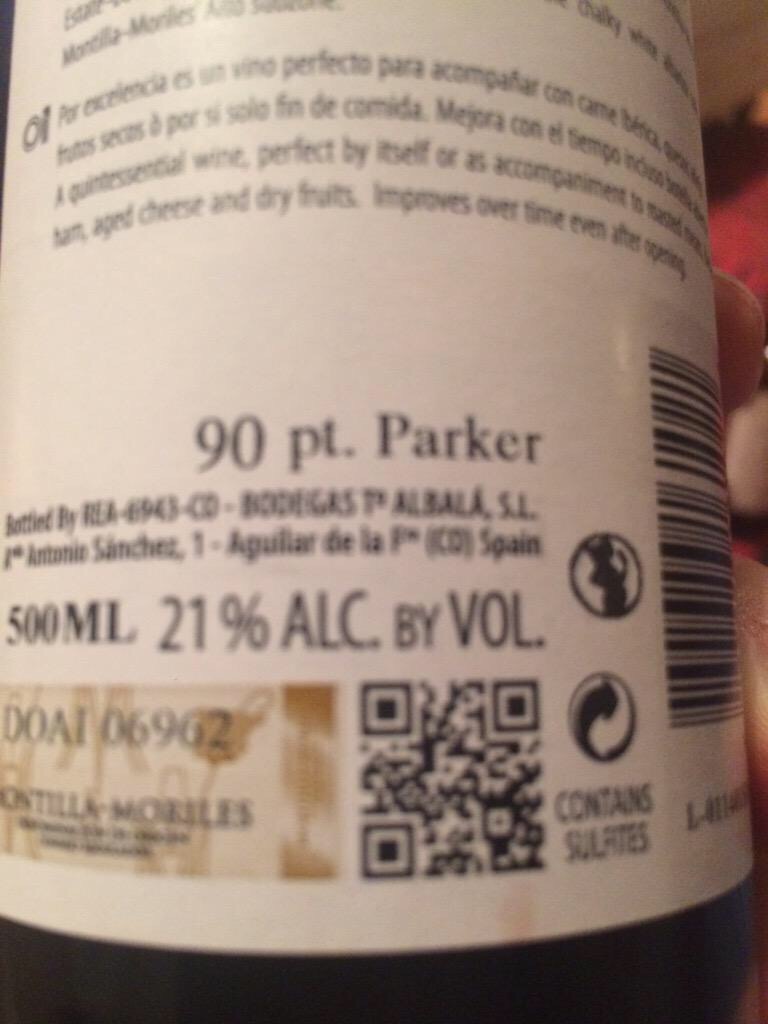
One thing that caught my attention is on the back label – where the words “90 Parker points” sit proudly alongside the alcohol content. I found it odd for three reasons:

  • First, I have seen references to Parker points on bottles before of course but usually as a sticker (since most wines are, logically, bottled before they are rated). 
  • Second, it was odd to see it with the objective information on sulfites, alcohol, etc, rather than in the text box of subjective descriptions. 
  • Third, it was odd to see a reference to 90 points – not a very high score by modern standards. Again, though, I quickly realized that Toro Albala have a 100 point wine in their cellars, a fact that (understandably) influences the importance they attach to such things. 


In any event, I found it odd (and questionable aesthetically speaking).

The wine itself is a characteristic chestnut colour (I must get a taster of chestnut colour options so that I can distinguish) and, as I think you can see in the picture, sticks to the side of the glass a little. On the nose it is sugary sweet, maybe honey with quite a lot of alcohol. 

In the mouth you immediately notice the syrup-like texture from the high glycerol content. It has a nice zing but is not quite dry – not clear to me if it has been encabezado or just not quite dried out (given the name I assume the former). Overall the flavours are of honey and oaky red wine, with maybe a bit of raisin underneath. Nice smoky finish, but a bit sticky. 

Overall I like it ok although, once again, I feel that you get more nuances from a fully dry wine (and I reckon Luis got the score bang on, by the way).  

La Bota de Amontillado 49 – Bota AR

I keep coming back to these – this is one I had open for a little while without finishing off. I wasn’t overwhelmed first time but have had such contrasting experiences with the 47 and 48 on a second attempt I thought this was worth another go. It is of course by Equipo Navazos and as many will already know it is a super old amontillado that labours under the burden of a 100 point Robert Parker score.

It is a deep reddish brown – more colour than you expect given the age and the black label etc.

The nose is powerful and challenging. At first it seems chemical and reminded me of almost a red wine. As I get into it I can pick out ginger (as in a whisky mac) cedar, resin and pine needles. It is reminiscent of really old leather bound books (trust me on this, I am a lawyer by training).

It has flavours of pine needles on the tongue too, and then other wood flavours, a really immensely woody taste to it. It is a gentler beast than I remember – less acidic and astringent – but still a beast. A lot of flavour but it is concentrated bitterness: it has the almost liquorice taste of black treacle, or caramel that has all burnt in the pan. Then again a really woody, tobacco taste fading to cigar ash, in fact.

It is unique and most likely historic, and challenging if nothing else.

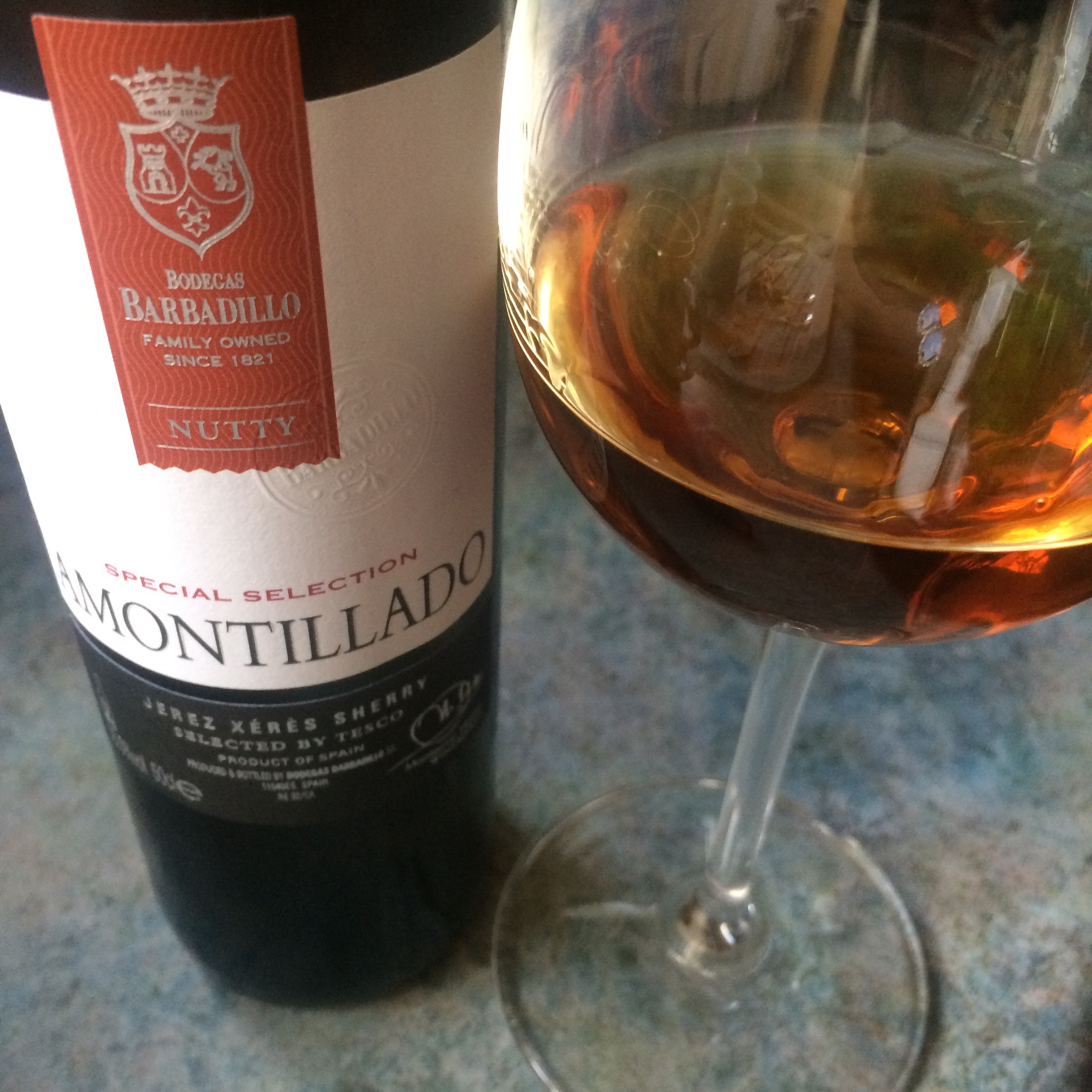
Tesco Barbadillo Nutty Amontillado


So here we go – bought this for six quid in a supermarket but then again, Barbadillo have put their name to it.

Attractive enough in colour, maybe not absolutely bright/crystal clear. On the nose it is toasted nuts and a little sweet and heavy – more like a liqueur than some amontillados.

On the palate it is indeed nutty – nice medium acidity and then nutty (toasted nuts) caramel/burnt caramel – some alcoholic heat coming through at the end and a bit of walnut skin bitterness.

Pretty good – not letting anyone down at that price for sure.