Fino en rama Cruz Vieja 


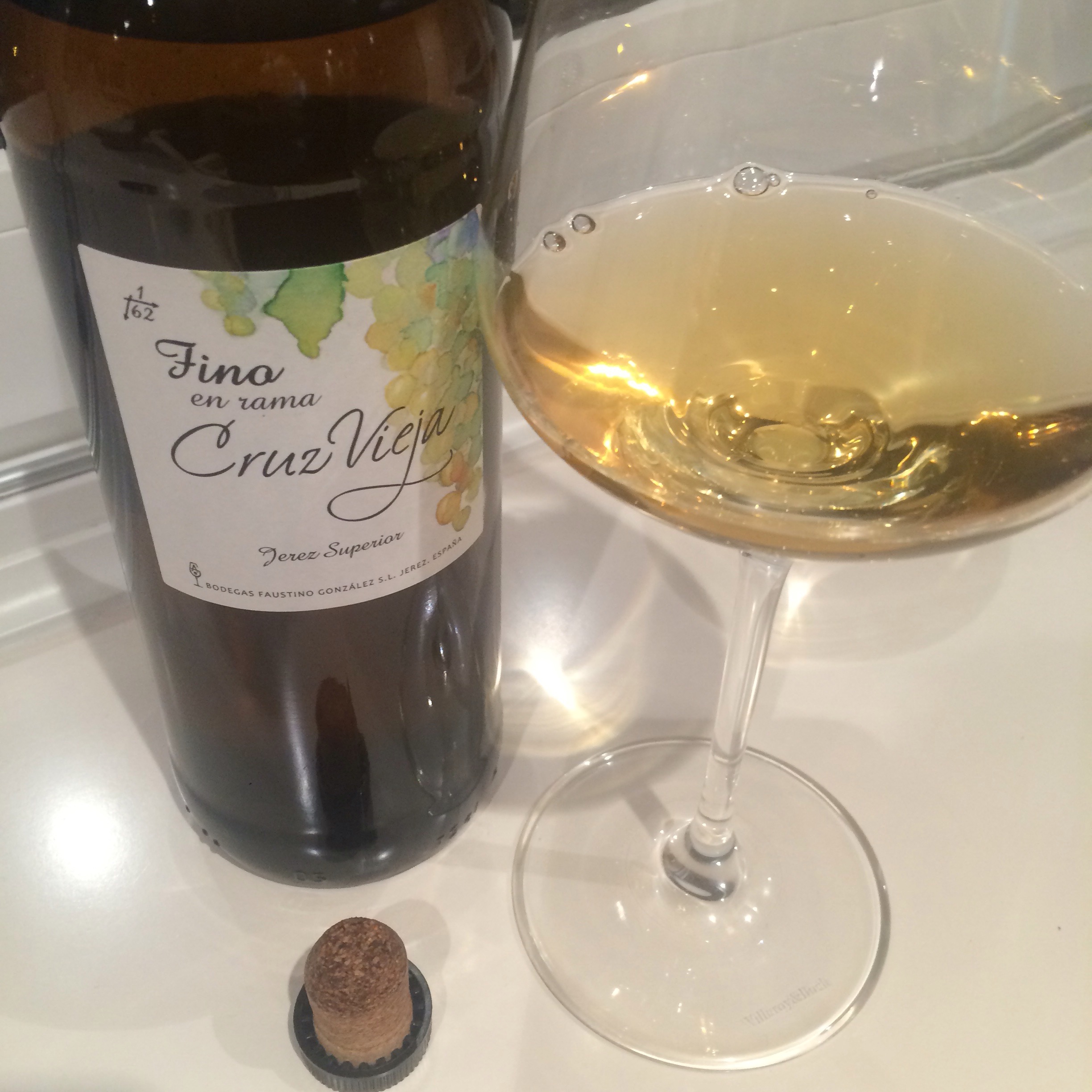
You can’t beat a fino en rama and I am enjoying this one by Bodegas Faustino Gonzalez.

According to the Ficha the wine is 100% palomino from Pago de Montealegre in Jerez Superior and has an average age under flor of 5-7 years (seems oddly approximate). There is no mention of the number of criaderas or sacas (or of which saca this is).

It is dark gold in colour and has that yeasty hay bale/undergrowth aroma – may even be a bit fungal – and bitter lemon or grapefruit. Big flavour – salty, bitter citrus, with nice integrated salinity and a longish, slightly soapy finish.

Maybe not quite as much definition or expression as some finos, but a yeasty mouthful and just what I needed on a Monday night.

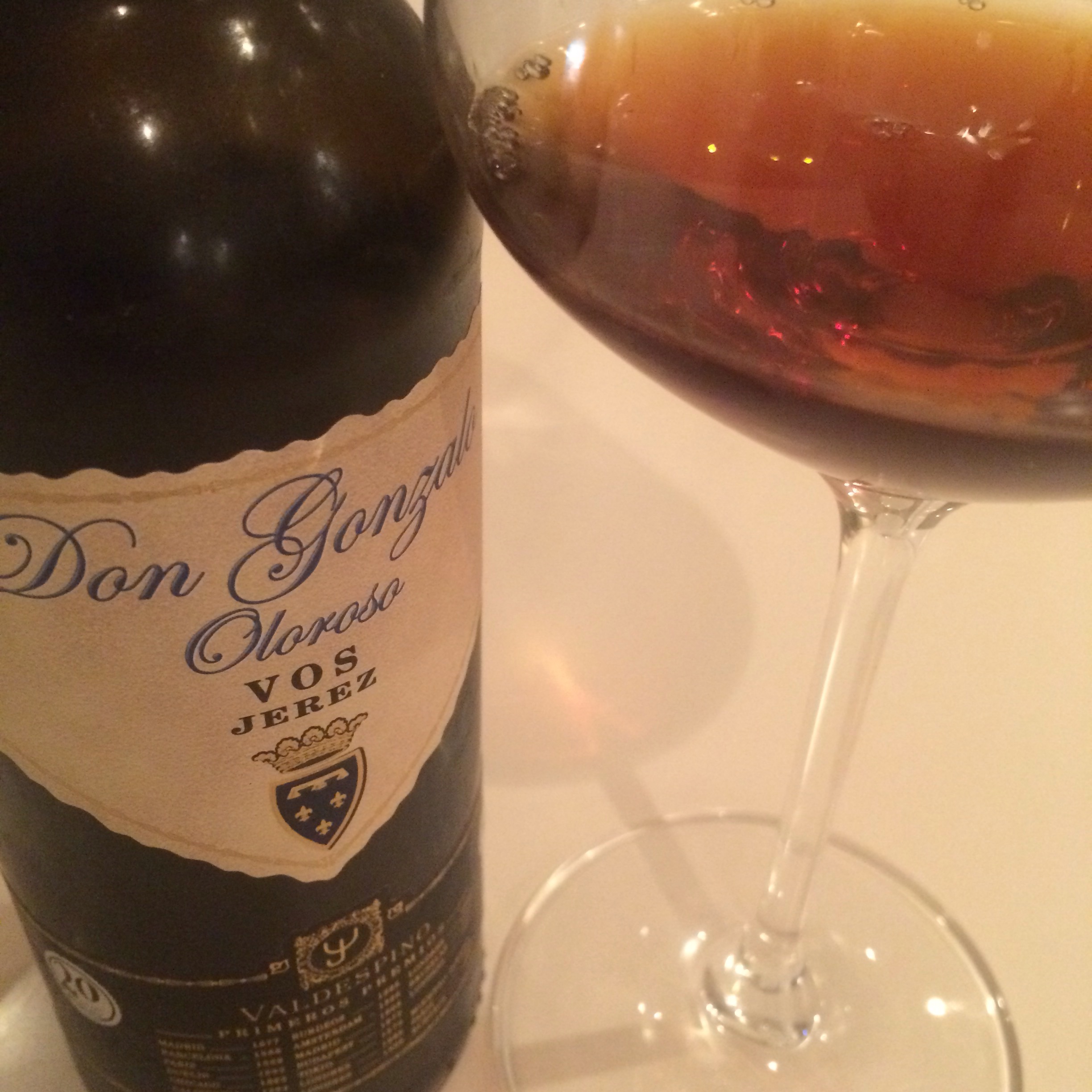
Oloroso Don Gonzalo 


A VOS (20 year old) oloroso from Valdespino. Not a lot of information on the Grupo Estevez site other than that it is from wine sourced from a mix of vines from Macharnudo and Carrascal.

It is a darkish hazelnut colour and has that extreme gasoline nose of the really old sherries – intense solvent/furniture polish. On the palate it is dry, intense, acidic, and concentrated, but above all bitter. Has the character of a much older wine – but essentially bitter flavours, from black burnt caramel to tobacco and cedar wood.

Not absolutely my cup of tea – a little harsh, astringent and agey but it is good stuff nonetheless.

Manzanilla la Bailaora  

  
Yet another acquisition from the Grupo Estevez online store, this is a basic manzanilla and it does the job. 

A pale, watery straw colour and a mineral, almost metallic nose. On the palate it is salty lemons –  not as elegant as some but punchy and refreshing, full flavoured. 

Very swiggable. 

Amontillado fino El Tresillo


Oh my word this is even better than I remembered.  The artsy photo is slightly misleading – the wine is fresh from the cabinet and the condensation on the glass makes it look slightly cloudy when in reality it is as clear as a rich honey coloured bell.

The first waft of this across the nose was divine – hazelnuts in honey. A closer inspection and the salty minerals are more prominent but there is no missing the sweet caramel notes and nuttiness.

Then on the palate well, it is all there – zingy, salty buzz to the tongue, and then super dry and intense but with flavours that suggest sweetness: caramel, nuts and even orange marmalade. Lovely long finish that seems to actually get better.

A world class wine, no doubt.

UBE 2013

There are many reasons to come to Surtopia (as discussed ad nauseam here, here and here) and not the least of them is the chance to drink singular wines like this one.

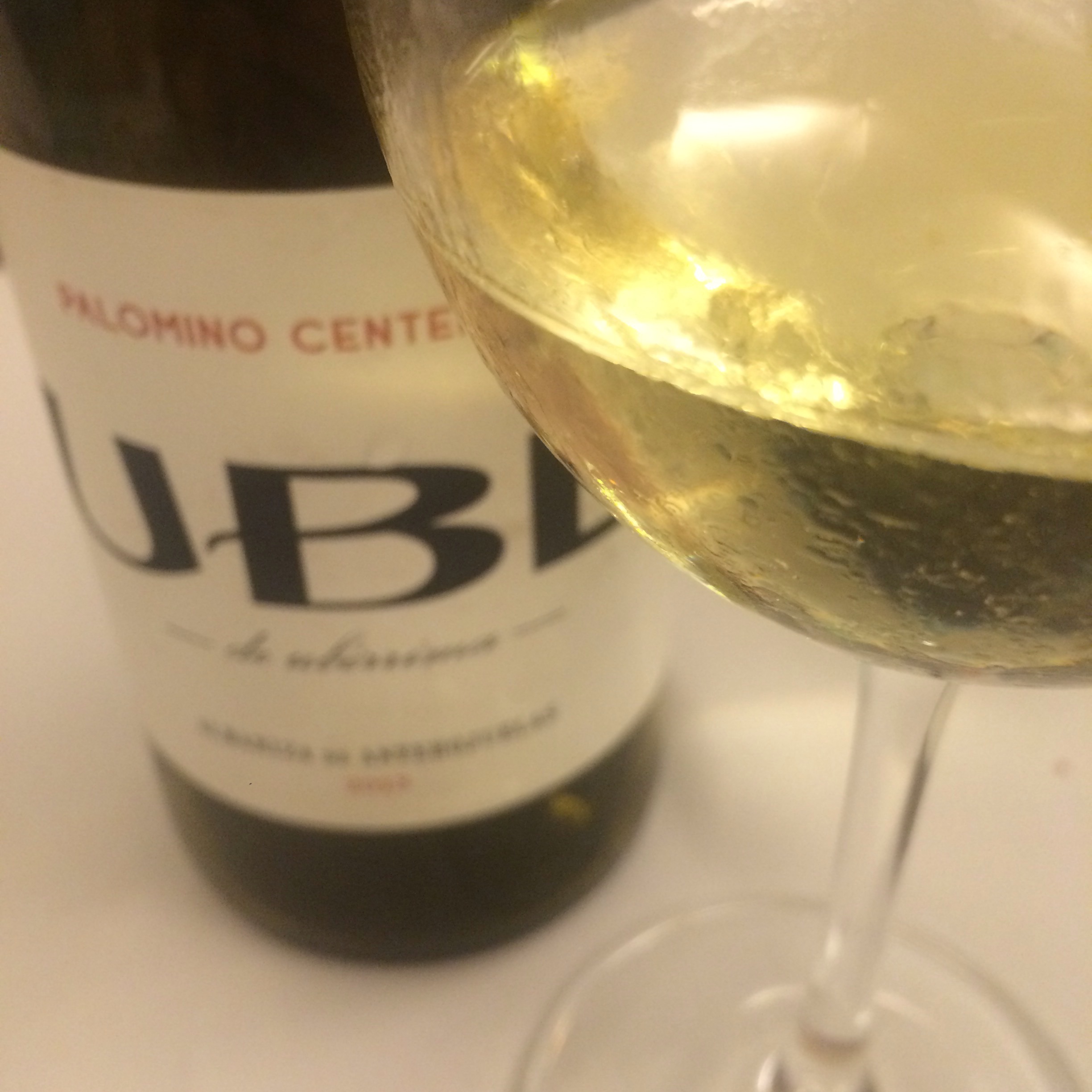
This is yet another of the fascinating projects of Ramiro Ibañez and, since the artistic photo is a bit blurry I need to fill in some blanks. This is the 2013, the full name is “Ube de uberrina” (uberrina meaning “utmost”) it is labelled “Palomino Centenario” (100 year old palomino) and it also references the kind of albariza soil involved – albariza de antehojuelas (new to me – will see what I can find out). The back label has yet more intriguing information, showing that the fruit is from a small finca called Las Vegas and the cepage is 73% palomino fino (the now dominant strain of palomino, originally from Sanlucar), 16% palomino jerezano (which I believe is aka palomino de jerez or palomino basto – originally the dominant grape but now much less common) and 11% palomino peluson (new to me). It says on the label that these are the original “roots” (by which I assume we are talking pre-phylloxera).

So a fascinating CV, no doubt about it, and the resulting wine is very fine stuff indeed. As you can see it is a pale but solid gold colour with green notes – crystal clear and appetising. It has an elegant nose with very subtle notes that are floral/herbal (honeysuckle and rosemary) and mineral (limestone rather than seasalt).

On the palate it is dry but has flavours that suggest sweetness – sweet herbs and almonds – and just enough mineral bite. Brilliant balance to it too: it is really fresh, clean and elegant. Brilliant stuff – maybe not the huge flavour profile of some white wines but classy and utterly enjoyable.

Manzanilla Gabriela 

What a week of manzanillas it has been – here is another, from renowned but not widely distributed Sanlucar maker Sanchez Ayala. The bodega has been a happy hunting ground in particular for the Equipo Navazos boys: the Number 1 release was a Sanchez Ayala and there have been no fewer than 12 in total (including some absolute crackers). However this is the first time I have tried one under their own label.

It is their classic manzanilla. Has an excellent ficha, which tells us that the palomino is sourced from the “Las Cañas” vine in Pago Balbaína. The wine has an average age under flor of five years, and has passed through no fewer than nine criaderas.

And the resulting wine is indeed a classic. Pale in colour, a nice fresh floral, almond and sea air nose and an equally fresh, delicate profile on the palate. Very elegant and fine – maybe not the biggest flavour profile but easy in and easy out – very nice quaffing as they say. Could imagine myself drinking bottles of this down at the beach.

Are the children really our future?

280px-Cripta_Cappuccini

With apologies to the late, great, Whitney Houston, I am taking a liberty in an attempt to harness the famous first line of the Greatest Love of All to my own ends. Namely, in response to an interesting piece that was posted by winesearcher about the decline of fortified wines under the provocative title “Fortified wine’s final generation?”

It is a piece that starts brightly enough, noting that “The magnificent fortified wines of Port, Sherry and Madeira are undoubtedly some of the greatest and longest-lived fine wines available in the market today.” But soon it takes a more pessimistic turn, noting that, the occasional green shoot aside, the image is all wrong, sales are down since 2003, people don’t drink much port or sherry any more etc. It is a pretty impressive piece full of statistics and quotes from influential sommeliers and the like, many of them full of doom and gloom.

The piece gives particular prominence to the reported fact that “the majority of fortified wine drinkers are males older than 45” while, by contrast, “only” 22% of people aged 18-34 are drinking sherry (and only 25% are drink port).  The piece then poses the worrying question of whether “fortified wine [is] heading for a slow death as Generation Y continues to shun the style?” Even more apocalyptically, the piece then worries about the impending extinction of the over 45s: “… as that generation eventually dies out, is there any evidence that younger drinkers will take their place?”

While the evidence looks solid enough and, it has to be said, sounds plausible too, the “angle” seems to miss the point. You see, what our younger colleagues may not yet appreciate is that, as the plaque in the capuchin monks famous ossary (you may have been wondering about the picture) points out, “what you are now, we used to be. What we are now, you will be“. Incredible as it may now seem, a mere 8 years ago I was myself part of that 18-34 demographic. On the other hand, the majority of people in that 18-34 demographic today will one day literally grow out of it. In fact, barring really apocalyptic Hollywood blockbuster style developments or zombies, there will always be people (including males) over 45.

And the point is that at different times of our life our relationship with wine changes. Did I drink wine in my youth? Only occasionally, it must be said. I really started taking an interest in my mid-20s when I fell in with the right crowd in Brussels. As for sherry, it really only got hold of me much later – I would say at age 36 and I have certainly made up for lost time since then. For a start, it just wasn’t available to me before that – it is no secret that for the last 20 years sherry sales haven’t been as buoyant as in the past. I also think that sherry, in particular, is a grown up wine – challenging and complex, intimidating even. In fact, to me 22% seems a pretty healthy percentage- of course it could be higher, but unless that percentage has itself declined it doesn’t on its own look like cause to worry.

So I really don’t think it is a problem that the youngsters aren’t hitting these particular bottles right now. From where I am sitting the outlook for fortified wines – and particularly, dry sherries, is bright. As the piece itself recognizes, “Both Sherry and Port are growing in value and volume” and that growth in value is almost tangible in the market.  Pioneers like Equipo Navazos and Tradicion have forced open the cellar door and an ever larger number of historic bodegas and classic wines are emerging, blinking, into the light. There are sherry bars opening all over the place. And  even more exciting things are happening as experimental mavericks are taking on the rulebook and questioning everything.

And the best thing about this renaissance is that it isn’t purely based on clever marketing (although there is some really clever marketing involved) but on quality, and in today’s world quality will win the argument. Going back to my spell in that 18-34 demographic, we didn’t have the internet, apps (we didn’t even have smart phones – imagine that), points scores, winetrackers or winesearchers to help us find the right wines and we didn’t have the million and one blogs by enthusiasts telling us what to drink. Today, all these innovations make it much easier for anyone with a bit of interest to find quality wines. It is no surprise to me that sherry has been a major winner as a result.

So please, let’s not worry about marketing to the kids – let’s just keep making the best wines we can. If you build it, they will come.
Three Manzanillas

Had three cracking and very different manzanilla en rama this last week and the differences made me reflect. Here we have three 100% palomino wines, made into manzanilla in the same small town but utterly different. Without reproducing the notes all over again I think they could be summarised as follows:

  • First, the Manzanilla 3 en rama had a nose of ozone and sea air and a palate full of zingy minerals, with a smokey finish.
  • Second, the Solear Winter 2015 was aromatic and juicy – vegetable, herbal and nutty – with a solidity and meatiness to it.
  • Finally La Guita en rama october 2015 was again different, with a more delicate, floral nose, a finer texture and very pleasant sweet citrus notes on the palate.

Three lovely wines that I would highly recommend and interestingly three quite different styles within a style. Really shows what can be done and how far we have to travel still in understanding the wines of the region.

Fino Tio Mateo 


After all this manzanilla I thought I would go fino tonight and this one by Marques del Real Tesoro (like Valdespino, part of the Grupo Estevez) intrigued me.

Two things caught my attention:  an interesting Elmundovino piece about a Supreme Court judgment permitting the use of the phrase “low in histamines” (although the current label makes no mention); and the Estevez website’s intriguing claim that it is the first wine in Spain made using the “Estevez method“. In fact really there is only one issue, because it turned out the Estevez method was developed to eliminate the histamines from the wine. But that only made me more intrigued: why would you seek to eliminate the Histamines? Are people actually allergic to sherry?  Given that I had never heard of anything being low in histamines it seemed an odd marketing ploy to say the least.

In fact it appears that there is indeed a small percentage of the population (below 5%) that apparently do react badly (may suffer headaches and other allergy symptoms) to consumption of food and drink of different kinds (not just sherry but everything from champagne to strawberries). As such, while only a small percentage of that small percentage would have such a reaction to sherry, by eliminating the histamines you would be able to just about truthfully say that your sherry is “less likely to give you a headache”. (Which also explains the opposition to the marketing: the sector in general was understandably unimpressed by the suggestion that their wines were riddled with unhealthy histamines.) I wonder why they don’t say it on the label any more?

Anyway, the wine is also perfectly nice. It is a watery/hay bale gold and has a mineral, yeasty nose. It is zingy on the tongue – real bite and tingle to it and is thick in texture, and then developes a salty almond, nutty flavour.

I just can’t help wondering what it might be like with histamines.

Manzanilla en rama La Guita octubre 2015 


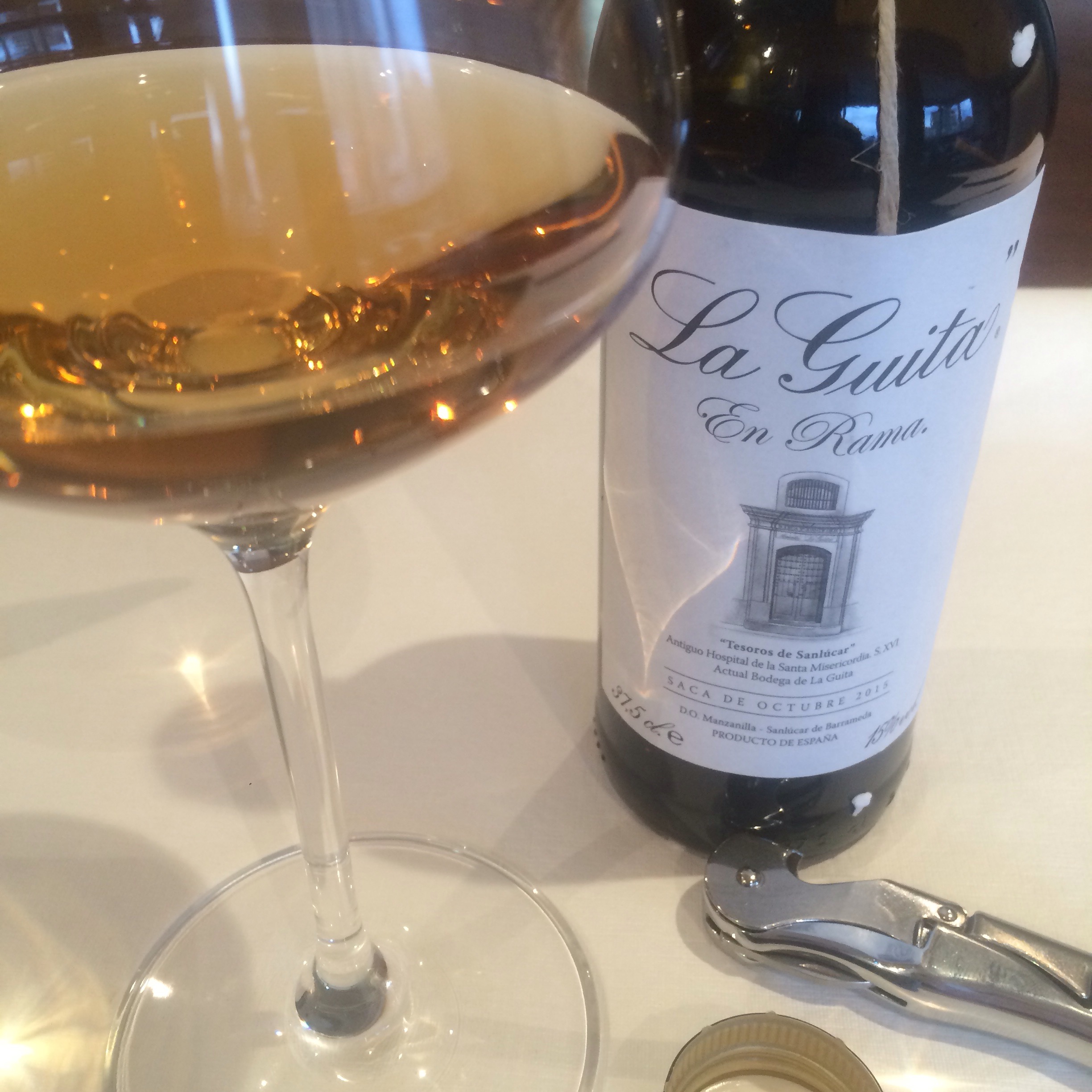
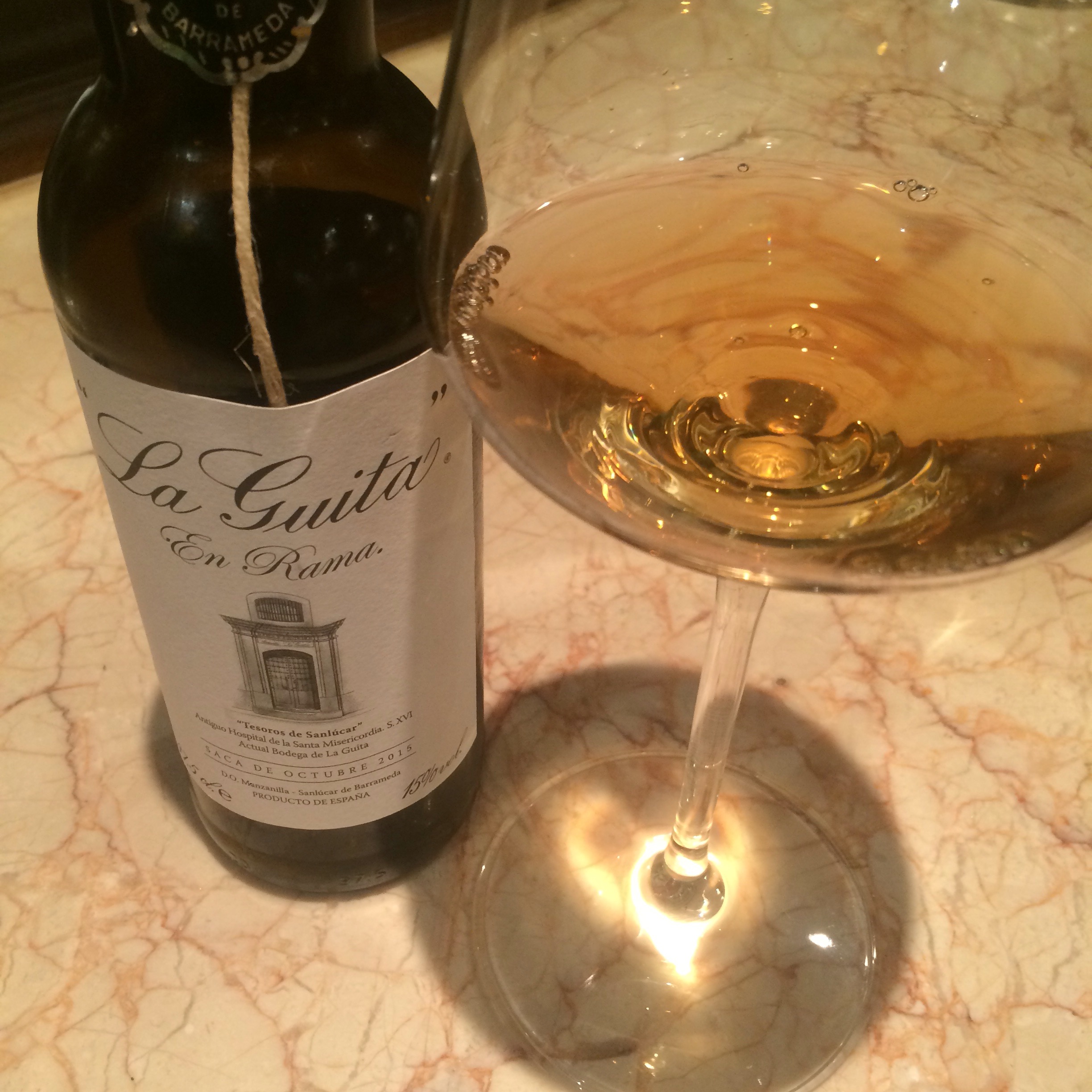
Just look at the colour of this. Pretty amazing colour for a four and a half year old manzanilla bottled a mere three months ago. Bears no resemblance to the classic La Guita manzanilla I have had litres and litres of in the sunshine over the years and in fact really reminds me of one I had last year that had been in the bottle five years.

La Guita (an old Andalucian slang term for “cash”) is one of the classic manzanillas and the bodega from which it comes – Domingo Perez Marin – is owned by  Grupo Estevez.  This wine has been selected from one hundred year old soleras located in two different bodegas, the Misericordia (originally a 16th Century hospital and featured on the label) and Pago Sanlúcar Viejo. It is the first saca en rama from La Guita and as you can imagine there has been a lot of expectation.

It is beautifully presented and the official “La Guita” web has an excellent ficha with details of the vines (all Sanlucar, mainly Pago de Miraflores), the soil type (chalky/limestone rich clay), acidity and sugar content etc. A couple of datapoints that are missing are the number of criaderas, sacas etc but the ficha is well above average as it is (and much better than it was last year, from memory, so well done).

So anyway, getting back to the wine itself, the colour is tremendous – a real old gold, like old brass cuff links and collar studs. On the nose too it is mineral – tin, with sea air rather than salt and orangey citrus – reminded me almost of a Loire white in some ways.

On the palate I get those same characteristics, nice minerals – not aggressive salinity by any means, very smooth and integrated but enough bite to be interesting. Has a lovely suggestion of sweetness and citrus notes – again orange peel. Not the biggest volume (compared to the Solears it lacks juice) but nice flavours nevertheless. Also a really nice length and the citrus notes persist making it a very pleasant finish.

This is extremely drinkable, by which I mean I need a bigger bottle (or several). 

(And three days later the last glass is still intact: the colour, nose and flavours seem very similar. Still that tinny nose and flavour of citrussy yeast. Very good but I don’t see myself taking two attempts to drink future bottles.)