CGWF17: Part 3 – Cakes and cream in the afternoon 

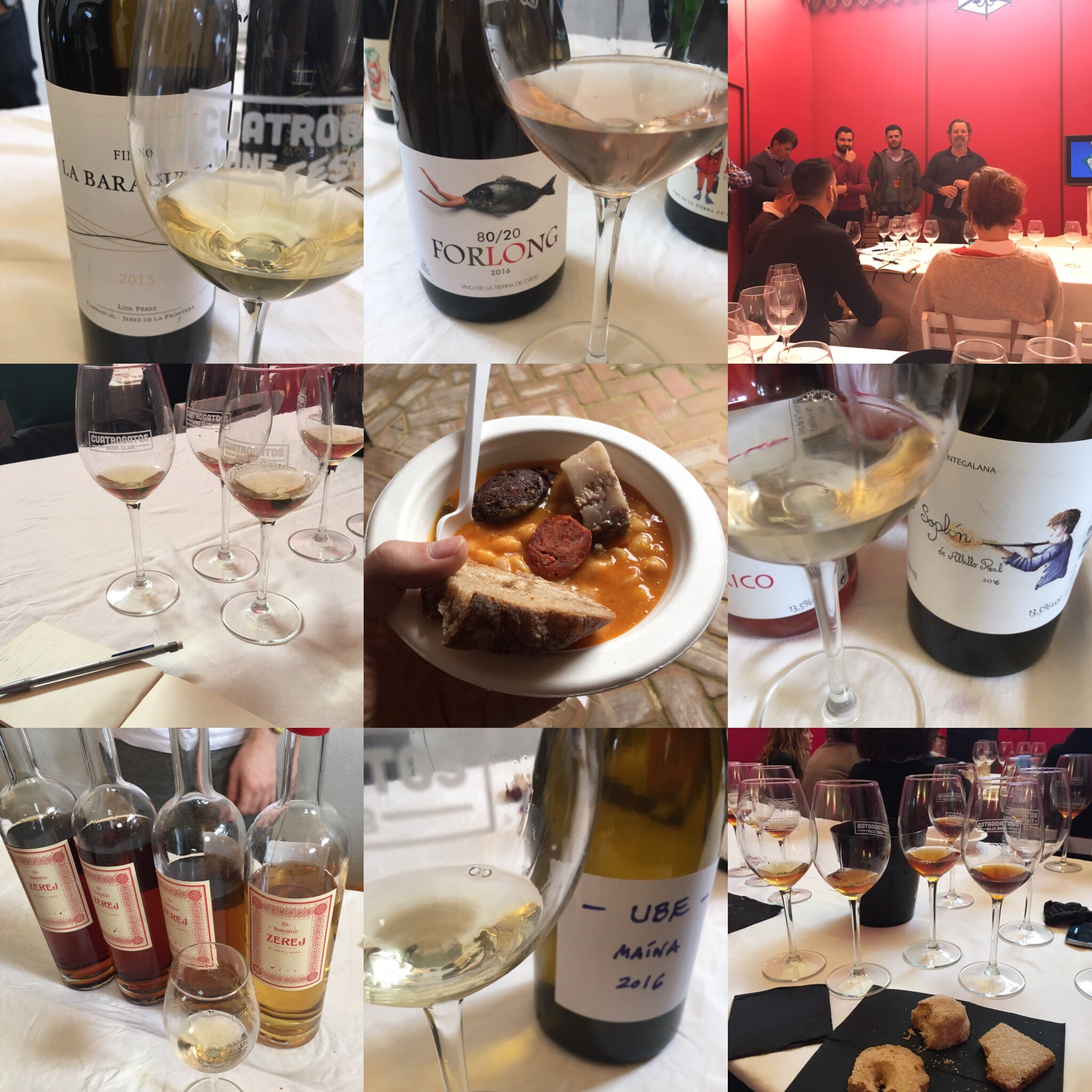
The second cata at the Cuatrogatos Wine Fest, lead by the man himself, Federico Ferrer, was short and sweet. At least it was for me: short because I overdid the siesta and rocked up an hour late, and sweet because, well, the wines were sweet, as were the little crumbly pastries we swigged them down with.

The sweet stuff isn’t really my bag but these were not your bog standard sweet sherries by any measure.

  • Moscatel Oro “Los Cuartillos” (Primitivo Collantes) was a really cracking start – citrus rich and lush but with nice acidity and a bit of mineral bite, muscle. Nice bit of freshness to it too.
  • Pandorga 2014 (Cota 45) is another favourite – a 100% pedro ximenez that is not as other PXs: sweet, tasty with apricot richness but with nice acidity, like a late harvest riesling.  Top class.
  • Golpe Maestro (Federico Ferrer) – the only wine of the lineup I hadn’t tried and a fascinating beast. A late harvest, sun dried palomino that has been two years in half full barrels. Unlike anything I have tried before – has a curious, herbal sweetness and a funky green bitterness (like bitter salad) to it. Really reminds me of the spicey peppery edge to some manzanillas, but more concentrated and with residual sugar. Need more time alone with this if I can get a bottle.
  • Piñero Cream (Juan Piñero) is a 20 year old 75% oloroso, 25% old pedro ximenez blend, with a nutty, woody, slightly bitter, acidic oloroso to balance the raisins of the PX. A tough ask in this company: next to the younger varietals it comes across as slightly less fruitful, elegant and natural
  • Pandorga 2015 (Cota 45) is something else altogether. Ramiro Ibañez at Cota 45 believes in expressing the vintage so in a hot year he harvested even later and left the grapes longer in the sun. Added to the fermentation at high ambient temperatures what you get is a nectar with a staggering amount of sugar and only five degrees of alcohol (so low he can’t call it “wine”). All that sugar is balanced with a lovely acidity and intense apricot flavour and the stuff is far, far too easy to drink. No spitting this  one!

(This is where I think I am obliged to make some kind of witty remark about the kind of sherry your grandma drinks or something but I can’t be bothered.)

Gueuze – Brussels champagne, or Brussels sherry?

Am allowing myself to post a picture of a glass of gueuze on this site because I reckon it is the sherry of beers. 

It undergoes second fermentation in the bottle and is sold in champers bottles, and is sometimes referred to as “Brussels champagne”. To be honest I can’t argue with that, but it also strikes me that there are parallels with sherry. 

First, because like sherry it is delicious and complex in flavour and texture (and I love it). Second, because of the role of natural yeasts in the fermentation of the lambic beers of which it is made. Third, because it is a blend of beers of different age – younger and older lambics. And finally, because it undergoes a second fermentation in the bottle and spends a good time on the lees (cabezuelas) as a result. 

To be honest, looking at that list I can see the champagne comparison – but in any event it is complex and delicious. If you haven’t tried it I recommend getting stuck in. 

Manzanilla pasada and milk chocolate 

Top pairing this – the zingy manzanilla lifts the milk chocolate, which in turn really brings the nuts and fruit of the manzanilla pasada out. The result is creamy, nutty, fruity, and salty.

Lets be honest it is a good excuse to eat chocolate buttons – my daughters will understand (or never find out at least).

CGWF17: Part 2 – Zerej Volume II 

There is a lot to like about Armando Guerra’s Zerej releases, of which this is the second.

The first volume would be a few years ago now and was something of a pioneer: a boxed set of four magnums of wines for with different amounts of biological ageing, accompanied by an explanatory booklet. The idea is for a group of friends to hammer their way through the four magnums and the booklet and by so doing learn about the miracle of the flor. I never tried it but would have loved it – and the format (in particular the magnums) is dead right.

The second volume is the oxidative ageing version and now Armando Guerra has the full might of Barbadillo behind him, so your box includes magnums of a white wine (in the style of Mirabras), an amontillado (think Principe de Barbadillo), an oloroso (the classic Cuco) and a stately old palo cortado (Obispo Gascon). This time around I did get the chance to try them, although not without some difficulty: on the day the man was absolutely mobbed as the locals piled in.

They are classic wines, full of the spikey character I associate with Barbadillo. Really interesting too to be able to taste the spicey, vegetable white wine and see the evolution in that character. They also undoubtedly serve their educational purpose – particularly if you had the discipline to wade through the accompanying literature – although for my money more an illustration of classic styles than the effects purely of oxidative ageing (I wouldn’t mind seeing the same wine with six, twelve and eighteen years of oxidation, say).

Not sure how many of these sets there are, but given Barbadillo’s distribution muscle there must be a chance of this being available internationally. I certainly hope so – there are too few opportunities to sit down with four magnums of sherry and a few mates!

CGWF17: Part 1 – Mayeteria Sanluqueña

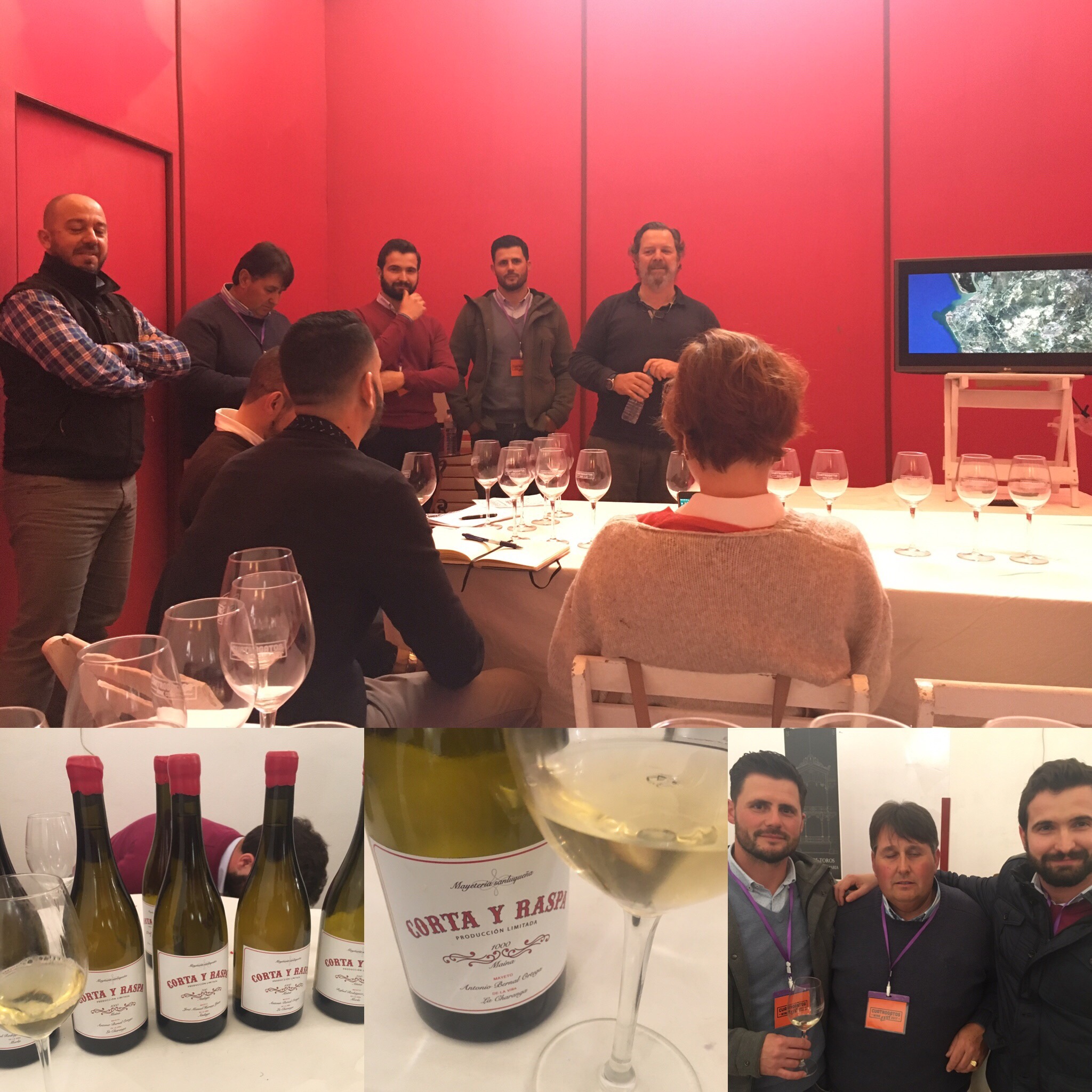
The Cuatrogatos Wine Fest was an absolute blast and there were fantastic wines everywhere you looked, but for me the highlight of the day was the unveiling of the “Mayeteria Sanluqueña”.

The project, the brainchild of Ramiro Ibañez, is aimed at encouraging and helping mayetos, or the small scale owner/growers who traditionally supply fruit to the cooperatives and other producers, to instead make and sell their own quality wines. The wines are vineyard specific from low yield (<7,000kg/ha), hand-harvested fruit and are fermented in bota, but otherwise the mayetos have a free hand to experiment and try and coax the best they can out of their vines, some of which have been in the family for generations.  Today we met the first wave – three guys who brought along four wines – but they are just the start, with other mayetos experimenting and working on their own wines up and down el marco.

As my half-dozen regular readers will know, I believe that this is exactly what el marco needs to do. There was a pretty vehement debate on Saturday afternoon amongst some big names on the role the vineyard and the vine should play in the future of Jerez but for me there is no doubt: the vines and vineyards of el Marco are capable of producing white wines of a quality and expression comparable to any great region worldwide, and seeking out and making those wines – and charting out the vineyards that make them – is surely the best way for el marco to get back to the top table.

And these wines were a further confirmation of the potential of the region:

  • Atalaya – by Jose Manuel “Manu” Harana Yuste – had a punchy nose of iodine and salty sea air (and a touch of reduction to start, although it improved a lot after 30 minutes or so) and a similarly direct and mineral profile on the palate, with a touch of steel, slightly stewy bitter almond flavours and a seashell finish
  • La Morla (Pago de Añina) – by Rafael Rodriguez Jiménez – was a totally different proposition. While the Atalaya was all coastal minerals the Añina was a delight on the nose, like a Cotes du Jura with ripe apple and pastry, and a nice concentration first up on the palate
  • La Charanga (Pago de Maina) – by Antonio Bernal Ortega – was probably the best of the lot, with a sea-air, almond and apple pie nose and a fantastic shape to it, with mineral zing to the start, a long finish and a big flavour profile in between – slightly more concentrated fruit and a hint of vegetable and peppery spice.

We were also given a sneak preview of two other wines – from Miraflores and Macharnudo – and later in the day I also had a chance to try another Añina wine by Rafael Rodriguez Jimenez. In fact it was one of those dream days when I was also able to have a dip into UBE 2014, a diatomic bomb “UBE Maína 2016” and another look at the three vineyard specific wines by Callejuela. Nearly a dozen palomino wines that were anything but the neutral, dowdy solera fodder that we have been brought up to expect: these were fantastic, quality and unique wines, and although it has been pointed out to me that I usually use “interesting” to describe wines I don’t like that much, these were interesting in a very good way.

I appreciate that the opportunity I had yesterday was special, but if you get the chance to try even some of these wines then you should grab it with both hands.


Cuatrogatos Wine Fest 2017

I didn’t expect any less but it has still been a fantastic day by any standards – brilliant wines, including some really exciting new projects, a lot of old friends, some new friends, and a lot of laughs.

Would be hard pressed to pick out a single highlight and it is going to take a while to get my thoughts in order (notes have been taken and spitting discipline was good) but for now my sincere congratulations to Federico Ferrer, his crack team and all the bodegas – really top drawer and will live long in the memory. 

II Feria Montenegro 

Was lucky enough to be invited to an absolutely cracking event today by the guys at Montenegro. 

A select group of top quality bodegas were represented:

Boal de Arousa; Fil.Loxera; Adega Entre os Ríos; Gatzara; Vins Cia. de Vinos del Atlántico; Finca Teira; Callejuela; Sílice Viticultores; Fredi Torres Viticultor; Antoine Touton & Fredi Torres; Bigardo; Suertes del Marqués (con Medianías); Gregorio Martínez; Zorzal Wines; Lorea; Bruma del Estrecho; Las Bacantes; Valsangiacomo; Bodega Vidas; Carlos Valero; Los Loros/Juan Fco. Fariña; Charles de Cazanove; Europvin (negociant); Bodegas La Tapada (Guitián); and of course Cvne, Imperial, Viña Real and Contino.

And unusually for me I was able to maintain a semblance of spitting discipline throughout my (all too brief) stay, so am in a position to even opine about some of the wines – and some absolutely cracking stuff. 

Most exciting find of the day for this blogger was the preview of the pago (even vineyard) specific wines to be released by Callejuela, but the overall standard was excellent and there were some real gems.

Wines that stand out in the memory in particular were: the Komokabras albariños – in yellow and green – and their raposo cousin Vulpes Vulpes; the “toro hecho a mano” by Bigardo; a marvellous Montbourgeau Trousseau; the Charles Cazanove Millesime 2009; a really intriguing Mazuelo by Gregorio Martinez; a bevvy of distinct vineyard specific monestrells by Brumas del Estrecho; and some quite magnificent old classics from Cvne and Contino – the 2009 and 2008 Gran Reserva, no less.

But there were many more – some fascinating stuff and I just wish I had had more time to try them all. 

Blanquito, La Casilla and El Cerro

For me today’s Feria started and finished at the stand of Callejuela Vinos – but whereas I started with their newest, as yet unreleased project I had to finish with these old beauties.

I utterly failed to take note of saca dates and any other kind of technical detail but the wines were as class as I remembered: the sharp, roast apple and salt and pepper Blanquito; the sleek, bitter-dry caramel Casilla; and the most elegant of olorosos – fine at both ends and nutty and juicy in the middle – El Cerro.

Fantastic to try them again – and to try them together too.

Los Pagos de Callejuela Vinos

A real treat today courtesy of the guys at Montenegro at whose brilliant event I met, at long last, the Blanco brothers from Callejuela Vinos and was given a sneak peek at their latest project – three pago specific young palomino wines.  

The wines are from Callejuela (Sanlucar, by the Guadalquivir), Añina and Macharnudo and really expressed those origins, with a clear step in structure and body from wine to wine. With only six months in bota they were fresh and aromatic and frankly very promising indeed. 

Three wines to look out for – there was talk of them being released in May. 

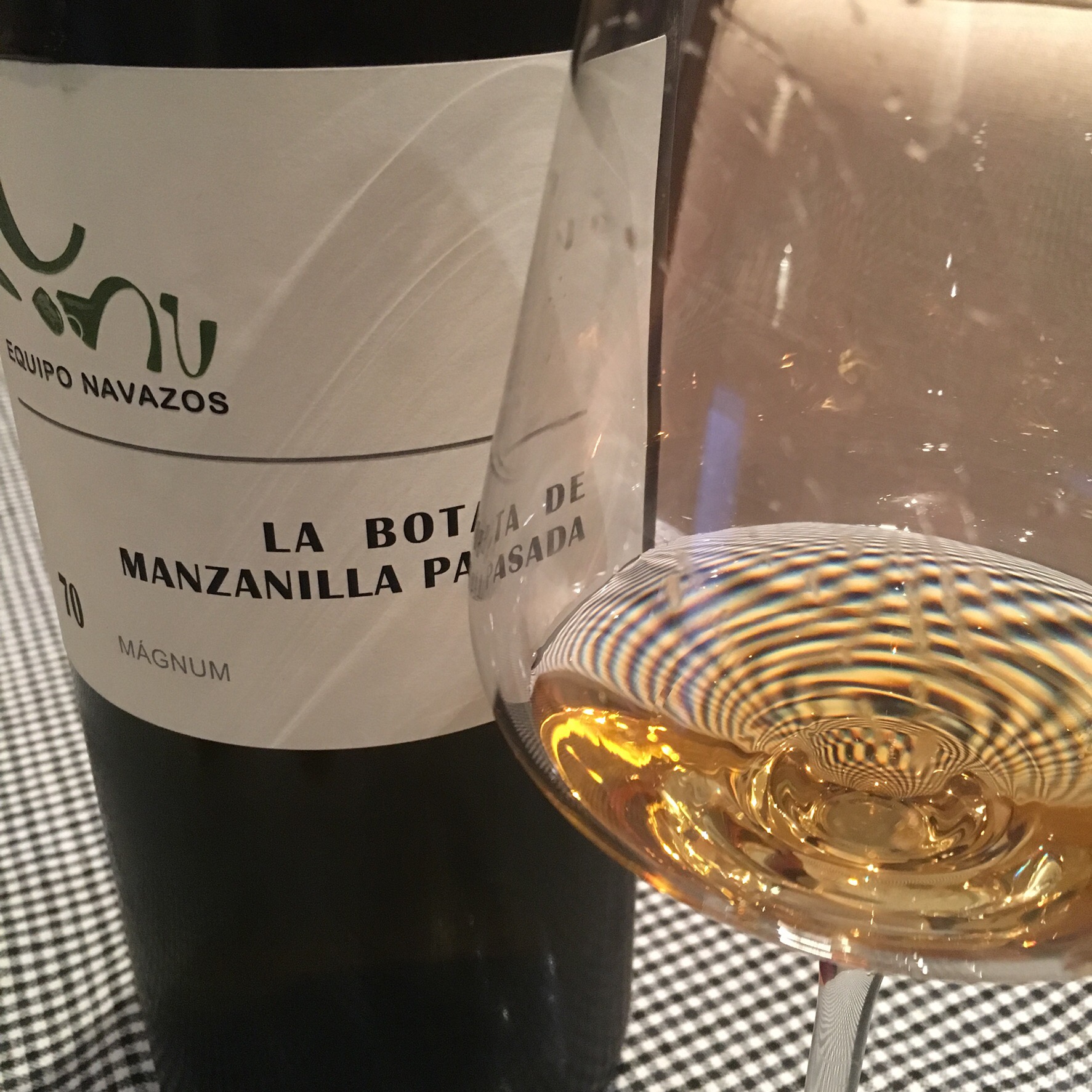
La Bota de Manzanilla Pasada 70 – Magnum

I read somewhere on twitter that a magnum is the ideal size for two people, provided that one isn’t drinking, and in the case of this wine at least I fully agree (my apologies for not giving the source but I didn’t take note and often get these things wrong). The guys at Coalla Gourmet had this as their wine of the week recently so I did the prudent thing and picked up a brace (you never know when a friend may pop round).

I wrote about this wine as recently as November but to be honest it is one that is so good it bears repeating. It is the latest in a long line of excellent manzanilla pasadas drawn by the guys at Equipo Navazos from the solera that also houses La Guita – and having got to know the La Guita en Rama (note to self: must be time for a new saca) there is a clear family resemblance. But whereas the en rama is chalky and delicate with a citrus influence this has a much more robust character. Sharp, zingy minerals there but also richer fruit, more in the line of roasted apple. It also has the lovely rich texture of these older biological wines. (And this is old alright: they estimate that it has been an average of 13 years in the making.)

Really a fantastic wine, I vote for a release of double magnums!