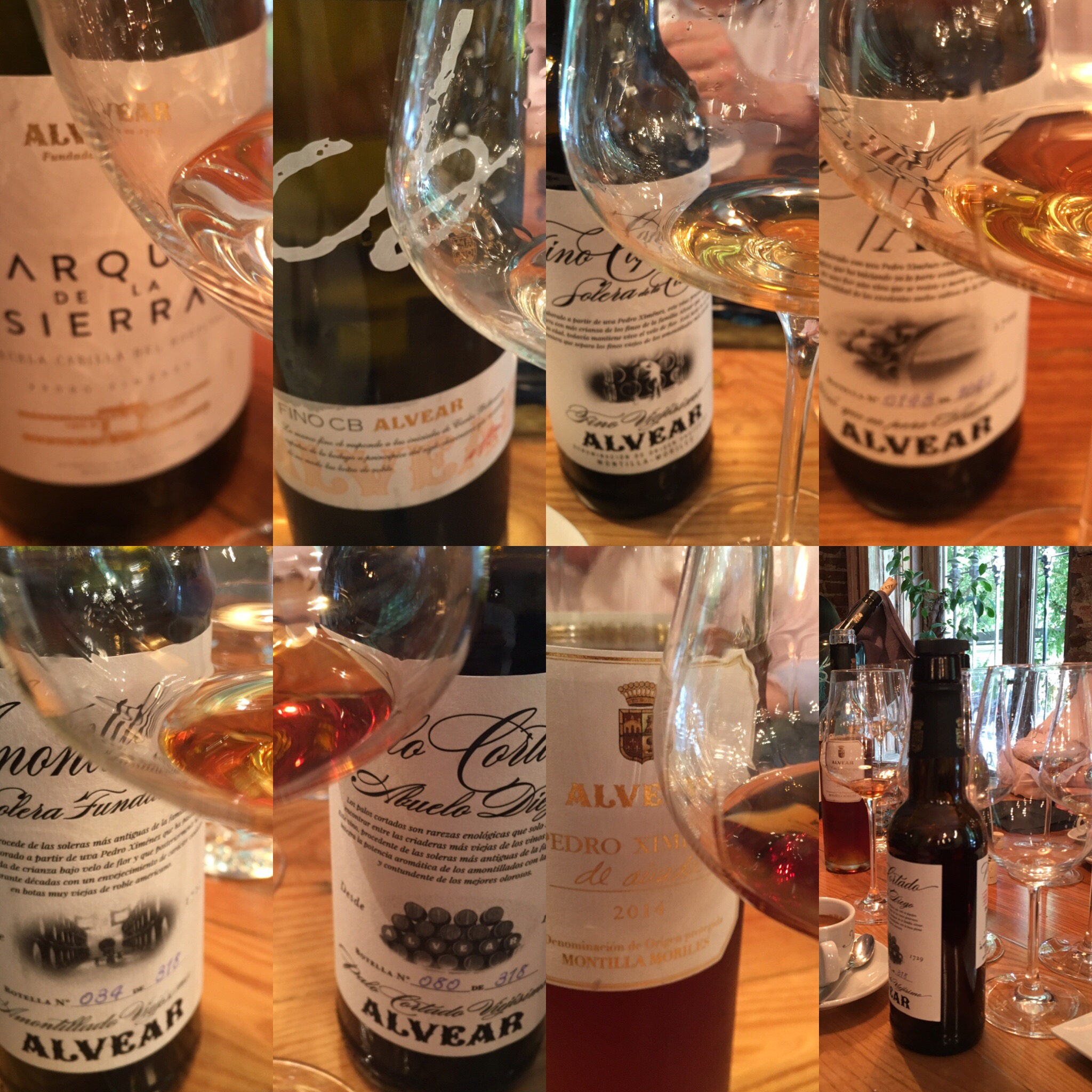
Lunch with Bodegas Alvear 

The most magnificent lunch today at Lúa with Bodegas Alvear and a chance to try a “vertical” of the full range of their fantastic new releases. As always I will need some time to write up my notes but it was a class occasion: seven very different bottles, some of them pure magic. The differences were fascinating in fact. 100% pedro ximenez all the way but wines of every style and flavours and aromas of every kind. 

The food wasn’t half bad either – we let the sommelier pick the food and everything from the ensaladilla to pulpo, to mollejas, to merluza and on to canutillos was perfect with the wines (I am forgetting at least one thing too). Highly enjoyable and a real effort to go back to work afterwards.

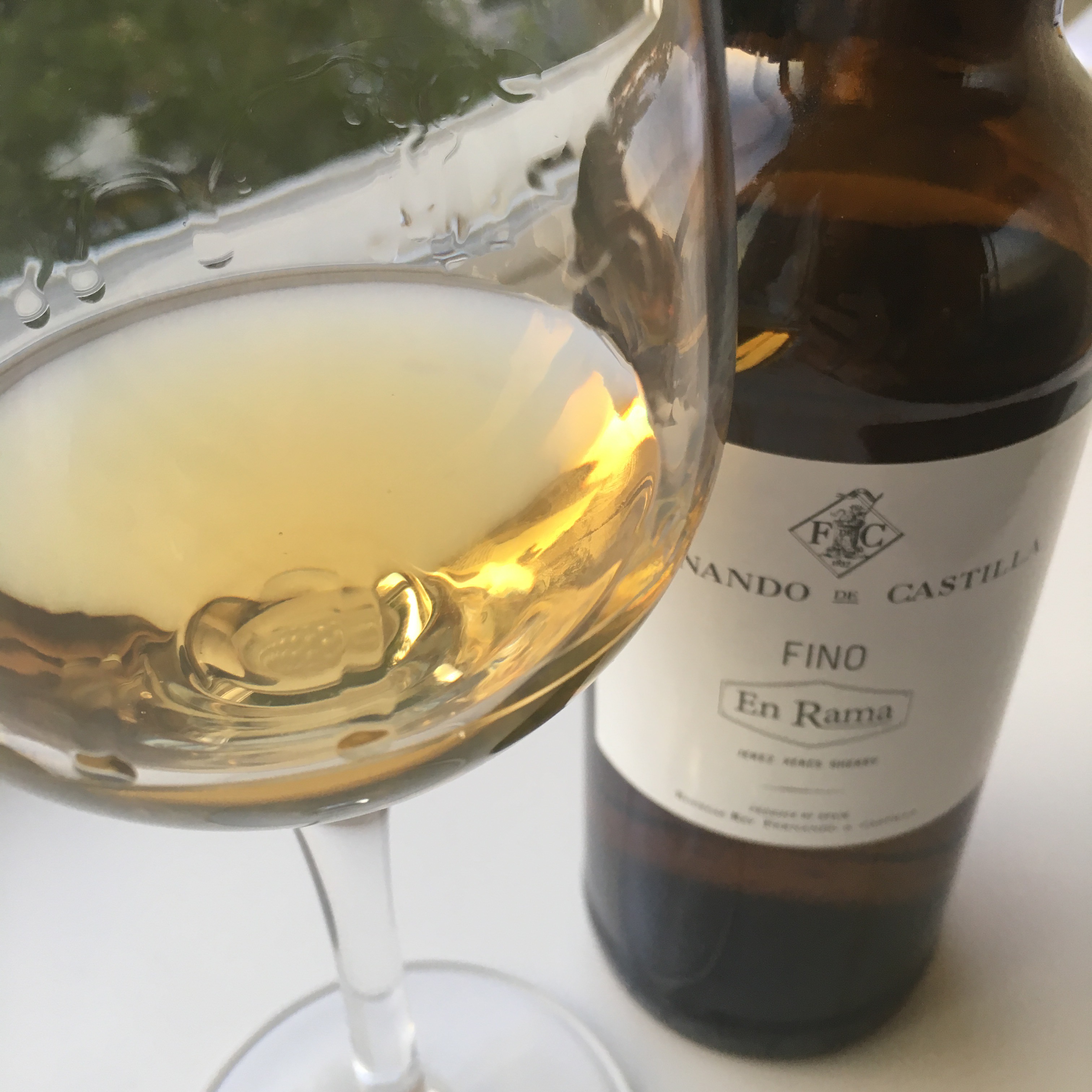
Fino en rama Fernando de Castilla, December 2015


Had another little bottle from late 2015 lately that I really enjoyed so when this appeared from the back of the fridge its days were numbered. 
A very likeable fino this with a nice dark straw colour, a really aromatic, haybale to almost ammonia nose, a pungent palate with a mouth watering start, apple to baked apple flavour and a stinging saline finish. 

Las viñas de Callejuela 

Lunch with new friends couldn’t have started better. “What kind of wine do you like?” I ask, and “Something different, terroir-driven and expressive” comes back the reply. Bingo, as they say. 

And it was a nice day for it too, because the lads at Territorio Era had just taken delivery of three wines with exactly those characteristics: the new vineyard specific wines from Callejuela. Three examples of 100% palomino fino from three different vineyards, located on three different pagos. 

Specifically, the wines in question are:

  • Hacienda de Doña Francisca, a vineyard at an altitude of 62m on pago Callejuela (Sanlucar) – which must be one of the higher altitude Sanlucar vineyards, located to the North East of the town in an area influenced by the river;
  • Las Mercedes, a vineyard at 83m on Pago Añina (Jerez), one of the more Atlantic-influenced Jerez pagos;  and 
  • La Choza, a vineyard at 74m on the famous inland pago Macharnudo (Jerez). 

Just as they did the first time I tried them back in February, the three wines really did express their roots. The Callejuela wine, despite being a more river influenced pago and its altitude, was vertical and fresh, the Añina wine had more structure and body, and the Macharnudo had a really full flavoured profile. They are also very good in their own right. Young wines, but finer and more refined than a mere mosto and with nice acidity and salinity, which gives them a nice shape in general.

I also have to say that for a project aimed at educating in relation to terroir, the packaging is perfect: the labels are modern and informative, with the name of the vineyard, a profile of the slope (is it the actual profile? Seems steep), the altitude and even a photo of the vineyard. 

Good things come in threes indeed. Worth trying and I would recommend these to anyone wanting to learn about the wines of the region. 

La Bien Pagá

Lunch in Territorio Era and the chance to try yet another new wine from el Marco. This time, “La Bien Pagá”, a manzanilla pasada en rama from a single bota selected by the splendidly monikered “Hijos de la Albariza” (sons of the Albariza, a group made up of Juan Echanove, Pedro Hernandez and Xavi Saludes, founder of Vinoteca Tierra) from the solera of Goya XL at Delgado Zuleta (and named, I assume, for a classic song by copla legend Miguel de Molina).

Nice dark straw colour to it with just a hint of green maybe, and a subtle nose: not big haybales or roast almonds but aromas of sear air and the eponymous chamomile tea (manzanilla in Spanish), just a suggestion of sweetness. Then elegantly punchy on the palate – nice sharp, integrated salinity first up, then yeasty flavour with again a herbal tea-like sweetness, not quite the false fruit of some manzanilla pasada but not dry. That slight sweetness also hangs around into the finish, which isn’t excessively long but is fresh and pleasant.

A subtle, elegant and enjoyable manzanilla pasada. Not many bottles of this one around (I say that far too often) and worth looking for.

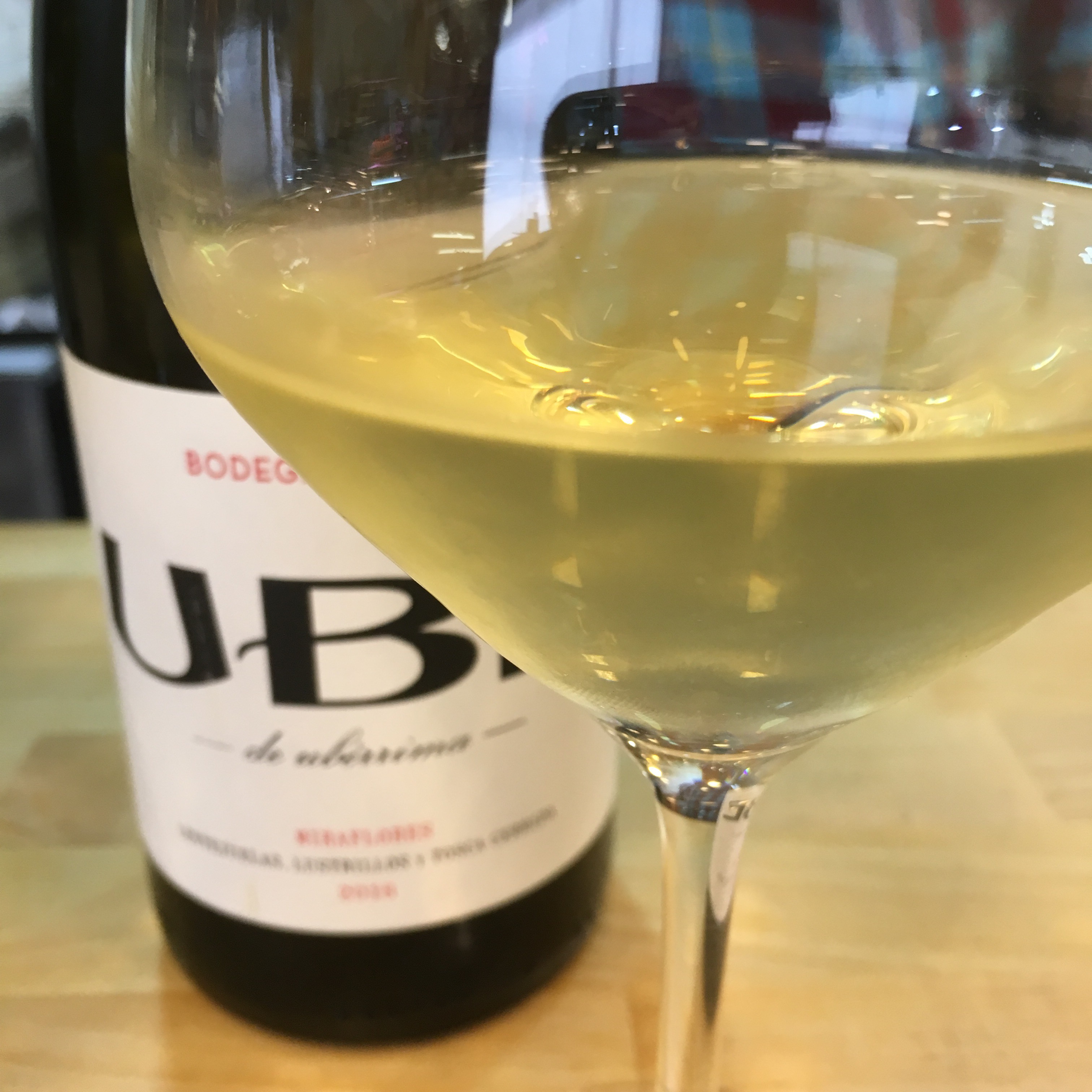
UBE Miraflores 2016

UBE (de Uberrima) is the white wine brand of Ramiro Ibañez’s Cota 45 and he now boasts not one but two wines, shortly to be three.

The first wine is now known as the Carrascal – after the pago in Sanlucar from whence it comes. It is wine from a specific vineyard of old vines and three kinds of palomino. This second wine is from neighbouring Miraflores, like Carrascal an atlantic pago (and probably the most famous of the Sanlucar pagos) and specifically from a combination of five selected vines in Miraflores Alto and Miraflores Bajo. (The third wine, due to be released in September, and is from palomino grown on Pago Mahina, a river influence pago with a huge concentration of diatoms.)

What they have in common, and this is no surprise coming from the creator of the Pitijopos and the manzanilla de añada, amongst others, is their focus on expressing vintage and terroir. Unfortunately they also have in common the fact that production is tiny: 1,000 bottles of each of the Carrascal and Mahina, 3,000 of this Miraflores.

The wine itself starts off as austere with minerals and then grows with herbal, vegetable characteristics. As you can see it is a pale, slightly greenish straw in colour. The nose is austere and mineral first with some savoury stewy herbs in the background like a kitchen far away. On the palate it is fine in texture, nice acidity first up and after that fresh start rather than fruit there is a herbal, almost meaty (in flavour) sapidity to it, fading to a fine finish with lots of minerals.

By comparison to the Carrascal 2015 (a different vintage and pago and a year longer in the barrel) it maybe has a touch less mineral edge, but even so it is a serious, mineral wine and no shortage of flavour.
UBE Carrascal 2015 

The third vintage (at least that I have tried) of this imperious white wine from Sanlucar. (You can see my notes from the 2013 here and here and the 2014 here, here and here.) It comes from some very special vines and vineyards in Carrascal (Sanlucar) and although it is simple enough to explain (it is an unfortified white wine) it is nevertheless one of the more challenging wines you will come across. It is made by Ramiro Ibañez’s Cota 45 and a total of 1,000 bottles were made. 

These are elegant, mineral wines, and I associate them with aromas and flavours of citrus and mountain herbs. By comparison to previous years, the 2015 has a greater concentration of citrus fruit, surprising acidity and a nice buzz first up – a chalky tingle on the gums and tongue. Then the flavours grow in intensity and are herbal and savoury. The citrus flavours persist and turn slightly bitter like gooseberries. 

As I was drinking this – minding my own business at the bar of Territorio Era, a passing genius chose to come and explain to me that there was no point drinking palomino, that it lacked expression and was  only good as solera fodder. I just smiled and looked around for the hidden camera. I have said it before, if there is any argument about palomino and expression, UBE is the answer. 

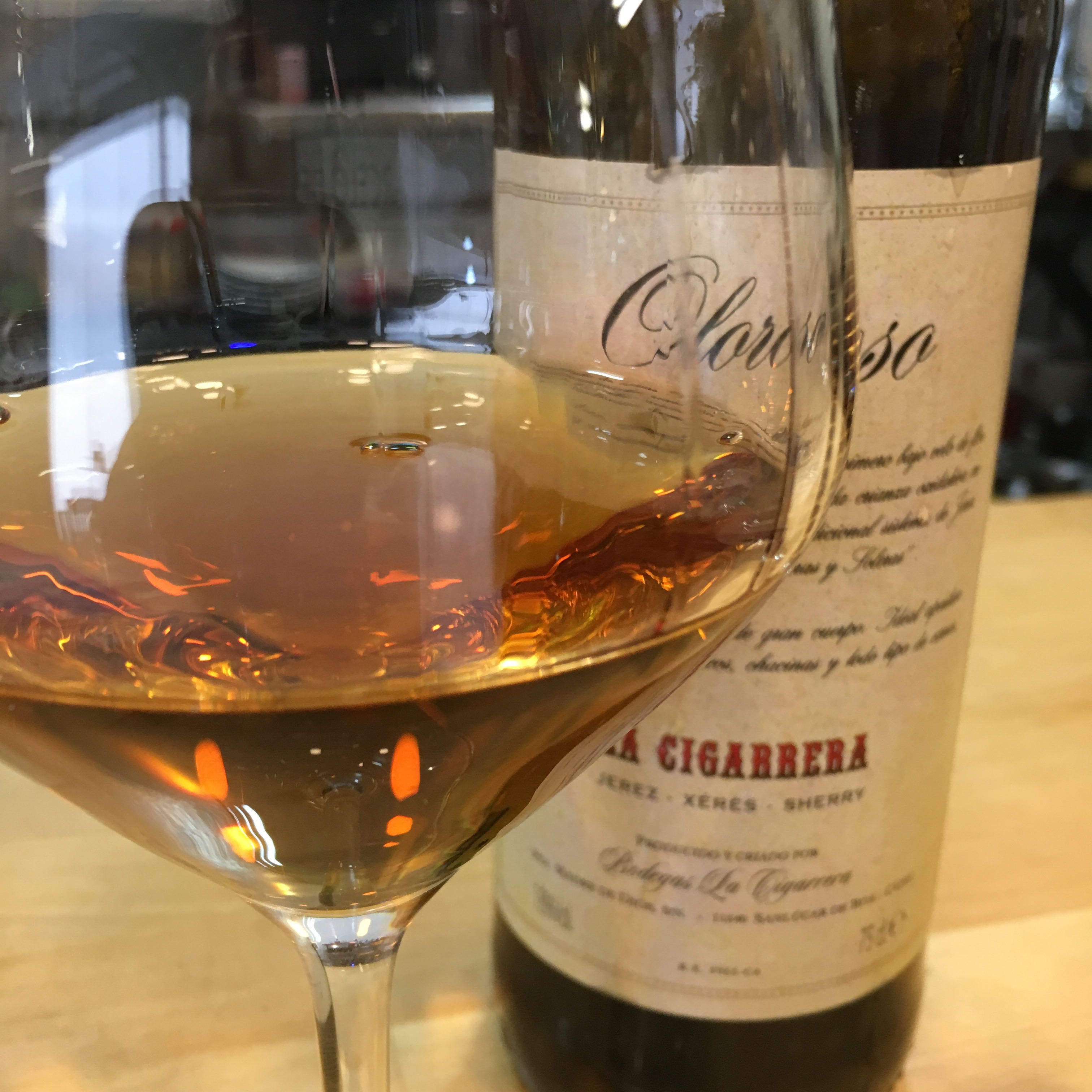
Oloroso la Cigarrera


If you look closely at the picture you will see a reflection of the photographer off the wine glass. If you look even closer, you will see the wine glass reflecting off the forehead of the photographer. Even closer etc …

But more important than the photography, here we have a very enjoyable Sanlucar oloroso. It is a disconcerting class of wine because they are unlike their more plentiful Jerez brethren – specifically they tend to be much lighter and slightly more saline. 

This is no exception. As you can see, a nice sandy/auburn colour, it is nicely aromatic with nuts, a little bit of volatile, coffee granules and a suggestion of haybales (on the label there is a reference to time under flor?). On the palate again it is has that bit of volatile acidity and is light and airy, lightly roasted nuts again. 

Very decent – an easy wine to pair, or indeed to drink on its own. I had it with callos a la tailandesa in Territorio Era. 

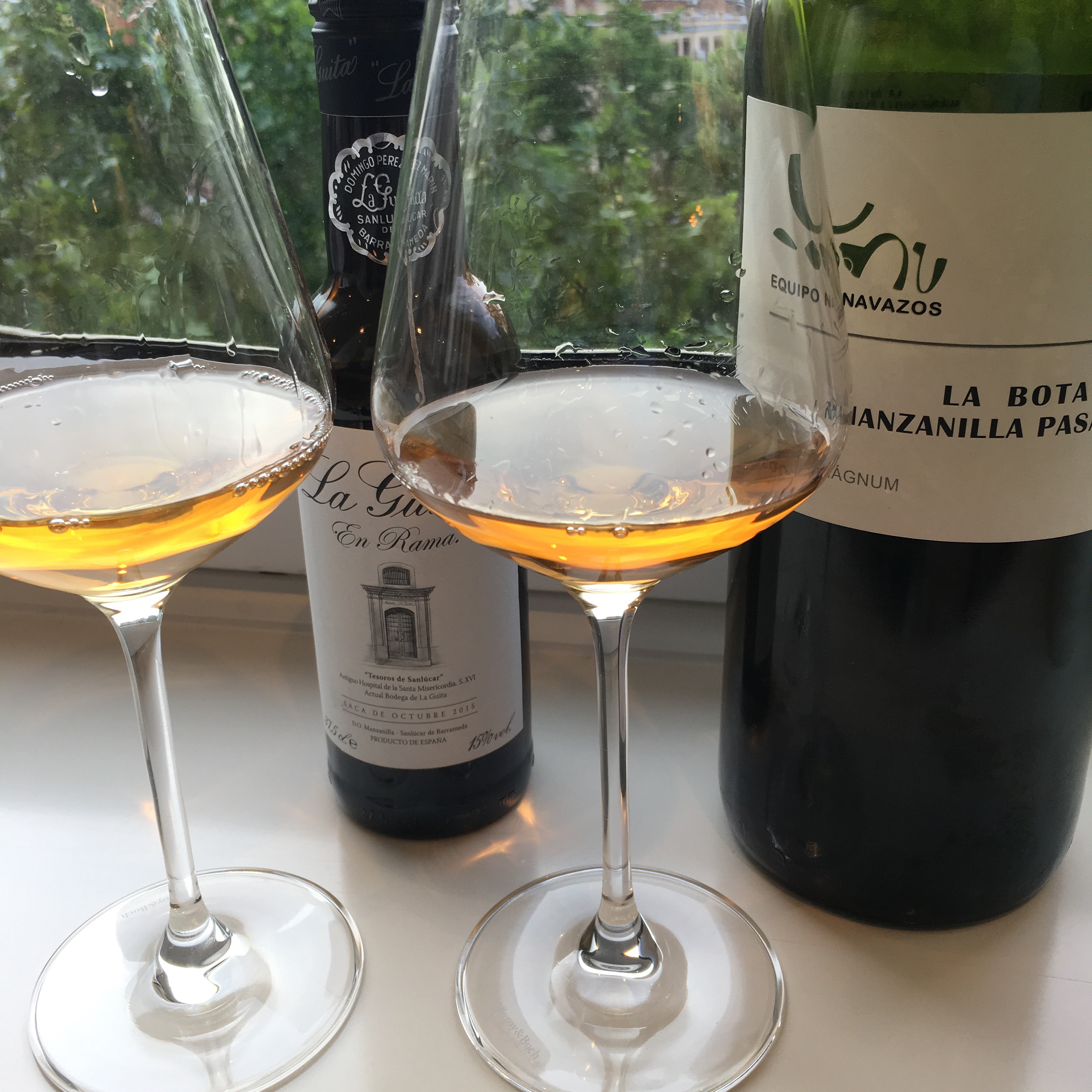
Happy Families: La Guita en rama and la Bota 70

Happy families because these two wines come from vaguely the same soleras – I say vaguely because while the La Guita en rama was apparently bottled from botas selected from the solera used to produce La Guita and has an average age of four and a half years, the Manzanilla Pasada, while sourced from the same bodega, is a selection from two very special botas in a very special room.

In any event, the family resemblance is very clear, and once again the comparison between the two is very revealing. As you can see the manzanilla pasada is only slightly darker in colour than the manzanilla, and on the nose I would say it is a little more muted, with less haybales. But whereas the manzanilla en rama comes across as jauntily characterful – a combination of citrus, chalky mineral and herbs – the manzanilla pasada seems to have the same elements but in a profile that is both more compact and richer, more harmonious, and with an added savoury, toasted flavour. Perhaps doesn’t have the sharp saline opening and finish of its younger sibling but it is beautifully elegant nonetheless.

Really top class wines the pair of them.


Ramiro Ibañez in Surtopia – 2017

Surtopia 2017

With apologies for the late notice, this is a shout out to anyone in the Madrid area: today and tomorrow Ramiro Ibañez will be putting in a shift as sommelier in the little corner of Madrid that most resembles his hometown Sanlucar, Surtopia.

Aside from the chance to meet the man himself, a special menu has been arranged to be paired with five wines brought by Ramiro and all for the modest sum of €60.

Last year’s edition was top drawer – see posts here, here and here – and although I have no idea if the plan is similar it is a great opportunity, or excuse, to get out and have some interesting wines. So see you there later!

Manzanilla La Guita en rama, Octubre 2015

Have been meaning to have another crack at this since a memorable dinner with its maker, Eduardo Ojeda, a little while ago in Lavinia. Although I had really enjoyed it last January and again in March, for one reason or another I hadn’t come across it for ages until that dinner.

It is a wine with a lot of personality, no doubt. A rich brass colour and a very aromatic nose of citrus, minerals (rusty metal), nuts, chamomile and herbs, then again on the palate fresh, sweet seeming citrus to baked citrus, a zesty orange sponge kind of flavour, almonds to roast almonds, and sweet herbs, and the citrus lasts a long time giving a really pleasant, sweet feel to the finish.

An excellent wine. I can’t wait for this year’s saca.