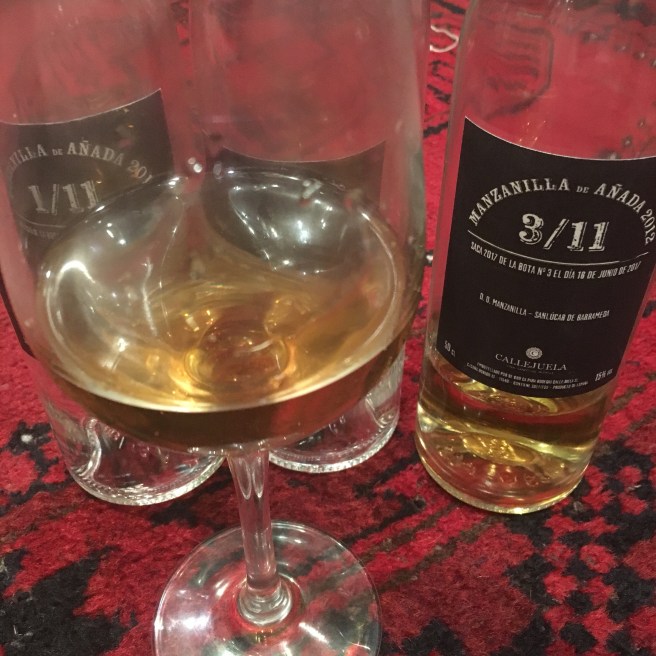
And this one has that slightly deeper, darker, colour and a nose that has a touch more honey.
And this one has that slightly deeper, darker, colour and a nose that has a touch more honey.

Bottle killing tonight and these little bottles are so much fun. Less leafy, less raw, more bread than dough, still spicey and salty but a touch of grapefruit in there now and a slightly drier finish.
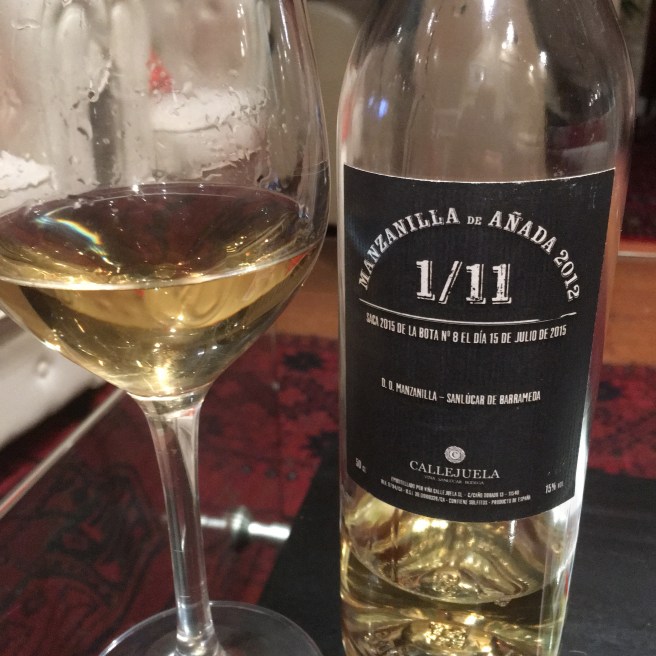
Been musing about authenticity this week and you can’t get more authentic than this – single vintage, single vineyard, old school.
But in other respects it was and is a mould breaker, and more importantly it is enjoyable stuff – tonight I am noticing a leafy nose then raw, unbaked bread on the palate, full in body, then salty, slightly bitter herbs and a hot finish.
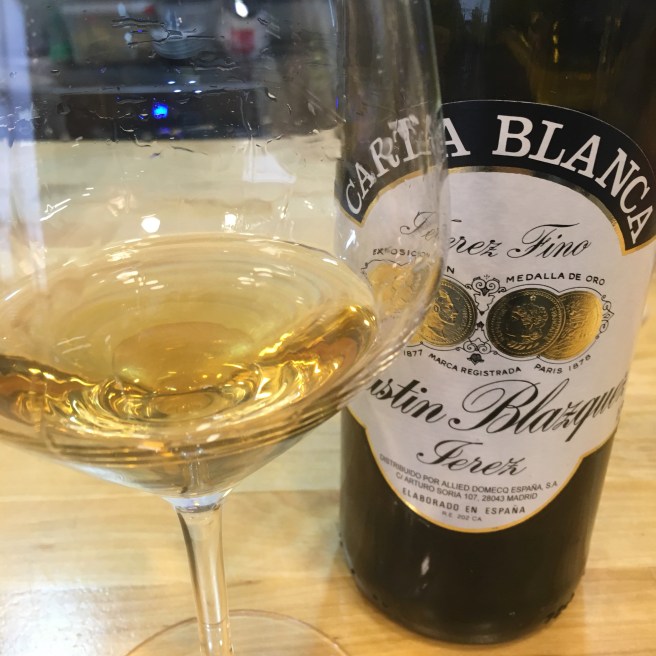
Now this is one of those old sherries that have acquired a kind of legendary status (the Spanish prefer the term “mythical” but I can assure you it is real). Agustin Blázquez was one of the many bodegas acquired in the second half of the 20th Century by Domecq and I believe the brand disappeared in the 1990s (when the winemaker in charge was Jose Maria Quiros, now of Tradición). This bottle is from that late era so is around 20ish years old or maybe a bit more, and it was very generously brought along to lunch at Territorio Era by Juancho Asenjo.
And the wine deserves to be legendary: it was absolutely fantastic. Beautifully clear and only a half shade darker than your standard fino, it had maintained its clarity in aromatics and flavours too. Unlike a lot of examples of bottle aged sherries I have come across this seemed to have maintained its shape and balance: compact and with solidity of flavour, and still with a full range from white fruit on the nose and at the start of the palate through those burnt almonds down to salty zing. It may have had more zip and power when it was younger – we all did – but there was certainly plenty left, and I didn’t notice any of the turn to bitterness that I sometimes associate with the older biological wines.
Absolutely top class. Nothing wrong with these golden oldies if you get the right ones!
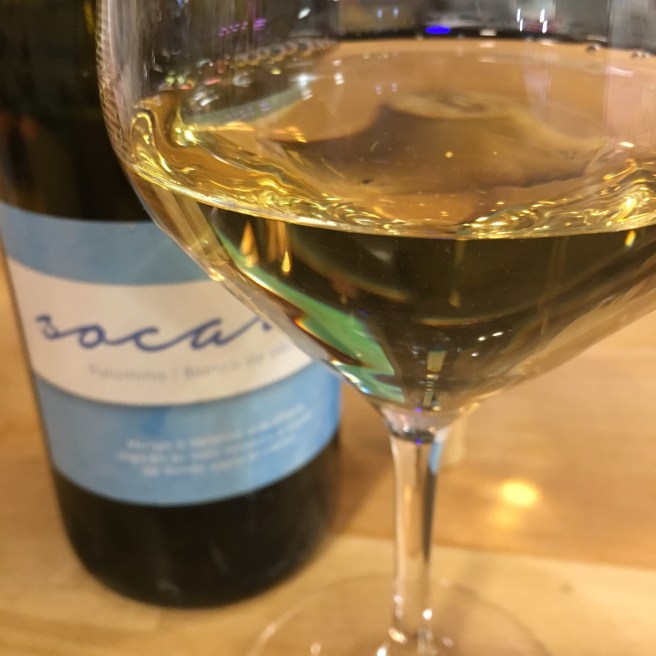
Good to come back to this and more grist to the mill of my palomino theories.
This is the Socaire, a wine named for the hiding spots from the wind that sweeps over the primest of albariza real estate in Chiclana, Finca Matalian. The Finca has a very high chalk content, is 100m up and right by the sea in the Southernmost limit of the “marco de Jerez”, making it a unique bit of terroir. And sure enough it is the source of a really fantastic line up of wines, of which this is one. In fact it wouldn’t be an exaggeration to say that this wine is a bit of a phenomenon: there are people out there who even define the movement towards making new wines in the region as “Socairismo”.
From memory (if you want precision you are reading the wrong blog) this wine was fermented and aged in butts that had previously been used to make the marvellous Arroyuelo fino, then given 20 months or so in the butt, without flor (at least the butt was full) before being released around Easter this year.
I first tried this back in September and I found it a little quiet compared to the first vintage, from 2014, although given my experience with other palomino white wines at the time I wondered if it would find its feet with some more time in the bottle and so it seems to have proved. Maybe it is just the memory of the 2014 wearing off but this certainly isn’t timid at all. Lovely big aromas of over-ripe plums and aromatic herbs and a packet of flavour on the palate. A really tasty and enjoyable wine with just enough of a fresh finish to wash it down.
Fantastic stuff and I am beginning to convince myself of this need to keep these in the bottle. It is not an easy thing to do though.
I get asked quite often what my favourite sherries are and find it very hard to narrow it down to less than twenty or so. But in a few words, the wines that interest me most are the wines that are authentic both in the sense of expressing their time, their place, or their upbringing, and, most importantly, in the sense of being what they say they are.
Because, unfortunately, the more you learn about the wines of el marco the harder it can be to keep believing everything you are told.
First, and whether it is biological or oxidative ageing, there is a tendency to exaggerate the amount of the ageing. The Consejo Regulador do a great job with the VOS and VORS classification, but 30 years now seems to have become the minimum age for an old sherry. In fact if your wine isn’t 50 years old (not certified by anyone) you aren’t anyone, and it seems like every year the wines get older. I was told recently that a wine was an average age of 83 years (which seemed suspiciously specific) and there is more than one wine out there the given age of which is a straight-up fairy tale.
A lot of this ties in with the blarney and the poetry that abounds in the region (it can often seem people are more interested in drinking “history” than drinking wine) but it is a bit unedifying when you keep getting told ever higher ages for the same wines. And neither is it a problem that is unique to the old olorosos and amontillados (let’s not get into the “mystery” of the palo cortados). The number of amazingly youthful-tasting 10+ year old finos and manzanilla pasadas is remarkable, and some of them are getting older as we speak. In one particularly egregious example I was given a new bottling taken from a classic solera I know well, and even asked for a glass of the original alongside to appreciate if there were any differences (not that I could tell). Up to there I was quite happy, but then I was told that the first criadera had four more years under flor than the original wine from the solera, which made my head hurt a little bit.
On the other hand, and more recently, as interest in pagos and vineyards begins to take hold there is more and more talk of long-established wines being from X pago or Y pago, in prime terroir and harvested by hand, when only a couple of years ago the same bodegas had told me that the wine had come from a variety of sources or even the cooperative (a cooperative, moreover, that does not source its wine from the afore-mentioned prime terroir). Now in fairness I have also learned that there are bodegas out there – more than you would think – that do source from a single vineyard and have every right to put the name of the pago on the label. I certainly wouldn’t discourage them from doing so or suggest that all new labellings of this kind are misleading, but I worry sometimes that we may end up with more asparagus than Tudela.
And these are only two of the more harmless worries. Under the foggy miasma of blarney and poetry there are whispers of darker deeds: wines being secretly touched up with something sweet to make them a little more amenable on the palate (pedro ximenez or moscatel if you are lucky), or having something very old/concentrated added to make them seem older, or something very dark to make them look as if they have been longer in the barrel. You even hear of wines from bodegas in less fashionable areas of el marco being sold as remnants of cellars with much swankier addresses. The worst of it is that you hear the whispers so often: one very respected maker told me that he believed his to be the only bodega in the region that did not spice up the wines (I don’t believe him, but he seemed to believe it).
And when you think about the recent history of the region it is really not surprising. The fortification, the solera, selection, roceo and cabeceo, all seem designed to correct nature’s variations, while all too scant attention has been paid to the raw materials. It is a philosophy geared more towards manufacturing wines than growing them. One of the more telling comments I have heard recently was the reaction of a very high profile wine maker to the suggestion that single vintage, single vineyard wines were the way forward: “the problem is that you have to be careful right from the being to the end”. The implication, of course, is that you don’t with the solera wines because the solera is much more forgiving (and of course it is).
This isn’t to say that the cellar produced wines cannot be great. Some of my very favourite producers do not own vineyards, buying wine in and doing absolute wonders in the cellar. Neither do I believe for a moment that all these wines are adulterated. But even if they aren’t juiced up, the cellar produced wines can almost be programmed to have certain characteristics: acetaldehide in the biological wines, volatile and other acidity in the oxidated wines, old barrel effects across the board. As one brilliant maker puts it, flor is the oak of the sherry region, and when overdone it becomes the oak chips.
Biological and oxidative ageing can produce wines of stunning beauty and complexity but with the great power that these processes give the winemakers comes great responsibility. And while every wine making region in the world has its issues, and the sherry region is probably no worse than anywhere else, in a region where wines are continually being mixed and processed, it is crucial to be disciplined and transparent in those mixes and processes.
So these days I am less interested in the hay bales or the zing “effects” that once moved me, and although it is great to see new faces, I am increasingly suspicious of the new kid on the block labels with implausibly perfect back stories. (I would really rather that the barrel selectors and new labels, in particular, were up-front about where they sourced their wines from.) I am also put off by the long lost botas of eye wateringly strong liquids that are frequently found and marketed. They can be remarkable wines, but at the moment the marketing seems more imaginative than transparent.
Rather, I am increasingly drawn to wines that express their time and place, whether that be vintage and terroir specific, or the really classic soleras, and rather than effects what I am looking for is the balance and the profile of the wines – more than anything the mark of a quality wine maker. At the very least I like to know what I am drinking and where it came from. And then I really do enjoy drinking it.
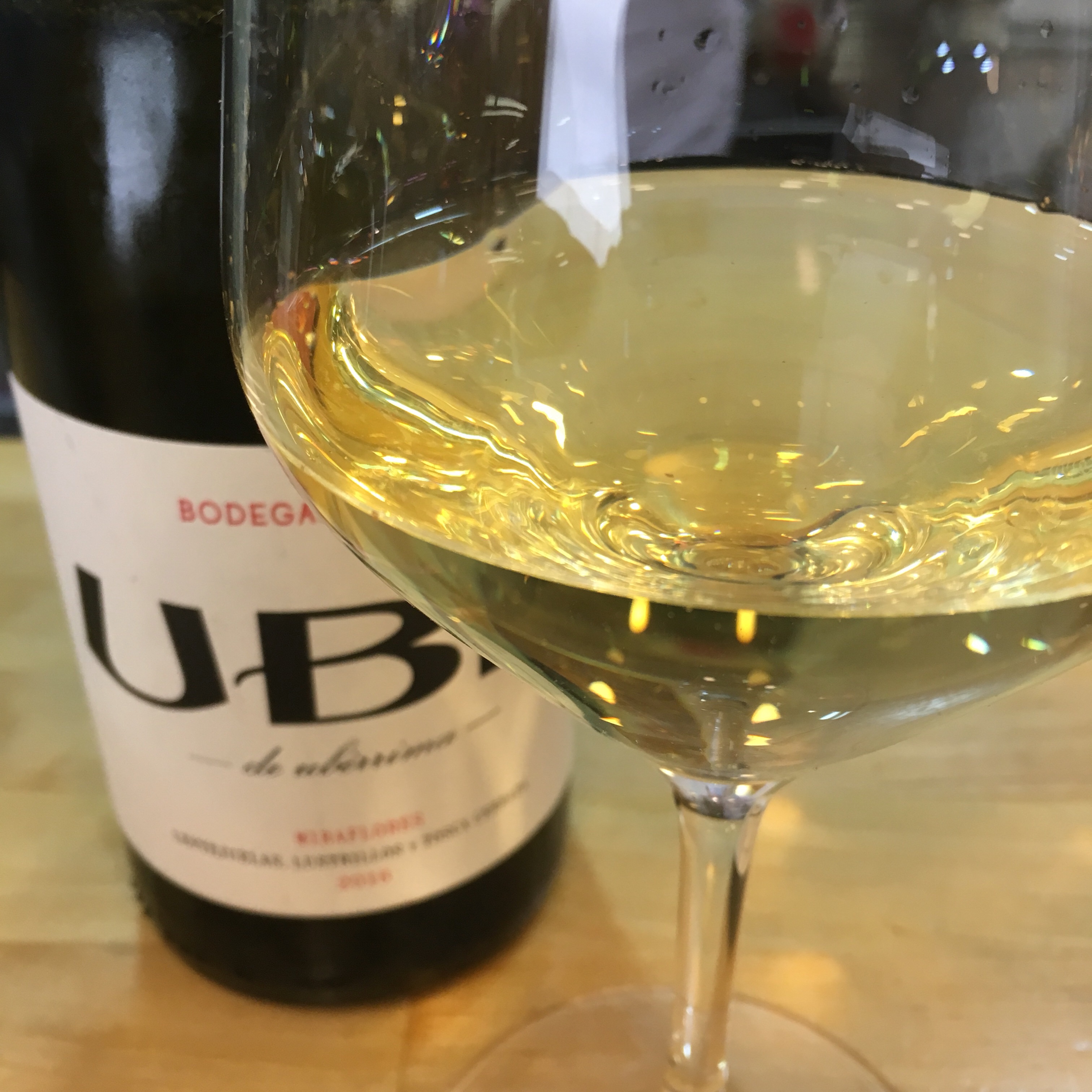
You want character from a white wine? You want attitude? Get yourself some of this little cracker.
The middle child of the three UBEs – not as sharp as the Carrascal or as wide as the Maina – but maybe the most polished overall. It is sharp as a tack and fresh, but savoury, funkier than you expect from a white wine, let alone the much maligned palomino. But above all it has a compact shape and the kind of profile I really like.
These wines tend to improve in the bottle but I had a glass of this at the bar of Territorio Era this week and found it to be absolutely singing, so if you come across it don’t be afraid to give it a go.

It is that time of year again. You are wondering what to get for that special sherry blogger in your life. Well worry no longer for I have the answers.
There is a school of thought that the old standards are the best, and there is no doubt you can’t go wrong with a bottle (or two) of La Panesa, Solear en rama, Maruja pasada, el Fossi or Tresillo. You certainly cannot go wrong with the white Sanlucar wines of Ube, the unique Encrucijado or the awesome Pandorga, and I must be doing something right if wines like this are such a regular part of my diet.
On the other hand and since it is Christmas you might be thinking bubbles. If so, just go with it. The palomino bubbles of Mr Angulo, the sherry dosed chardonnay or xarel-lo of Colet Navazos, or even just some Salon or Selosse from a decent year: there is room for all chez Sharquillo.
But if you are looking for something extra special, there are a few things I would relish in particular:
10. First, I am curious to see what Peter Sisseck does with Fino Camborio. One of the big names of the “new Spain” has acquired one of the great old soleras – the last release of which was an absolute belter – and the combination is fascinating. Part of me hopes he doesn’t change anything (and it’s not exactly as if I need an excuse to get another bottle or two) but the possibilities are there.
9. Las Viñas de Callejuela 2014 – to be honest I would settle for more of the 2015s (and I bet they will be better for a year in the bottle) and I look forward to the 2016s but from the little I have seen/sniffed/swallowed of the 2014s they are going to be absolute corkers. In fact as I write this I can imagine the Blanco brothers in red suits with big white beards – merry Christmas fellas!
8. That brings me on to the new crop of Mayeteria Sanluqueña. There were some little gems this year and this is a project that if there is any justice is set to grow and grow.
7. Beyond a picture on twitter I have absolutely no idea what they are doing but even so I am intrigued to the point of anxiety by the potential fruit of the fruit of the Leclapart Muchada union. (Sisseck, Leclapart – it looks like something really is changing down there.)
6. I am almost ashamed to have to include Las Tres Miradas in this list. There is really no excuse for not having tried them yet. The guys at Alvear have kept me informed of the numerous tastings and there is no doubt in my mind of the potential either: the lads at Envinate know a few things about distinctive and approachable wines.
5. Back onto more familiar terrain and I personally cannot wait for the Fino and Oloroso la Barajuela 2014 (and frankly anything from La Barajuela). I have been lucky enough to try the fino twice already and it was awesome but if Willy thinks it wasn’t ready for the bottle then who is going to argue with him? All I can say is when it is ready it looks like being a monster fino, and if that is the fino …
4. And still I want more. Having been up and had a look at the vineyards nearly 18 months ago a chap is getting impatient with regard to Willy Perez’s wines from la Esperanza and El Caribe whatever they are. Come on Willy, get on with it!
3. And that Christmas carol line about King of Kings brings to mind Primitivo Collantes’ UVA Rey – wine of an unspecified nature from a vineyard of this regal old variety planted by the unsung hero of Chiclana. Once again all I know is that I saw a bottle on twitter alongside some of those cryptic descriptors that experts use, but knowing the man I reckon it is going to be tasty.
2. As I write this list I am getting more and more excited about the year ahead and one of the reasons is the relaunch of La Riva, one of the famous names absorbed by Domecq in the boom years and recently acquired by Ramiro Ibañez and Willy Perez. They have a white wine and a fino from the original vineyards and some little cellar dinosaurs in the pipeline and they will find me lying under the tap with my mouth open.
1. But what I am most looking forward to is Pitijopos Vol III, which this time around – possibly the last – is due to cover some of the legendary vineyards, and the old way South is watering at the very thought of it. But it almost doesn’t matter what the wines are like: if anyone ever does anything as important as the Pitijopos in Jerez again I will be very surprised, and there will probably never be another box of wines created with more genuine passion.
I appreciate it is a long list, but just think of my little eyes lighting up on Christmas morning …
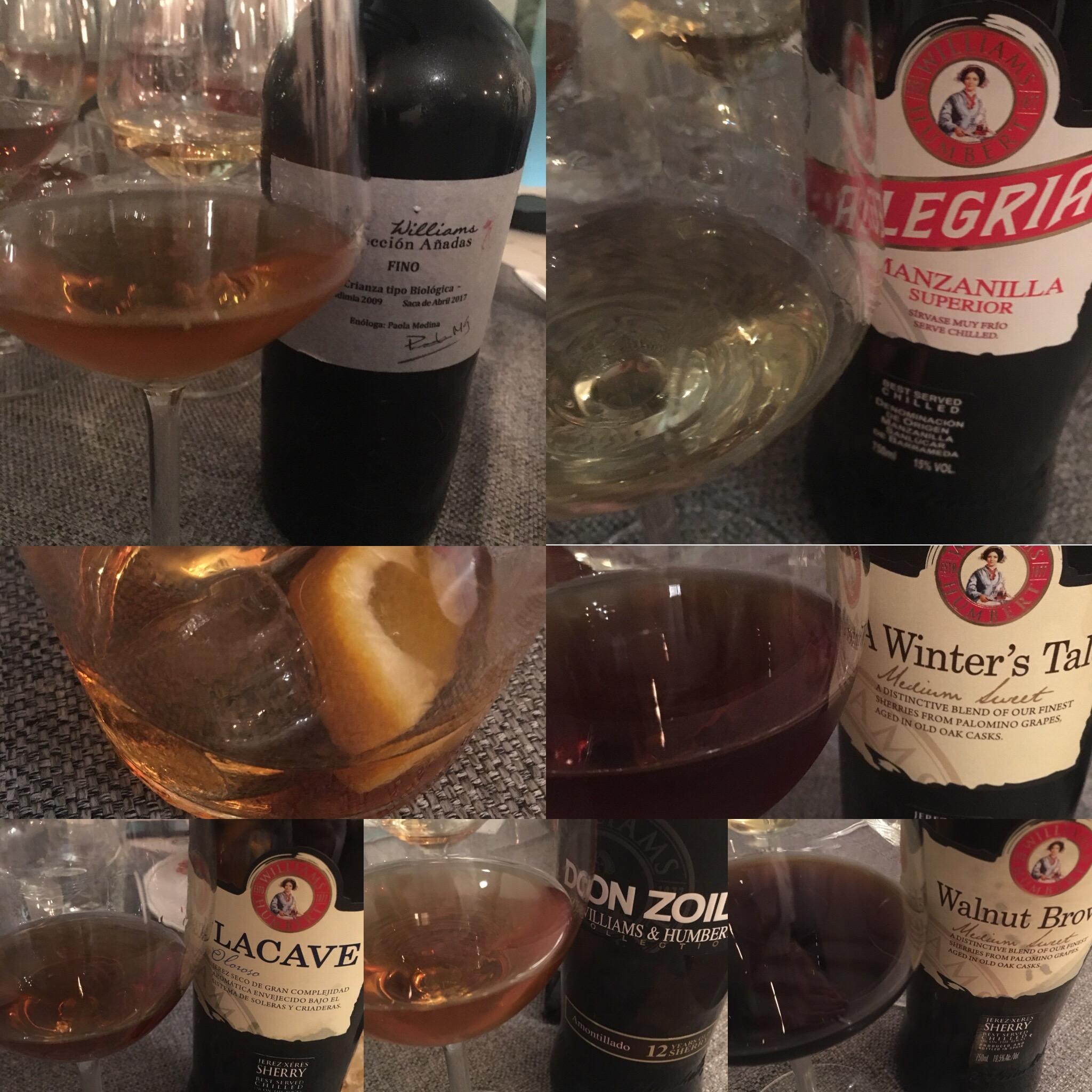
A long overdue write-up of an intriguing selection of wines and pairings on a great night at La Malaje, including as a highlight the last of Williams & Humbert’s cracking 2009 finos, their excellent Alegria manzanilla and Don Zoilo amontillado, but also some wines you don’t often see in Spain: favourites in Denmark, Ireland and the UK.
One of them the Winter’s Tale, a lighter, finer, younger, medium-sweet medium (82 gr/l), from six year old oloroso with a reasonable shot of pedro ximenez. I have often said that the sweeter styles are not really my bag and I am not going to pretend to enormous enthusiasm but this was quite striking with very nutty aromas and a nice combination of raisiny sweetness and salinity and freshness. Very gluggable stuff as Shakespeare would no doubt have remarked.
Interestingly, it came up early in the evening and was imaginatively paired with a salad of smoked mackerel. It must be said the combination of smokey salty sweetness in the mackerel and sweet nutty saltiness in the wine worked pretty well, and the acidity of the salad meant you didn’t need much from the wine. If you were being picky you would say that maybe the wine took over a little bit as the glass wore on and the food ran out but on the basis of a quick taste of each this was evidence in favour of drinking sweet wines before the dessert courses.
Another wine you don’t see a lot of was the Oloroso Lacave, a young and pretty light oloroso – I didn’t make a note of how old but it was probably not markedly older than the Winter’s Tale since it didn’t have any great concentration or acidity to it. Did have that same pleasant nuttiness though – not as pronounced a hazelnut as the Fino de Añada but in that direction. Another imaginative pairing – with the gamba roja (the english translation of “red prawn” doesn’t do it justice) – and again the nuttiness was a nice complement, although it went even better with the top class bread and olive oil we had.
After that the wines were of a more familiar stamp – the afore-mentioned Manzanilla Alegria, Amontillado Don Zoilo y Fino de Añada, until the finish and the Walnut Brown. This time the sweet wine was paired with a desert – a Tarta Napoleon in chestnut custard – and although my dessert was gone so quickly it is hard to judge the pairing it certainly seemed alright.
Now the Walnut Brown is an old favourite in my family (if not of mine). It is a sweet oloroso or cream (105gr/l) but interestingly enough has not just palomino and pedro ximenez but also at least a touch of moscatel – and once you know it is there you can really tell it is there, with aromas and flavours of what I identify as stewed tomato. Makes for a more complex palate than the average cream and maybe the varied flavours help balance the sweetness.
A terrific dinner all round, and if it hasn’t converted me to sweet wines as such there is no doubt that it was a chance to try some wines I otherwise wouldn’t.

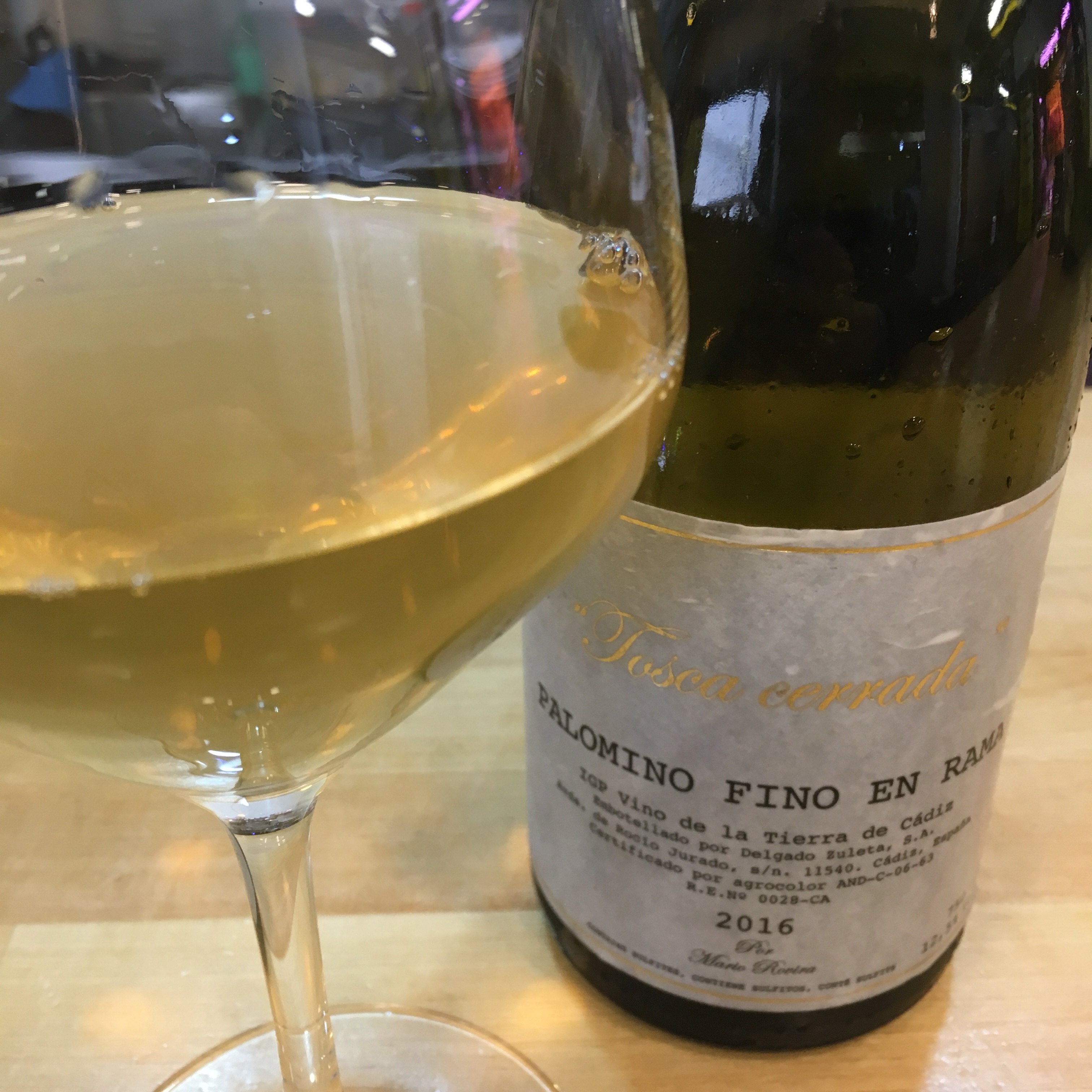
If you want to enjoy palomino white wines I have two top tips: first give them time in the bottle and then give the bottle time once open. In particular I have found that these wines by Mario Rovira have improved in the bottle – those lucky enough to still have the 2014s really sing their praises.
This one, the 2016, is probably a little unready: aromatic with an apple and sweet herb nose but slightly murky in appearance and just the slightest touch heavy on the palate. Fresh start then that apple and a touch of bitterness, then a touch of fennel leaf or anis coming out in a persistent finish.
Very enjoyable but I reckon you might want to keep this a year or so.
 undertheflor.com