The wines of Alba Viticultores, Spring 2016

It has been a really tough week but what a great way to head into the weekend – a really cracking lunch with some fascinating, delicious wines from Alba Viticultores, a group of young  winemakers that are pushing the boundaries in every direction down in Sanlucar.

They are all (with a couple of noted exceptions) palomino fino from vines on albariza soils in Sanlucar and all impeccably “natural” – no additives, the bare minimum of SO2 (if that), indigenous yeasts, little or no filtering or clarification – and some of the wines I have tried in the past have come across as slightly experimental in character. However this latest crop are the best I have tried yet – really good on any level.

We kicked off with the Alba Rojo Pago Miraflores 2015 (without so2, 10.8º) A red wine from tempranillo (which they describe as a type of Listán – I am assuming we are not talking the same tempranillo of Rioja and Ribera del Duero fame but I may be wrong) from 15 year old vines in the Confitero and Coronado vineyards on Pago Miraflores. The wine goes through “semicarbonic” fermentation in stainless steel tanks and then spent another seven months in deposit before being bottled in April, 2016 without filtering, clarifying or any addition of sulphur. The result is aromatic, delicate, light and refreshing – some reduction at first but then tiny strawberries, then the tingle and lightness of the semi-carbonic fermentation. A really good start.

Second we teed up the first of the sparkling wines –  Alba Ancestral 2015 – 11º. Sparkling wine made with palomino fino using the ancestral method. Fermented in plastic containers for 12 days, bottled before the fermentation completed so as to allow the formation of bubbles from the yeasts and sugars that remain. Racked for five months, disgorged by hand and dosed with the same wine (ie no added dosage). This again was delicious  – really light, very nice creamy aromatics and just a hint of sweetness. No  big structure or acidity but a nice, simple and enjoyable wine. You could drink litres and litres of this no bother.

We then accidentally went very large – we had intended to stick with the sparkling and hit the Ancestral Alegrías del Carrascal 2015 but by mistake we were served the (admittedly similar sounding) Alba Pago Carrascal Las Alegrías 2014 (no SO2, 13,3º) which was a fish of an altogether different kidney. From 50 year old vines of “listán sanluqueña” on the “las Alegrías” vineyard in Pago Carrascal (de Sanlucar), this was fermented and aged in a 650 litre chestnut bocoy that had held oloroso for over 80 years. In total 18 months of ageing, of which four  months were under flor. The guys at Alba describe this as a “natural and direct palo cortado” and it is a fascinating, complex wine. The notes of the barrel, and those 80 years of oloroso, were really something.

After the palo cortado we thought it was time for the Alba sobre tabla 2014 (bota 1, 12º). Not the first time I have had one of these Sobre Tabla wines  – fermented in stainless steel, then aged for 14 months in a 500 litre butt that had held manzanilla for over 50 years (they generally make two butts, bottled separately). Flor had not formed, although space was left for oxygen allowing for a “noble” oxidation and the wine gained half a degree of alcohol as a result of the concentration. It was quite magnificent – full of aroma and flavour, with salinity and structure, notes of cheese and herbs in amongst the ripe apples. World class and my wine of the day.

Alba Pago Miraflores Confitero 2015 (no SO2, 11,7º) is a still palomino wine from 35 year old listán vines in the El Confitero vineyard in Pago Miraflores (right next to the legendary Armijo de Gaspar Florido). This fermented in a 5000 litre fibre glass tank and was aged in stainless steel for four months. Indigenous yeasts, no sulphur or other additives, no filtering or clarification. This had a lot of raw yeast on the nose and was hard to get into at first but when it opened up there was a creaminess to it that grew on you. Not a great deal of structure but a nice bit of salinity that kept it fresh and balanced. (Frankly it was a big ask following the Sobre Tabla.)

Then we intended to go back to the bubbles with the Ancestral Alegrías del Carrascal 2015 (sin so2) another ancestral method wine from the Las Alegrías vineyard mentioned above. Fermented in a 1000 litre tank for two weeks before bottling with some residual yeasts and sugars, they disgorge these by hand to order – this one has around 8 months on the rack before disgorging. When it came to writing this account I was surprised not to have any notes or clear recollection until the restaurant called me to tell me we had left if behind (full). A new blogging low? (Have since tasted it – the TN is here if you are interested).

The bubbles we did have started with the Brut Nature 2013, a “traditional method” sparkling wine from a selection of albariza pagos in Sanlúcar. Fermented in temperature controlled stainless steel tanks, aged in the tank with some flor (which disappears little by little) for around five months. Then it is put in 16 litre demijons in which each develops different veils of flor for around 6 months (the makers say that each demijon tasted different when they came to putting together the assemblage). They were bottled in August 2014 and spent 15 months on the rack. Now this was a really class bottle of sparkling wine – thecomparisons  mentioned were with classic blancs de blancs – had just a bit more bite to it, crisper and more compact.

Finally, another traditional method sparkling wine but one with added devilment, the Brut Nature Sobre Tabla NV. Here they fermented the wine in the butt itself, it was aged for fifteen months of which some were under flor, then into the demijons for a further 8 months, again under flor. After that 20 months on the rack before disgorging by hand, dosage with the same wine. very, very little of this was made and it is a real pity because it is a really class, characterful, impressive sparkling wine: bite, fruit, cheese, herbs, salinity – really brilliant and right up there with the Sobre Tabla as one of my wines of the day.

Different pagos, vintages, different methods, techniques – lots of imagination and attention to detail and, most importantly, some really brilliant wines. The only problem is that there are so few of them – lots of 400 or 500 bottles or even fewer in some cases. A really uplifting day, no doubt about it – I really feel like I have a better handle on what these guys are doing and I can’t wait to see what comes out next.

A word for our fantastic hosts – Carlos and Elisa at La Buena Vida. They took cracking care of us through a long lunch and the eating was, as always here, exceptional: habitas con morcilla, patatas a la importancia con congrio, (outstanding) colmenillas and raya a la mantequilla negra con alcaparras fritas – really superb stuff – which we finished off with an intriguing little bottle of sweet, sparkling Rioja.
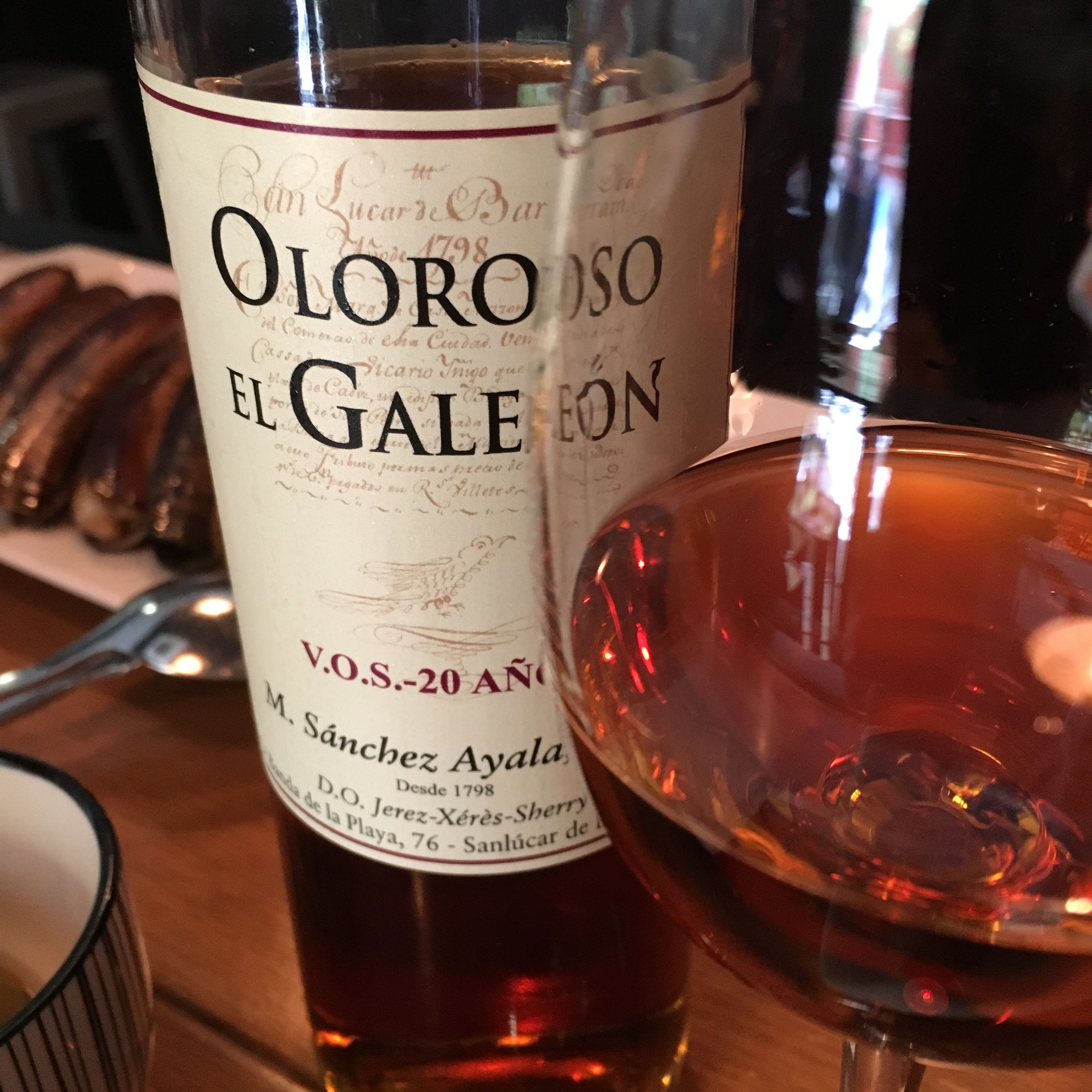
Oloroso el Galeon

A delightful wine and a delightful pairing. We were having a spot of lunch in la Chula de Chamberi and this magically appeared in the centre of the table ar more or less the same time as a bevy of grilled razorclams (navajas a la plancha). Or maybe I should say hoved into view, because this is Oloroso el Galeon.

It is a 100% palomino, 20 year old oloroso by Sanchez Ayala in Sanlucar (better known for their Gabriela and Gabriela Oro manzanilla, not to mention the special bottlings of their wines by Equipo Navazos and Sacristia AB) and it was indeed delightful. It is, as you can see thanks to my much improved photography, a beautiful red amber colour – just look at the brilliant reflections in the glass. On the nose it had a nice salty caramel effect – very appetising indeed – then on the palate it lived up to that billing and them some: tasty, light on its feet, salty but with an almost delicate acidity and lovely balance.

Really good stuff – and an excellent pairing with the salty, juicy razorclams.

Don PX Convento Selección 1929

Final wine of a fantastic lineup at Taberna Palo Cortado was this 1929 Don PX Convento Selección – an 87 year old single vintage wine no less. Unfortunately, it just didn’t quite match the spritely 85 year old that it followed, much less the youthful 61 year old before that.

In colour it was between a brownish black and a blackish brown. On the nose it was much sweeter, and while there were savoury notes they were not as spicey or as defined as on the earlier wines. On the palate it was extremely sweet – maybe the lack of spices made it seem much sweeter than the others – and although there was salinity it didn’t have the same balance.

Still a long, long, leathery, treacly monster, just not quite in the same class as its amazing brothers.


Don PX Convento Selección 1931

The fourth wine of a quite unbelievable quality tasting at Taberna Palo Cortado was this 1931 Don PX Convento Selección – amazingly, an 85 year old single vintage pedro ximenez. Interestingly, this one was the first one that had the profile I expected – the most stereotypically “super old PX”.

It was black again – maybe a bit blacker than the last one but not that you could tell with the naked eye at that time of night. On the nose though this one was all pepper and spices, raisin of course but now raisin as dry as dust and heading to coffee and leather.

Then on the palate it was no disappointment, all those spices, big sweetness like black treacle, coffee like a coffee liqueur, then those dry wine flavours of wood, tobacco, leather, fading to a black treacle tail for what seems an eternity.

A night of superlatives, what can I say.


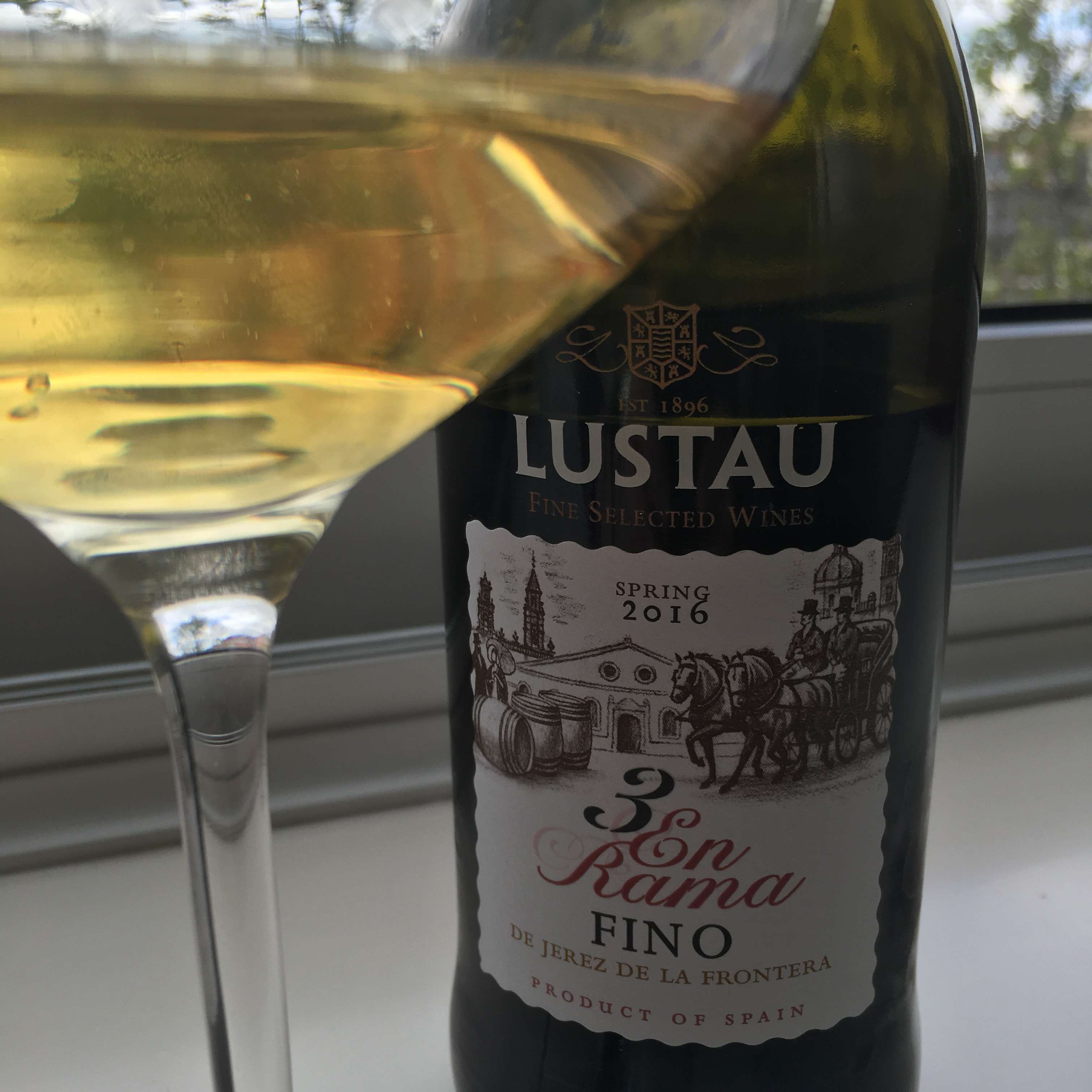
Fino 3 en rama del Puerto de Santa Maria

The third of the 3 en rama Spring 2016 by Lustau, and this one really is cracking good. Again a fino with five years under flor, but this time aged in El Puerto De Santa Maria, which is said to have a slightly more moderate climate – perhaps better conditions for the flor year round -, more humidity and the benefit of sea air. 

I was looking forward to this since it was so good last year, and its almacenista cousin is also brilliant stuff, and this has comfortably lived up to the hype. 

The colour is a rich gold with just a hint of green to it. The nose is yeasty and has apples – not green but old yellow ones. In addition, and most distinctively, it has an amazing sea air component. Not just salty air and iodine but “rock pools”: wet seaweed left behind at the water’s edge. 

On the palate too it has a lovely full flavour to it. Nuts, granary bread, and vegetables, celery and rocket, then a salty fresh finish. 

A really class fino. Can’t decide if it is better six weeks or nine months old – either way I don’t think I would have it on the rack for nine months!

Don PX Convento Selección 1955

Wine number 3 of the tasting at the Taberna Palo Cortado was this absolute beauty. Another single vintage wine, now 61 years old, and showing sensational integration.

A deeper black brown in colour, like crude oil, this had the most amazing, surprizing, nose. Yes it had raisins and maybe chocolate, but it was for all the world like an overripe Chateauneuf du Pape with jammy fruit and spices, again oranges, but now mouldy orange peel from the back of the bin.

Then on the palate this came across as lighter, with nice acidity and sweeter spices, no astringency and much less mineral than the 1965. It again had a bittersweetness to it but rather than savoury it was the bitterness of marmalade, with acid and bitter citrus  – your man from Toro Albala came up with a great descriptor: the bitterness of orangey hands after peeling an orange. After that bitterness there was a different kind of sweetness, concentrated and dense, like black treachle and which just seemed to last forever.

Really out of the top drawer – an epic wine.

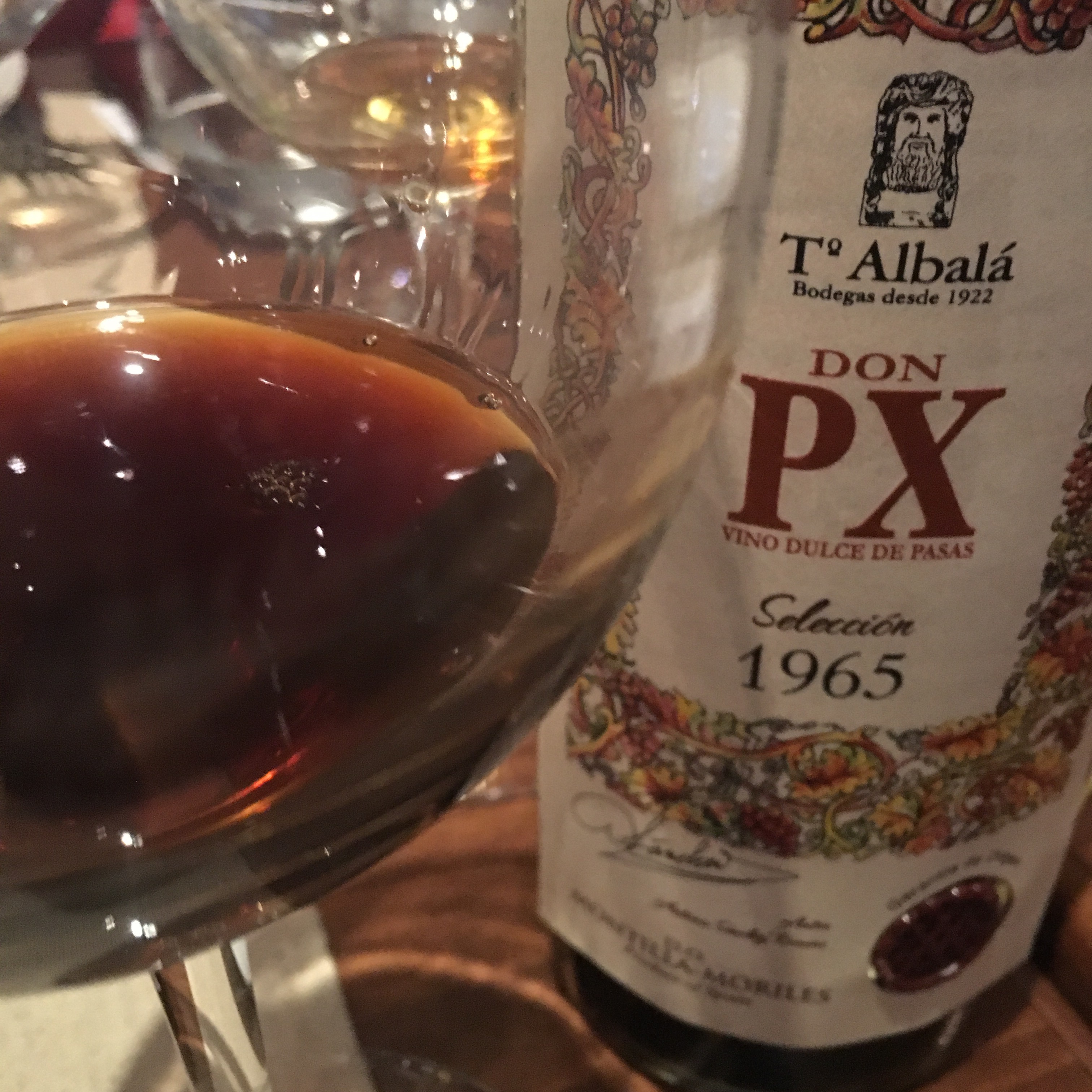
Don PX Selección 1965

Second wine of a fantastic tasting was this 1965 Don PX Selección. Again a single añada wine, again 100% pedro ximenez, but this time a sweet wine with I can’t imagine how much sugar per litre. And of course it was a mere 51 years old (I now realize I didn’t take note of when these were bottled).

I am really going to struggle to describe the colours of these because I can only think of so many words for brown. Anyway, on this occasion there is a pretty good photo. There was a bit of chat about curry but someone called a far better descriptor: the fried tomato preparation they sell around here (with maybe a bit of cloves)and of course raisin. The palate was pretty amazing. The cloves were there again with orange peel, an almost tangible acidity, pepper, and really evident minerals. It also had a fantastic savoury zing and chalkiness to it – real saltiness that made for a refreshing finish.

Another fantastic, memorable wine.


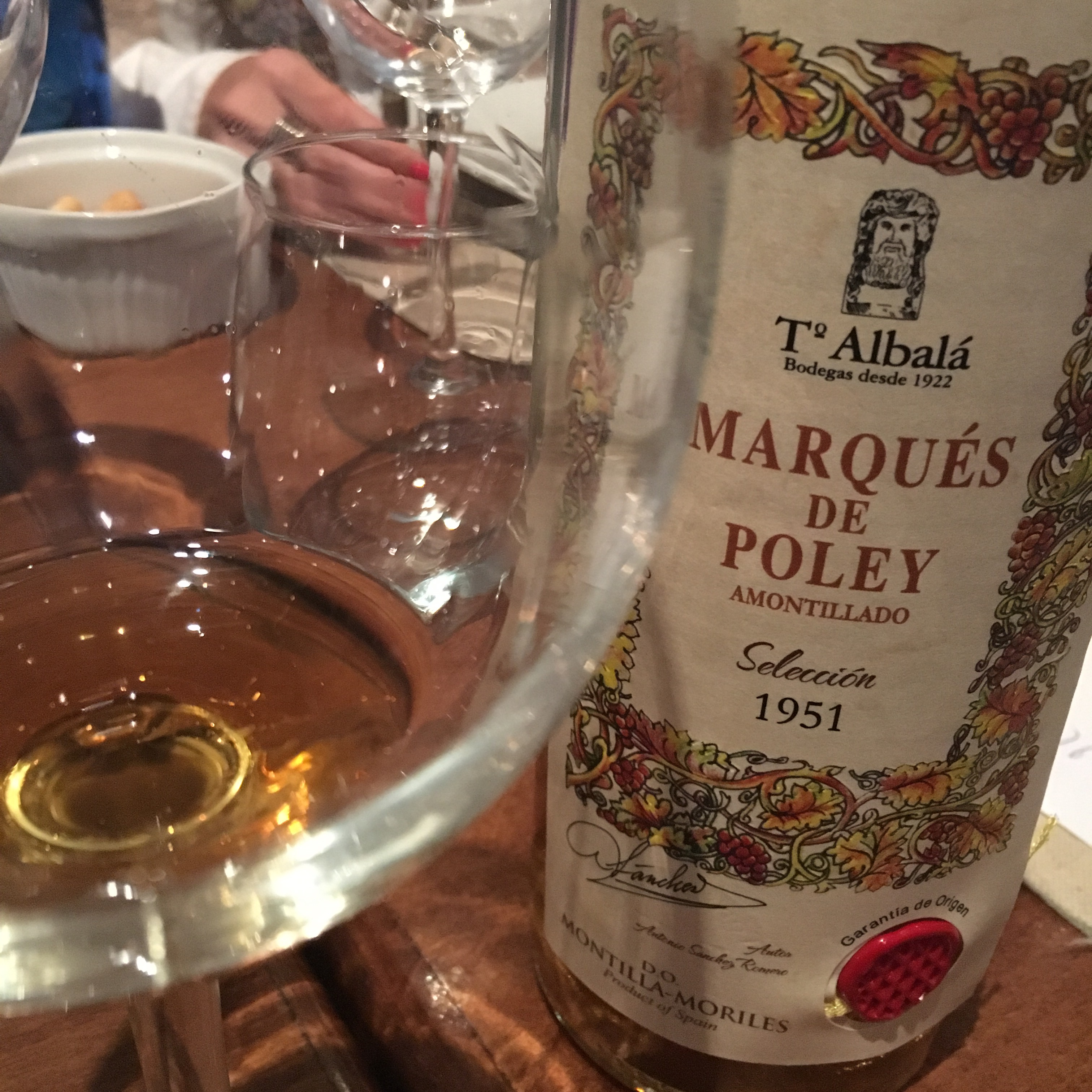
Marqués de Poley Amontillado Selección 1951 

A fantastic night at Taberna Palo Cortado started with this 1951 Marques de Poley Amontillado. All of the wines were single vintage “añada” wines but not “statically” aged – the “merma” or evaporation of the wines had been replaced by wines from the same añada (and it wasn’t clear whether the wines had been “moved” between barrels in addition to that).

Anyway, moved or not, this is a 65 year old dry amontillado (Montilla amontillado, as Antonio Barbadillo pointed out) that is 100 pedro ximenez but unbelievably fine and light. I have written in the past about how elegant single vintage wines seem to remain, but this one was really amazingly excellent given its age and cepage.

You can’t really see the colour above because I didn’t get hold of the bottle until the glass was nearly gone, but it was crystal clear and a really lovely amber colour,  extremely appetising. The nose had a spirit quality that was nearer to brandy than petrol fumes, a really fine nose of caramel and alcohol. Then on the palate it had a combination of acidity and zing, that didn’t so much burn as freshen, followed by notes of caramel then quickly tobacco and leather, before a long, long bitter almond finish.

A really exceptional wine. One of the best 65 year old wines I have drunk, without doubt. (Seriously, one of the wines of an exceptional night – and what a start.)

Fino 3 en rama de Jerez de la Frontera 

Not a great day outside but always a good moment for a spot of fino and the second leg of the Spring 2016 3 en rama. In fact, a bit of controversy over the order – Carlos from Lustau here in Madrid would go Manzanilla, Fino del Puerto, Fino (which does makes sense in that the Manzanilla and Fino del Puerto share those seaside influences), whereas I prefer the Manzanilla, Fino, Fino del Puerto order because I think the flavours of the latter are a touch more intense than those of the Fino. Anyway whoever is right, this is what I am drinking right now.

This is another selection from a solera – this time in Jerez de la Frontera – and the wine has spent an average of five years under flor (compared to four for the Manzanilla and five for the Fino del Puerto).

In colour it is a pale goldish yellow – maybe a little less of the green tinge that the manzanilla had. On the nose, there are again some notes of green apple but less grass and more yeast and undergrowth. Then on the palate you get that yeasty flavour with a suggestion of apple at first, followed by punchy undergrowth and salinity, and then quite a long yeasty and sapid finish – maybe a little longer than the manzanilla.

A very pleasant fino -compared to the manzanilla it doesn’t scream freshness at you but it is certainly at the lighter, fresher end of the scale, with just a little heft to it.


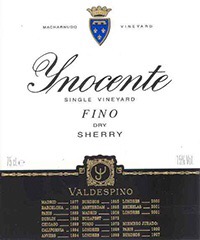
Y not


Have learned a lot over the last few days and it will take a while to digest some of it.

I can share one item immediately, however: the chaps at Valdespino confirm that the first letter above is a fancy “I” and not, as many people seem to think, a “Y”. Looking at that label you can certainly understand y, so it is an innocent mistake etc.