Fino Inocente

After the two slightly older than average finos of recent days I had a hankering to try a classic fino –  and this is a classic fino.

In colour it is a pale straw – with maybe just the tiniest tinge of green. On the nose there is a bit of hay bale but it is definitely more wet grass than dried grass, some muted green apples in the background and a bit more alcohol than I expected. It feels oily in the mouth and it has noticeable salinity – a real mouthful of pure seawater – then the yeasty, vegetable power catches up in a hurry – maybe just a hint of lemon and a real tingle on the tongue.

Overall a classic aperitif refresher – I can imagine drinking barrels of this if I am not careful.

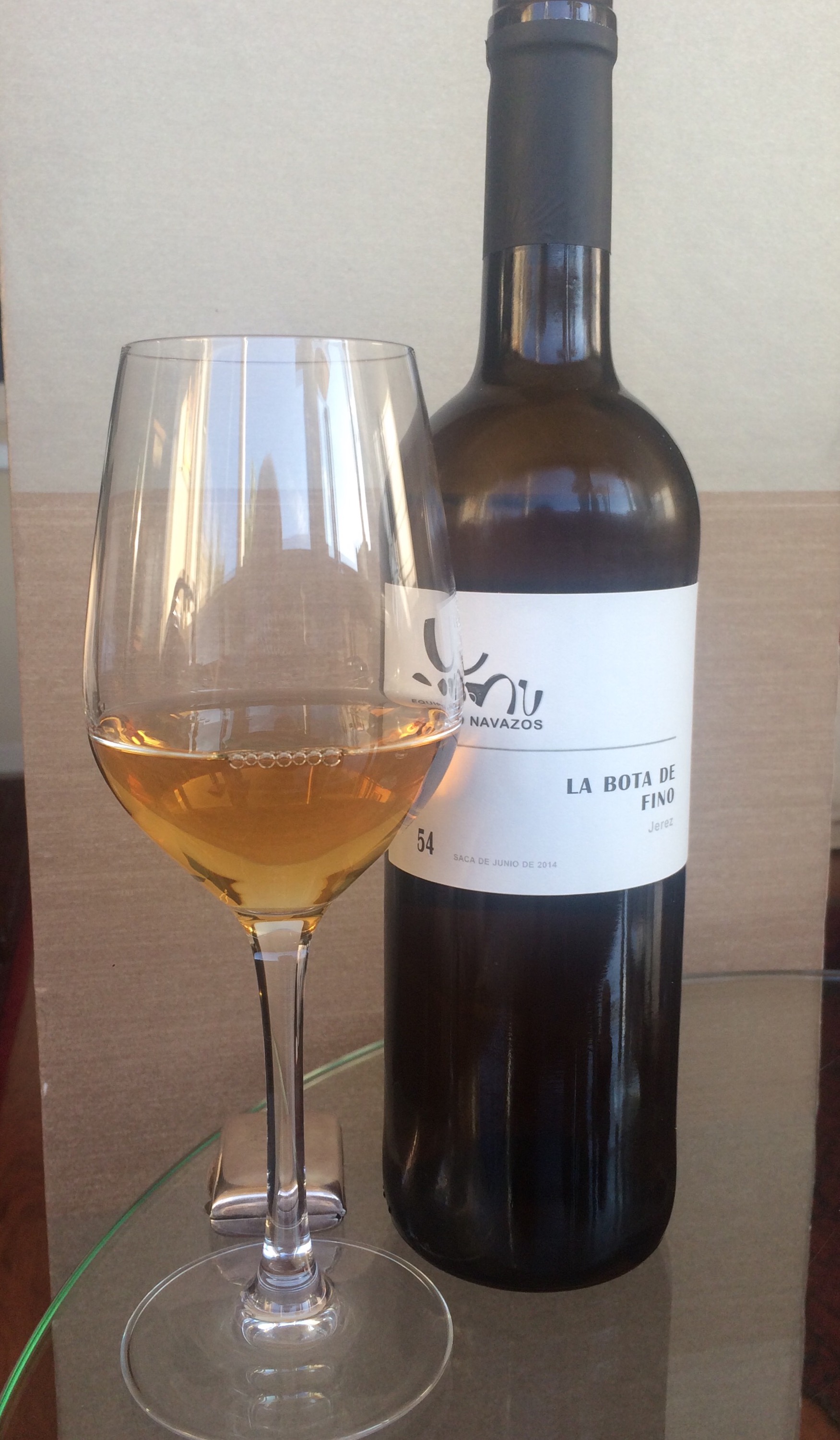
La Bota de Fino 54

Just look at this remarkable fino from Equipo Navazos. The colour is a real old bronze and you just know it is going to be full of body and flavour. I sometimes think these Equipo Navazos bottlings can be a bit extreme – particularly a recent series of palo cortados – but this is right up my street.

As the colour suggests there is just a hint of oxidization in the nose – not quite caramel but a sweet edge to surprisingly muted aromas of yeast/hay-bales. It isn’t muted on the palate though – the yeasty, vegetable power of it is a joy. Integrated salinity, hints of fruit – and the merest suggestion of oxidization. It really is a great combination of dry herbs on the front end and juicy yeasty fruit on the back, with a lovely long finish too.

I quite like it!

Fino Dos Palmas 

The second of the hand selected “palmas” range (see the Una and the  Cuatro) by Antonio Flores at Gonzalez Byass this is an eight year old, en rama big brother of Tio Pepe (5 years) and Una Palma (6).

A nice rich yellow gold in colour (would have been a better picture had there been sun today) and a smooth but powerful yeasty or hay bale aroma – maybe just a little bit of olive juice and alcohol in the air too.

In terms of mouthfeel it is rich but not too oily. On the palate I don’t find it very expressive – it is a big solid, very well integrated packet of flavour and very long. The flavours are vegetable verging on fruit and to me the salinity is very harmonious. Did I mention how long it is?  I wrote those last three sentences (finger by finger on an iphone) and this one since my last sip and it is still there, hanging around.

For me, if there is anything that truly characterizes these Palma bottlings it is that they are tidy wines – well balanced and organized, and they keep their shape well. You would say they are not as flamboyant in any attribute as some wines on the market but this is quality, no doubt.

As for this Dos Palmas, it is a style of wine – an older fino – that has its detractors because it seems to fall between two stools. It is neither a fresh young fino (Una Palma) nor a caramelized, zingy amontillado (Tres Palmas). I think on the whole I would tend to agree – unless you go really old (like the incomparably massive, complex giant that is La Panesa) it is hard for these wines to have a really distinctive voice.

Having said that, there is a lot to be said for tidy elegance and there is no doubt that this wine has that bit of extra body. Must be ok because it is nearly gone already.

Una Palma

It’s a beautiful sunny afternoon in Madrid, day off tomorrow and snooker on the TV – time for a drop of temper restoring fino.  


Fino Una Palma (literally, one palm) is the first of the range of four bottlings  selected by Antonio Flores, the superstar head winemaker at Gonzalez, which are named after the traditional barrel heiroglyphics used to indicate highly prized botas.

This one has been selected to represent the finos. It has an average age under flor of six years (compared to Tio Pepe’s five) and is an excellent example of the breed – a silky, fatty texture and it smells and tastes like the epitome of fino. Loads of minerals, nutty (raw, not roasted) and a slight hint of apple/citrus. It is a full bodied wine but probably works best a little cooler – say 9/10 degrees rather than 12/13. 

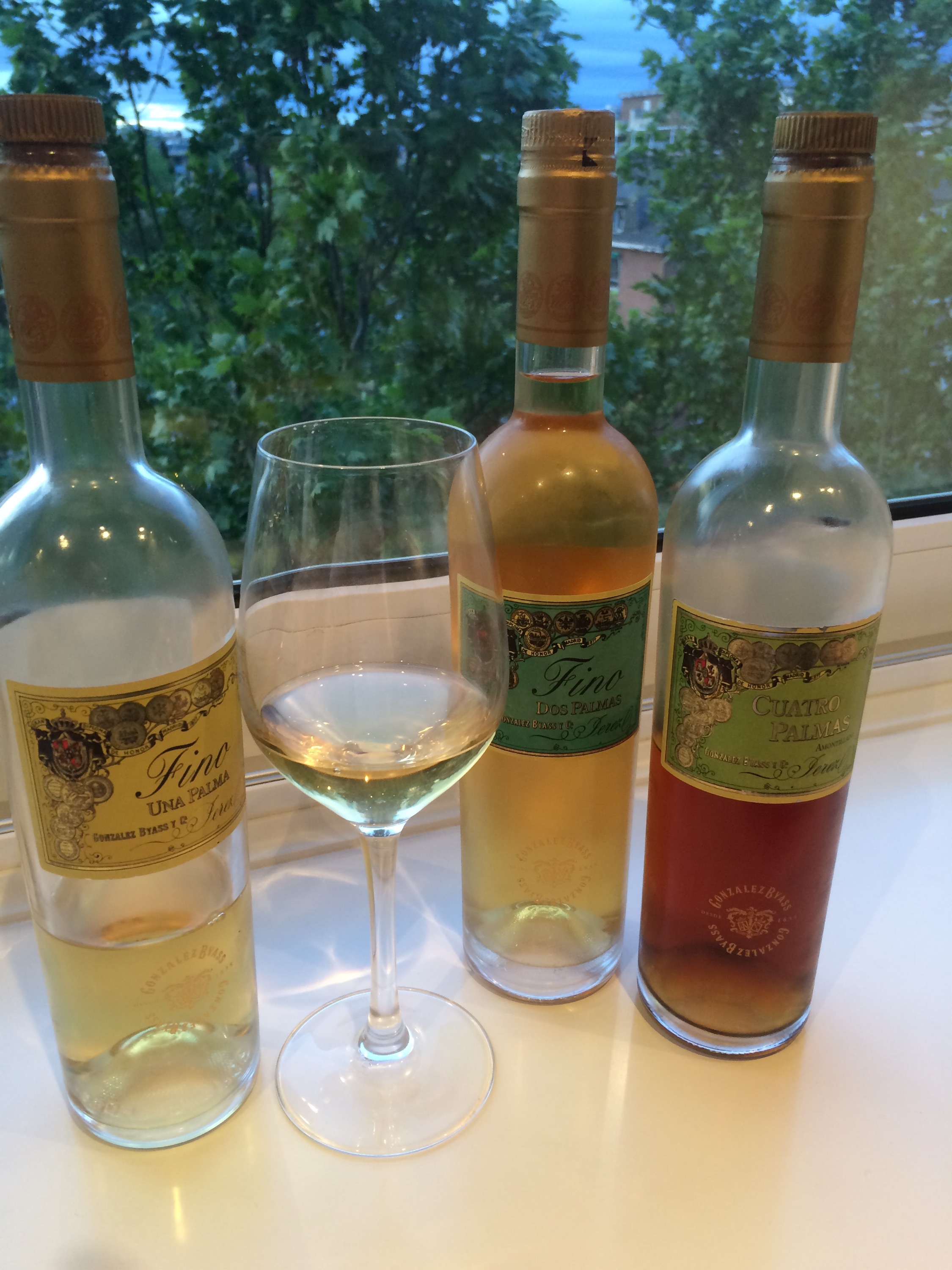
Here, in fact, is a nearly complete family photo – can’t believe I don’t have the Tres Palmas but you probably get the idea (yet another blogging fail)


Blogging fail

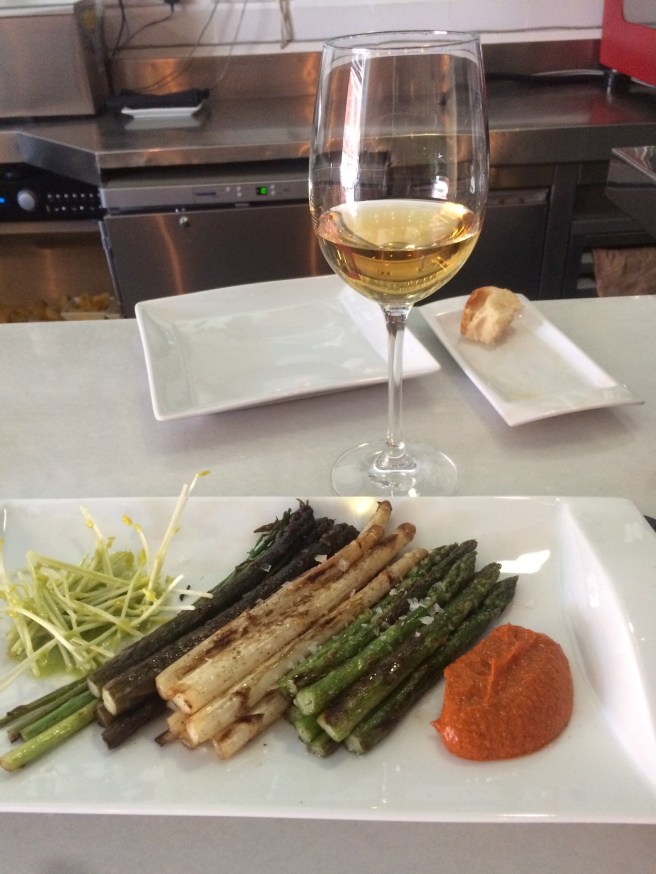
I had a magnificent lunch today – a “matrimonio” of boquerones and anchovies and a “verbena” of asparagus with a glass of La Panesa (especial fino), veal sweetbread with el Tresillo (amontillado fino) and a steak tartare with a nice glass of Palmer champagne, followed by an even nicer second glass of Palmer champagne.

However I totally failed to take notes or pictures. I clearly have much to learn in relation to this blogging lark.

As a consolation, here is a reheated piccy of the verbena with a glass of La Panesa

Fernando de Castilla Fino Antique

I have never asked them but I assume these guys named their bodega after Fernando IV – a king of Castile and Leon who amongst other things retook Gibraltar in 1309. While he was in the area he probably took the opportunity to fill his cellar with some top class sherry, brandy and maybe even vinegar.

This effort – the  Fernando de Castilla Fino Antique – is an absolute gem of a wine. Real aromas of the mosto – like grapey cider – and a lovely smooth intensity in the mouth. A little bit of nuts but not too toasted and certainly not too salty. This is the sort of wine you could drink with anything and at any time.

All in all a lovely tipple and fortunately I have another bottle.

En rama: for keeps?

Literally, “on the vine” an “en rama” is an unfiltered, unclarified wine that was originally intended to reproduce the taste of traditional wines drunk fresh, straight from the barrel.

Most major bodegas now release finos and manzanillas en rama, the most widely available being the Tio Pepe and Barbadillo finos en rama and the Solear and Barbiana manzanillas. (If you are able, you really need to find sherry out of a barrel – in Jerez itself or in La Venencia in Madrid.) The en ramas tend to have more body than the standard releases and for me they seem to express a little more of the bakery flavours.

Perhaps paradoxically, en ramas also lend themselves to bottle ageing, where they are said to subtly grow in complexity and structure. (Being cynical, what lends itself to bottle ageing is really the label, since it has a date on it.)

This one is a 2006 Williams & Humbert. It has oxidized a little and although for me the mosto (the original palomino wine from which the fino is made) is a little muted, it is well balanced, mellow and long.

To be honest I am undecided on the relative merits of bottle ageing vs not. Ageing may accentuate the “florpower” but I feel that the fruit and freshness suffer a little – and these wines are so dry fruit and freshness are valuable qualities. Further study is clearly required. 

So squirrel them away if you must – or crack them open and have at it. I probably tend to the latter, although I am keeping some back just in case.

La Panesa

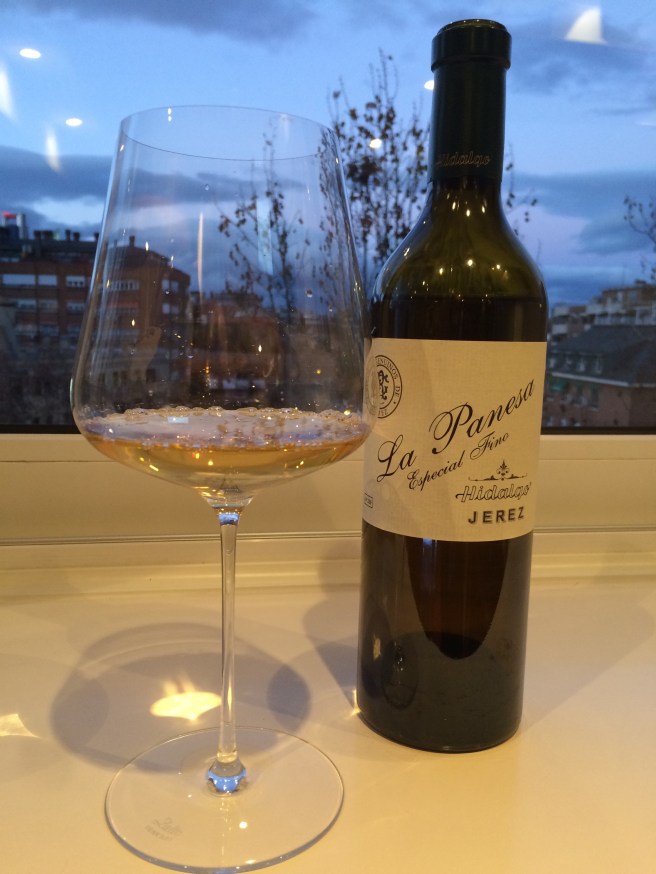
Fino does not come any more serious than La Panesa, the supreme example of what biological ageing can do. The wine has spent an average of 15 years under the flor and is just immense. (This is surely the technical limit – I am not aware if any other wine aged as long under flor.)

The nose can seem quiet – I like to decant or at least give it a good swirl – but it repays the effort with a lot of aromas. The apples are no longer the green cider jobs of the mosto but the oldest of winter fruit, packed away in wooden crates and surrounded by almonds and undergrowth, to name just three. In the mouth it is velvety, full bodied and flavourful – with layers of toasted almonds, bakery flavours and a distinctively vegetable power and zing.

Overall a remarkable wine and one, I think, that any aspiring sherry connoisseur should have on hand at all times.

Tio Pepe

It is cheap and ubiquitous and doesn’t get the credit it deserves. 

Tio Pepe in fact has just enough body and expresses the fruit of the palomino, sea air, and buried moisture of the albariza/fungal workings of the flor. It is a complex and enjoyable little wine. 

 It is also a product of patient ageing, constant labour, and miraculous biology:

  • The average age of the wine is around five years (as opposed to the three required by the Consejo);
  • Those years have not been spent idly loafing, but in a solera process requiring frequent tasting and selection; and
  • The flor that has been merrily chomping down the sugar and alcohol during that time is a naturally ocurring miracle almost unique to Jerez.

Let’s face it, you may drink more interesting wines from jerez but you probably won’t get many five year old, artisan made wines for five euros from other areas.