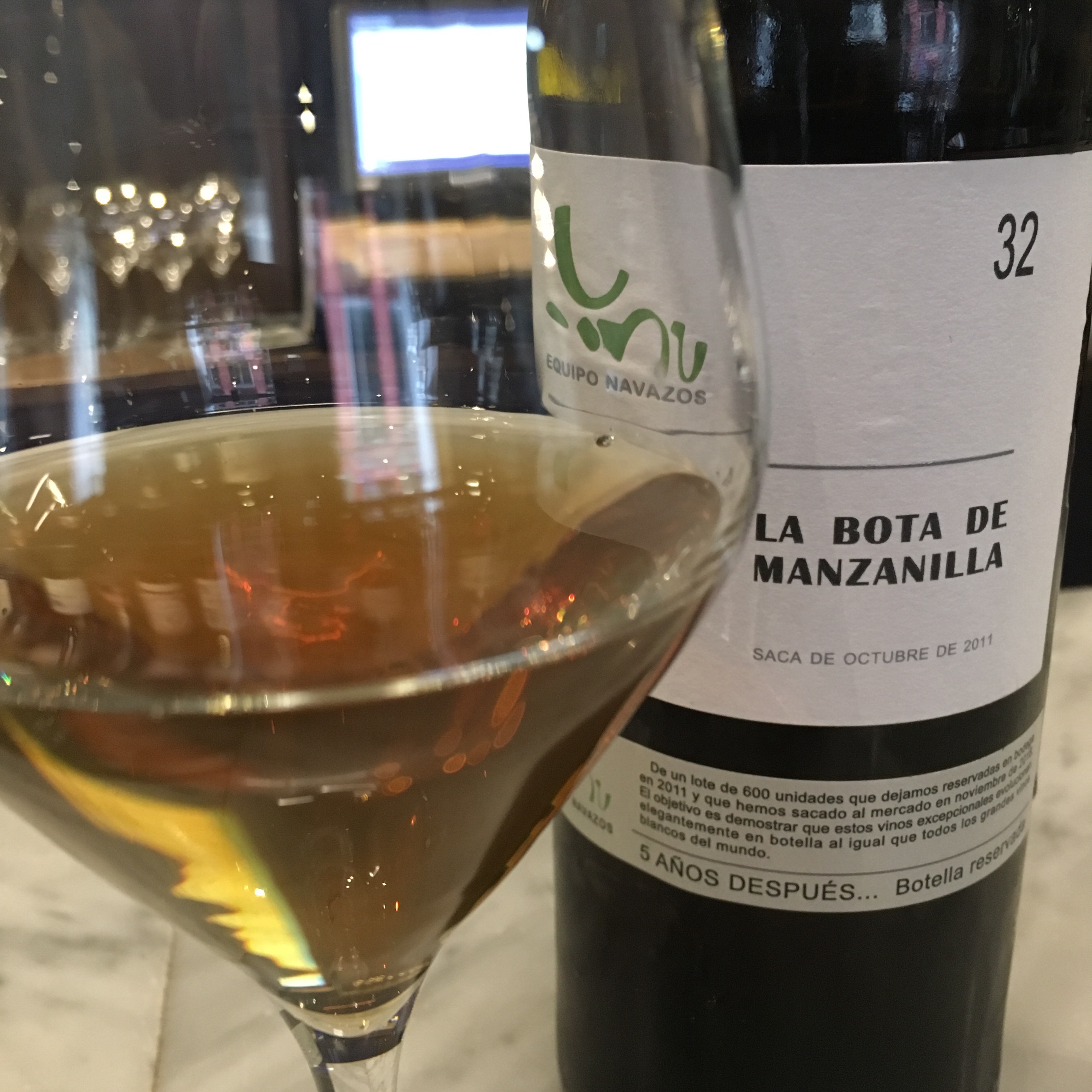
La Bota de Manzanilla 32 – 5 years later 

Here is another interesting release by Equipo Navazos and one that is bang on trend.

Behold a bottle of excellent manzanilla – one of the top wines from Sanchez Ayala bottled by Equipo Navazos and one of the first of theirs that I tried. As the second band label makes clear, this bottle is one of six hundred that Equipo Navazos reserved at bottling in October 2011 and have only released again now in November 2011. These bottle aged wines are currently all the go (you may have noticed my own musings and even the new category on the blog), and indeed the stated reason for holding these wines back (five years ago) is to show that they are capable of ageing like any great white wine. The experiment deserves nothing but praise – these guys really have done as much as anyone to generate interest and debate about these wines, and this is another superb release on that score. (My appreciation also to Angelita Madrid – what a luxury it is to be able to have a wine like this by the glass.)

This wine is great. It was always a rich colour but now has an old straw complexion and a lovely yeasty, chamomile and acetaldehide nose, nutty, citrus flavours and zingy salinity. It has retained its biological character and is really top class.

But is it better than it was five years ago? Compared against my (admittedly fading) memory of the wine I first tasted it seems finer and has a bit more smokey flavour, an additional burnt edge and an even more elegant profile. But in my minds eye it seems a touch duller and blunter than it once was, and the additional edge of flavour makes it – to my imagining – slightly more bitter.

I fear I may be projecting my views about bottle ageing these wines. Do I remember this wine as zesty and fresh, or am I imagining that to confirm my theory? I will never know – I have a bottle in the fridge but evidently it is also five years in the bottle. And in the end, what does it matter? I am sure many others will enjoy this wine, which is excellent, and there is no doubt that that shade less punchiness brings it down nearer to the more accessible range of mortal wines.

But ultimately I am put in mind of that old sheep of the Lake District, Wordsworth, and his famous definition of poetry being “emotion recollected in tranquility”. Although I enjoy the poetry of these old wines, I generally prefer the emotion of the new ones.
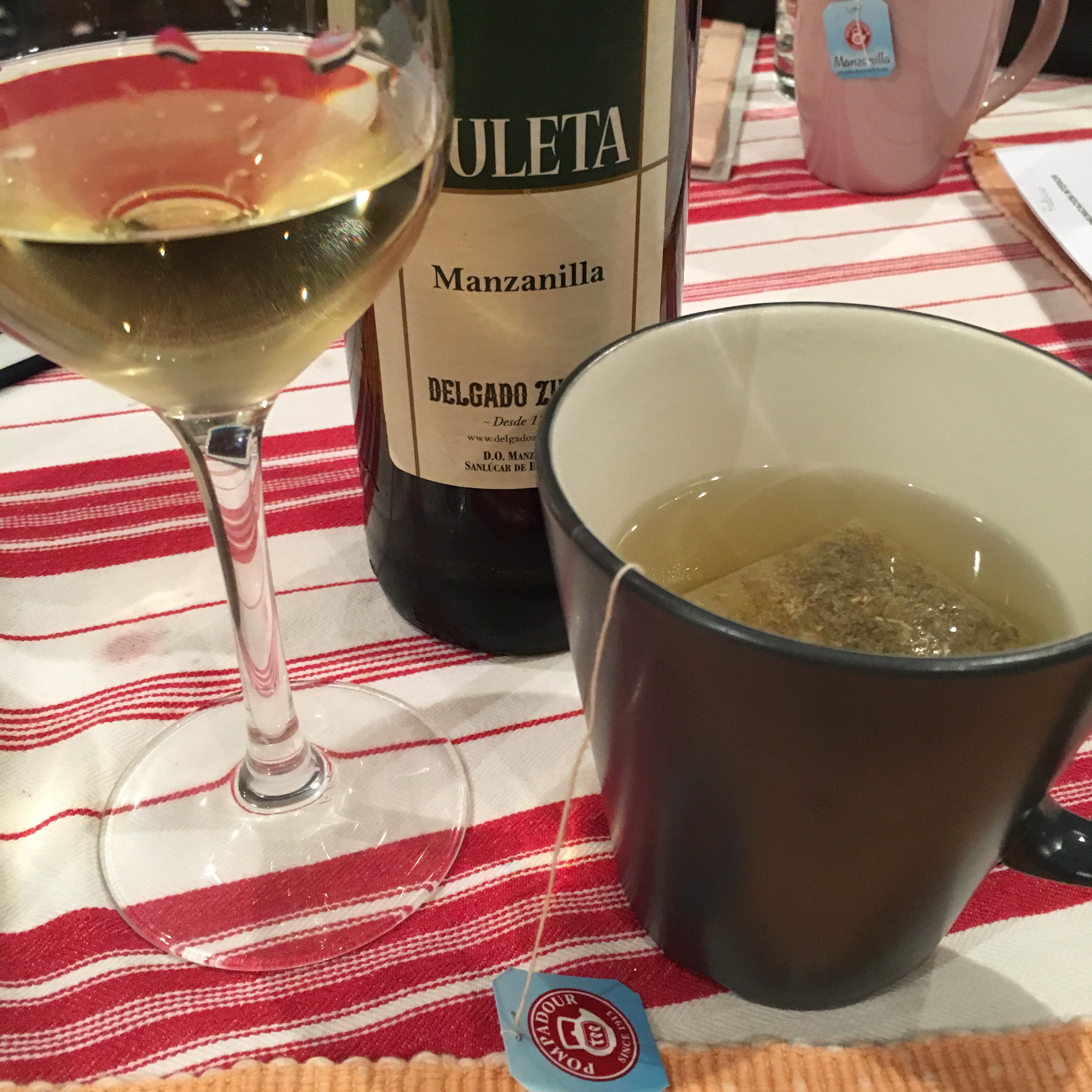
Manzanilla head to head 

Told my better half I fancied a manzanilla and went to get myself one – by the time I got back I already had one. I wonder if you can guess which one I brought to the party …. 

This Zuleta manzanilla is cracking after a couple of weeks open. Has that same metallic/chalky aroma on the nose, heavy salty texture, herbal citrus flavour, zingy salinity and a long, slightly bitter citrus finish. 

Way, way better than the other manzanilla. 

Manzanilla Solear en Rama, Autumn 2016

A new instalment of this incomparable saga of seasonal sacas, with a new, streamlined and elegant label featuring the Little Bustard (Sison Comun). Very attractive too (even if the change in label wrecks the aesthetic of the family photo).

The contents are absolutely fantastic. I love the yeasty, salty haybale aromas, the ripe apple and bitter salad flavours and, above all, the spicey, saline finish. Above all the sensations in the mouth are astounding: first a fullness and creamy buttery texture, then the flavours, then the mouth is stinging for an age, then fresh and watering.

Another classic.

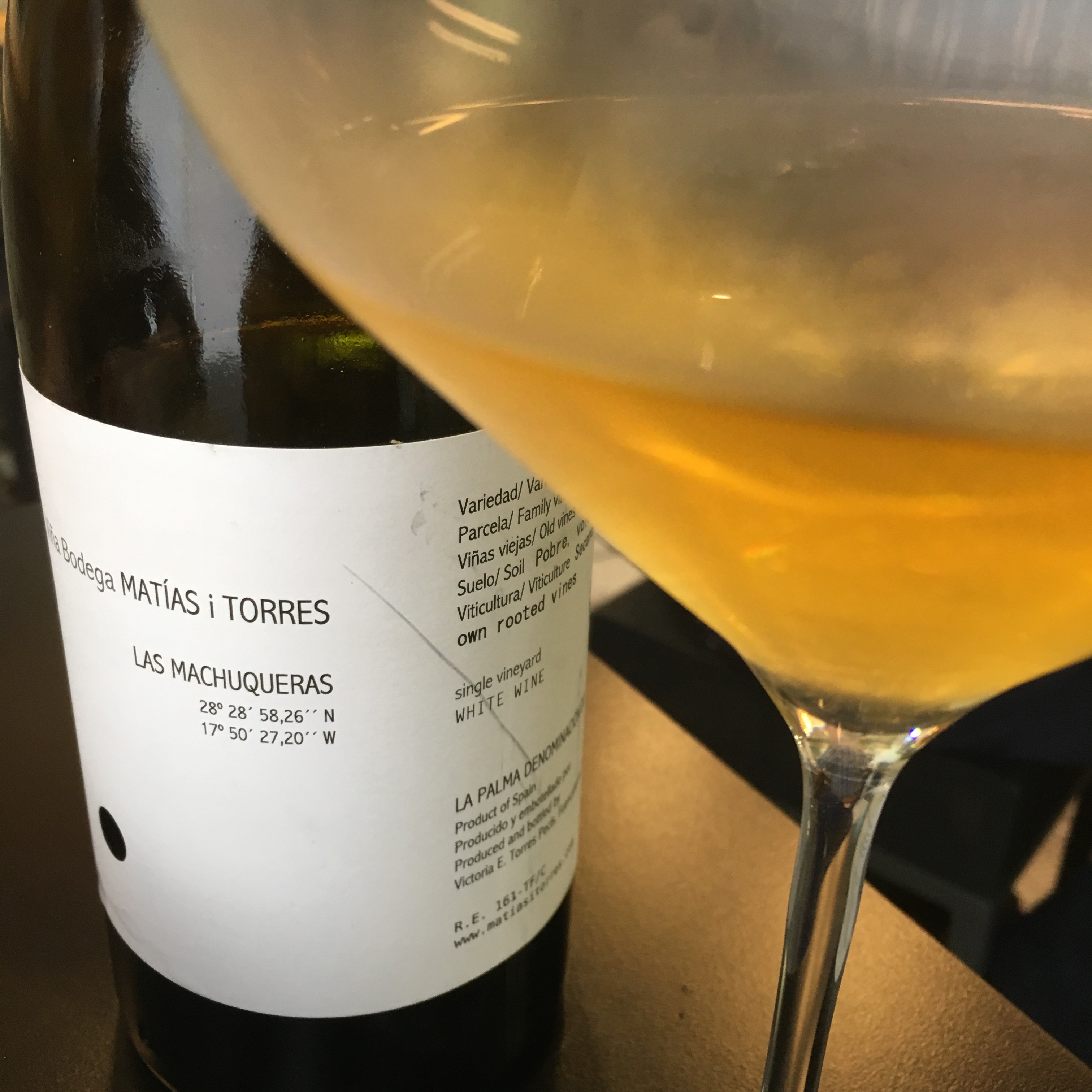
Las Machuqueras, Matias i Torres 

A sought after wine ever since the boys at Can Roca apparently cornered the market in recent years, I have been able to try this – and the Albillo Criollo and the Diego – thanks to David at Territorio Era. Listan blanco (aka our friend the palomino) from old vines about 250-450m above sea level on the island of La Palma in the Canary Islands: one of the vineyards with the picturesque little walls to protect the vines from the wind.

So a lot of expectation and it was a very interesting wine alright. Not high acidity but just enough, and nice concentration of over-ripe apple and chemistry-set minerals. Minerals in colours – more dimensions than your standard salinity and steel. Nicely integrated too. 

A flavourful and complex wine. 

Tintilla 2013, Vara y Pulgar

Enjoyed this at lunch today in my current watering hole of choice. Black of blackcurrant in appearance with a nose of more black berries and undergrowth. Then on the palate rich, concentrated dark fruit, sweet notes and a slightly peppery, mineral and ashy/tannic finish.

Concentrated but enjoyable.

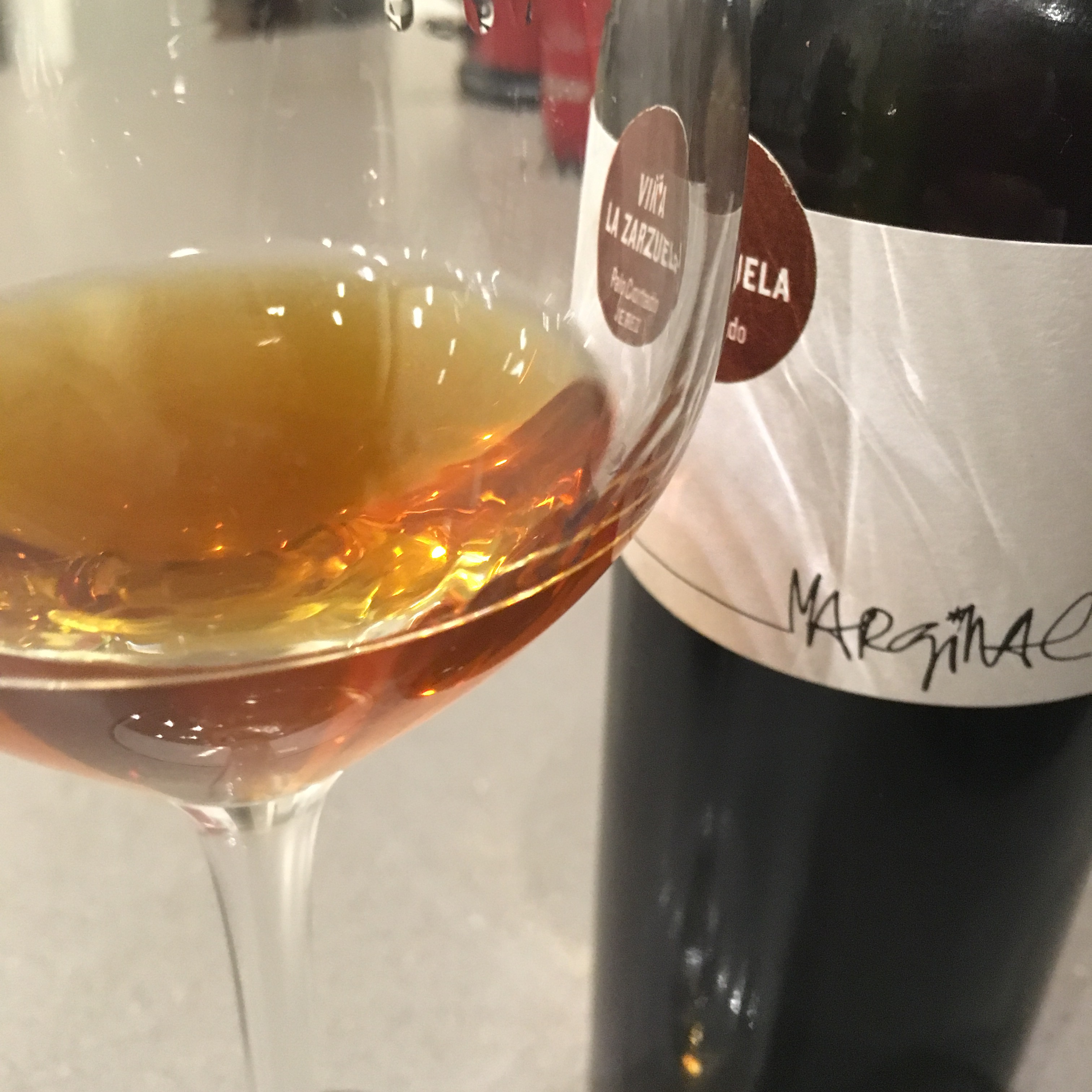
Palo Cortado Viña Zarzuela (el Marginal 2016)

The “Marginal” is a special bottling by the guys at La Tintoreria of a small quantity of a different wine each year, distributed to a few very select restaurants. I was able to try this one thanks to Lakasa, who have it on their top class wine list by the glass even. As yet I don’t know much about it (except how it looks, smells and tastes) although there was talk of it being a non-fortified, old school palo cortado with some old school varietals.

As you can see it looks great, crystal clear and a slightly chestnut amber colour. The nose has a very nice sweetness – ginger and amaretti, a little bit of sawdust.  Then on the palate it is very pleasant, has a nice bite and while dry has gingery/sweet-spice flavours, a bit of bitter almond, but not excessively bitter or astringent – a nice balance and a long, sweet-spice finish. (I would swear, in fact, that it has some sugar, residual or otherwise, but I might be wrong.)

Very nice little bottle – worth trying if you get the chance. 

Lustau biological wines in Taberna Palo Cortado

Finally getting around to writing up my notes – thumbs a blur across the iphone screen – of the fascinating tasting of Lustau biological wines at Taberna Palo Cortado last week. We got to try wines from all along the solera process – including the sobretabla and a wine from an intermediate criadera.

Anyway, here we go with my thoughts:

  • Sobretabla – one year old wine that has been fortified and will be used to refresh the La Jarana solera. As a wine you would find it alcoholic, rustic, unready and undefined, but it has personality alright – a really earthy, punchy little brawler. Whatever, I still appreciate the chance to try these whenever I can, because they can give you an appreciation of where the wines come from.
  • Fino Jarana – after the sobretabla you could really appreciate the fine quality of this and the work of the flor, of which it has had around four years. A very nice green apple and salty nose, and green apple on the palate too, with salinity giving it buzz and volume. A very decent young fino.
  • 1a criadera of los Arcos. This wine was not a successor to the last – from the first criadera of amontillado, but fed with manzanilla (I guess the Papirusa) rather than the Jarana. It had four years under flor and around two of traditional ageing. Like the sobretabla it was exuberant and a little unmade/undefined – fascinatingly so. Light in colour and slightly turbid, it had a slightly fuzzy, still pungent and salty nose with a little hazelnut to it. Again on the palate you noticed the salinity, which seemed to slightly overpower the nuttiness when it came.
  • Los Arcos itself is the real thing and showed some real benefit for its additional couple of years of traditional ageing (and of course finishing – whereas the previous wine was a bota sample this was a finished product). Four years under flor and four years traditional ageing this had greater clarity and sharpness. Refined hazel/apple or even tomato on the nose here – a sweet cherry tomato. Then a nice zingy bite on the palate and roasted nut flavours with a nice tasty finish.
  • Escuadrilla – now we come back to Jerez, and an amontillado with four years under flor (the Jarana) and a further eight years of traditional ageing. This was a cracking wine, crystal clear and a lovely chestnut colour, with a nose of hazelnut spread – really appetising nose. On the palate too it just seemed to have a bit more flavour and class than its predecessor – nice rich hazelnut and a long mouthwatering finish keeping the flavour going.
  • Amontillado VORS. It was followed by the senior amontillado of the range – a VORS (i.e., at least 30 years old in total). A rich red chestnut colour, again crystalline, this had a much more pronounced sawdust on the nose, then a palate that was more acidic first up, even dryer, concentrated flavour and then a very dry finish.

A really interesting group of wines and the kind of tasting that can be really instructive. I think my favourite was the Escuadrilla but there was no doubting the power and class of the VORS or the spriteliness of the Arcos. Excellent range of wines.

But there was more to come – a bottle of East India Solera was produced with the deserts, and although I am not in general a fan of creams and mediums this one struck me as most opportune and went down very nicely indeed.

And in fact there was even more to come because Abel Valdenebro, a genial chap and genius photographer, had brought along a lovely old Lustau amontillado from the 1960s, which was then followed by another couple of vintage bottles purchased by popular subscription (a whip around) from Paki’s fantastic collection, including a sublime Inocente that had been in the bottle at least forty years. (I rather cheekily asked Paki for a 2016 Inocente as a comparison and it was as stark a comparison as I can remember – will write on that anon.)

So many thanks once again to Carlos from Lustau and to Paki for a cracking evening, and to Abel and the other subscribers to the other wines. Top class all around.

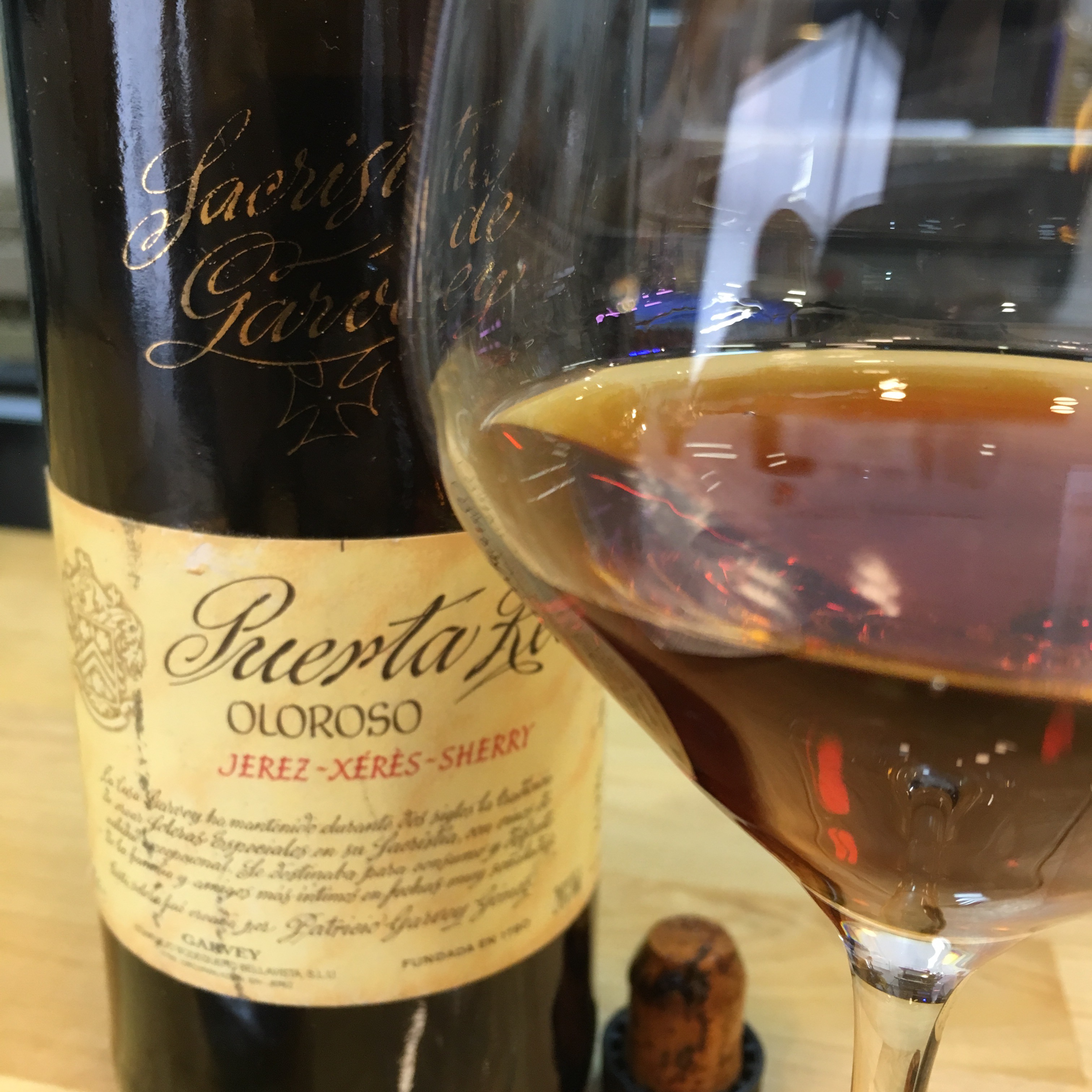
Oloroso Puerta Real 

All macharnudo and pretty old – no VORS or a VOS on the label but a reference to “many years”.  Fans of bottle ageing will note that this one had a few years in the bottle – a 2012 bottling.

As you can almost see it is a reddish, mahogany brown colour. Has a nice rich walnuty nose to, with a hint of sweet spice maybe, and then on the palate it is a big horizontal mouthfull – full flavoured but not sharp in attack or finish. In fact on the whole it comes across as so smooth as to be almost mellow.

Tasty and elegant.

Oloroso Muy Viejo Tradición

A second, even more majestic wine from a lunch with Bodegas Tradicion this week. This is the oloroso from the solera fundacional of the bodega. The bodega itself was founded in 1996 but the solera was older and would have been static for some time when this was bottled. 

It took a little time to open up. At first it was heavy and robust – reminded me of a very old almacenista style oloroso or one of these extreme releases that get a lot of praise, but as it started to stretch its legs it became more and more impressive. By the end it was, as I said at the top, majestic. 

Powerful and rich in aromas and flavours but dry and increasingly elegant in profile: nuts and polished hardwood rather than sawdust. Acid bite first up, a big palate of flavour and then stinging salinity that makes for just an immense, mouth watering finish. 

Really top class wine and an excellent foundation for any bodega.

Cata de Lustau in Taberna Palo Cortado

It has been a big week in sherry terms and this was yet another interesting tasting of Lustau wines at Taberna Palo Cortado.

A selection of wines – with a fino and amontillados of different ages and types and a sobretabla and a first criadera of the amontillado thrown in. Made it very instructive indeed to see the progression from that sobretabla through fino to first criadera, then the amontillados of different ages (which I mentally filed as cherry tomato, hazelnut and sawdust).

A bit of a rowdy crowd including none other than Colectivo Decantado – but Carlos did his best to educate the masses and once the wines had been explained we all piled into an excellent dinner – tataki the ternera was brilliant and an excellent match for the wine – finishing with a luscious bottle of East India Solera.

I will need to find time to write up my notes properly but wanted to mark the occasion at least and express my thanks to Carlos from Lustau and Paqui for a great evening (and to Abel Valdenebro who brought along a special treat for afterwards: a Lustau amontillado from the 196os no less).

Thanks also to the wellwisher who said hello at the end and said such nice things about the blog. I am sorry I didn’t catch your name but many thanks indeed – really means a lot and hope to catch up again soon.