Gabriela Oro in Media Ración

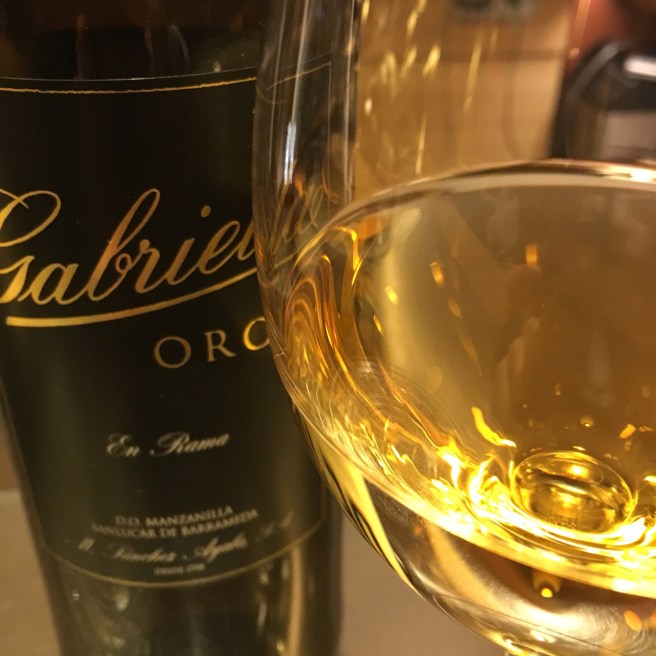
A quick pre-Reyes lunch in the marvellous bistro Media Ración with an absolutely outstanding bacalao al ajorrariero – the best I can remember – and this classic manzanilla from classic Sanlúcar bodega Sanchez Ayala.

Just look at that colour – the lighting may have helped but there are no filters above, just pure liquid gold in the glass. On the nose it is salty sea air and slightly musty esparto grass, with more and more almond coming through the longer it is in the glass (and when the glass is empty). On the palate this is punchier than I recall in the past, with a real zing of salinity first up, then super dry, smokey and toasty almond flavours before a gunpowder salty finish.

Really delicious, and although everyone seems to debate between sweet wines of every kind, the nutty flavours of the last sip went beautifully with the roscón de reyes that my hosts very kindly gave me.

On another note, these wines from Sanchez Ayala have a real personality that previously I had always attributed to the location and techniques in solera, but in a recent chat with the bodega I learned that all the wines are sourced from a single vineyard: las Cañas in Balbaina Alta, a fact which curiously doesn’t feature in the marketing of the wine. Come on guys, don’t be shy, take pride in your roots!

Three Kings: The elmundovino wines of the year 2017

The guys at elmundovino unveiled their wines of the year this morning and I am glad to say I have all three (one of them only since this afternoon it must be said).

But I am particularly glad to see that the Oloroso la Barajuela 2013my own wine of the year – has at last received the recognition it deserves.

The appreciation of wines is by definition subjective, but even so I cannot understand the treatment that this wine has received in some other rankings and guides this year. What was most surprising was not so much the absolute level of the scores given – although they were unduly mean in my view – but the comparison with scores given to other wines in Jerez and elsewhere. It would be unfair to pick out any one example but you don’t have to look far to find some relative scoring that is borderline absurd.

So it is heartening that it has at least been recognized by the elmundovino panel, which uniquely amongst the leading sources tastes wines blind and which (maybe not coincidentally) I have generally found to be the most reliable measure of the wines of the region (in 2015 they also nailed it in my view).

And there is more good news – first with the 3 Miradas by Alvear and Envinate scooping white wine of the year (not tried it yet) and, among the runners up, in the guise of Cota 45’s Encrucijado 2014. It is almost as if these small production, convention-defying wines show better when tasted blind …

Corta y Raspa “La Charanga” 2016 in Angelita

In just over a week have had two absolutely cracking dinners in Angelita. Absolutely delighted to see the place full to the rafters on both occasions (standing room only downstairs the other night) because if anywhere deserves to be full this place does. Can’t speak highly enough of their approach to sharing wines – a fun list of interesting stuff that always has me trying new things and almost always enjoying them.

There were a few of those this week but this wine I knew alright, and it is a cracker.

This wine is by Antonio Bernal Ortega, one of the mayetos that make up Ramiro Ibañez’s Mayetería Sanluqueña. I refer to that earlier post for details of the project – as so often with Ramiro the idea is in itself fantastic – because this wine deserves a post all to itself. It is 100% palomino from the vineyard “La Charanga” on Pago Maína near Sanlúcar, a “river influence” pago famed for an albariza rich in diatoms.

The wine came out at first with a touch of reduction, but nothing that a big glass and a swirl couldn’t cope with and once it settled down it was a gem. It has an attractive sea-air and apple tart nose and on tasting shows a lovely salinity and shape. Fresh at the beginning and mouthwatering at the end, not heavy by any means but a nice splash of almond, apple, and herbs, fading to that salinity and a touch of peppery spice.

A lovely little wine all told, and it was a big hit with my sister in law – who despite being a newcomer to my little world of palomino white wines took to it like a born winelover, calling the salinity and flavours perfectly. A wine for all seasons and all publics. If only there were more of it …

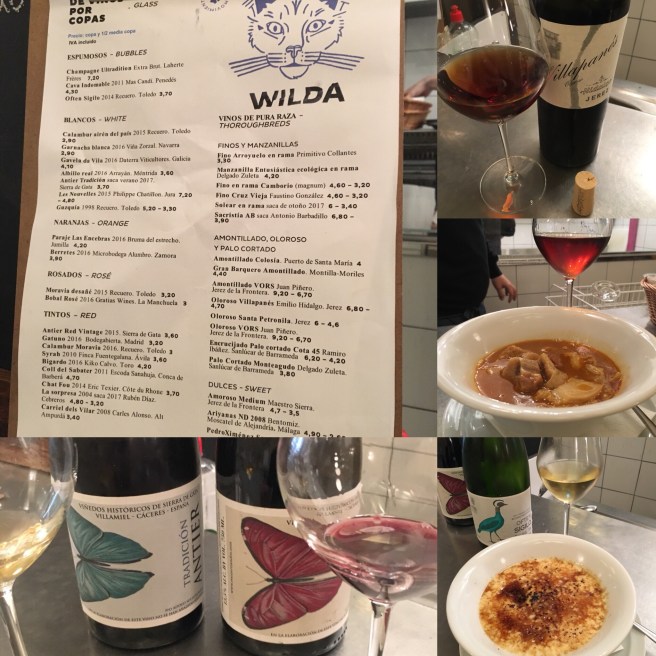
Oloroso Villapanés with Callos in Wilda

One of the classic sherry pairings in one of Madrid’s newest and trendiest establishments. I don’t think anybody would describe Wilda (Calle del Leon 9) as conventional, with its funky decoration and selection of equally funky (in a good way) natural and artisan wines. But when you look closely at the wine list and menu you can rest assured that this is also the sort of place you can safely refuel on a crisp winter day.

Some classic combinations are possible and this was certainly one. Here the oloroso Villapanés was stately and awesome – this wine is feline like a regal old lion – and perfect with the callos, which are from a famous, michelin starred stable and are super smooth in flavor and texture.

And after that well, I know the other sherries on what is a well thought-out little list so I had a bit of a dip with some really interesting wines from Extremadura and some fizz from Toledo (and an XL serving of top drawer arroz con leche, as you can see).

Really nice little lunch and well worth a visit.

The end of another Era

As many of you will know, the oasis of wine in Mercado Barceló that was Territorio Era is no more.

These last fifteen months Era has been my second home (or at least my second office). In part because the food was always fantastic – at first thanks to Diego, with his unique callos a la tailandesa and his quality show-cooking; and then to Liliana, who prepared the best salmonetes I have ever tasted bar none. But mainly I went for the wine. On that score, without Era, and specifically David Trillo, its sommelier and driving force, this blog – and the life of this blogger – would have been a much poorer, lesser thing.

I have lost count of the number of times I have called in for a quick glass of mood restoring balm (Era is referenced in 75 posts on this blog, and I am sure the real number of visits is higher) and he never let me down. An amazing variety – 100 something sherries by the glass at one point-, and a lot of absolutely outstanding wines. Among the wines from the sherry region off the top of my head the Fino, Oloroso and Raya from la Barajuela, the UBEs from Carrascal, Miraflores and Maina, Fino Capataz, Encrucijado, the legendary El Cid, Amontillado Gran Barquero, Las Viñas de Callejuela (2015 and 2014),  Precede, and some older wines (admittedly mostly brought to lunches) including a Panesa from 2010, a Manzanilla Sacristia AB from 2011, a quite magnificent Carta Blanca and a stately old Manzanilla la Pasada La Guita, to name just a few. But on top of those there were some fantastic champagnes and hard to get wines from Jura, the Loire, the Canary Islands and other far flung spots – and with a generous BYO policy (no fee) the possibilities of a given dinnertime were literally endless.

I met a lot of characters and made a lot of friends at that bar – I was there so often it was a pretty good place to find me of a lunchtime-, and there were also some really memorable occasions. Of the ones that made it onto the blog the Night of the Pitijopos (Volume II) back in January and Florpower Friday stand out, but there was also a fantastic dinner on a Sunday night (with the whole market closed around us), the start of a big night out with Erik and Laura of montillamorilesuk.com back in March, wine tastings with friends and colleagues and a large number of lunches that could best be described as “riotous”. Neither will I ever forget rocking up there one Saturday afternoon for a quick glass of wine only to find the place full of wine lovers in an advanced stage of “merriment”: the sensation of being the most sober person present was both unusual and unnerving.

But now David is moving on in order to find a better location (and the current plan is a place that, thankfully, is not so far from my real office). Wherever it is, however, I will be there, and you, dear reader, should be there too. Because if you really love wine it is your duty to get out and drink them, and in particular support guys like David, who go to enormous lengths to offer such a variety of high quality liquids. The world is a better place for establishments like his, it was a blessing to have Territorio Era so near over the last year and this blogger and many others are going to miss them greatly for the next few months.

The Greatest Show on Earth: the wines of el Corral de la Moreria 

Looking back at what was a pretty fun 2017 as a blogger it dawned on me that I had never properly written up what was probably the best night of the year, an absolutely unforgettable evening in Corral de la Morería.

The Corral de la Morería is Madrid’s and the world’s most famous, and probably best, venue for flamenco and a place of pilgrimage for many. It was opened in 1956, making it the oldest known tablao of its type, has been the scene of some historic moments and performances by the very best artists (just check out the list on the website) and has been frequented down the years by the likes of Ava Gardner, Frank Sinatra, Ronald Reagan, Kiss, John Lennon and others of their ilk. Founded by Manuel del Rey, the business was taken over on his death by his wife, Blanca del Rey, herself a world class cantaora, and is now run by their sons, José Manuel and Armando. I am told that the tablao is so famous it can book artists that other places cannot, and although I am almost completely illiterate in flamenco terms I can tell you from personal experience that the artists I saw there – including a fellow called Jesus Carmona – were absolutely superb.

In addition the dinner you can tuck into while watching the artists is also from the very top drawer. It has a top class, Michelin starred chef – David Garcia, who won his Star in Álbora – and the pairing menu we had was as good as anything you can get in Madrid (I can still remember the pichon a good five months later). The only problem, as I said in my post at the time, was that with the spectacular show taking place a few metres away it really was impossible to pay the food the attention it deserved, but I am told that since then this problem has also been resolved: they now have a separate “Restaurante Corral de la Morería” reserved for dining in peace before the show starts.

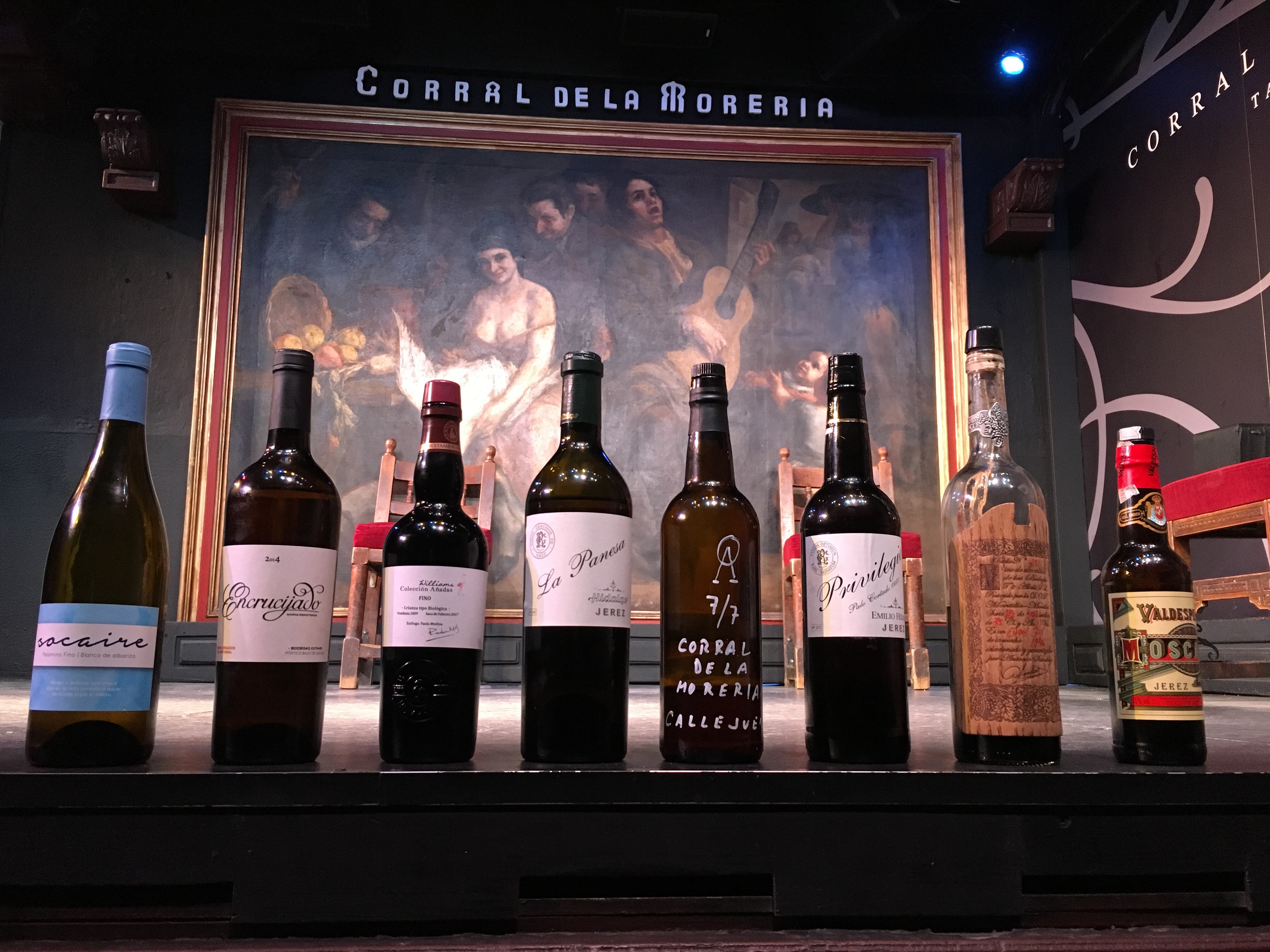
But anyway, this blog is not about dance or about food, and the real reason I felt I had to come back and write something was the phenomenal line-up of wines we were given with the pairing menu (not that I made any note whatsoever of the dishes they accompanied – apologies for that). They are said to have the largest collection of sherries in Madrid and, frankly, I believe it, but more importantly they gave me the right ones.

  • Socaire 2014 – a fantastic way to start, with what I have no doubt is the Grand Cru de Chiclana de la Frontera, a 100% palomino from a terrific little vineyard called Finca Matalian, at the Southernmost point of the region but soils that are high in calcium, 100m high and only eight kilometers from the sea. It was a terrific wine – and the current vintage, the 2015, is just as good – I refer you to my earlier posts for full details.
  • Encrucijado 2014 – that was followed up by another terrific wine and one of the new stars of the region. The Encrucijado is almost unique in that it is plurivarietal, and has a wiry structure and butterscotch flavours that just seem to get better with the time in the bottle. Again, I refer you to earlier posts for full details.
  • Fino de Añada 2009 (March 2017) – the first really biological wine on the night was this little gem from Williams & Humbert. Really superb progression of wines, this following the Encrucijado’s butterscotch with sweet hazelnut and salty potency but with a fine, sharp, fresh elegance. Once again, if you would like more details check out these posts.
  • Fino Especial La Panesa – very occasionally there comes a time when you think the sommelier is reading your mind and this was one of them. I was just thinking how much I would like to compare the hazelnuts of the Williams with the roasted almonds of this, the king of solera finos, and hey presto it appeared. (What made it more fun was that the wines were being served blind, and I laughed when I scented this one.) An absolutely regal fino which I have written about from time to time in the past.
  • Amontillado 7/7 de la Callejuela – now this, on the other hand, I had never tried and would never have identified for anyone’s money (I might have been able to tell you that it was an amontillado). It is a wine that was bottled specifically for the guys at Corral de la Moreria by those great lads at Callejuela – and a very nice, balanced amontillado too, with a nice sharp biological, Sanlúcar character but plenty of body and juice and nice honey-like notes. A really superb wine and, again, perfect after the Panesa.
  • Palo Cortado Privilegio 1860 – As I mentioned before, these wines were arriving blind but I have to say the sommelier gave himself away a bit because he was unable to hide his excitement when this was served. It is, simply put, one of the very best wines I have ever had from any region. A sweet spicey nose, perfect profile of smooth acid, full body and long finish, silk on the palate and an unbelievable array of flavours from nuts to ginger, chocolate and spices that seem to last forever. Looking back I now see that I have had this on no less than four occasions – if you ever hear me complaining just remind me of that fact.
  • Don PX Convento 1946 – if my good friend the sommelier was excited about the Privilegio he was gleeful about this one. The first and only wine from outside the Sherry region, this is, you guessed it, a pedro ximenez from Montilla Moriles, and a legendary one too. These really old pedro ximenez are fascinatingly dark, and this one was like a peppery dark chocolate in character, but for once the progression didn’t do the wine any favours – maybe it was the comparison with the Palo Cortado (or maybe purely because it is so concentrated to start with) but this one, complex as it was, didn’t come across as quite as expressive.
  • Toneles – and we finished by returning to the sherry region and another absolutely legendary wine, Valdespino’s exceptional old moscatel. Superb aromas of brandy, raisins, sweet spices, chocolate, cedar and tobacco, then a lovely buttery mouthful of intense flavour and immense length – with sweet raisin and chocolate with figgy spices. An absolutely exceptional finish to a quite stunning line up of wines.

Really brilliant wines individually but also a beautifully judged progression from light to shade, up through the ages and styles. Awesome stuff. And while I only had a glance at the first few pages of the monumental winelist I saw enough to be able to tell you there are plenty more where these came from.

When you are blogging it is easy to get over-excited with the hyperbole and declare everything fantastic, awesome and unforgettable but when it comes to that night at el Corral all of the superlatives apply. I really won’t forget it in a long, long time.

Paola Medina in the new Taberna Palo Cortado

2e0480b4-b3f2-4c47-a068-148530f16cec

Paola Medina of Williams & Humbert is one of the most important wine makers in el Marco de Jerez and was the star of yet another absolutely outstanding tasting at Taberna Palo Cortado – this time in their new premises at Espronceda 18.

Williams & Humbert are well known for their collection of vintage wines – they are said to have a cask set aside from every harvest since time began (or at least since the bodega began). Until relatively recently – in fact until the Medina family took over the reins in the early noughties, the wines that were released were of the old oloroso variety, but for the last fifteen years they have also been setting aside 10-20 casks of wine a year for biological ageing and the results – most vividly experienced via the Colección Añadas of a year or so ago – have been ground-breaking. Just as Ramiro Ibañez’s Pitijopos collections have laid to rest any doubt about the relevance of terroir for the wines of the region, Williams Colección Añadas are about the best evidence for the relevance of vintages.

And the tasting provided more of said evidence and also some good news, in the shape of new wines. Taking the good news first, Paola told us that they were in fact making even more distinct wines than before. Since 2015 they have been making an ecological fino de añada, and in addition to the finos and olorosos de añada that we already know and which come from wines from vineyards in Añina and Carrascal (de Jerez), the bodega is now also making separate wines – in fino and oloroso – with fruit from those two pagos/viñas, making a total of seven specific wines for each vintage.

And indeed the first wine we tried on the night was the first of the new kids on the block, the Fino Ecológico de Añada 2015, made with palomino from a vineyard near Trebujena and in process and a lagar (on the road from Jerez to Rota) that are fully separate from those of the other wines. (Apparently, in order to get the certification of ecological you need the ecological alcohol from the Rioja and you have to keep everything separate, which requires some pretty extreme measures – early harvests and fermentation in a different town, for example.)

Whatever the difficulty level it was a cracking little wine – had a nice subtle chestnut aroma on the nose, was full in body again with a suggestion of chestnut and had tremendous sapidity and zing for a wine that had only had a bare two years under flor. Paola attributed the sapidity to conditions in the lagar, where a lovely, healthy, thick white veil of flor formed, but this will be an interesting wine to follow.

Next up was Fino Don Zoilo, a classic fino with a good nine years under flor. A classic that we don’t see often in these parts since the majority is apparently exported to Japan, where in addition the public prefer filtered, clarified wines. Couldn’t have been more distinct to the wine that preceded it: even aside from the biological angle and the Jerez/Trebujena sourcing it was solera rather than vintage, nine years under flor rather than two, and filtered. Those differences showed: although the 2015 had sapidity this had sharper saline intensity, was finer in body and greasier too. To me it had a chamomile tea-like nose, a much dryer palate with less chestnut and more raw almond and mor pronounced citrus notes, with a classic fresh finish. Top stuff.

Then came the wine that I was looking forward to – a look at the Fino de Añada 2010. I was a big fan of the Fino de Añada 2012 and probably even more so of the Fino de Añada 2009 and was looking forward to more of the same but this is a fish of a different kidney altogether. Whereas the Fino de 2009 was so chestnutty, generous in body and full of manzanilla-pasada like fruit, this one is incredibly dry, fine, and sapid, a much more austere wine altogether. Surprising contrast and a demonstration of the variations possible in static ageing: whether as a result of the rainy growing season in 2010, or the climatic conditions in the years that the wine spent under flor, two wines from the same pagos in consecutive years are totally different.

The surprising 2010 was followed with Amontillado Don Zoilo, an amontillado with an average age of around 12 years, of which nine under flor. Specifically, we are looking at the continuation of the Fino Don Zoilo: wine from the last criadera of Don Zoilo is used to refresh a small solera of one criadera and the solera itself of this amontillado. The resulting wine, it must be said, is fantastic. Has a lovely hint of honey on the nose and honeyed chestnut on the palate and the oxidation and concentration (this was 19%) really seemed to complete what had been quite an austere fino, while keeping its lovely sharp profile and fine body. Really buzzy, enjoyable wine that would be superb on the dinner table with almost anything savoury.

After the amontillado it was time for an oloroso but not just any oloroso: our old friend the Oloroso de Añada 2009. Really enjoyable as always, and maybe it was the time of year but it just reminded me so much of Christmas pudding on the nose, with brandy, burnt Christmas cake, nuts and figgy fruit. (There was another top shout from one of my colleagues (or somebody anyway): baked banana.) Then after all that enticing richness there are saline flavours and a little bit of burnt caramel bitterness in there. Really such an enjoyable, juicy wine.

The last wine up was the Canasta 20 años, the VOS version of the original Canasta (which has around six years of ageing). It is a cream of oloroso and pedro ximenez. Unlike some creams the Canasta wines are blended at the outset rather than prior to bottling as a means of enhancing integration and you have to say this resulting wine is extremely elegant. Nice acidity and freshness to it despite what must be a fair dollop of sugar per litre, and very nice array of flavours from figgy to cedar and even tobacco. Really enjoyable stuff, although these sweeter wines really refuse to grow on me. I sometimes wonder if I do them justice when they are tagged on to tastings of dry wines like this one:  maybe one of these days I should try to get a few of these VOS and VORS creams together and try them out side by side and in the right mindset.

And then the Taberna Palo Cortado tapas party began, with lashings of Williams & Humbert wines and an awful lot of laughter. Another absolutely top night: perhaps the best news of all is that normal service is well and truly resumed.
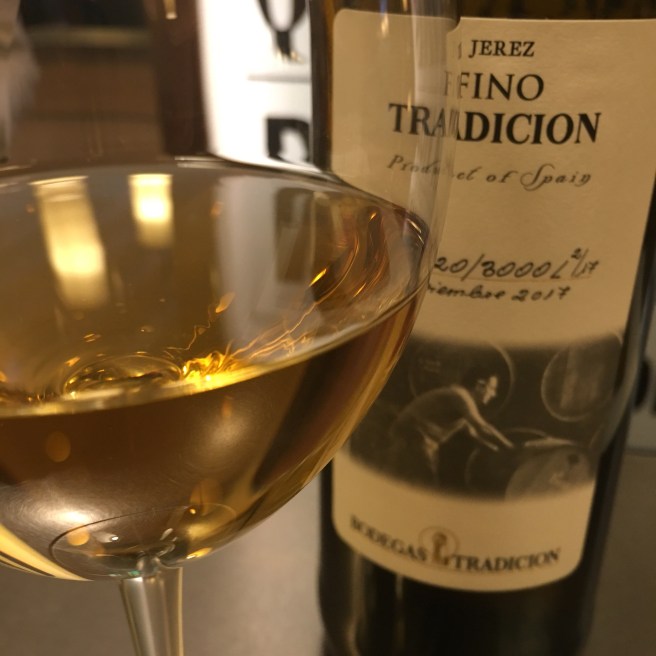
Fino Tradicion Noviembre 2017

If a few of the autumn sacas I have tried are a guide it has been a hard summer for the flor down in el Marco.

This autumn saca of the great Tradicion fino seems to me from memory to be towards the oxidated, roasted, end of the register. Not necessarily a bad thing: gives it plenty of body with a ripe, rich feel to the flavours and the zing of salinity gives it a nice spicey finish and balance.

A serious but very drinkable fino from the top drawer.

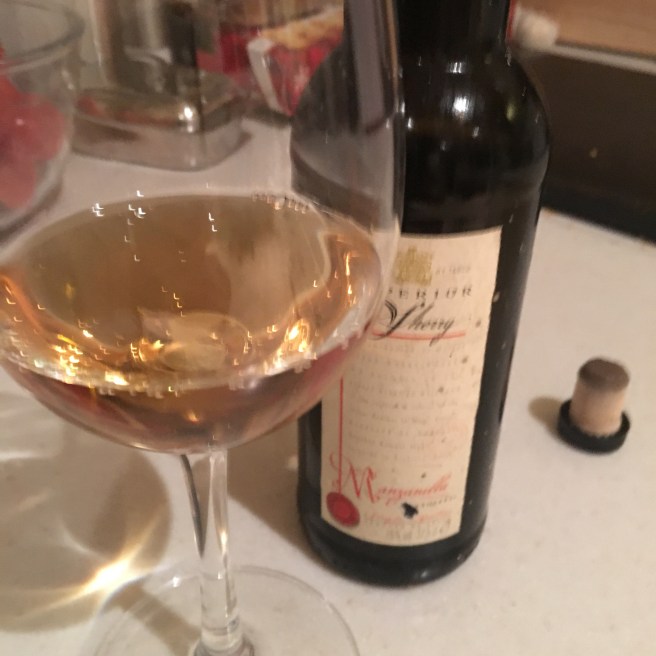
Manzanilla pasada La Guita (1970s)

This was a second very special wine brought to lunch by Juancho Asenjo – the man is a legend – in Territorio Era recently.

It had some tough competition on the day – a quite outstanding 20 year old Fino Carta Blanca – and has a tough act to follow in the form of its own descendants. You see it is a manzanilla pasada La Guita from (I think – memory is a bit hazy for some reason) the 1970s and would be a lineal ancestor of the outstanding “noughty”‘manzanilla pasadas released in more recent times by Equipo Navazo, which are among the very finest wines I have tried from the region.

And this was a fascinating wine. Was a rich old amber in colour and was pretty clear, maybe just a hint of cloudiness. On the nose it was still there – a bit of old apple and straw – although not as punchy as it might once have been, and on the palate it was extraordinary. Not so much the flavours, which were still there and were enjoyable if a little muted, but a quite amazing chalky, almost chalk dust texture.

The most mineral wine I have ever tasted without question – extraordinary stuff.