El Tresillo Amontillado Fino


This is really excellent wine.

It is a beautiful dark gold in colour – a deep amber. It looks frankly delicious. On the nose it has a fine quality that I am beginning to think of as the hallmark of Emilo Hidalgo, and sweet aromas of nutty toffee – toasted almonds or even honey roasted peanuts, maybe just a little bit of hay bale at the end to remind you of the flor. A lovely nose, no doubt.

It is also super elegant on the palate. In texture it is very light, a very refined oil, fatty but not too much.  Flavourwise it has real shape to it: it starts quietly, with a cool, buttery toffee type entry, but expands into unexpectedly intense salty, slightly zingy, alcoholic toffee flavours. Very long finish – a little bitter and very savoury after all the sweetness in the nose and the tip of the tongue but just about in balance.

I had this with some sweetbreads and salty roasted vegetables here in my favourite watering hole but to be honest I then had a second glass on its own and it was even better. Really a superb wine, and for me head and shoulders above the (very few) other amontillado finos you see around.

Alvaro Giron Sierra: A probable history of the dry wines of Jerez – from chance to necessity

This blog post by Alvaro Giron Sierra on the Vila Viniteca blog is probably the most interesting that I have ever read in relation to the wines of Jerez. It is a real piece of scholarship, littered with contemporary evidence and even historic photographs, is mercifully free from the blarney and anecdote that plagues most writing about Jerez, offers some superb insights about the history of the wines and wine making in the region and finishes with a shrewd suggestion of what must be the way forward for the future.

The central theme is that it is a great error to project onto the past: the wines made in Jerez were not, in the past, the wines we know today. He makes a great counterpoint with the most fashionable debate in modern times – about whether palo cortados are “made” or “born” (“se hace o se nace”). As the author points out, in fact for most of history almost all wines in Jerez were “born”: it is only in recent times that wine makers in Jerez have had the knowledge and technology needed to “predictively” make the wines they intended, rather than reacting to and managing the evolution of wines that refused to be governed. (This is in fact something I find fascinating in relation to a lot of wine regions that have been famous for centuries: the evolution or even the wholesale revolution in the wines made there.)

There are some superb insights in the piece: the historic existence of numerous grape varieties with different strengths and characters; the huge variations in the wines fermented in “botas” and the massive resulting wine-making possibilities; the importance of the solera as a means of averaging not just vertically but horizontally; the ignorance until relatively recently of the crucial importance of the flor; and maybe most importantly for the future, the differences in quality attributable to the soil and demonstrated by single vineyard wines. There are many more, but I don’t intend to repeat them all – you should really read the piece itself.

It is a fascinating read and the conclusions the author makes sound absolutely right to me. A single grape, the solera process, a rudimentary classification and scant attention to terroir may have been an excellent way of making a very good wine sold by the barrel in the 19th Century, but Jerez today needs to seek to make possible the unique, outstanding wines being produced in other wine making regions. It is revolutionary – superficially a call to care less for tradition and more for the pursuit of excellence – but on closer examination it is a call to respect the traditions that made singular wines possible in the pre-industrial age, to cast off the limitations assumed and look again at all the possibilities.

The revolution may have already begun: the author himself is at the forefront of a project – Equipo Navazos – that is arguably leading the charge, having evolved from pickers of forgotten, prize botas to makers of interesting, singular wines, but they are far from being alone. Excellent, singular wines are being made and all we can do is seek them out, ask for them, buy them, try them and, if we like them, praise them. I fully intend to do my part at least.

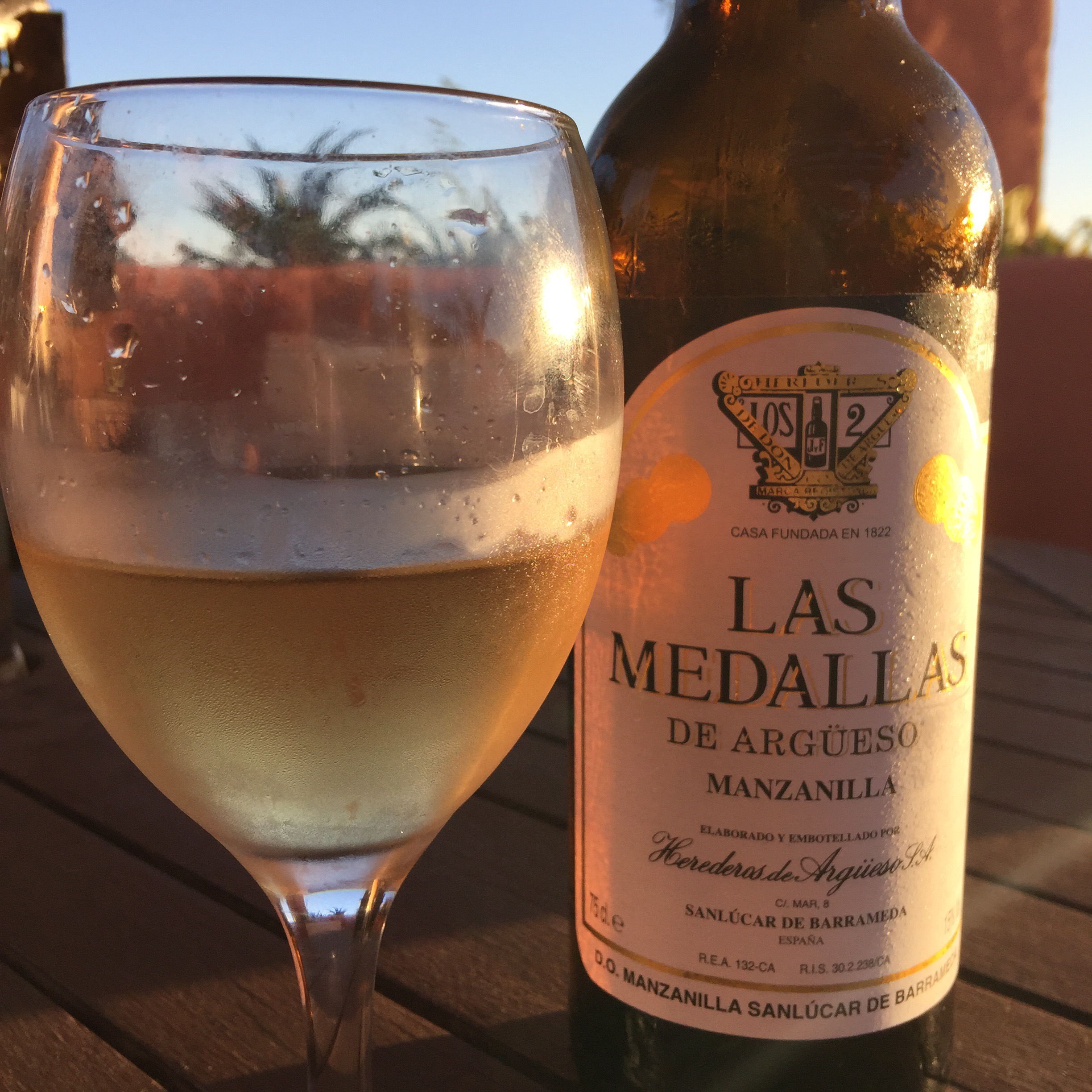
Las Medallas 

  
This is a standard manzanilla by Argueso acquired yesterday in a local supermarket for the princely sum of €3.99 and enjoyed as an aperitif in the evening mediterranean sunshine.

When I tasted this in Taberna Palo Cortado a couple of weeks ago I noticed how meaty and full bodied it was for a manzanilla and it certainly is. So much so I find you have to serve this quite a bit colder than my standard 10-12 degrees to get the best out of it – this one was probably 6 degrees.

It is, in short, a bit of a brute compared to the delicate, floral manzanilla wines you may be used to. Salty and meaty, but nevertheless it has some nice bready flavours – maybe a suggestion of unsalted macadamia nut. 

Supersol, Elviria (Malaga)

  
I have been visiting Elviria, on the Costa about 10km shy of Marbella (coming from Malaga), a good 13 years now to visit my in laws. The beach is good, the lifestyle relaxed, there are plenty of good golf courses around but generally I struggle to find anything interesting to drink. (In fact, somewhat ironically, this blog was actually born down here at Easter.) Let’s be fair – I had a choice of Tio Pepe, La Guita, La Gitana and Solear, so I should not overdo the complaint, but it wasn’t the offering a thirsty traveller dreams about. 

So imagine my joy at witnessing this vastly improved sherry offering at the local Supersol just now (in fact I couldn’t fit the top shelf in the shot, so it is even better than it looks). The sherries are of course sharing the shelf with the malaga wines, and ok, we are not looking at the top end of the range, but there is nonetheless a cracking choice of finos and manzanillas here. In the end I picked up a bottle of the Las Medallas that I tried recently in Taberna Palo Cortado, but I am looking forward to having a good go at these in general. In any event,  it must be great news to see a bigger selection of these great wines on the shelf. And just look at the prices! 

La Jaca

  
A nice little manzanilla, if a little lightweight. A clear, yellow gold, there are notes of apple on the nose, but it is light and floral rather than aromatic and herbal. Nice and fresh on the palate too – not too salty or dense. Very pleasant.

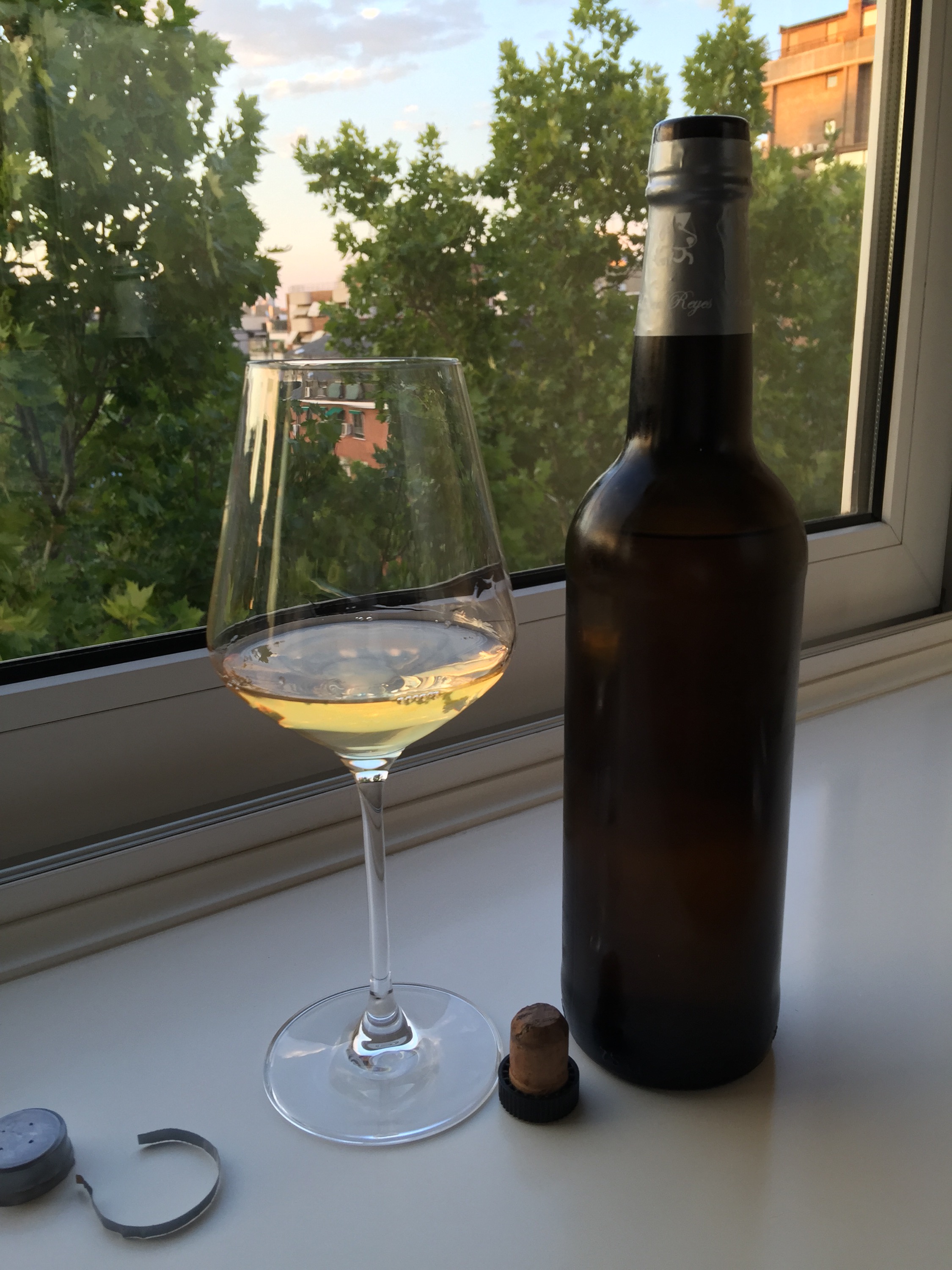
Blanca Reyes Manzanilla en rama

The polar opposite of packaging trends, this enigmatic creation has no visible label at all.

It is not one of the more aromatic manzanillas, but has a sweet aroma that is a bit more fruity than haybales – sweet dried herbs or maybe even dried apple flakes. There is also definitely some of the piercing cider/”catpiss” smell of the mosto coming through (I mean that in a good way).

A rich mouthfeel like a very light oil, then after the sweetish nose it comes across as tart – like cooking apples, then salty and savoury/herby in the mouth. Nicely balanced – tasty but fine and light, and long but fresh. I really like this – very good.

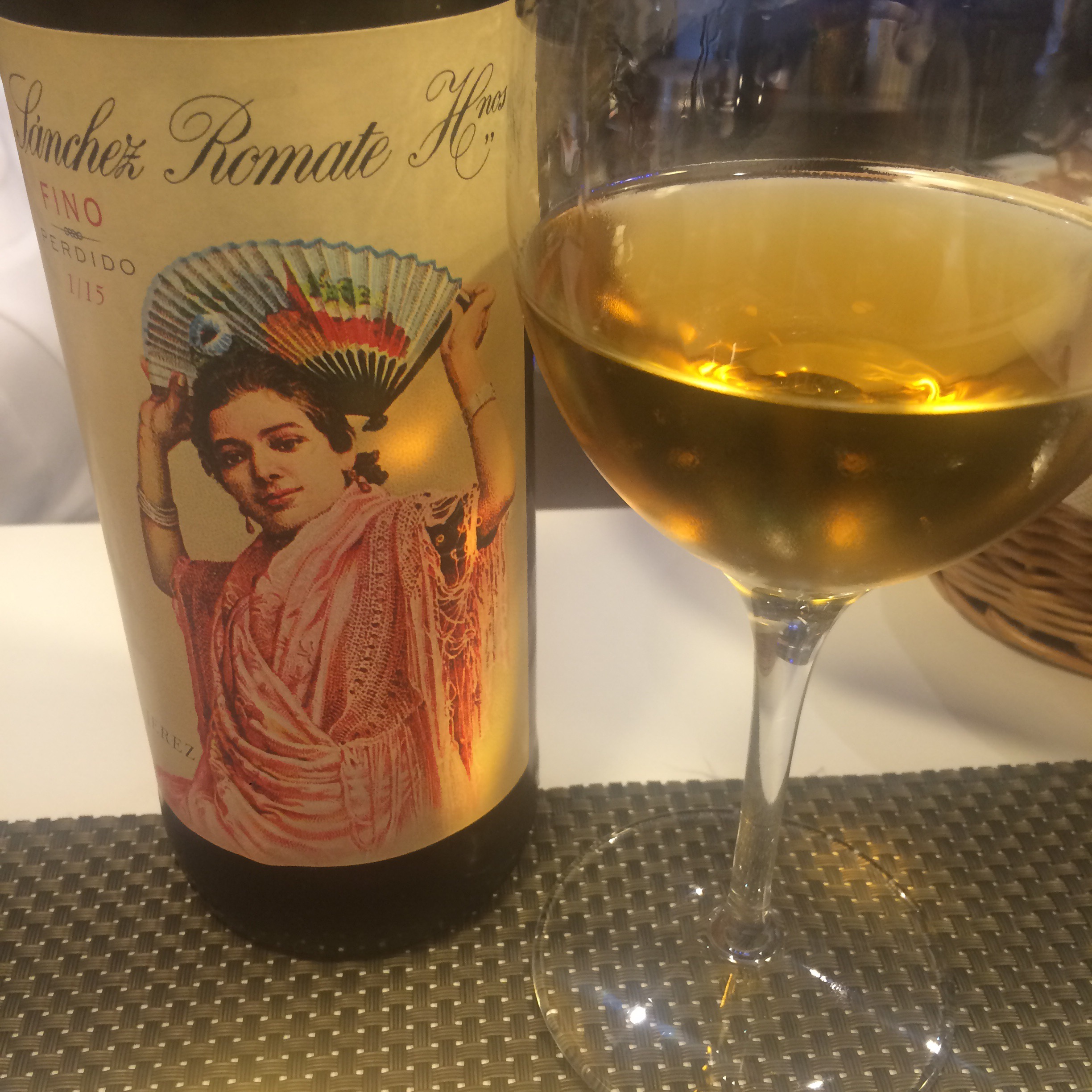
Romate Fino Perdido 1/15


An old fino in old school bottle (I am trying to work out the fan technique) this has been eight years under flor and minimally treated en route to the bottle – en rama and from the first saca of this year.

The colour is super dark – nearly a fino amontillado – but absolutely clear and a tinge of brown where there might have been green. On the nose there is yeast – dough – maybe a bit of apples and caramel. Then on the palate it is strong, salty, yeasty, with definite yeast flavours that last ages – not as much of the caramel and maybe I was imagining it.

Really tasty – just that bit more elegant than the fino en rama before.

Fino en Rama Arroyuelo, February 2015


By Primitivo Collantes in Chiclana de la Frontera, this is an unfiltered “unpercolated” en rama from a saca from botas number 36, 92, 118 and 205 – on February 4 this year. (All this came of the hand adjusted label – quite a lot of data as is the modern way.)

It is boldy coloured and has a strong nose (a combination of green grass, herbs and citrus cheese – like a Comte). It is then no surprise in the mouth – at the big, fruity, herby end of the scale. Despite the herbal promise, and maybe because of all those strident flavours, it is not all that long and doesn’t keep it shape very well – sort of fades away to a slightly bitter ending.

On the whole it is not a very delicate wine for a fino – not really my bag.

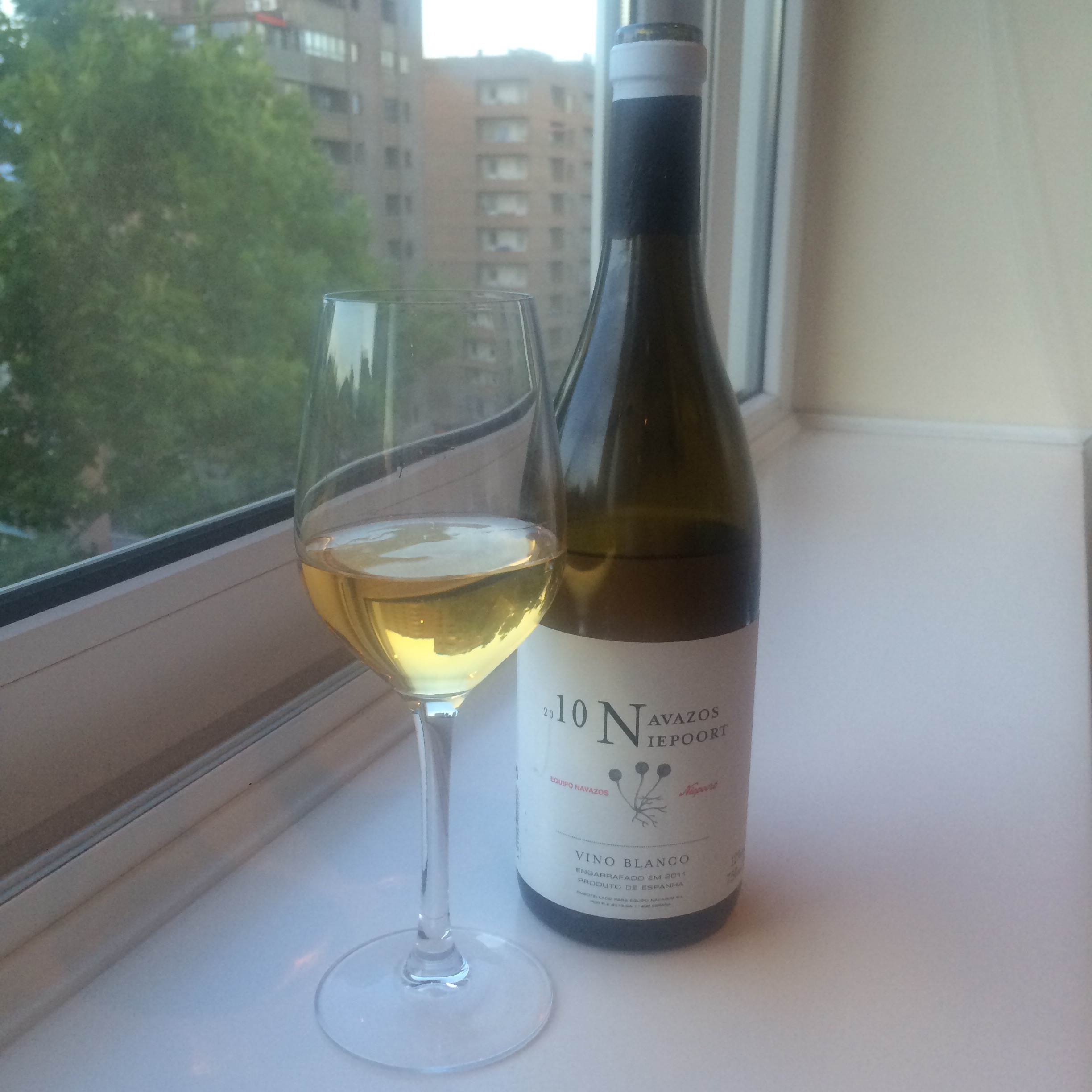
Navazos Niepoort 2010


Admirable and historically interesting as they may be, I just can’t quite enjoy these wines.

This is a 100% palomino fino, from a “historic” vineyard, fermented in a sherry butt with the yeasts from the vine itself, then six months more under flor, and absolutely no fortification.  It is supposedly what all the hip sherry bloggers would have been drinking in the 18th Century. It is also made by the thoroughly admirable, expert trio of Equipo NavazosQuim Vila and Dirk Niepoort.

It is a dark, old gold colour and has a very interesting nose: coppery tin and grapefruit. It also has grapefruit flavours on the palate, with lime cordial and maybe a hint of cream. It is all the juicy fruit flavours of a lively sherry but I must admit I don’t enjoy it much – for me these fruit flavours seem brash, and I end up hankering for the fine texture and nutty, bready flavours of a good old fino.

Having said that, I think these palominos are worth trying and give real clues to appreciating sherries when the time comes.