Quo Vadis, NPU and the traditionally aged wines of  Sanlucar and Jerez

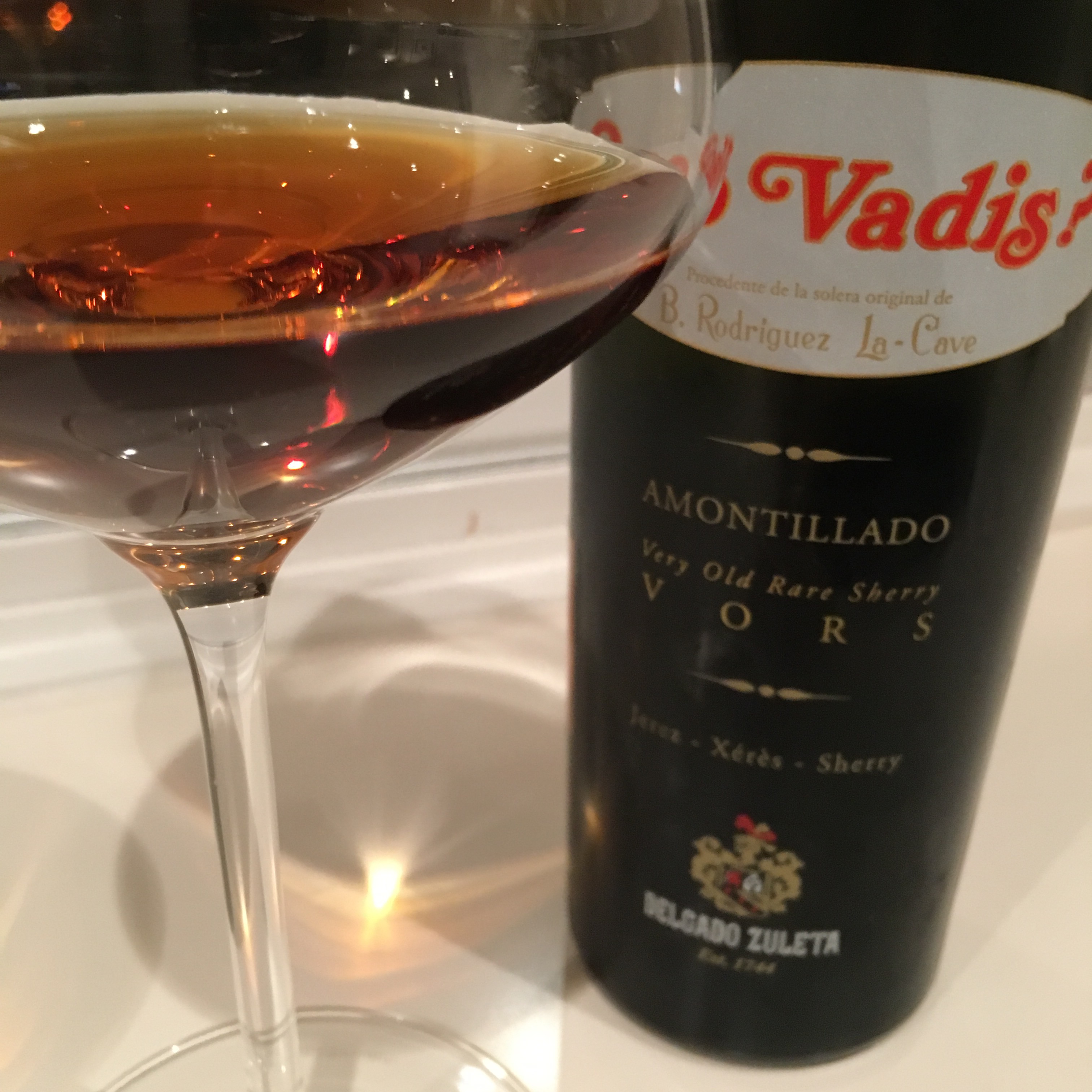
I have had this bottle open at home since before the summer and it has really grown and grown on me since I opened it about six weeks ago.  It is a very fine old wine – more than 40 years old – and almost the epitome of what a Sanlucar amontillado is all about. It has a very dry, very stark profile, with only the bare minimum of nuts and caramel, a very saline, savoury flavour and really sharp zinginess.

It is also an interesting contrast to the NPU amontillado from Jerez that I tried this week. That seemed to me to be typical of a Jerez amontillado and was very rich by comparison – really pronounced hazelnut on the nose and a sensation of sweet juiciness to it.

The differences are revealing and to a certain extent mysterious: while it is easy to see why a veil of flor would develop differently in one or the other location, it is less obvious to me why the oxidatively aged wines are so different. The fruit used in each case may even be the same (there is no obligation to use mosto from Sanlucar in Sanlucar or mosto from Jerez in Jerez) and although the amontillados may of course differ due to the biological ageing in practice these days many finos have characteristics that are very similar to manzanillas. Evidently there is a slight difference in terms of climate and it may well be that there are big differences in the techniques used in the cellar – it is something I would like to learn more about.

For the time being, all I can say is that they are different and recommend anyone seeking to learn about these wines to compare and contrast. In fact I would go further: all preferences aside to really understand the wines of the region I think you need to have a handle on both styles.

Fino (de Sanlucar) in Bar la Manzanilla (in Jerez)

Ask for a manzanilla in Jerez and you are likely to get given a cup of chamomile tea, unless, of course, you visit Bar la Manzanilla – a modest establishment bang in the centre which stands as a lone monument to the other place on the coast. In fact a few of the chaps were joking that the order de rigeur in this place would be a fino, and, what is more a “fino de Sanlucar”.

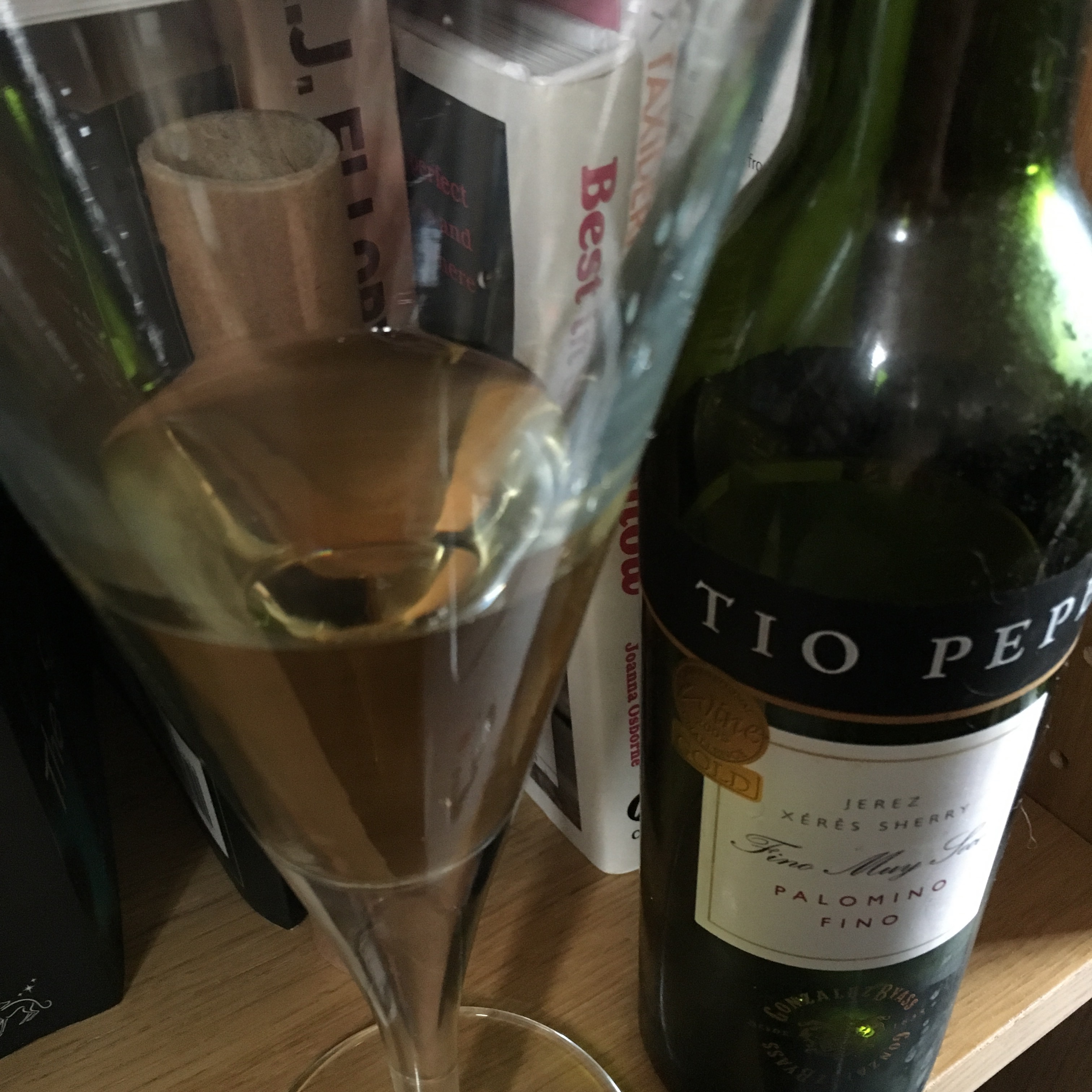
“A fino de Sanlucar? “, you ask, “Has he been on the bottle all day?”, you wonder. But no, a fella is in full possession of both faculties and indeed facts. You see while the biologically aged wines of Sanlucar are, as a rule (and possibly as a legal obligation), known as manzanillas, in origin this is due to the aromatics imprinted on them by the healthy levels of flor prevailing at the seaside. As a result, in Sanlucar itself wine from botas that don’t develop that vigorous veil of flor – that develop a veil of flor more typical of the inland cellars of Jerez, in fact – is traditionally known, legally or not,  as “Fino de Sanlucar”.

So on a flying visit to Jerez last week I made a beeline for the locus in quo and confidently asked, in a rich baritone with no hint of (Spanish) accent,  “Un fino de Sanlucar, por favor”. Unfortunately the barman, who clearly was not in the market for sherry geekery or similar. He patiently explained to me – in Spanish but slowly – that in Sanlucar they made “manzanilla”.

So I had a manzanilla, obviously.

Amontillado NPU 

Another lovely glass of wine from my lunch at Verdejo Taberna yesterday and one of the house favourites (they actually have a little bota on the bar but consumption outstrips supply). It is a Jerez Amontillado by Sanchez Romate – 100% palomino fino and an average age of  around 15 years (note that the reference to over 30 years on the web is an error – many thanks to Ruben at Sherrynotes for pointing that out. The NPU presumably refers to “Non Plus Ultra” – latin for none better, and should not be confused with a legendary and mysterious old Sanlucar amontillado allegedly labelled NPI (broadly, “not a bloody clue”).

I actually tasted it once before last year and although I wouldn’t change that original note I am a little surprised by the outcome. I definitely underrated it a little last year, although that could be due to the bottle I had – which had suffered a little leakage. Also, I am interested to see how the other wines I have tried in the meantime have changed my perception.

Anyway, as you can see it is a beautiful lively, deep amber colour and both on the nose and the palate one of the things that catches the attention is the youthfulness of the wine – it is really fresh and full of caramel and fruit flavour, with a lot of hazelnut on the nose. On the other hand, that youthful caramel and juice is beautifully balanced on the palate, which is dry with nice acidity and saline sharpness. A lovely elegant finish in particular.

A beautiful wine.

Bombilla Fino Eléctrico 

This is the standard fino (not to be confused with the en rama) from Toro Albala in Montilla Moriles – where they make some of the very finest old pedro ximenez wines I have ever tasted – and is in the shape of a lightbulb in homage to the fact that the bodega occupies a building that was once a power station. In fact, the locals refer to this wines as a “calambrazo” (which translates to electric shock but is a much more vivid word).

I had this at lunch today at Taberna Verdejo – one of my favourite watering holes here in Madrid and note that the above photo has been through an instagram filter thingy. It is not absolutely true to life, but I thought it was appropriate given the wine and packaging involved (and don’t get me started on the packaging again).

As luck would have it the Toro Albala web appears to be down as I write this but in any event this will be 100% pedro ximenez and I believe it has had around five years under flor. It is a very pale lemony gold in colour and as always with a pedro ximenez fino it has soft almonds and a bit of lemony citrus on the nose and then those same flavours on the palate, with a bit more juicy volume/slightly less bite than its palomino cousins – both reasons why I reckon these Montilla Moriles wines to be pretty accessible even if not always as elegant or defined as the palomino finos.

Almonds, citrus and juicy volume – very pleasant in fact and not at all the shock you might be expecting.


Manzanilla en rama Solear Summer 2016 


This is majestic stuff – deep, darkish gold colour, straw-filled hay bale nose and bags of citrus and herbal flavour. Nicely integrated salinity that you only really notice afterwards as it crackles off the tip of your tongue. A little bitter spinachy herb in the finish. 

It is the latest edition of a series that I love – some links here – and which I picked up this week in the Casa del Jerez (although it is only fair to mention that I nearly got a bottle three weeks ago in Der Guerrita). 

Much hyped (at least by me) and I was looking forward to this – but it is really excellent. I really needed that! 

Puerto Fino Pavón


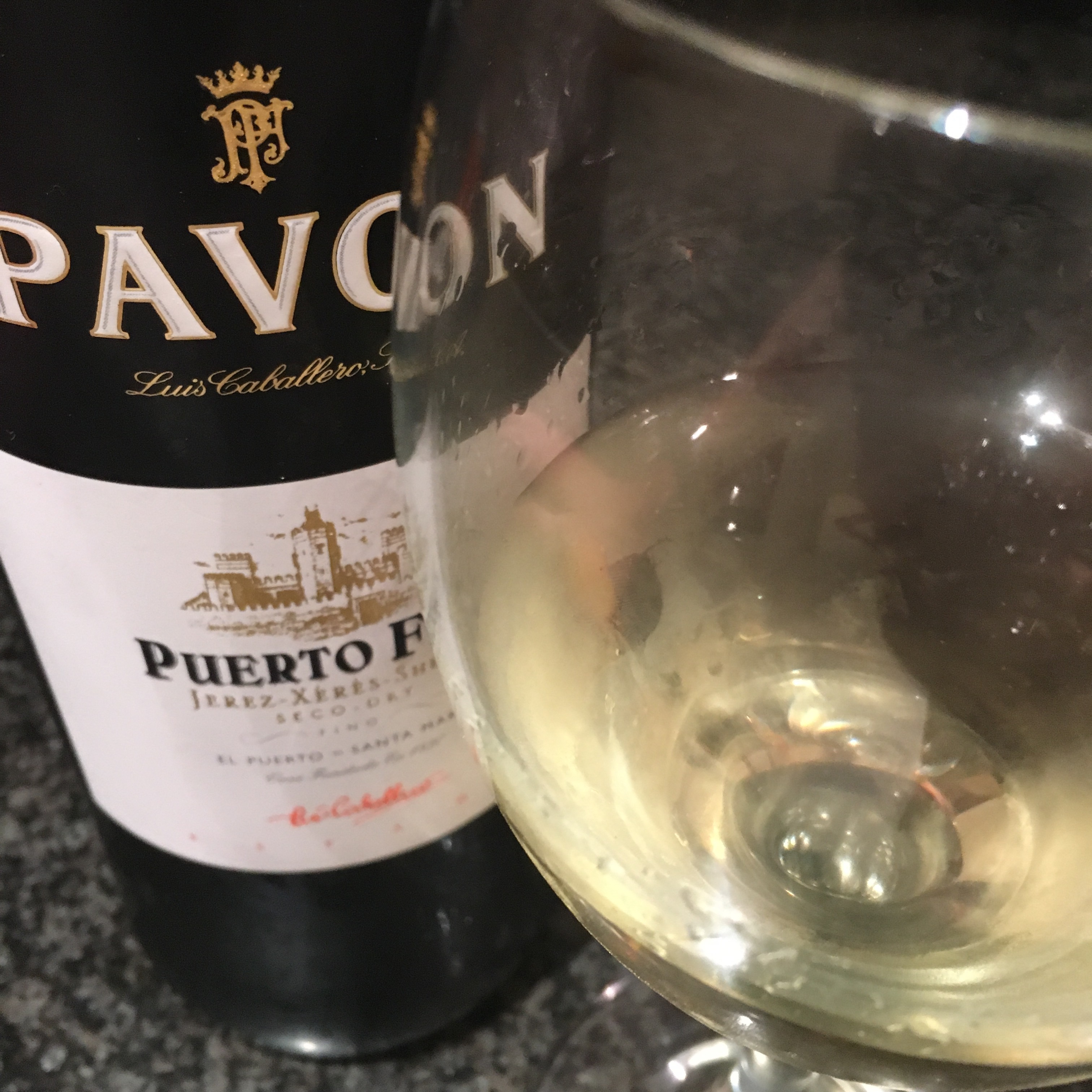
I am partial to a Fino del Puerto and this is a classic example. Pavon is the famous fino brand of Caballero and the name is plastered over the wall of a bodega in the heart of Puerto de Santa Maria (I walked past it a couple of times when I was down there in March). Although it is now under the same ownership as Lustau (also part of the Caballero group), this comes from a different solera to the stunning Lustau 3 en rama Fino del Puerto and to that of the also brilliant Fino del Puerto from the almacenistas range.

It must be said the ficha isn’t all that informative but according to this typically excellent note on Sherrynotes this has around four years under flor. As Sherrynotes points out, you don’t see it around all that often but to my surprise I found it in the supermarket this morning and, with no sherry on the horizon for the next couple of days, thought I ought to seize the chance.

It is a pale gold in colour. On the nose it is all seawater and minerals, maybe a bit of almond in there too. On the palate it is bulky and voluminous: seawater like saltiness, although not really sharp or zingy on the tongue. Mineral, pebbly flavours to it and bitter almonds, getting more bitter as it finishes. Very tasty, just quite challenging and a bit heavy: just lacking a bit of definition and lightness.

Muscular, strong stuff.


La Casa del Jerez 


Was literally driving past Jerez today and thought I would swing by this little institution of a store – La Casa del Jerez.

It is small and perfectly formed – dedicated exclusively to sherries and brandies with a small space for catas and even a row of botas to drink from (no photo – just forgot, sorry). That wine is from Bodegas Faustino Gonzalez, of Cruz Vieja fame and owned by the same family, but there certainly doesn’t seem to be any conflict of interest – just about every bodega you could name was represented on the shelves and I picked up three interesting bottles in a flying visit. 

I would strongly recommend a visit to anyone visiting Jerez itself – can often be surprisingly tricky to pick up wines there curiously – and am delighted to update my list of stores accordingly. 

Beta Brut

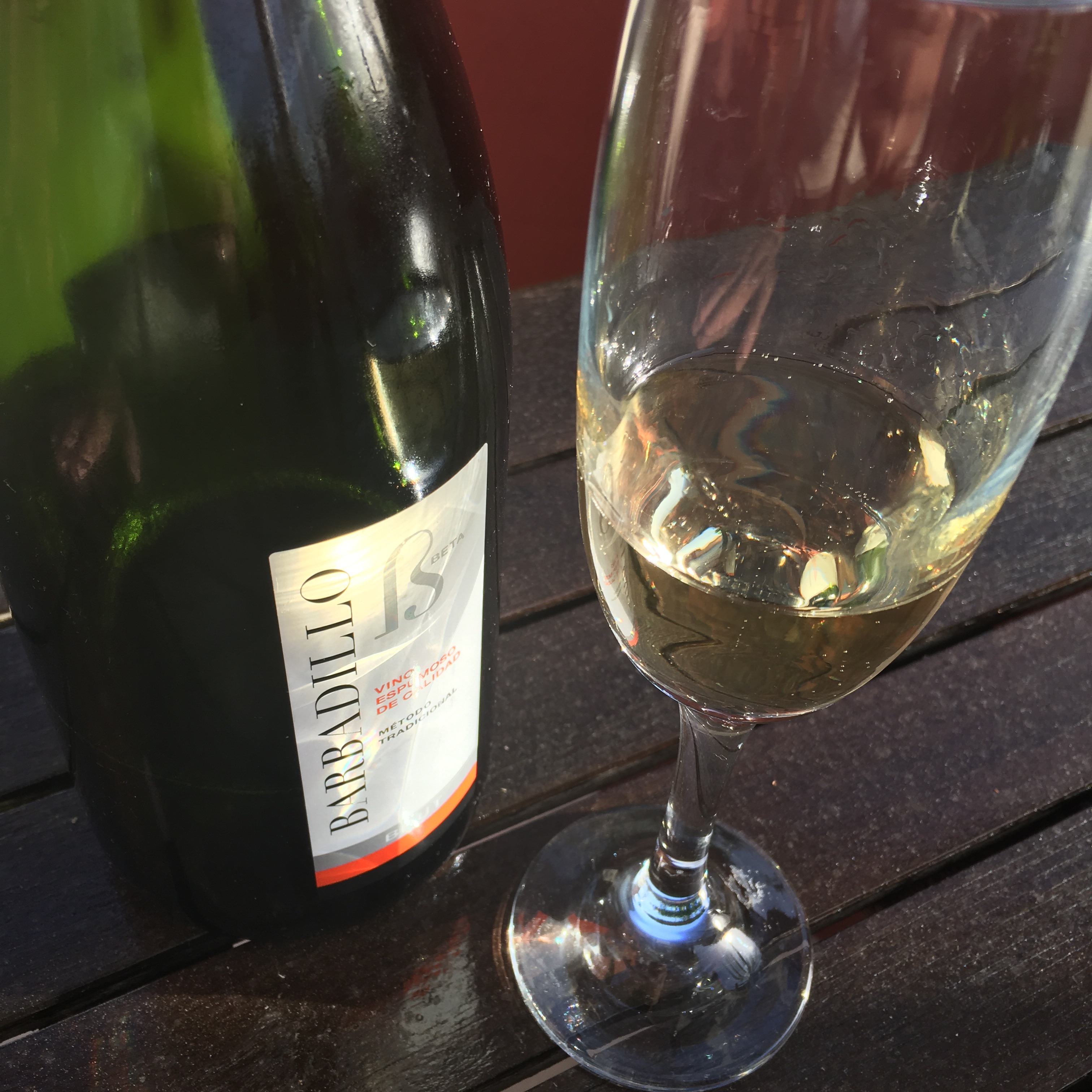
Another happy surprise from my trip to the supermarket this morning (not my usual supermarket but temporary summer location on the Malaga coast) was this Beta Brut, the traditional method sparkling wine made by Barbadillo from palomino and chardonnay. I first tried this mixed with some cantaloupe in a faux Bellini ages ago at the start of a great night in Surtopia, and have often wondered if I would see it around. Now I have, and the timing is perfect (bubbles are always welcome after all).

First the technical details. It has an absolutely cracking ficha on the web, specifying the pagos from which the fruit has come (the classic Barbadillo pagos of Gibalbin and Santa Lucia), the date of harvest, levels of acidity and sugars, even the type of pruning the vines have undergone. I love the way the ficha also explains the stemware you should use and even how to pour it – they are clearly preparing to blaze a trail through a market segment not accustomed to sparkling wine. Curiously, however, it doesn’t mention the amount of chardonnay relative to the palomino.

Nice colour to it – straw gold with just a hint of green. Not a big nose to it – typical palomino apple and herbal aromas there. On the palate it has a nice crispness – not a lot of acidity but good carbonic bite to it. Sweet creamy start and a bitter finish that makes it seem drier than it it is.

Great stuff – fresh crisp and creamy bubbles.

Oloroso Old and Plus 

I had wanted to try this ever since reading about it in this cracking elmundovino tasting back in 2009. A really top class panel gave it a glowing review and very nearly top marks. It also comes from Sanchez Romate, whose Fino Perdido is an absolute cracker.

I have a slight beef about the bottle shapes (and the closures) but there is no doubt they are attractive and cheap. What struck me at the time I read that review (from 2009 but I got to it in 2012) was that the wine only cost around €36. Even last week (in 2016) I picked this up for €34 – a classic example of the great value you can get, or of the scandalously low returns for wine making, depending on your point of view.

The wine is a deep chestnut brown in colour -and has a really atractive nose of shrivelled old black raisins and nuts – like a bag of party mix – and maybe just a bit of burnt barrel edge. Just a little bit of sweet figs maybe. 

On the palate it is relatively dry compared to that nose but still has a suggestion of sweetness – those old raisins again. Nice little bite of acidity and full of flavours – caramels fading to woodiness and barrle flavours like cigar box and tobacco, but not dusty or astringent, and a long, long finish that gets nuttier.

Fine and balanced for such an old wine and very drinkable – maybe I won’t have to worry about storing it after all.