La Bota de Amontillado 49 – Bota AR

I keep coming back to these – this is one I had open for a little while without finishing off. I wasn’t overwhelmed first time but have had such contrasting experiences with the 47 and 48 on a second attempt I thought this was worth another go. It is of course by Equipo Navazos and as many will already know it is a super old amontillado that labours under the burden of a 100 point Robert Parker score.

It is a deep reddish brown – more colour than you expect given the age and the black label etc.

The nose is powerful and challenging. At first it seems chemical and reminded me of almost a red wine. As I get into it I can pick out ginger (as in a whisky mac) cedar, resin and pine needles. It is reminiscent of really old leather bound books (trust me on this, I am a lawyer by training).

It has flavours of pine needles on the tongue too, and then other wood flavours, a really immensely woody taste to it. It is a gentler beast than I remember – less acidic and astringent – but still a beast. A lot of flavour but it is concentrated bitterness: it has the almost liquorice taste of black treacle, or caramel that has all burnt in the pan. Then again a really woody, tobacco taste fading to cigar ash, in fact.

It is unique and most likely historic, and challenging if nothing else.

La Bota de Palo Cortado 51

This is a very highly rated, very special wine by the guys at Equipo Navazos – one of a series of Palo Cortados (together with the numbers 41 and 48) from the bota “GF 30”, a bota of wine with an estimated age of somewhere between 50 to 80 years, originally made by Gaspar Florido in Sanlucar but rescued by Equipo Navazos from industrial surroundings in the outskirts in 2007 and now housed in the “Sacristy” of Bodegas Pedro Romero in central Sanlucar, very near Gaspar Florido’s original bodega.

I have not had the 41 but have had the 48 twice and now this and I would have to say I have had mixed experiences. The first time I had the 48 I had it during a game of snooker with a good mate and although we loved its nose and flavours, we both found it just too chewy and astringent – real walnut skin juice. The second time I had it, on the other hand, it was my favourite wine at a very high quality cata of top class palo cortados – the sheer range of flavours giving it a slight edge despite a strange nose.

I took this 51 to a pretty special dinner with a group of great friends who happen to be pretty vocal wine enthusiasts. If this were a champagne blog I would write you a dissertation on the absolutely sublime magnum of Henri Abelé Millesime 1990, not to mention a white 2007 Chateau Rayas and an awesome 2008 Les Chenes by Michel Lafarge, amongst others (this is how I know they are great friends). We also gave it every chance to shine – bang on temperature, decanted in advance, good stemware and a receptive audience.

It was a beautiful chestnut colour and had a fine, spicey almost sweet nose. It was also superbly structured – an acidic attack and big full shape to it – and full of toasted (almost burnt), nutty caramel, but, particularly in the company (and maybe in part due to the expectation) just a little one dimensional in flavour and not quite holding its shape for long.

Overall, to be quite honest it suffered a little in comparison to the other wines and did not quite live up to its own hype. Very nice but I really start to wonder if these wines are great for tastings (I can imagine this doing well compared to other palos) but not quite as great on the road – it reminded me of the way the even more highly rated Bota de Amontillado 49 failed to impress at a dinner back in May.

Fino Capataz: awesome with steak tartare


Loving this capataz fino – so nutty. Not a great combination with these garlicy grilled razorclams but good enough.

With the steak tartare (with chopped hazelnuts) though the combination is remarkable – the sherry spices up the palate and makes the tartare seem much livelier in every sense. It makes it spicier and brings out a lot of flavours – the tartare seems saltier, nuttier, meatier, and you really notice the savoury spring onion. On top of all that enhancement, you also get a mushroom/truffle flavour from the combination.

Interestingly you also get more alcohol from the fino – almost as if it loses its other flavours to the meat. A really superb pairing though. To try the original get down to La Chula.

Fino Tradicion revisited

  
A couple of weeks open and this is definitely a shade darker, a notch more mellow and, if anything, even more enjoyable. 

It seems a little less expressive of fruit in the nose than a couple of weeks ago and softer in feel and on the palate – less citrus on the front end but still a savoury middle and a finish that reminds me of comte cheese. 

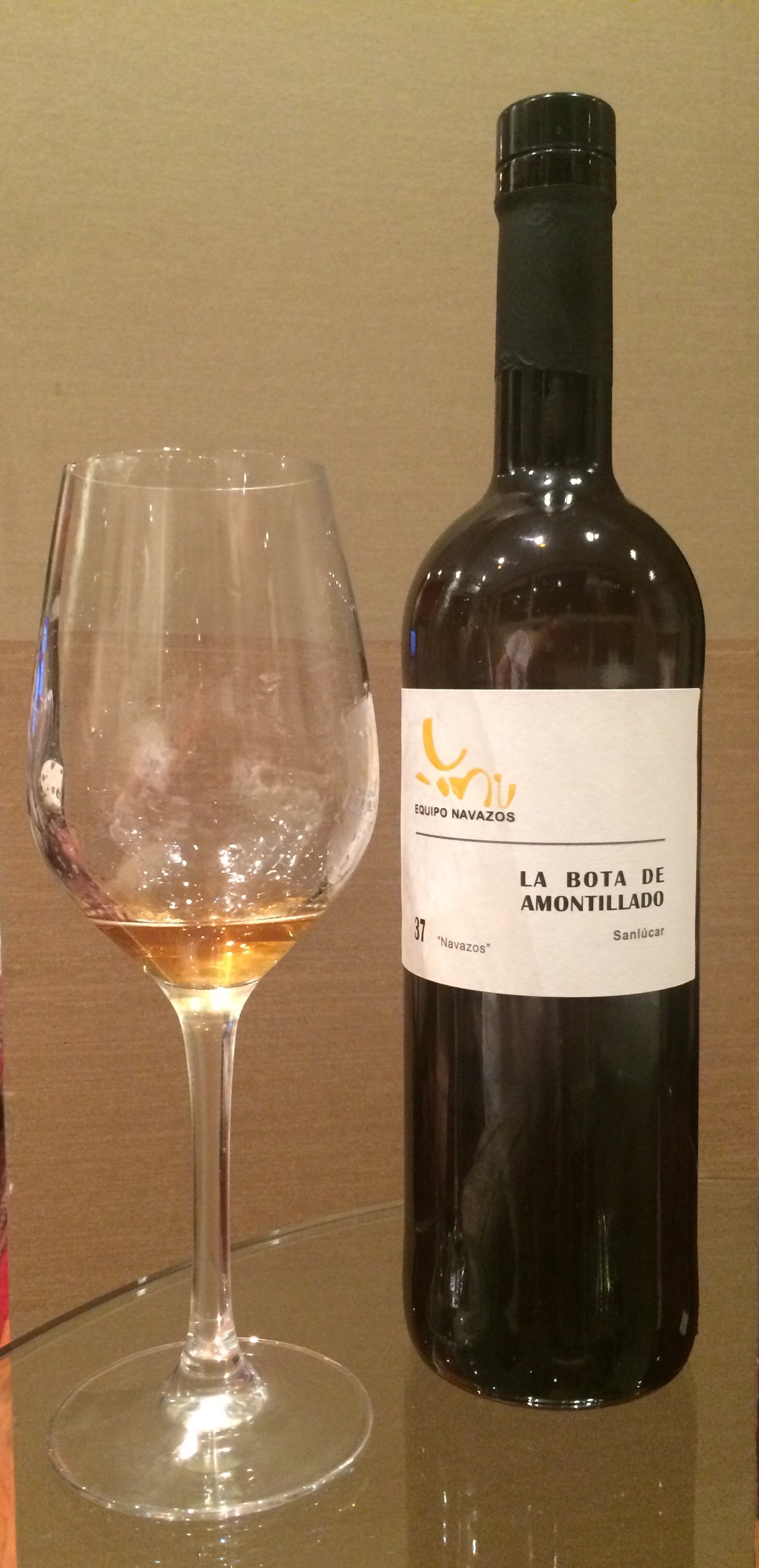
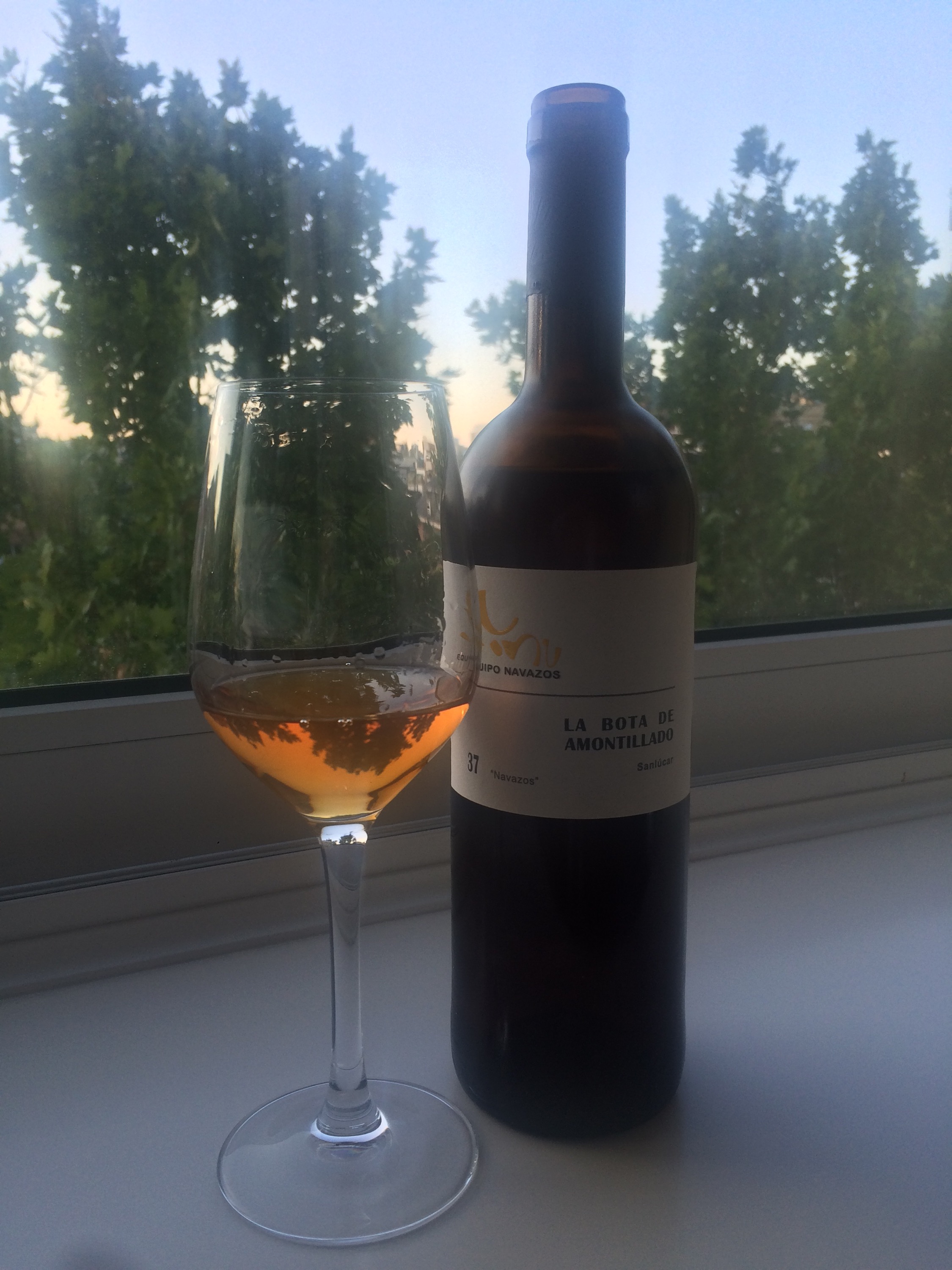
La Bota de Amontillado 37 “Navazos”

  
Late night supping. Dark gold in colour and a lot of crunchie bar on the nose. This has been open a while and it seems to have a bit more edge but not full on acidity. There is burnt, toasty caramel – and a bit of burnt apple sauce there too. From memory it seems to not be as deep, full and bready but there are lingering yeast flavours. It really seems a different wine – still top drawer though. 

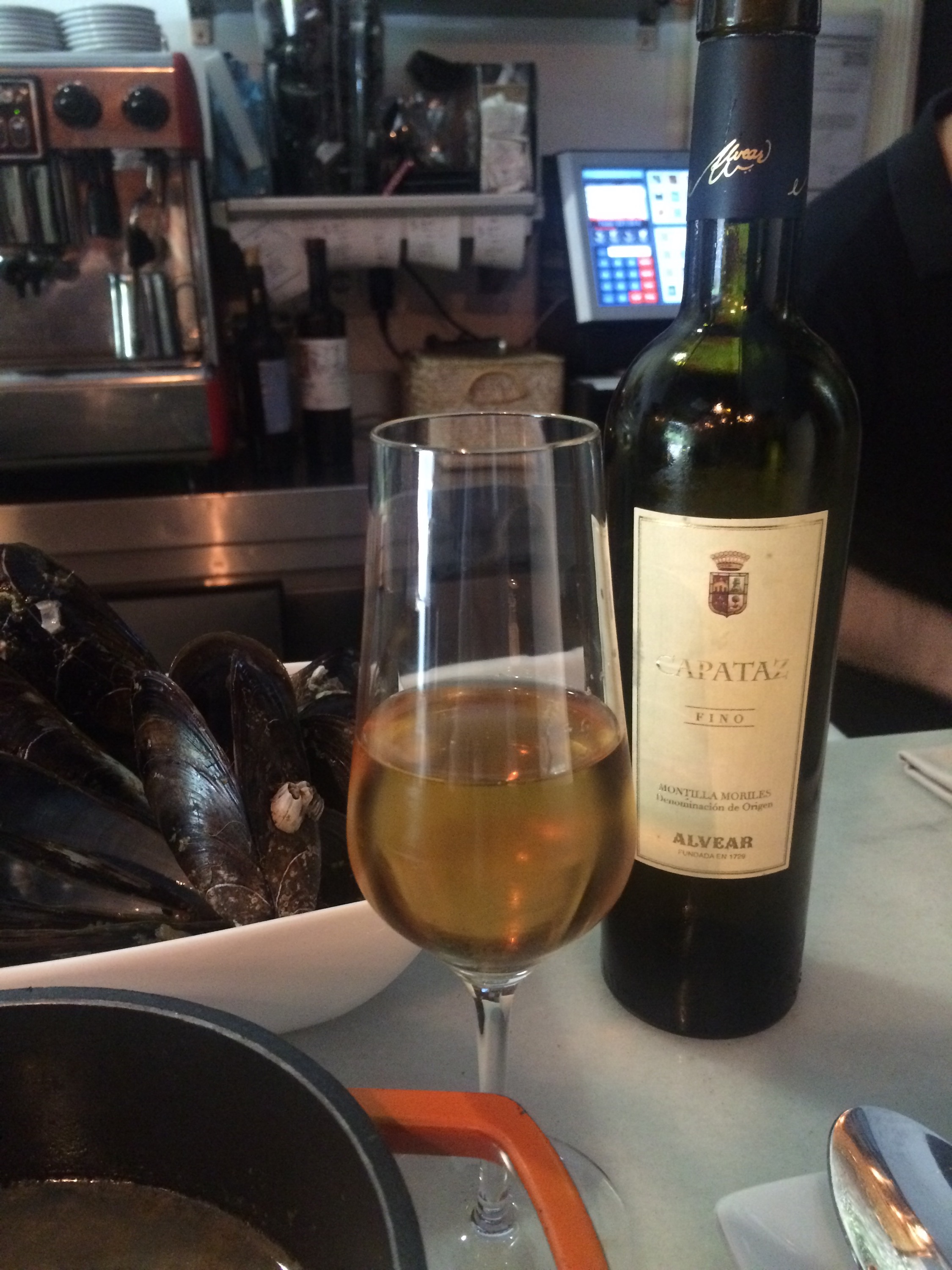
Fino Capataz

A native of Montilla Moriles and made from 100% pedro ximenez this is not strictly speaking a sherry. However, with upwards of 6 years under the proverbial flor it is a classic, dry, nutty fino (seen here with the remnants of some very fine mussels in my watering hole of choice – La Chula).

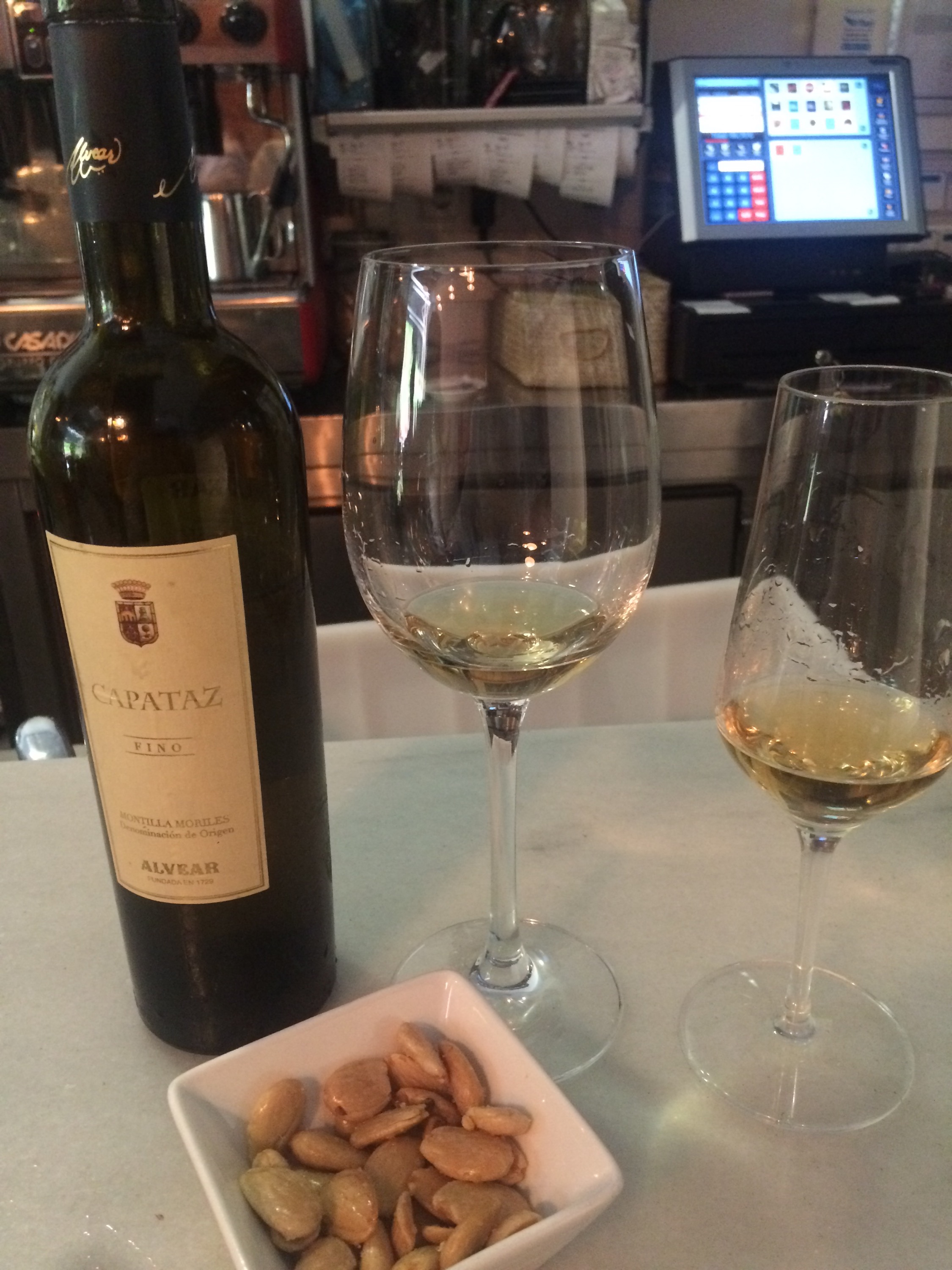
It is a dark, old gold colour and seems a bit quiet on the nose – even when switched to a more conducive vessel (and the bigger glass is better – just a better swirl, more surface for the wine to cling to I suppose).

It is surprisingly fine and salty in the mouth – not as full in texture as many px finos. In fact the first time I had it blind I thought it was a manzanilla. Flavourwise too there is very little fruit – all nuts, salt and olives. In the finish there is a lovely, fleeting sensation of creamy butter (or maybe olive oil mayonnaise or something).

I really love it – this is a top drawer drop.

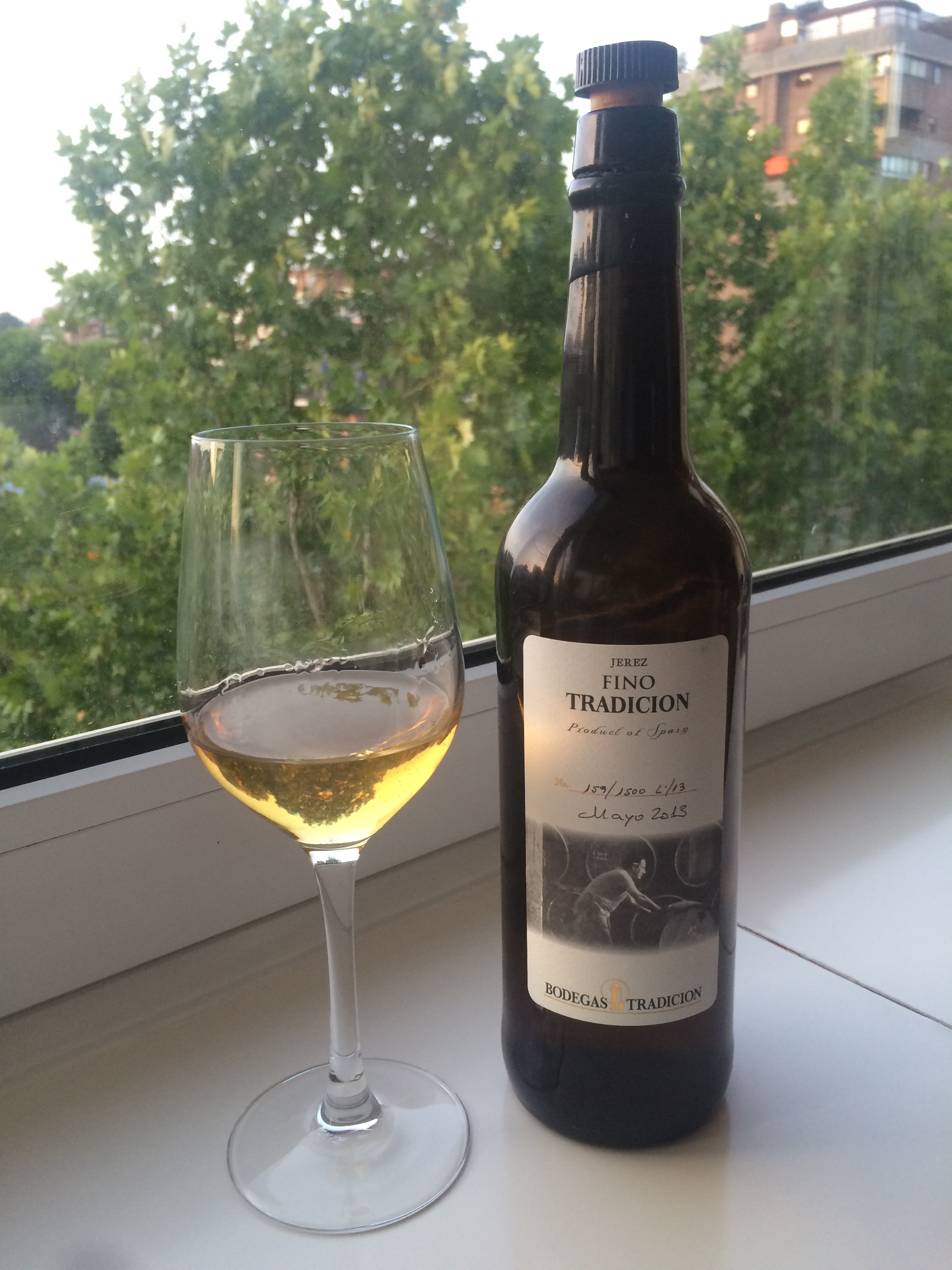
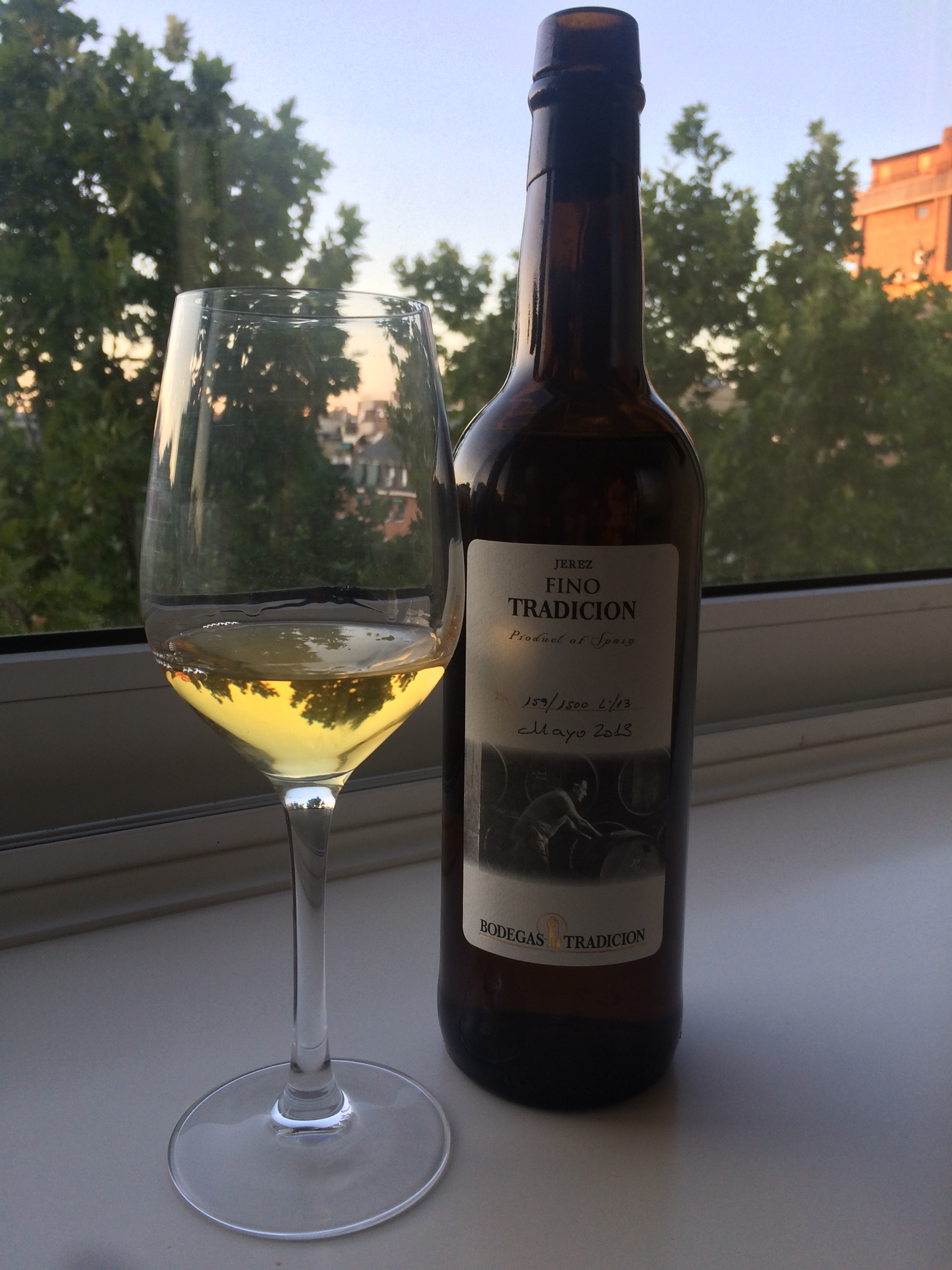
Fino Tradicion may 2013

This is a fino by Bodegas Tradicion, one of the new stars (by the name alone you can guess it is a relatively new winery) of Jerez.

Tradicion started out focussing on VORS wines – oloroso, amontillado and palo cortados. The release of this fino – of which this is the first saca – is more recent, and in keeping with their other wines it is a high spec fino with a long time under the flor, no serious filtering etc. As befits a modern producer, the saca is dated and the bottle is numbered – it is wine made with enthusiasts in mind.

It is an amber gold in colour. In the nostrils it has the haybale of the yeast but also really has the aromas of the mosto – somewhere between grapey, half fermented cider and incontinent feline. In fact it smells a little like a jura wine – a lot of grapefruity citrus and a hint of cheese rind. The Jura-like sensations continue on the tongue – a lot more fresh fruit than dried fruit, and the yeast seems raw and fresh not nutty or bready. Despite all those years under flor it seems young and full of fruit – with a little roast almond savoury.

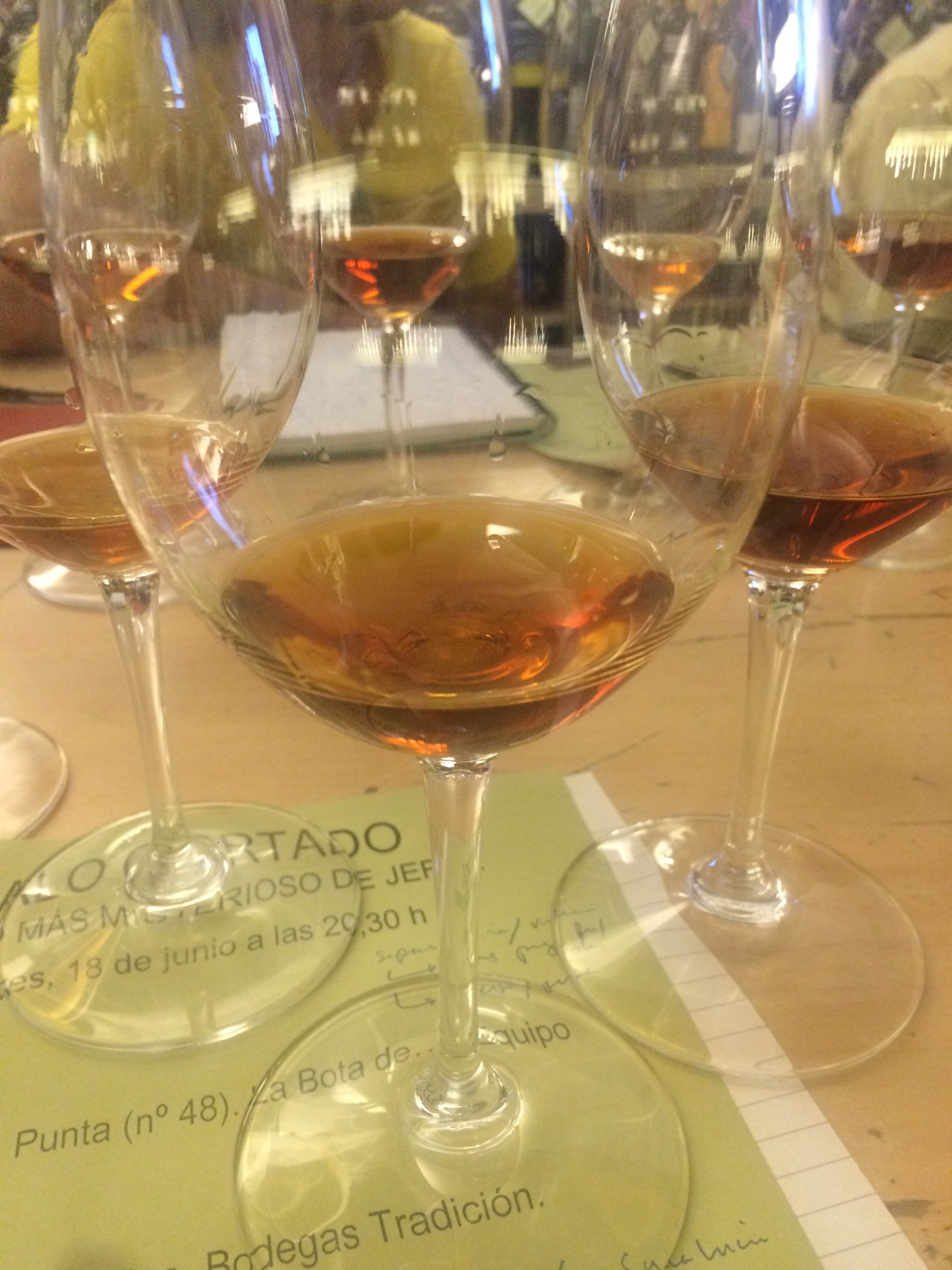
Cata de Palo Cortados en Enoteca Barolo

A good friend made it possible for me to attend this and it was a cracking event.

The title – “Palo Cortado – the most mysterious sherry wine” – suggested a bit of blarney but in the end nothing to worry about – maybe a bit of blarney but overall a good, punchy and knowledgeable introduction with some interesting nuggets and some key background facts on each wine – a well prepared and well conducted tasting.

We started with Obispo Gascon – by Barbadillo in Sanlucar (on the left below). The colour is an orange amber/chestnut – absolutely crystal clear. It wasn’t super expressive in the nose – salty with a bit of sweet pastry. On tasting the salinity is nicely integrated and it is maybe not creamy but a little oily, with flavours of caramel to burnt caramel – and very long. Nice start. (16/20)
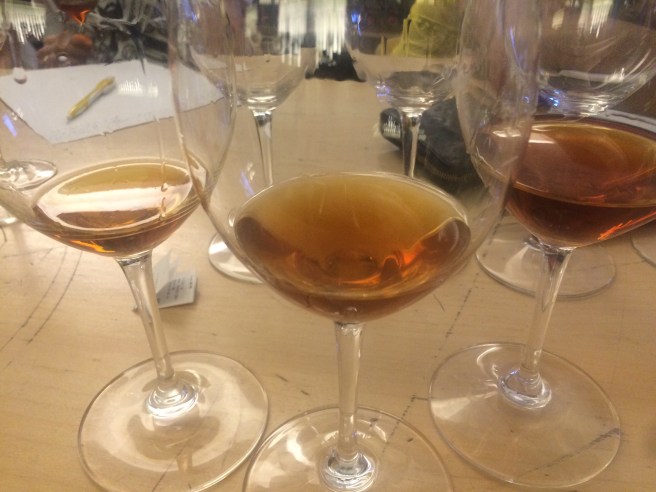
Next up was the Tradicion – seen here between the Obispo and the Gutierrez Colosia Viejisimo. Similar in shade  to the Obispo Gascon although not as crystal clear – a suggestion of cloud. More nutty on the nose – more almond pastry/bakewell tart rather than the honey pastry of the Obispo and not the same noticeable salinity (this lad is from Jerez). Noticeable acidity in the mouth and it is full of darker caramel flavours – maybe a little bitter/burnt in the aftertaste. Always notice the structure of this wine and it has a nice, savoury, nuttiness to it. (17/20)

The Gutierrez Colosia is called “very old” and it looks it. It was at least a shade darker than the other two – but crystal clear – and again a little bit of sea air on the nose (this fella is from Puerto de Santa Maria). Also a bit of yeast on the nose – a more vegetable sensation. Big and rich on the tongue and it has that old fruity christmas cake taste to it, caramel flavours, baked orange, a suggestion of nuts. Really full in body and maybe a touch more width/breadth than the other two. Lovely wine. (18/20)

Next up – Roberto Amillo Espiritus de Jerez. In colour it is a little browner and my glass – in fact the bottle – was a little cloudy. A bit less expressive on tje nose. On the tongue it not as rich and on the palate it is acidic, spicey and sharp with flavours of walnut tending to walnut skin. For me not as rich and structured as the Tradicion or the Viejisimo – a racy, spicey glass though. (15/20)

The fifth wine (middle of this picture) is the Equipo Navazos 48. Deep bright red in colour – light ruby and a really distinctive nose – a bit of the diesel, varnishy garage forecourt smell, with bitter orange and minerals and even lactic notes (cheese rinds). I can understand it not being everyone’s cup of tea on the nose but in the mouth it is fabulously rich, with a whole new range of flavours. You get dark chocolate and tobacco, the jammy marmalade, and of course the nutty toffee. I found it a really expressive, rich wine and a little extra dimension on the palate compared to the others. (18/20)

Finally, on to the Cardenal by Valdespino, an old school palo cortado made from wines that stepped off the “true path” of the Fino Inocente (and therefore all from the Macharnudo Alto pago). In colour it is another dark one – chestnut brown. Then a salty, iodine in the nose, and burnt caramel for me (but others reckon yeast). In the mouth it is enormous – treacly, maybe even too concentrated. The range of flavours is not quite as wide as the 48 – absolutely massive and relatively balanced even if possibly not as multifaceted as the Navazos wine. A magnificent wine no doubt. (18/20)

Overall favourite: the Equipo Navazos 48 – just for the range of aromas, flavours and notes – but this was a superb range of palo cortados and an excellent event.

La Bota de Amontillado 37


An old favourite this and a beauty. 

A lovely colour to it – a reddish honey. There is honey on the nose too – slightly salty honey. The salinity is noticeable on the palate, too – it isn’t as sweet as honey, with notes of burnt caramel and a salty, bready intensity. A serious wine. 

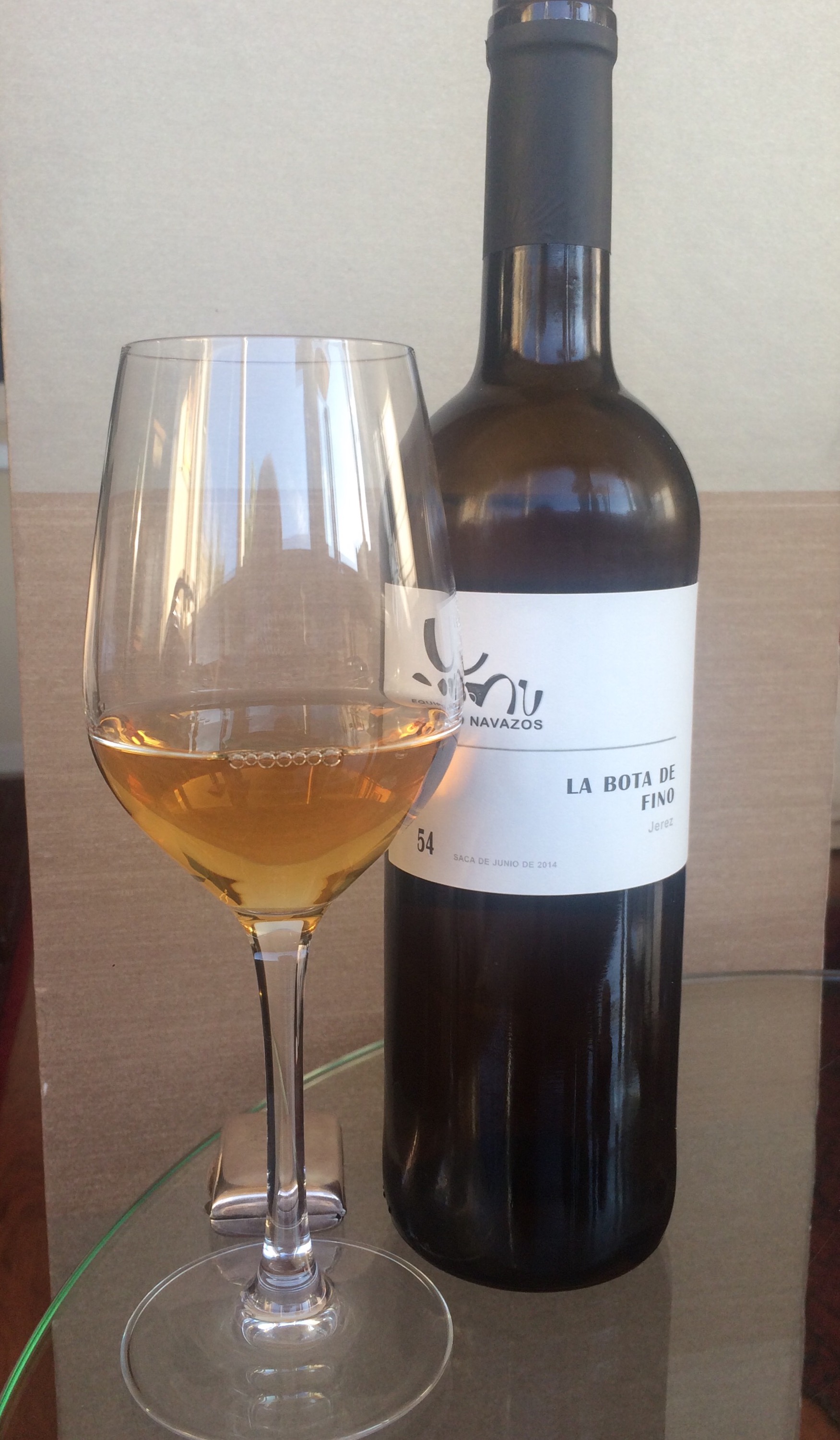
La Bota de Fino 54

Just look at this remarkable fino from Equipo Navazos. The colour is a real old bronze and you just know it is going to be full of body and flavour. I sometimes think these Equipo Navazos bottlings can be a bit extreme – particularly a recent series of palo cortados – but this is right up my street.

As the colour suggests there is just a hint of oxidization in the nose – not quite caramel but a sweet edge to surprisingly muted aromas of yeast/hay-bales. It isn’t muted on the palate though – the yeasty, vegetable power of it is a joy. Integrated salinity, hints of fruit – and the merest suggestion of oxidization. It really is a great combination of dry herbs on the front end and juicy yeasty fruit on the back, with a lovely long finish too.

I quite like it!