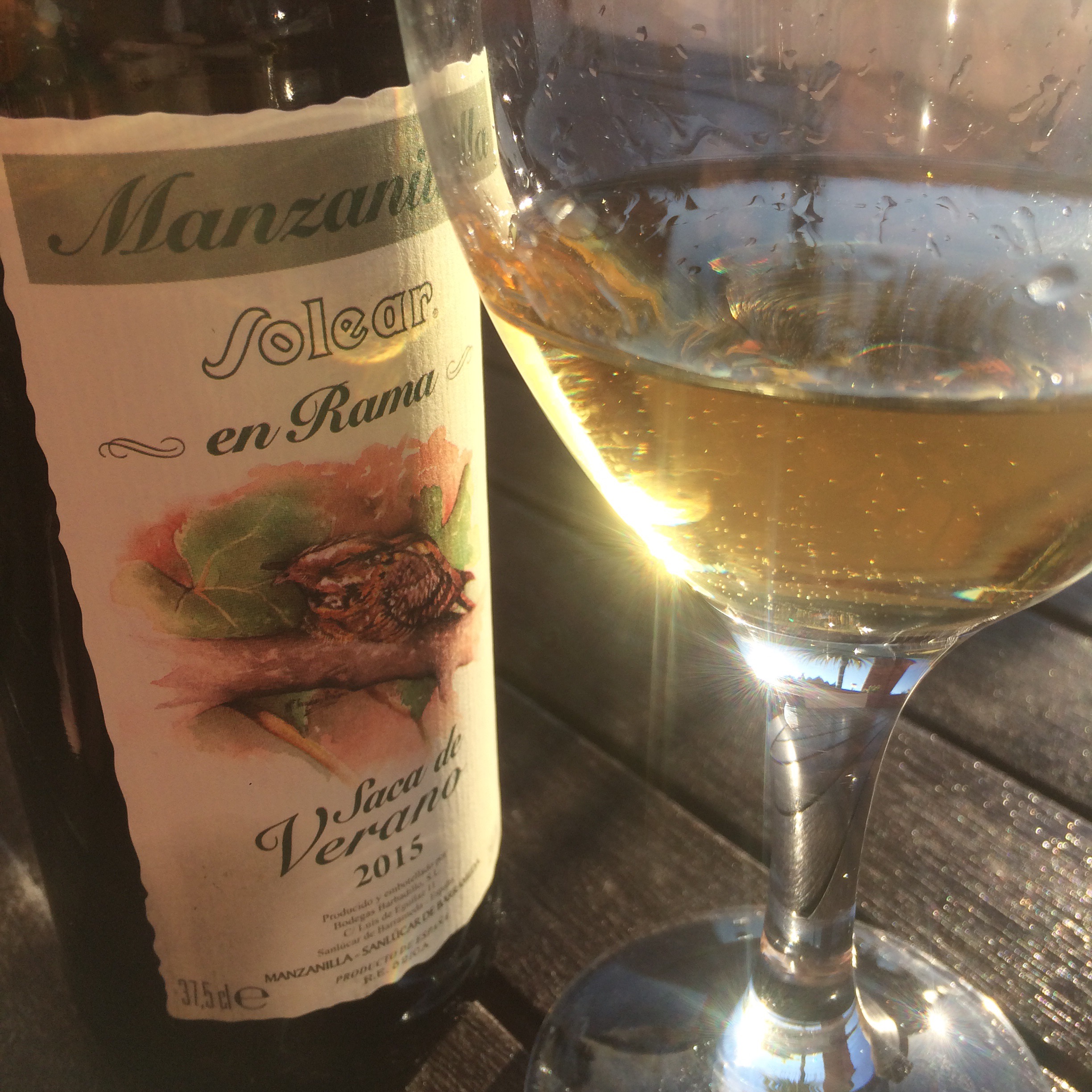
This is a little gem of a wine – extremely herbal/floral on the nose, slightly oily in texture, an intense saltyness and a big herbal flavour. Maybe a little bitter in the finish but overall really good.
16/20
Marques de Poley Amontillado Viejisimo Solera 1922

This is called “very old amontillado solera 1922” from which I deduce it is a very old amontillado – probably from a solera founded in 1922. It is by Toro Albala, one of the big houses in Montilla Moriles and is 100% pedro ximenez.
One thing that caught my attention is on the back label – where the words “90 Parker points” sit proudly alongside the alcohol content. I found it odd for three reasons:
- First, I have seen references to Parker points on bottles before of course but usually as a sticker (since most wines are, logically, bottled before they are rated).
- Second, it was odd to see it with the objective information on sulfites, alcohol, etc, rather than in the text box of subjective descriptions.
- Third, it was odd to see a reference to 90 points – not a very high score by modern standards. Again, though, I quickly realized that Toro Albala have a 100 point wine in their cellars, a fact that (understandably) influences the importance they attach to such things.
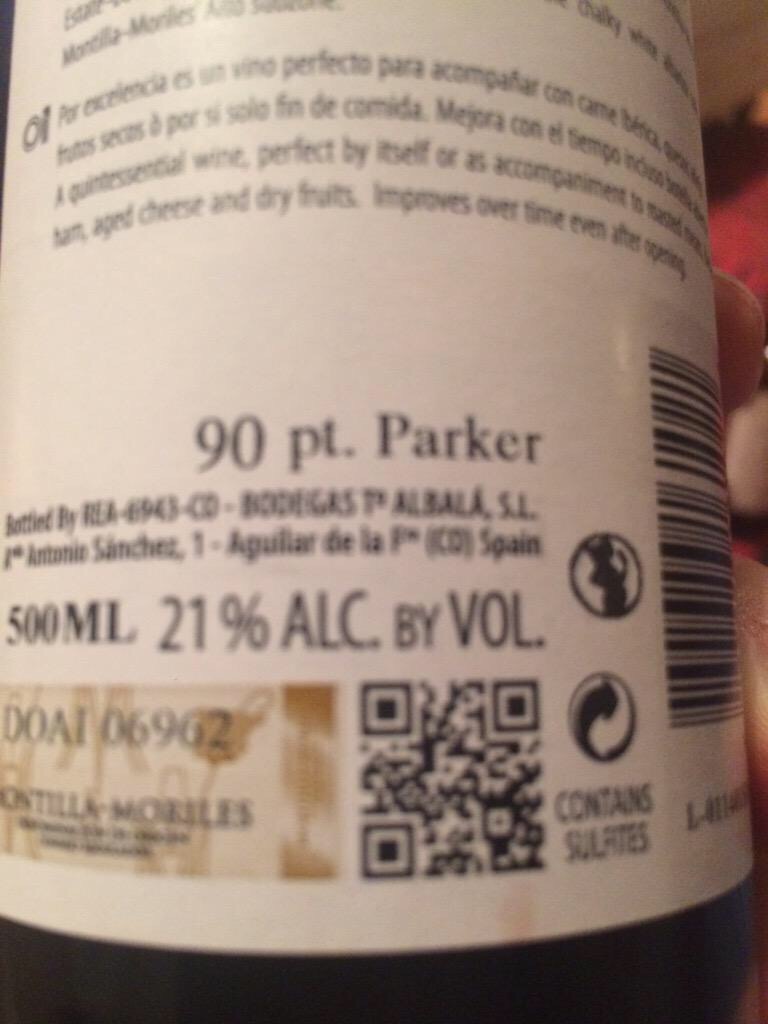
In any event, I found it odd (and questionable aesthetically speaking).
The wine itself is a characteristic chestnut colour (I must get a taster of chestnut colour options so that I can distinguish) and, as I think you can see in the picture, sticks to the side of the glass a little. On the nose it is sugary sweet, maybe honey with quite a lot of alcohol.
In the mouth you immediately notice the syrup-like texture from the high glycerol content. It has a nice zing but is not quite dry – not clear to me if it has been encabezado or just not quite dried out (given the name I assume the former). Overall the flavours are of honey and oaky red wine, with maybe a bit of raisin underneath. Nice smoky finish, but a bit sticky.
Overall I like it ok although, once again, I feel that you get more nuances from a fully dry wine (and I reckon Luis got the score bang on, by the way).
La Bota de Pedro Ximenez 36
I find sweet sherries a lot harder to appreciate than dry – although I can see that the sugar and high glycerol levels may make these wines a good vessel for expressive wines, for me the sugar seems to mask many of the qualities on offer, and makes supping heavy going in general. On the other hand, it is fair to say that one of the few genuinely perfect wines I have tasted was a moscatel: Toneles. (In fact maybe the real problem is that my expectations have been raised unrealistically high by that awesome little wine.)
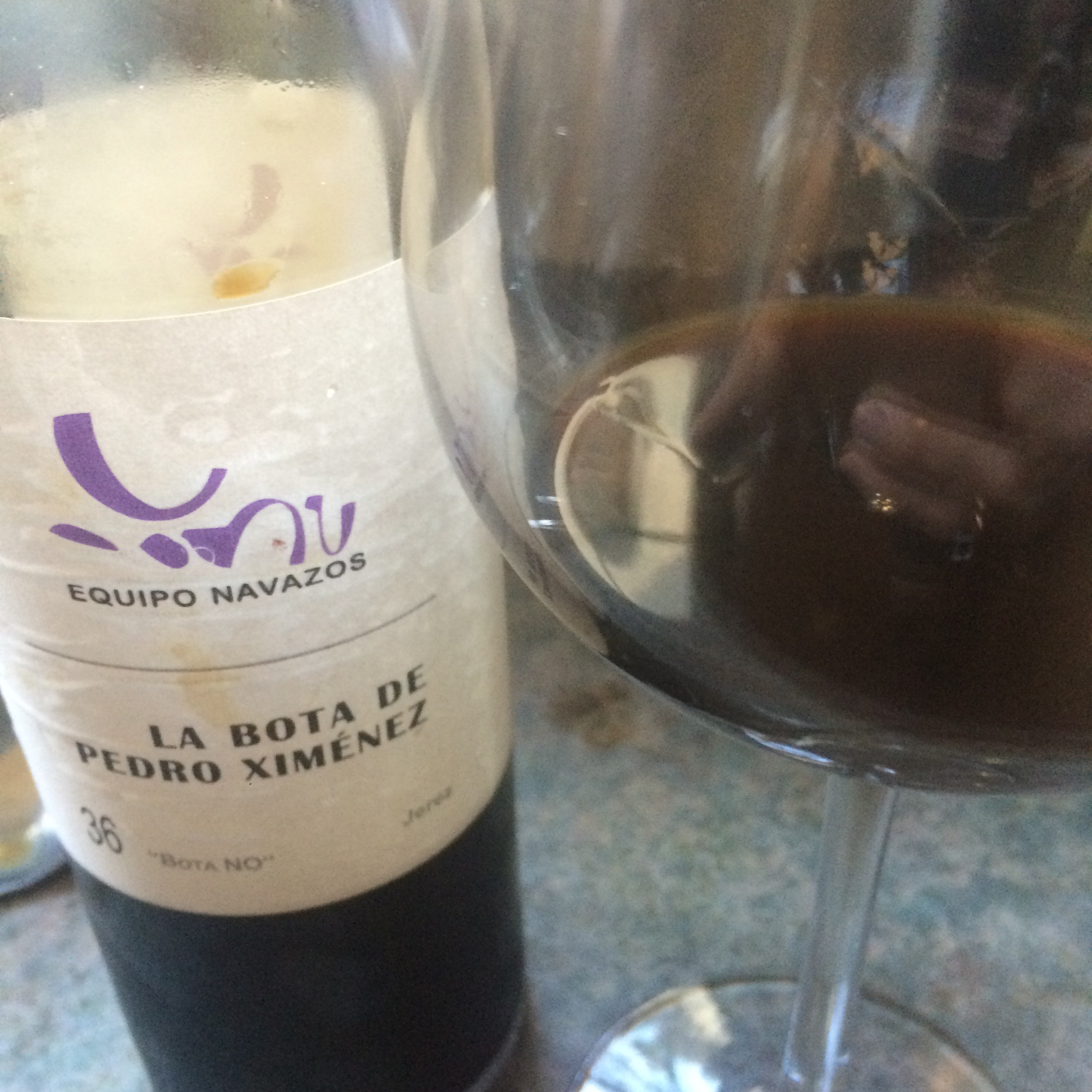
This effort by Equipo Navazos was selected from some Fernando de Castilla wines of an average age of over 30 years. It is one I had had in Madrid for a while, but brought home to taste in England since there seem to be more takers for sweet wine over here.
It is deeply black and treacly in appearance, dirtying up the glass and leaving a brownish residue. On the nose it is all sugar and raisins.
On the palate there is more candied fruit, baked and fresh raisins, a slightly menthol edge and a nice fresh finish. However I don’t find it that expressive – not a lot of the nuts, figs and spices that I was expecting.
A juicy pedro ximenez with a fresh finish – but not the big puddingy wine I was hoping for.
Blanca Reyes manzanilla or fino?
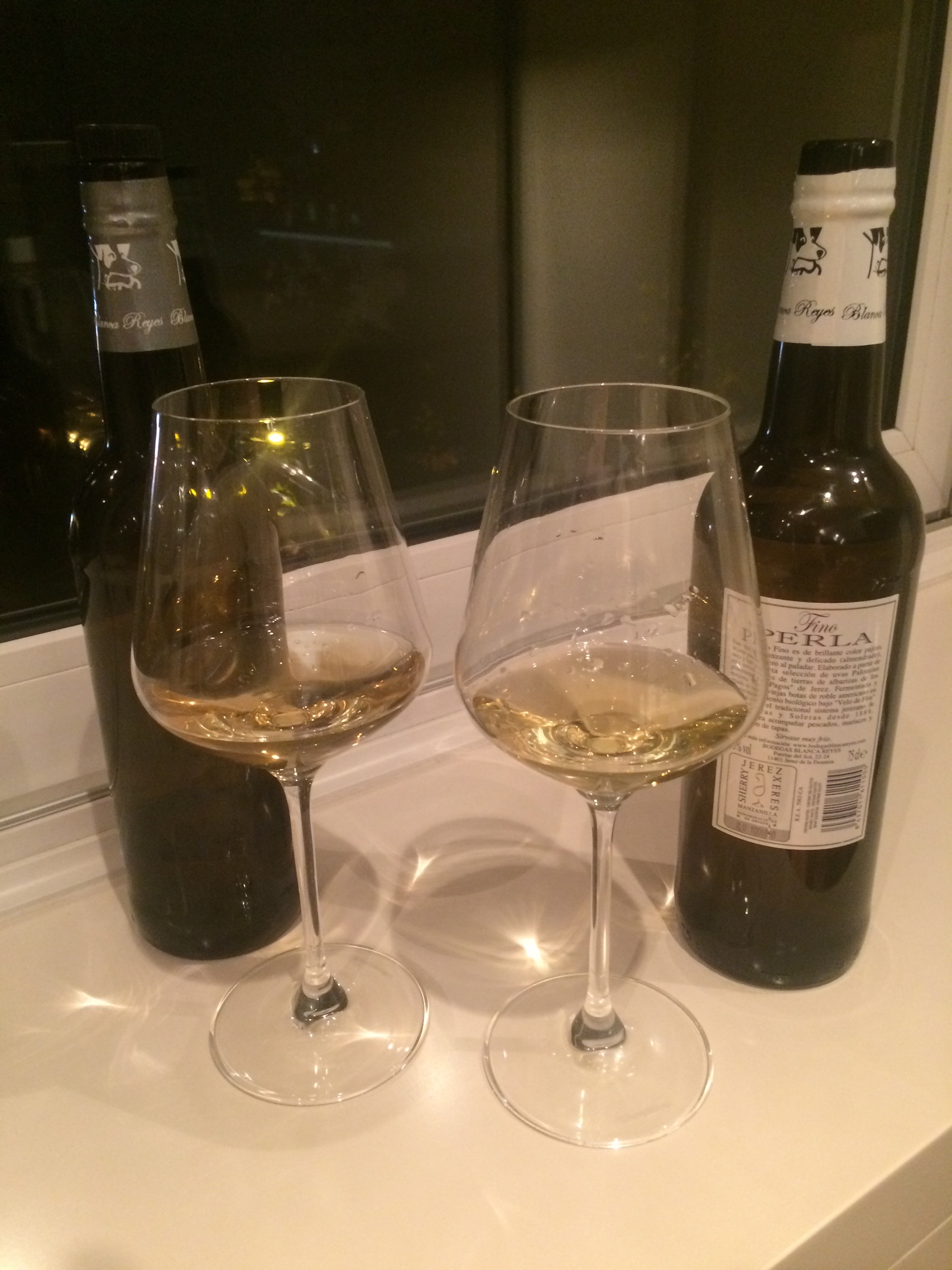
It had to be done – was about to polish off the manzanilla when I realized I had a bottle of the fino lurking.
Amazing difference in aroma – the fino is all yeast, hay bales, and wood shavings, and by comparison the manzanilla smells as sweet as pineapple juice. The colours too are a good two shades apart – although the manzanilla has been open a couple pf weeks.
On the palate the differences are not as pronounced – the manzanilla is a touch softer and less buttery, maybe not quite as dry.
Really interesting experiment – hard to choose between these two but I think I would go fino – seems a bit more robust.
Blanca Reyes fino Perla

Yum, yum, and indeed yum. This is lovely – big, yeasty aroma, big yeasty taste. Almost hoppy like a fancy lager- in fact maybe a little too bitter – and buttery in the mouth. Really tasty.
Blanca Reyes manzanilla en rama – again
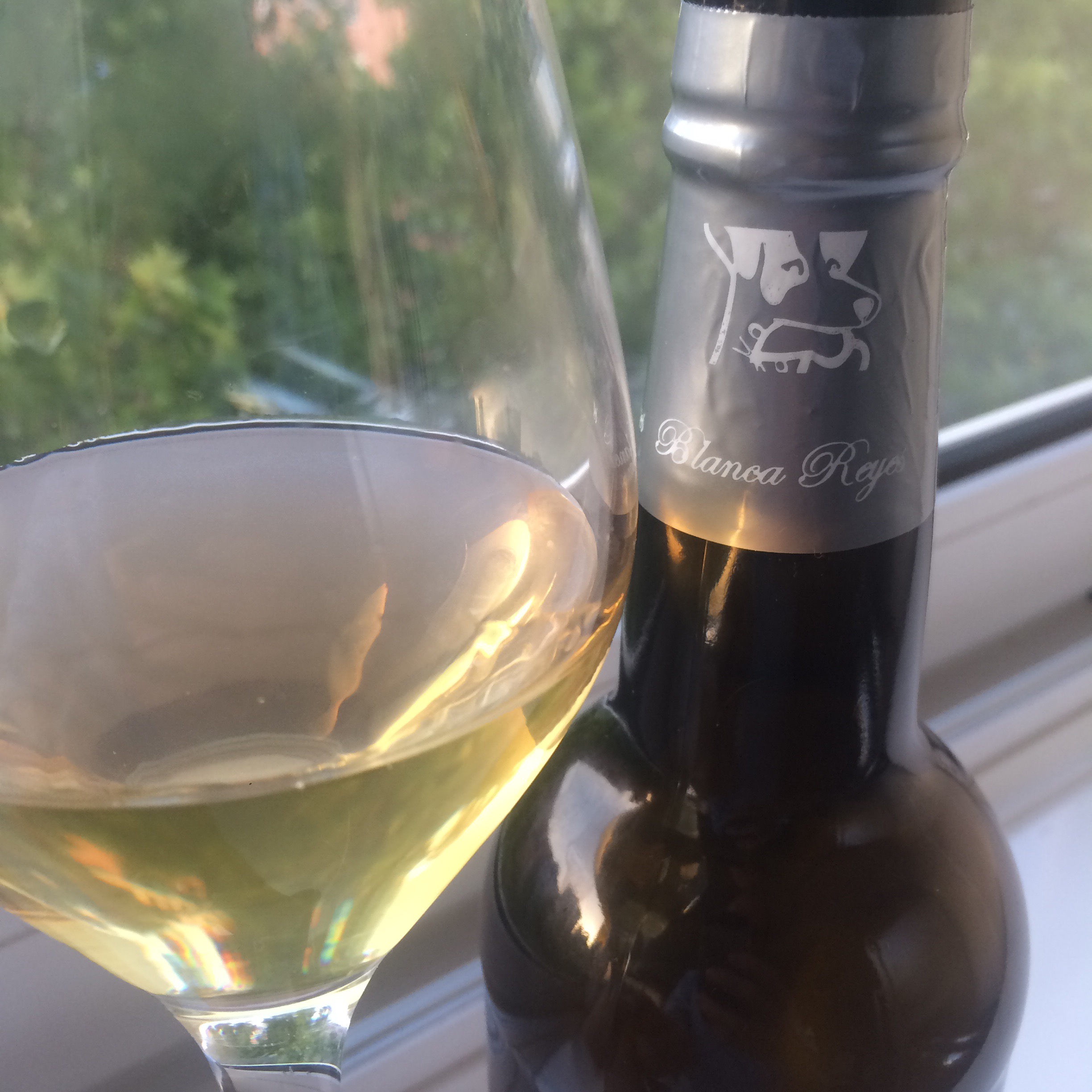
Manzanilla Monday in full effect here with this bottle of juicy, full flavoured manzanilla en rama. This has been open a couple of weeks and if I were to criticize it has maybe gone slightly sour in the nose – but it is still big and aromatic, with juicy, yeasty flavours and a long finish.
Really good – would probably advise drinking this fresh open, but it is big enough to handle being open a while.
Blanca Reyes Manzanilla en rama
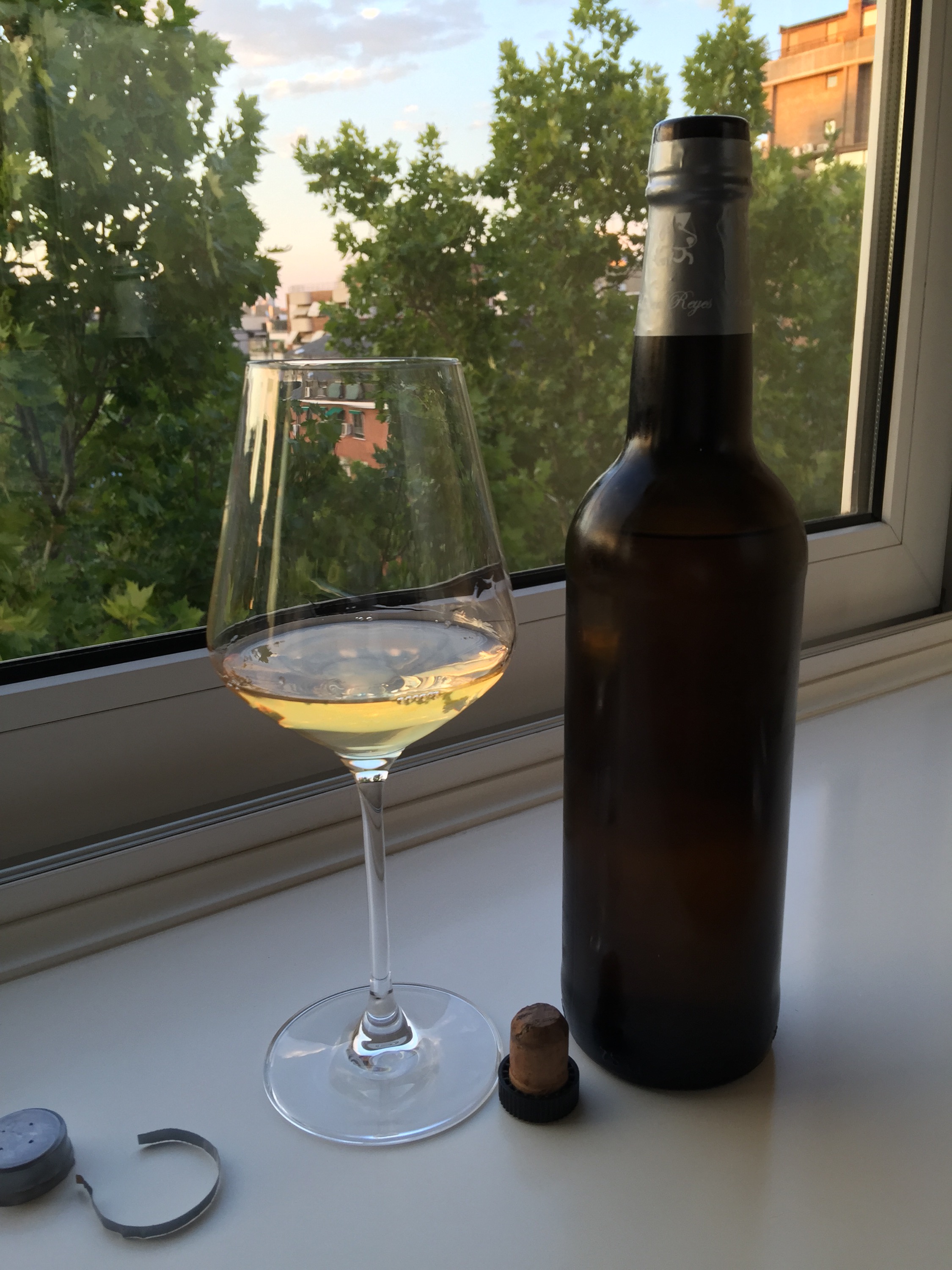
The polar opposite of packaging trends, this enigmatic creation has no visible label at all.
It is not one of the more aromatic manzanillas, but has a sweet aroma that is a bit more fruity than haybales – sweet dried herbs or maybe even dried apple flakes. There is also definitely some of the piercing cider/”catpiss” smell of the mosto coming through (I mean that in a good way).
A rich mouthfeel like a very light oil, then after the sweetish nose it comes across as tart – like cooking apples, then salty and savoury/herby in the mouth. Nicely balanced – tasty but fine and light, and long but fresh. I really like this – very good.
Romate Fino Perdido 1/15
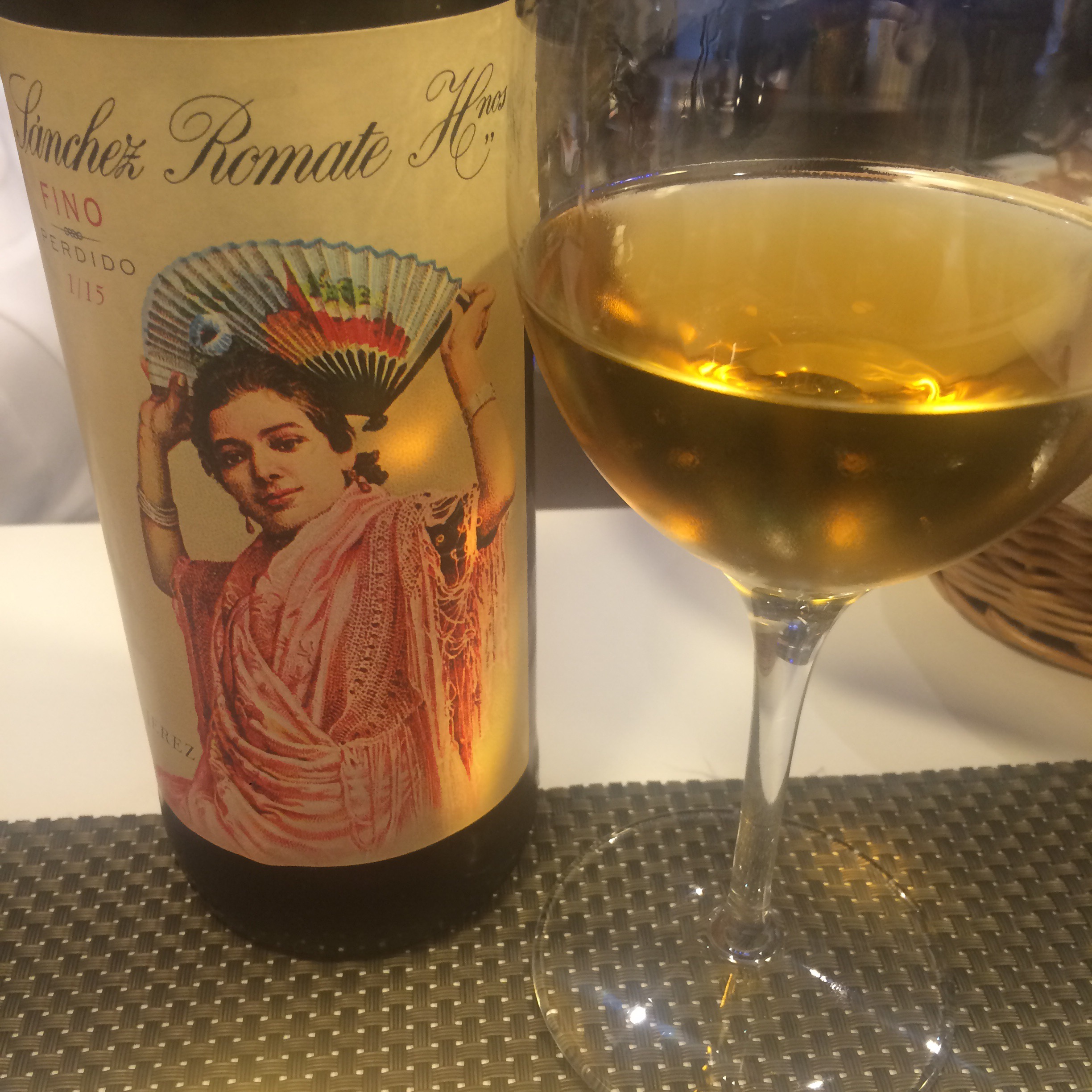
An old fino in old school bottle (I am trying to work out the fan technique) this has been eight years under flor and minimally treated en route to the bottle – en rama and from the first saca of this year.
The colour is super dark – nearly a fino amontillado – but absolutely clear and a tinge of brown where there might have been green. On the nose there is yeast – dough – maybe a bit of apples and caramel. Then on the palate it is strong, salty, yeasty, with definite yeast flavours that last ages – not as much of the caramel and maybe I was imagining it.
Really tasty – just that bit more elegant than the fino en rama before.
Taberna Palo Cortado
I have finally made it to Palo Cortado, Madrid’s latest sherry destination.
It is an old school tavern in one of the quiet streets a stone’s throw from the palace and opera-house. The menu is full of Andalucian classics and standards – we had an excellent salad of partridge of escabeche in particular.
But the main attraction for sherry fans is the wine list – I didn’t count them (or take a picture, I really am a shocking blogger) but I reckon there must have been 60-odd sherries available, examples of every area and style and excellent prices (even for the blockbusters). Even better is the person behind that wine list, Paqui, one of the Sherry Women and a much loved member of the Madrid wine scene. Because when you have a list as long as this one you really need some expert advice.
In my case, I opted to go a vertical of manzanillas that I don’t know well from Bodegas Argueso.
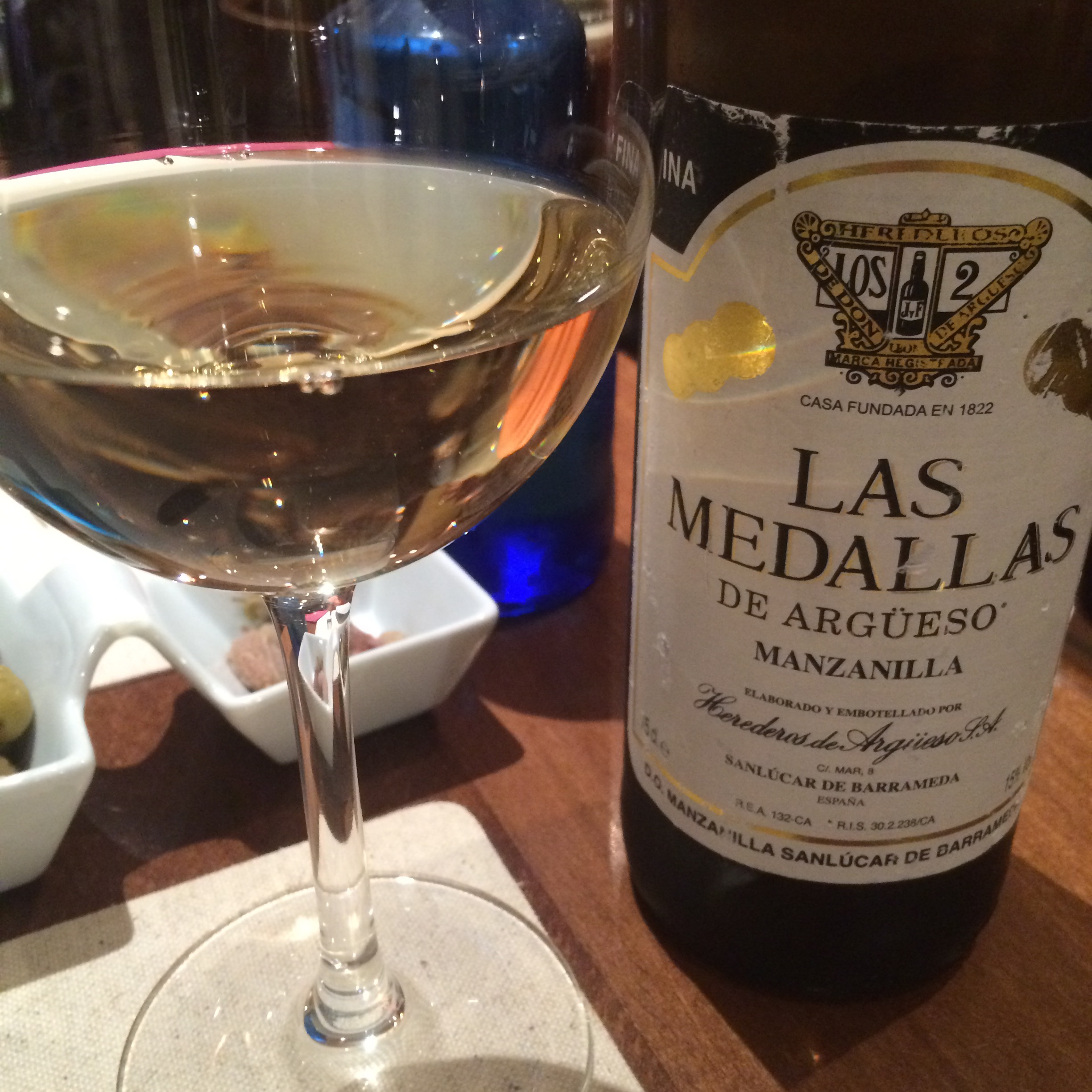
First up was this manzanilla – Las Medallas – with five years under flor. It had aromas of straw and a big, meaty body to it. Really broad and robust for a manzanilla – amazingly meaty and chewy, like a very doughy loaf of bread, with more toasted bread than almond but a lot of umami. I really liked it (15/20).
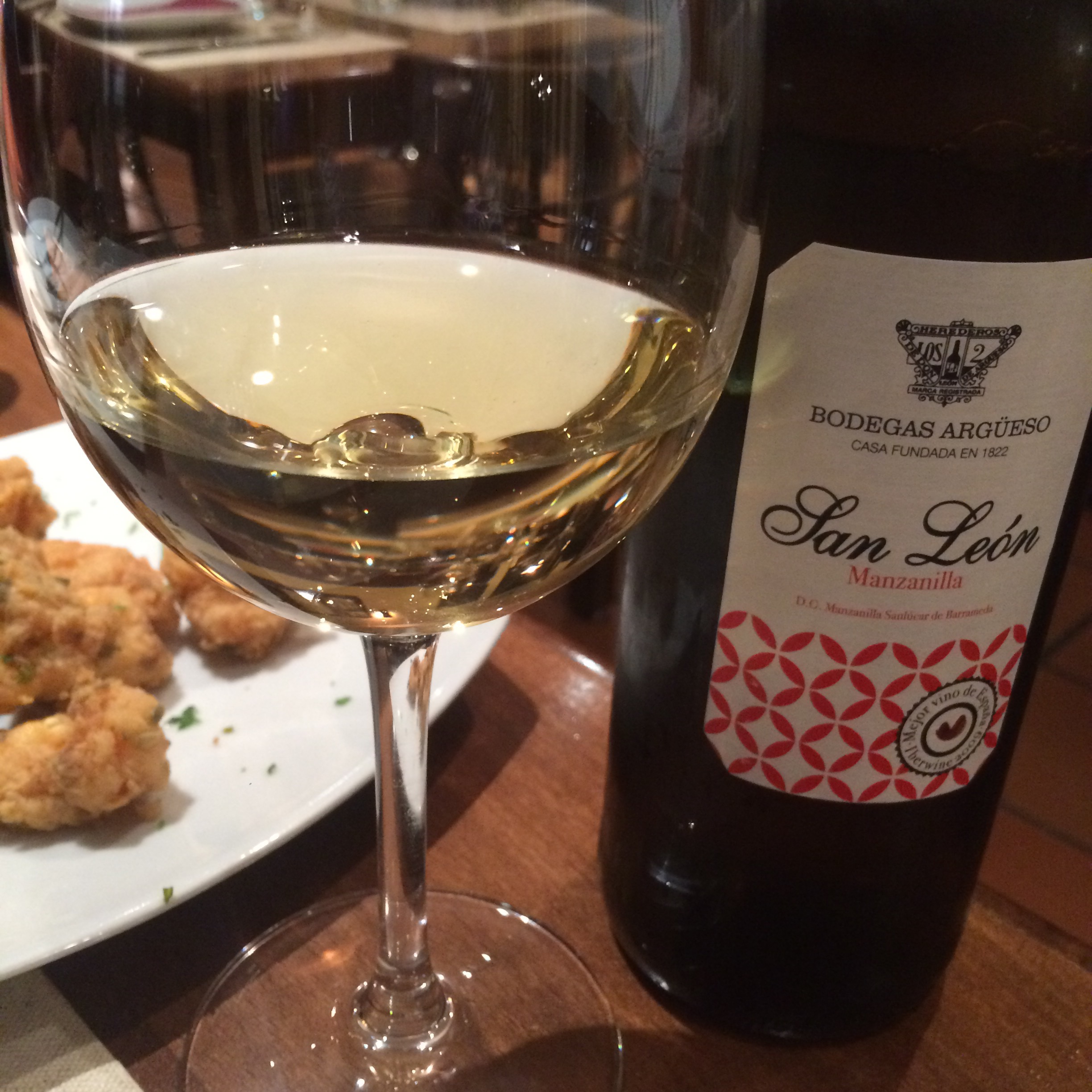
Second was this, the San Leon, a more typical manzanilla – again with five years under flor. Also hay bales and herbal tea on the nose, much finer, more elegant but not quite as meaty as the Medallas. Bit quiet on the finish. (15/20)

Last but not least, comes the San Leon, Reserva de la Famila. This has had seven and a half years under flor and is recognizeably more refined – maybe lacking a little less scent compared to the junior version but a more elegant, powerful and compact wine. (16/20)
Three excellent glasses of wine – for a combined total of €8.70. There is no doubt that Palo Cortado is an essential visit for any sherry fan (and an excellent alternative even for laymen).
Mirando al Sur
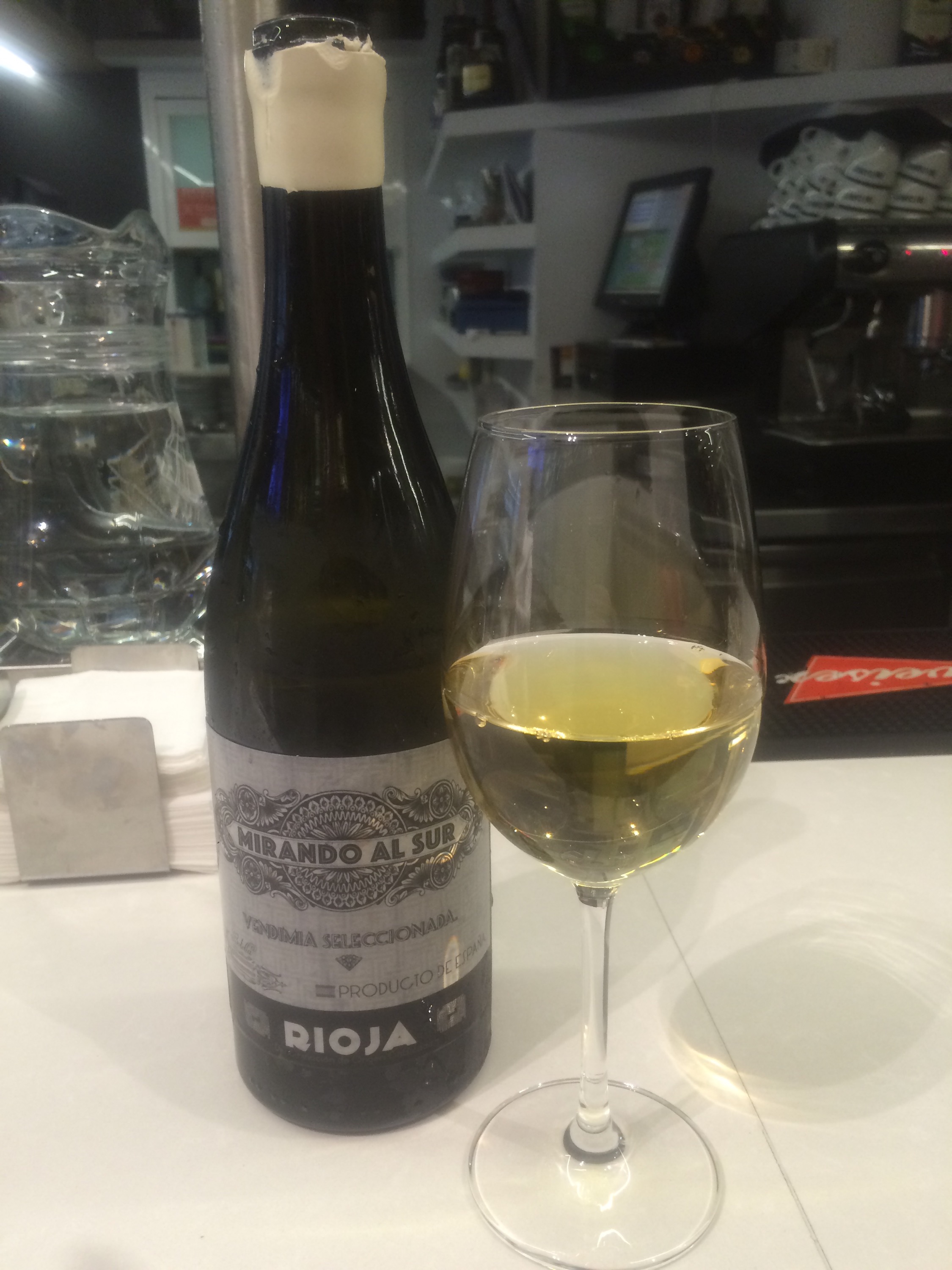
Definitely a ringer but a lovely one. A Rioja white wine – 100% viura – by the livewire man of the moment, Olivier Riviere, which makes it onto this blog because it spends 18 months in oak botas used to make jerez.
It is a rich gold in colour – not un-sherry like (indeed not unlike a good white Rioja). On the nose it is rich and fruity – maybe just the slightest suggestion of almonds and bread in the background. On the palate it has nice acidity, plenty of body to it and maybe just a bit more spice than you would expect – it is certainly long and fading towards the nutty flavours (maybe more hazelnut than almond).
The sherry influence is subtle – in this day and age of florpowers and aged palominos (of which more another time) this is more of a finished product. Overall, a (very nice) white wine with some sherry styling (and all the better for it).
 undertheflor.com