Palomino Fino OVNI 2015


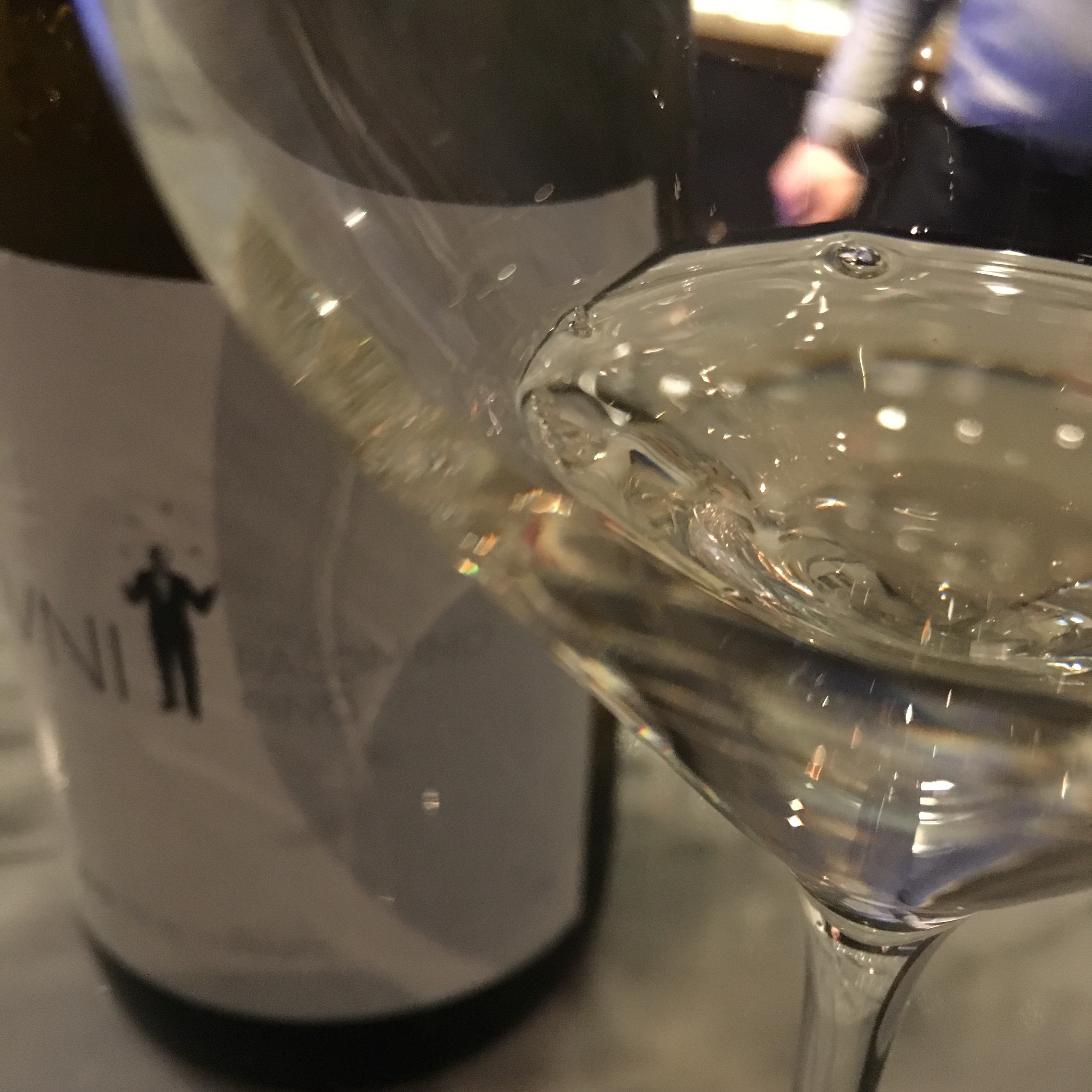
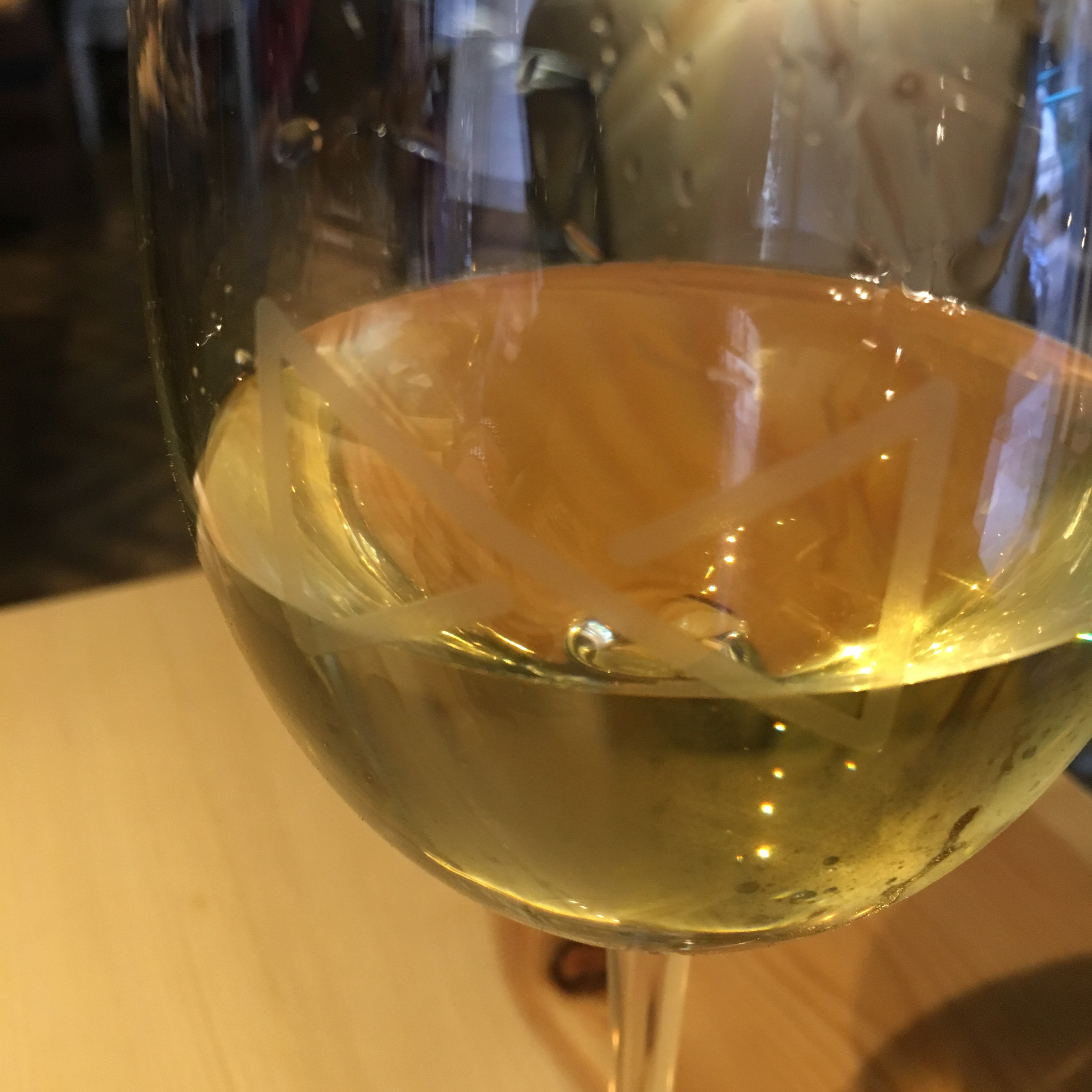
Another fascinating wine, this time by Equipo Navazos (in association with Coalla Gourmet) which I had during a great night at Angelita Madrid. The name is a play on the Spanish term for unidentified flying objects (objetos voladores no identificados) – although this one is a winelike object (objeto vinicola). 

The ficha is great (as is the new website) and as it points out, this is a “sobretabla”, with six months under flor – they mention “added” flor – in a vat.  The wine is very pale in colour and has the punchy, yeasty, cidery nose of a mosto. On the palate it is dry and refreshing, slightly mineral and quite punchy. 

Nice refreshing little wine.

Fino de Huelva Espinapura 


Had this last night at Angelita and it wasn’t too bad. It is a palomino fino aged under flor but not a sherry. Rather it is from Condado de Huelva – outside el Marco (away to the North of Sanlucar and West of Seville – about an hour and a half from Jerez by car). 

According to the ficha this has had four years under flor in a solera. It has a nice almond vibe to it – quite pale in colour, nice nutty nose, good and smoothand not too saline. Very decent.

Manzanilla Papirusa


The only manzanilla (or sherry) on the menu here at Pajarita but it is a favourite and since it comes from Lustau a modest, but heartfelt, tribute to the great Manuel Lozano. 

It is the most basic of the Lustau wines but is very well made (technical details here) with an average age under flor of 4-5 years. Has that very aromatic, green apple nose of a wine with less time under flor but with sea air and minerals in the background, then a similar palate – a dash of aromatic juice and a spike of minerals, with a long, tasty finish. 

Fino Trocadero

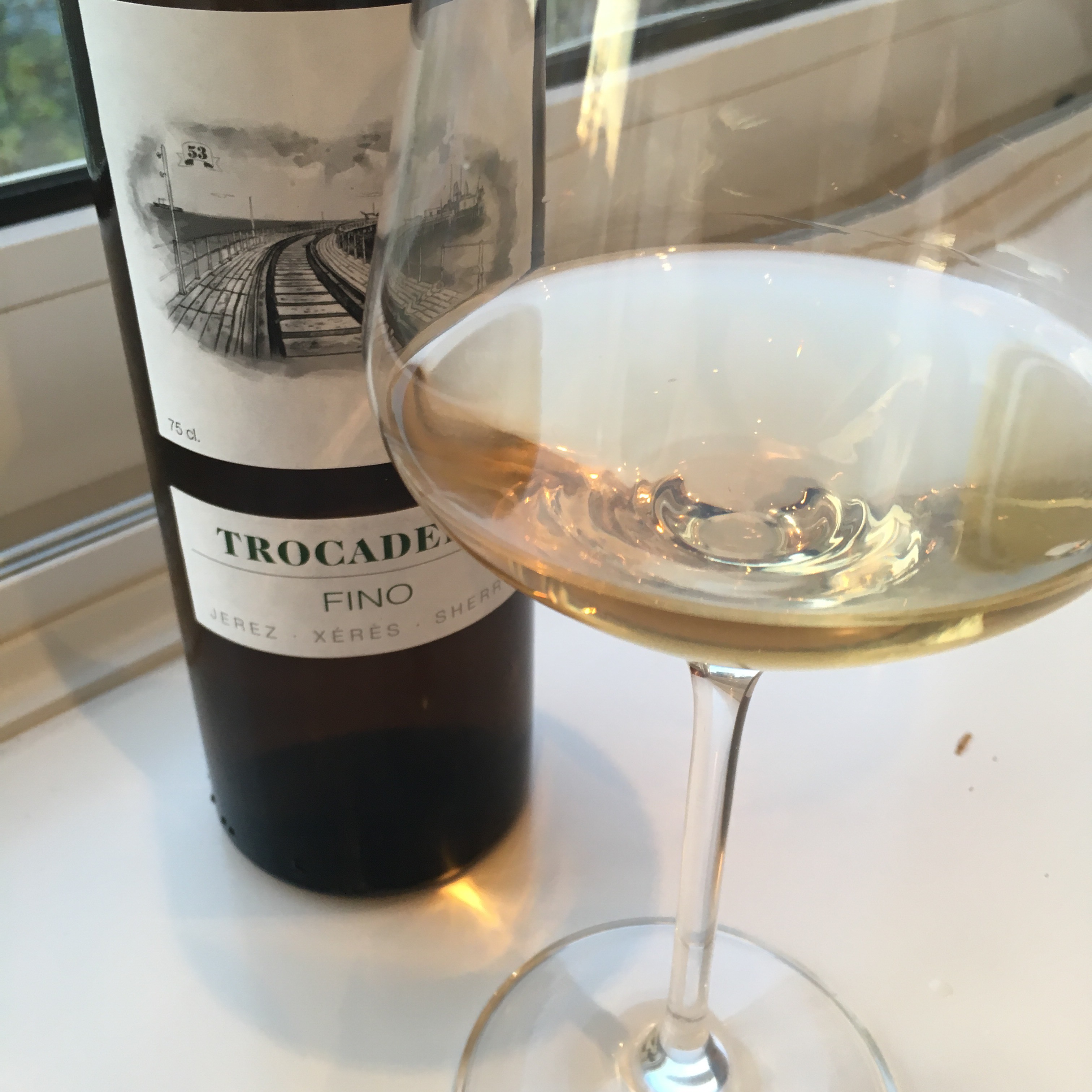
Picked this up at Reserva y Cata a couple of weeks ago out of curiosity. It is a fino named after the Trocadero railway station (not the Paris “rien arrive” terminus, but the one in Puerto Real, to the South of Jerez on the Bay of Cadiz (where you can also find the fort which the Paris one is named after, the French having taken it off the Spanish at some point)) at the end of the Jerez- El Puerto-Trocadero line and was once one of the key routes for wine exports from the region.

It is an original label, no doubt – industrial engineering and infrastructure don’t tend to feature that heavily on wine bottles in my experience. Diligent research on the web reveals that this comes from an outfit called uno53 but I haven’t been able to work out much more.

The wine is a fino with seven years under flor and is pretty good stuff. Has a pretty nice colour to it and an aroma of seaside docks – piercing and bracing. It shows its age on the palate – a big spike of almost peppery minerals, then bitter, wet salty seaweed, maybe just a hint of bready flavours and nuts. Pretty good, railway style fino.

Fino Coquinero


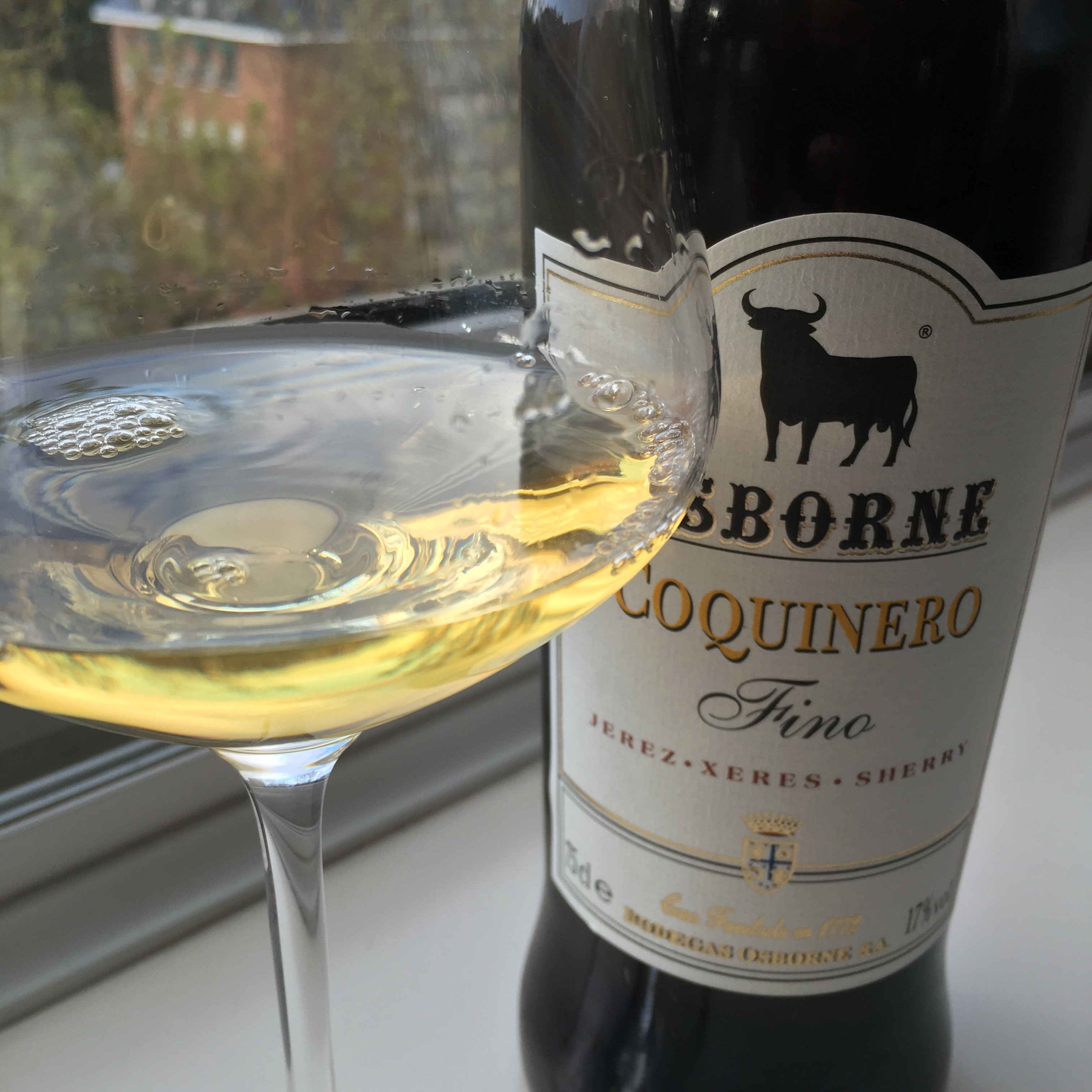
This is pretty intriguing – have seen it a lot on twitter lately and picked it up this week to have a go myself. It also has a pretty interesting profile as you can see on its ficha – a fino amontillado with four and a half years under the flor and two in the open air at a pretty punchy 17 degrees. (Although the ficha doesn’t say so I am assuming we are talking a fino del Puerto.)

Just looking at it you could mistake it for an older fino – a darker shade of gold and very very clear – like a sort of gold alpine see. At first I find the nose slightly tinny – but it is opening out a little and the apple and nuts of the ficha are there alright. Tasting it I find it very zingy on the tongue, full of minerals and quite punchy, and then the nuts again in the aftertaste, but a kind of refined seaside bitterness, then quite a long smooth, nutty finish.

Punchy and pretty tasty.


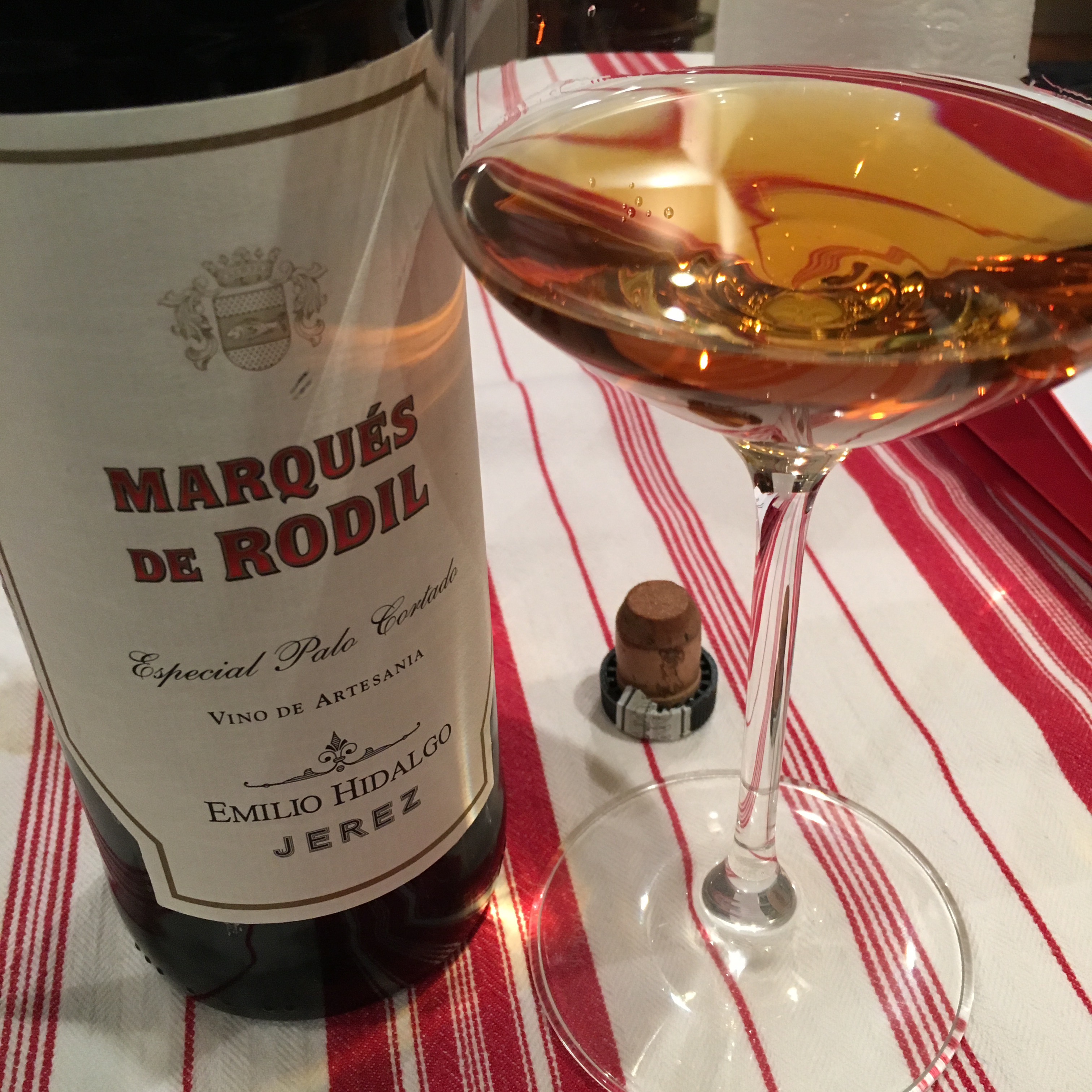
Palo cortado Marques de Rodil 

So here is a wine you don’t see around a lot. Emilio Hidalgo is probably my favourite single label – as if La Panesa were not enough on its own they also make El Tresillo and El Tresillo 1874, not to mention El Privilegio 1860 and the ethereal Santa Ana PX. In fact the only wine I hadn’t tried before from this bodega is this Marques de Rodil “especial” palo cortado, which had an average age of anywhere between 15-20 years when it was bottled in 2013.

As you can see, it is beautifully clear. (I like to take pictures against this table cloth – the straight lines help give an impression of turbidity – as you can see above this wine is as clear as a bell. It is also a relatively pale amber colour – at least a shade lighter than you might expect from a palo cortado. The nose is also different – there is a kind of semi-volatile aroma there, not as sharp as in the amontillados, with saltiness and caramel in the background and to be honest the lack of definition is off putting: it smells reductive for all the world, as if it were a red wine with poorly integrated sulphur. (Maybe it is just my bottle – I am going to double check.)

On the palate it doesn’t suffer as badly and has a lovely combination of caramel, bite and salinity, with a long finish that seems to suggest fruit. The zingy salinity, in particular, is very noticeable for a palo cortado, but if anything it seems elegant and maybe lacking the structure of the racier palo cortados.

A typically elegant wine this one but I must admit I find the nose difficult.


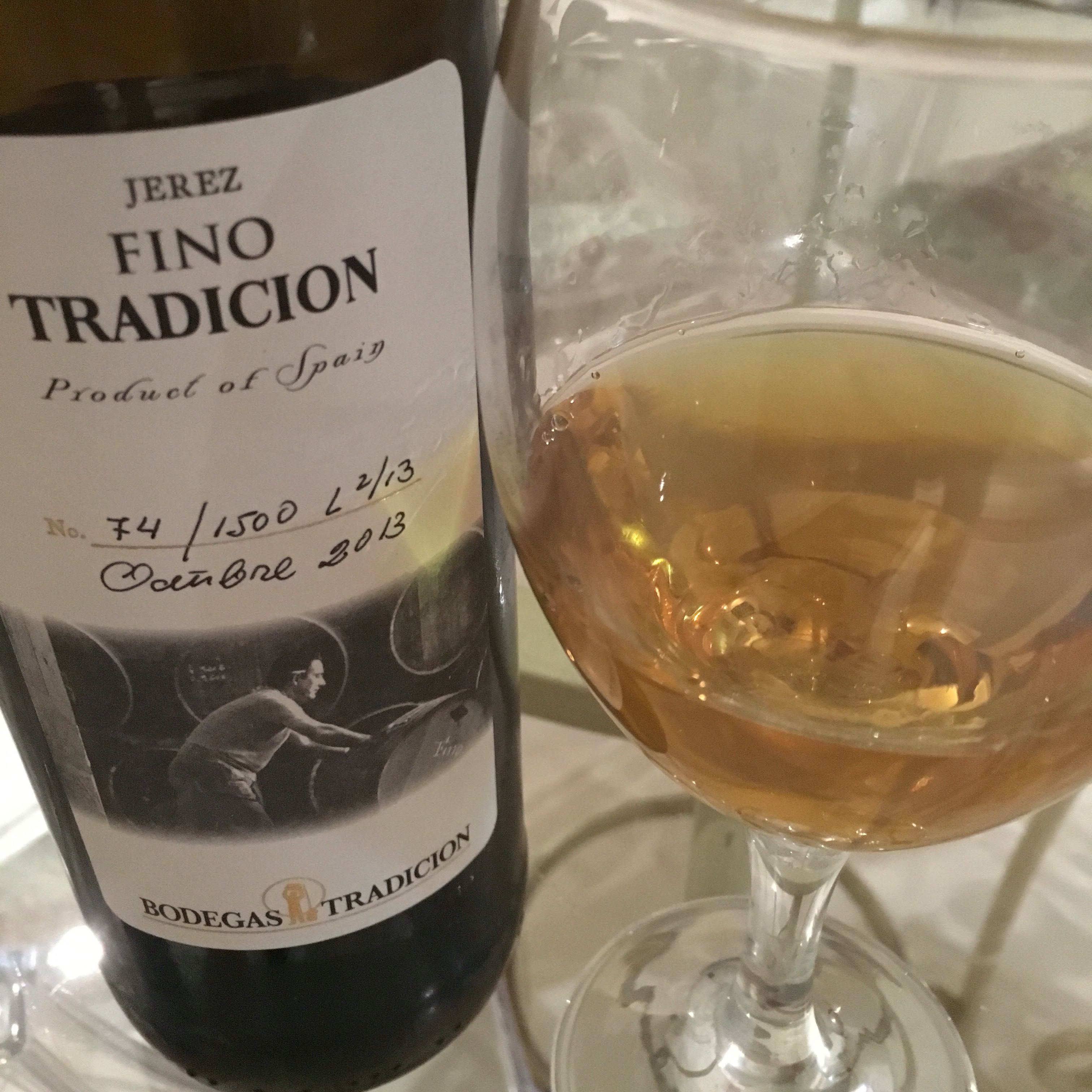
Fino Tradicion Saca de Octubre 2013 


So here we have bottle number 74 of the second saca of 2013 from this fantastic bodega. On the blog I have previously tried the May 2013 saca, the May 2015 Saca (not once but twice) and the November 2015, and pre-blog I had also had the October 2014 and my impression is that for whatever reason these are getting better as the years go by.

This one looks a shade darker in colour to me, and although this stemware is not quite the best it also doesn’t look quite right in terms of brilliance – maybe not cloudy but slightly dull. The nose is quiet and jura like but not all that cheesy, and on the palate it doesn’t seem to have the nutty, umami solidity of some of the later versions. As a result, the grapefruit flavours I noticed in the May 2013 come across as almost sour in this one. There are nice minerals, it makes the mouth water and there is a long, bready aftertaste, but just not enough on the front end.

Chalk it up to the old ones not necessarily being the best I guess.

Fino los Amigos 

  
At a work conference far from home but among friends with this very decent 100% pedro ximenez fino from Perez Barquero. It is 3-4 years under flor and very pleasant. 

Yellow-green in colour, rich colour too. Nice punchy almond nose, slightly heavy bodied but nice nutty, herbal flavours.

Not bad at all. 

Amontillado de Sanlucar Manuel Cuevas Jurado    


There were some doubts about the order of play on order of play but no problem at all for me. This was a typically elegant Sanlucar amontillado – in fact particularly fine, which may have to do with the five years under flor and seven ageing.

Again light in colour, a yellowy orange, nice nutty, mineral nose to it. On the palate a nice caramel attack but then a little bit of a gap before the minerals at the back end.

Very nice components – just a little bit disconnected. 

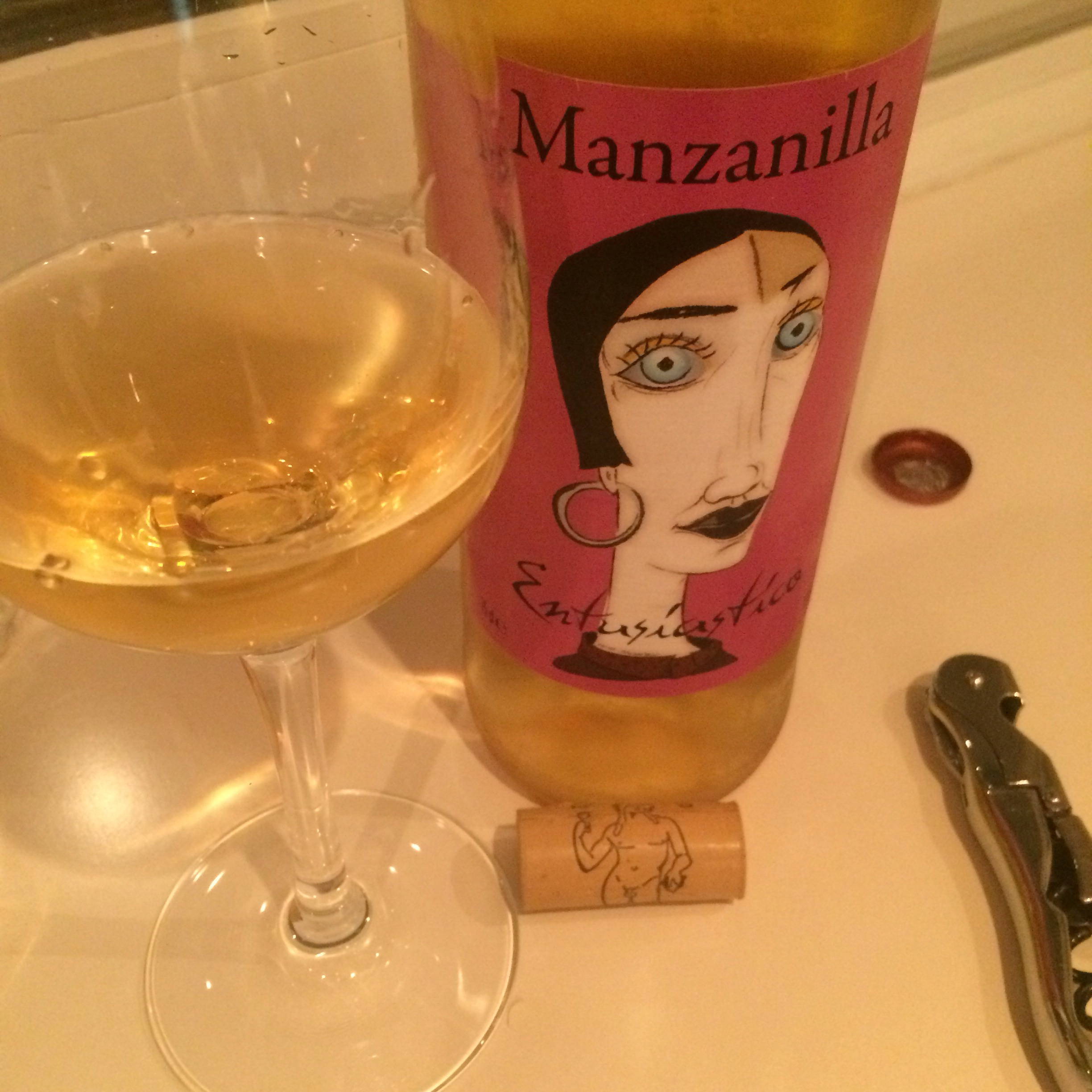
Manzanilla Entusiastica


Advertised as the first “ecological” manzanilla (strikes me as surprising but if they say so). Has bright, modern (clear glass) and cheeky packaging – a naked chap on the (natural) cork no less. He doesn’t look all that enthusiastic to be honest, and I would admit to misgivings myself when picking this up from Vila Viniteca last week, if only because I tend to be a bit suspicious of anything gimmicky.

I soon overcame any such doubts tasting it however. This is a subtly floral fruity manzanilla that is right up one of my many streets and different enough to be interesting.

The colour is a rich gold, and the nose is like a palomino table wine: less aromatic than I expect from a manzanilla, fruit with a hint of herbs and cheese. On the palate too it is less mineral and more organic than many. The minerals are there – a little buzz on the tongue – and so are those same flavours, but maybe it is a little underpowered in punch and length. More interesting and different than I expected – and nice flavours too.

…. Coming back to this a day later I have now located this interesting piece by Cosasdecome.com (which also seems to be cosasdebebe.com) with some excellent detail. Ecologically grown, single vineyard palomino from pago Burujena de Jerez  (where he also apparently is growing some “castellano” – one of those 40 odd varieties). The first harvest was 2012, refreshed in 2013 and 2014 and this is the first saca from October 2015. What is fascinating is that the first year was presumably the solera, 2013 provided a first criadera, 2014 a second, etc: the criaderas would have been literally stacking up as the years go by. This may of course explain why this tastes so fresh and raw – not only if the wine only three years under flor but the solera is brand new, so the average ages will be well down. I am not sure I have ever had a wine from a new solera before.

In fact a day later as a wine it has lost the element of surprise a little – it still has the fresh, raw character I mentioned but the fruit doesn’t stand out to me quite as much (the nose actually seems a little alcoholic), and I find myself missing some of the mineral freshness on the finish of a classic manzanilla.

Nevertheless, it is a rare example of a really new solera (new and proud of it) and for that alone worth trying – and coming back to over the years to see how it might evolve.