Williams and Humbert 2006 Vintage fino en rama

  
Coming back to this after three days open for some second thoughts. 

May be my imagination but it seems a touch darker than I remembered – a gorgeous old gold. The nose is intensely yeasty – ripe hay bales with a little bit of cream cheese and citrus like a cheesecake. 

Really nice zing to it – leaves the tongue buzzing – then salinity, broadens into a buttery toffee, before a long yeasty hay bale tail. 

I like it even better today. This wine needs some time open.

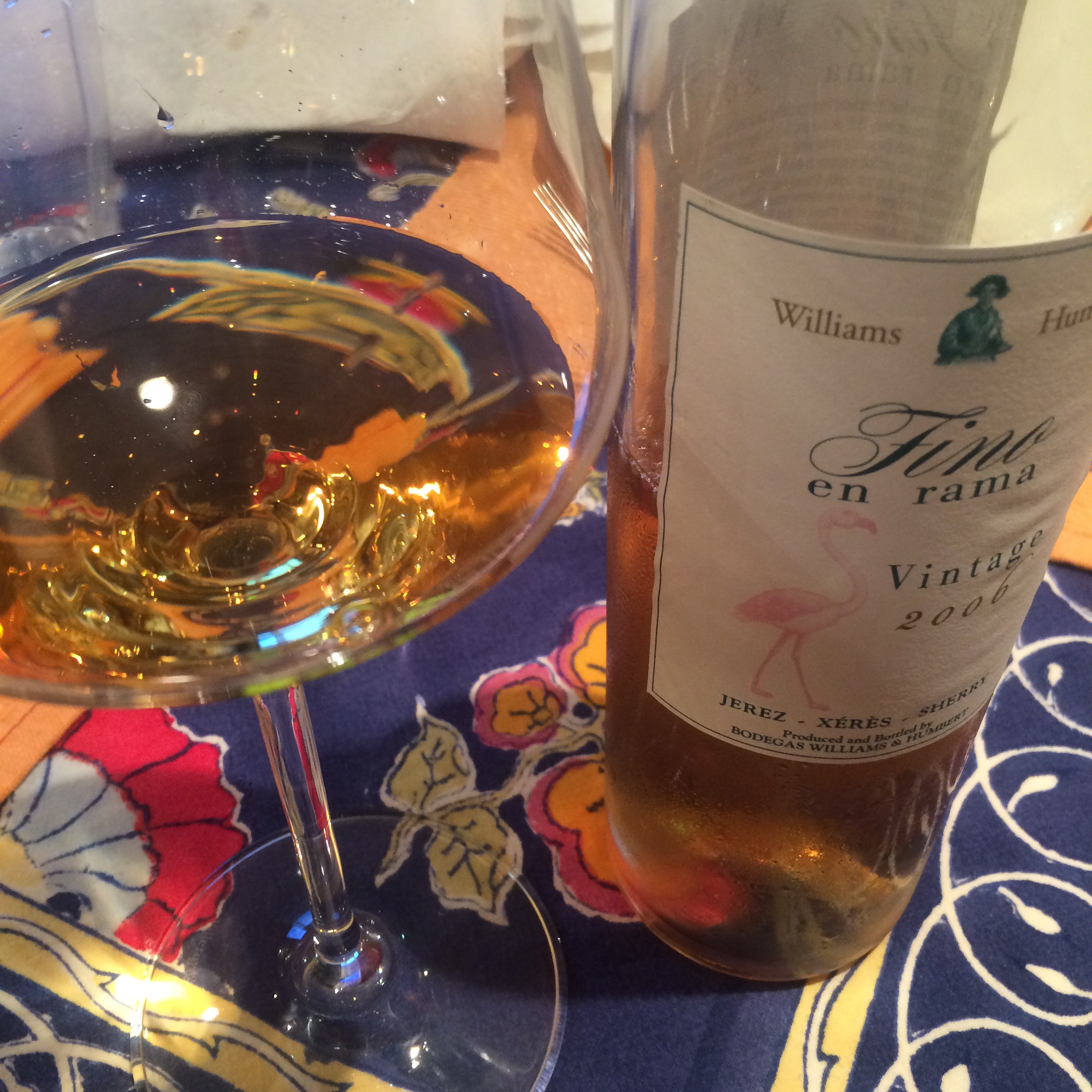
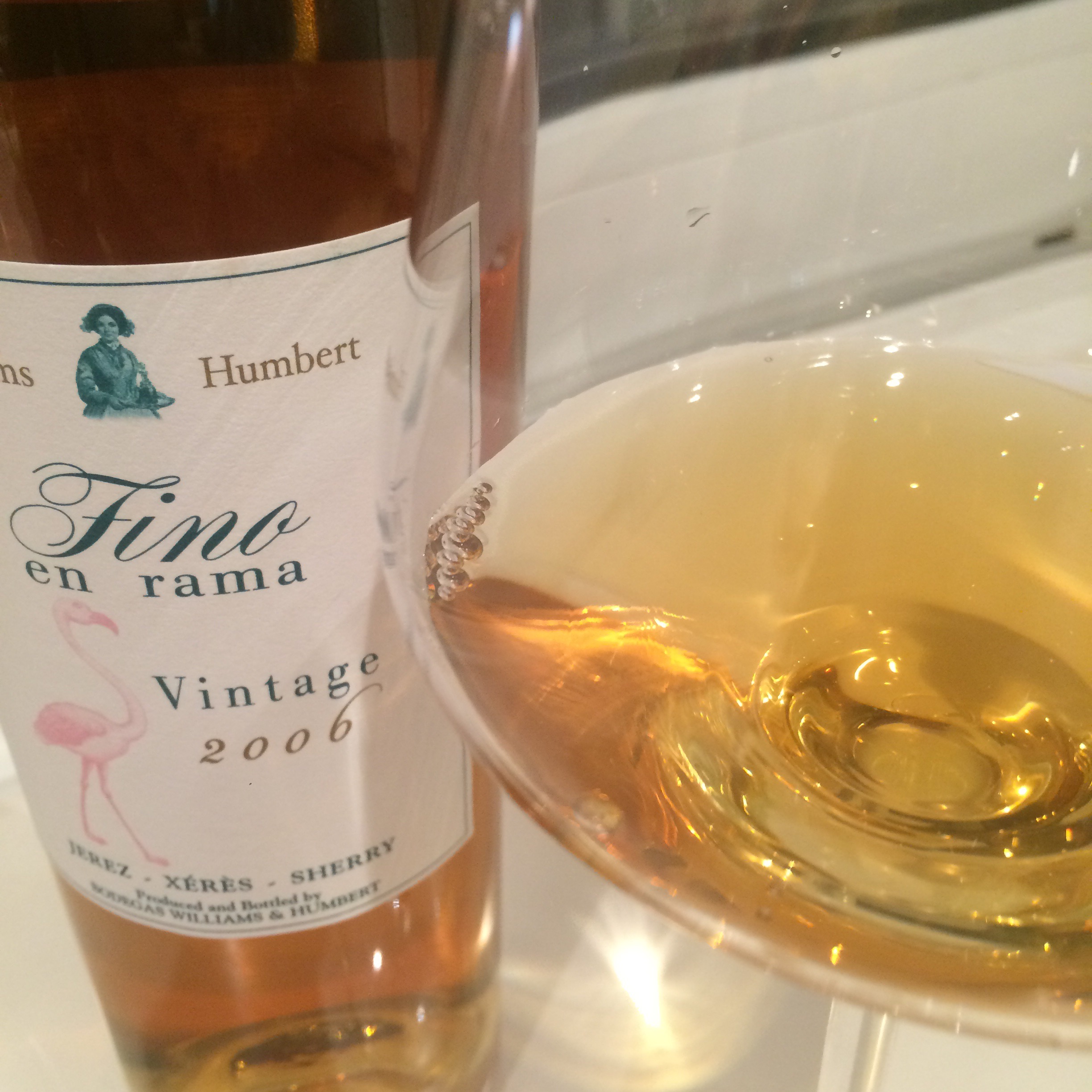
Williams and Humbert 2006 Vintage Fino en rama 

Flamingopower! Had my first bottle of this just over six months ago – just before, in fact, I started writing this blog, and I thought it was sufficiently interesting to pick up another and write something. It is from Williams & Humbert, a classic old label whose Walnut Brown and Canasta cream sherries were favourites at our house when I was a kid.

This one, of course, is not a cream. It is a vintage fino – statically aged in botas that were put aside in 2006 and bottled unfiltered in 2014. (For a fuller description check out the post on the excellent Sherry Notes.) Pretty unique stuff and very interesting, although I am not 100% convinced that these wines are better than their dynamically aged counterparts.

The colour is a bit darker than straw and clear as a bell. The nose first up was frankly amazing: lots of yeast, even by sherry standards, a bit of alcohol, really herbal and pungent and hints of baked milk. On coming back to it a day later the differences were interesting – definite toasty, honey notes.

It is smooth and potent on the palate. It is buttery in texture and has a buttery, yeasty flavour, with zingy salinity and alcohol. As big as it is, though, I find it a little hollow in structure, not as full bodied as it might be, and although it has a long yeasty tail even that seems a little thin.

Overall a very interesting mouthful, just not as rounded and full bodied as it could be.

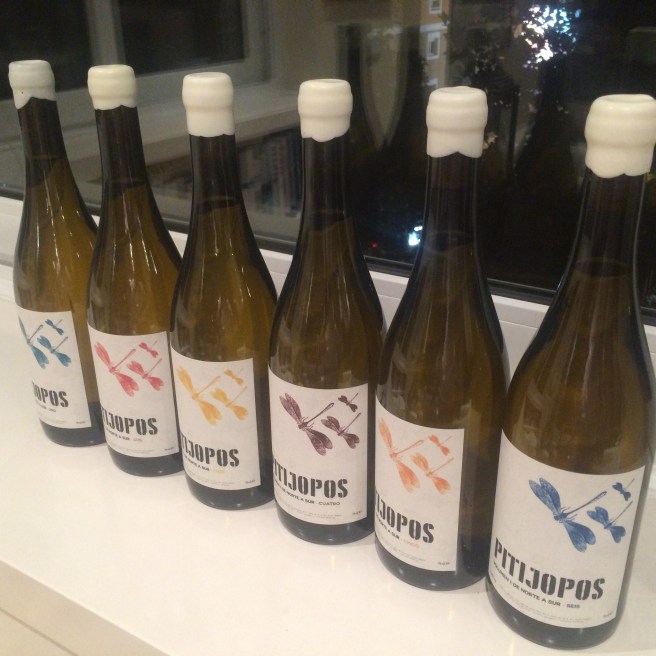
Pitijopos Volume 1 – 2014 


Yet another cracking project from Ramiro Ibañez (he of Encrucijado, the Manzanilla de Añada and other projects) and something I am really looking forward to getting to grips with.

Called “Pitijopos” it consists of a case of six examples of “mosto de pago”. Mosto is the name given to the unfortified palomino wines that are used to make sherry (confusingly, it is also a term given to unfermented grape juice elsewhere in Spain and the english word, “must”, clearly refers to a sort of intermediate stage). “Pago” on the other hand is a term given to specific vineyards/terroirs. Normally you would hear the term “vino de pago” as meaning single vineyard wine, or a wine might be called “Pago …”.

So here we have examples of mostos, from a single vintage, 2014, and a single grape, palomino, but from specific pagos from around the jerez region. Specifically, from six different locations ranging from Northwest to Southeast: Trebujena, Sanlúcar, Rota, Jerez (2) and Chiclana. Tasting them all together (which I intend to do as soon as I have a chance to really appreciate six bottles of white wine at once) is probably a unique opportunity to compare the differences in character that result from those differences in terroir.

Even if you can’t get six of them (I am told there were only around 100 cases of this available) I would recommend any sherry enthusiast to try mosto if you can.  The very best tasting I ever experienced (at Emilio Hidalgo) started with tasting some mosto and then following it up through the chain as sobretabla, fino of different ages, amontillado, oloroso – it was frankly the most formative lesson of my brief education in these things, and the mosto was a key part. It has a very distinctive aroma, structure and flavour which is worth getting a handle on since it will really help you appreciate the same dimensions of the fruit in the fine wines that have been undertheflor (once you have smelt mosto you will recognize it in a lot of finos and manzanillas, in particular).

As always, these have been on the road and I need to give them time to settle in, but I will report back when they are ready.
 

Manzanilla de añada Callejuela 2012 – 1/11

So here we go – a wine I have been looking forward to tasting for weeks and one of the most exciting projects in sherrydom, as I wrote back when it first arrived. (I am going to try and be objective but I will be honest and admit that I just want this project and the guys behind it – including the Cuatrogatos Wineclub – to succeed for a lot of reasons.)

First impression – the colour. It is a solid looking, relatively dark gold (the clear bottle can play tricks on your mind and make you expect something slighly paler) and doesn’t seem to shine like an older wine can (this has, after all, been “only” three years under flor). Maybe a slight hint of green – maybe not.

The nose is a cracking mix of fruit and yeast – smells like fresh herbs, green tea (or even that german appley type tea) and apple/cider. Again, having read all about the old vines, the exceptional harvest and select fruit it is hard not to want to smell fruit here, but in the presence what seems more remarkable is how rounded and mellow the nose is: none of the piercing quality of some mostos/younger wines.

On the palate, it is big and voluminous in texture and, even in this day and age where one is accustomed to a 6 or an 8 year old manzanilla en rama, it has a great saline zingyness to it. It is compact and integrated and the fruit and fresh herbs are there in quantity: what it might lack in contours and definition it makes up for in flavour, and there is no sourness or bitterness in the finish.

Not the most elegant manzanilla (how could it be on such short notice?) but as fresh and full flavoured as it is fascinating. An excellent first instalment and I am really excited to see what this project will achieve.

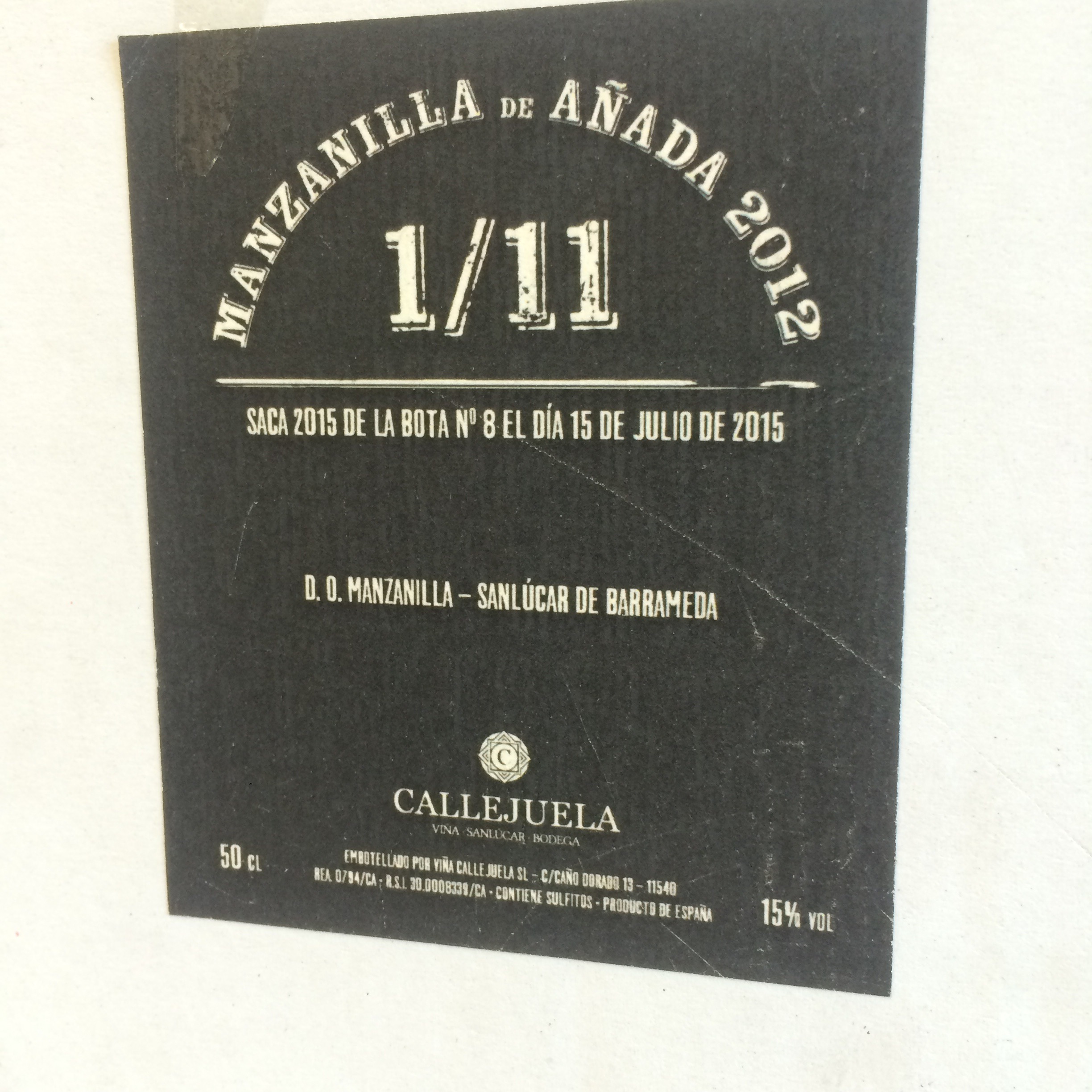
Callejuela Manzanilla de Añada 2012 1/11


It is no exaggeration to say that I am very excited about this parcel that just arrived courtesy of the Cuatrogatos wine club.

The wine comes from old vines on a pago called “El Hornillo” and the 2012 vintage was of historic quality. Due to the extremely high quality of the wine/must a decision was taken not to include it in the criaderas of the bodega. Instead, Ramiro Ibañez (he of the Encrucijado, referred to in past posts) decided these 11 butts were good enough to be bottled as vintage manzanillas.

The 11 butts have been set aside and are being “statically aged” – ie under flor but not in a solera. There is no mixing, even between these 11 butts.  Each year Ramiro will select one of the butts for bottling:  for this reason, this bottling is Butt 1/11 of 2012 and is expected to have a markedly biological character. However, the character of the successive releases (each one 800 bottles or less – with purchasers of the previous year’s vintage having a preferential right to future bottlings) will clearly be different, and it is likely that there will be more oxidation (although time will tell). The last butt will be bottled, if all goes well, in 2025.

This wine has just arrived and deserves a rest after its long journey. What is more, I have a cold, and cannot possibly do it justice right now. I will, however, report further, and probably at some length.

Lustau Añada 1997 Vintage Oloroso

Continuing on with my vintage obsession of today it is time to top and tail this note of this lovely oloroso abocado. I got this at the recommendation of Vila Viniteca – who have a great range of sherries and organize some top class tastings.

It is by Lustau and is surely one of the pioneers in this vintage sherry game. Sherry Notes has a fantastic write up that I cannot hope to match, so get over there for details.

The problem with finding a note like that is that it is hard to go on and make your own note – but anyway here are my own impressions.

I love the colour – a red brown that is clear if not quite crystalline. I love the nose too – brown sugar and raisins, burnt caramel, and alcohol, which comes over as close to the polish and pine needles of many a top class palo cortado.

It has a nice burnt taste to it too – I find it ever so sticky in texture but it has a nice balanced range of flavours. Nice acidity, big black treacle, burnt sugar, sweet spices, the afore mentioned pine needles, plum pudding (burnt raisins), even walnut skin nutty.

A good balance indeed – sticky but spicey.

Encrucijado MMXII – Part II (now part I)


After all the bombo I have been giving the vintages, the terroir and the doing of new things today I had to have another glass of this (I had attached a link here but the first blog post has been mistakenly deleted in what can only be a new personal best in blogging incompetence). This is after all a vintage (MMXII) it is terroir specific (although don’t ask me which) and it has some interesting cepage.

Specifically, it has six different grape varieties: 50% Palomino Fino and 10% each of Beba, Mantúo Pilas (aka “Uva Rey”), Perruno, Cañocazo and Mantúo Castellano, all of them believed to have been used traditionally in the production of the original “cortado wines”. They were hand harvested from plots up and down el marco, fermented in bota and then aged in the same bota for 20 months: 10 months under flor and then 10 months traditional ageing.

As I remarked in my now long lost post, I first read about this on Spanishwinelover and in an article by Paz Ivison on Elmundovino.com and was intrigued enough to pick up a bottle in Reserva y Cata. It is marked with a “cortado” and the name certainly conjures up the idea of palo cortados (as does the combination of biological and oxidative ageing), but this is unlike any palo cortado you would have tried before: it isn’t even old enough to be a fino and the different varietals really bring different characteristics.

In colour it is slightly more garish gold than I remember but it has the same delicate structure and butterscotch nose and flavours. Very fatty in the mouth and the buttery caramel flavours are very gentle but I think the first time around I underestimated the power and persistence of it. It is not a big profile but it is an intense flavour and lasts a long time.

I really like it more and more. Maybe the extra days open have given a touch more oxygen in a good way.