La madre de Cariñena

I was dining with friends in near Calatayud yesterday and enjoying some really old Equipo Navazos palo cortados, when one of them made the observation that the palos reminded them of the “madre” (mother) in the cellar.

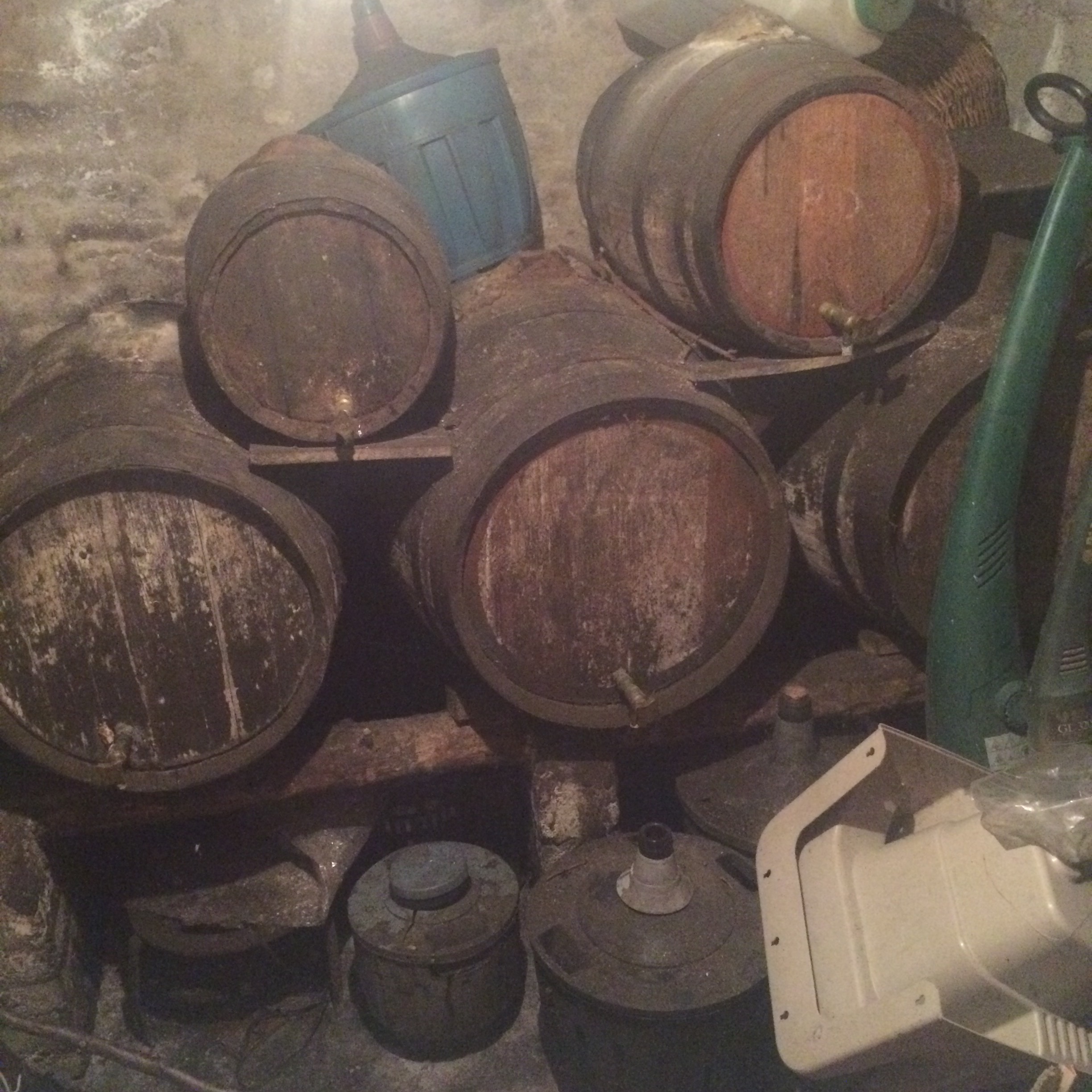
They referred to the contents of these barrels- traditional “pipas” (pipes) in the cellar that are generally refilled with local wine year after year. These barrels had apparently been bought by the grandfather of our host’s grandfather (and she was in her fifties) and were reckoned to have been in use over 100 years. Since the barrel is never quite emptied, the effect achieved is similar to that of a solera, and the older wine that remains in the barrel is referred to as the “madre”, said to give character to the incoming wine. On the other hand, when the barrels are left untouched for a period of time – as these had been – you get classic “traditional ageing” via oxidation and evaporation and what is left can become highly reduced/concentrated.

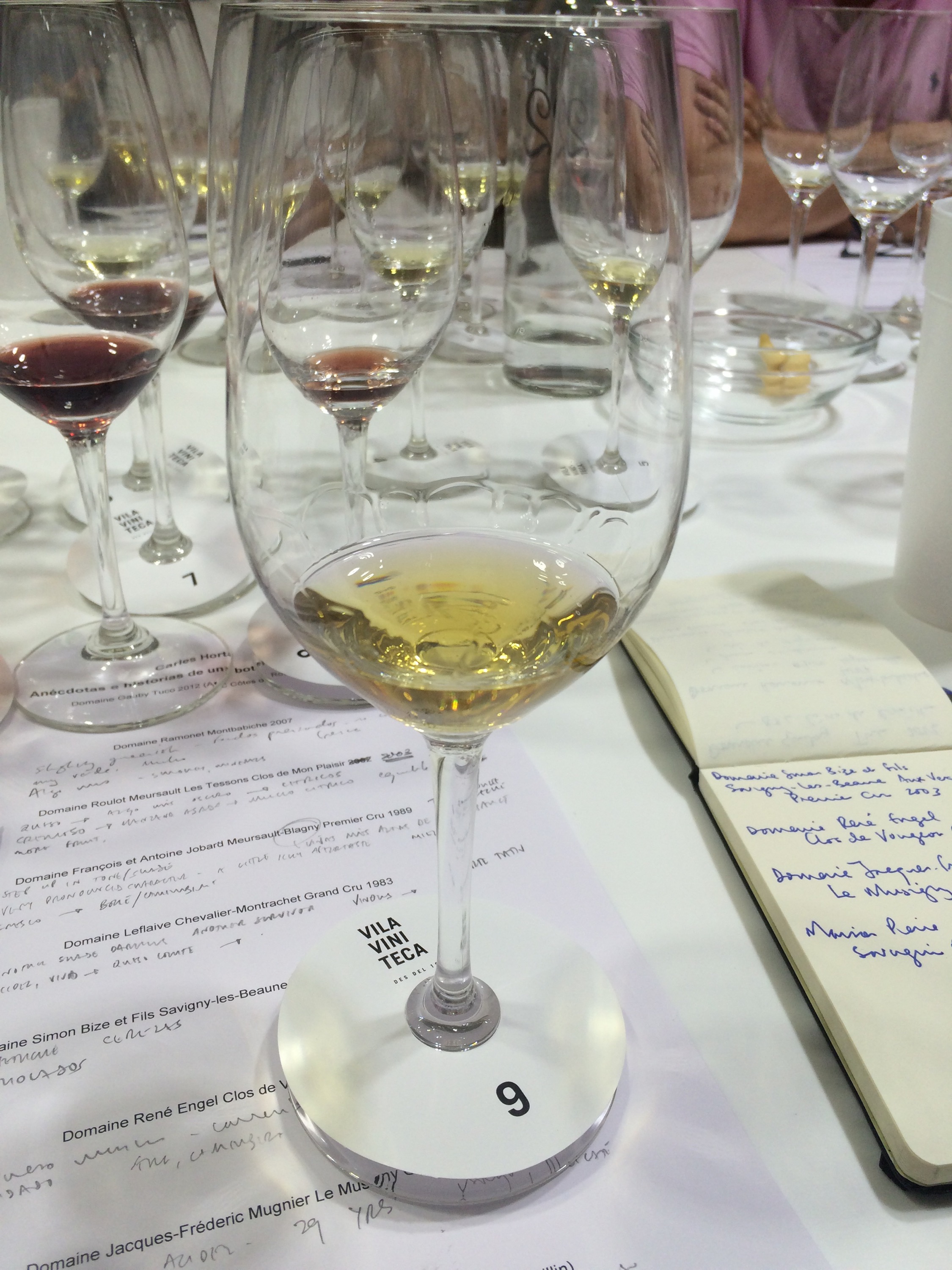
Two thimbles were produced and they were little eye openers. I am not 100% sure what the original wine was. Given the neighbourhood it was probably mainly garnacha, but my hosts weren’t certain and thought that over the years any number of wines could have been added to the barrel.  Nevertheless, both thimbles did indeed show a lot of the characteristics of the ancient palo cortado and amontillado we were drinking – the concentration, wood influence, and length. The similarities with the dusty old amontillado were particularly striking.

Evidently, there were differences as well, and the thimble on the left in particular still showed rich blackberry fruit flavours. Hard to recall exactly from memory, but the effect was similar to the Sereno rancio, albeit with a much much more pronounced concentration and reduction.

A really interesting thing to have tasted.

Encrucijado MMXII – Part II (now part I)


After all the bombo I have been giving the vintages, the terroir and the doing of new things today I had to have another glass of this (I had attached a link here but the first blog post has been mistakenly deleted in what can only be a new personal best in blogging incompetence). This is after all a vintage (MMXII) it is terroir specific (although don’t ask me which) and it has some interesting cepage.

Specifically, it has six different grape varieties: 50% Palomino Fino and 10% each of Beba, Mantúo Pilas (aka “Uva Rey”), Perruno, Cañocazo and Mantúo Castellano, all of them believed to have been used traditionally in the production of the original “cortado wines”. They were hand harvested from plots up and down el marco, fermented in bota and then aged in the same bota for 20 months: 10 months under flor and then 10 months traditional ageing.

As I remarked in my now long lost post, I first read about this on Spanishwinelover and in an article by Paz Ivison on Elmundovino.com and was intrigued enough to pick up a bottle in Reserva y Cata. It is marked with a “cortado” and the name certainly conjures up the idea of palo cortados (as does the combination of biological and oxidative ageing), but this is unlike any palo cortado you would have tried before: it isn’t even old enough to be a fino and the different varietals really bring different characteristics.

In colour it is slightly more garish gold than I remember but it has the same delicate structure and butterscotch nose and flavours. Very fatty in the mouth and the buttery caramel flavours are very gentle but I think the first time around I underestimated the power and persistence of it. It is not a big profile but it is an intense flavour and lasts a long time.

I really like it more and more. Maybe the extra days open have given a touch more oxygen in a good way.

Cabinet reshuffle

Was hunting for a bottle of wine earlier this summer and ended up emptying the whole thing and restacking. Was a good intellectual challenge – getting the right combination of young on the bottom and old on the top (a 1994 vintage port and a 2000 St Emilion are young, but some 2009’s are already middle aged).

Came across some great memories as I worked. Some curiosities, some wines that were once fashionable, some interesting verticals and of course some wines that I treasure and am prepared to wait 10 or 15 years to open.

So what? I hear you ask. Well, going through here has made real to me how much the sherry business is missing by not differentiating by vintage. I realise that I am far from the only voice grumbling about this – and I don’t pretend to make much of a contribution here, butI still think it is worth sharing.

Vintages are, in fact, beginning to appear. I am in fact expecting to receive two bottles of the first ever single vintage, single vineyard manzanilla – about which I am unreasonably excited – and am already planning my way to “cellaring” it so as to have enough for future generations (no chance). I have also tried a couple of the Gonzalez Byass vintage Palo Cortados – the 1974 and the 1982, but they are expensive – as you would expect for a wine that my have been 40 years in the making – and, indeed, they are not really comparable with a vintage as we would normally understand it – precisely for that same reason.

On the other hand, as I already wrote in my piece about Equipo Navazos and their Magic Numbers, it is increasingly common to find dated bottlings and sacas, labels with average ages, specified botas and numbered editions, and even to get into debates about bottle ageing (Criadera wrote a good piece on this – and your servant also has attempted a more modest contribution).

In short: vintages are both more interesting and more expensive and must be worth exploring further. I am not saying no to soleras – you certainly should maintain miraculous creations like La Panesa, Inocente and others – but it would be great to see how much can be achieved by paying attention to the fruit, the harvest, the production of a specific vineyard.

These concepts are so central to wine making everywhere that it is surprising that this argument even needs to be made, and it is no surprise to me that the brightest lights around today are people that have been around the world making wine, like Willy Perez and Ramiro Ibanez, or have a passion for wine of very kind, as Juanma Martin Hidalgo (of Emilio Hidalgo) clearly does.

Forlong Blanco 2014 

  
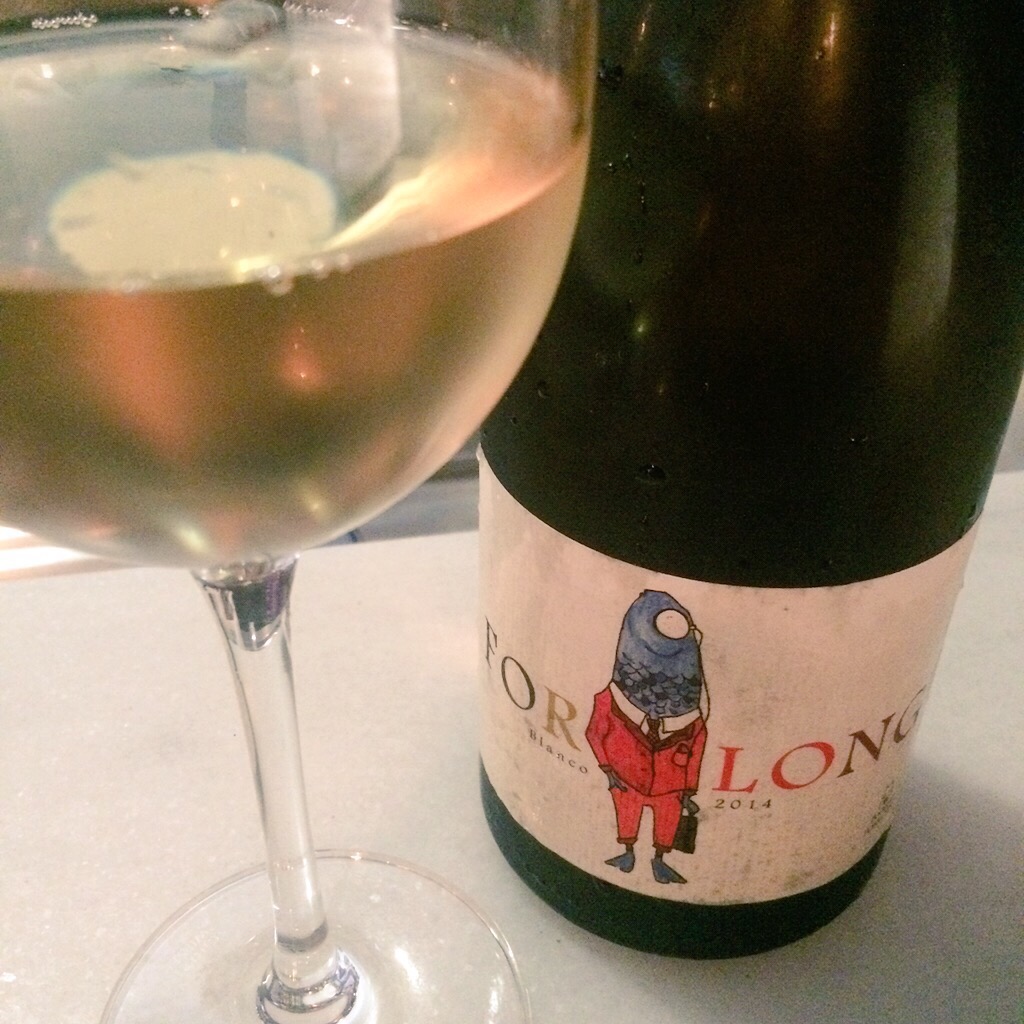
I like this I must say – a white table wine made from a blend of palomino fino and pedro ximenez in El Puerto made by some bright young things using unimpeachably ecological methods.

It is a pale goldish yellow in colour and very clear. On the nose it is fruity – a juicy apricot – and slightly mineral. On the palate too – and nicely balanced/integrated. 

A very nice drop indeed. 

Sherry flavours: umami


I like a nice sake but don’t drink it often – I was reminded I had this because the nose of the Alba Sobre Tabla the other day really reminded me of a sake both for its tropical fruit on the nose and it’s smooth, mellow character.

To be fair I may have exaggerated the similarities. Those descriptors were right in an impresionistic sense but as a wine there is no comparison: this Masumi Sake is really a fish of an entirely different kidney. The nose is fragrant with tropical fruits, the structure is soft like marshmallow and the flavour is that big, filling umami reminds me of a proper english baked rice pudding (with alcohol).

In fact, although the Alba first brought this to mind, the umami of this sake reminds me of the big, bready texture and character of biological wines.

Sereno Solera 2009

  
In Alabaster at lunchtime you get a lot of things – you get top class fish (today sardines, anchovies and hake), you get stylish surroundings and great service, but most of all you get Fran and Oscar – two of the best maitres/sommelieres you could ever hope to come across.

Years ago Oscar used to give me Equipo Navazos in the low numbers before I knew what it was and I met Fran for the first time socially at Sherryfest, when we were both tasting Emilio Hidalgo: these boys reallly know their sherry. So when they suggest a fortified wine from Catalunya (Amporda, to be slightly more precise) you definitely give it a go.

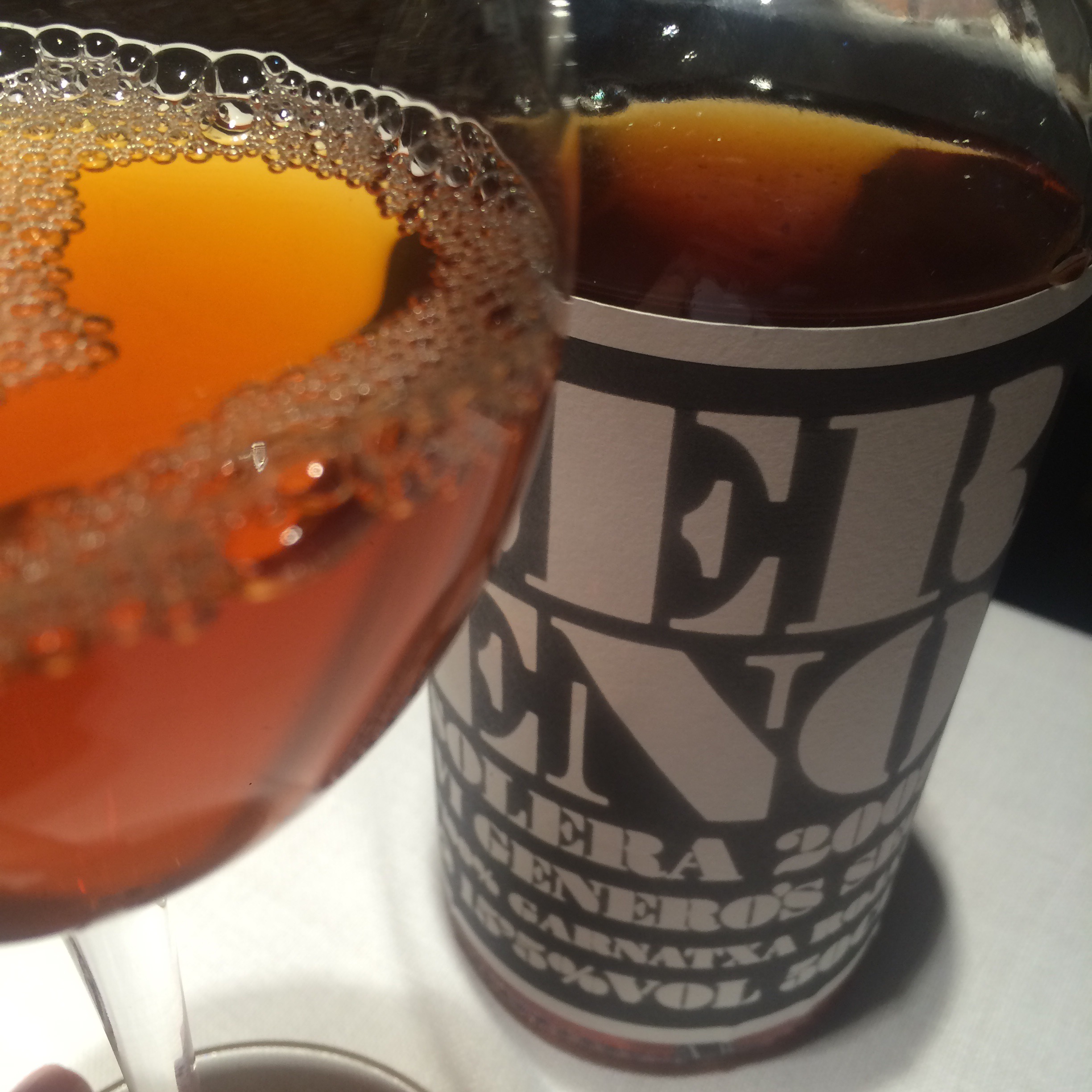
This is a 2009 red garnacha “rancio” – has literally been allowed to oxidize like an oloroso (not sure for how long) and the result is very interesting. It is a red brown in colour and has a fine, red fruity nose to it – very elegant beak.  

On the palate it was dry but something that struck me was the absence of salt and iodine (it seemed less serious as a result) and the lack of volume – the sense of buttery oil and bread. The flavours of barrel and oxygen were there – caramel and treacly fruit in a pretty interesting range of flavours, and the finish was as easy as the nose – nice and light. 

Overall a very accessible sup, but while  I liked it I just don’t think it had the all around depth of character and complexity of a sherry. More interesting to me was the fine quality of it – something you would associate with a very good amontillado or palo. Are we making oloroso with the right grapes? It is an interesting (if impertinent) question. 

Mirando al Sur


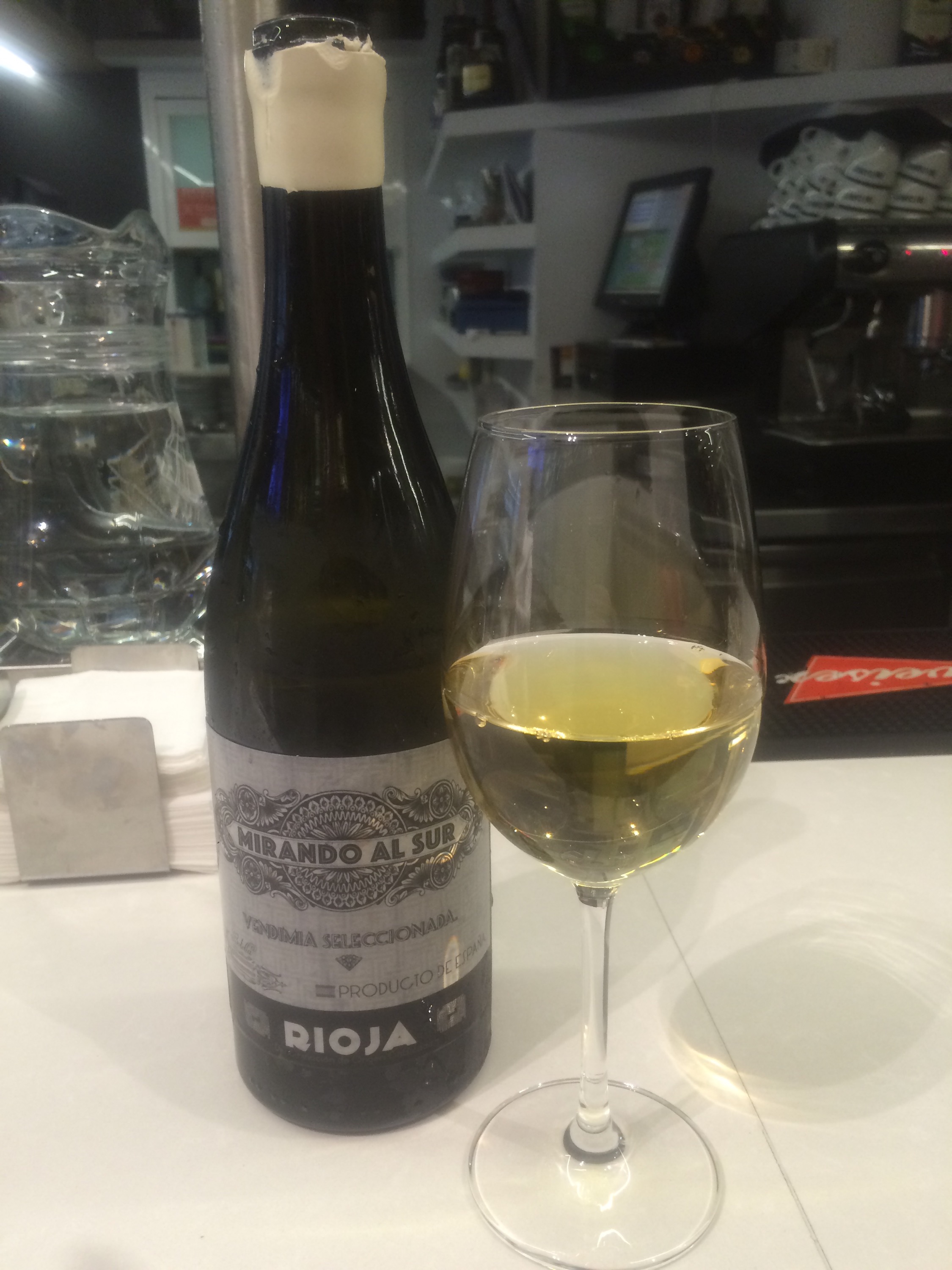
Definitely a ringer but a lovely one. A Rioja white wine – 100% viura – by the livewire man of the moment, Olivier Riviere, which makes it onto this blog because it spends 18 months in oak botas used to make jerez.

It is a rich gold in colour – not un-sherry like (indeed not unlike a good white Rioja). On the nose it is rich and fruity – maybe just the slightest suggestion of almonds and bread in the background. On the palate it has nice acidity, plenty of body to it and maybe just a bit more spice than you would expect – it is certainly long and fading towards the nutty flavours (maybe more hazelnut than almond).

The sherry influence is subtle – in this day and age of florpowers and aged palominos (of which more another time) this is more of a finished product. Overall, a (very nice) white wine with some sherry styling (and all the better for it).

Vin Jaune


Not sherry but one of its distant cousins and if you enjoy sherries these wines – from Jura or Arbois – are well worth seeking out. This one is wonderful – it is a 1986 Overnoy Savagnin Ouillé from Arbois and it is fantastically light despite being packed with citric and yeasty flavours.

While we are at it – here is another spectacular vin jaune – this time a “vin de paille”. It was amazingly acidic and a perfect wine with a sweet nutty dessert.