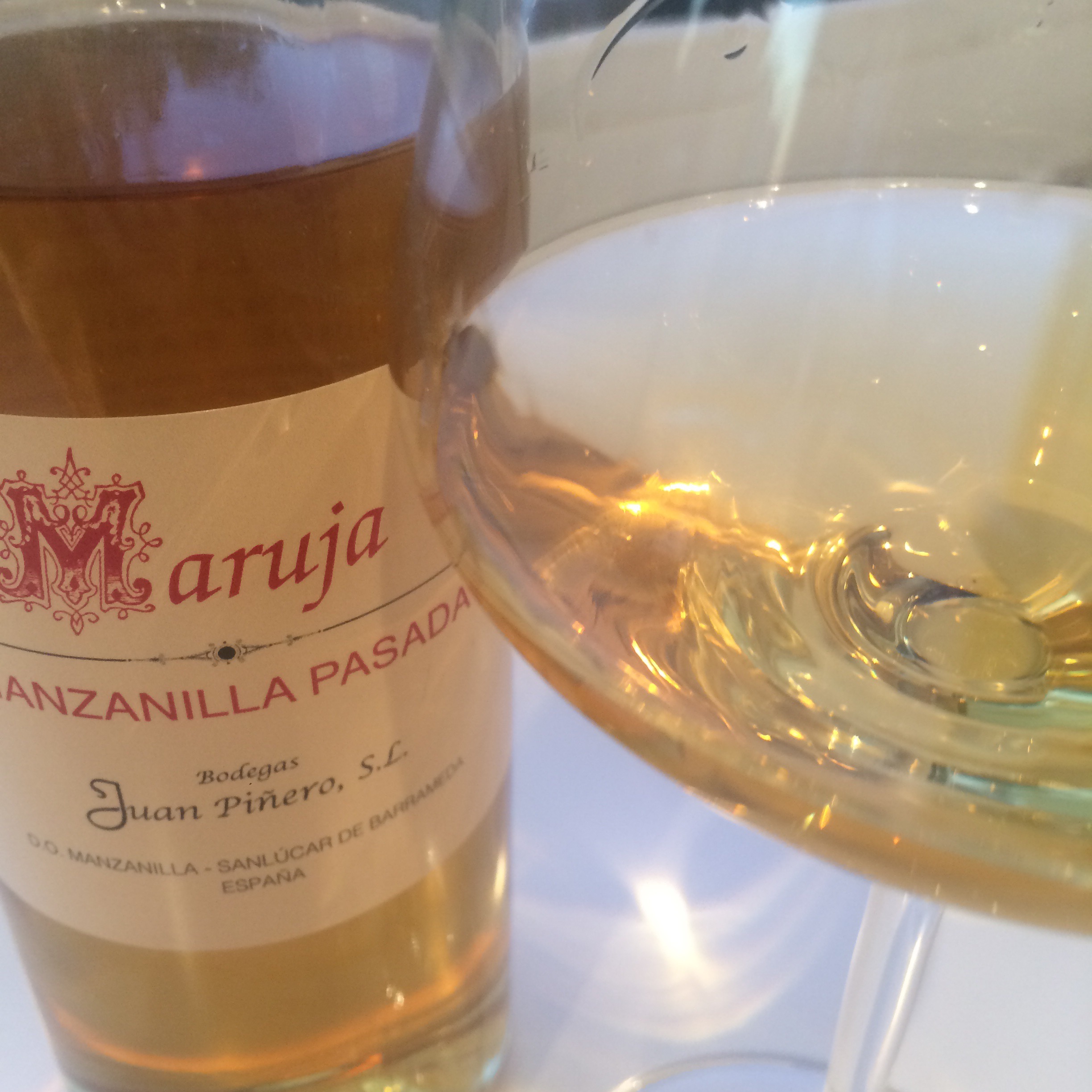
Maruja manzanilla pasada  

Intriguing label on this one – not a lot of information other than to say it has been under the flor only for a few weeks (the most favourable) per year. I am guessing this refers to the end of its time in the solera and, based on the fact that the Maruja manzanilla has an age under flor of 8-9 years I would guess that here we are looking at the last 1-2 years of a total of 10-11.

It has a rich, orange amber colour which it shows off in a clear bottle. I still have the dog end of a cold but even so this has a big, expansive nose full of yeast, apricot jam and sweet herbs (hay bales and salty oregano).

In the mouth it has an oily texture and a really intense, concentrated structure. A big yeasty opening of apricot jam (the home made kind that is nearly marmalade), really nicely integrated salinity and acidity and a long, long fruity, bready finish.

Really like it – a beautiful wine.
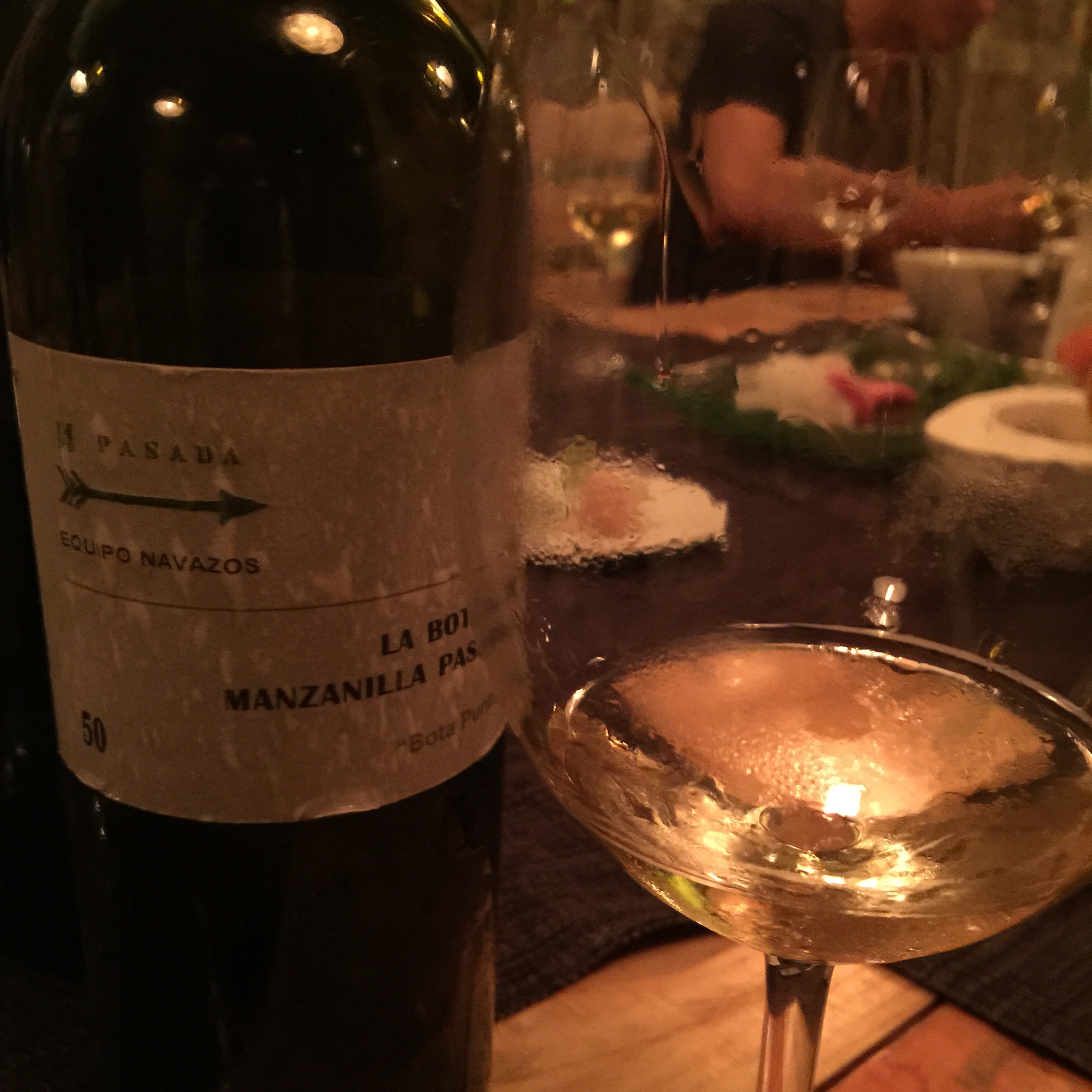


La Bota de Manzanilla Pasada 40

Have now found a photo of this super wine:

Once again, it is an intriguing effort from Equipo Navazos. Slightly dark in colour with hints of brown and green, it has a very mineral, sea air nose to it – maybe just a little bit of hay bale as it warms in the glass.

Once you take a sip though there is no missing the yeasty power of it. It is super smooth in texture – I thought it was silky and it coats the mouth.  It has an amazing structure – acid and salt to begin but powerful vegetable and umami flavours like unsalted macadamias. It also has a lovely long finish, with the salty minerals dropping off and leaving the umami. Really excellent – probably the best manzanilla pasada I have had.

The Goyas 

   
End of week treat at Taberna Verdejo

This place seems to be the watering hole of choice for winemakers passing through Madrid – don’t think I have ever been here without meeting someone or other and today was no different. Jose Mas, of Mas Asturias, up in Bierzo. Fortunately I have some of his wine, but it was not sherry so we move on.

On to the “La Goya” – a special edition manzanilla which I find extremely elegant. Pale in colour and very floral in the nose – really expresses the chamomile it is named for – the salinity  is integrated and it has all the vegetable, yeasty bread flavour you would expect. Hits the spot and sets me up for lunch.

Then, with some Navajas, the Goya XL – it calls itself a manzanilla reposada and it has been brewing up for gone 10 years. As often happens, it is darker in colour but slightly quieter on the nose – same aromas, maybe a bit more salt and iodine but definitely sweet herbal tea. On the palate it is definitely more intense – plenty of yeasty power to balance the salinity. And it goes on, and on, and on, keeping its shape pretty well.

And on we go, to the mackerel escabeche, with the Monteagudo Amontillado – also from Delgado Zuleta. To be honest, I have messed up this pairing – the mackerel is delicious, the monty too,  but they are at odds. One (zee fishh) is vinegary and sweet, the other mellow and dry. My bad.

Next up is a salad of sweetbreads and carabinieros and just take a look at this.  

Again, though, the pairing is not great by me – the sweetbreads would be pigs in muck with the monty, but the salad calls out for acid and freshness. (For this dish I would probably go champagne – and it deserves it.)
And now my esteemed colleague from Bierzo has started plying me with his wares so wish me luck. 


Xixarito manzanilla pasada en rama


The sort of thing that really brightens up a difficult day. (Seen here in a v fancy Riedel sherry glass – not sure I am convinced and am half tempted to ask for a proper glass but will not cause trouble.)

You can see the colour – it is a clear slightly watery yellow gold – this rates as pasada but it is not as dark as the Sacristia AB or maybe even the Equipo Navazos Bota 55.

Does not seem as fragrant as you might expect (the stemware?) – in fact it is really quite quiet – and again more fresh grass than the dry grass you might expect from a pasada.

Not sure though whether to blame the glass 100% because although it is salty and intense like a pasada – a briney, zingy, green olive flavour – it is not quite as expressive as those others mentioned.

Overall you would say a very nice manzanilla – maybe if I hadnt expected the “pasada en rama” I wouldn’t be grumbling. (To be fair those three words are definitely in the fine print of the funky label.)

Manzanilla pasada Pastrana

At the bar in Surtopia enjoying one of the classic manzanilla pasadas – and probably the most widely available. This is by Bodegas Hidalgo La Gitana one of the biggest and most important bodegas in Sanlucar (and not to be confused, under any circumstances, with Emilio Hidalgo in Jerez).

The “Pastrana” wines are the result of a plan hatched by Javier Hidalgo and Cristiano Van Zeller from Oporto. They are made from fruit from a single vineyard and there are two wines: the Manzanilla Pasada; aged for over 12 years, and the Amontillado Viejo, aged for even longer and which has therefore become an amontillado. “Pasada” literally means “past it” – at over 12 years this one gets more time to brew and, as the flor eventually gives up the ghost, a little oxidation.

As a result you get a much more intense manzanilla experience – not so much in the nose (I often find that the longer a wine spends under flor the less expressive it is in aromas) but on the tongue it is very potent. And it is potent. Has a nice easy entry and an almost oily mouthfeel then zingy salinity, intense bitter almond nuttiness, and a long, fresh finish.

It is absolutely perfect with these olives and if you like manzanilla you will love it.