Will sherry be the next “new gin tonic”? (Hopefully not)

The title isn’t my own invention – it is the title of a piece from El Comidista, published a little while ago.

It is a hopeful piece in that it picks up on some of the signs of optimism surrounding sherry at the moment: the Mystery of Palo Cortado movie; the prominence of sherry on the wine lists of top restaurants; the apparent success of sherry in tapas bars in the US and the growing number of sherry bars opening up. It also identifies two of the most important labels behind this new momentum – Equipo Navazos and Bodegas Tradicion.

Nevertheless the title of the piece is disconcerting and the reasoning seems incomplete. Despite a lot of good input, the overall impression is that the author started off with a bad idea and never really joins the dots.

It is true that gin and tonics are dry, as are some sherries, and that for the price of 2 or 3 gin and tonics you could have a cracking bottle of sherry, but the same is true of champagne or, come to that, a lot of quality wines. Why should sherry be a competitor of gin and tonic or vermouth and not of champagne, claret or burgundy (of either colour)?

I frankly am no expert, but whatever anyone tells you about their preferred brand of gin or tonic, their choice of salad accompaniment and goldfish bowl/chalice/goblet to put it in, by comparison to the wines of Jerez and Manzanilla these are standardised products that will cool you down, get you drunk, and maybe (depending on the tonic) protect you from malaria. Gins may not all be made in bathtubs and served in coffee cups these days, but they are products produced on an industrial scale and their success is based on differentiation, branding and marketing more than on uniqueness or complexity.

The same concepts have a role to play alright (the magic numbers again) but the wines made in the sherry triangle can be so much more than marketing. These are some of the most wonderful, complex wines being made and with every advance in terms of terroir and vintage more singular, exciting wines will be available.I really believe there is so much potential in the region for making great wines that it would be a tragedy if they fell back into the bad old ways of chasing the mass market.
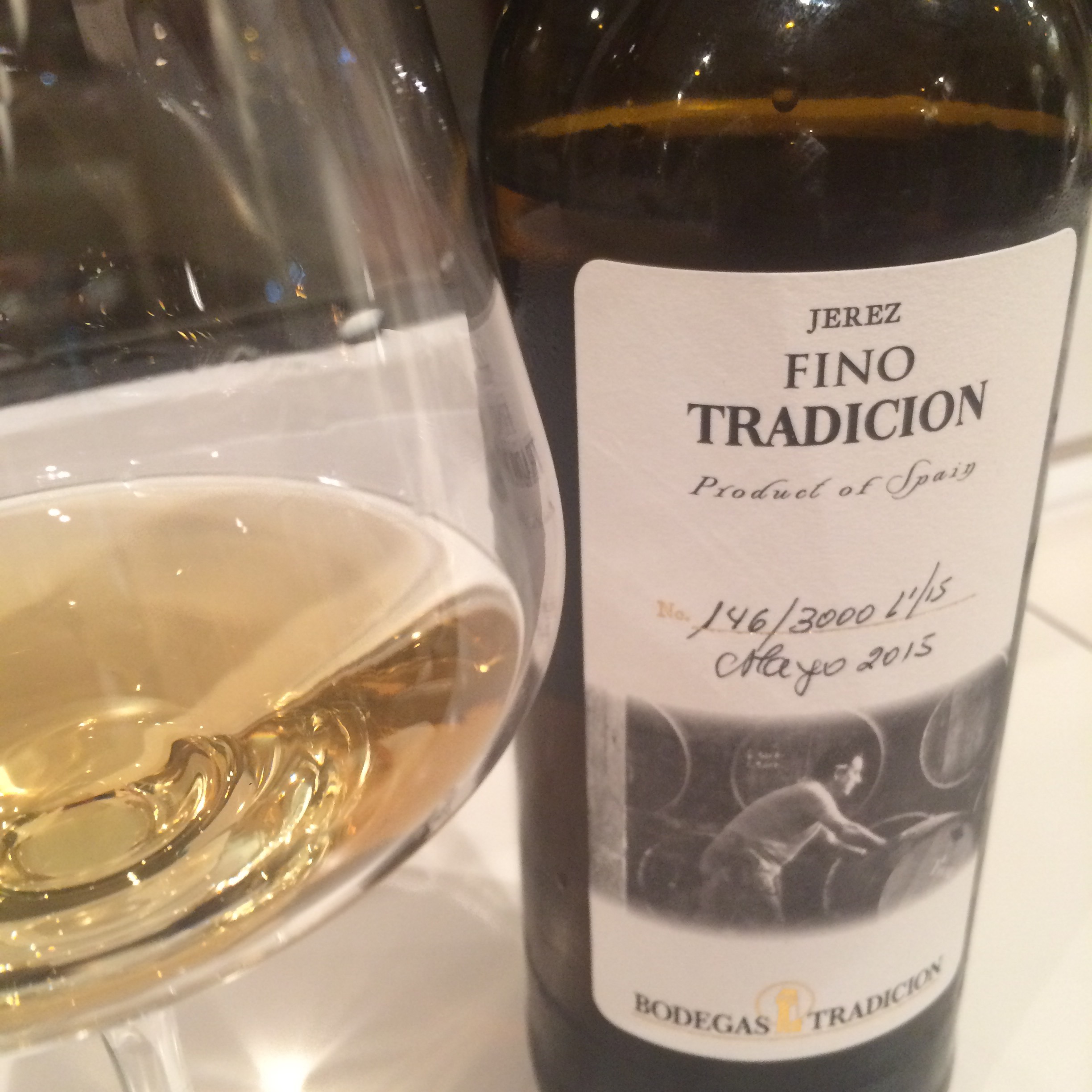


Fino Tradicion may 2015 

Yum and indeed, yum. This is absolutely spot on – a big yeast bomb. Nice gold straw colour. Fresh hay bales on the nose, intense saline citric juiciness on the tongue. Long, but a touch bitter on the finish.

Really good – I am more and more of the view that these Tradicion Finos are better taken in the first few months.

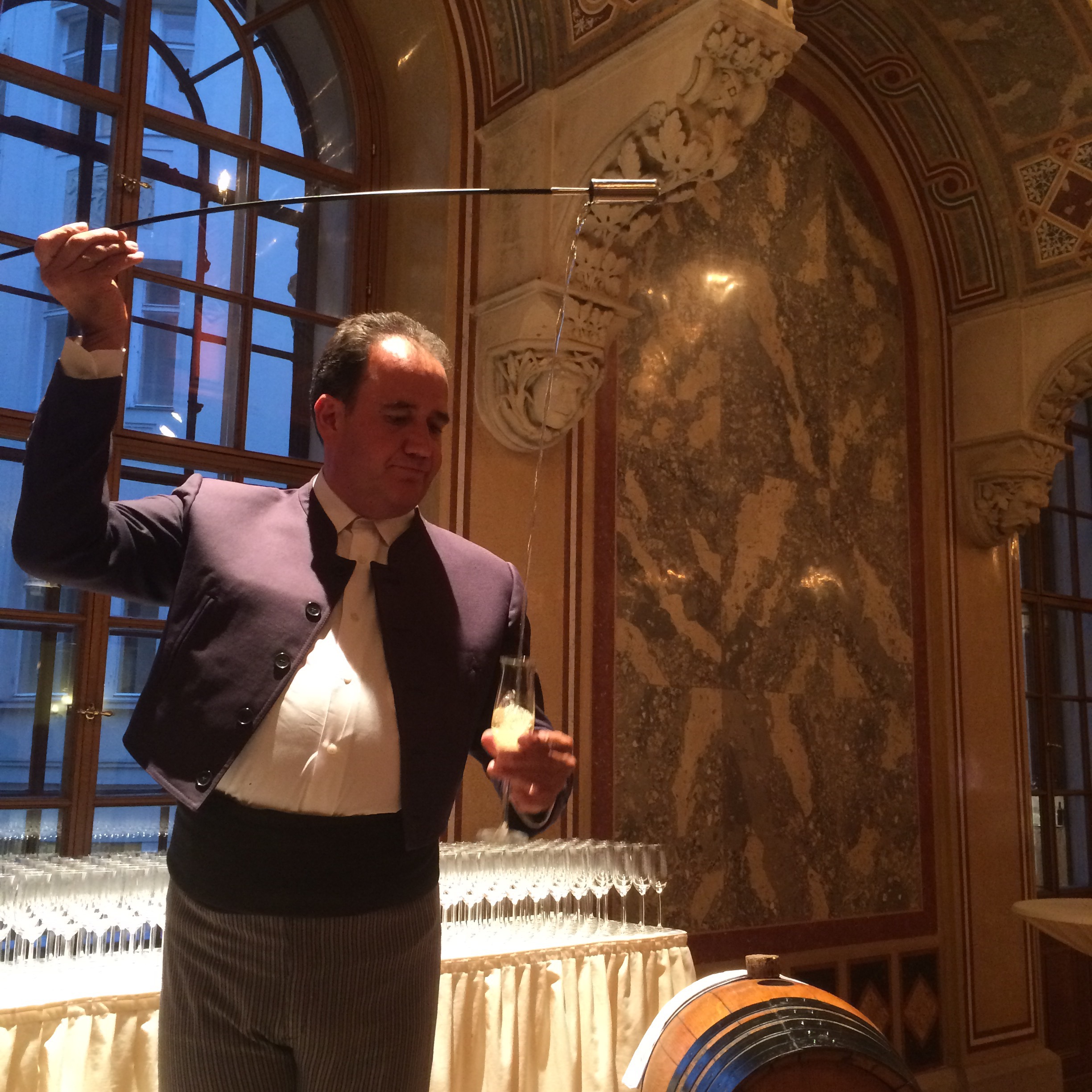
Straight from the barrel 


Any time you have the chance to try biologically aged wines from the barrel you must take it.

Here the libation in question was a vino fino by Bodegas Gongora from Seville and, although not a vino fino de jerez, was very decent. It was a nice pale gold colour, not quite crystal clear and maybe a touch of brown/green to it. A delicate, yeasty nose with some nice mineral notes of campfire smoke, and a tangy zing. Not a big, juicy wine but very approachable. It was superb with some jamon de jabugo.

Even more impressive, though, was the venenciador – your man must have served well over a thousand catavinos during the evening and never a drop did he spill. Superb stuff.

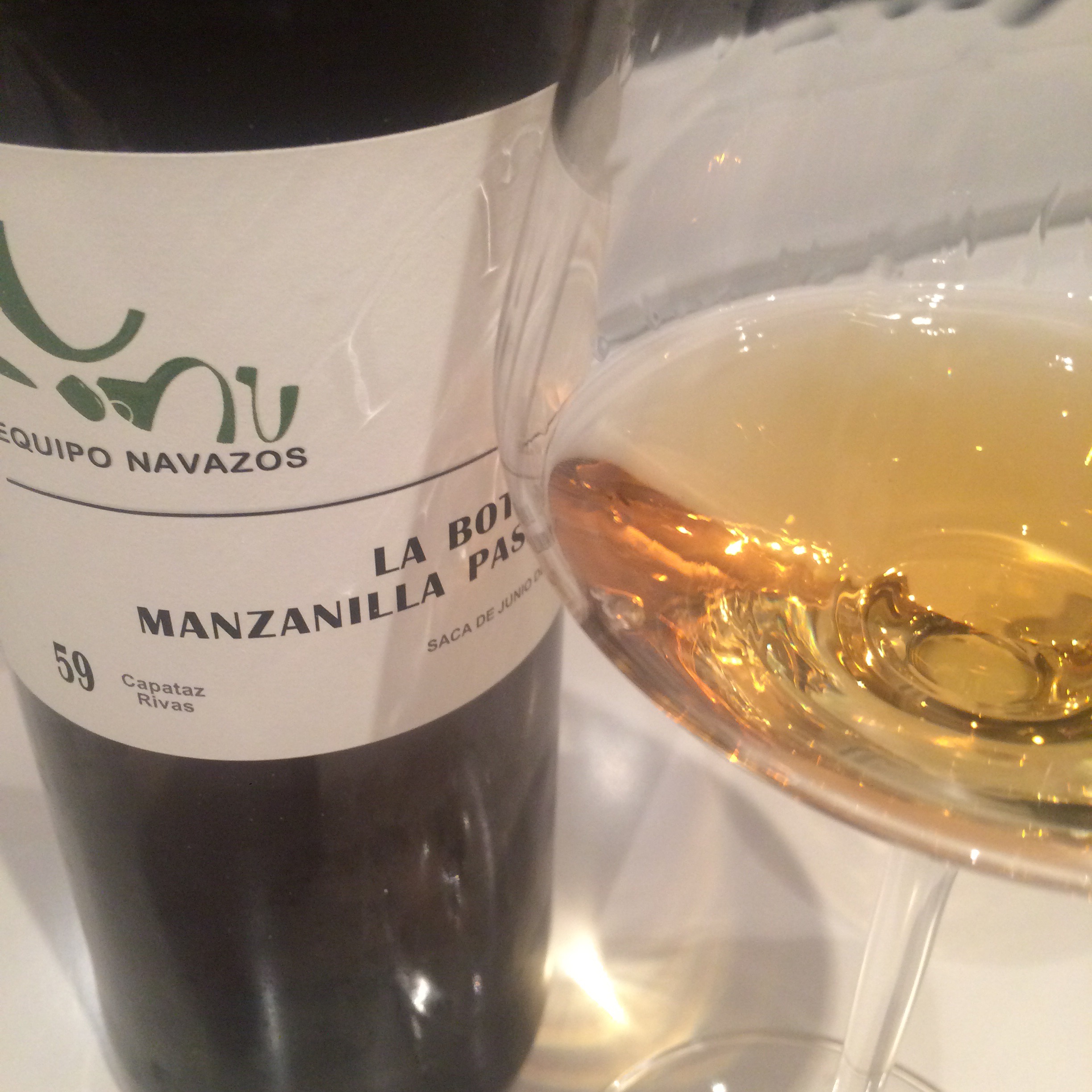
La bota de manzanilla pasada 59 – Capataz Rivas 

  
Yet another high quality release from Equipo Navazos and the latest in a line of very high quality manzanilla pasadas (the most recent – No 40 – is my favourite).
This is a golden colour (without the brown/green that I remember from previous editions) and crystal clear. It has a salty sweet nose, like salty chips, bready yeast and a bit of caramel underneath. 

On the palate it is smooth and silky, with a nice shape from the salty zing and a softer, sweetish finish. Not as much power and body as I expected.

A really nice drop once again – although for me it doesn’t quite scale the heights of the 40. Maybe just slightly past a pasada and on the way to an amontillado.

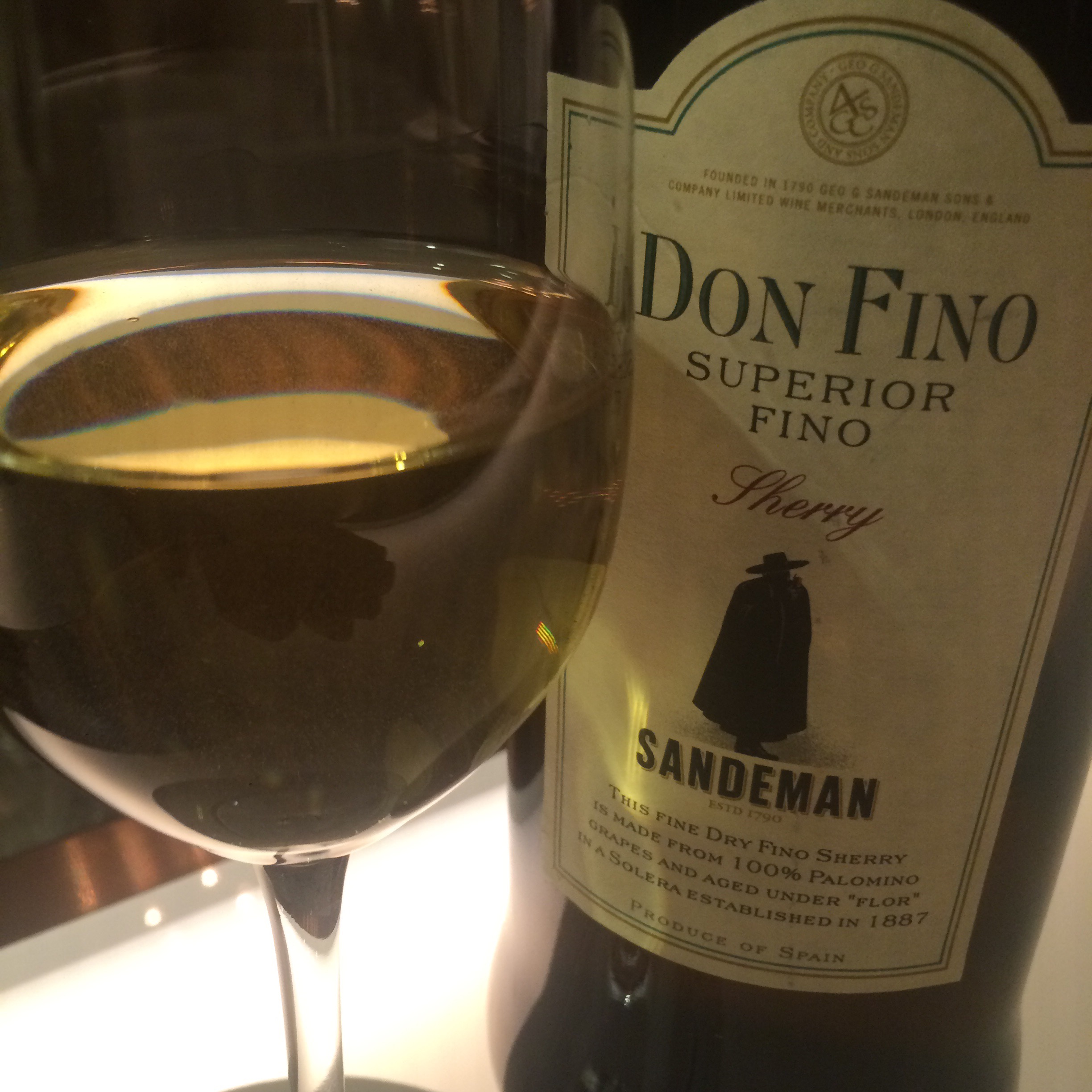
Sandeman Don Fino 

  
This was a pleasant surprise – I am removed this week to Vienna, a grand old city at the heart of Europe but not a city where I expected to have much access to my favourite tipple. I was quite wrong – at the hotel bar last night there were no fewer than four sherries on offer, including the great Tio Pepe and this. 

You can’t judge the colour here – it was very dark (as night always seems to be in Central Europe)  but despite the gloom there was no mistaking the straw/yeast notes in the nose. On the palate it was very smooth and pleasant, gentle salinity and nice nutty, bready flavours. Perhaps served slightly warm and I had the sense that it may have been open a while, but very nice.

More importantly, since I am here until Thursday it is good to know that these are on hand. 

It’s official

Guest Bloggers Badges - Black

Hawk eyed readers using a screen larger than a mobile will have seen the above logo appear over there on the right hand side (more or less where I intended). The reason is that I have been, as the logo suggested, invited to contribute some content to the snazzy new web of the Consejo Regulador.

So far I have only contributed one guest blog – very much a first effort (without giving too much away, I actually wrote it a while ago) – but hopefully also the first of many.

El fino que va para amontillado vs Solear en Rama


The hay bales on the manzanilla made me wonder how they would compare to this little beauty that I have had open for a while and which, from memory, had those yeasty aromas in bags, but the comparison is more revealing than I thought.

Next to the manzanilla the fino is a little muted on the nose, but on the palate wow – the px fino is a big juicy raisin in hay bale clothing. It has that salty zing ok, but it is much less savoury, more fruity and the word is rich.

Two really high class wines, but I am a palomino boy based on this.

Solear en rama – Saca de Invierno 2014 

  
Nothing helps transition to the weekend better than a manzanilla, and since the winter is drawing in here in Madrid (ok, it is 20 degrees C but a bit breezy and leaves are definitely falling) this winter edition feels appropriate.

It certainly hits the spot. A beautiful gold in colour it is hay bales and herbal tea on the nose, and then salty, intense and juicy – a real mouthfull of savoury fruit/sweet roast veg. 

Love it. 

Pitijopos Volume 1 – 2014 


Yet another cracking project from Ramiro Ibañez (he of Encrucijado, the Manzanilla de Añada and other projects) and something I am really looking forward to getting to grips with.

Called “Pitijopos” it consists of a case of six examples of “mosto de pago”. Mosto is the name given to the unfortified palomino wines that are used to make sherry (confusingly, it is also a term given to unfermented grape juice elsewhere in Spain and the english word, “must”, clearly refers to a sort of intermediate stage). “Pago” on the other hand is a term given to specific vineyards/terroirs. Normally you would hear the term “vino de pago” as meaning single vineyard wine, or a wine might be called “Pago …”.

So here we have examples of mostos, from a single vintage, 2014, and a single grape, palomino, but from specific pagos from around the jerez region. Specifically, from six different locations ranging from Northwest to Southeast: Trebujena, Sanlúcar, Rota, Jerez (2) and Chiclana. Tasting them all together (which I intend to do as soon as I have a chance to really appreciate six bottles of white wine at once) is probably a unique opportunity to compare the differences in character that result from those differences in terroir.

Even if you can’t get six of them (I am told there were only around 100 cases of this available) I would recommend any sherry enthusiast to try mosto if you can.  The very best tasting I ever experienced (at Emilio Hidalgo) started with tasting some mosto and then following it up through the chain as sobretabla, fino of different ages, amontillado, oloroso – it was frankly the most formative lesson of my brief education in these things, and the mosto was a key part. It has a very distinctive aroma, structure and flavour which is worth getting a handle on since it will really help you appreciate the same dimensions of the fruit in the fine wines that have been undertheflor (once you have smelt mosto you will recognize it in a lot of finos and manzanillas, in particular).

As always, these have been on the road and I need to give them time to settle in, but I will report back when they are ready.


Undertheflor – the first 6 months

Just realized it was six months ago yesterday that I first started playing around with WordPress in an idle moment. The time certainly seems to have flown by. In those first 182 days I have apparently posted 167 times (think that includes this one), and been visited nearly 4,000 times by around 1,500 visitors from IP addresses in over 40 countries.

I have learned a few things along the way. The first was that I really did, as the cliché goes, know virtually nothing. Not only was I not aware of the existence of other sherry blogs, neither was I aware of many of the sources of excellent reading that I have stumbled across since. The best I have read in the last six months was a superb piece by Alvaro Giron Sierra on the Vila Viniteca blog which really got me thinking and which I highly recommend (one day I will translate it).

Highlights so far? The most amazing wine was Toneles, although the best, from a very good group, may have been Privilegio and the most exciting was this weekend’s Callejuela Manzanilla de Añada. Most amazing pairing was a spectacular combination of roast garlic and palo cortado in Mugaritz which also lead me to one of my favourite posts, you win somm, you lose somm, while other favourites would be How to be a bad sherry blogger (although you should really read the original book) and the Magic Numbers (the truth of which I think is borne out by the sheer number of Equipo Navazos wines that have featured on here).

All in all, I have certainly enjoyed it so far – hope some of those 1,500 visitors have too.