
Sunshine, tapas on the way …
Sunshine, tapas on the way …
There was a glimpse earlier and here is the most venerable of the palmas range, a very old (infinitely, according to the label, but more likely around 45 years, according to earthly sources) amontillado from a single bota from the so-called “Museum Solera”.

It is an amazing wine – it is fragrant, potent and long lasting, but what is really remarkable about it is its elegance. These days with all the boutique and niche sherries coming out you can get some really tough, woody old amontillados, but this one is so balanced it smells and tastes younger, lighter, but full of pure flavour. It is also so long and all round pleasing it deserves to be up there with the very best wines.
A really exceptional drop but be warned – admission to this museum is pretty costly.
It’s a beautiful sunny afternoon in Madrid, day off tomorrow and snooker on the TV – time for a drop of temper restoring fino.

Fino Una Palma (literally, one palm) is the first of the range of four bottlings selected by Antonio Flores, the superstar head winemaker at Gonzalez, which are named after the traditional barrel heiroglyphics used to indicate highly prized botas.
This one has been selected to represent the finos. It has an average age under flor of six years (compared to Tio Pepe’s five) and is an excellent example of the breed – a silky, fatty texture and it smells and tastes like the epitome of fino. Loads of minerals, nutty (raw, not roasted) and a slight hint of apple/citrus. It is a full bodied wine but probably works best a little cooler – say 9/10 degrees rather than 12/13.
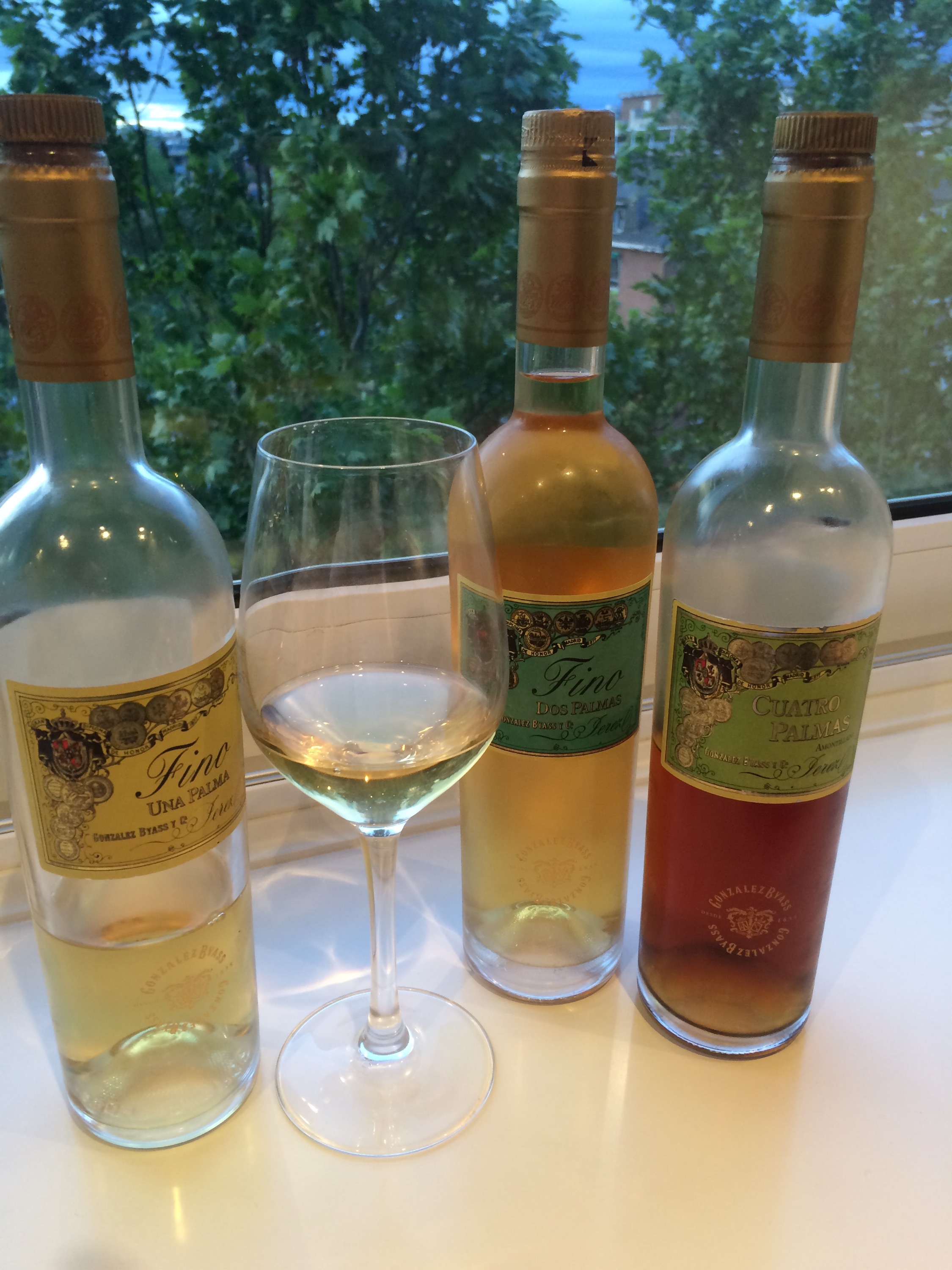
Here, in fact, is a nearly complete family photo – can’t believe I don’t have the Tres Palmas but you probably get the idea (yet another blogging fail)
This here is what I mean by a small but perfectly formed list of sherries – a great mix of styles (fino, amontillado fino, amontillado and oloroso) and of palomino (La Panesa, El Tresillo, Micaela, Gobernador and Fernando de Castilla) and PX (the capatazes).
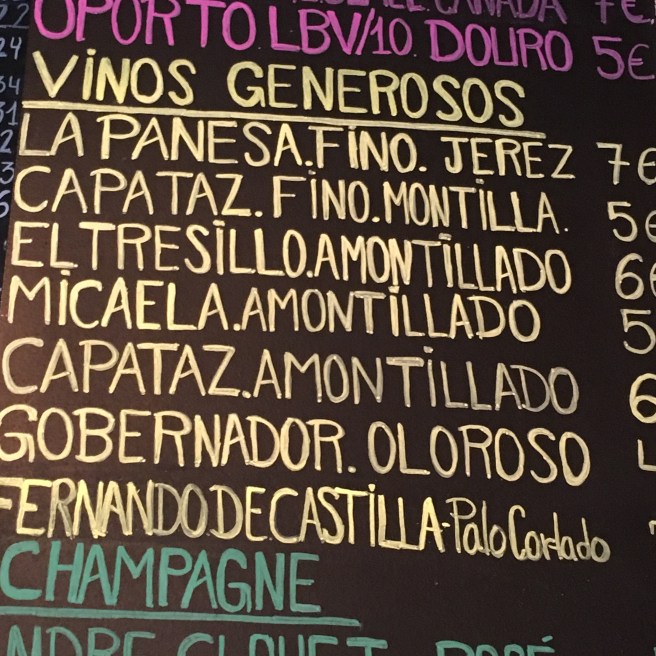
It also forms part of a fantastic selection of wines by bottle and glass in general – here is the current edition.

And even that doesn’t do full justice to the remarkable Ana Losada – a gem of a sommelier – who often surprises the thirsty with something out of the box.Today she gave us a fantastic amontillado I had never heard of (and forgot to take note/photo of – see earlier blogging fails) – I will clearly need to return.
In fact, this is probably my favourite place to eat and drink in Madrid – not least because the food is every bit as good as the wine. Here is a piccy with the menu but if I start trying to tell you what they have this will become a food blog.

For me, this sherry is the boss.

It is a bright red, orangey chestnut in colour. On the nose there is caramel and some hints of fruit (orange and even ribena) and aromas of chocolate, tobacco, liquorice, cloves and spices.
On the palate it is elegant but has powerful flavours: black treacle, bitter baked oranges and dark chocolate. It really is awesome – in fact the first time I took it to a wine tasting it was overwhelming.
Overall, this is outstanding, and at 70 euro or so a bottle it is also outstanding value.
At least in part this blog – and in fact my interest in wine in general – was inspired by Simon Barnes’ terrific book How to be a Bad Birdwatcher.
The thesis of the book (subtitled “To the Greater Glory of Life”) is really that life is enriched by the mere act of lifting up your eyes and enjoying the things that are all around us, and that the more you learn about them, the more you enjoy.
If I remember right, the first piece of advice is simply that the next time you see some birds fly by, you should look at them and observe how amazing they are. The second, that you should enhance your pleasure by learning something about them. After that, you will find that the knowledge enables you to identify those birds and discover new birds, seek out information on the new ones, and so on. The knowledge then accumulates and the more you know, the more you enjoy, and then at some point I think you start hiding under blankets in fields with long lenses.
It is fantastic and I can’t recommend the book too highly. After reading it I really did start birdwatching – and even got into some amusing situations with binoculars in public parks – but I soon realized that the same rules apply in other fields.
Specifically, I noticed how much more you get out of wine when you really try and observe it – when instead of glugging it down you take a moment to look at it in the glass, smell the aroma and splash it around your tongue and tonsils. Then you start learning little odds and ends – winery visits are great for this – and, before you know it, you feel like you are beginning to understand things, and really enjoying it.
In my case, I have found that the blog adds to the fun. It has given me an excuse/a prod to drink a few different sherries already (and I have some real goodies lined up), has forced me to try and observe them and even to try and put my observations into words. The latter part is a lot more difficult than I expected (I frankly admit some of the descriptions are based more on inspiration than information) but it is also highly enjoyable – once your imagination starts telling you a sherry tastes of caramel, or nuts, or herbs, or bread, then it doesn’t take much more.
And there is also some cracking bird watching around Jerez, or so I am told.
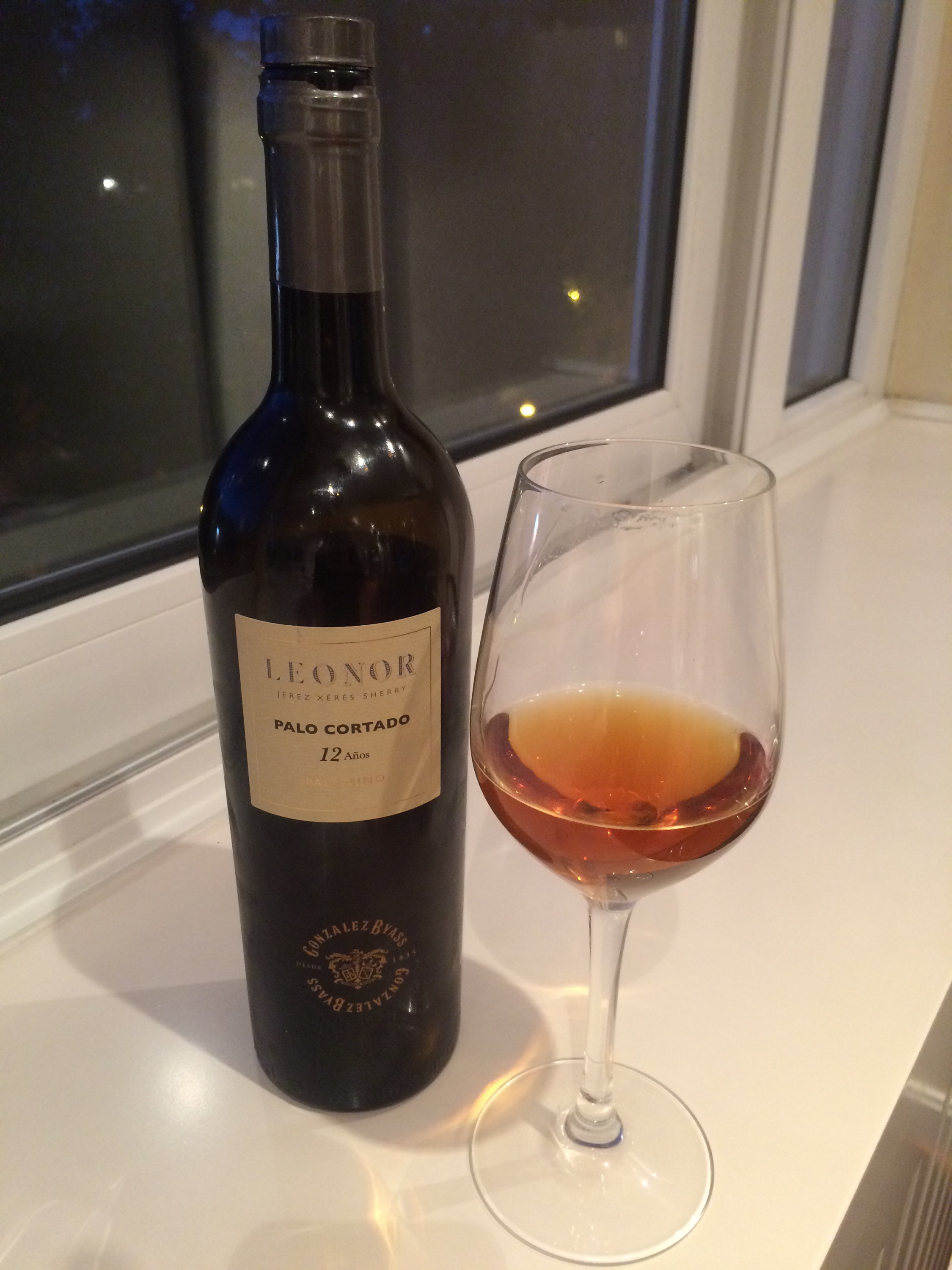
I love them and they are sometimes really great but palo cortados are probably the most overhyped of sherry wines – they bring the blarney out of makers everywhere. They get their name from the heiroglyphics that the cellarmen put on the barrels in the bodega. Specifically, they are selected as suitable for making fino under flor and therefore marked with a straight line or “palo” (literally, stick). However, shortly afterwards the barrel is chosen instead for “traditional” oxidative ageing (perhaps because the flor doesn’t develop as it should) and so the cellarman (“capataz”) strikes a line through the first one to make a cross – a cut stick, or “palo cortado”. The wine is then fortified to ensure the flor does not grow back and then the wine is traditionally aged.
As a result, what you get is a creature with a little time under flor – compared to an oloroso with none and an amontillado with plenty (amontillados are allowed several years under before the wine is fortified to allow oxidative ageing). The resulting difference in character can be amazing: palo cortados can be much lighter than an oloroso and punchier than an amontillado.
This one is Gonzalez Byass’ 12 year aged palo cortado – a young and mellow example of the class that would be an excellent dinner wine – could go anywhere a full bodied red wine can and beyond. Clear and chestnut brown, sweet on the nose and chocolate caramel in flavour. Maybe just a little bit of heat but not too acidic or concentrated – and overall nicely balanced.
It really is a nice drop and criminally inexpensive – this one was a mere 17 euros, which when you consider its age and the effort that went into it is quite remarkable. Given GB’s reach it should also be obtainable widely.
This is an amontillado selected by Antonio Barbadillo Mateos (i.e., not the Antonio Barbadillo) from the old soleras of Bodega Francisco Yuste and was an inspired purchase from Mares Vinos one sunny afternoon.
It is crystal clear, chestnut in colour – almost a dark rosé to look at. Very sweet on the nose with lots of caramel, but then a lot of Sanlucar salinity on the palate, together with burnt caramel and spice and minerals. Maybe not much by way of yeasty, bakery flavours – you could almost think it was a palo cortado rather than an amontillado – but then it has the elegance and refinement more akin to the former.
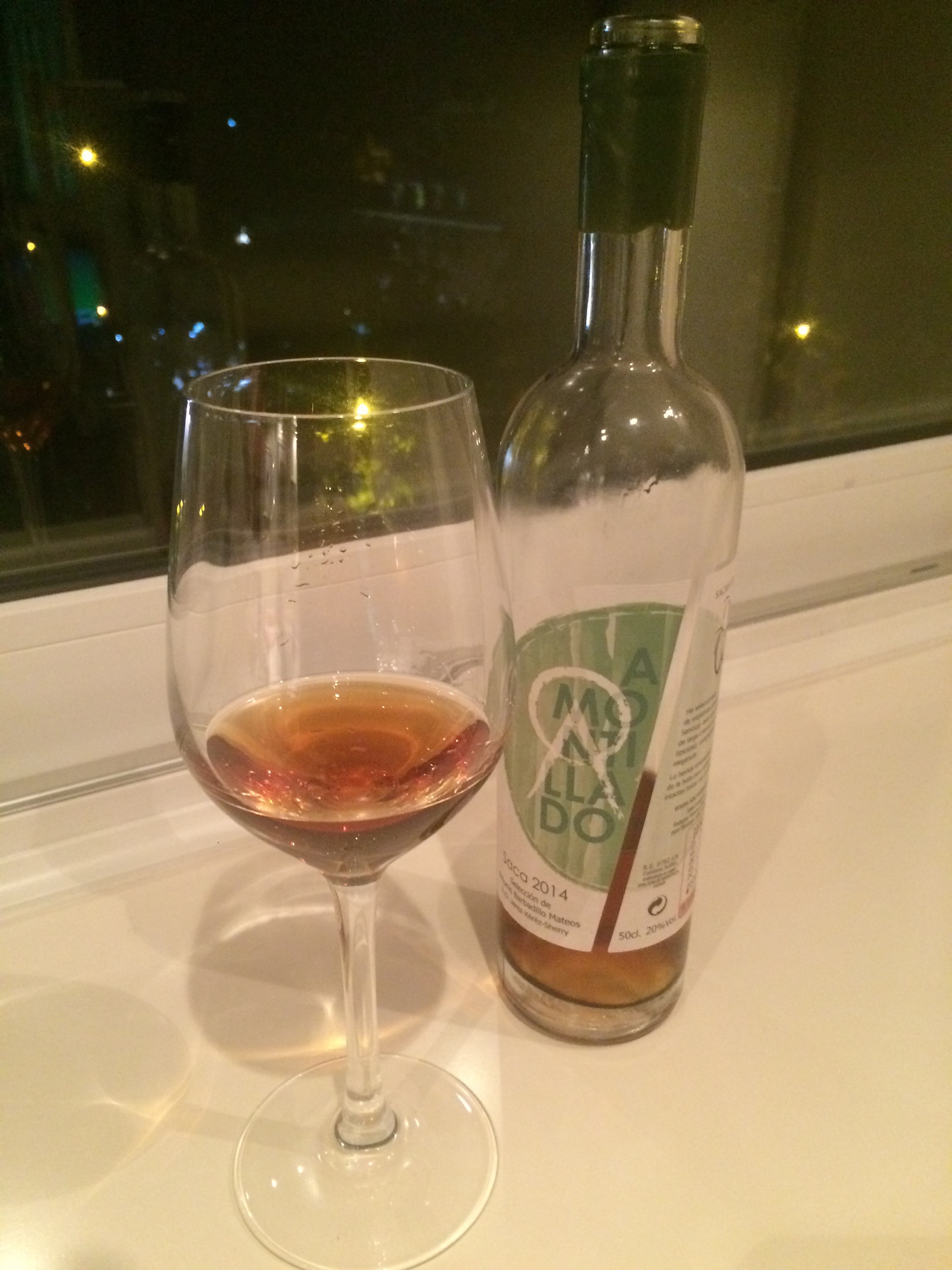
This is an expensive wine by sherry standards – 70 euros or so for a 50cl bottle – but a highly enjoyable one.
Has been to a nice manzanilla tasting and it aounds like he has caught the bug – great piece in the NYT and I am glad I don’t have to pay New York prices for these wines.
Wines by Lavinia – some top range sherries in this list but why not add a more basic oloroso, palo or amontillado? Seems a bit of a jump from top to botttom

 undertheflor.com