Leonor Palo Cortado


Coming back to this a good while after I last tasted it. 

The first impression is the colour – it is a light brown, orange amber – and the second is the sweet honey in the nose. To be blunt tonight the nose reminded me of a Crunchie Bar – albeit a Crunchie Bar with a bit of background alcohol. On a deeper inhale there are also notes of the fruit of a dessert wine (not a PX either).

On the palate the flavours are a bit more black treacle/toasted caramel – some nice acidity and heat. I don’t get the honey or fruit at all on the palate – although maybe a little bit in the texture – all in all it is a juicy mouthful. 

The old and the, er, equally old

Thought it would be interesting to pour sniff and sip side by side. 

On the left, the Inocente, on the right, the Number 54. The number 54, with its dusky colour, stronger hay bale aroma and notes of oxidization looks and feels like an oldy and it is indeed 10 years old. The Inocente is paler, fresher and fruitier and is … 10 years old! 

This is a real revelation for me – I knew about Inocente’s single vineyard palomino – from the classic pago macharnudo alto. I also had the idea that it was one of the great traditionally produced wines, but I must admit to surprise at the average age. 

There is a clear difference in colour and in nose – but side by side it is clear there is no difference in intensity. The flor on the big oak barrels of the Inocente has clearly not eaten away as much fructose and has prevented the air getting to the wine – it gives a new meaning to the name in fact – but it has been doing its magic nonetheless. 

The caramel sweetness and herby aromas and body of the 54 are attractive and probably make it slightly more of a wine than the inocente, but they are not the product of mere age – rather selection, oxidization and the almost en rama bottling.

In fact when you consider the price difference I feel like I have seriously under appreciated the Inocente. This must surely be one of the cheapest 10 year old classics you can buy.

Fino Inocente

After the two slightly older than average finos of recent days I had a hankering to try a classic fino –  and this is a classic fino.

In colour it is a pale straw – with maybe just the tiniest tinge of green. On the nose there is a bit of hay bale but it is definitely more wet grass than dried grass, some muted green apples in the background and a bit more alcohol than I expected. It feels oily in the mouth and it has noticeable salinity – a real mouthful of pure seawater – then the yeasty, vegetable power catches up in a hurry – maybe just a hint of lemon and a real tingle on the tongue.

Overall a classic aperitif refresher – I can imagine drinking barrels of this if I am not careful.

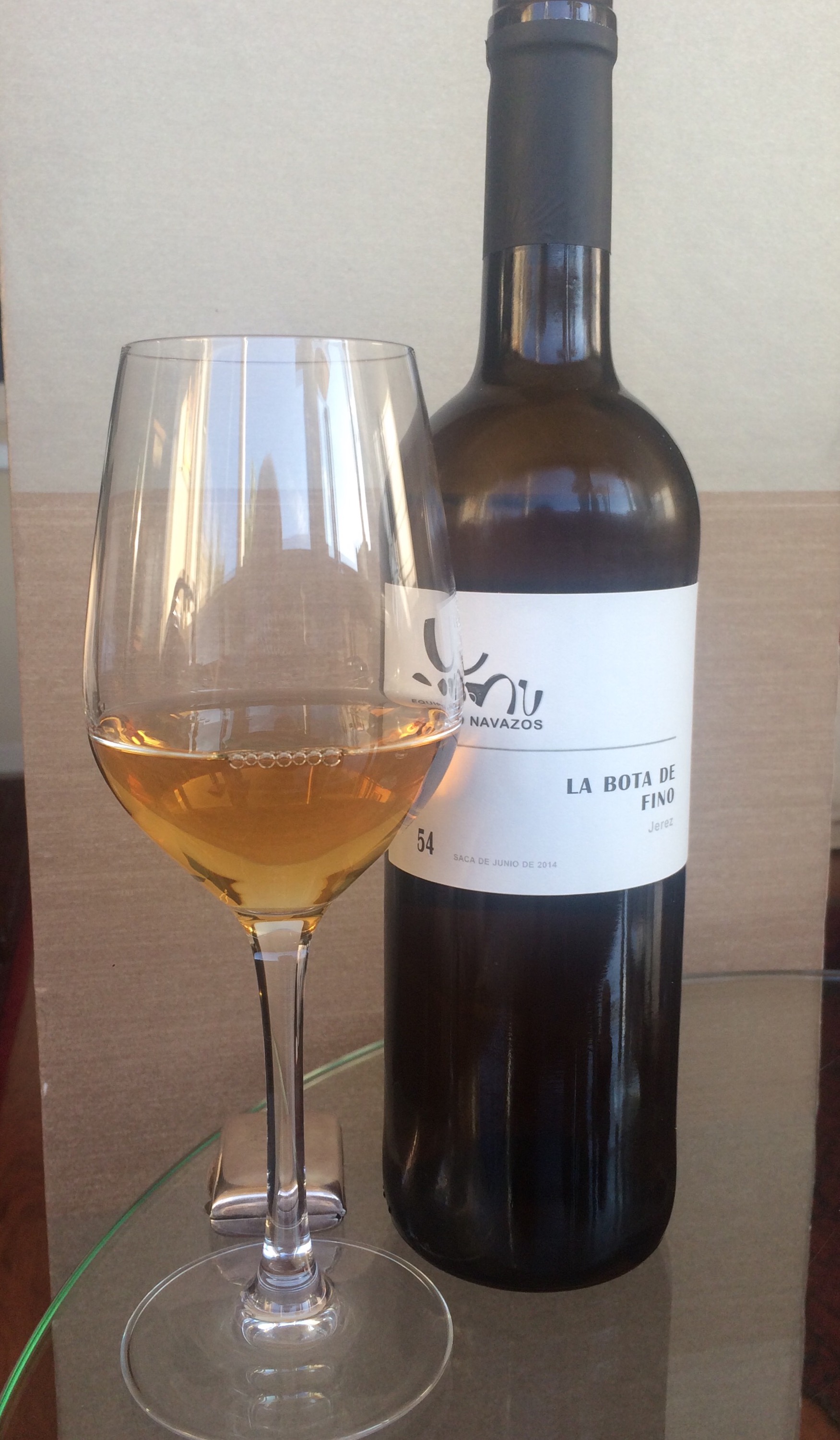
La Bota de Fino 54

Just look at this remarkable fino from Equipo Navazos. The colour is a real old bronze and you just know it is going to be full of body and flavour. I sometimes think these Equipo Navazos bottlings can be a bit extreme – particularly a recent series of palo cortados – but this is right up my street.

As the colour suggests there is just a hint of oxidization in the nose – not quite caramel but a sweet edge to surprisingly muted aromas of yeast/hay-bales. It isn’t muted on the palate though – the yeasty, vegetable power of it is a joy. Integrated salinity, hints of fruit – and the merest suggestion of oxidization. It really is a great combination of dry herbs on the front end and juicy yeasty fruit on the back, with a lovely long finish too.

I quite like it!

El Tresillo 1874

Apologies if these posts are repetitive but this wine is like the proverbial pig with a wooden leg – too good to consume all at once.

First the lovely red colour – almost pink – is really appetising. Then the massive multifaceted nose: to me it is black treacle on caramel, just a hint of spices and cooked citrus. In terms of mouthfeel it is zingy – definite acid and volatility – but the flavours are again super rich – black treacle with maybe just a bit of chocolate and a definite bitter citrus edge. It is of course immensely long.

Absolutely superb (again).

Fino Dos Palmas 

The second of the hand selected “palmas” range (see the Una and the  Cuatro) by Antonio Flores at Gonzalez Byass this is an eight year old, en rama big brother of Tio Pepe (5 years) and Una Palma (6).

A nice rich yellow gold in colour (would have been a better picture had there been sun today) and a smooth but powerful yeasty or hay bale aroma – maybe just a little bit of olive juice and alcohol in the air too.

In terms of mouthfeel it is rich but not too oily. On the palate I don’t find it very expressive – it is a big solid, very well integrated packet of flavour and very long. The flavours are vegetable verging on fruit and to me the salinity is very harmonious. Did I mention how long it is?  I wrote those last three sentences (finger by finger on an iphone) and this one since my last sip and it is still there, hanging around.

For me, if there is anything that truly characterizes these Palma bottlings it is that they are tidy wines – well balanced and organized, and they keep their shape well. You would say they are not as flamboyant in any attribute as some wines on the market but this is quality, no doubt.

As for this Dos Palmas, it is a style of wine – an older fino – that has its detractors because it seems to fall between two stools. It is neither a fresh young fino (Una Palma) nor a caramelized, zingy amontillado (Tres Palmas). I think on the whole I would tend to agree – unless you go really old (like the incomparably massive, complex giant that is La Panesa) it is hard for these wines to have a really distinctive voice.

Having said that, there is a lot to be said for tidy elegance and there is no doubt that this wine has that bit of extra body. Must be ok because it is nearly gone already.

Xixarito manzanilla pasada en rama


The sort of thing that really brightens up a difficult day. (Seen here in a v fancy Riedel sherry glass – not sure I am convinced and am half tempted to ask for a proper glass but will not cause trouble.)

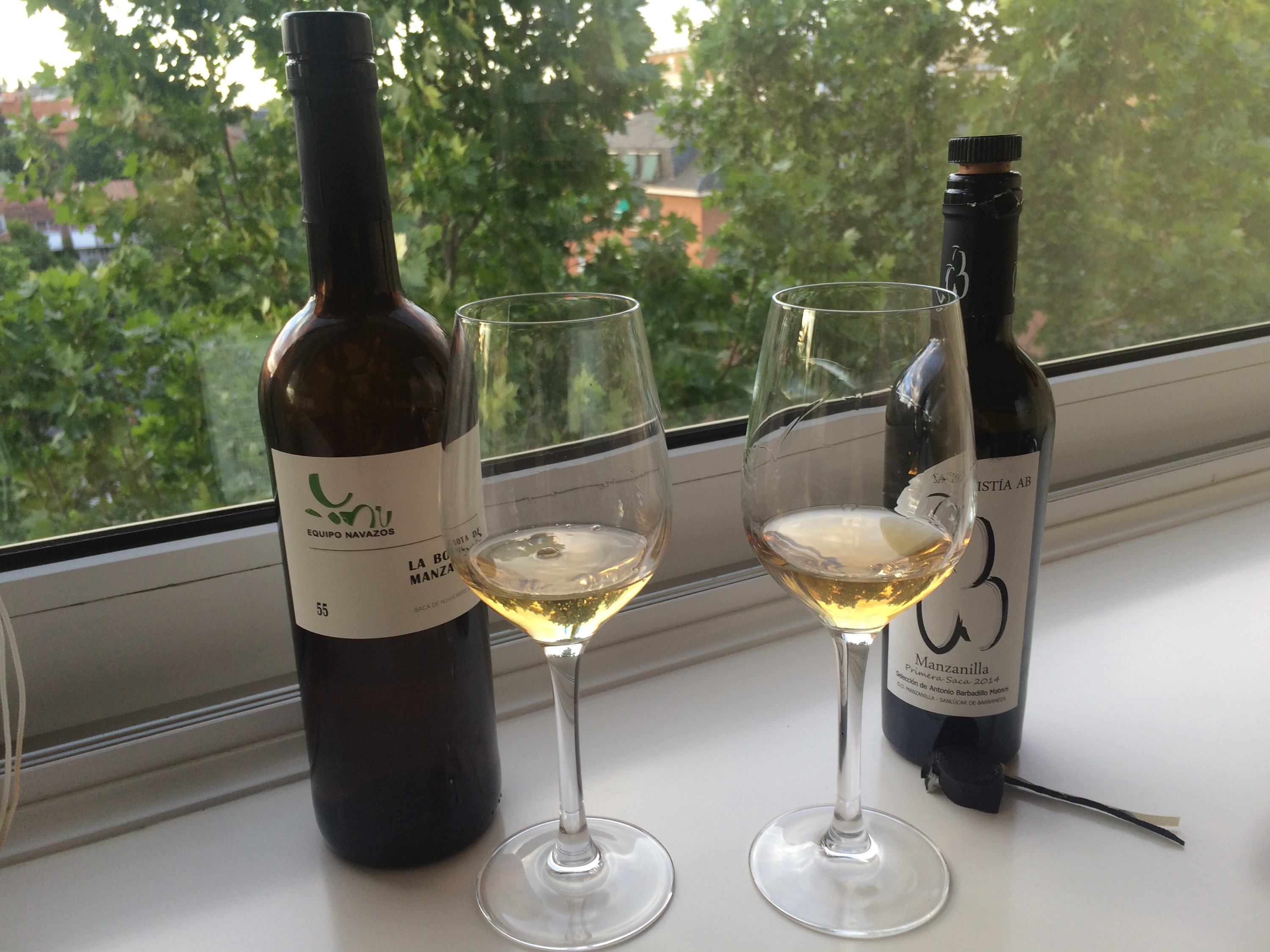
You can see the colour – it is a clear slightly watery yellow gold – this rates as pasada but it is not as dark as the Sacristia AB or maybe even the Equipo Navazos Bota 55.

Does not seem as fragrant as you might expect (the stemware?) – in fact it is really quite quiet – and again more fresh grass than the dry grass you might expect from a pasada.

Not sure though whether to blame the glass 100% because although it is salty and intense like a pasada – a briney, zingy, green olive flavour – it is not quite as expressive as those others mentioned.

Overall you would say a very nice manzanilla – maybe if I hadnt expected the “pasada en rama” I wouldn’t be grumbling. (To be fair those three words are definitely in the fine print of the funky label.)

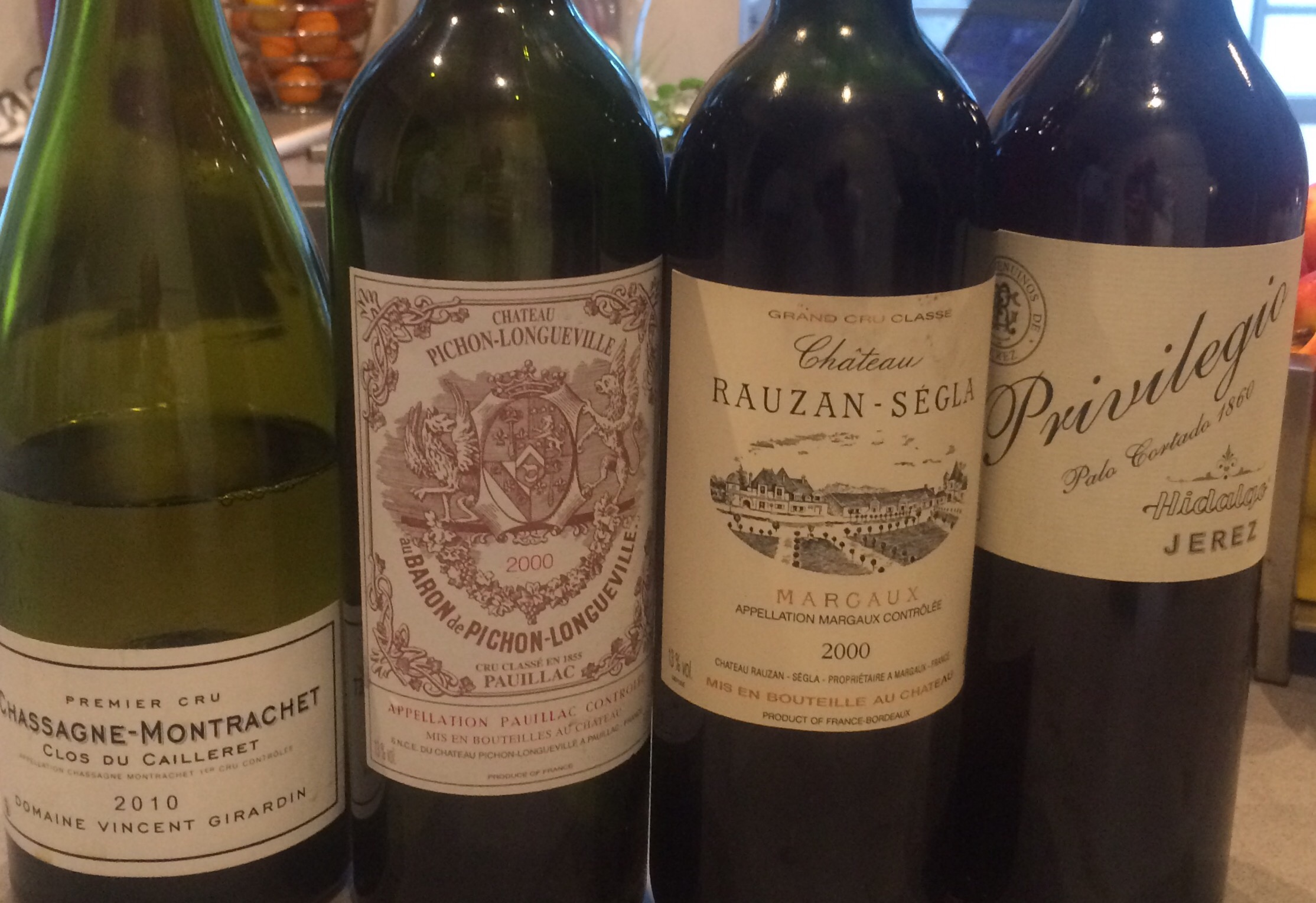
Emilio Hidalgo Privilegio Palo Cortado 1860


This is a truly exceptional palo cortado.

It is from one of the “foundation” soleras – a solera in production since 1860 – at Bodegas Emilio Hidalgo in Jerez, in my view the foremost wine maker in sherry today. Production is limited – there are two “sacas” of 150 bottles per year – manual, and natural.  The wine is bottled by hand without any kind of filtering or stabilization. The average age of the wine is well north of 50 years.

We tasted it at the end of an excellent dinner washed down by some very nice chablis and claret and after a decent decant. (I always recommend decanting a really good sherry – especially one of these older specimens.)  In terms of accompaniment, we had some dark chocolate arranged but to be honest once we started tasting the sherry we stopped worrying about such distractions.
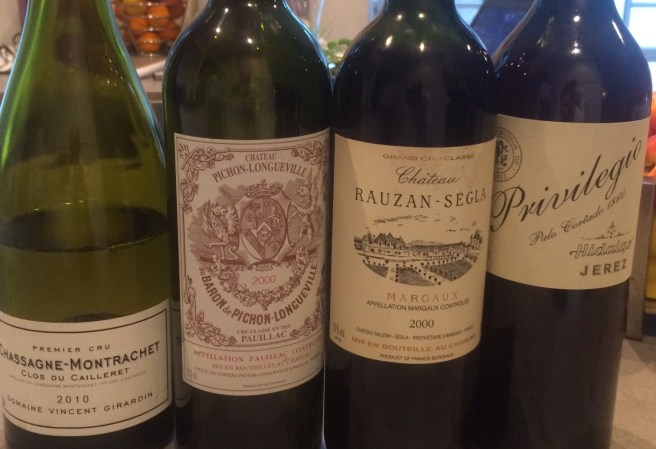
It is quite unlike a lot of the old palo cortados I have tasted: fine, light, elegant and yet still intense, rich and powerful.

It is a brilliant, very clear, reddish caoba in colour and, as sherries do, has the most amazing nose. From afar, (through the neck of the decanter) it is sweet and fruity – raisins like a PX – but get it up close and swirl it and it has tremendous power and a huge range of notes.

The mouthfeel is clean and fine – nothing oily or dusty here, just silky – and nose is matched by the flavours on the palate: caramel, nuts, then toffee, then treacle toffee, then treacle nut toffee, then chocolate, coffee, tobacco, leather, roast chestnuts. It is almost unbelievably long: just keep tasting it for one, two, more minutes and forget about “after taste” – it holds its shape and its balance beautifully.

More than anything it is strikingly light on its feet for a wine of such power. Many very old wines around now can be excessively acidic or astringent – walnut skin concentrate – but this is compact and balanced. In fact it is almost too easy to drink – the years have just made it lighter and more integrated.

An extraordinary wine – pretty close to perfection and a real privilege in every respect.

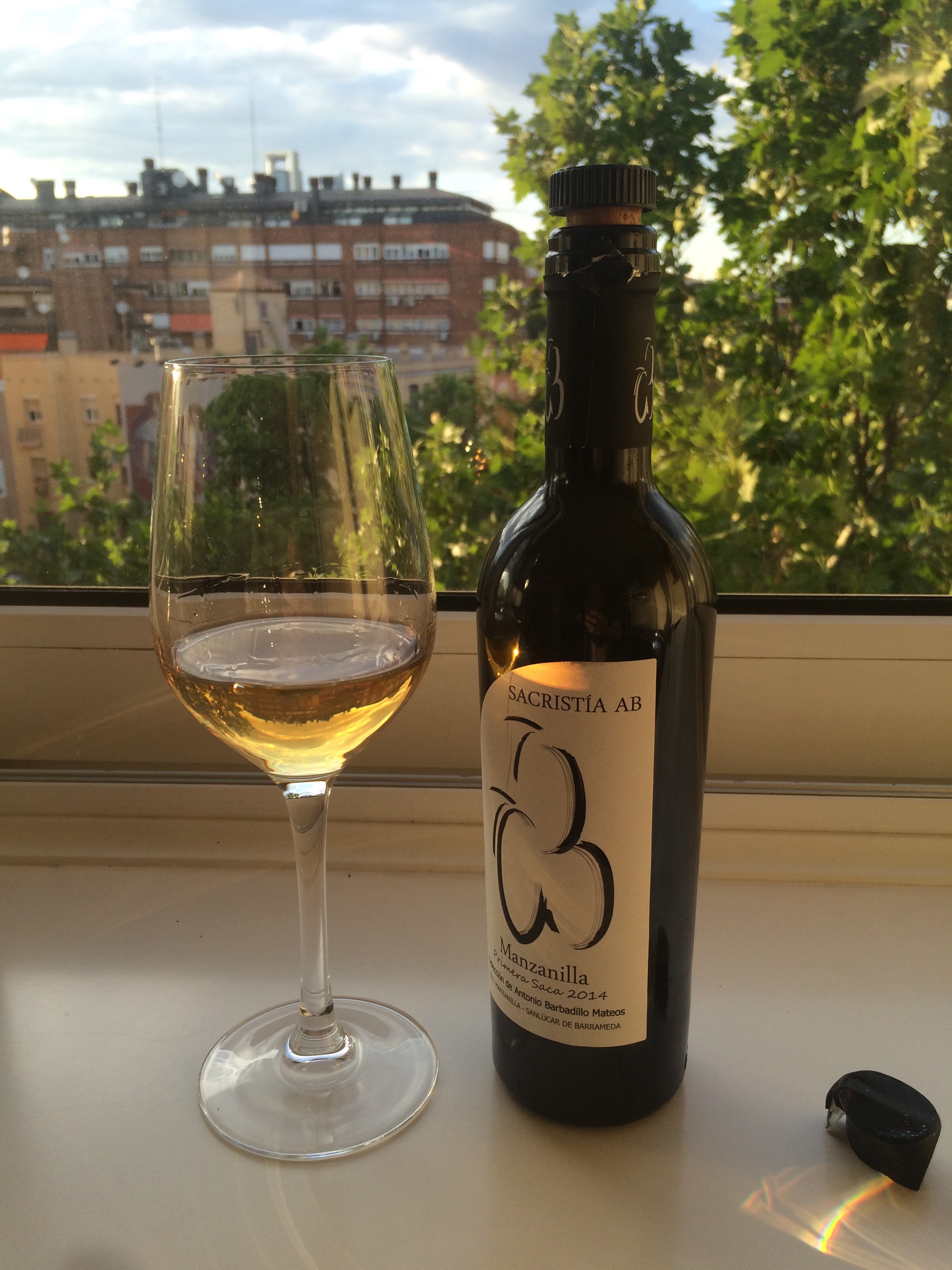
Sacristia AB – Manzanilla en rama, primera saca de 2014


Finishing off the month in style here with one of the manzanilla en ramas selected by Antonio Barbadillo Mateos – this one is the first edition from 2014.

It is dark in colour for a manzanilla  – a real old gold at least a shade darker than the Navazos effort. On the nose you would say refined rather than fragrant. To me it has a pronounced aroma of dried grass (especially when you come back to it) and maybe just a hint of old fruit (apples that have been stored away). Then in the mouth it is very slightly oily in feel and saline and intense in flavour. If you like your manzanillas mature this is definitely for you.