La Bota de Pedro Ximenez 36


I find sweet sherries a lot harder to appreciate than dry – although I can see that the sugar and high glycerol levels may make these wines a good vessel for expressive wines, for me the sugar seems to mask many of the qualities on offer, and makes supping heavy going in general.  On the other hand, it is fair to say that one of the few genuinely perfect wines I have tasted was a moscatel:  Toneles. (In fact maybe the real problem is that my expectations have been raised unrealistically high by that awesome little wine.)

This effort by Equipo Navazos was selected from some Fernando de Castilla wines of an average age of over 30 years. It is one I had had in Madrid for a while, but brought home to taste in England since there seem to be more takers for sweet wine over here.

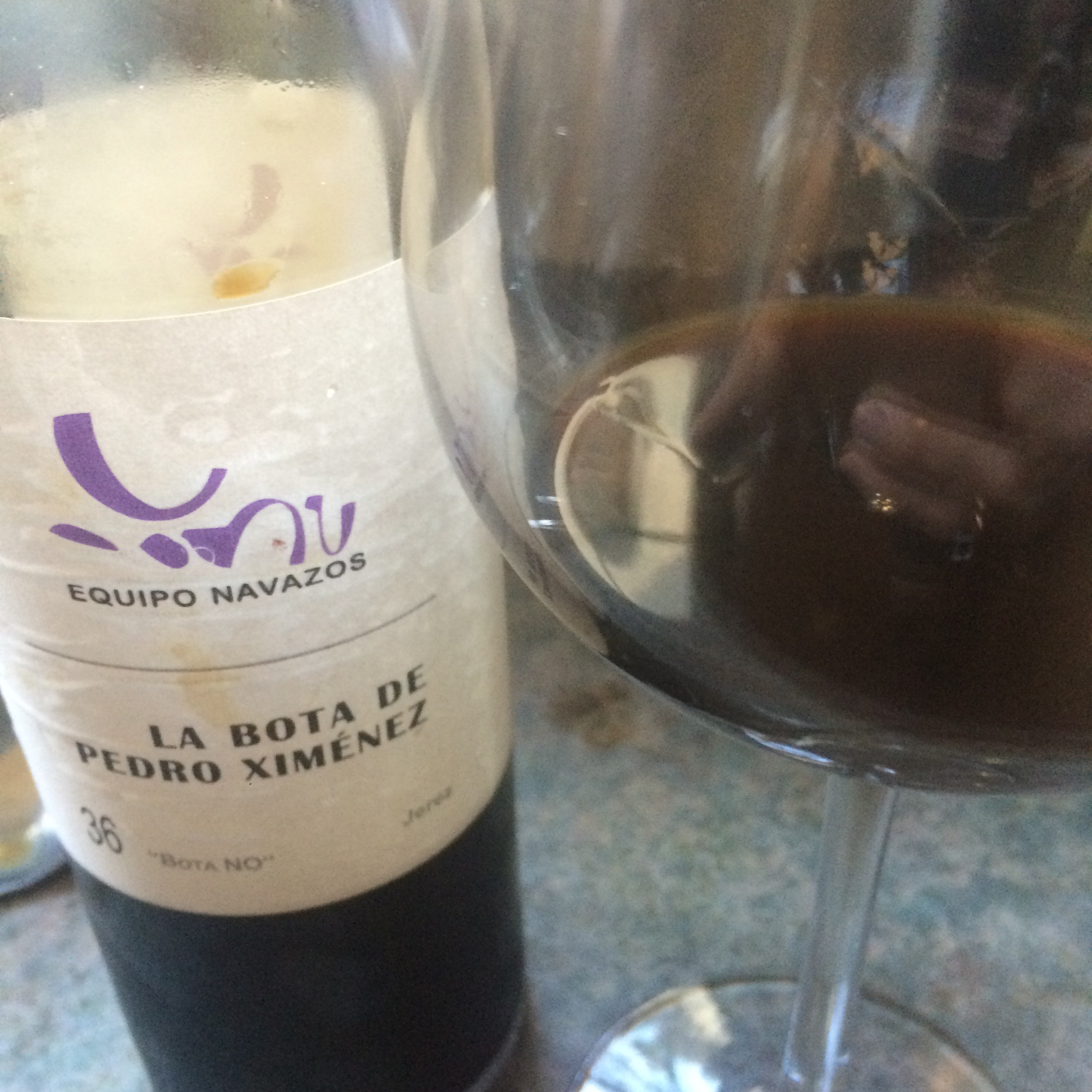
It is deeply black and treacly in appearance, dirtying up the glass and leaving a brownish residue. On the nose it is all sugar and raisins. 

On the palate there is more candied fruit, baked and fresh raisins, a slightly menthol edge and a nice fresh finish. However I don’t find it that expressive – not a lot of the nuts, figs and spices that I was expecting.

A juicy pedro ximenez with a fresh finish – but not the big puddingy wine I was hoping for. 

Sherry flavours: granary bread

  
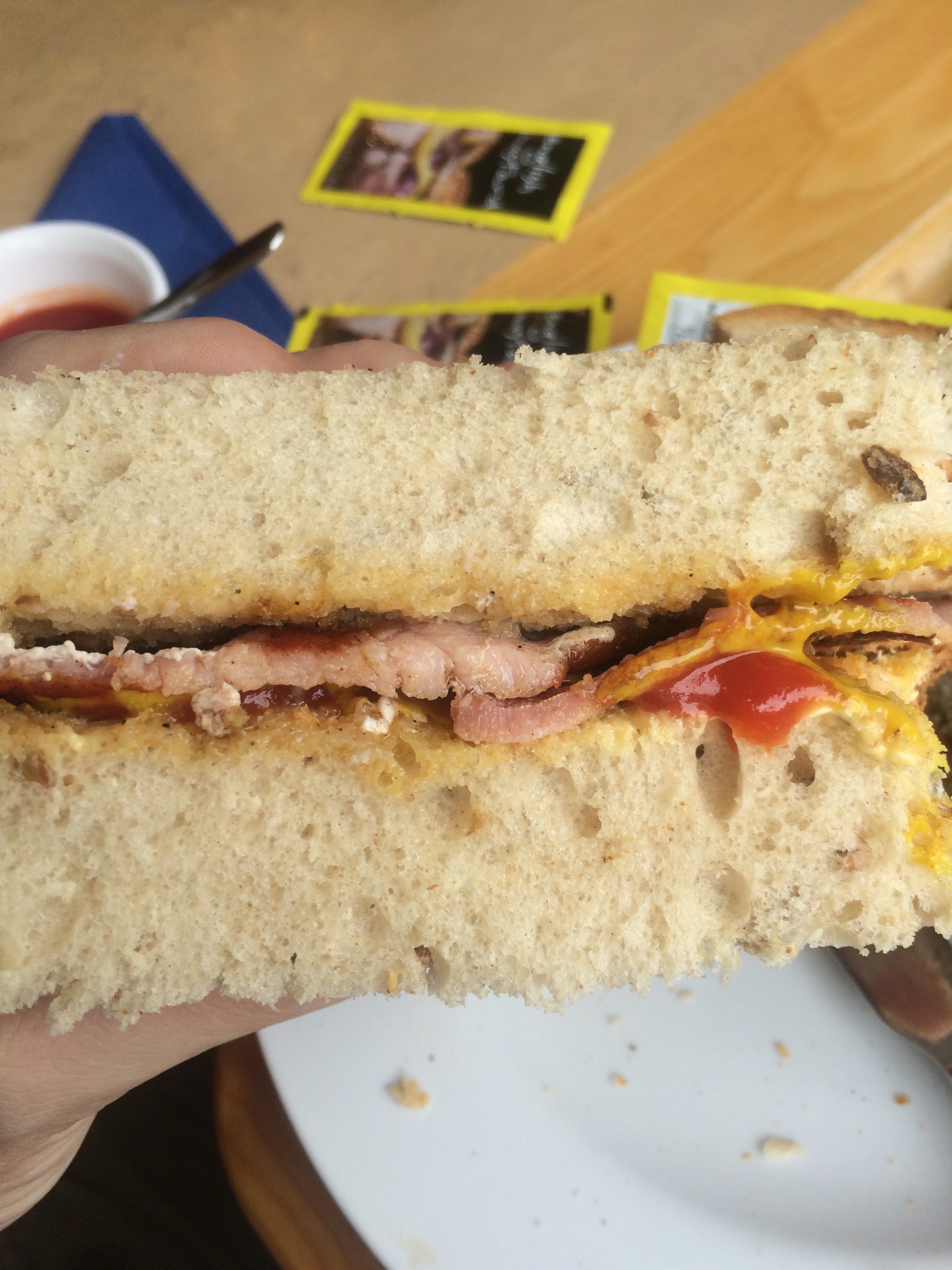
A clear sign you have slipped over the top of the hill of healthy interest in sherry and onto the slippery downslope of dangerous obsession is when, upon eating a magnificent bacon butty such as this, you start comparing it to biologically aged sherries. 

It really was a magnificent butty – thick cut bacon, dijon mustard, a touch of ketchup and, most importantly for my current purposes, an even thicker cut soft, fresh, warm granary loaf. The kind of bread I have in mind when I drink a really top class fino – nutty, yeasty and lots of umami. 

Evidently, if I discover a fino with the thick cut bacon as well I will shout it out. 

Sherry at (a fantastic) dinner

Although I touched on this in a previous post, recently I took two top bottles of Jerez to a quite spectacular dinner with some good friends and it really gave me a lot to think about.

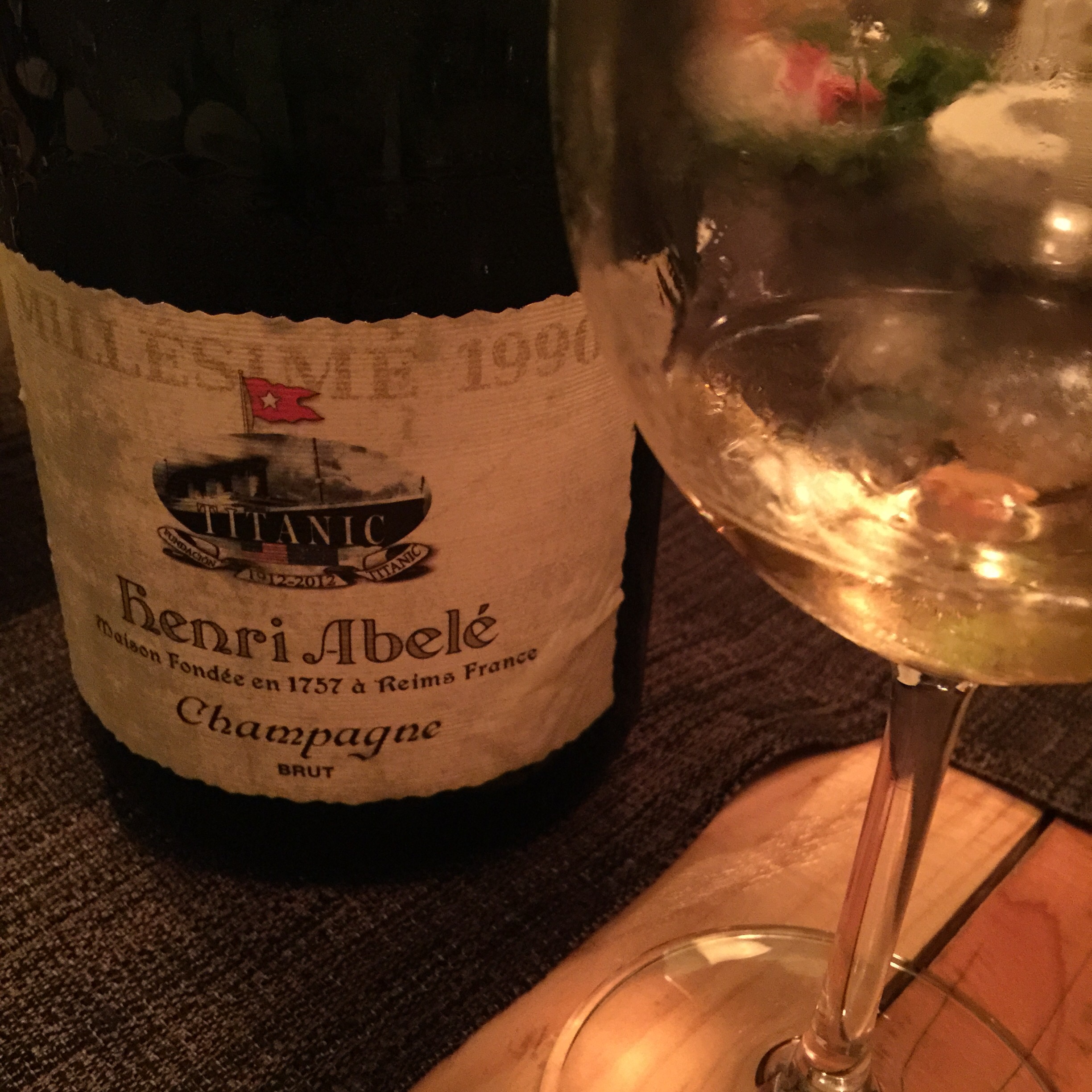
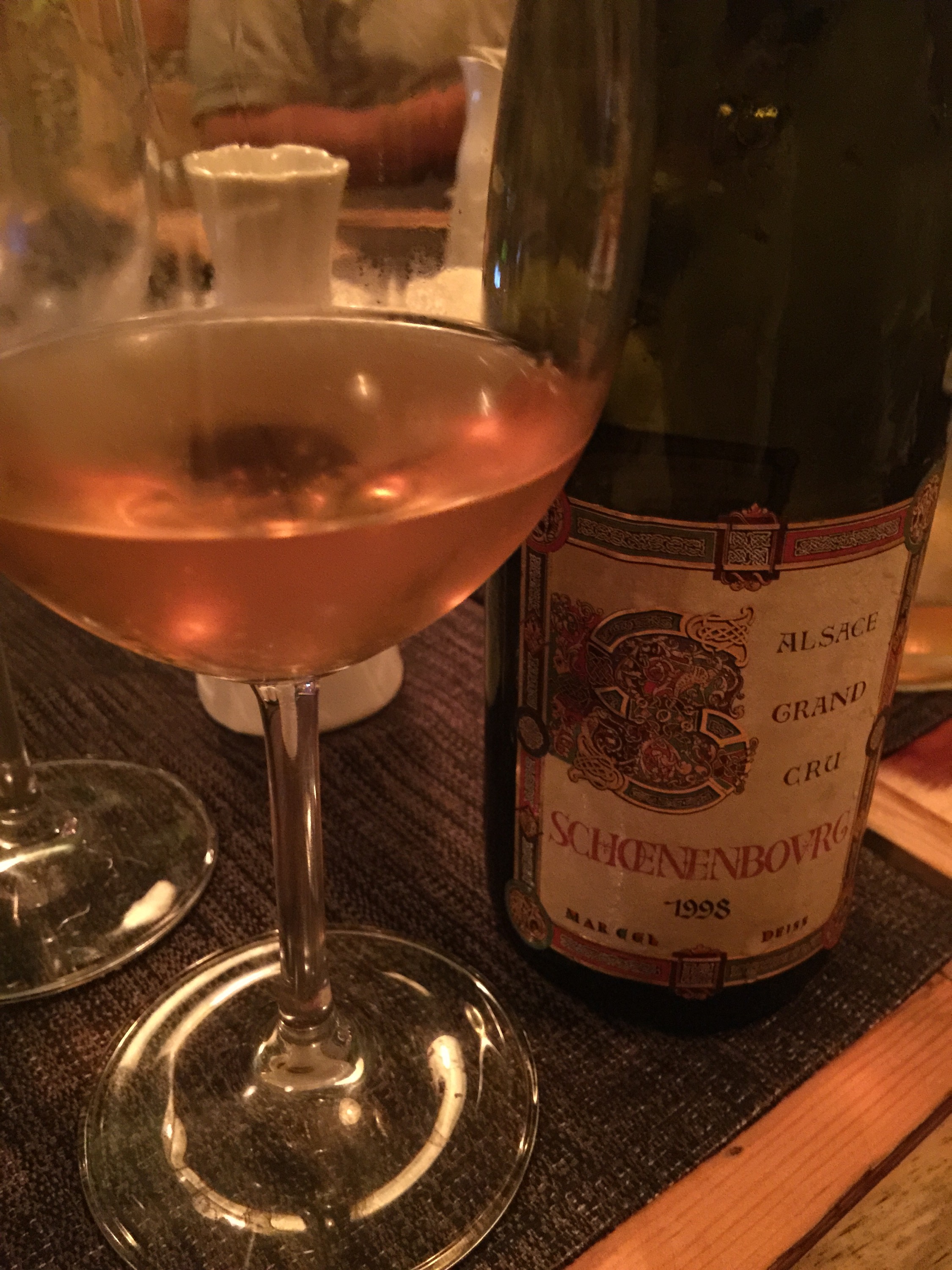
The two sherries were excellent – la Bota de Manzanilla Pasada 40 and la Bota de Palo Cortado 51 – but they were on show against some quite spectacular wines, including amongst others, a quite amazing Henri Abelé Millésimé 1990 champagne – for me the wine of the night-, a Francois Chidaine Les Bournais 2011 that was full of juice and character, an ethereal 1998 Schonenbourg Alsace Grand Cru, a 2007 Chateau Rayas blanc that was pure minerals (woodsmoke in a glass) and a simply majestic 2008 Les Chenes by old man Lafarge.

In summary, a great test of sherry’s ability to fight it out for the centre of the table on a big occasion and against top class wines of every kind.

So what did I learn?

  • I have some very good friends indeed – some of the wines were quite outstanding and many will live long in the memory.
  • The manzanilla pasada certainly didn’t struggle for structure or depth, even in this company. A top, top wine.
  • The palo cortado was maybe a little more out of its depth (as I think I said at the time).
  • Despite the quality of the manzanilla and the excellent company, a few of the guys were not that keen – sherry is not everyone’s cup of tea, even amongst well meaning wine buffs.
  • In general, it strikes me that these wines are hard to match to wines of other styles, so you either go all sherry or the food pairing becomes critical.
  • Even if you love it like I do, it is obvious that the dry character and salty, iodine notes of the manzanilla made it hard to place it in the line up. We ended up having it first and I can’t argue with that.
  • For similar reasons, the palo cortado ended up last in the line-up (by which stage the Lord Mayor’s show was well and truly over), mainly due to the difficulties of combinations with other wines (and also partly due to the lack of a food pairing). That in itself was a problem – it is a tough gig for a dry, intense wine like the palo cortado to come last after some big fruity reds –  and on reflection we probably got that wrong. The old rules for wine tasting – from dry to sweet, light to heavy, still apply. Maybe the palo could have pulled it off had it been a lighter, more balanced wine, or had it been one of the slightly sweet, “traditional” after dinner wines, but this was super dry, burnt caramel.

  • In this case, the food involved was fusion-style sushi, which didn’t even really stand up to the manzanilla pasada and would not have coped at all with the palo. The menu was more suited to the champagnes and mineral whites – a straight up, fresh fino or manzanilla would have been an easier pair.


  • Had we had tastier vegetable dishes – artichokes or asparagus, or vinegar dressing or sauces – the manzanilla could have spread its wings. Similarly, the palo was crying out for a spicey, intense flavoured savoury dish, like callos, or the roast garlic that I had paired with the Bota de Palo Cortado 52 in Mugaritz.)

Overall, a chastening experience for a sherry fanatic – I would have put the manzanilla pasada on the podium but I suspect that others would not, and overall it was a reminder of both the extreme competition sherry faces as it fights to regain its former glory and the complexity of achieving the much talked about goal of converting sherry into a “gastronomic” wine.


It is no stretch of the imagination to drink sherry with dinner – there are great wines and great pairings – but it is not as easy to displace all these other great wines, and neither is it easy to cohabit the table with them. You can have a great sherry menu, and if you are lucky a genius sommelier will nail a pairing in as tasting menu, but taking a bottle of sherry to dinner with friends requires great care.

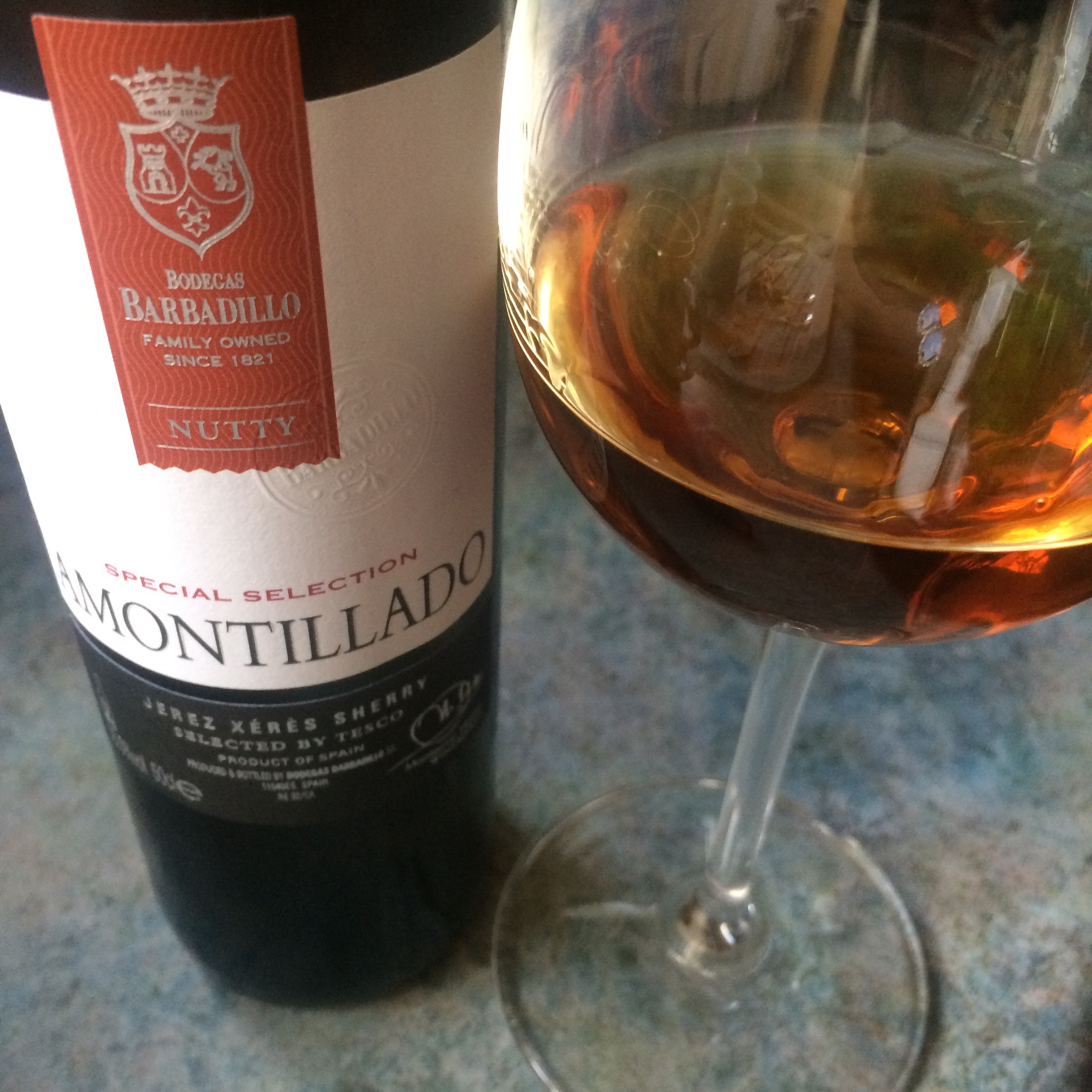
Tesco Barbadillo Nutty Amontillado


So here we go – bought this for six quid in a supermarket but then again, Barbadillo have put their name to it.

Attractive enough in colour, maybe not absolutely bright/crystal clear. On the nose it is toasted nuts and a little sweet and heavy – more like a liqueur than some amontillados.

On the palate it is indeed nutty – nice medium acidity and then nutty (toasted nuts) caramel/burnt caramel – some alcoholic heat coming through at the end and a bit of walnut skin bitterness.

Pretty good – not letting anyone down at that price for sure.

Tesco, Hampton, Cambs


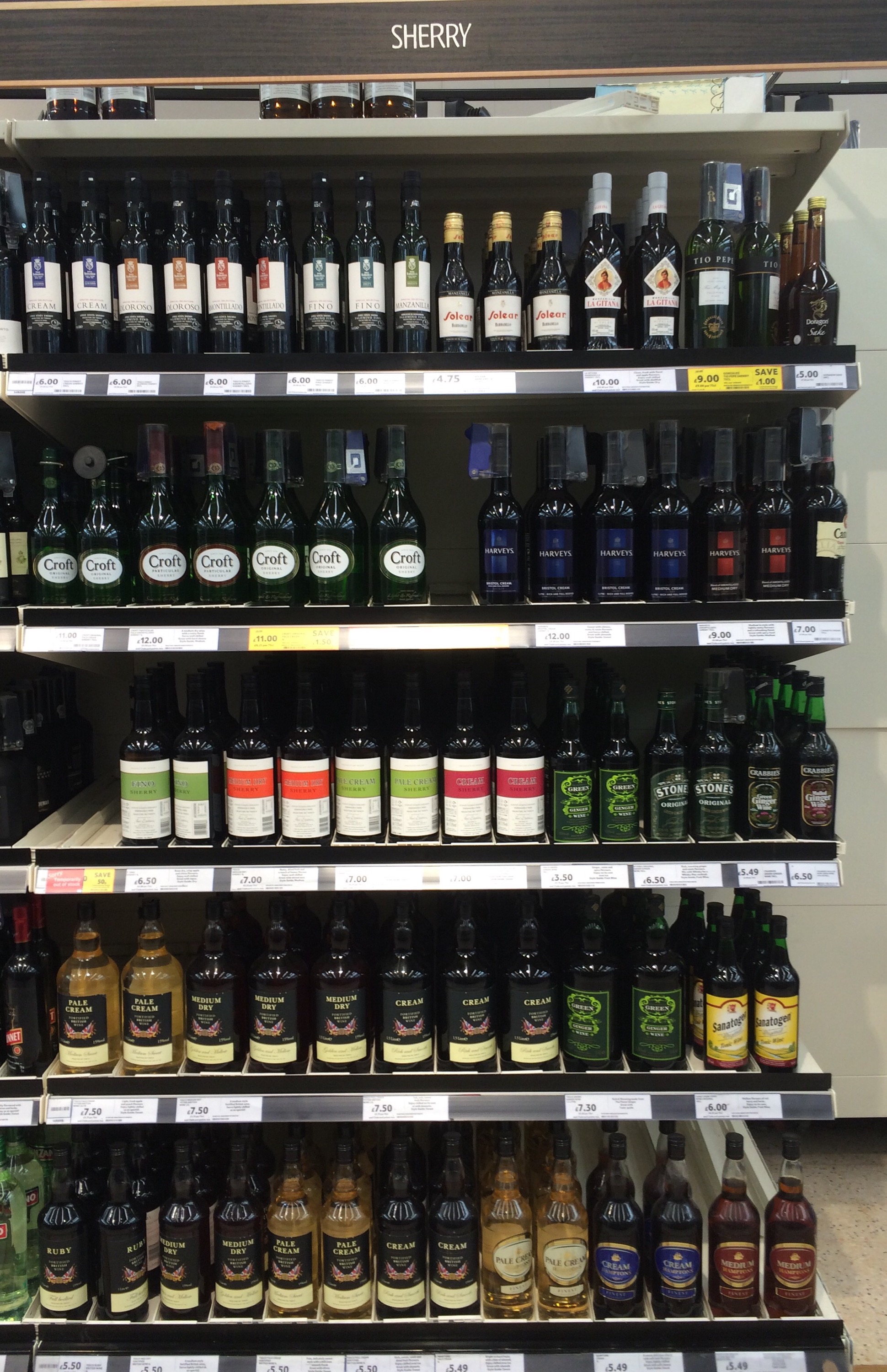
Quite a strange experience today hunting out sherry here in a big UK supermarket – and an interesting comparison with a Spanish supermarket on the Brit-friendly Costa del Sol.

First, unlike in Spain, in this UK supermarket the sherry was nowhere near the wine section: wine was aisle 16, beer and cider aisle 15 and sherry on the end of aisle 14, after the liqueurs, spirits and port. I find that a bit bizarre I must admit.  

Second, the range of sherries is of course different – both in terms of brands and styles. Brandwise, of the sherries we would get in Spain there are only four – Tio Pepe, Solear, La Gitana and Canasta (and maybe Croft Original and Harveys Bristol Cream, but you wouldn’t call them Spanish brands even if Croft is owned by GB). More importantly, there is a big contrast in terms of styles: including the Spanish interlopers I count three finos and three manzanillas, two amontillados (including the Croft Particular) and one oloroso; compared to 7 creams, 4 medium drys, and 4 pale creams (and four ginger wines). Nine dry sherries against 15 sweet (and I am not sure about Croft Particular – might be 8:16). By comparison with Supersol, the numbers would have been 7 fino, 4 manzanilla, one oloroso, one cream, and three px. Overall 2 sweet blends in Spain (not counting the monovarietal px) against 15 or 16 in the UK. 

Third, although at first it was heartening to see a biggish selection, just as in Supersol, a closer look left me a bit less optimistic. Not a lot of high quality wine here and the price range is depressingly similar. Tio Pepe is almost the most expensive wine in both places. Now Tio Pepe is great, but it is cheap – there were Ports on the shelf next door that were 3, 4 or 5x as expensive as the costliest of the sherries. 

Must admit to being a little disappointed – even if we are talking supermarkets. It seems to me that sherry has a lot of ground to make up (in both countries). 

The Magic Numbers

img_4924

Only recently I mentioned on this blog that I had never tried the Bota de Palo Cortado 41 by Equipo Navazos and providence, in the form of an agile wine merchant, has provided. A bottle of said beverage is now on its way to me – and this is not, it must be said, purely an act of altruistic generosity on the part of the merchant involved: a largeish amount of coinage has already travelled in the opposite direction.

I must admit to certain misgivings. First, this number 41 is a “brother” or “cousin” of Botas 47, 48 and 51, wines of which I have had mixed experiences. Second, I have a growing worry that this blog may be turning into an Equipo Navazos fan page (albeit written by a grumpy, demanding fanboy). There are a lot of sherries out there, why do I keep spending my hard earned wodge on these?

There are of course a number of reasons. All their wines are high quality and some are amongst the best I have ever tasted. They cover a wide range of styles too. Since I started this blog I have cracked open palo cortados, manzanillas, a manzanilla pasada, a fino, a white wine and two amontillados that I can remember, before that I have had olorosos of every stripe, I have a PX in the fridge as we speak and indeed they even have created some new categories – “fino que va para amontillado” and “florpower”. They are also cleverly marketed by genuine enthusiasts – they come with a story behind them which lends them interest and piques your curiosity.

But most of all, there is the magic of the numbers. All of the Equipo Navazos releases are given a number (e.g., the palo cortados mentioned above – releases number 41, 47, 48 and 51) and are strictly limited editions. They may in future release another palo cortado from the same bota, but it will be a different wine with different characteristics, and will get a different number accordingly (witness the manzanilla pasadas – at least the 30 and 40 are from the same bota and the 40 is in a class of its own).

These numbers give the wine something that many of the superb wines from Jerez and around do not have – uniqueness and scarcity. In my view (and this is an area where I know many of my friends in Jerez disagree) that uniqueness is something that all makers should try to achieve. Maybe not by numbering releases necessarily – but by dating the releases, identifying the vineyards and even the special botas involved.

First, because as I mentioned before, you pique the curiosity: sherry fans will want to try every one of your releases to compare them. Even the guys in Jerez that disagree with the idea of identifiable releases will admit that their wines differ from saca to saca, and even if they didn’t, it is fun to check it for yourself and to compare how the same wine evolves over time, for instance.

Second, because a certain kind of wine lover will want to collect them. I am not in this camp with the Equipo Navazos – I try them all and only attempt to stockpile my favourites, but there is one wine I have started collecting every release of – the brilliant Solear en ramas with birds on the labels (I am also a bad birdwatcher, which may explain that).

Third, by differentiating your releases you get a little of the buzz that accompanies the vintages of the wines of other regions – the guys at Gonzalez Byass in particular are very adept at generating buzz around their en rama releases each year, and it is noticeable that they are also leading the field with the single vintage palo cortados (albeit in a slightly more diffuse way – I reckon they could do more with a more disciplined, focussed approach).

Fourth, and this is an important point, you give wine writers and reviewers a reason to regularly review and write about your wines – give them new scores every year (scores which generally drift upwards naturally, it has always seemed to me) – and you give the new generations of writers and reviewers a reason to write about you. Every high score adds to your prestige and generates buzz, and the low scores are soon forgiven or forgotten – the more horses you enter, the better your chances of winning the race.

Of course there is a downside: when I started to hunt around for the last few bottles of my personal favourite, the Bota de Palo Cortado 34, I found that a wine I had first acquired for €36 a bottle might now cost me several multiples (fear not, I hunted around and obtained a reasonable stock for limited damage). I also feel this can be overdone: a specific release is fair enough, but I am not sure it is worth individually numbered bottles and botas.

I also recognize that people who are far, far, more entitled to an opinion than I disagree with me on this entirely. (I wish I could explain to you their reasoning but I generally only get to discuss it after quite a quantity of quaffing.) It is easy to see that this approach would significantly complicate the business of selling sherry – and that a large amount of the added value may end up in the hands of retailers.

On the whole though, I am in favour of limited and dated releases, of identifiable vintages and vineyards, and of doing anything at all that might help the bodegas of jerez make truly unique wines or, at the very least, bring the superb wines they do make back to the front of the mind of the world’s wine writers and drinkers.
Sereno Solera 2009

  
In Alabaster at lunchtime you get a lot of things – you get top class fish (today sardines, anchovies and hake), you get stylish surroundings and great service, but most of all you get Fran and Oscar – two of the best maitres/sommelieres you could ever hope to come across.

Years ago Oscar used to give me Equipo Navazos in the low numbers before I knew what it was and I met Fran for the first time socially at Sherryfest, when we were both tasting Emilio Hidalgo: these boys reallly know their sherry. So when they suggest a fortified wine from Catalunya (Amporda, to be slightly more precise) you definitely give it a go.

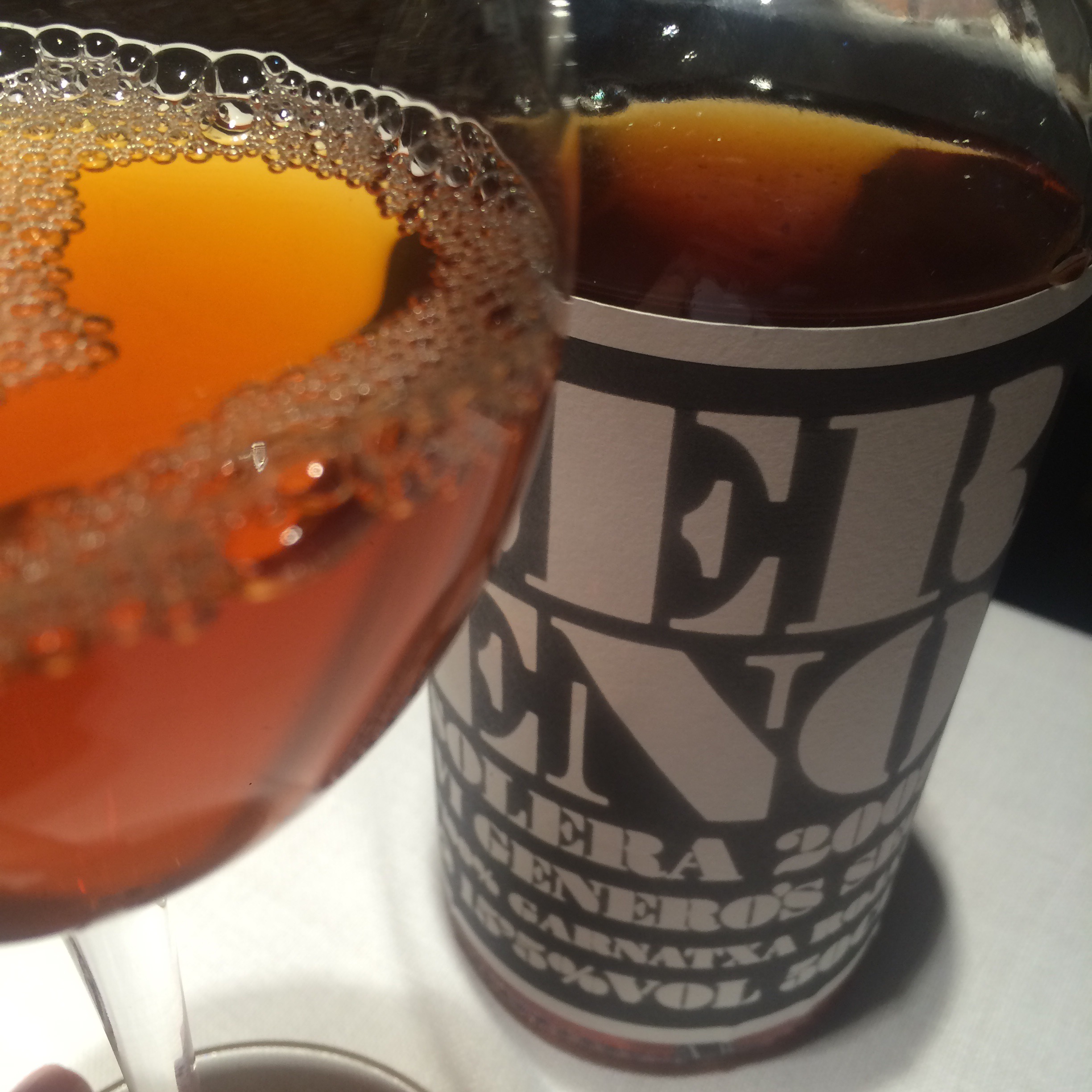
This is a 2009 red garnacha “rancio” – has literally been allowed to oxidize like an oloroso (not sure for how long) and the result is very interesting. It is a red brown in colour and has a fine, red fruity nose to it – very elegant beak.  

On the palate it was dry but something that struck me was the absence of salt and iodine (it seemed less serious as a result) and the lack of volume – the sense of buttery oil and bread. The flavours of barrel and oxygen were there – caramel and treacly fruit in a pretty interesting range of flavours, and the finish was as easy as the nose – nice and light. 

Overall a very accessible sup, but while  I liked it I just don’t think it had the all around depth of character and complexity of a sherry. More interesting to me was the fine quality of it – something you would associate with a very good amontillado or palo. Are we making oloroso with the right grapes? It is an interesting (if impertinent) question. 

Alabaster Bar – the Sherry list

  
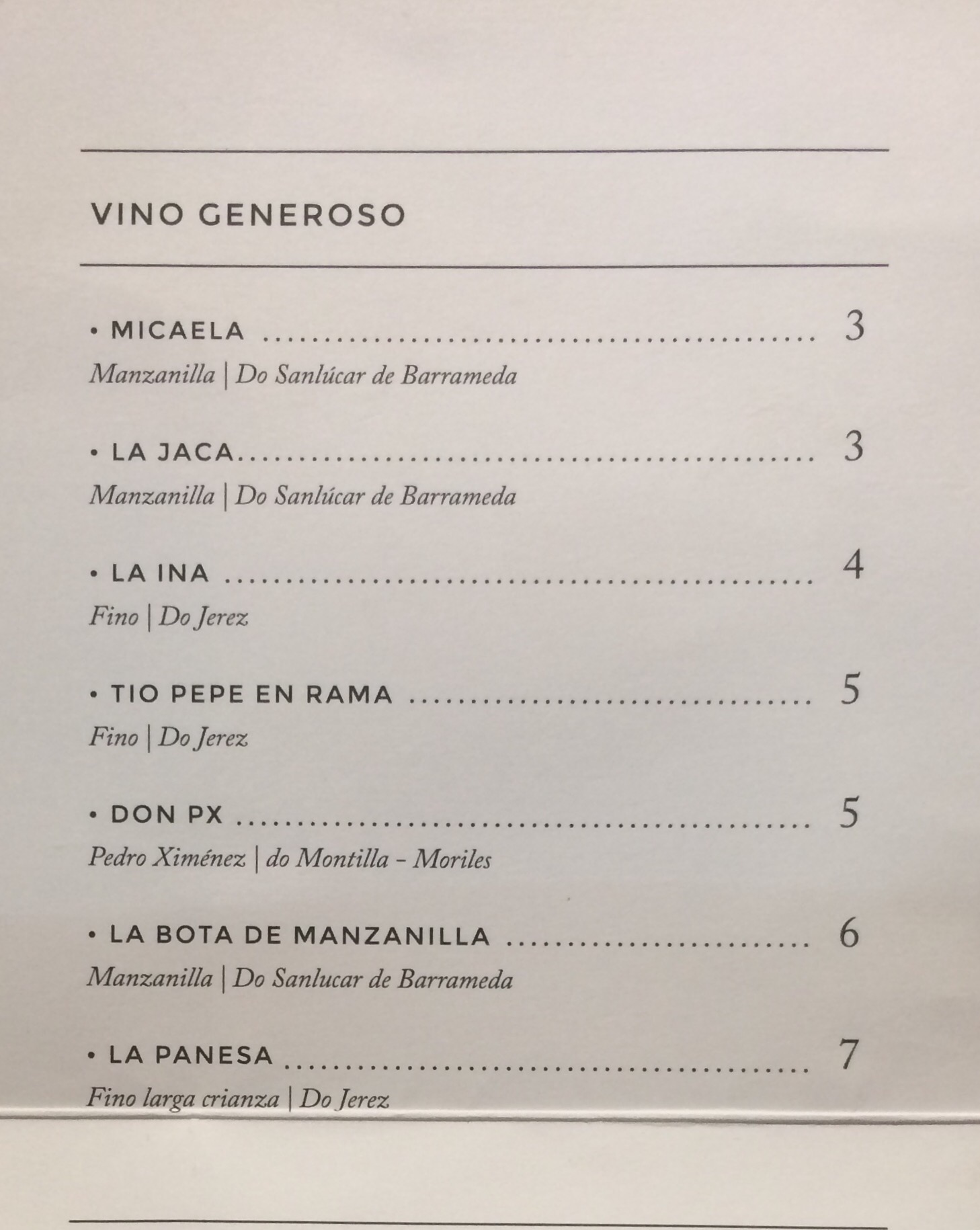
Here is that sherry list I mentioned in a post a while ago. As you will see, has a lot of bases covered at the fino/manzanilla end although would maybe be good to see some amontillado, oloroso, and palo cortado choices. Given that it is primarily a seafood establishment one can perhaps understand …. 

More to come in relation to this visit!