Fernando de Castilla Antique Amontillado


Recovered from my cold and stoked by recent feasting on grilled sardines I feel in the mood for a bit of this amontillado by Bodegas Rey Fernando de Castilla, one of my favourite makers.

On the eye it is just slightly dull brown – definitely more of a yellow brown than the rich red or orange brown of some older amontillados and not quite as crystalline either.

It has a rich nose alright – little bit of the Christmas orange (the one with all the cloves stuck in it), some Christmas tree/pine needles too, even some tobacco and old books. Maybe a little lacking in caramel – in the background at best – and for me it isn’t quite harmonious, but it is certainly an interesting nose.

On the palate it is watery in texture and for me doesn’t quite live up to the nose. It has a nice zingy start, a spicey breadth and a pleasant finish – just maybe lacks an ounce of volume/yeasty umami.

A really spicey smelling glass and an enjoyable tipple – a really good amontillado all around.

And you certainly get the truth and the whole of the truth – just look at these particles: no wonder it tastes dusty!

Espeto and Tio Pepe


One of those pairings of convenience – smoky sardines cooked on a skewer over coals, a bit of salt and lemon and the only fino on offer is a good un.

The pairing is just about perfect – the sardines are salty, tasty and smoky and the Tio Pepe matches nicely.

And a decent location too … Can’t believe it is back to work on Monday. 


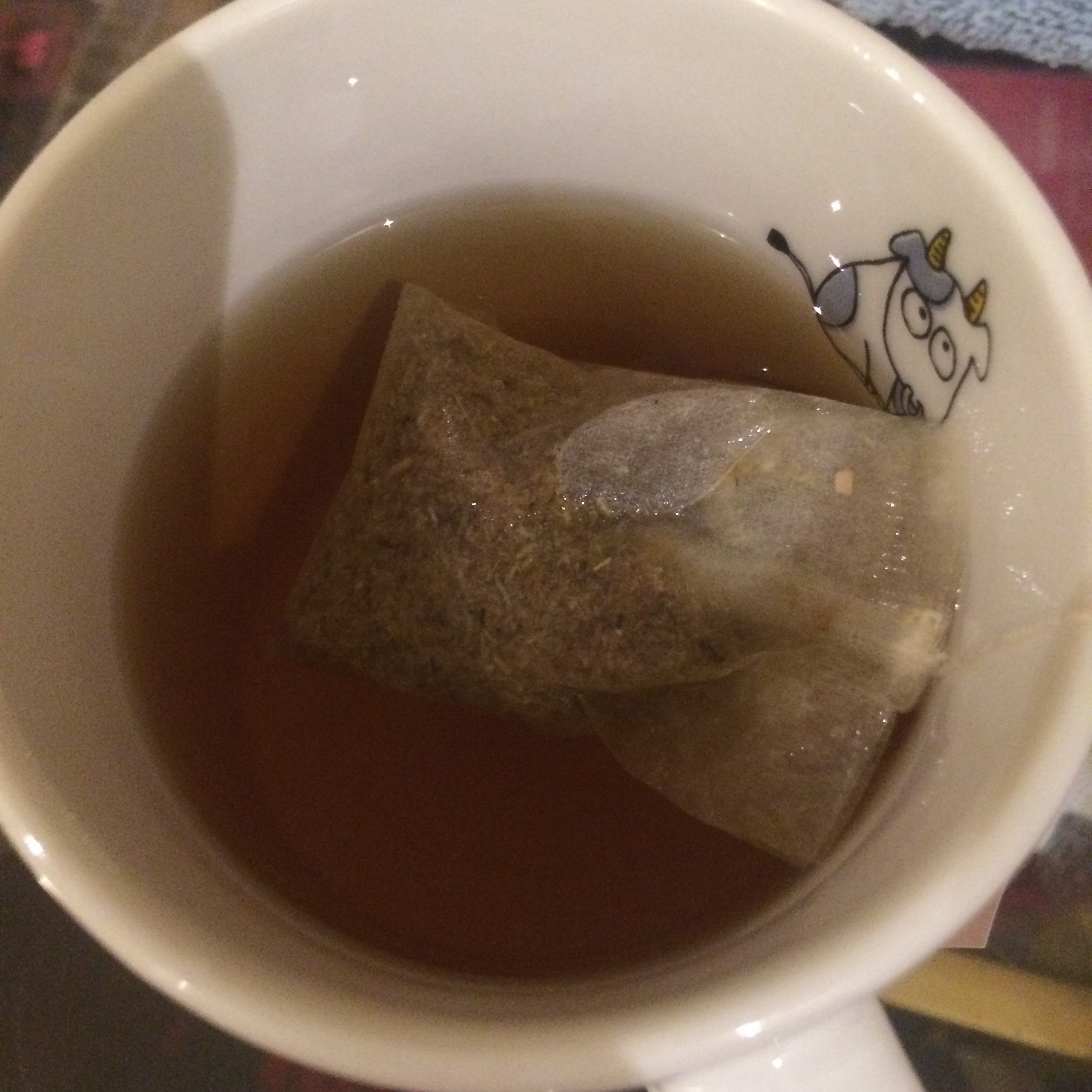
Sherry flavours: the other manzanilla (chamomile tea)

I am told that if you ask for manzanilla at the feria de jerez this is what you get given. In fact, I am told there are a couple of places in Madrid where you run the same risk.

In all seriousness, you can see why this and the real manzanilla share a name – the sweetish aroma of floral herbs can be very similar.

Not that I can really comment on the nose and palate of chamomile tea – if I am anywhere near a cup of this it generally means I have a shocking cold.


Sherry flavours: black treacle (molasses)


Here is a flavour I have mentioned liberally on this blog but probably have not tasted in the last 30 years or so (in my youth my grandmother would make us treacle toffee with it – can’t remember having it since). So as soon as I saw it there on the supermarket shelf I had to get some. 

As its name indicates it is very dark in colour and despite being a refined sugar product it has a burnt bitterness to it – almost tastes like liquorice. I believe it is the main raw material used to make rum and you can certainly taste that heritage in it. A really dark flavour and one that I find in a lot of the big olorosos, amontillados and palo cortados. 

Marques de Poley Amontillado Viejisimo Solera 1922


This is called “very old amontillado solera 1922” from which I deduce it is a very old amontillado – probably from a solera founded in 1922. It is by Toro Albala, one of the big houses in Montilla Moriles and is 100% pedro ximenez. 

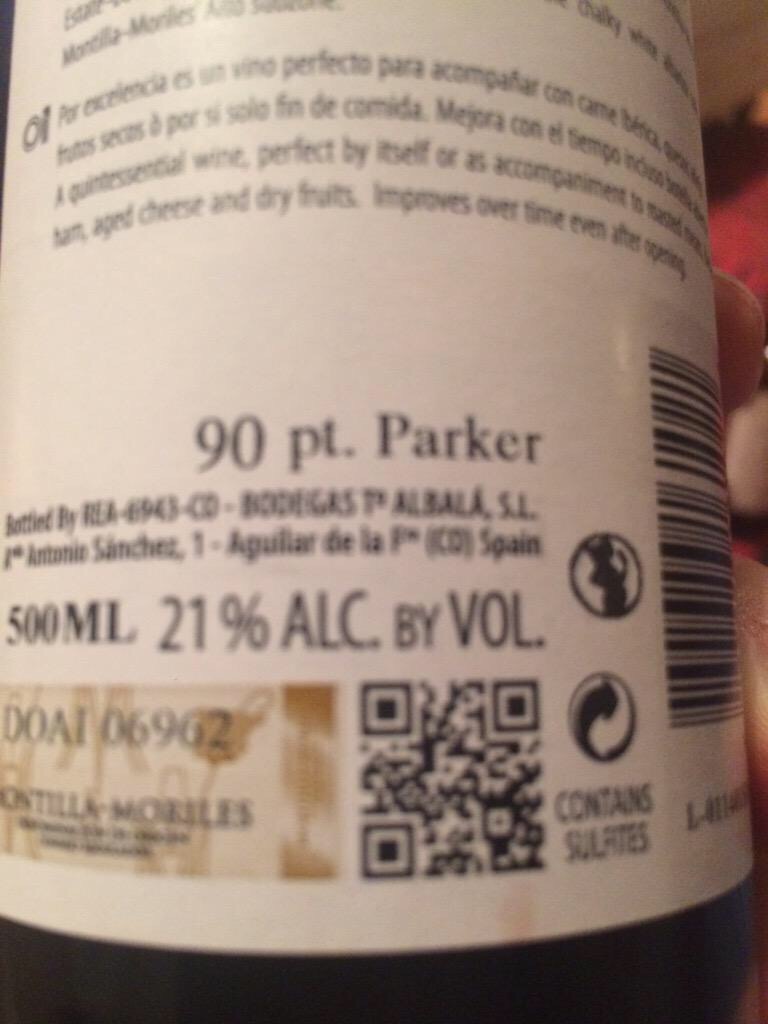
One thing that caught my attention is on the back label – where the words “90 Parker points” sit proudly alongside the alcohol content. I found it odd for three reasons:

  • First, I have seen references to Parker points on bottles before of course but usually as a sticker (since most wines are, logically, bottled before they are rated). 
  • Second, it was odd to see it with the objective information on sulfites, alcohol, etc, rather than in the text box of subjective descriptions. 
  • Third, it was odd to see a reference to 90 points – not a very high score by modern standards. Again, though, I quickly realized that Toro Albala have a 100 point wine in their cellars, a fact that (understandably) influences the importance they attach to such things. 


In any event, I found it odd (and questionable aesthetically speaking).

The wine itself is a characteristic chestnut colour (I must get a taster of chestnut colour options so that I can distinguish) and, as I think you can see in the picture, sticks to the side of the glass a little. On the nose it is sugary sweet, maybe honey with quite a lot of alcohol. 

In the mouth you immediately notice the syrup-like texture from the high glycerol content. It has a nice zing but is not quite dry – not clear to me if it has been encabezado or just not quite dried out (given the name I assume the former). Overall the flavours are of honey and oaky red wine, with maybe a bit of raisin underneath. Nice smoky finish, but a bit sticky. 

Overall I like it ok although, once again, I feel that you get more nuances from a fully dry wine (and I reckon Luis got the score bang on, by the way).  

La Bota de Amontillado 49 – Bota AR

I keep coming back to these – this is one I had open for a little while without finishing off. I wasn’t overwhelmed first time but have had such contrasting experiences with the 47 and 48 on a second attempt I thought this was worth another go. It is of course by Equipo Navazos and as many will already know it is a super old amontillado that labours under the burden of a 100 point Robert Parker score.

It is a deep reddish brown – more colour than you expect given the age and the black label etc.

The nose is powerful and challenging. At first it seems chemical and reminded me of almost a red wine. As I get into it I can pick out ginger (as in a whisky mac) cedar, resin and pine needles. It is reminiscent of really old leather bound books (trust me on this, I am a lawyer by training).

It has flavours of pine needles on the tongue too, and then other wood flavours, a really immensely woody taste to it. It is a gentler beast than I remember – less acidic and astringent – but still a beast. A lot of flavour but it is concentrated bitterness: it has the almost liquorice taste of black treacle, or caramel that has all burnt in the pan. Then again a really woody, tobacco taste fading to cigar ash, in fact.

It is unique and most likely historic, and challenging if nothing else.

Sex scenes and tasting notes

A mate of a mate is a successful novelist – goes by the name of Marcus Sakey (which is, in fact, his name). His books are really good. I read the first one on recommendation but for the rest needed no encouragement – really good characters, really good stories, cracking writing – you read through the night until you finish. Absolutely top class.

Then I met the chap and he turns out to be a really good lad as well. Sort of chap you could drink beers and whisky with and have a well above average amount of fun. Comes from a stable of good lads over in Michigan and has not let them down – absolute diamond.

But since I met him I have read another of his books and this time, without labouring a point, I now notice the sex scenes.

Before, they were there I suppose. Sex is, after all, a beautiful part of life, even in paperback thrillers, But before I barely noticed.

Now, when I read these descriptions (far from OTT – just beyond banter level in fact) I feel a little bit embarassed and fail to stay in the moment. Imagine one of your mates in the pub describing two other people making love and you will have an idea of the discomfort. The books are still cracking – and I realise I am compounding the issue because if you read one now you will be imagining my discomfort, which may be discomforting – but it is at times like watching a Bond movie with your parents.

Which is why I try to hold back in the drafting of the old tasting notes. I wouldn’t want to come across like Meg Ryan in that deli with that bearded chap even if – occasionally – I feel that way.

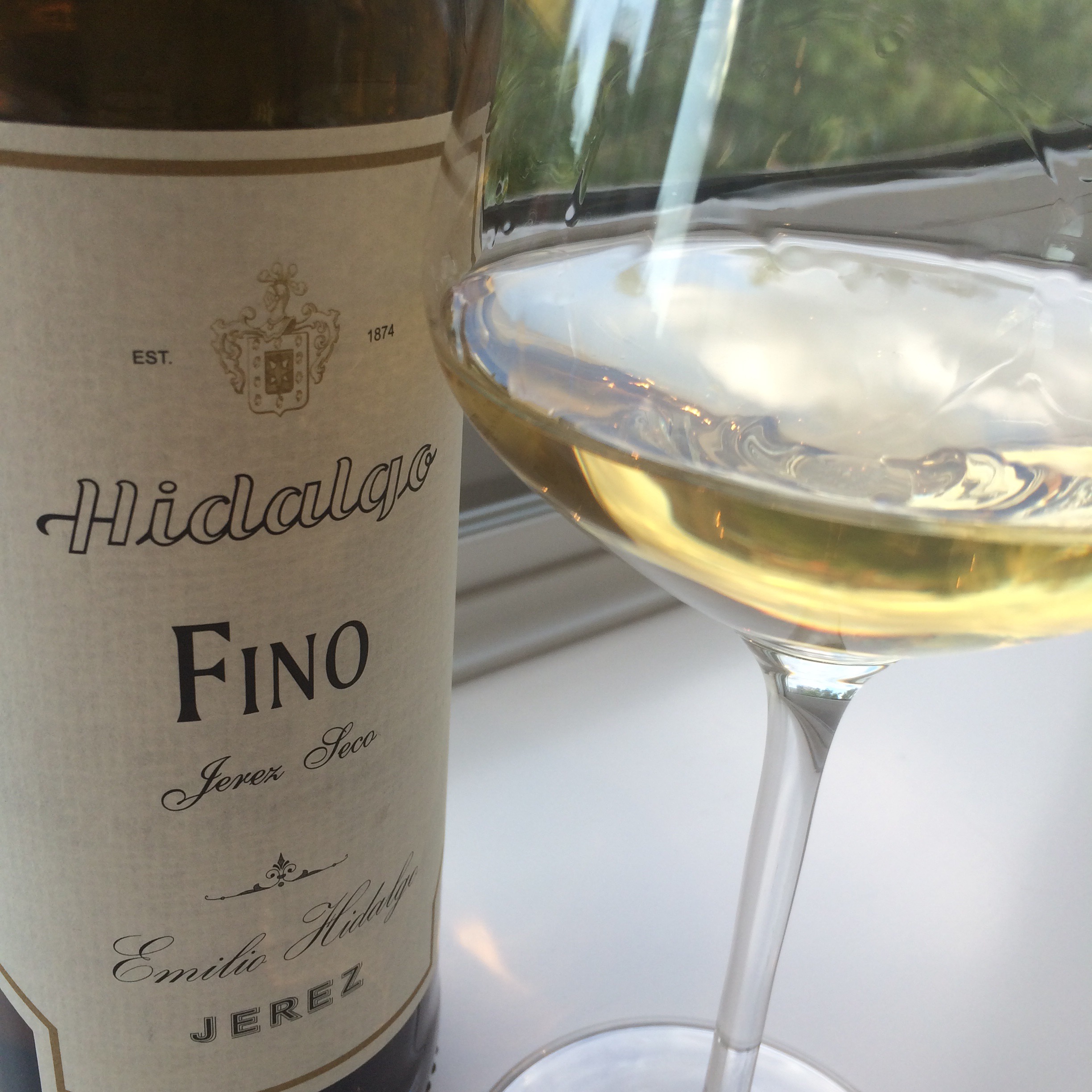
Fino Hidalgo


Home sweet home – after 10 days in the wilderness what a wine this is to return to.

It is by Emilio Hidalgo and is a very fine fino – I believe it has a mere 8 years or so under flor compared to the 15 of La Panesa. It is also difficult to get (not sold widely but they can help you in Enoteca Barolo, or you can drink it from the barrel in La Venencia).

In colour it is a pale gold with a look of age about it – and absolutely clear. The nose just shouts fino – hay bales and unsalted, roasted almonds.

On the tongue it is buttery rich – a lovely coating to the mouth. It has a super structure to it – starting fresh and small and just getting bigger and bigger, filling the mouth with an intense salty, yeasty, nutty flavour, which stays a long time, holding its shape and leaving a lingering toasted almond taste.

Superb. I love it.

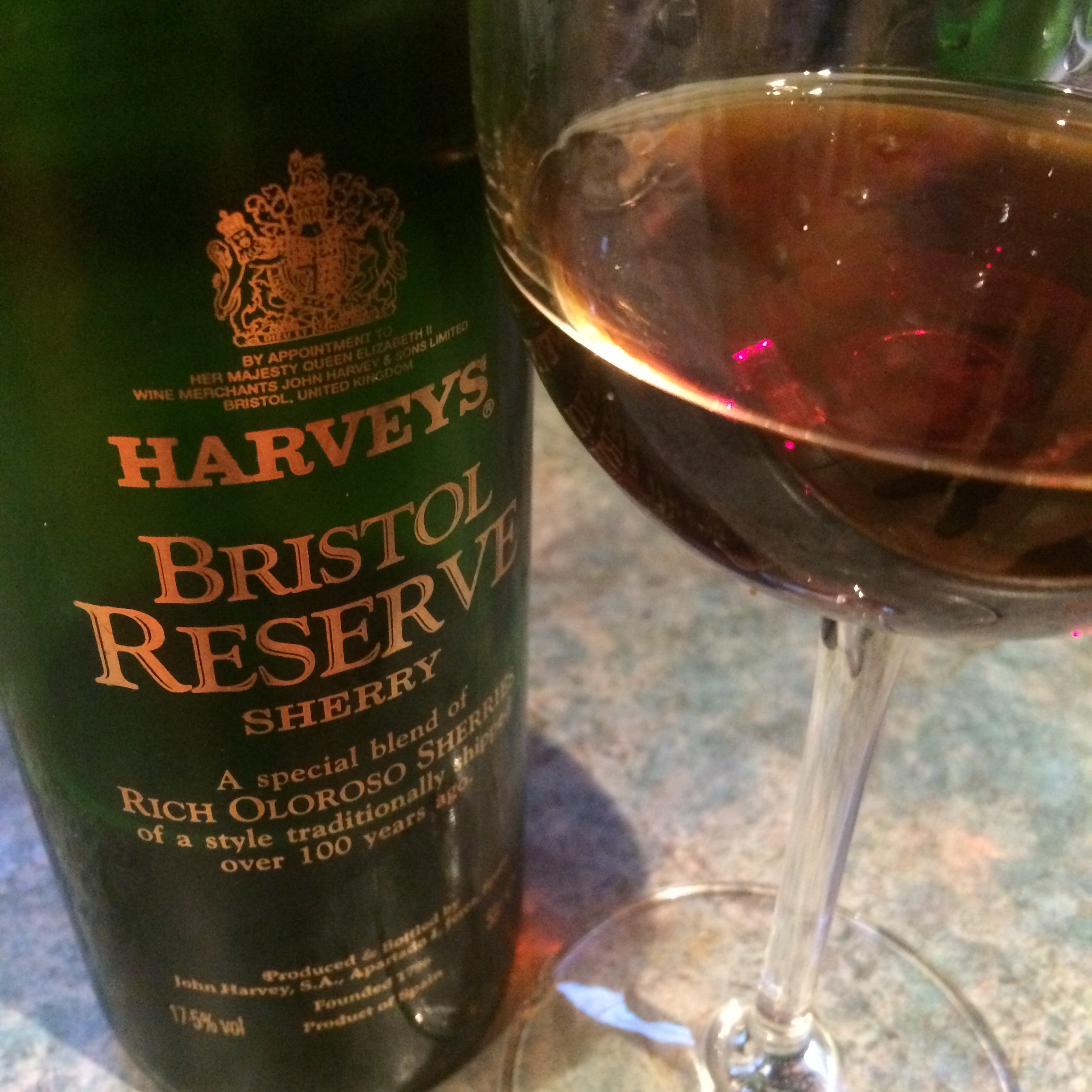
Harveys Bristol Reserve

It is said that sherry was at one time so widely drunk in the UK that it was commonly referred to as “milk”, and that the characters at Harveys blended an oloroso so rich that it became known as the “cream”, creating the category that now dominates the supermarket shelves over here.

In fact a gander at the Wikipedia entry shows a far more complex blended beast – fifty different soleras, three types and two grapes – a typically complex wine, in fact, for a region where nothing is ever straightforward (I am not referring to Bristol).

In colour it is a deep brown – a little dense and not fully crystalline. Then the first noseful is all sweet raisins like a pedro ximenez – a sensation that doesn’t repeat when you go back to it – becomes more sugary treacle and a bit of baked citrus.

On the palate it is again like a (very light) treacle, sticky on the top and sides of the mouth. There is less of the raisins, a bit more burnt sugar and toasted walnut/walnut skin. Nice and long and a sweet, sticky finish.

Overall I find it pleasant and drinkable but a bit lacking in bite – the acidity of the oloroso never seems to really arrive.