A good friend made it possible for me to attend this and it was a cracking event.
The title – “Palo Cortado – the most mysterious sherry wine” – suggested a bit of blarney but in the end nothing to worry about – maybe a bit of blarney but overall a good, punchy and knowledgeable introduction with some interesting nuggets and some key background facts on each wine – a well prepared and well conducted tasting.
We started with Obispo Gascon – by Barbadillo in Sanlucar (on the left below). The colour is an orange amber/chestnut – absolutely crystal clear. It wasn’t super expressive in the nose – salty with a bit of sweet pastry. On tasting the salinity is nicely integrated and it is maybe not creamy but a little oily, with flavours of caramel to burnt caramel – and very long. Nice start. (16/20)
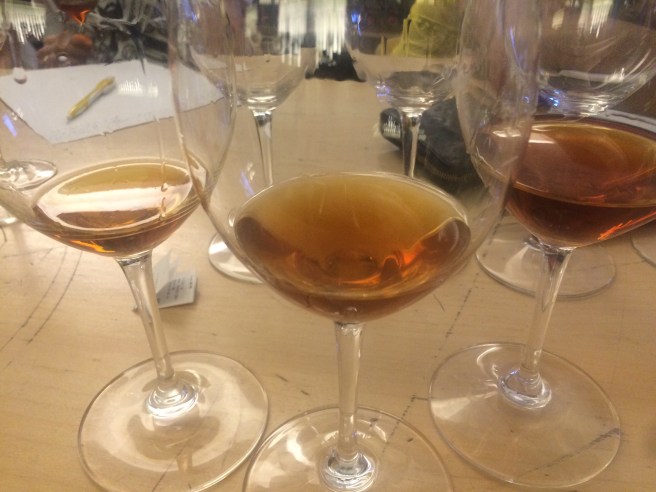
Next up was the Tradicion – seen here between the Obispo and the Gutierrez Colosia Viejisimo. Similar in shade to the Obispo Gascon although not as crystal clear – a suggestion of cloud. More nutty on the nose – more almond pastry/bakewell tart rather than the honey pastry of the Obispo and not the same noticeable salinity (this lad is from Jerez). Noticeable acidity in the mouth and it is full of darker caramel flavours – maybe a little bitter/burnt in the aftertaste. Always notice the structure of this wine and it has a nice, savoury, nuttiness to it. (17/20)
The Gutierrez Colosia is called “very old” and it looks it. It was at least a shade darker than the other two – but crystal clear – and again a little bit of sea air on the nose (this fella is from Puerto de Santa Maria). Also a bit of yeast on the nose – a more vegetable sensation. Big and rich on the tongue and it has that old fruity christmas cake taste to it, caramel flavours, baked orange, a suggestion of nuts. Really full in body and maybe a touch more width/breadth than the other two. Lovely wine. (18/20)
Next up – Roberto Amillo Espiritus de Jerez. In colour it is a little browner and my glass – in fact the bottle – was a little cloudy. A bit less expressive on tje nose. On the tongue it not as rich and on the palate it is acidic, spicey and sharp with flavours of walnut tending to walnut skin. For me not as rich and structured as the Tradicion or the Viejisimo – a racy, spicey glass though. (15/20)

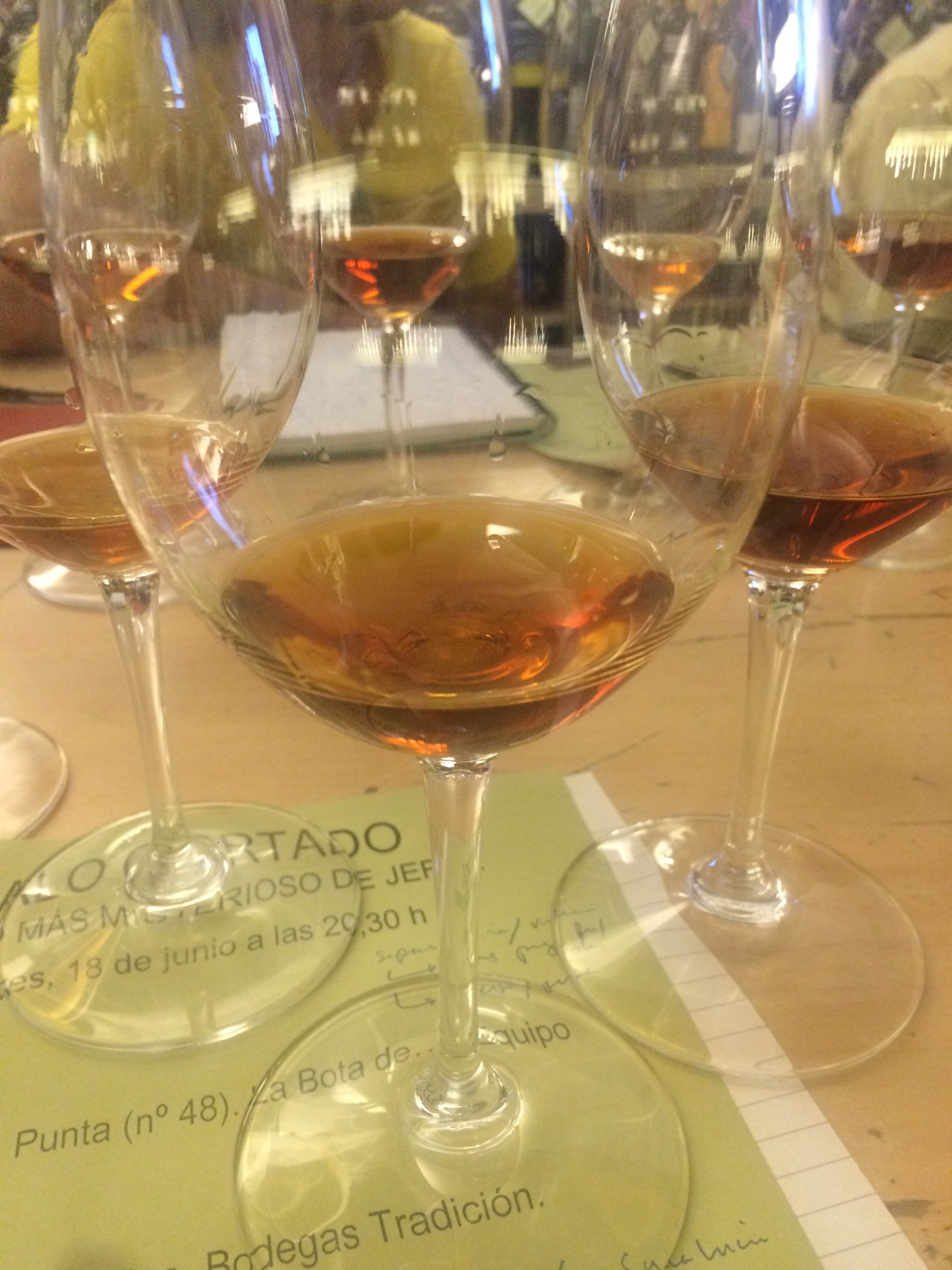
The fifth wine (middle of this picture) is the Equipo Navazos 48. Deep bright red in colour – light ruby and a really distinctive nose – a bit of the diesel, varnishy garage forecourt smell, with bitter orange and minerals and even lactic notes (cheese rinds). I can understand it not being everyone’s cup of tea on the nose but in the mouth it is fabulously rich, with a whole new range of flavours. You get dark chocolate and tobacco, the jammy marmalade, and of course the nutty toffee. I found it a really expressive, rich wine and a little extra dimension on the palate compared to the others. (18/20)
Finally, on to the Cardenal by Valdespino, an old school palo cortado made from wines that stepped off the “true path” of the Fino Inocente (and therefore all from the Macharnudo Alto pago). In colour it is another dark one – chestnut brown. Then a salty, iodine in the nose, and burnt caramel for me (but others reckon yeast). In the mouth it is enormous – treacly, maybe even too concentrated. The range of flavours is not quite as wide as the 48 – absolutely massive and relatively balanced even if possibly not as multifaceted as the Navazos wine. A magnificent wine no doubt. (18/20)
Overall favourite: the Equipo Navazos 48 – just for the range of aromas, flavours and notes – but this was a superb range of palo cortados and an excellent event.



 undertheflor.com