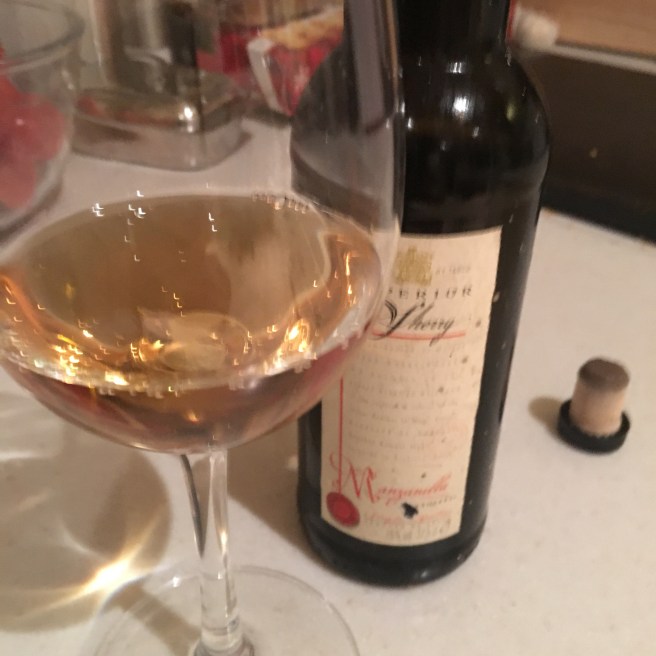
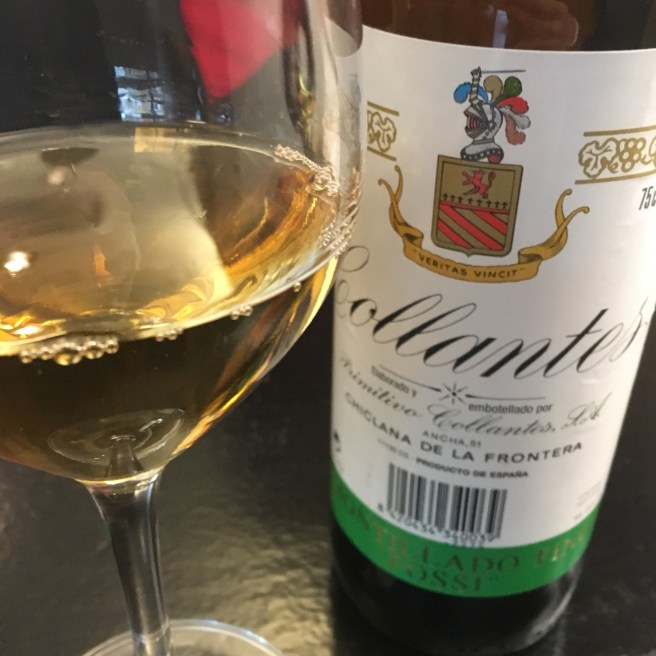
Amontillado fino El Fossi

The first of two amontillado finos during a nice lunch in Surtopia.

In colour it is an appetising dark gold – yellow brown rather than the orange or red notes of an older amontillado. After the fino and the en rama it is no surprise to find minerals, ozone, sea air in the nose, but the sweet caramel fruit aromas envelope and balance them in this and make it a less aggressive nose overall.

In the mouth there is that same zing, those salty minerals, although for me the texture is slightly finer (maybe it is more in keeping with this fuller flavoured wine), and there are sweet caramel, fruit flavours that again balance the saltiness, fill the palate and, it may be my imagination but seem to me to get back to the fruitiness of the mosto.

A really enjoyable wine with a nice edge of mineral complexity.

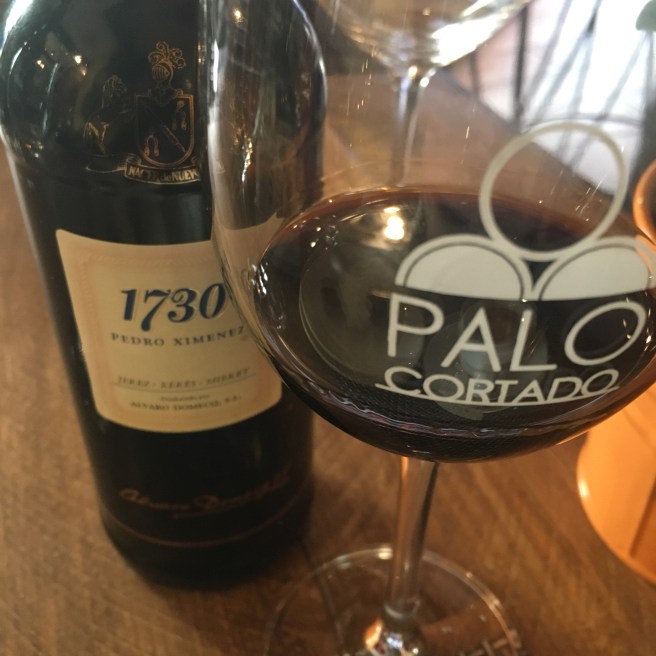
Pedro Ximenez 1730

These 1730 are an underrated and great value range of old wines that seem to fly under the radar. By Alvaro Domecq, a scion of that legendary family that acquired what was formerly the almacenista Pilar Aranda, they make and sell some really nice old wines at what seem like very generous prices. I tried the VORS amontillado a while back, and even before that I remember a very decent palo cortado too.

I had this PX in Taberna Palo Cortado a couple of weeks ago and it really hit the spot: sweet as nectar but had that little bit of mineral, almost steely bitterness and concentration that you get in particular from the older Jerez PXs, with just enough salinity to keep it (relatively) fresh. Very very easy to drink, for all the sugar per litre, which is never a bad thing after a nice long lunch.

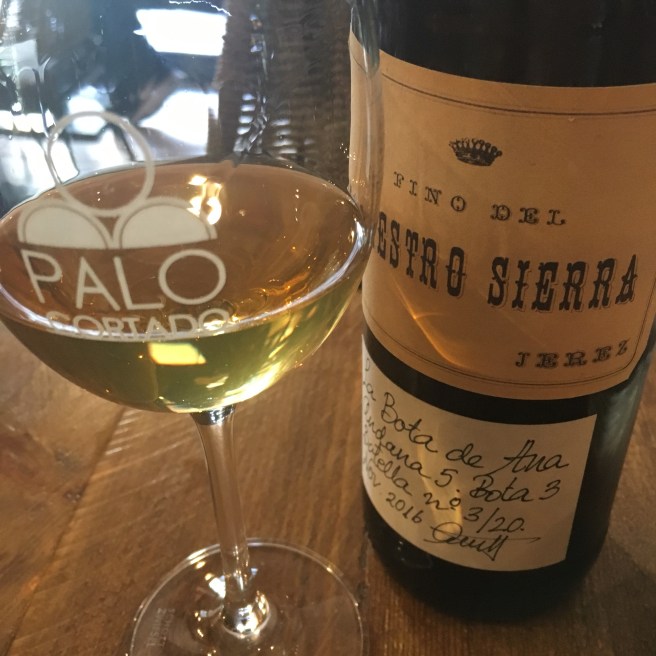
Fino del Maestro Sierra – Bota de Ana (Bottle 3/20)

This is a very rare wine – as you may be able to see on the label only 20 bottles from each saca – from a bota of fino chosen by the winemaker at Maestro Sierra, Ana Cabestrero (and hence la Bota de Ana). The bota itself is said to be one of the two “original authentic fino soleras” (although when I was told that it made me wonder what the other soleras were called)  botas of Amazingly I was able to try this by the glass at Taberna Palo Cortado (one of their 300+ wines from the region).

Maestro Sierra’s finos are characteristically very fine and elegant, with a nice soft yeasty almond texture and flavour, and this is all that. The colour is watery gold and the nose has just a hint of fresh straw to it, with those almonds and maybe a touch of citrus underneath. Then the flavours in the palate are just what the nose leads you to expect: it is big and rich in texture and very long, but there isn’t much width to it – a kind of silky almond rapier. Neither is the salinity overpoweringly zingy – a very refined wine indeed.

The height of refinement, and exclusivity!

Oloroso Gobernador

Enjoyed this with some meaty callos in La Antojá and it is a winning combination (if anything callos could have been a little spicier to match the oloroso, but it was close enough).

It is a classic oloroso. Just look at that beautiful clarity and deep, rich color. On the nose it is nutty and inviting, just a suggestion of caramel, but on the palate it is crisp, dry, acidic – some nutty and burnt caramel in the middle – and then more heat on the finish.

A no-nonsense wine for a no-nonsense dish.


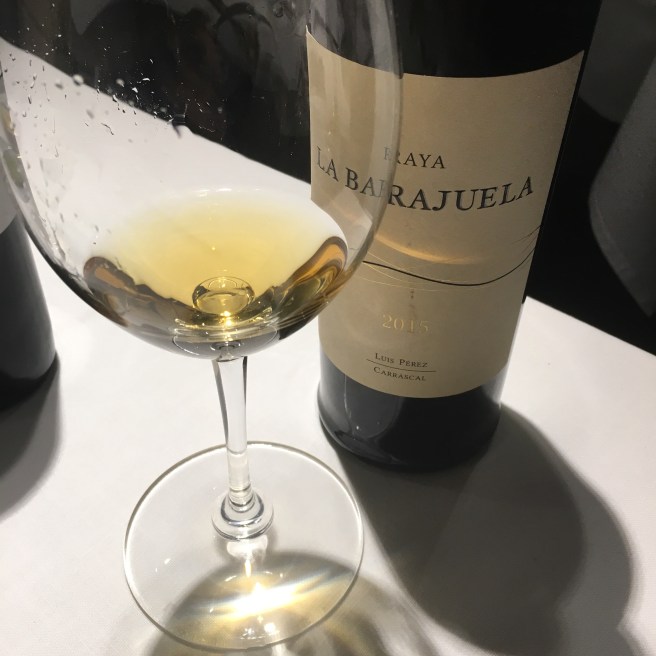
Raya la Barajuela 2015

The third of the wines – all from the very top drawer – of a really memorable lunch at Alabaster recently this is something unique and special indeed.

The name “raya” refers to the old categories given to wine – whereas the finest wines were “palmas” destined to become finos, the rayas were heavier wines, over rich, that would be sent down a different path. This one is not a raya by chance: it is from fruit that was harvested from the el Corregidor vineyard in the very last of their many passes. A late harvest palomino, you might say.

The first time I tried it I must admit I struggled to understand it – the nose is sweet and rich, really in the style of a Riesling almost, while the palate is solid, dry and grapefruit bitter. In isolation I found it a strange combination.

The next time I had it was not in isolation: a fantastic tasting of the Barajuela project wines in Taberna Palo Cortado. On that occasion, coming hot on the heels of the epic oloroso, the richness and extremes of this wine seemed to make much more sense.

This time the context was provided by some fantastic pairings: a terrific red scorpionfish and a meaty, flavorful horse mackerel. The two dishes really complemented the wine, or vice versa: the sweetness of the nose with the scorpionfish and the bitterness and salinity with the horse mackerel.

A couple of things were very noticeable: first that the bitterness here was the grapefruit, baked orange bitterness of the fruit, not the burnt almond, woody bitterness I associate with process. The other was the utter contrast in profile with the fino. While the fino’s zing and salinity lets it slip in and out without a ripple, here the flavours are massive from the first sip to the long, long tail. On that finish the salinity is there but so is that over-ripe fruit – a long, long, long finish of fruit rather than just salt and spices.

And the potency – I was dragging this out but was still amazed at the intensity that made the tiniest sip enough.

It is probably my third favourite of the wines from this awesome little plot, but it is still a brilliant wine in its own right and fantastic with a strongly flavoured meat or fish dish like these.
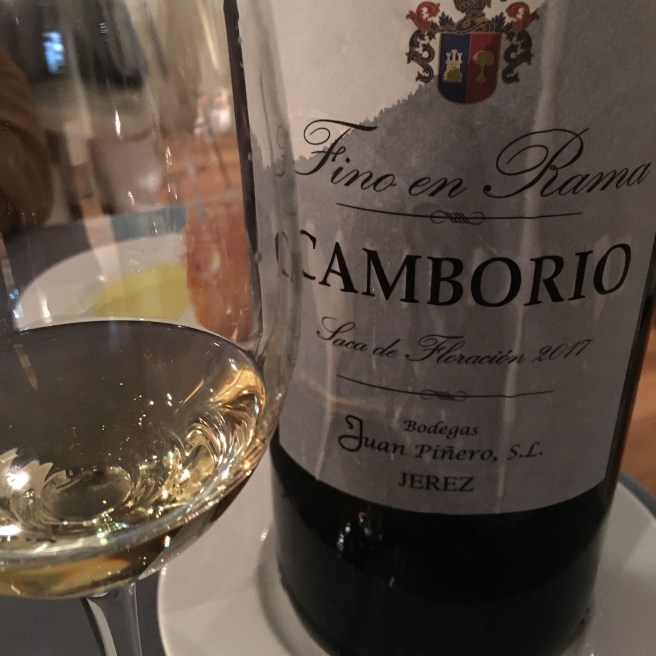
Fino Camborio in Viavélez

Dropped into Viavélez Friday night for dinner for the first time in a long time and kicked off what was a terrific dinner with a glass of this classic, high class fino. It is a fino that has up until now been underrated and little talked about, a circumstance which is likel to change since Camborio has recently been acquired by none other than Peter Sisseck of Pingus fame (but a considerably broader portfolio).

I for one think it is good news. To say that Mr Sisseck is a saviour in the style of Berlanga’s Mr Marshall (as some excited editorials and bloggers have) is maybe a bit overblown, and is certainly unfair on the pretty long list of existing saviours who have for years been working hard to bring the sector back into the winemaking mainstream in terms of quality, terroir and vintages. But it is undoubtedly good news for the image of the region: there is no doubt that Peter Sisseck brings a bit of international name recognition and star quality. It is also good news from the point of view of distribution, because his is the kind of operation that can take this wine overseas. It is also good news from the point of view of the message that it sends concerning winemaking: a guy made famous by a wine from a tiny plot of old vines in Ribera del Duero clearly sees value in a patch or two of albariza in Jerez.

I wish him well and I can tell you he has done a good bit of business picking up Camborio, certainly on this evidence. In fact maybe the biggest difficulty he has will be in improving on this offering of a great wine. The colour is a lively straw color, it has saline and straw nose with toasted almonds and a super elegant profile, starting and underpinned by sharp salinity, then intense savoury almond flavours, tailing off again to a long, spicey and mouth watering finish. Really class: maybe has lost an ounce of that explosive character it had when first released, but as good a fino as you will find anywhere with very few exceptions.

Never mind the label, feel the quality (and now might be a good time to buy).


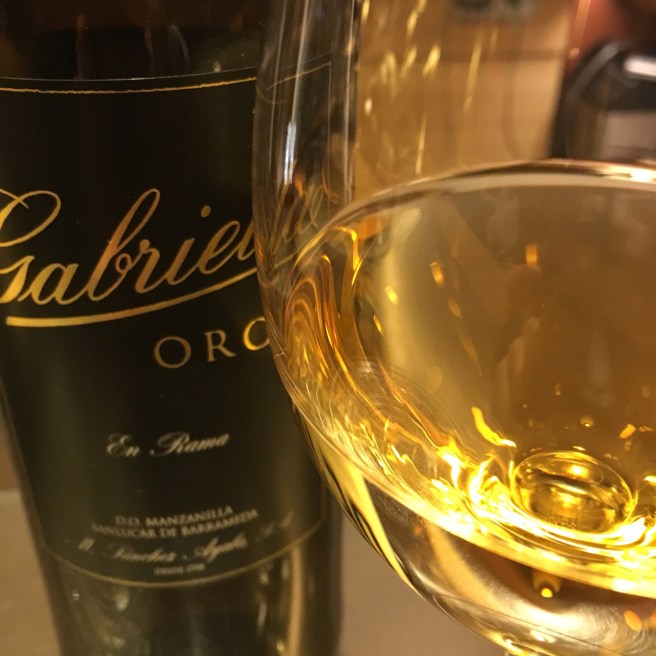
Gabriela Oro in Media Ración

A quick pre-Reyes lunch in the marvellous bistro Media Ración with an absolutely outstanding bacalao al ajorrariero – the best I can remember – and this classic manzanilla from classic Sanlúcar bodega Sanchez Ayala.

Just look at that colour – the lighting may have helped but there are no filters above, just pure liquid gold in the glass. On the nose it is salty sea air and slightly musty esparto grass, with more and more almond coming through the longer it is in the glass (and when the glass is empty). On the palate this is punchier than I recall in the past, with a real zing of salinity first up, then super dry, smokey and toasty almond flavours before a gunpowder salty finish.

Really delicious, and although everyone seems to debate between sweet wines of every kind, the nutty flavours of the last sip went beautifully with the roscón de reyes that my hosts very kindly gave me.

On another note, these wines from Sanchez Ayala have a real personality that previously I had always attributed to the location and techniques in solera, but in a recent chat with the bodega I learned that all the wines are sourced from a single vineyard: las Cañas in Balbaina Alta, a fact which curiously doesn’t feature in the marketing of the wine. Come on guys, don’t be shy, take pride in your roots!

Corta y Raspa “La Charanga” 2016 in Angelita

In just over a week have had two absolutely cracking dinners in Angelita. Absolutely delighted to see the place full to the rafters on both occasions (standing room only downstairs the other night) because if anywhere deserves to be full this place does. Can’t speak highly enough of their approach to sharing wines – a fun list of interesting stuff that always has me trying new things and almost always enjoying them.

There were a few of those this week but this wine I knew alright, and it is a cracker.

This wine is by Antonio Bernal Ortega, one of the mayetos that make up Ramiro Ibañez’s Mayetería Sanluqueña. I refer to that earlier post for details of the project – as so often with Ramiro the idea is in itself fantastic – because this wine deserves a post all to itself. It is 100% palomino from the vineyard “La Charanga” on Pago Maína near Sanlúcar, a “river influence” pago famed for an albariza rich in diatoms.

The wine came out at first with a touch of reduction, but nothing that a big glass and a swirl couldn’t cope with and once it settled down it was a gem. It has an attractive sea-air and apple tart nose and on tasting shows a lovely salinity and shape. Fresh at the beginning and mouthwatering at the end, not heavy by any means but a nice splash of almond, apple, and herbs, fading to that salinity and a touch of peppery spice.

A lovely little wine all told, and it was a big hit with my sister in law – who despite being a newcomer to my little world of palomino white wines took to it like a born winelover, calling the salinity and flavours perfectly. A wine for all seasons and all publics. If only there were more of it …

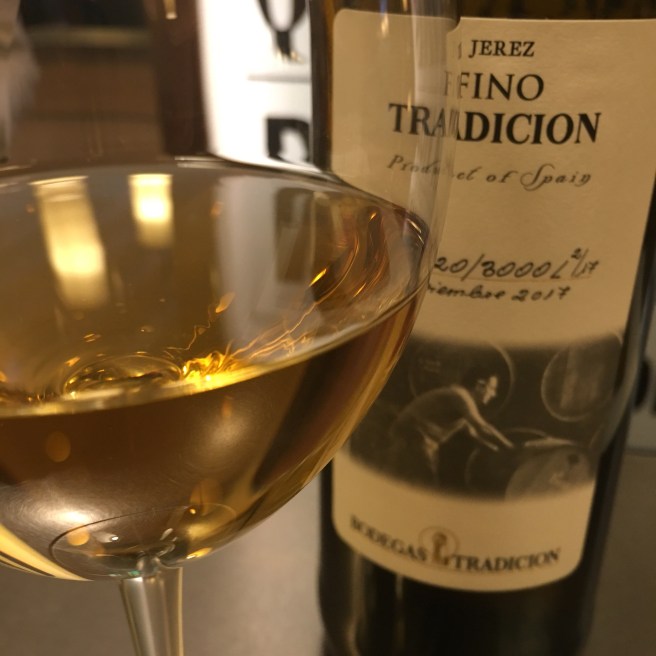
Fino Tradicion Noviembre 2017

If a few of the autumn sacas I have tried are a guide it has been a hard summer for the flor down in el Marco.

This autumn saca of the great Tradicion fino seems to me from memory to be towards the oxidated, roasted, end of the register. Not necessarily a bad thing: gives it plenty of body with a ripe, rich feel to the flavours and the zing of salinity gives it a nice spicey finish and balance.

A serious but very drinkable fino from the top drawer.