Tintilla Nude 2016

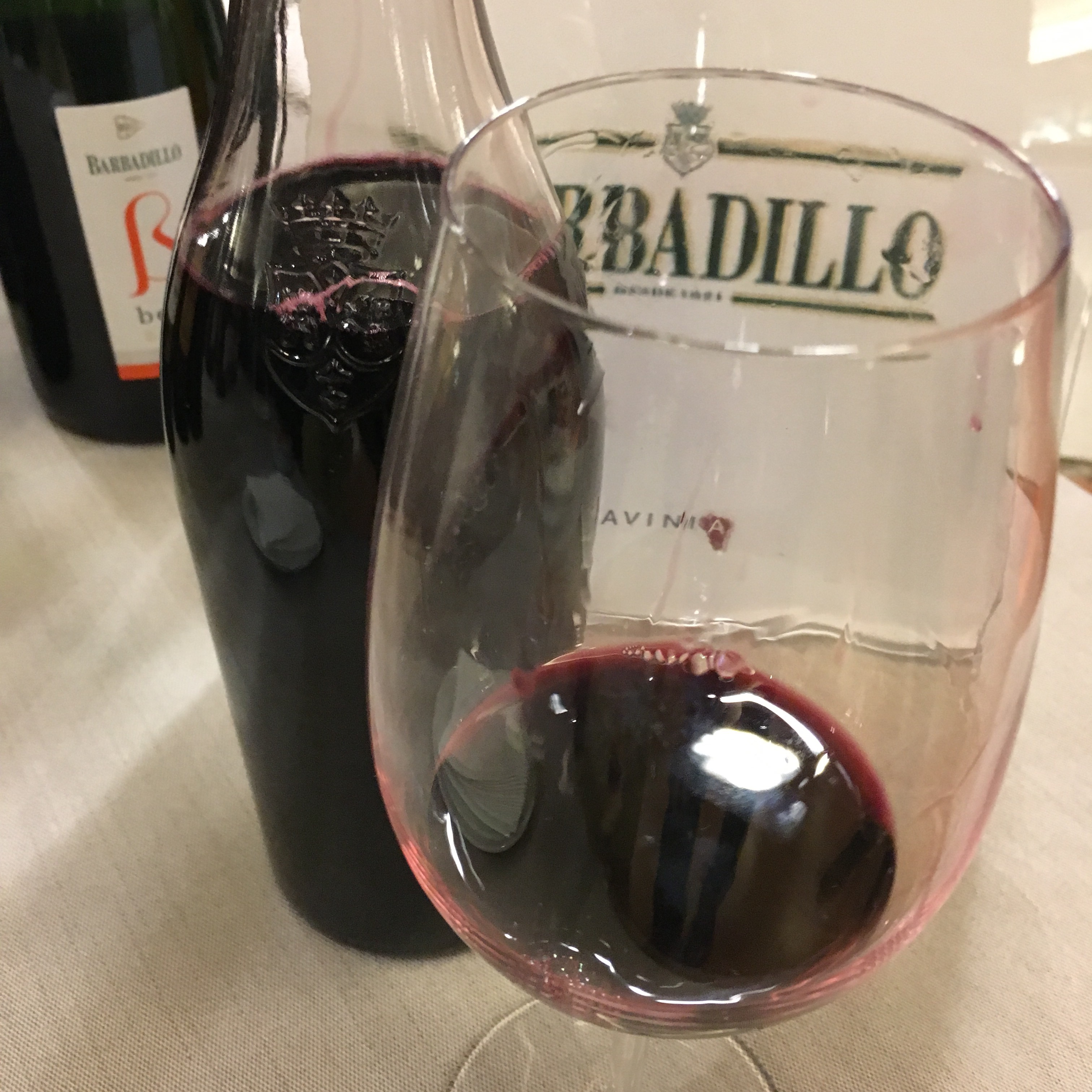
A lot of data in the above photo – as you can see we have a red wine, made by Barbadillo, which I had a go at at an event in Lavinia (metadata would reveal that the event in question was this year’s Feria de Vinos last Friday) and there is even a reflection of the inept cameraman.

I am, however, pretty pleased with the composition here because it shows off one of the qualities of this wine – just look at the colour of it. Such is the density of colour in the wine that the bottle appears fully black, to the point that when opened and poured it comes as a shock that the glass is absolutely clear. This is almost certainly where this grape gets its name (tintilla meaning “little ink”) and it strikes me as a neat bit of packaging by Barbadillo (although the brand name is not the easiest for the locals to pronounce).

The wine is also pretty good it must be said, and again surprising. When you look at that colour (it paints the glass pretty handily too) you are half expecting something structured and concentrated, even sweet or port-like, but the actual wine is all red fruits on the nose and dry and refreshing on the palate. It hasn’t had any time in the barrel at all and is extremely drinkable – I was surprised to find that it was 14.5% because it comes across as lighter.

According to the ficha 2000 bottles were made – I guess they may need to make a few more than that.


Amontillado Seco Valdivia Dorius (2006)

Another long lost label – this one once of Ruiz Mateos, later absorbed by Garvey, recently acquired itself by Fundador – but David at Territorio Era has somehow got his hands on a few bottles, including this one dated 2006. A middle aged amontillado with a deepish colour, relatively quiet, nutty nose (with a bit of reduction first up that soon blows away), then a palate that is relatively mellow and roasted-nutty with a little bit of bitterness from the time in the bottle.

Amontillado Fino Agustin Blazquez 

The second of two very special wines served after an already brilliant tasting with Bodegas Tradición at Taberna Palo Cortado last night, this one was a homage to the star of the evening, Jose Maria Quiros, who had for a time worked at the legendary and now disappeared bodega of Agustin Blazquez. It was very generously opened by Paqui, who had already given up her evening to host us and had laid on the usual delicious tapas – I just wish I had a wine good enough to have reciprocated.

Because this wine was also top drawer. Estimated as being bottled in around 1950, it came from an original wooden case and was wrapped in original straw packaging (you can just see it above). The cork had not survived the passing of the years, or rather had been partaking a bit too heavily, which explains the debris in the glass above, but otherwise the wine came across as as clean as a whistle.

This would have started as an amontillado fino – probably not unlike the older finos that Tradición make today – and has probably gained some colour. As you can see, a lovely clear brown (interesting to me how similar it was in colour to the manzanilla of the same kind of age that we had tried just before). This had just a touch of reduction on the nose and aromas that were a bit more serious, like bitter almonds. Then on the palate again it was still compact and clean in profile. Not a big structure or punch but a little bit of acidity and a nice deep, almond to bitter almond flavour.

This must have been some wine when it was a young’un – and in many ways it still is.


Manzanilla CZ 

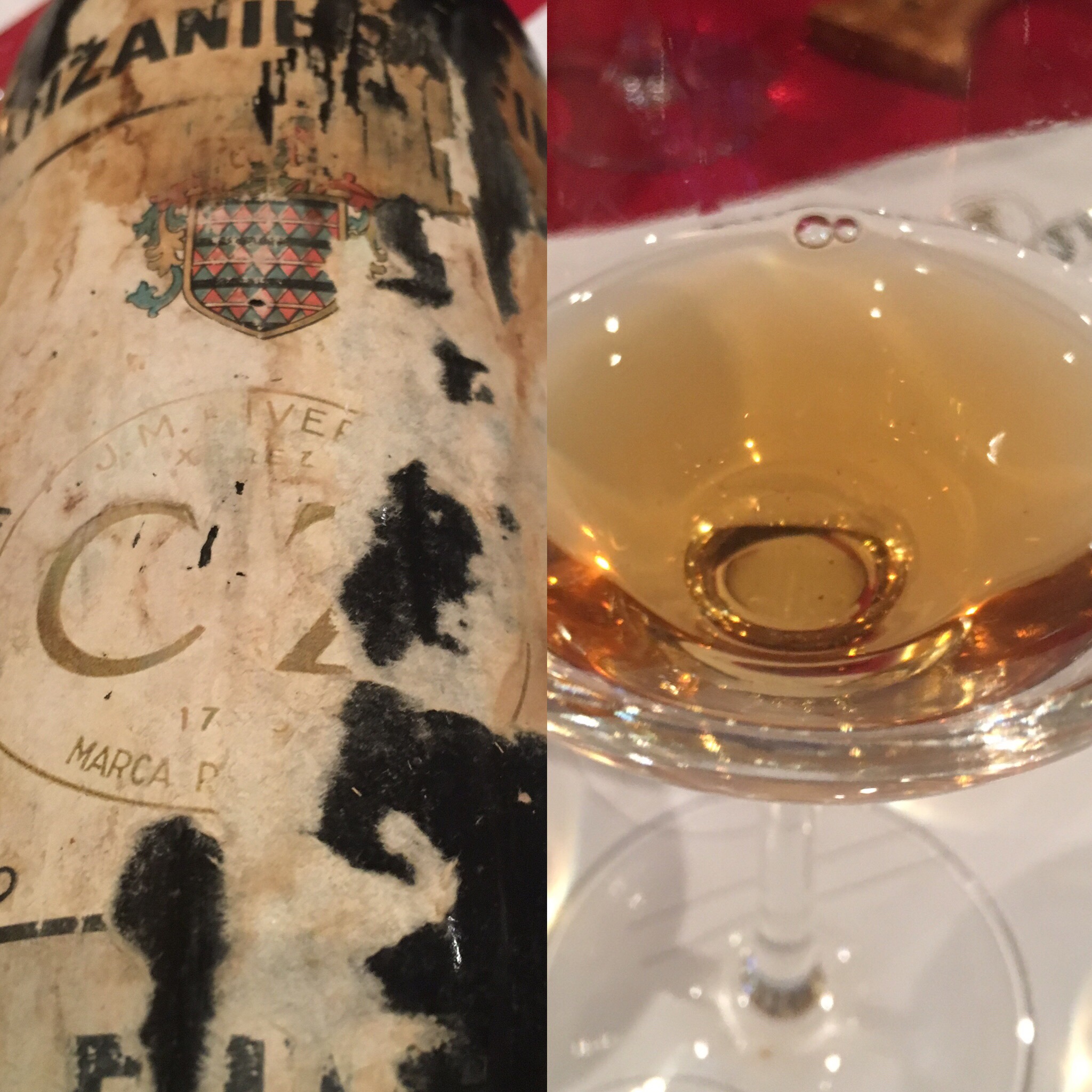
I went to a special tasting of singular wines by Bodegas Tradicion last night at Taberna Palo Cortado and after the official program there were some even more exceptional extras. The first was this Manzanilla CZ – the original brand of the Rivero family, current owners of Tradicion – which had no date but based on label and bottle must have been from the 1950s or maybe even earlier (or so the experts concluded last night anyway). It was brought by the massive legend and outstanding cameraman Abel Valdenebro.

Just look at that colour – evolved from a manzanilla, but not as evolved as some en ramas that are currently on sale (naming no names), and so bright and clear. It looks incredibly clean and appetising, and you get the same impression from the nose – slightly sweet of esparto grass, but by no means honeyed or nutty. It has wandered from the path of the manzanilla but I would place it as a manzanilla pasada, although it didn’t have quite the same saline punch as either.

Finally on the palate again clean and fresh, a compact profile with no dustiness. Not a big profile or an exuberant wine and not much structure left but a nice waxiness and an even better range of flavours across the palate, from a slightly sweet of esparto grass start through a warming salinity to only a slightly bitter finish.

This is what is known as growing old gracefully – a beautiful old wine. Many thanks Abel!

Encrucijado 2014 

A top wine, getting better every time I try it – and seems to show something different too. Today (and maybe in this glass) it is amazingly aromatic and has a more vertical feel on the palate too. Lovely – and as those in the know can see, still available at Territorio Era.

Eduardo Ojeda in Lavinia 

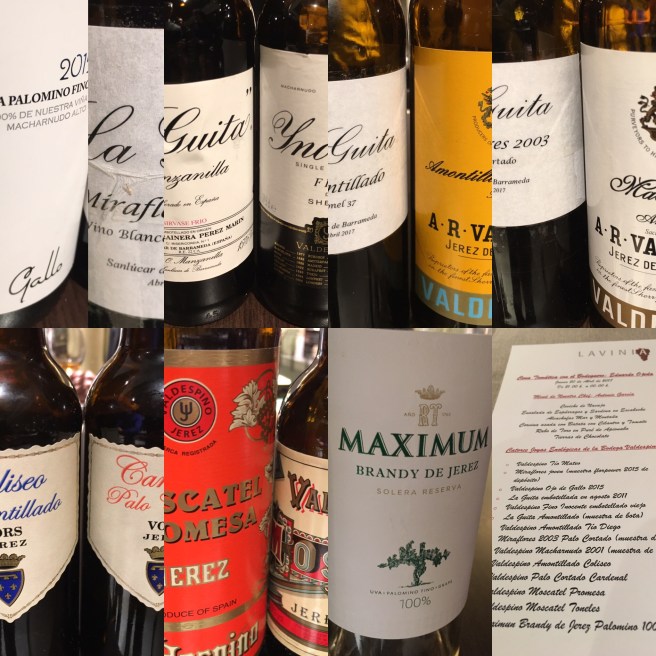
As you can see from the compressed nature of the collage above, a fella was present at a fantastic evening in Lavinia this week. A dinner with the great Eduardo Ojeda of Grupo Estevez (including Valdespino and La Guita) and, of course, Equipo Navazos. And my kind of dinner too: six courses with a mere 13 wines and a brandy. It was a top evening in every respect, with first class wines, excellent knowledge from the horse’s mouth, good food, and charming company.

The tasting was also cleverly structured. After a nice refreshing glass of Tio Mateo as an aperitif, and as the collage above shows (if you look closely), with each course we had wines from both sides of el marco – La Guita/Miraflores (Sanlucar) and Valdespino/Macharnudo (Jerez), respectively – and with increasing age/intensity.

Valdespino is famously a single pago brand, but it was interesting to hear that, since acquiring La Guita in 2007, the group was also attempting to be far more selective in sourcing for that business and in particular to focus on Pago Miraflores (where the historic La Guita house can be seen). (It was also very interesting to see an emphasis in the tasting on single vintage wines, particularly the recent vintages but also some wines that were around 15 years old, although they are not commercially available.)

Round 1: Miraflores Joven (a sample of the Florpower 2015) and Valdespino Ojo de Gallo 2015. Two young unfortified palominos from these two famous pagos and I found the comparison very interesting. The Ojo de Gallo was recognizably macharnudo and had that breadth and flavour but the Miraflores, while of course not a finished wine, had not only a fresher profile but what seemed like more punch on the nose and palate. Very curious contrast between the two and really set the scene for the wines to follow.

Round 2: La Guita (bottled in 2011) and Fino Inocente, also with time in the bottle. These are both classic, fortified and solera aged wines and, as you would expect, they were noticeably finer than the wines that had gone before. Actually the second time I had tried this 2011 bottling of La Guita and with a couple of years extra time in the bottle it seemed to have not only evolved but also improved, with a lot more hazelnut nuttiness than you might normally expect. The Inocente was fantastic – just like the first wine it seemed quiet and restrained at first but soon opened up and showed its class, with hay bales/esparto grass on the nose and that big, yeasty/bready/nutty palate. Not as evolved as the La Guita and I honestly couldn’t have told you that it had spent time in the bottle had it not said so on the menu.

Round 3: La Guita Amontillado (bota sample) and Amontillado Tio Diego. Two really class wines with the next course: amontillados from Sanlucar and Jerez respectively. Again a fascinating contrast, the Sanlucar wine offering up crunchy bar on the nose and hazelnut and roast apple sauce flavours on the palate while the Tio Diego had more caramel and dairy notes, again big hay bales and punchier fruit, more like marmalade than apple sauce.  I had kept a glass of Inocente alive and it was fascinating to hear that the Tio Diego and Inocente came from soleras in parallel and with the same number of criaderas – the principal difference being not the total age but the speed of rotation down the solera (one saca and rocio per year rather than two).

Round 4: Miraflores Palo Cortado 2003 and Valdespino Macharnudo 2001. Two single vintage wines that are very sadly not commercially available. The Miraflores Palo Cortado might have been the wine of the night and had a bit of everything, a beautiful rich amber colour, a nutty sweetness on the nose and a beautifully elegant toffee, nut and mineral palate. As is now de rigeur there was some discussion as to why it was a palo cortado and Eduardo’s explanation was simple: it smells and tastes like one (some subtleties may have been lost in the summary). By its side the Macharnudo 2001 maybe didn’t sparkle quite as brightly but was a delicious wine in its own right. More serious, with less sweetness and more haybales on the nose and a deeper nutty and zingy palate, but still elegant and balanced. What really struck me about these two wines, however, was the contrast in profile – the vertical, fresh feel to the Sanlucar wine compared to its horizontal, fuller Jerez counterpart – a difference that seemed as clear as it had with the first two wines.

Round 5: Amontillado Coliseo and Palo Cortado Cardenal. Now these two wines are both Valdespino but even so we maintain the distinction between Sanlucar and Jerez: the Coliseo is an outrageously old amontillado refreshed only with manzanilla while the Cardenal is of course refreshed with fino. They were both absolutely epic and worthy of a tasting to themselves. The Coliseo is like a highly polished wooden javelin: dark mahogany in colour, a punchy, furniture-polish nose and then incredibly saline and dry on the palate with woody flavours of black treacle, burnt cake and pipe tobacco. The Cardenal, by comparison, is a massive war axe, with a salty, iodine and burnt caramel nose and just an enormous palate of treacle and roasted nuts, incisive zingy salinity and sharp acidity.

Round 6: Moscatel Promesa and Moscatel Toneles. I must admit that by this stage of the dinner, with any spitting discipline a distant memory, my critical faculties were not everything they might have been and, as I have had occasion to mention before, the sweeter wines are not absolutely my satchel. Nevertheless, although the notes may be pretty patchy the mental fog isn’t thick enough to obscure the fact that these were two cracking wines. The Promesa I hadn’t tried before and was very good – nice light, marmalade nose and a decent edge to the palate – and what can you say about Toneles?

Finally out came the brandy to finish me off altogether: the Maximum Brandy de Jerez Palomino 100% 2014. A pretty interesting one too, incorporating a blend of styles and finishes, date specific and 100% palomino (as you may have guessed). A punchy, high quality end to an excellent tasting and evening that was as educational as it was enjoyable.


A lesson in expression

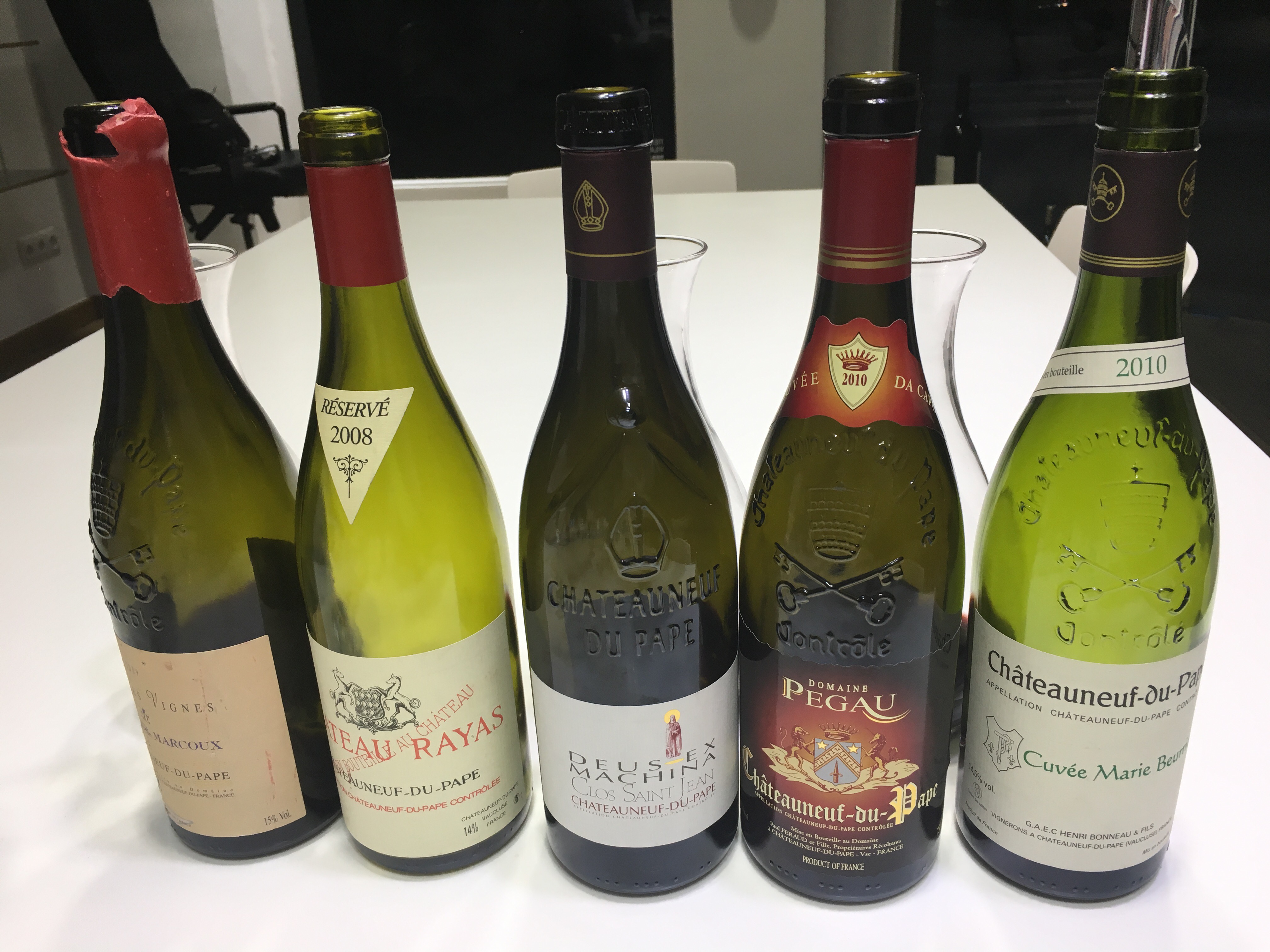
I have a lot to write up, some of it even related to Jerez, but wanted to share some thoughts from tasting these five quite magnificent Chateau Neuf du Pape with David Martinez at el Mostrador de Vila Viniteca last night. 

They were all at the very top level, but for  me two stood out – the very first, Domaine de Marcoux Vielles Vignes 2009, which had a concentrated jammy fruit and liqueur that shouted out Chateauneuf; and the second, the amazing Chateau Rayas 2008, which had aromatics and a kind of ethereal strength that could only be, well, Chateau Rayas, which famously has cool terroir soil in a hot place. Talk about wines with personality. 

I am not saying that this level of expression is possible in Jerez, but surely we ought to be at least trying?

Fino Williams Colección Añadas 2009 – Saca de February 2017

They are back, the Williams Coleccion Añadas by Williams & Humbert, probably the leading champions of añada wines in el marco. Here by the glass (or two) at Territorio Era.

And this new saca is even more like the old one – maybe even better. The gorgeous colour, the sweet hazelnut nose and the sweet/salty combination in the palate – incredible hazelnut sweetness tempered with a mineral saltiness – and a zingy finish,  which again leaves a long nutty sweetness in its wake.

Not comparable to other finos, or even amontillados, that I can think of (except the ones in its own family of course). A unique wine and a fantastic advert for finos de añada.

Manzanilla Elias 

Yet another of the new additions to the wines available by the glass at Territorio Era. A very decent young manzanilla this from a bodega I had never heard of before last month’s Salon de los Vinos Generosos but which is located at the heart of the action – opposite Sanchez Ayala. Nice appley, sea air aroma with just a touch of esparto grass, then fresh and saline on the palate. Hits the spot.

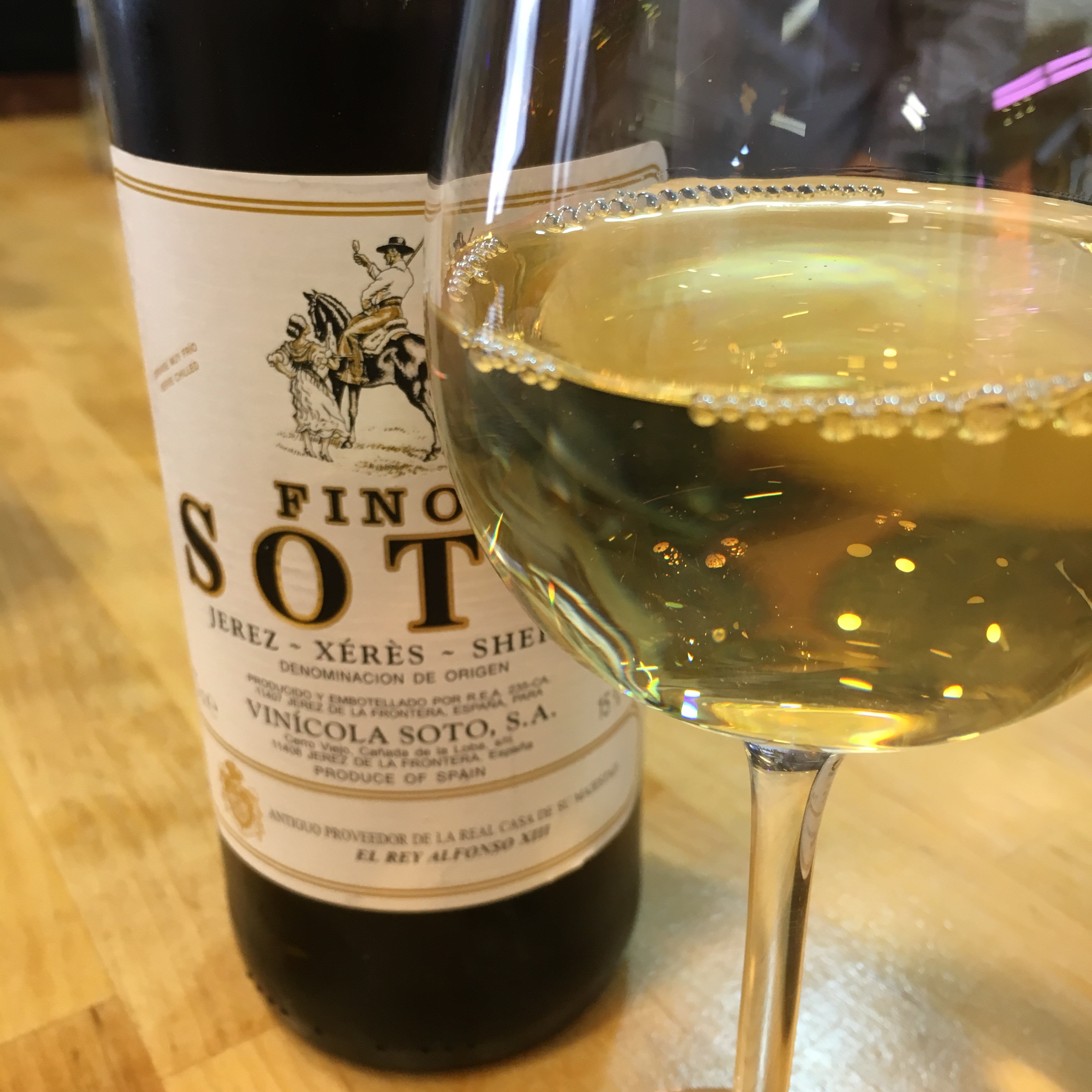
Fino Soto 

This has been a fair time in the bottle and it shows, at least at the beginning, with a pretty flat nose and a lot of liquorice on the palate. Improves after a little air and loses those more jarring notes on the nose. Had a serious palate with good salinity – even heat – but still a little too liquorice heavy for my tastes. 

Not really my bag but worth tasting – the bodega has quite a history or so I am told. One of the 105 (!!!!) generosos now available by the glass at Territorio Era