Fino Collecion Añadas 2009, saca de febrero 2017

The Williams Coleccion Añadas were a revelation when they came out last year and although the second saca hasn’t had as much fanfare, for me it may be even better.

It still has the rich colour, the nose of sweet hazelnut (my colleague called tiramisu today which was a great shout) and the salty, nutty potency on the palate, but this to me seems finer and more elegant than the 2016. In particular the finish seems sharper and fresher. 

A lovely wine that is rich and fine at the same time. 

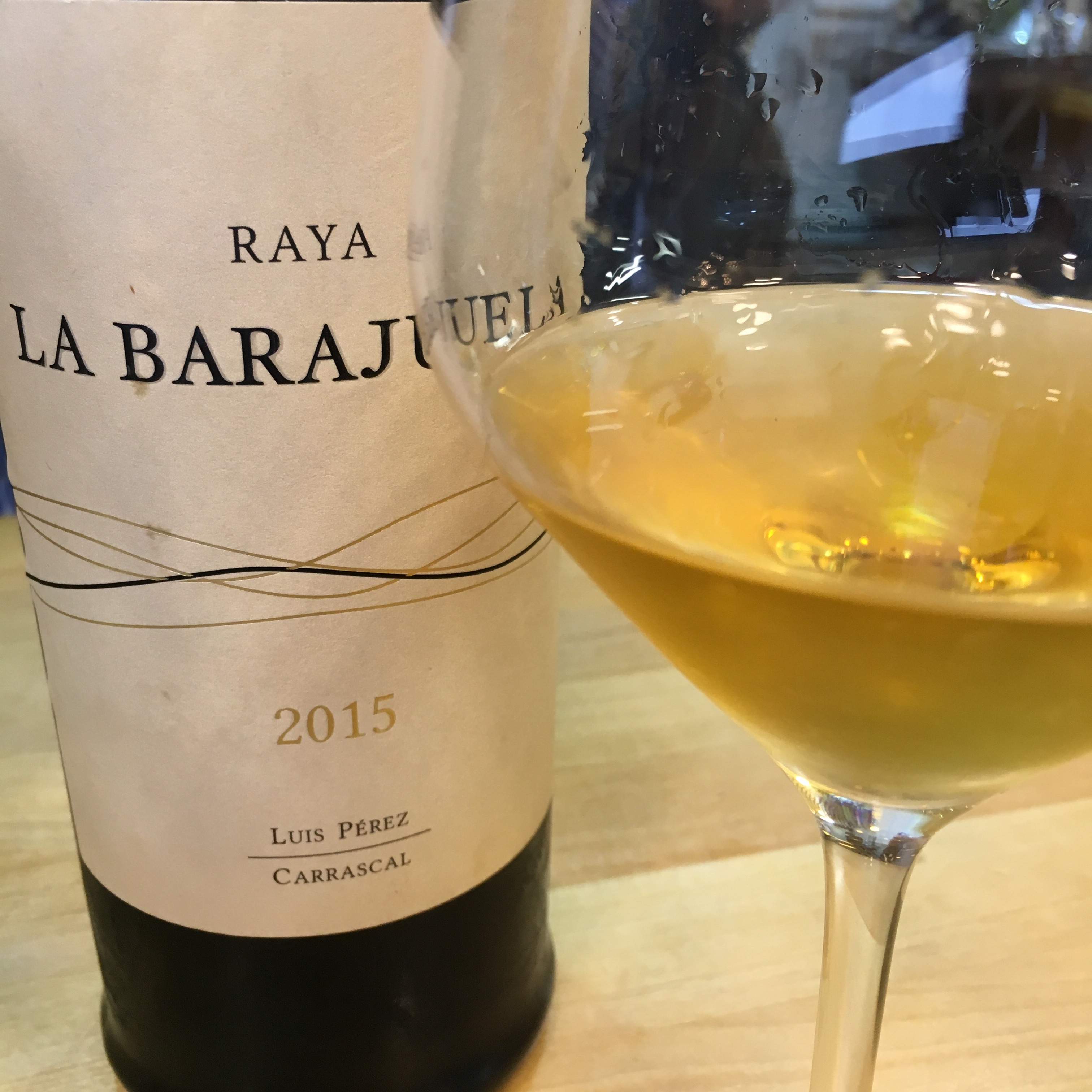
Raya la Barajuela 2015

An unexpected bonus wine from the Barajuela project and another historically and educationally important wine. 

The name refers to the old classification of wines when they came in from the vineyard – palmas and rayas. Broadly speaking whereas the palmas were fine and could hope to become finos and amontillados, the rayas were heavy and were destined for oxidation. Back in the day the differences in the wine resulted from the mix of varieties in the vineyards, but in the monovarietal present this has been selected from the latest and longest ripening fruit from the multiple passes of the harvest.

The result is a wine where on the nose it smells like there is some residual sugar and first up you get that false sweetness of a late harvest riesling, but without the same level of acidity and a much finer body. (I must admit, I have heard these wines described as “heavy” and “fat” so many times I half expected something syrupy.) it has a nice backbone of salinity but then you get a turn to grapefruit bitterness which I must admit I find a bit disconcerting. Overall it is easy to see why the palmas were so sought after. (On the other hand, it is fascinating to speculate about how a wine like this is transformed by oxidation.)

Very interesting indeed.  

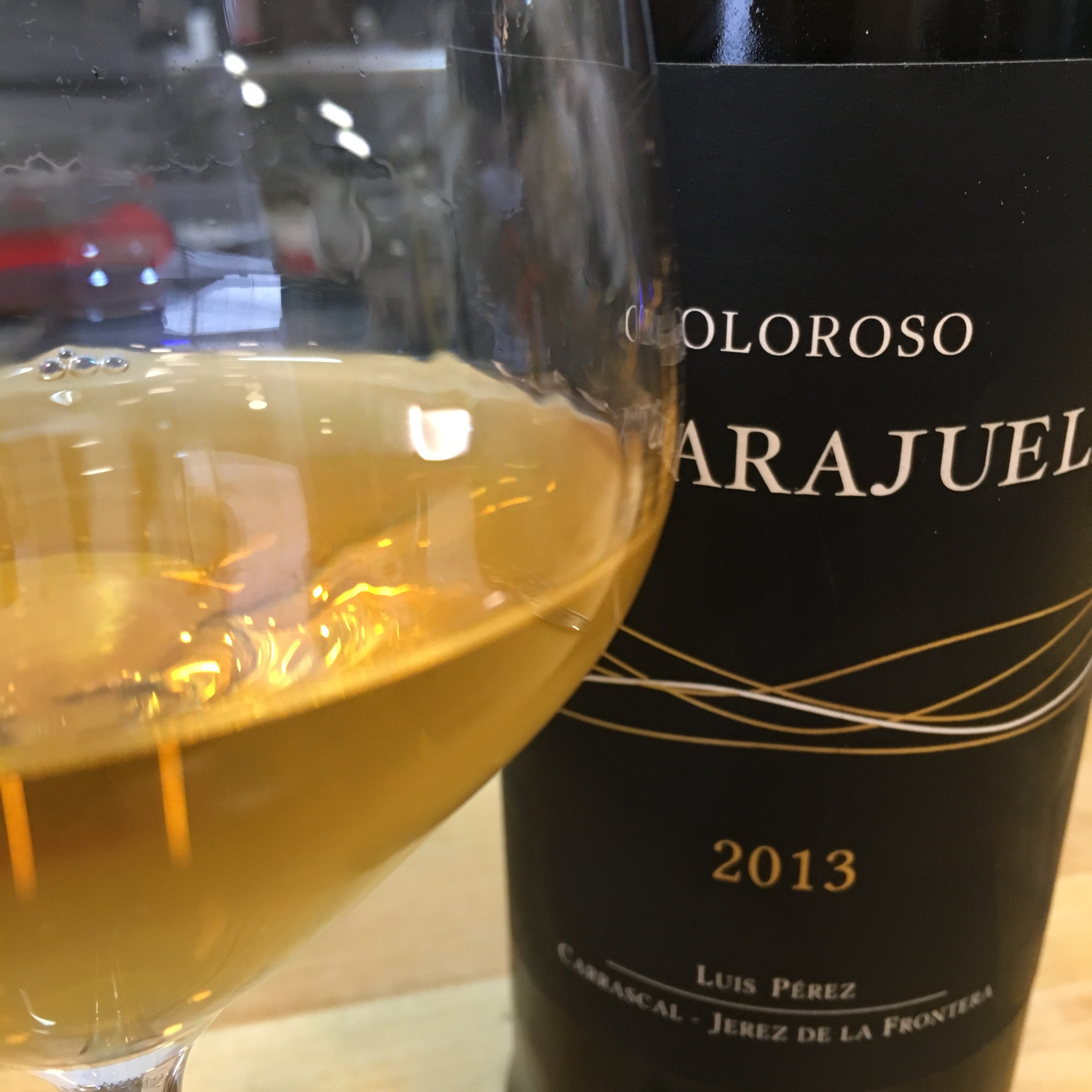
Oloroso Barajuela 2013


Bottles of this are about as easy to get hold of as unicorns with wings so the fact that you can try a glass of this at Territorio Era (but hurry, this was his last bottle) is remarkable even by their standards.

I am unable to write objectively about this wine (or a few others on this blog if I am honest). First, there is a special pleasure in drinking a wine that is extremely scarce, a frisson proportional to the envy you know will be provoked by your post. Second, it is a great pleasure to taste wines that accord so exactly with your own views on vintage, terroir and wine making. (Third, the fact that it is made by such a good bloke is very hard to ignore, even if he is taller than is strictly polite.) 

On the other hand, the expectation and hype that has been generated – most recently a 19/20 from elmundovino – would be almost impossible for any wine to live with. Not to mention the buildup – despite the occasional sighting in the last 18 months its official release has been delayed and delayed due to wrangling about whether it can be called an oloroso. 

And in defense of the DO you can see why – the oxidation, the barrel and the concentration haven’t taken over here as they have in the olorosos you may be accustomed to. Rather, the dominant characteristic of the wine is still its fruit, with a nice depth of minerals and a richness from those four years of oxidation.

The result is by far the finest white wine I have had from Jerez. It lacks the sizzling profile of its younger brother, the fino, and struck me as less potent than I remembered – slightly closed on the nose and not as much power in the middle – but what it might have lacked in power it made up in character and elegance. Given time, both the nose and the palate had a delicious richness of nuts and dried fruits, almond tarts and the like, all in a nice profile with a very long middle and finish. 

A really outstanding wine. I would drink gallons if there were any available! 

Don PX Convento Selección 1946

This was one of three absolute showstopper wines that I had at the end of an epic evening at Corral de la Moreria recently – and while I am lucky enough to have had the Privilegio and the Toneles before, this was my first crack at this so I took special notice.

Pure pedro ximenez harvested in 1946 and in bota until it was bottled in 2011, this wine gained great fame when it was granted 100 points a couple of years ago, so when I saw the date on the bottle my curiosity was piqued to say the least.

I wasn’t in a position to examine the colour very closely – in the dark of the theatre it looked pretty black and dirtied up the sides of the glass but couldn’t tell you much more. It didn’t seem sweet or rich in nose or on the palate. In fact on the palate there was raisin sweetness but also everything from pencil lead to tangy citrus, plenty of liquorice bitterness and even peppery herbs, and the overall effect was quite a rollercoaster.

A serious, complex old wine. Amazing stuff.

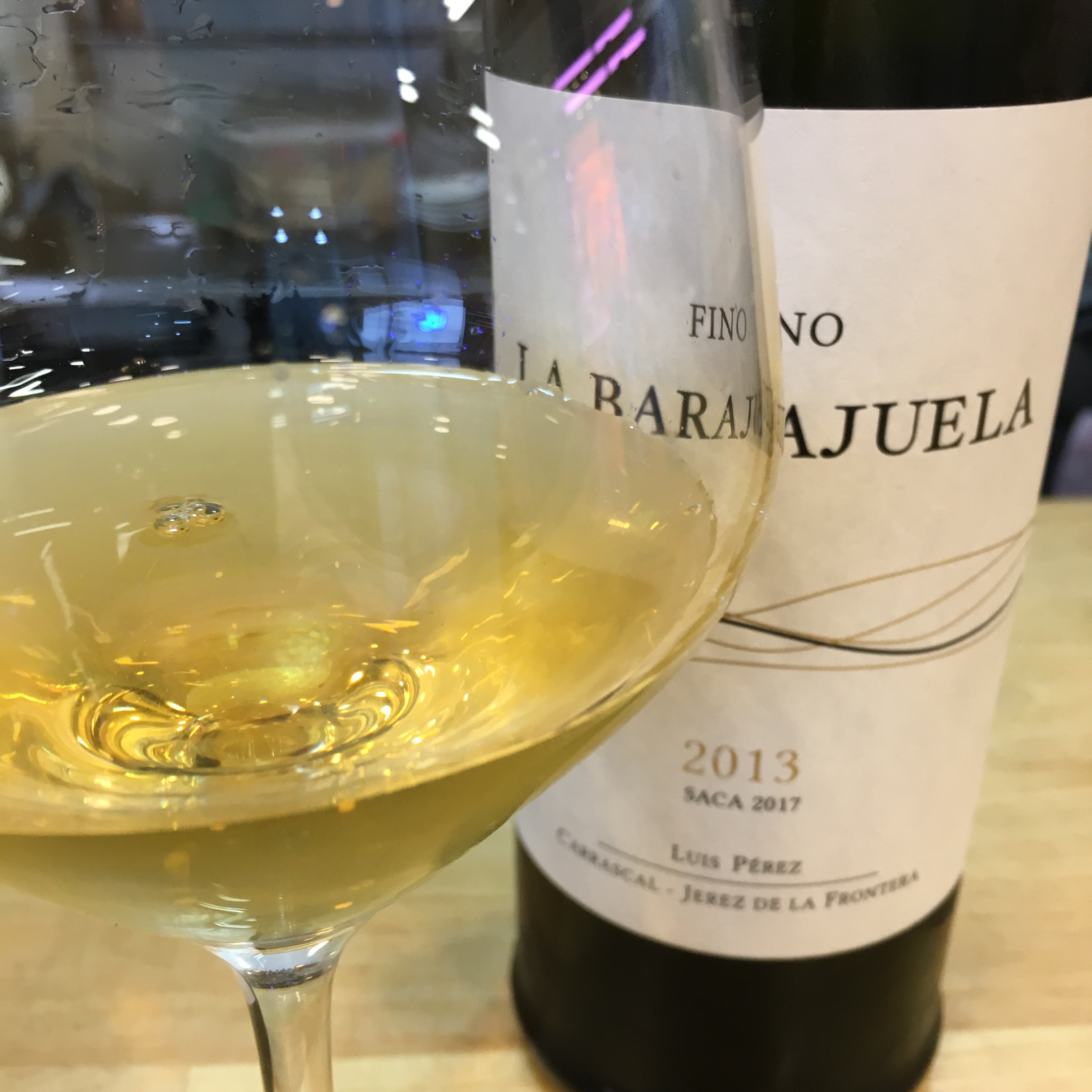
Fino la Barajuela 2013 – Saca de 2017 

Home after a month of vacation and what a welcome this is in Territorio Era. A second saca of the great Barajuela fino of 2013 which seems even bigger, even more fruitful and powerful than the first.

A rich oldish gold colour and an equally rich, honeyed nose with just a hint of undergrowth: mature apples packed in straw. On the palate it is just epic – that lovely fruit first up, then an explosion of zingy mineral power and flavour, fading to a long, long, mouthwatering finish with a cracking combination of mineral sizzle and concentrated fruit.

Absolute class. There is no place like home.

The Wines of Alba Viticultores in Wine Attack Madrid

img_7267

I finally finish writing up my notes of a really fun tasting at the end of June. It was a really good laugh for a number of reasons, but at least in part because these wines seem to have fun embedded in their DNA. Seven bottles in total, four bubbles (two ancestral and two brut, of which one was rosé) and three dry white wines.

First up was the Ancestral Alegrías del Carrascal 2015 – 11,5%, 100% from 50 year old palomino fino vines from the Alegrías vineyard on pago Carrascal (de Sanlúcar).  2015 was a very hot year and the wine was fermented in 1000l stainless steel tanks for 14 days before being bottled at the end of September. No added ingredients here and while we had tasted one with 7 months on the rack last year this one had a further 12 months before disgorging. A curious combination of the most vertical and atlantic of the Sanlúcar pagos in one of the warmest recent years, it was fresh and very amenable, the slight residual sugar making it very appetising, with nice tight bubbles, appley sweetness and fresh grass, a touch of salinity and a slightly bitter finish.

Second came the Ancestral Confitero 2015 – 11,9% vol – from 35 year old vines on the El Confitero vineyard on pago Miraflores (just inland of Carrascal), very near to the legendary “Armijo” of Gaspar Florido. Again ancestral method with only 3 gr/Hl of so2 before pressing and no additives. This one was fermented in plastic containers for 12 days before bottling then spent 17 months on the rack was disgorged by hand and refilled with the same wine. Pretty decent bubbles these – a bit broader in the shoulders flavourwise but didn’t hold together quite as well. A bit more serious, more wine/vine/root-like, not quite as much residual sugar and less of a defined shape.

After the ancestral wines we turned to the methode champenoise wines, starting with the Brut Nature 2014. This comes from palomino fino from different Sanlúcar pagos, is fermented in stainless steel at controlled temperatures, then aged in deposit, initially with a little flor for around 5 months. Then it is put in 16 litre demijons for six months where flor again develops. Then it is bottled and has spent 25 months on the rack. Once again, only 4gr/Hl of so2 before pressing.  The result is a quality bottle of bubbles – tighter, sharper bubbles – with a bit more bite and crispness. Has those same apple and herb aromas and flavours and a compact, elegant profile. Really top class and probably my favourite wine on the day.

That was followed by the Brut Nature Rosado 2014, pink bubbles made from 93% palomino fino and 7% tintilla de rota, all grown on vineyards in Sanlúcar. Fermented in stainless steel and bottled in June 2015, with 25 months on the rack. 3 gr/Hl of so2 added before pressing and then no other additives, disgorged by hand and refilled with the same wine. Again a quality bottle of sparkling wine and full flavoured, with quite brash red fruit flavours and a bit of the heavy metal effect you get from cavas with a lot longer on the rack. Again bags of potential here.

The first of the still wines was the Alba sobre tabla 2014 (Bota 2). 100% palomino fino from different vineyards in Sanlúcar, a white wine fermented in stainless steel and aged there until January 2015, when it was put in a manzanilla butt. For the 2014 vintage there were three butts of Sobre Tabla: Butt III was bottled in August 2015, Butt I was bottled in March 2016 (and was part of last year’s tasting) and Butt II was bottled earlier in 2017. None of the three butts developed flor except this Butt II which saw some develop in the last few months. The wine was excellent and there was general agreement that of the wines tasted it was the wine with most fruit and, at the same time, oxidated “sherry” character. Has a nice tingle of salinity/acidity and ripe apples on the nose and palate and a slightly tingling, mineral finish.

That was followed by Alba Flor 2014, essentially the same wine but whereas the Sobre Tabla was in a butt that was filled to the top this one was placed into a three quarter full butt for four months under flor.  I must admit I found it hard to spot the difference between this and the previous wine. Slightly finer maybe? By a hair’s breadth if anything. Then again it was my sixth wine of a very enjoyable lunch. Still a very fragrant, tasty white wine by any measure.

The final wine was La Charanga 2014, from the eponymous vineyard in pago Mahina. This wine is from the oldest and best palomino fino vines tended by legendary mayeto “el Bolli”, on a vineyard that faces West to the breezes from Doñana. The wine was fermented in an oloroso butt and was aged for a year in a manzanilla butt. I had placed this wine last in the order on the basis of it’s being from the beefiest of the Sanlúcar pagos and a memory of it having a fair structure to it but on the day it came across as lighter and more floral than I expected. Nice slightly sweet floral/herb flavours and a long elegant finish.

Seven quality, imaginative and well made wines, a lot of fun and yet again a demonstration of the value of what can be achieved by working the vintage and the vineyard.



El Muelle de Olaso 2016

A dry white palomino wine from the Corregidor vineyard on Pago Carrascal.

Corregidor is the source of the two most exciting wines from Jerez at the moment – the Barajuela Fino and Oloroso – and this wine is the little brother of those two giants. It is made 80% from grapes collected/discarded while “clearing” the vines in the months prior to harvest and 20% from the mosto used for the Barajuela itself. And even better, there is a lot more of it: whereas the Fino and Oloroso are about as common as singing unicorns there are no fewer than 10,000 bottles of this. It is fermented in Bota de Jerez and then spends six months in stainless steel.

Curiously, despite coming from prime Jerez real estate the name of the wine is a reference to a landmark not of Jerez but of Sanlucar: el Muelle de Olaso, or Olaso dock. A pier built from concrete between 1911-22 on Bajo de Guia and used for many years by the shipping lines before being demolished in 2005. A symbol of Sanlucar’s past importance in exports for the region.

I have only had this in convivial occasions and it contributed significantly to each – a really fun wine. What strikes me is the relatively sparky acidity and the richness of the fruit on the palate. It is quite a lively lemon yellow color and has a really nice nose with almost tropical fruit like pineapple, then it is a big juicy mouthful but still fresh thanks to that sparkiness up front and a faintly mineral finish.

Very drinkable indeed – in fact maybe even better than that because this is a serious wine, and while I don’t often talk about prices on this blog this is cheap as chips – less than a tenner. No excuse for not getting stuck into this this summer people.

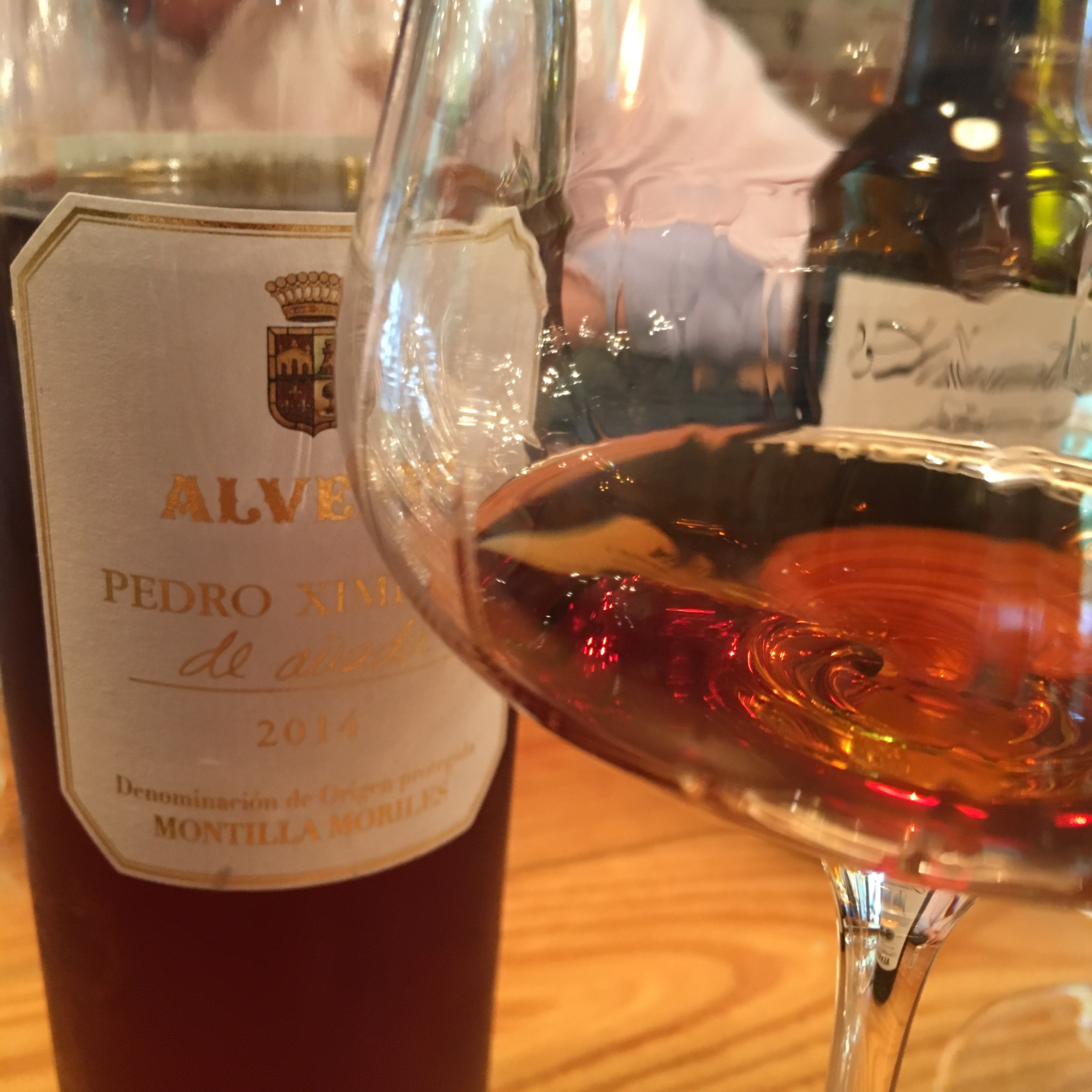
Dulce de Añada 2014

The last wine from a spectacular lunch with Bodegas Alvear a couple of weeks ago was this fantastic sweet wine. 

It is a dulce de añada, a sweet wine made from pedro ximenez from the 2014 vintage. Grapes that have spent 7-14 days on the pasera, been pressed through capazos and then aged in tinajas. 

It is really top class. A rich hazelnut in colour, clear as a bell and extremely appetising, it has a nose that in addition to sultana fruit has smokey aromas and even cigarrette tobacco.

On the palate at first it seems all fruit with beautiful clarity and freshness – the harvest conserved in alcohol as they say. But then you notice the nice acidity and the sharp mineral freshness to it. Then at the finish it is salty and white pepper spicey. Makes it light and fresh over all – you would never guess that this was 16% or had 400 grammes of sugar per liter. 

A fantastic end to a fantastic lunch. One of the best sweet wines I have ever tried. 

Manzanilla de Añada 2012, 3/11 

Another day, another vintage wine from el Marco. If only it were so. In fact the wines from el Marco that are differentiated by vintage tend to be the exception and this, in particular, is absolutely exceptional.

I have written about this project often – here is a bit of a compilation – and have been looking to this third bota keenly. The difference between botas one and two was marked – the additional year of flor turning a wine that was still fresh and fruity into something noticeably sharper – and while not as dramatic, the step up here is also noticeable.

Unless it is my imagination (or the light, or my eyes, or the warmup drinks) but the colour seems to have lost the touch of green that the first bota had and the gold has become just a touch older. Then on the nose it has definitely gained some sea air – a saltier presence there, which is backed up on the palate, where it has gained volume and backbone from the salinity.

Most importantly though it still has that lushness of fruit – has maybe retained a little bit of glycerol and the flavours are towards old golden delicious apples (the ones that have lost their green and turned yellow). The flavour has also gained something in intensity.

I appreciate that not many people get the chance to try this and it is a real pity – it is fascinating to see the difference that each year in bota makes (granted that the botas will evolve slightly differently). I only hope my notes give an idea of the process. In any event, three down now, only eight to go (to the vertical in 2025).


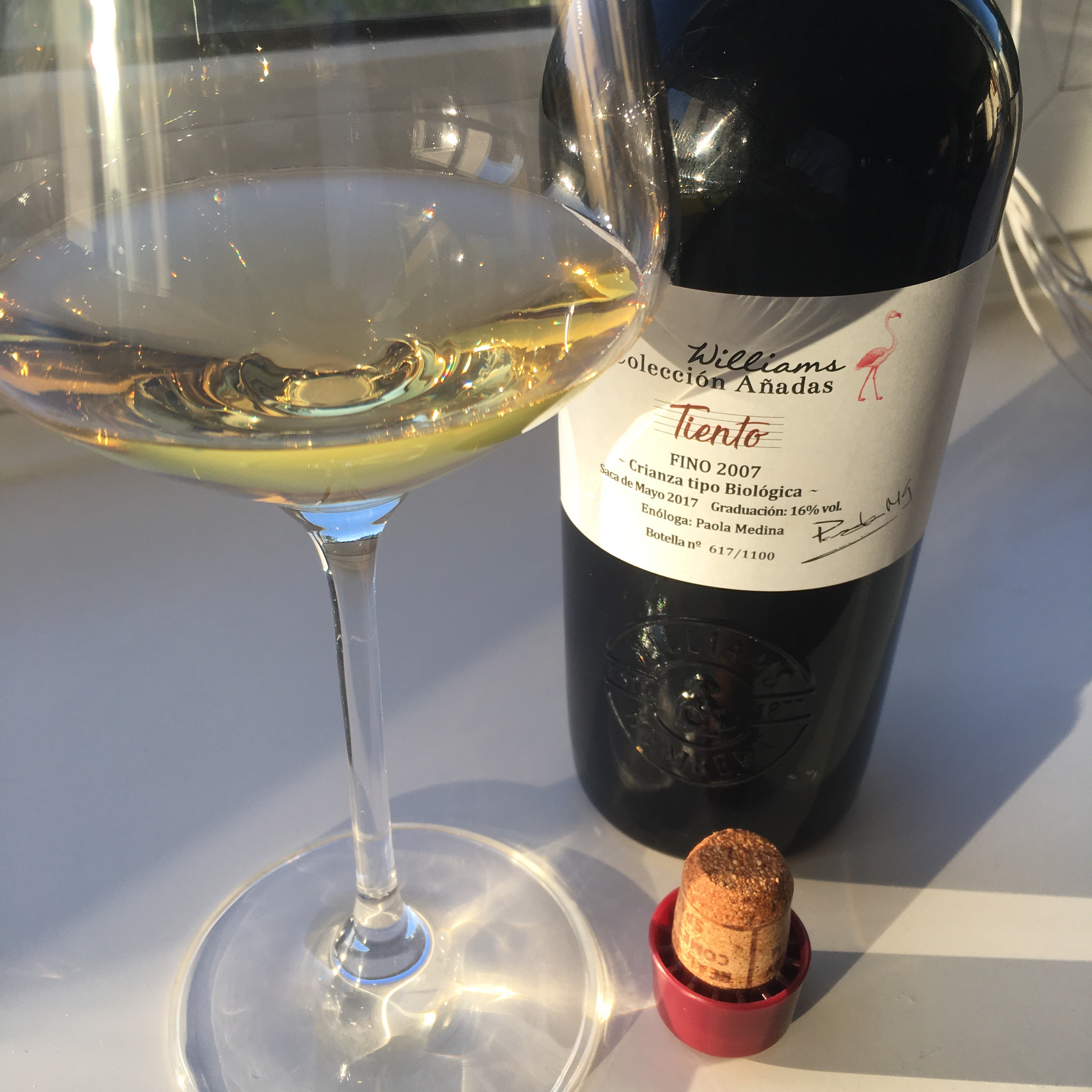
Williams Colección Añadas “Tiento” Fino 2007 


The Williams & Humbert 2006 Fino was a pioneer, the first vintage fino I ever tried, and one of the finest too. It was followed by the fantastic Colección Añadas and happily now by this new release, complete with the stylized Williams’ bottle and a flamenco inspired brand name (tempt, as in temptation), with future releases likely to be similarly monikered.

It is not quite the same style as its elegant predecessor. The 2006 had just over eight years of static biological ageing but this one nearly ten, and I feel you can sense a little more oxidation. It is slightly darker in colour, slightly more potent in alcohol and has more sweetness in flavour.

But like the 2006 it has a wine-like fruit and texture that sets it apart from your solera finos, and in common with the other wines from the Colección a racey, spirity character. It is lush and tasty, not as aggressively saline as some solera wines and that touch of oxidation and acidity makes its finish sweet and spicey.

Excellent stuff, full of character and personality. An excellent vintage, you might  say.