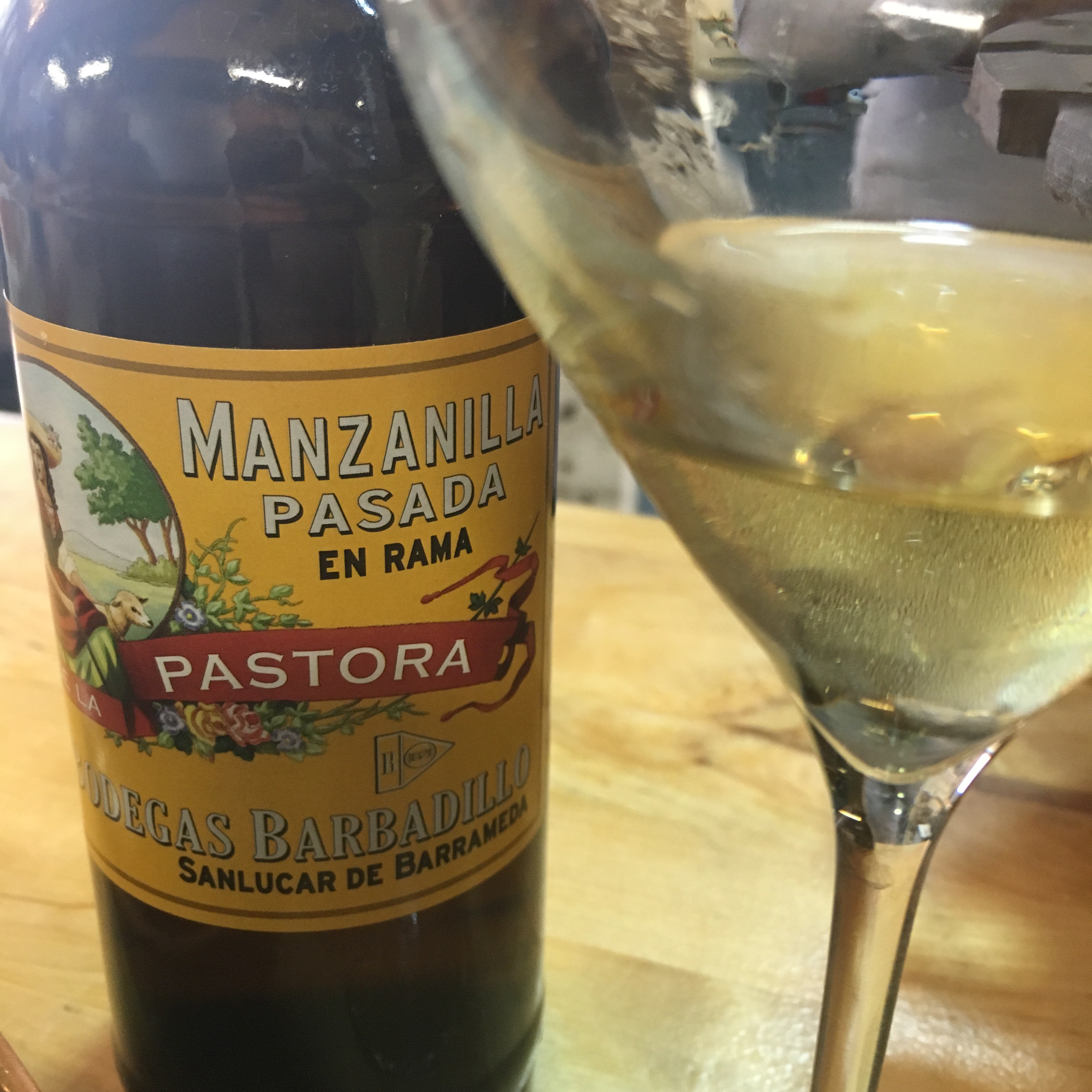
Manzanilla Pasada en rama Pastora 

Love this wine, salty seaside nose with nice hints of apple just gone into baked apple, more baked apple and vegetable spiciness softened and broadened on the palate, and all in a sleek, saline and acid profile. 

A really nice wine and maybe would be a good place to start for a beginner learning to appreciate biological ageing. I had a glass yesterday in Territorio Era – another good place for anyone seeking to learn about these wines. 

Fino Collecion Añadas 2009, saca de febrero 2017

The Williams Coleccion Añadas were a revelation when they came out last year and although the second saca hasn’t had as much fanfare, for me it may be even better.

It still has the rich colour, the nose of sweet hazelnut (my colleague called tiramisu today which was a great shout) and the salty, nutty potency on the palate, but this to me seems finer and more elegant than the 2016. In particular the finish seems sharper and fresher. 

A lovely wine that is rich and fine at the same time. 

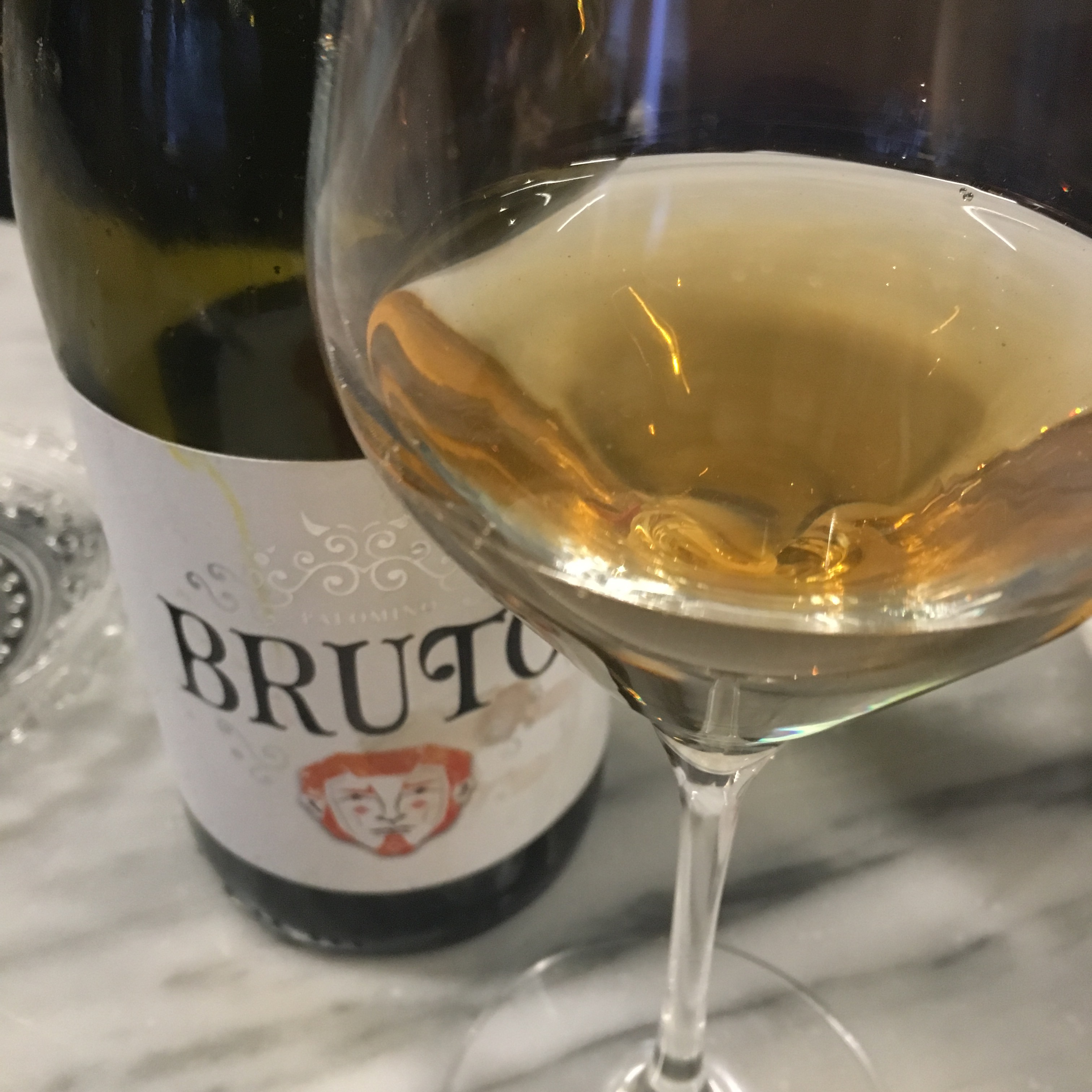
Bruto 2014

Now here is an interesting wine: 100% palomino from a single vineyard, spontaneous fermentation in the butt, then 12 months “under flor” and 4 months in inox. 948 bottle in total. And from Rueda of all places. 

Quite a geographic shift (about 600 km north as the urraca flies) but I am told it is less of an innovation than a throwback to the times when a lot of palomino was grown and aged in the North. It is also from an impeccable maker – Beatriz Herranz of Barco de la Corneta – who has a cult following for making serious wine from a grape (verdejo) and in a region that are too often synonymous with egregious mass production. 

Most importantly it is pretty tasty stuff. I wouldn’t have said it had 12 months under flor – if anything I would have said a good few months oxidation – and neither was it the most expressive, but there is pungency, solidity and salinity there. 

As experts in Madrid bar tops will know from the picture, I tried it in Angelita, where this month all the wines are from female winemakers, but you can find interesting wines by the glass all year around. 

La Bota de Fino Amontillado 24 – Montilla – 7 years later

Glory be to Angelita Madrid. Yet another absolutely cracking lunch yesterday with some top wines by the glass and a really special one to finish. A rare old wine and a privilege to taste it – there can’t be many of these bottles still in circulation (there were only 2,600 seven years ago). But how had it stood up to the seven years in the bottle? 

I had high hopes given the provenance (originally Perez Barquero) and the quality of the 2013 release, but by comparison to that wine this seemed to have faded. The acetaldehide hay bales had gone and bitter, bottle age notes seemed to have taken over the nose, and while still zingy and potent on the palate it seemed much less interesting in shape – the bitter almond finish taking over all too soon. 

So, a privilege for which I am very grateful but this one is more evidence for the case against excessive bottle ageing. I still have a bottle of the 45 and will get drinking it based on this. 

Soleras cincuentanarias (y una centenaria) de Perez Barquero

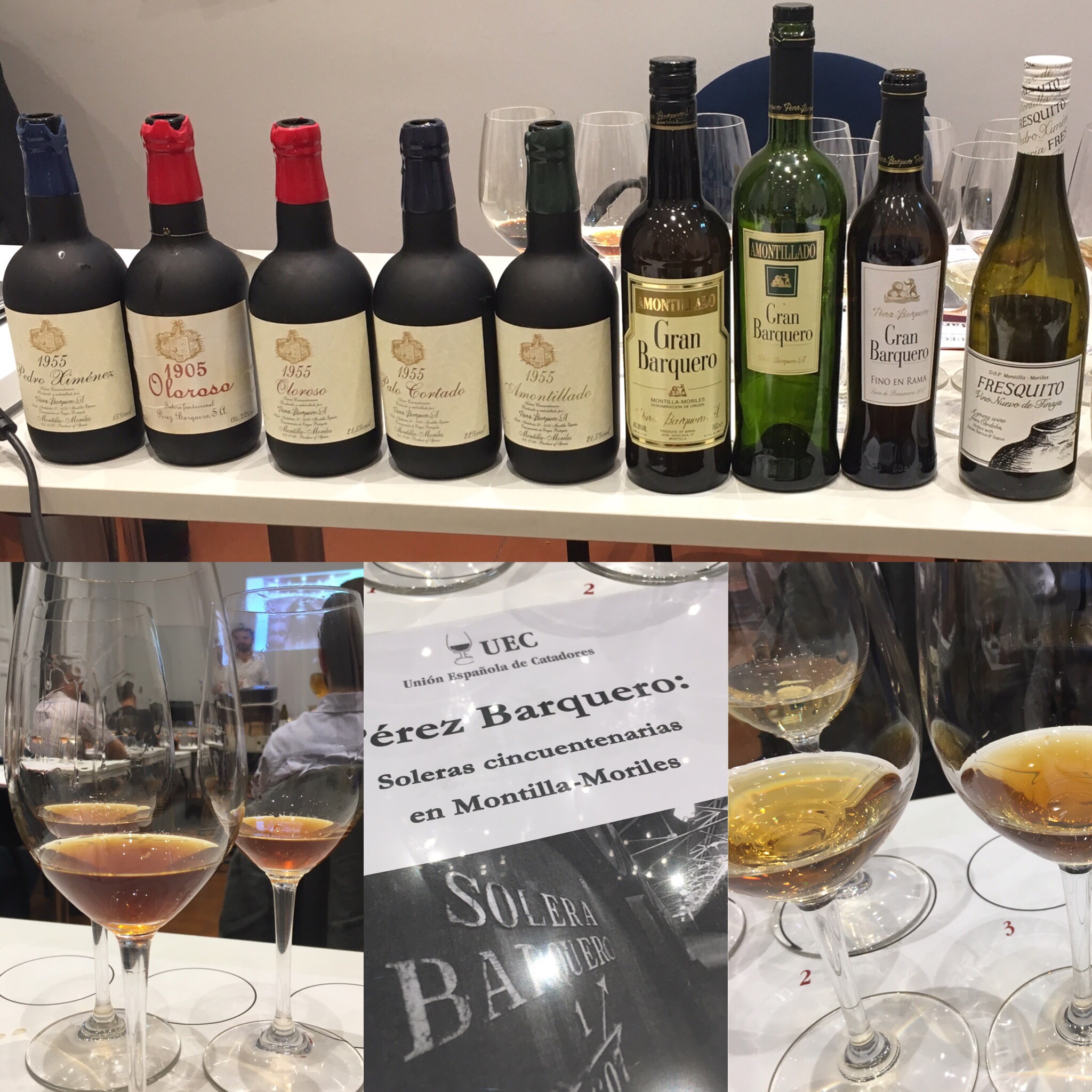
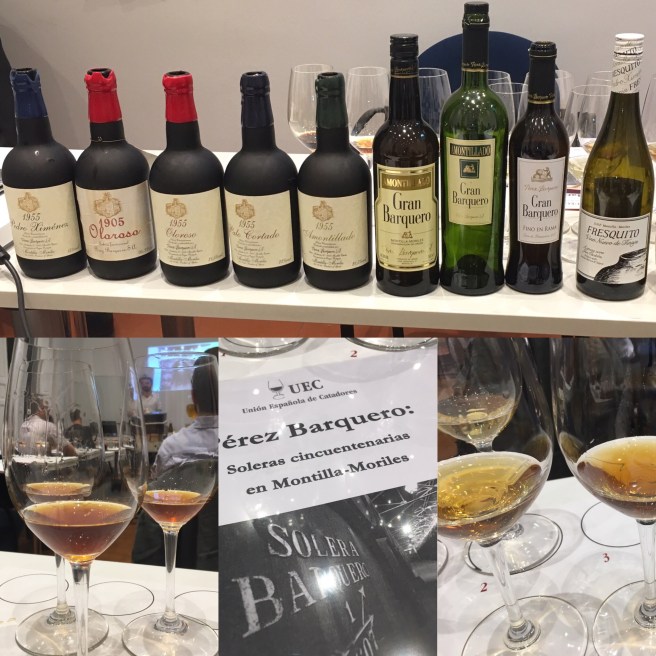
Fantastic cata last night at the Union Española de Catadores as José Ruz of Perez Barquero and Paco del Castillo lead us through the wines of this great Montilla bodega. 

As you can see, there were some real heavyweight wines to be tasted, and I for one learned a few interesting things. We started with Fresquito, a sparky vino de tinaja, then moved smoothly through the gears with the Fino en Rama Gran Barquero (Spring 2017), the Amontillado Gran Barquero, an Amontillado Gran Barquero bottled in 1996, the full range of Solera Cincuentenario wines – the Amontillado, the Palo Cortado, the Oloroso, and the Pedro Ximenez – and before that last one the Oloroso Solera Fundacional (Lot B). 

I am a huge fan of the Amontillado Gran Barquero – an absolutely world class wine – and it would take some persuading for me to choose any of the others over it last night. There was a lot of concentration and a lot of intensity on show, and some rare and expensive wines (sacas of 200 and 500 bottles), which really had very distinct profiles. 

In fact, it was very interesting and quite disarming to hear that the Cincuentenario Palo Cortado – one of the stars of the night – was the result of barrel selection rather than any intentional process. Motivated by the current high fashion status of palo cortados the guys at Perez Barquero had selected from amongst their older olorosoa the wines they felt had that kind of profile – without really knowing why they did. It would not have been due to selection or mostos, because they were all olorosos, but it could have been some biological action in the tinaja before the wines entered the solera. (Perhaps there is some mystery after all.) In any event, and whatever the cause, there was no doubting the difference in character between this and the oloroso. 

It wasn’t the only star either. The Oloroso Solera Fundacional was an absolute beast – brandy, salinity, burnt Christmas cake and a finish like the after dinner cigar (and nearly as long). One of those wines that you consume with extreme care. 

I could and will write a note on all the wines because the standard was exceptionally high across the board, but the one I could drink gallons of is the current Amontillado Gran Barquero. It is the standout in terms of elegance, profile and all round flawlessness – a marvellous wine that only gained in comparison to the bigger beasts. 

And a word of thanks and congratulations to José and Perez Barquero, the UEC and Paco del Castillo for a fantastic tasting – really top class. 
Sanchez Ayala at Distribuciones Navarro 

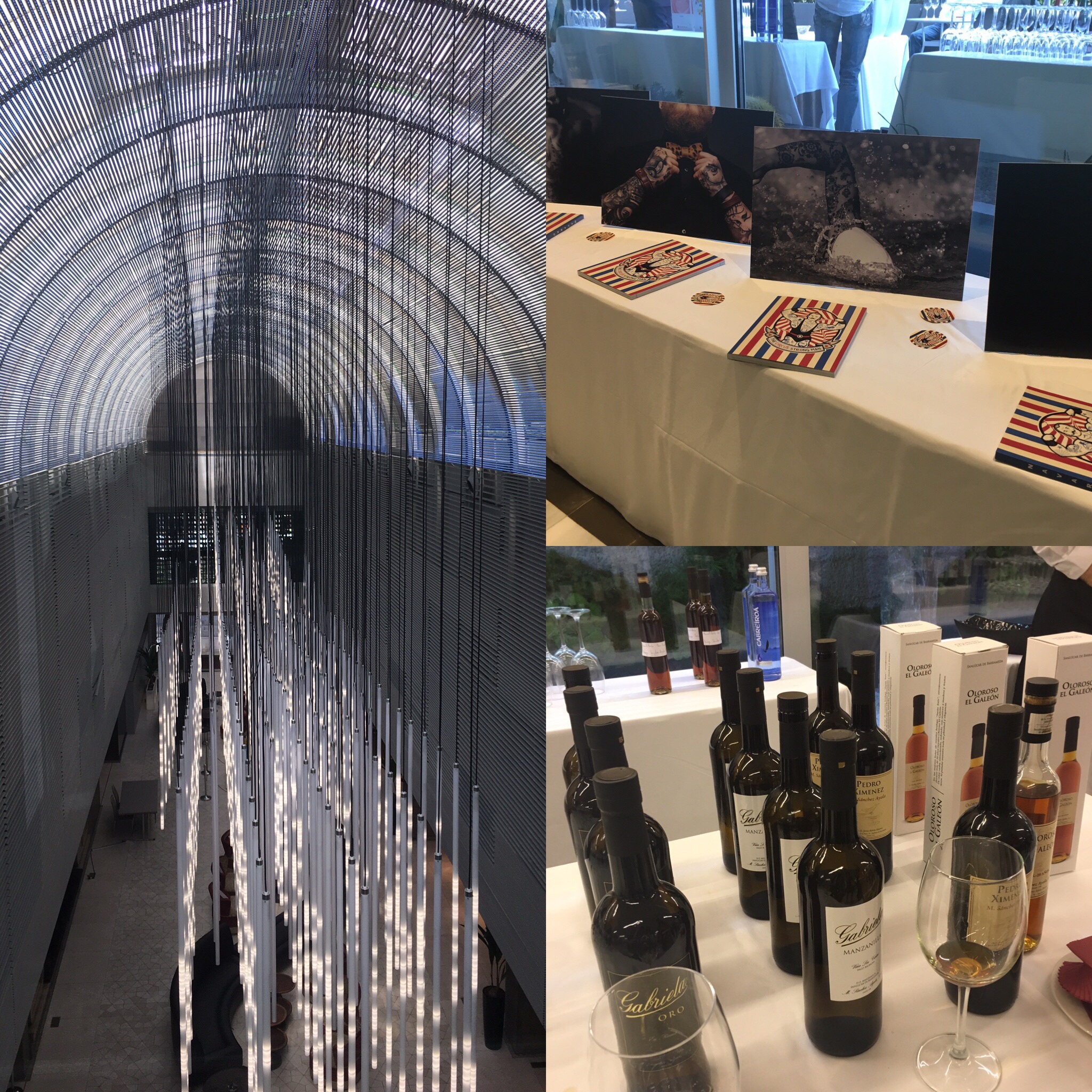
It is Salon season in Madrid and there are few events on the horizon. Today I was lucky enough to be invited to the presentation of the new catalogue by Distribuciones Navarro and it was an absolutely top class event: held at the NH Collection Eurobuilding in one of the nicest salons I have seen. Top, top wines too, and although I only had time for a flying visit, it was enough for a couple of cheeky glasses of champagne and a chat with a bodega I have wanted to catch up with for a while – Sanchez Ayala.

Sanchez Ayala is an old name (the family ran the bodega through most of the 20th Century with an even older bodega (dating back at least as far as 1798) and has also been the source of some fantastic wines under other people’s labels: a couple have achieved near legendary status under the Equipo Navazos label and Antonio Barbadillo’s first Sacristia ABs were from the same source. More recently, the bodega have been distributing wine under their own label more widely after years of serving the local market.

And impeccable wines they are too. Both the Gabriella manzanilla and its en rama, selected big sister the Gabriella Oro go through 9/10 classes and are top class manzanillas, with a characteristic apple, salt and hay bale profile.  Oloroso el Galeon is a lovely little saline, elegant and tasty oloroso, and the 45 year old Amontillado Don Paco (seen here in the background and due to be released in the coming year) is as sharp and as saline as any Sanlucar VORS. 

And you always learn something new when you have an opportunity to chat to these guys. Amazingly, the wines are apparently all sourced from a single vineyard – las Cañas, on Balbaina Alta (and in the right kind of neighbourhood too, bang opposite El Cuadrado). Fantastic stuff. 


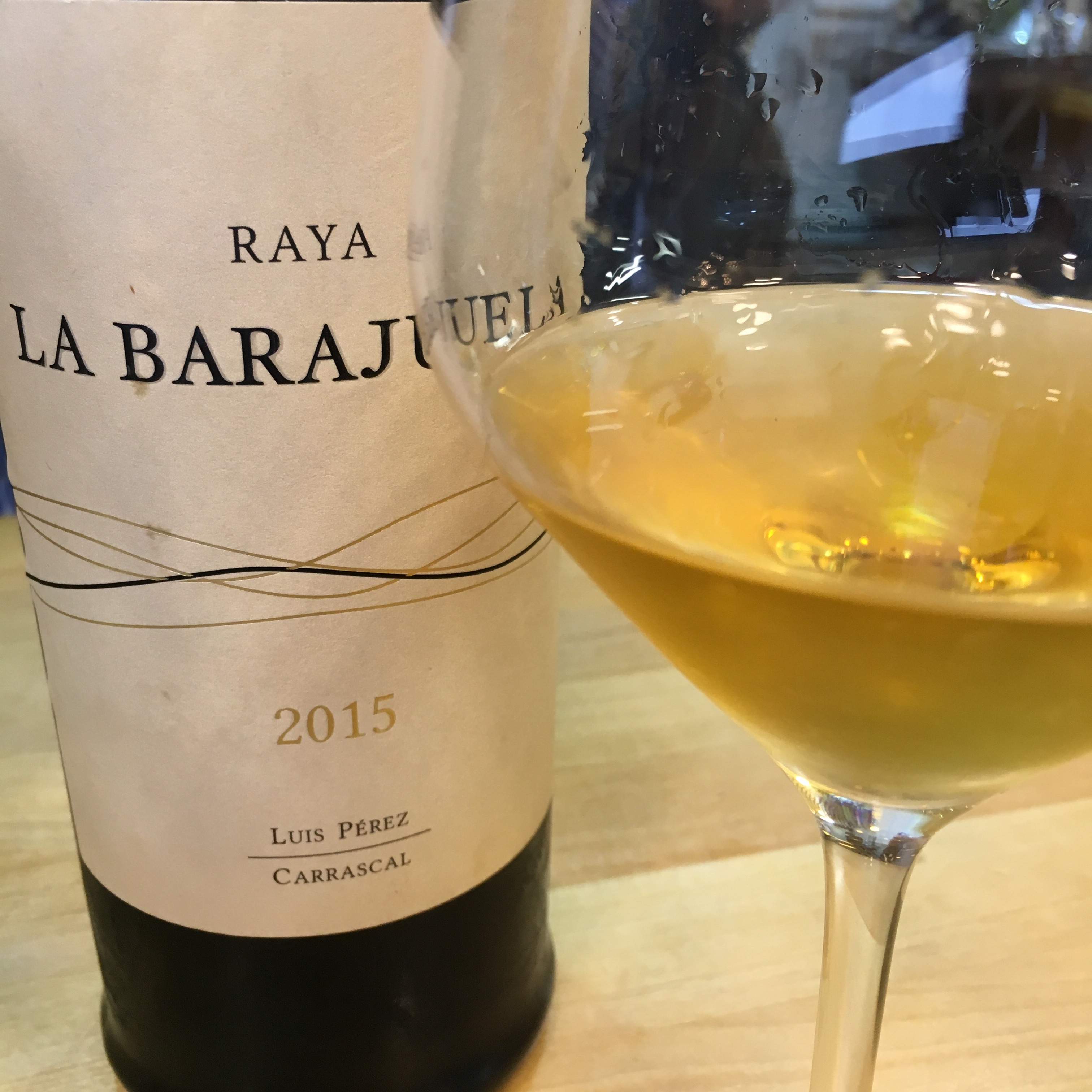
Raya la Barajuela 2015

An unexpected bonus wine from the Barajuela project and another historically and educationally important wine. 

The name refers to the old classification of wines when they came in from the vineyard – palmas and rayas. Broadly speaking whereas the palmas were fine and could hope to become finos and amontillados, the rayas were heavy and were destined for oxidation. Back in the day the differences in the wine resulted from the mix of varieties in the vineyards, but in the monovarietal present this has been selected from the latest and longest ripening fruit from the multiple passes of the harvest.

The result is a wine where on the nose it smells like there is some residual sugar and first up you get that false sweetness of a late harvest riesling, but without the same level of acidity and a much finer body. (I must admit, I have heard these wines described as “heavy” and “fat” so many times I half expected something syrupy.) it has a nice backbone of salinity but then you get a turn to grapefruit bitterness which I must admit I find a bit disconcerting. Overall it is easy to see why the palmas were so sought after. (On the other hand, it is fascinating to speculate about how a wine like this is transformed by oxidation.)

Very interesting indeed.  

(The song of) El Cid 

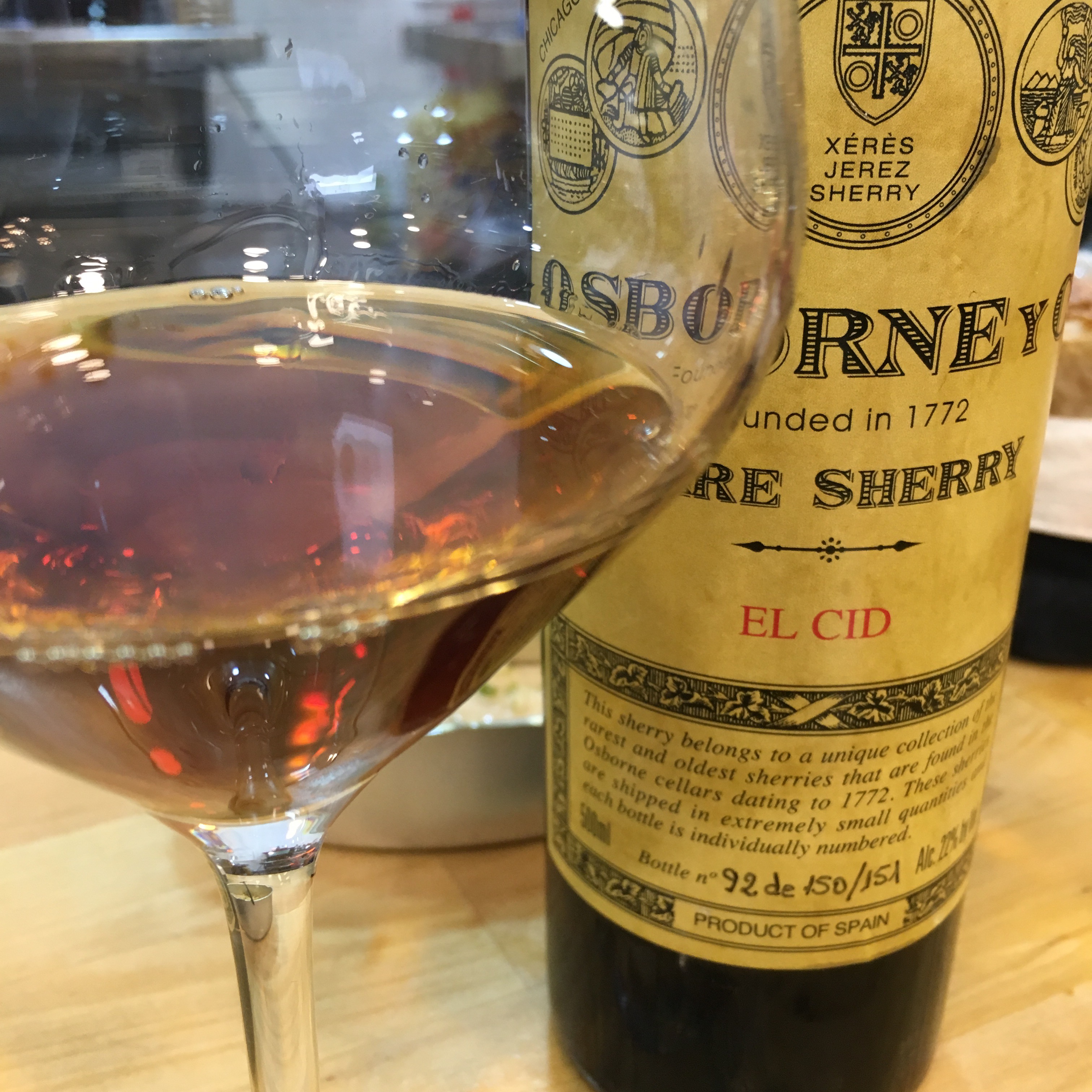
Now here is a wine you don’t see every day. I am often criticized for reviewing wines that are marketed in minute quantities. Wines, as a famous Spanish winemaker, student and philosopher puts it, of which there are more photos on twitter than bottles in circulation. Well this one isn’t marketed at all – it is in theory only distributed witin the family and shareholders of Osborne – so booyah to the haters. 

That being the case you may wonder how I got my hands on the liquid photographed above and the answer is simple: Territorio Era. It really is the number one spot to taste the rarer examples of these wines – and even by the glass. This one caused a bit of a splash on the social networks when its arrival was announced so after a short but enjoyable lunch we tucked into a glass. 

It is a fish of a similar kidney to the Solera BC 200 from the same house (and also of a very limited distribution) and is another absolute dream wine. I don’t know the full details but I would guess it was a very, very old but very fine amontillado with a small and very nicely judged, perfectly integrated percentage of pedro ximenez. 

As you can see, it has that dark, more intense colour that the pedro ximenez can impart. On the nose it was quiet but there was a lot in there: sweet figs, roasted nuts, bready Christmas cake. Then on the palate it was like a sort of nectar on steroids. The sweetness of the pedro ximenez lifting it and making it absurdly easy to absorb, but not hiding the fact that there was a lot of wine in there. A rapier, cool acidity first up then very intense flavours of those figs and walnuts, slightly burnt cake and just tending to sawdust before an eternally long and pleasantly sweet nut and fig finish. And no edges or joins anywhere in sight – like one of those baths carved from a single piece of wood this is all curves and smooth surfaces. 

Absolutely fantastic. 

Oloroso Valdivia 

Another experiment in bottle ageing thanks to the absolutely remarkable collection of wines on offer at Territorio Era. This is an oloroso from a bodega that is no longer around (although I gather there is a hotel that was the bodega) and the wine itself has been 11 years in the bottle. I don’t know much about the wine itself which makes it hard to judge the effects of the time in the bottle but it certainly shows all the hallmarks. 

As you can see it is a dull amber/brown in colour and a little bit of precipitation in the bottle. A bit of reduction on the nose when first opened which made it hard to judge what else was in there (I turned down the chance to go back at 18:00 and try it again – wonder if there is any left). 

On the palate it was really interesting, a sweet nutty, almost coconut start, a big spike of acidity/alcohol and then a big turn for the bitter, with a lot of bitter almond flavour. Didn’t seem to have held together all that well – came across as somewhat disjointed – and it seemed like the years had pulled the wine in different directions.

Nevertheless, very pleasant and very interesting with all those nut flavours there. Definitely worth a try.