Macharnudo Blanco 2016, M Ant de la Riva

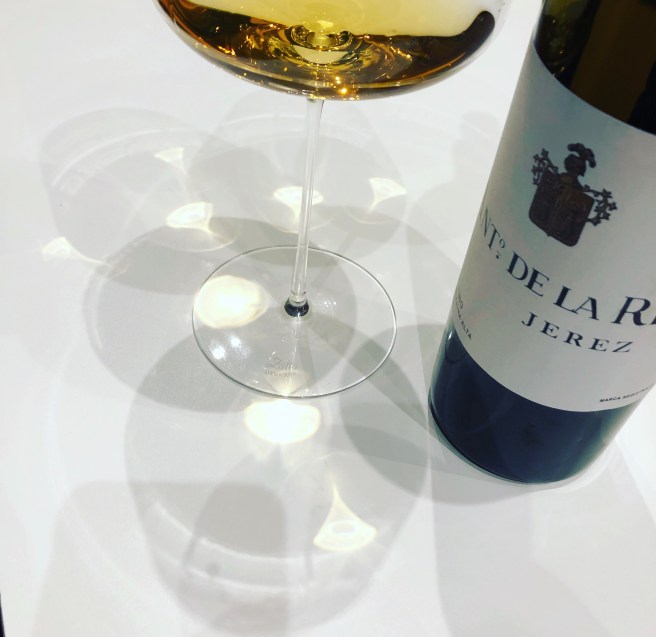
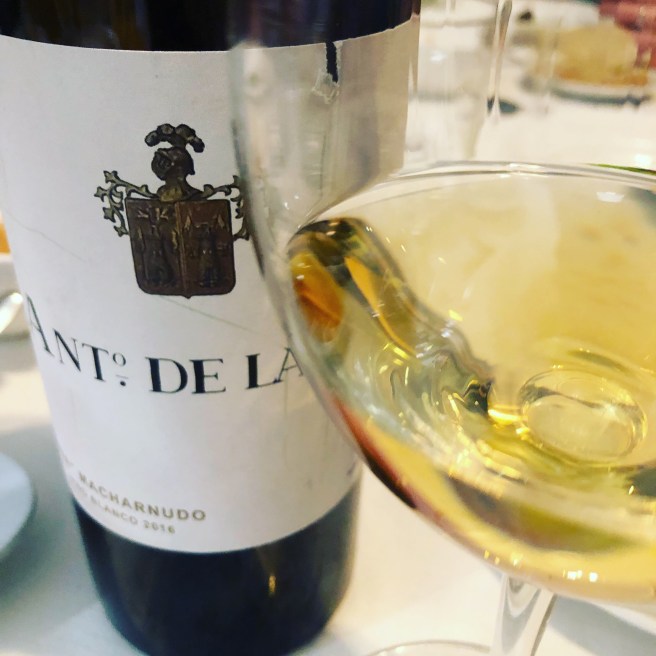
This wine was brought to dinner last night by a true gent and new friend and what a treat to have another crack at this, maybe the classiest of all unfortified palominos.

It is class in every respect. From an old, famous name, the bottle and label are an elegant, respectful homage to that tradition and are frankly pretty damn smart looking. The other name on the bottle also has some lineage as the most famous of all the pagos: macharnudo.

More importantly the wine just oozes class. It is a beautiful rich gold in colour – it just looks delicious, so inviting. Then you have gorgeous nose that seems like a blend of honey suckle and apple blossom and wild herbs on a mountainside, and the palate is maybe the classiest of all: a floral, white fruit start with just a hint of mineral bite to it, that grows with sweet, savoury, aromatic herbs in the middle and shapes away to floral fresh sweetness at the end.

Really superb stuff – an iron fist in the silkiest of velvet gloves.

Por debajo de la flor

Me han dicho que eso de escribir un blog sobre vinos que forman parte de la historia, patrimonio y cultura de España esta muy bien, y que se entiende porque lo hago en ingles, pero por otro lado seria un guiño al personal que vive en el antes aludido territorio traducir los posts de forma que se pueden leer en cristiano. (Estoy resumiendo un poco, porque me lo han dicho de una forma muy insistente, con muchos argumentos y no poca persuasion.)

Y la verdad es que tenían razón. No porque me puede traer mas lectores, o porque permitiría mi (muy querida) suegra seguir mis movimientos, sino por respeto a los aficionados españoles de undertheflor.

Mas de la mitad de los lectores accedan al blog desde este maravilloso pais y dentro de poco “celebraremos” el cuarto aniversario del blog, pero en todo este tiempo no he tenido la minima consideración con los castellano-hablantes (por no hablar de la gente de Jerez y Sanlucar).

De hecho, por si escribir en ingles fuera poco, he utilizado en todo momento un verbeaje de lo mas rebuscado, imposibilitando el trabajo del traductor automático mas asiduo. Esparto grass es poco, soy consciente.

Pero, por favor, no me lo tomáis mal. No es que no os quiero. Después de 16 años, 11 meses y 22 dias Madrid ya es la ciudad donde mas tiempo he pasado en mi vida (y los mejores tiempos ademas) y sois muchos los amigos que he hecho a través de este blog.

El mundo del vino, y especialmente del vino de Jerez, es una cosa muy especial, pero sobre todo por la gente que tiene dentro. Muchas gracias a todos por compartir tantas cosas conmigo. No me salen tan fácilmente los chistes en español pero vaya, lo intentaremos de vez en cuando.

Fino de la Riva Balbaina Alta

Just look at the quality of that photo. The shadow of the phone at the bottom left is unfortunate, but on the whole the composition is pretty top class. The content, though, is even better.

Because this is a class fino. Lovely old gold colour, haystacks, nuts and sea air on the nose, buttery mouthfeel and then an elegant palate that starts with fresh, zingy salinity, has roasted almonds, nutty bread. A fine profile that tapers away quickly to a consistent, slightly bitter but fresh finish.

It is one of the wines released by the reborn De la Riva marque, which was registered by Ramiro Ibañez and Willy Perez after years of disuse, and this specific wine is from a solera acquired by them and refreshed with wines from Balbaina Alta.

Fantastic photo, even better wine.

Fino la Barajuela 2014 en Lakasa

Here we go again with one of my very favourite wines (of which I recently enjoyed a glass in one of my very favourite places).

Fino la Barajuela is, depending on your point of view, the white wine of finos, or the fino of white wines. The semantics should be irrelevant, because what matters is the liquid genius of it: big and powerful with a lovely aromatic profile, mineral sharpness up front and salinity in the finish to keep it fresh despite the weight in between. And that in between is quite something: a big mouthful heavy in texture (a natural, unenhanced 15% + here) and a flavour profile from honeysuckle to honey and citrus to savoury stewed herbs that fill out the throat.

It all makes for a wine that is a massive, massive legend but light on its feet and easy to drink, and for all that it is at the cutting edge in terms of the new Jerez, it is immediately recognizable to wine drinkers from across the spectrum. In fact, perhaps ironically, it is almost more widely accepted outside the sherry world than it is within. In the sherry world you get the feeling it is seen as an awkward upstart that doesn’t fit in any of the established categories, – an ugly duckling -, whereas like the eponymous juvenile aquatic bird, the reality is quite magnificent.

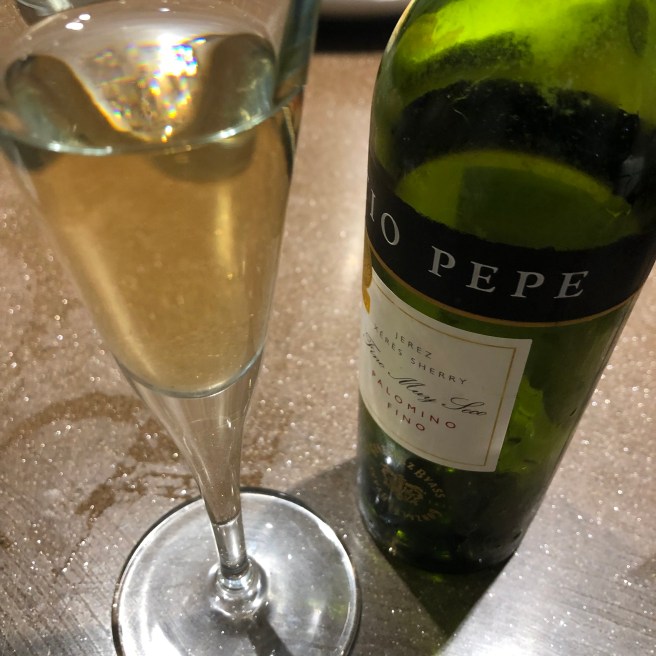
Tio Pepe 1000 posts later

Bit of blog history here – the other day I posted my 1,000th post and tonight I happened across (and finished) this bottle in my sister’s fridge.

Lovely drop of sherry as always – nice bit of nutty almond to it – but it was only afterwards that I realized that this is the very same bottle I started 1,000 posts ago.

I didn’t notice much difference after nearly four years – maybe a bit more fruity – will have to get her another bottle even if I am the only one who drinks it.

Finos San Patricio in Taberneros

Took me far too long to get to Taberneros – the very first time I posted my list of restaurants for sherry lovers I was told I should go there and it ended up taking me over three years – shocking really. When I finally did duck my head in last week there were friendly smiles all round, an entire cocido was miraculously found despite the late hour and, even more miraculously, while I stepped outside to take a call three bottles of a fine old fino appeared on the bar. To be precise, three bottles of Fino San Patricio – the famous Garvey marque – from 1977, 1972 and 1967, respectively.

As a result a fella found himself under an obligation to pay a bit more attention than has lately been the custom, and found himself enjoying the experience all the more as a result. Nothing in it really color wise – and no surprise if you think you are drinking wines that are 41, 46 and 51 years in the bottle – but some quite telling differences on the nozzle and in particular on the palate.

The 1977 was piercing and saline on the nose, any hay bales appeared to have faded to sea air and brackish sea weed, the 1972 was a little bit closed and whiffy while the 1967 had a really intriguing nose of salty bacon flavoured crisps (frazzles) with a background of a little bit of ginger. Then on the palate the 1977 was intriguingly the least substantial of the three – vertical, bitter but fresh, the 1972 had that same profile with just an ounce more oomph and pungency but the 1967 seemed to have gone a little over the top, a much softer, mushier profile and clear signs of oxidation in the wine.

Very interesting and a real treat. I am by no means a fan of these older bottles but there is no denying how interesting the comparisons can be. The cocido, though, was even better. I will be back!

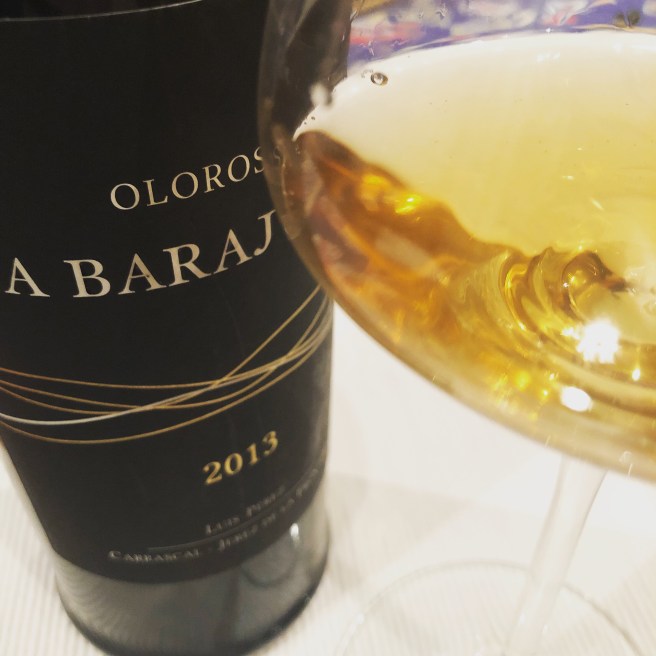
Oloroso la Barajuela 2013

I was at dinner with some friends who allowed me to choose the wine and inevitably ended up trying Fino la Barajuela. They liked it very much – so much in fact that I promised them I would open a bottle of oloroso with them. But don’t worry, I can find more friends.

This wine is not everyone’s cup of tea: controversial, mould breaking, maverick even, and one of the poster wines for the “new Jerez”. It needed at least two tries for it to be accepted as an oloroso for the tasters of the Consejo Regulador and when you drink it you can see why: it is quite unlike your standard oloroso.

First, there is no fortification here: just the pure natural power of a low-yielding vine in a unique vineyard, harvested late and maybe given a bit of sun. The resulting wine is a natural 17 degrees and climbs higher than that in bota (but not solera – this is the wine of a single vintage).

Second, it has less time in the bota than even the younger olorosos you will have tried. I lose track a bit but I think this had four and a half years on release.

And the unique origin and winemaking adds up to a wine that is equally special. On the slightly spirity nose and the palate this wine has no dusty old barrel, rusty nail or church furniture: it is all delicious richness, an elegant combination of fruit, nuts and salty caramel, with a nice acidity on top and fine mineral salinity on the bottom. An incredibly big, opulent white wine with a sensational range of flavours and a mouthwatering freshness and balance.

There is no doubt that this wine is a wine that deserves to be shared, which is why I have chosen to share it with me, myself and I. Cheers!

Fish and chips Media Ración style … feat. La Panesa

The bar of Media Ración is a special place: top class food, wine, service, comfort and condiments – it really has everything. Including fish and chips. Not on the menu, admittedly, but if you simply take the soldaditos de pavia (deep fried cod “soldiers”) and request some chips, Robert is your father’s brother as they say.

Best of all, and as previously reported on this blog, you can splash the resulting plate with a liberal quantity of really top class, tasty vinegar, sprinkle on some salt and wash it down with an absolutely superb fino: la Panesa.

Oloroso M Antonio de la Riva

From the reborn De la Riva label this is nevertheless a very old wine – said to be over 70 years old – from a solera that Ramiro Ibañez and Willy Perez have acquired and brought back to life with wine from Balbaina Baja.

The first impression is of the beautiful old school packaging – the vintage label and dinky bottle – and it still looks good in the glass. The one above looks too cold (only cellar temperature but in any event it soon warmed up) but even so you can see the rich red chestnut colour, which was clear as a bell.

Even more than how it looks, this wine just smells sensational. The most amazing aromatic profile – a sweet brandy nose with volatile acidity lifting and nuts and caramel in the background. Absolutely delicious, enticing aromas.

Then on the palate it is as sharp and potent as any oloroso I have had. Sharp acidity and salinity then a lot of concentrated flavours emerging like flavored layers of a gobstopper.  I saw Luis Gutierrez describe this as having rusty nail and that is bang on – there is rustiness at the beginning and end, with a big robust nutty caramel to burn caramel in the middle and a slightly dusty, astringent, biting finish.

A cracking little bottle of wine (and excellent accompaniment to a couple of frames of snooker).

Solear en Rama Autumn 2018 – the Northern Gannet

It’s a surprisingly handsome bird the Northern Gannet – its Spanish name “Alcatraz Atlantico – does it more justice, but it is still not a patch on the wine it graces the label of.

This is yet another absolute beauty of a manzanilla off this formidable production line. Gorgeous gold colour, intensely herbal nose, a zingy, yeasty, and maybe a little jammy palate, then fading to bitter salad flavours and a spicey, salty finish.

Really remarkable how intense the flavours of these wines are. Top quality.