Fernando de Castilla Fino Antique

I have never asked them but I assume these guys named their bodega after Fernando IV – a king of Castile and Leon who amongst other things retook Gibraltar in 1309. While he was in the area he probably took the opportunity to fill his cellar with some top class sherry, brandy and maybe even vinegar.

This effort – the  Fernando de Castilla Fino Antique – is an absolute gem of a wine. Real aromas of the mosto – like grapey cider – and a lovely smooth intensity in the mouth. A little bit of nuts but not too toasted and certainly not too salty. This is the sort of wine you could drink with anything and at any time.

All in all a lovely tipple and fortunately I have another bottle.

Barbadillo Solear


It is ironic/inept that having decided to start writing down these thoughts I have spent a few days far from my own wines or any sources of decent sherry. After several “dry” days, this Solear was a sight for sore eyes and is going down a treat.

This is a classic manzanilla and seems to be made from sea air (not seawater, although if you are not used to manzanilla the saltiness is a bit of a shock) and unopened blossoms. It is a very pale green gold in colour, has an aroma of honeysuckle and wet grass (you can definitely smell mosto, but not the sweet notes of the apple) and in the mouth is fresh and slightly saline. 

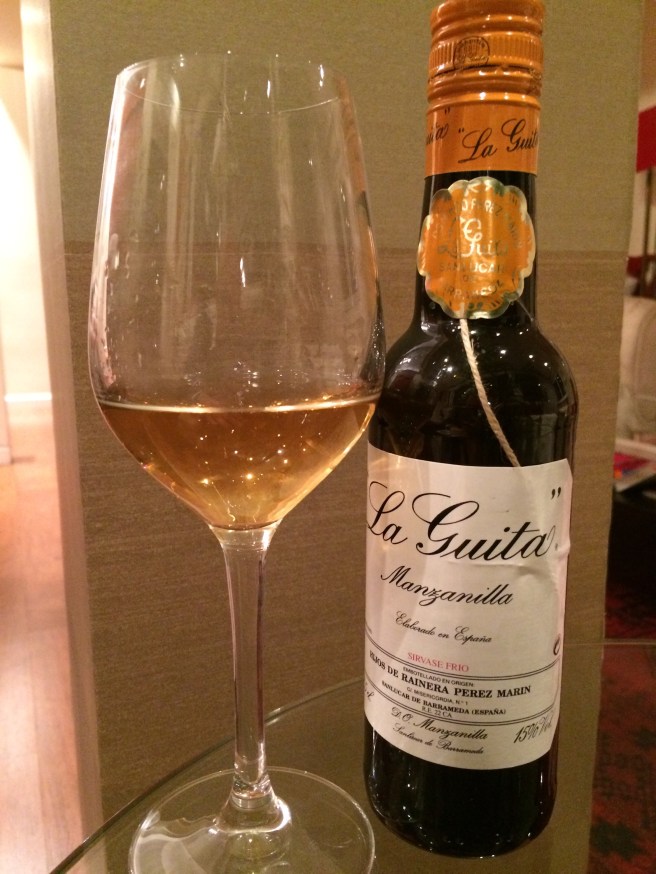
La Guita 2009

A rare opportunity to get a crack at an older manzanilla. Not sure if it was en rama or not – no marking on the bottle. 

First tasting it seemed a gem – fresh despite the salinity and slightly oxidized in a harmonious way. In fact the most notable thing about it was how integrated it was – La Guita off the shelf can sometimes be just too salty and thin for my taste, whereas this was more rounded.

Coming back to it a day later it had staled a little – didn’t enjoy being open – but to be fair it was only a half bottle so there was no need to come at it in two attempts. All in all an interesting experiment in bottle ageing. 


Table wines?

There is a belief that top class sherry needs to break out of its “aperitif/digestif” typecasting and take its place at the center of the dinner table.

It can certainly do it – olorosos or palo cortados in particular lend themself to the task with their dry acidity and mellow/spicy flavours and are superb with meaty roasts and even spicey stews (if you havent tried oloroso with callos a la madrilena you really should). Lighter finos and manzanillas stand up well with seafood and tastier fishes, and dry, full bodied finos (like the Panesa or Tradicion) and amontillados really complement creamy sauces. In fact, there are many foods – very green greens like artichokes, asparragus, or rocket, or pickles and vinagrettes – that really cry out for a sherry.

On the other hand, the dinner table is not short of pretenders – the entire world of wine, not to put too fine a point on it – and one does wonder whether this is the right battle in strategic terms. There is nothing lost by trying, of course, but it may be a mistake to limit options.

At the end of the day there is nothing wrong with being an aperitif – I would rather have a glass of sherry than many beers and wines, proseccos and pink spritzers. Of course, to an extent it depends where you want to be in the supermarket – the company you want to keep etc. – and the price bracket you want to be in. Sherry as the new champagne?

PX 

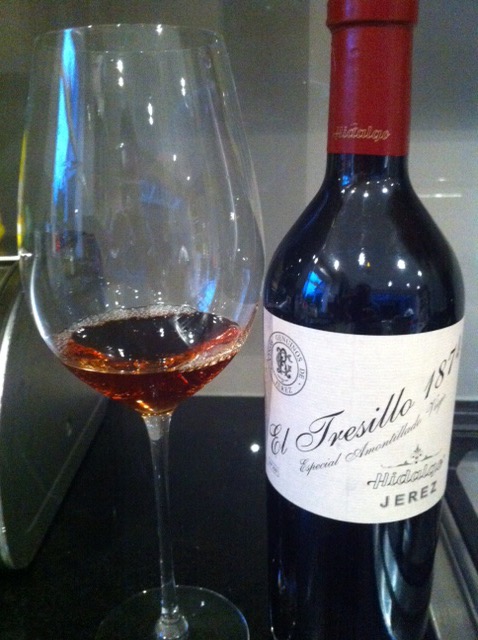
Pedro Ximenez – the grape allegedly brought to Spain by the templar Pieter Siemens and primarily used in Montila Moriles – is the raw material for some massive, raisin intense desert wines which can repay serious study. As they age (traditionally) the residual sugar increases but so does the acidity and the barrel really helps integrate sugar, acid and alcohol producing wines that paradoxically come across as lighter  and more refined. Emilio Hidalgo’s 90 year old Santa Ana must be tasted to be believed. 

More generally there are some pretty interesting things being made with PX these days. This is a dry oloroso from Equipo Navazos which is excellent – the texture and mouthfeel of the PX really lends itself to the flavours of an oloroso. 


In fact PX is used in the full range of finos, amontillados, palo cortados and everything in between (and indeed some very dangerous brandies). They are interesting, although to my mind not all of them work as well as the oloroso: I just don’t feel you get as many flavours or as much expression in the finos and lighter oxidized wines when compared to their palomino based rivals.

Nevertheless, it is another example of the many dimensions of Jerez – a fino style wine could be a fino (palomino), a manzanilla (palomino) or a fino (px) – one of these days I should organize a lineup. 

Biological and traditional

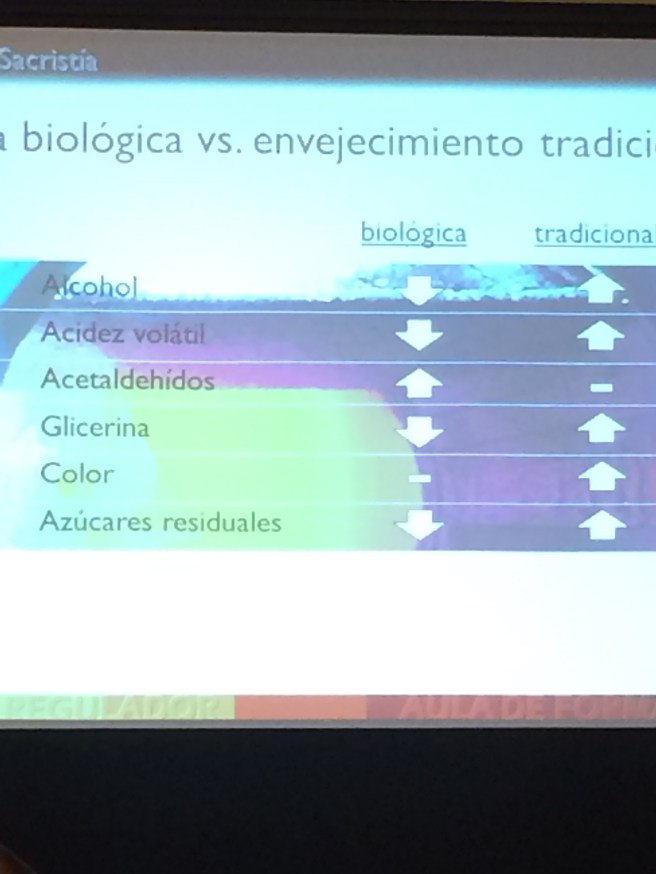
The slide below – photographed at last year’s sherryfest during a masterclass by the great Cesar Saldana – is probably the best summary I have seen of the effects of biological vs oxidative or “traditional” ageing.

In biological ageing, the living flor protects the wine from the oxygen in the air and steadily eats away at the alcohol, sugar  and glycerine, reducing the volatile acids and leaving behind the hangover inducing Acetaldehydes. The result is “fino” – fine, potent, dry wine with bready, nutty flavours.

In “traditional” ageing, these gears go into reverse. Residual alcohol, glycerine and sugar all increase as evaporation (the angels taking their share) does its work, and colour and volatile acids increase due to the interaction of the wine with air and oak barrel. Now the result is oloroso: a fragrant (oloroso literally means “smelly”), acidic, caramel flavoured wine.

And of course the great thing about jerez is that in some wines both processes are used: in a palo cortado there are a few months of biological ageing followed by a longer spell in the open air, and in an amontillado a longer spell of biological ageing (up to 7 or 8 years in some cases) followed by a good stretch of oxidation. The results can be spectacular.