La Bota de Palo Cortado 34

I still love this wine, but I loved it so much more six years ago.

Maybe it is me. This is the wine that first caught my attention back in the day – it absolutely knocked my socks off in what was my most memorable wine experiences. I still remember firing off an email to a friend in pure amazement at what to me was an entirely different dimension (although then I had probably tried a total of ten sherries, eight finos and two ancient olorosos).

And I also swim against a strengthening tide on the question of bottle ageing. I understand that the oldest wines can be finer and sharper, and even funkier, but I love the freshness and fullness of texture and flavours of these wines when new, and this one when it was new really knocked my socks off.

And although old men forget (yet all shall be forgot) there is no doubt in my mind that this wine has changed over the years. Images may be worth thousands of words and if so this image backs me up.

Which isn’t to say it isn’t an absolute belter of a wine. Aromatic on the nose, sharp up front and superbly aromatic, too, on the palate. The almond and nuts are slightly more toasted than when the world was new and the bright orange notes more marmalade but they are still there and so is the ginger. It really is terrific stuff.

Angelita Madrid

I never get bored of Angelita Madrid (and how could you given their astonishing wine list, ever better cooking and their superb range of cheeses?) but I am aware that for those readers that aren’t actually in there with me (and on some days half my readership are) it may not be the most thrilling subject matter to always be reading about the same place. Fortunately they are not the same wines.

Here are a selection of the wines from a recent lunch with a colleague (not a comprehensive reportage) and you can see just what a marvellous spot it is.

First, a genuine cult wine: one by Alba Viticultores. This guy’s wines are not easy to get but Angelita is one of the places to get them. This was the last couple of glasses of a lovely effort – just enough fizz to set off the fine aromas and salinity of the palomino.

Second, the limited edition la Gitana en rama, which is really a good manzanilla. Pungent bitter almond in a fresh package – zingy upfront and mouth watering behind.

Then a couple of ringers to keep things interesting – including an absolutely superb Arbois by your man Lucien Aviet.

And finally a quite majestic amontillado from Toro Albala in Montilla Moriles – the Marques de Poley 1964, which I would put up there with the very finest amontillados I have ever had. Superbly fragrant, sharp and fine, a lovely array of flavours unfolding through the palate.

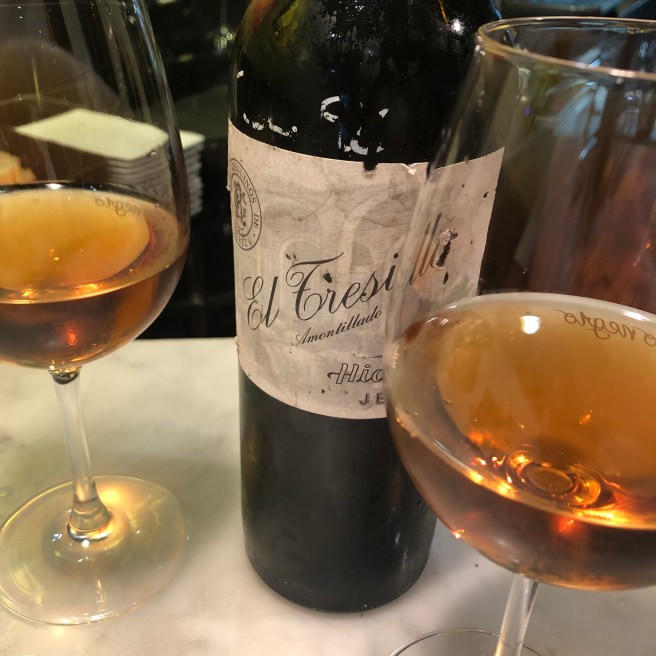
El Tresillo in A Fuego Negro

Had a very enjoyable few days in San Sebastian earlier this summer and of course hit the old town in pursuit of pintxos. Cracking fun albeit hard on the elbows, and even more so if, like me, you run into friends from Jerez everywhere you turn. Some of them were humans – and it was cracking to see them – and some were liquid and wonderful.

Because this is a wonderful wine, no question, and it was a joy to see it hastily tagged onto the end of a chalkboard in A Fuego Negro – the only sherry there and you would have to applaud the taste of whoever squeezed it in.

It is the finest of amontillados – packs complexity and nutty, savoury flavour in the most ethereal of shapes – really lovely. In fact it is one of the finest of wines full stop.

Was a great moment when we saw it on the list and the reverential enjoyment of this beautiful wine made for a really enjoyable oasis of calm in a frenetic lunchtime.

Étoile, de Muchada Leclapart

The second of these wines that I have had in the last few weeks after cracking open a bottle of the Lumière at a dinner party recently and this as a sundowner – on both occasions to much acclaim.

They are both old vine palominos from Muchada Leclapart, the joint venture between Alejandro Muchada and David Leclapart in Sanlucar. There is no doubt about the brand power of the Leclapart name – one of the real artists of the new champagne – and the philosophy of the bodega in Sanlucar seems similarly terroir and vine driven.

To the surprise of some, these wines have no bubbles (although there are or have been some sparklers amongst the range). Rather, they are pure palomino (and in one case moscatel) wines and very fine ones too. Nice noses – white fruit and chamomile – they are fine and soft upfront, relatively lush and fruitful on the palate and fresh on the finish. They didn’t strike me as intense or expansive – maybe the Lumière came across as a little drier, the Étoile with more fruit – but both were beautifully made, approachable wines with a very nice profile, the kind of wines you don’t have to be a sherry lover to embrace.

Sophisticated sipping indeed!

Cofiño

It has been an exceptional summer in terms of visiting places I had long heard about and amongst some bigger names one of the nicest surprises was at Cofiño, tucked away in the Cantabrian hills.

It is a respectful distance from the glamour of the beaches and towns on the coast and there is absolutely nothing pretentious about it from the outside. If you didn’t know it was there you wouldn’t give it a second glance (were it not for the dozens of parked cars). Inside too, while it is an extremely pleasant space, there is no indication you are in anything other than a rustic tavern – while you cannot argue with a menu heavy in mixed salads, fried eggs and potatoes, meatballs and steaks.

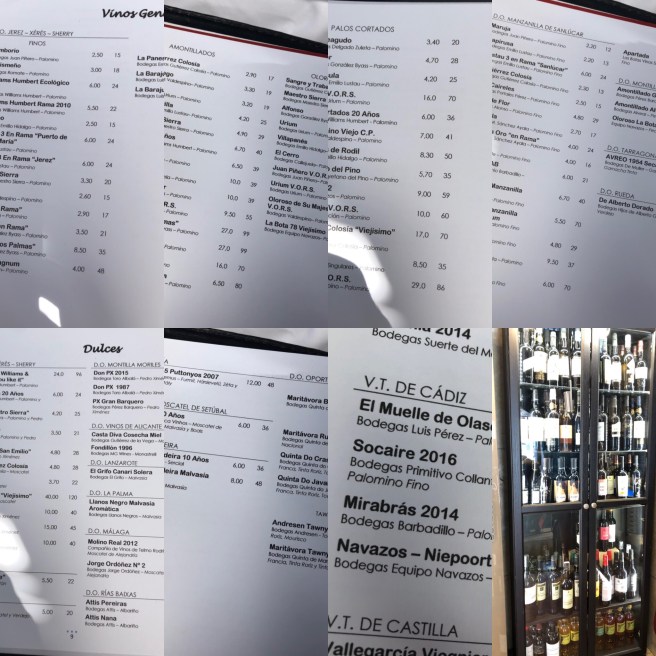
But then you see the winelist, and the little cellar on display to one side of the dining room, and you realize that everything you had been told was true.

Absolutely cracking – as good a selection of current releases from around Spain as I have seen and a nicely chosen selection of wines from all over. Sherries are superbly represented – those that are listed and those that are not, with some real treasures, and the prices are absolutely fantastic all the way down the winelist (you would not believe how little we paid for the wines above). Or should I say list of wines and spirits – a really exceptional list of spirits of every kind, including a pretty encyclopedic list of brandies de jerez.

Eggs, ham and chips, meatballs and top quality wines for a song. Paradise!

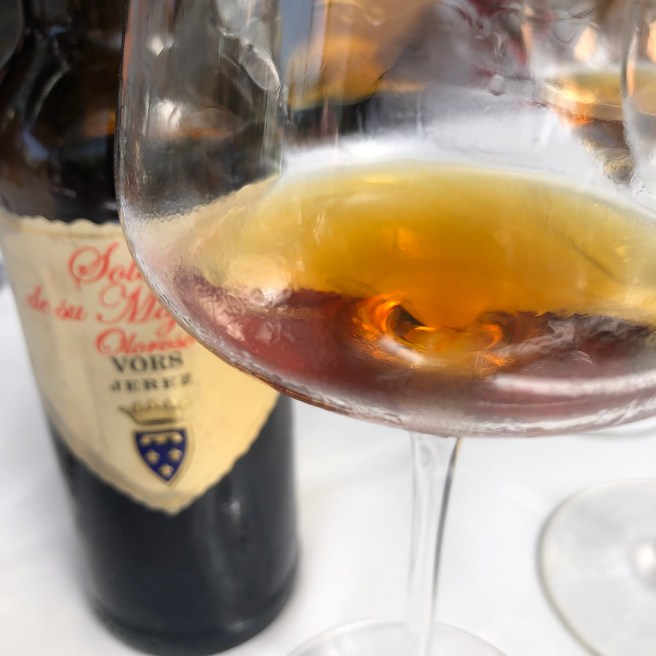
Oloroso Solera de su Majestad

A lovely wine this. It was given to me blind by Hector of La Corte de Pelayo and it was an inspired choice. First, I had never tried it – and it is not often I get the chance to try something as old as this that is new to me. Second, because it is cracking.

Blind I had it as a fine, youngish Sanlucar oloroso in the mould of el Cerro – and it shared the delightful balance of flavour and edges without astringency that I associate with that wine. And when the bottle was produced my amazement only increased.

This is one of the mighty wines by Valdespino from a solera founded in the 19th Century and fed from their vineyards in macharnudo alto – about as far from Sanlucar as you can conceptually imagine – but it had a lightness and vitality that I would never have expected from such an old wine or having tasted the epic Coliseo and Niños (they are majestic wines too, but you wouldn’t call them light).

Really delicious, elegant wine and a perfect way to finish a really fine light lunch (… of fabada and cachopo). Many thanks again!

Miracles in the mountains

I have in the past used the expression “miracle” when referring to wine making but the more wine makers I meet the clearer it seems that it is a miracle in the same way that Lee Trevino was “lucky”: the miracles are the result of a lot of very hard work.

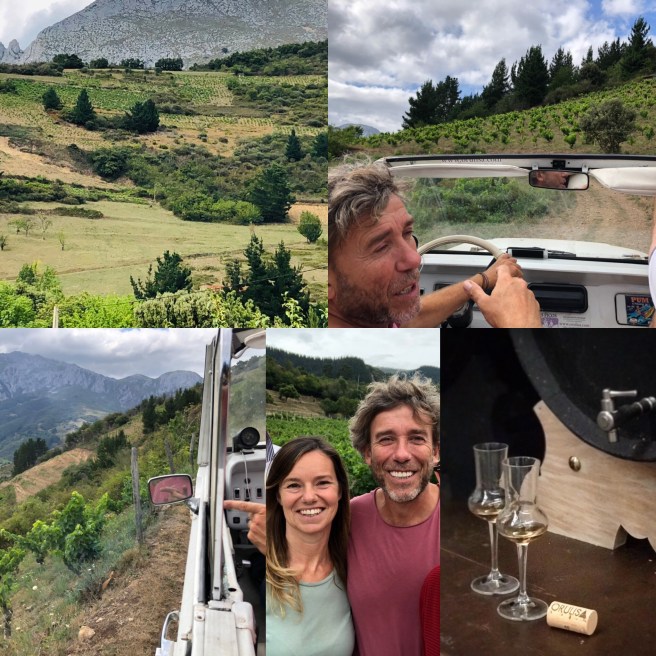
This week I was treated to a staggering vineyard visit by Sabino and Isabel of Orujo de Liebana S.A. and was able to see first hand, from the back of a fifty year old jeep, pottering along on a track that most mountain goats would have simply refused to contemplate (and at an angle of almost 45 degrees), the sheer amount of work and passion that can go into making wine in the mountains.

As we made our way up to the vineyards we passed field after field of vines that had been lost to some ailment or other, and learned that 2018 had been quite literally a wash: so much rain in July that 2 hectares produced only 300 liters of wine. It felt like a miracle to find any grapes at all up there – but there they were, bracing themselves for the final assaults by birds and boars as they tried to make it the last week of September.

It was really humbling stuff, no surprise that this was officially recognized “heroic winemaking” (to be honest it was pretty intrepid just visiting) and although you could not find a friendlier, sunnier or more cheerful bloke than Sabino to show you around there was no mistaking that serious hard work was involved – red flag phrases like “by hand”, “14 hours” and “before dawn” were slipped in with alarming regularity (and considerable relish – to be fair your man Sabino seemed to genuinely love it).

But after a couple of hours of near vertical mountainside we were back down in the distillery. Sabino and Isabel’s main business is the Orujo distillery they inherited from Isabel’s grandmother – Justina de Liébana. It is widely considered to be Spain’s top distillery of orujo or anything else, with a beautiful array of 24 copper stills that slowly bubble away to allow for the most artisan distillation you could think of. (It really is as if they had just brought all the stills in the village under one roof.)

It would have been rude not to have a little tipple and while a fella is occasionally misunderstood he has never been known to be so rude as to refuse high class booze. And this was really high class.

To start with the wine – Pum de Pumareña – was as fresh, aromatic and fruitful as you would hope and had a lovely feel to it – we only had a snifter but it was enough to produce sadness at the cruelly curtailed production (only three hundred litres!) There were a good few more litres of orujo and good news there: wonderful lightness to the aromas and a smooth, straight to the chest heat in the orujos, along with beautifully integrated flavors in the liqueurs and cream.

Best of all for the parishioners of this blog were two little barrels of top quality orujo aged in sherry barrels – pedro ximenez and oloroso – in which those sherry characteristics really shone through on the nose and palate – deliciously dangerous stuff.

They told us they were in thirty Michelin starred restaurants that they knew of and it is absolutely no surprise. It was superb stuff, and the few bottles we bought didn’t make it back even to Madrid.

But the lasting memory will be of the kindness of Sabino and Isabel, inviting us into their home (and in Sabino’s case driving us up the mountain) to share what is clearly a passion for them. They could not have been better hosts and it could not have been a greater pleasure. I would raise a glass of orujo to them, but since I am temporarily out of stock this fino will have to do!

La Corte de Pelayo, Oviedo

Your correspondent has been enjoying a much needed break travelling across the North of Spain, greatly enjoying the local hostelry along the way. And despite some big names, none have impressed me more than Restaurante La Corte de Pelayo, here in Oviedo.

It was recommended by a reliable trencherman and good friend as having a “good list of generosos” and if anything he sold them short – it is a superb list, of generosos (and wines of every kind) and once Hector, co-owner and Jefe de Sala spotted our interest, he revealed that that superb list only scratched the surface.

The restaurant itself is beautifully located and right up this blogger’s alley style-wise – friendly and unfussy but classy and elegant – and the food too was a great balance of hearty Asturian fare with a touch of class. We had two grand prix level dishes – fabada (ranked 4th in the world in 2019) and cachopo (the all Asturias champion) – and with no disrespect to the cider we have been swigging away the wines here were the perfect accompaniment.

Superb stuff and many many thanks for a cracking lunch.

Colet Navazos Extra Brut 2011

Madrid is currently scorchio and of an evening you will find the locals repairing to high places in the hope of catching a Himalaya style breeze. And since man does not live by altitude and atmosphere alone if you can find a terrace with the good stuff then all the better.

One such spot is El Mirador del Thyssen – the roof terrace of the Thyssen museum – currently featuring none other than David Trillo as chief of the roof and wineslinger, who is by all accounts revelling in the bottles he has found tucked away in the cellar.

And this is the good stuff, too. Not my first bottle, but hadn’t had it for a good while – January 2017 it says here. 100% Xarel Lo, dosage of palo cortado and amontillado, 30 months on the rack and must be over five years on the bottle.

And what was back then a big exuberant cava is now sharp and fine – still yeasty, floral, apple and nut on the nose, but then sharp, fizzy and crisp on the palate, really cracking nutty, mature apple flavours and that fresh saline finish.

Top class, refined summer bubbles.

Ube Paganilla 2018

I have been on a rampage of Ube drinking lately due to the happy coincidence that while Madrid’s unseemly warmth parches the throat, the watering holes I head to (for the record, home, then Angelita, Taberna Palo Cortado, Taberna Verdejo, and now Dis Tinto), are awash with these high class fresheners.

And I speak in the plural because the Ubes are legion. First came the Carrascal. Then the Miraflores. She in turn was followed by the Maina. And this, my friends, is Paganilla 2018.

I honestly have no clue where Pago Paganilla is – but given that the label says Barajuelas and Tosca Cerrada and the way this wine shapes up I am guessing we are nearer to Maina than Carrascal, if not further inland. Pale gold straw in colour but bags of bandwidth on the nose and the palate – really flavourful with ripe herby fruit and oxidation – not quite savoury apricot jam and dry honey but on the way there. And a stinging saline, mouth watering finish, with that jammy, herby flavour hanging on for ever.

This is not like most white wines. I like this very much.