La Bota de Palo Cortado 51

This is a very highly rated, very special wine by the guys at Equipo Navazos – one of a series of Palo Cortados (together with the numbers 41 and 48) from the bota “GF 30”, a bota of wine with an estimated age of somewhere between 50 to 80 years, originally made by Gaspar Florido in Sanlucar but rescued by Equipo Navazos from industrial surroundings in the outskirts in 2007 and now housed in the “Sacristy” of Bodegas Pedro Romero in central Sanlucar, very near Gaspar Florido’s original bodega.

I have not had the 41 but have had the 48 twice and now this and I would have to say I have had mixed experiences. The first time I had the 48 I had it during a game of snooker with a good mate and although we loved its nose and flavours, we both found it just too chewy and astringent – real walnut skin juice. The second time I had it, on the other hand, it was my favourite wine at a very high quality cata of top class palo cortados – the sheer range of flavours giving it a slight edge despite a strange nose.

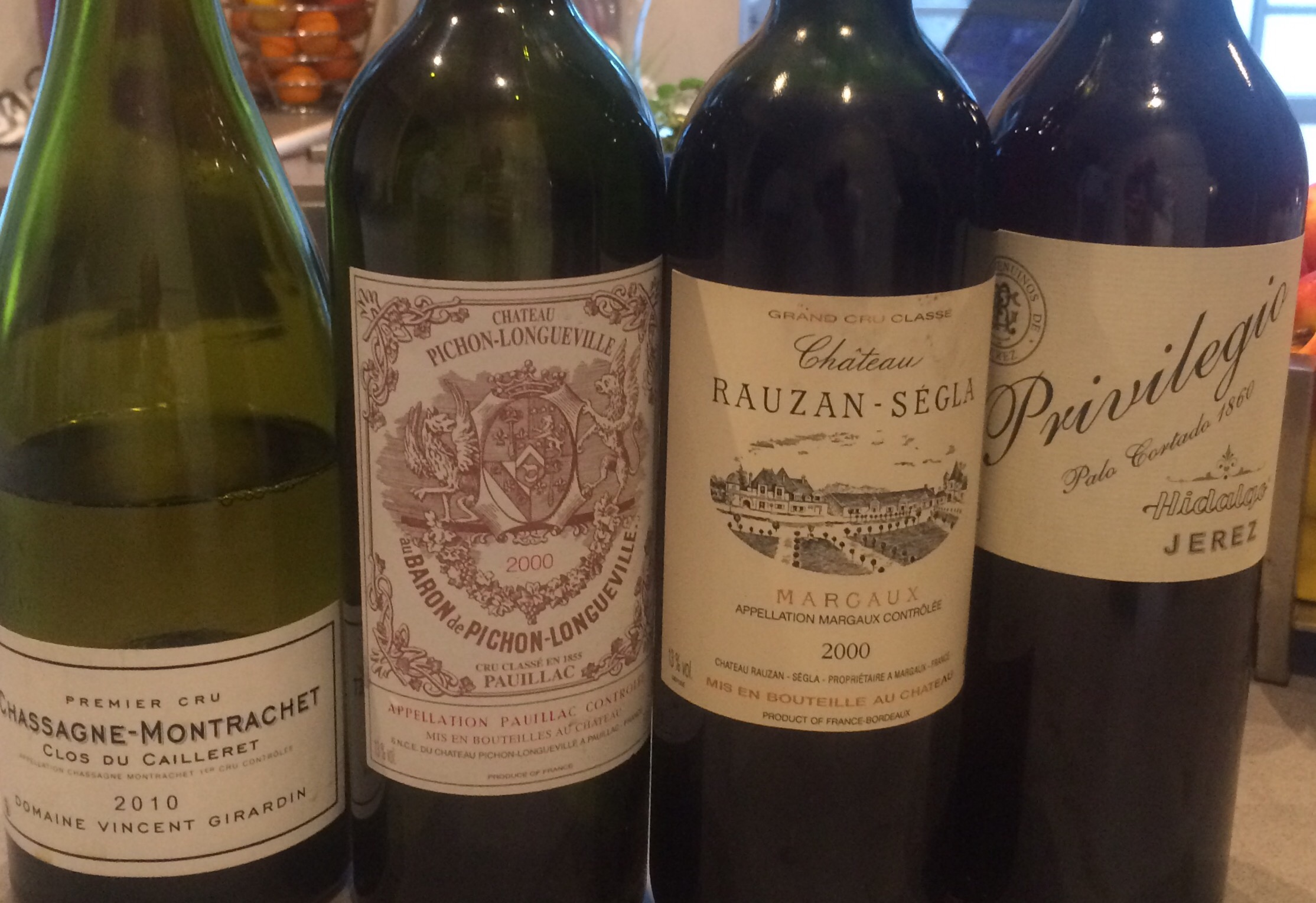
I took this 51 to a pretty special dinner with a group of great friends who happen to be pretty vocal wine enthusiasts. If this were a champagne blog I would write you a dissertation on the absolutely sublime magnum of Henri Abelé Millesime 1990, not to mention a white 2007 Chateau Rayas and an awesome 2008 Les Chenes by Michel Lafarge, amongst others (this is how I know they are great friends). We also gave it every chance to shine – bang on temperature, decanted in advance, good stemware and a receptive audience.

It was a beautiful chestnut colour and had a fine, spicey almost sweet nose. It was also superbly structured – an acidic attack and big full shape to it – and full of toasted (almost burnt), nutty caramel, but, particularly in the company (and maybe in part due to the expectation) just a little one dimensional in flavour and not quite holding its shape for long.

Overall, to be quite honest it suffered a little in comparison to the other wines and did not quite live up to its own hype. Very nice but I really start to wonder if these wines are great for tastings (I can imagine this doing well compared to other palos) but not quite as great on the road – it reminded me of the way the even more highly rated Bota de Amontillado 49 failed to impress at a dinner back in May.

La Bota de Palo Cortado 52

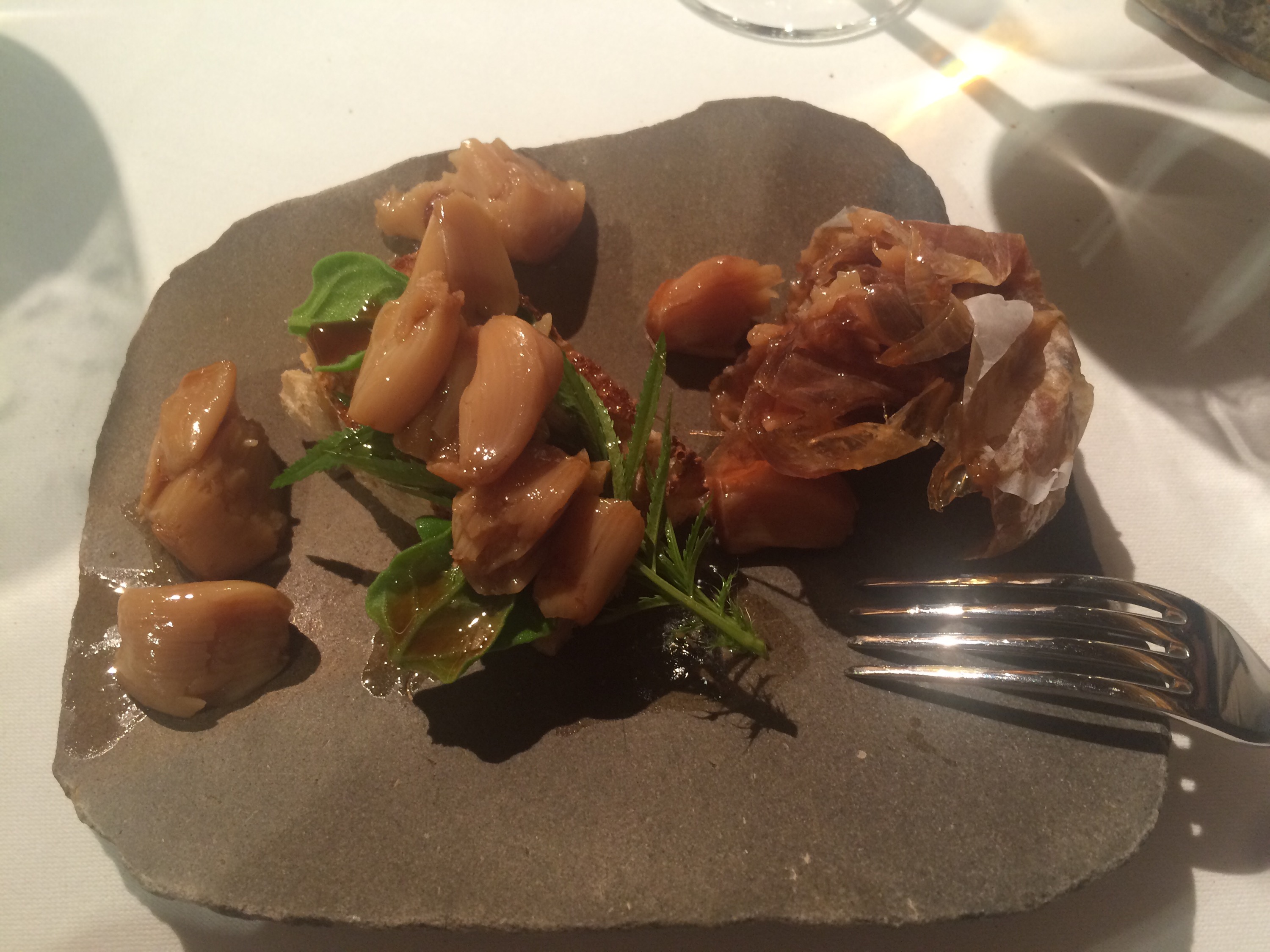
An absolutely inspired pairing in Mugaritz last night. Here you have a head of garlic roasted with lamb juices –  you squeeze the teeth out onto a toast with parsley and then in she goes.


The dish itself is just as tasty as it sounds – absolutely delicious – and the savoury, nutty palo cortado by Equipo Navazos not only stands up for itself but is in perfect harmony.  Guillermo Cruz – the sommelier at Mugaritz – is a genius and this is evidence.


Cata de Palo Cortados en Enoteca Barolo

A good friend made it possible for me to attend this and it was a cracking event.

The title – “Palo Cortado – the most mysterious sherry wine” – suggested a bit of blarney but in the end nothing to worry about – maybe a bit of blarney but overall a good, punchy and knowledgeable introduction with some interesting nuggets and some key background facts on each wine – a well prepared and well conducted tasting.

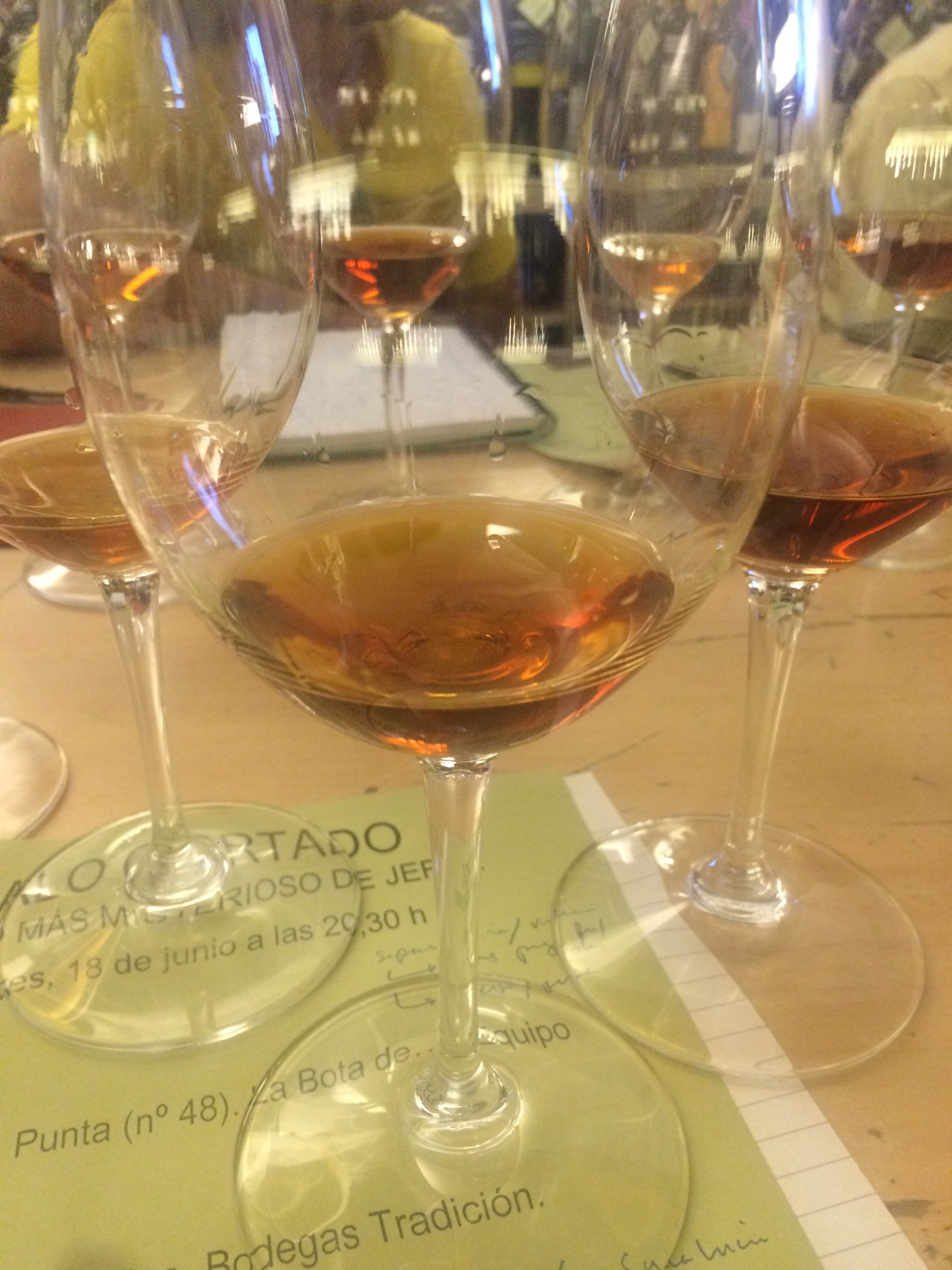
We started with Obispo Gascon – by Barbadillo in Sanlucar (on the left below). The colour is an orange amber/chestnut – absolutely crystal clear. It wasn’t super expressive in the nose – salty with a bit of sweet pastry. On tasting the salinity is nicely integrated and it is maybe not creamy but a little oily, with flavours of caramel to burnt caramel – and very long. Nice start. (16/20)

Next up was the Tradicion – seen here between the Obispo and the Gutierrez Colosia Viejisimo. Similar in shade  to the Obispo Gascon although not as crystal clear – a suggestion of cloud. More nutty on the nose – more almond pastry/bakewell tart rather than the honey pastry of the Obispo and not the same noticeable salinity (this lad is from Jerez). Noticeable acidity in the mouth and it is full of darker caramel flavours – maybe a little bitter/burnt in the aftertaste. Always notice the structure of this wine and it has a nice, savoury, nuttiness to it. (17/20)

The Gutierrez Colosia is called “very old” and it looks it. It was at least a shade darker than the other two – but crystal clear – and again a little bit of sea air on the nose (this fella is from Puerto de Santa Maria). Also a bit of yeast on the nose – a more vegetable sensation. Big and rich on the tongue and it has that old fruity christmas cake taste to it, caramel flavours, baked orange, a suggestion of nuts. Really full in body and maybe a touch more width/breadth than the other two. Lovely wine. (18/20)

Next up – Roberto Amillo Espiritus de Jerez. In colour it is a little browner and my glass – in fact the bottle – was a little cloudy. A bit less expressive on tje nose. On the tongue it not as rich and on the palate it is acidic, spicey and sharp with flavours of walnut tending to walnut skin. For me not as rich and structured as the Tradicion or the Viejisimo – a racy, spicey glass though. (15/20)

The fifth wine (middle of this picture) is the Equipo Navazos 48. Deep bright red in colour – light ruby and a really distinctive nose – a bit of the diesel, varnishy garage forecourt smell, with bitter orange and minerals and even lactic notes (cheese rinds). I can understand it not being everyone’s cup of tea on the nose but in the mouth it is fabulously rich, with a whole new range of flavours. You get dark chocolate and tobacco, the jammy marmalade, and of course the nutty toffee. I found it a really expressive, rich wine and a little extra dimension on the palate compared to the others. (18/20)

Finally, on to the Cardenal by Valdespino, an old school palo cortado made from wines that stepped off the “true path” of the Fino Inocente (and therefore all from the Macharnudo Alto pago). In colour it is another dark one – chestnut brown. Then a salty, iodine in the nose, and burnt caramel for me (but others reckon yeast). In the mouth it is enormous – treacly, maybe even too concentrated. The range of flavours is not quite as wide as the 48 – absolutely massive and relatively balanced even if possibly not as multifaceted as the Navazos wine. A magnificent wine no doubt. (18/20)

Overall favourite: the Equipo Navazos 48 – just for the range of aromas, flavours and notes – but this was a superb range of palo cortados and an excellent event.

Leonor Palo Cortado


Coming back to this a good while after I last tasted it. 

The first impression is the colour – it is a light brown, orange amber – and the second is the sweet honey in the nose. To be blunt tonight the nose reminded me of a Crunchie Bar – albeit a Crunchie Bar with a bit of background alcohol. On a deeper inhale there are also notes of the fruit of a dessert wine (not a PX either).

On the palate the flavours are a bit more black treacle/toasted caramel – some nice acidity and heat. I don’t get the honey or fruit at all on the palate – although maybe a little bit in the texture – all in all it is a juicy mouthful. 

Emilio Hidalgo Privilegio Palo Cortado 1860


This is a truly exceptional palo cortado.

It is from one of the “foundation” soleras – a solera in production since 1860 – at Bodegas Emilio Hidalgo in Jerez, in my view the foremost wine maker in sherry today. Production is limited – there are two “sacas” of 150 bottles per year – manual, and natural.  The wine is bottled by hand without any kind of filtering or stabilization. The average age of the wine is well north of 50 years.

We tasted it at the end of an excellent dinner washed down by some very nice chablis and claret and after a decent decant. (I always recommend decanting a really good sherry – especially one of these older specimens.)  In terms of accompaniment, we had some dark chocolate arranged but to be honest once we started tasting the sherry we stopped worrying about such distractions.

It is quite unlike a lot of the old palo cortados I have tasted: fine, light, elegant and yet still intense, rich and powerful.

It is a brilliant, very clear, reddish caoba in colour and, as sherries do, has the most amazing nose. From afar, (through the neck of the decanter) it is sweet and fruity – raisins like a PX – but get it up close and swirl it and it has tremendous power and a huge range of notes.

The mouthfeel is clean and fine – nothing oily or dusty here, just silky – and nose is matched by the flavours on the palate: caramel, nuts, then toffee, then treacle toffee, then treacle nut toffee, then chocolate, coffee, tobacco, leather, roast chestnuts. It is almost unbelievably long: just keep tasting it for one, two, more minutes and forget about “after taste” – it holds its shape and its balance beautifully.

More than anything it is strikingly light on its feet for a wine of such power. Many very old wines around now can be excessively acidic or astringent – walnut skin concentrate – but this is compact and balanced. In fact it is almost too easy to drink – the years have just made it lighter and more integrated.

An extraordinary wine – pretty close to perfection and a real privilege in every respect.

Fernando de Castilla Antique Palo Cortado at Taberna Verdejo

Another superb spot for sherry lovers (and everyone else, frankly). 

Just look at this for a selection of sherries.


And if that is too much choice do not worry – the marvellous Marian will recommend some exceptional sherries to go with the brilliant food.

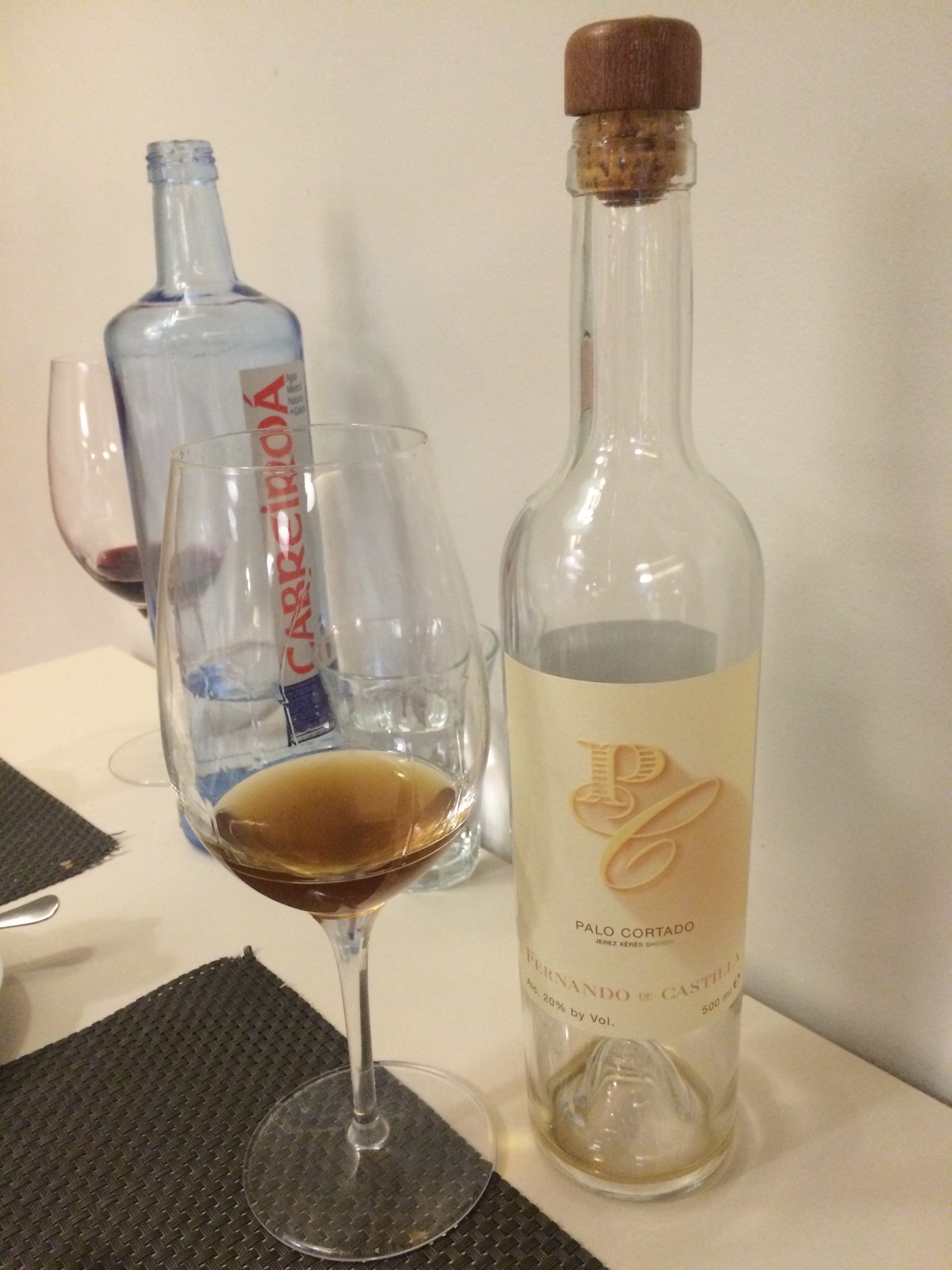
With white asparagus, artichokes and fried piparra peppers I had some full bodied Arroyuelo fino en rama and then, with a fantastic sirloin, this Fernando de Castilla Palo Cortado (bottle is empty due to consumption)

  
You will not be surprised to learn that I utterly forgot to take pictures of the food but only because I was too busy eating it.

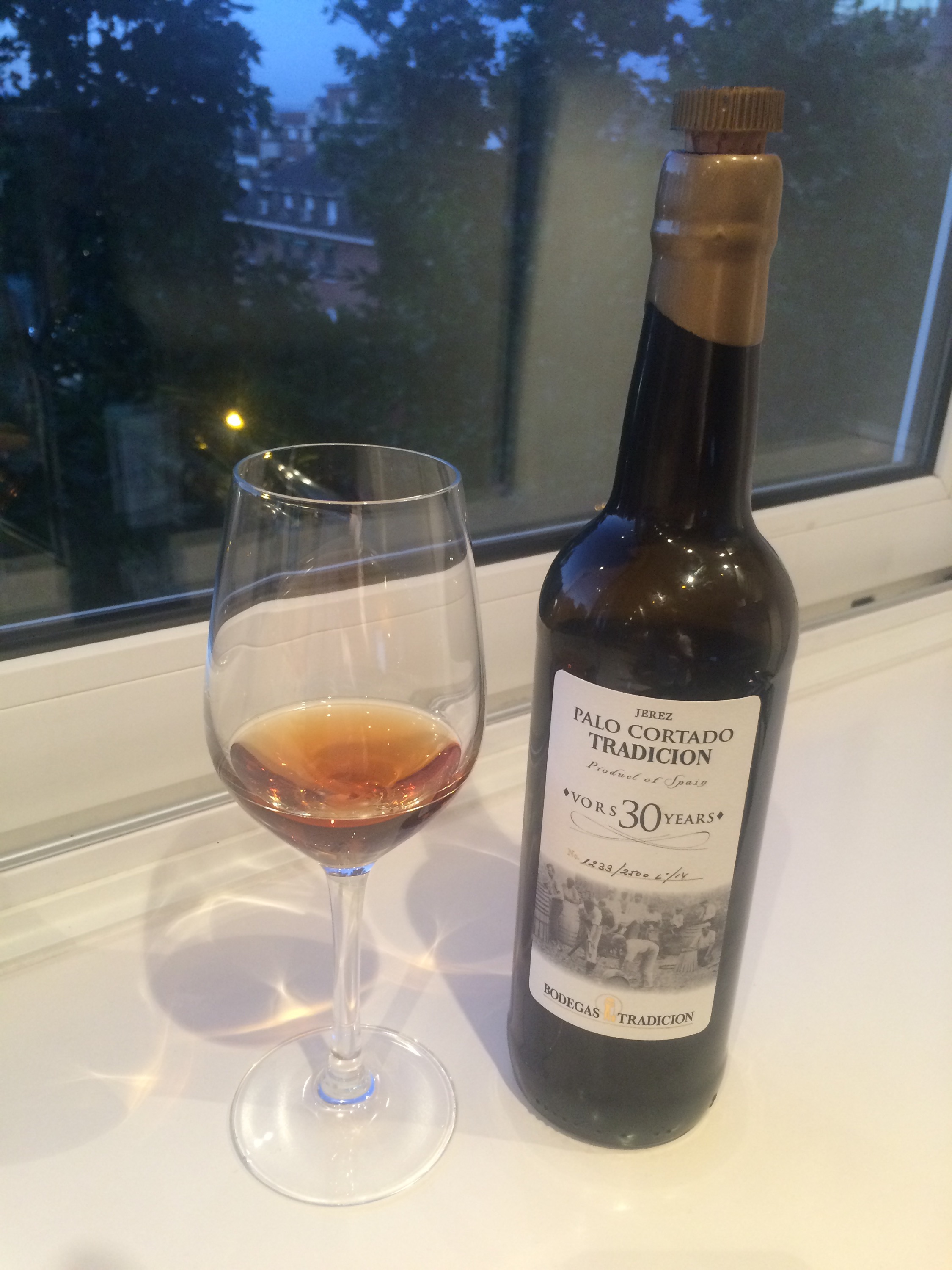
Palo Cortado Tradicion


Wines like these make writing blogs fun I can tell you. This is another top drawer Palo Cortado – from Bodegas Tradicion, a crew who specialize in very old sherries like this one – a 30 year old palo cortado. 

This has a (burnt) citrus vibe on the nose, then a lot of (also burnt) caramel in the palate, an oily, buttery mouthfeel, a little bit of alcoholic heat and a little acidity. Really very good – real structure to it.  

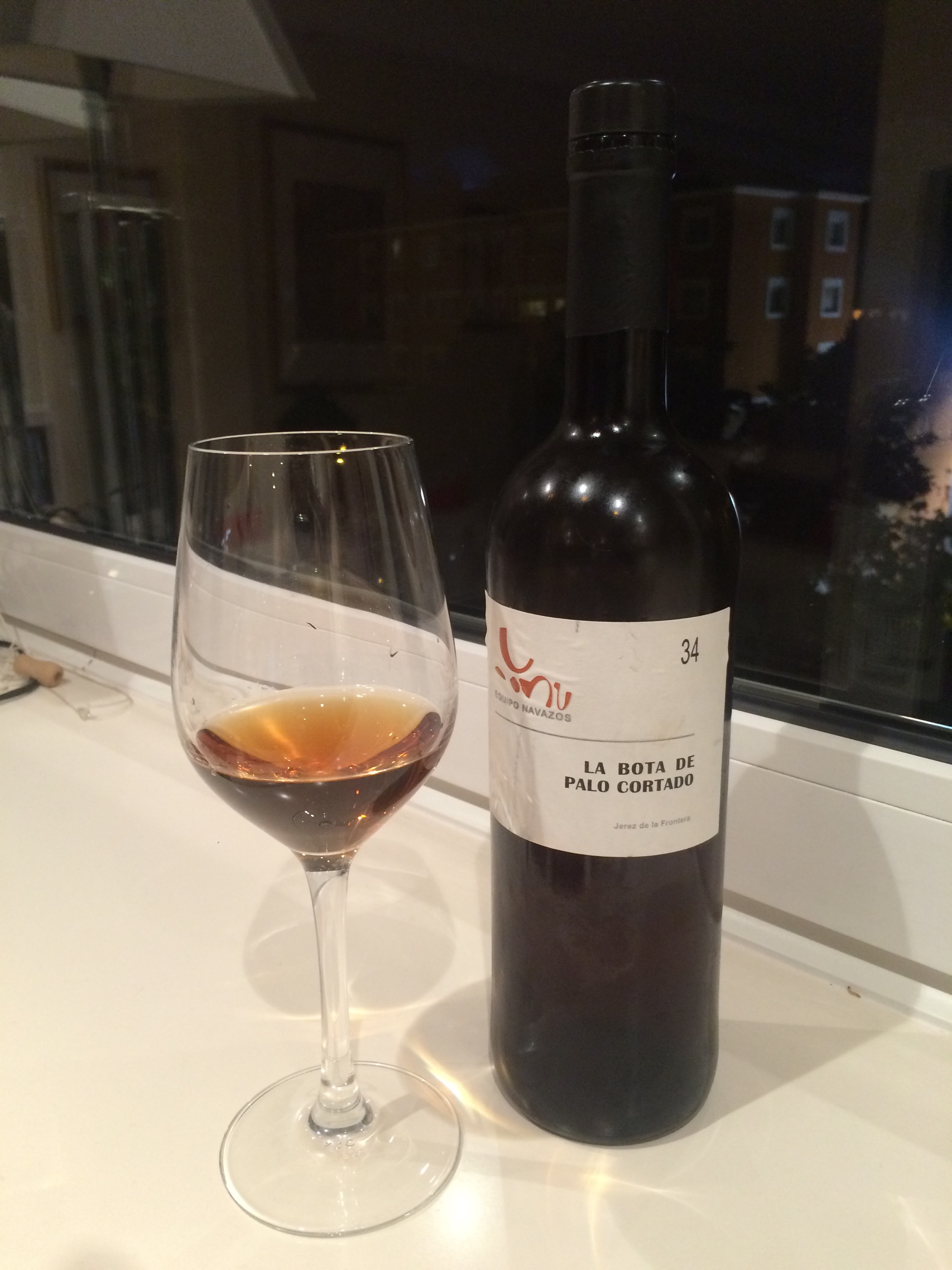
La Bota de Palo Cortado 34

This is the wine that first made me sit up and take serious notice of sherry and it is still among my favourite wines. Just the thing to lift one’s spirits after the first long day of what promises to be a long week.


The first time I tasted this I was just blown away by the number of aromas, flavours, and spice. In part I was caught by surprise but even now I find this wine has a depth and and variety to rival anything. In fact now when I come back to it I am equally impressed by the sense of lightness and balance, the lack of astringency. It really is a masterpiece.

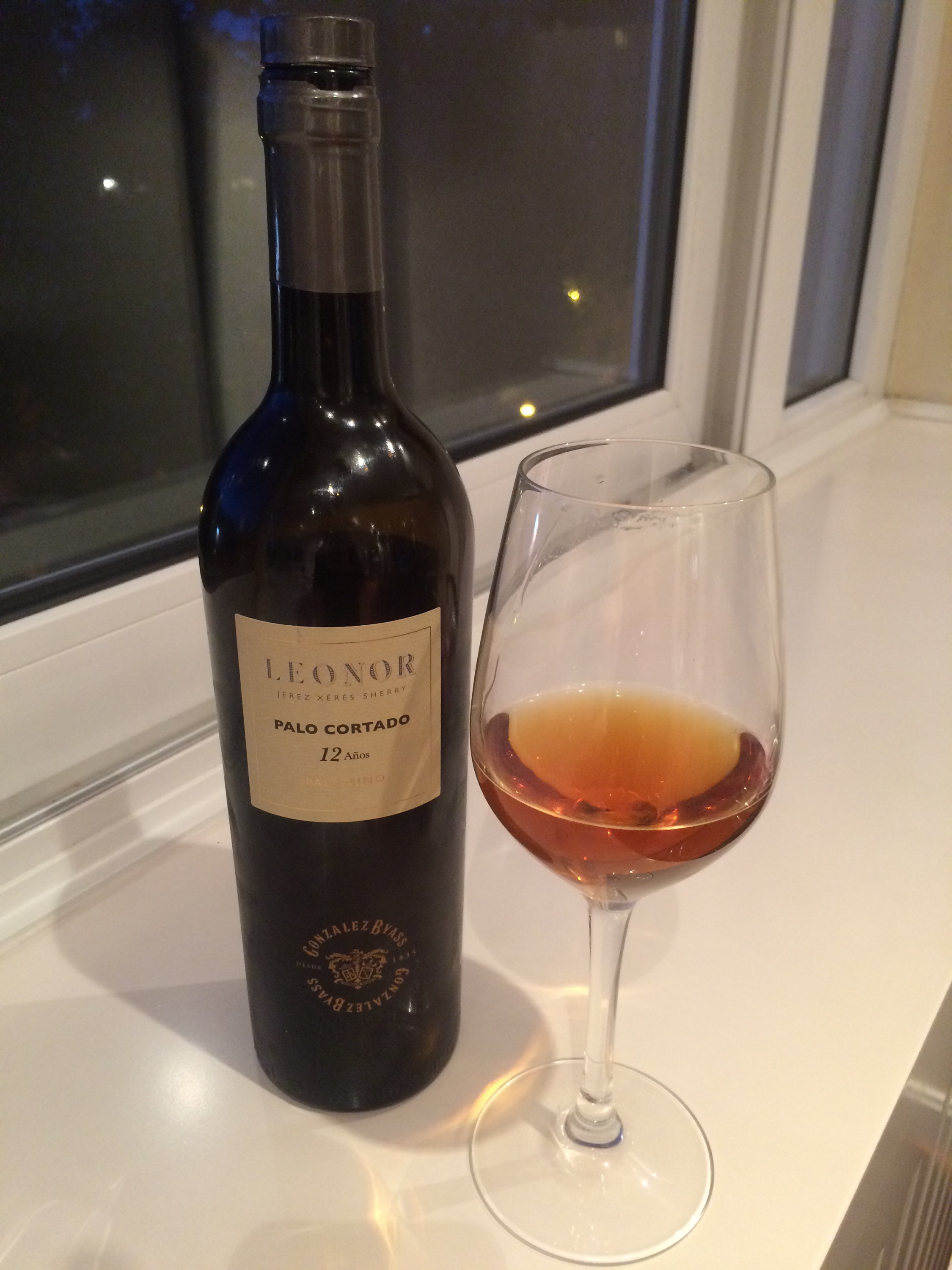
Leonor Palo Cortado

I love them and they are sometimes really great but palo cortados are probably the most overhyped of sherry wines – they bring the blarney out of makers everywhere. They get their name from the heiroglyphics that the cellarmen put on the barrels in the bodega. Specifically, they are selected as suitable for making fino under flor and therefore marked with a straight line or “palo” (literally, stick). However, shortly afterwards the barrel is chosen instead for “traditional” oxidative ageing (perhaps because the flor doesn’t develop as it should) and so the cellarman (“capataz”) strikes a line through the first one to make a cross – a cut stick, or “palo cortado”. The wine is then fortified to ensure the flor does not grow back and then the wine is traditionally aged.

As a result, what you get is a creature with a little time under flor – compared to an oloroso with none and an amontillado with plenty (amontillados are allowed several years under before the wine is fortified to allow oxidative ageing). The resulting difference in character can be amazing: palo cortados can be much lighter than an oloroso and punchier than an amontillado.

This one is Gonzalez Byass’ 12 year aged palo cortado – a young and mellow example of the class that would be an excellent dinner wine – could go anywhere a full bodied red wine can and beyond. Clear and chestnut brown, sweet on the nose and chocolate caramel in flavour. Maybe just a little bit of heat but not too acidic or concentrated – and overall nicely balanced.

It really is a nice drop and criminally inexpensive – this one was a mere 17 euros, which when you consider its age and the effort that went into it is quite remarkable. Given GB’s reach it should also be obtainable widely. 

The Masters of wine

I have always loved the Masters golf tournament – such a beautiful, tough course, great players, cheesy american TV coverage, and perfect timing – a great Saturday and Sunday night in with a bottle or two. 

  
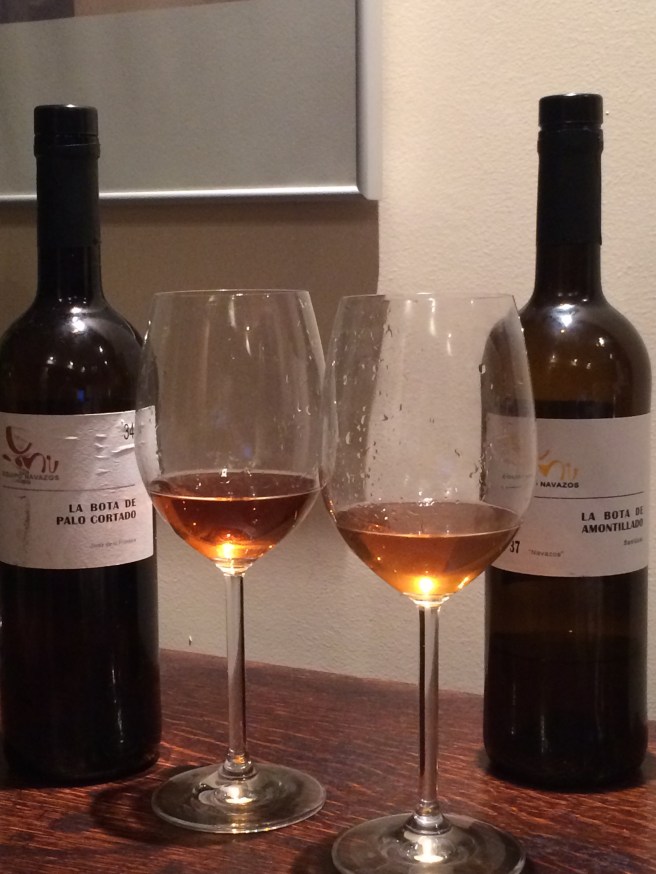
And you couldn’t watch golf in better company than these boys – the 34 Palo Cortado and 37 Amontillado from Equipo Navazos.

The 37 is maybe the softer of the two – not quite the bite of the Palo Cortado and a slightly more muted range of flavours and aromas, but still a wonderful example of its kind and has a deep doughy consistency to it that really fills the mouth. 

The 34 is something else – expansive, amazing nose and structure and lightness on the palate. Every kind of flavour you could ask for.  This is the wine that first made me pay proper attention to sherry and still my favourite palo cortado.